Category: FOMO and Its Discontents

  • The Watch Honeymoon Is Just a Press Release

    The Watch Honeymoon Is Just a Press Release

    The Watch Honeymoon lasts a month, maybe two. It feels like euphoria, but don’t be fooled. This isn’t chemistry. This is public relations.

    You strap on the new Grail and wear it relentlessly, day and night, as if removing it might expose doubt. The rest of your collection is demoted overnight—relics from a lesser era, reminders of your former ignorance. You speak in absolutes now. This watch cured you. The search is over. You’ve reached equilibrium. You tell your audience you’re riding into the sunset, shutting down the channel, stepping away from the noise, living at last in a quiet garden of horological contentment while the poor souls of the watch world continue clawing at the glass of desire.

    It’s a convincing performance. You almost believe it yourself.

    Then, one evening, the watch feels… normal. The shine dulls—not physically, but psychologically. You catch yourself browsing. Just looking. Just curious. A new release appears. A different dial color. A slightly thinner case. And just like that, paradise evaporates. The Grail becomes a watch. The cure becomes a memory. You step back onto the Hamster Wheel of Crazy without ceremony.

    What happened was predictable. You passed through the Grail Justification Cycle—the phase in which enthusiasm is amplified, loyalty is proclaimed, and public devotion is performed to defend the financial and emotional cost. The intensity wasn’t peace; it was narrative control. This wasn’t impulse, you told yourself. This was wisdom. This was destiny.

    And when you return to the forums, the videos, the late-night comparisons, no one raises an eyebrow. No one calls you out. Why would they? There is no failure here. Only membership.

    You’re one of us.

  • When Watch Collecting Becomes Financial Infidelity

    When Watch Collecting Becomes Financial Infidelity

    Any honest account of watch addiction must confront its most uncomfortable chapter: financial infidelity.

    The watch obsessive does not merely inhabit a fever dream of dials and bezels. He is a consumer training his appetite the way a bodybuilder trains a muscle. Each purchase lowers resistance. Each box on the doorstep normalizes the next. What begins as an occasional indulgence becomes a rhythm, then a pattern, then a supply chain.

    At first, his wife is charmed. A parcel here and there. A harmless hobby. A grown man treating himself to a toy.

    But frequency is the tell.

    Soon the packages arrive too often, too predictably, like clockwork. The enthusiast recognizes the danger before anyone says a word. And so the hobby evolves. Deliveries rerouted to the office. A friend’s address. A rented mailbox. The collection expands. The domestic narrative is quietly edited.

    The line is crossed when the money changes categories.

    Vacation funds become “temporary reallocations.” Home projects become “later.” College savings become “untouched in principle.” And somewhere along the way, a Swiss luxury watch appears that cannot be explained without a level of honesty the buyer is no longer prepared to offer.

    Behavior adapts to the secrecy.

    Watches are swapped during the day so no single piece attracts attention. New arrivals are unboxed during strategic windows of solitude. Lume checks are performed under blankets like a teenager hiding a flashlight after lights-out. YouTube reviews are watched with the sound off.

    To the outside world, he is a responsible husband and father.

    Privately, he operates a parallel identity.

    This condition has a name: Domestic Double Life Disorder—the psychological split in which a man performs stability and restraint in public while privately sustaining a covert economy of acquisition, concealment, and rationalization.

    For some, the weight of the split becomes unbearable. Guilt accumulates. The numbers add up. The secrecy grows exhausting. And one day, the buying stops.

    The result is not relief.

    It is silence.

    No packages. No tracking numbers. No late-night research. No private surge of anticipation. Life becomes honest—and strangely flat. For a man accustomed to the adrenaline of concealment and the dopamine of arrival, integrity feels less like freedom and more like withdrawal.

    This is the danger point.

    Because if honesty feels empty and secrecy felt alive, the relapse writes itself.

    The addresses reappear. The justifications return. The private economy resumes. The double life feels, once again, familiar. Efficient. Even comforting.

    For some watch addicts, deceit is not the problem.

    It is the habitat.

  • Why I Bought the G-Shock Frogman

    Why I Bought the G-Shock Frogman

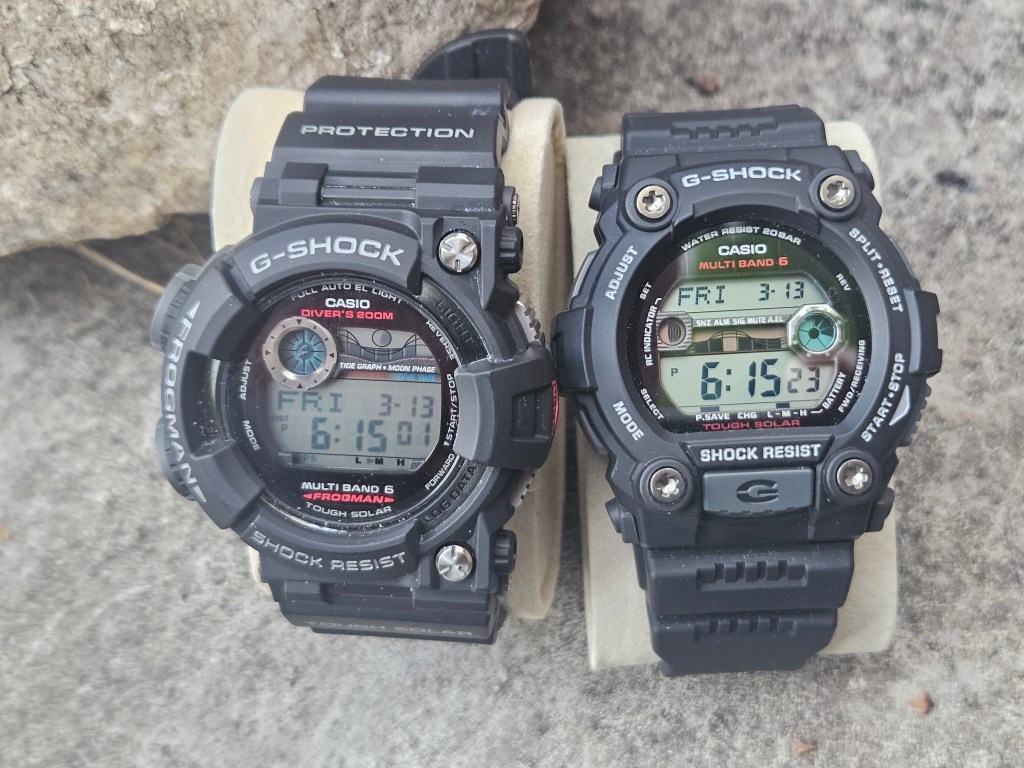
    If you’re buying the G-Shock Frogman GWF-1000-1JF, you need to abandon one illusion immediately: the fantasy that you are a solemn, high-minded “serious watch buyer.”

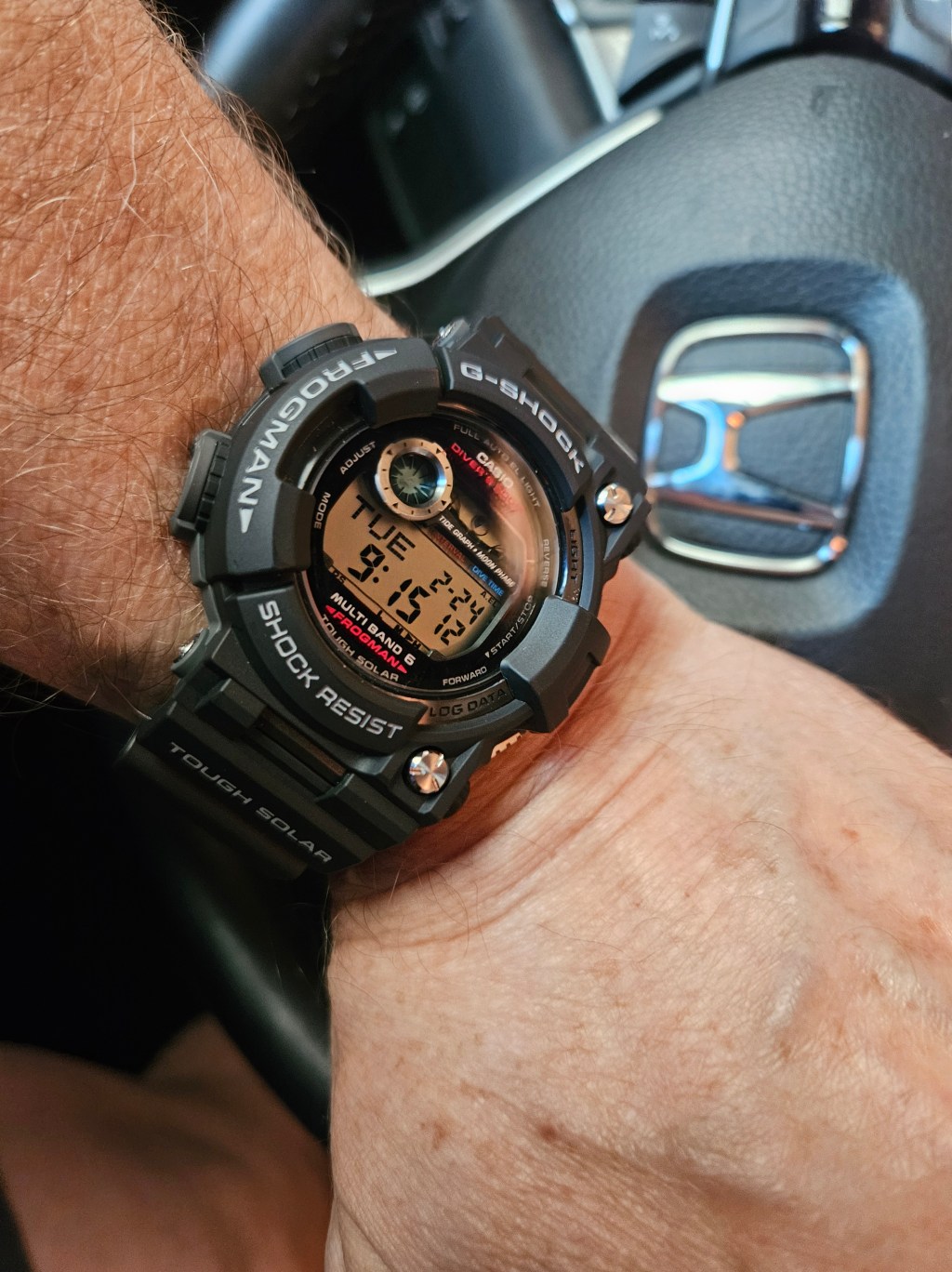
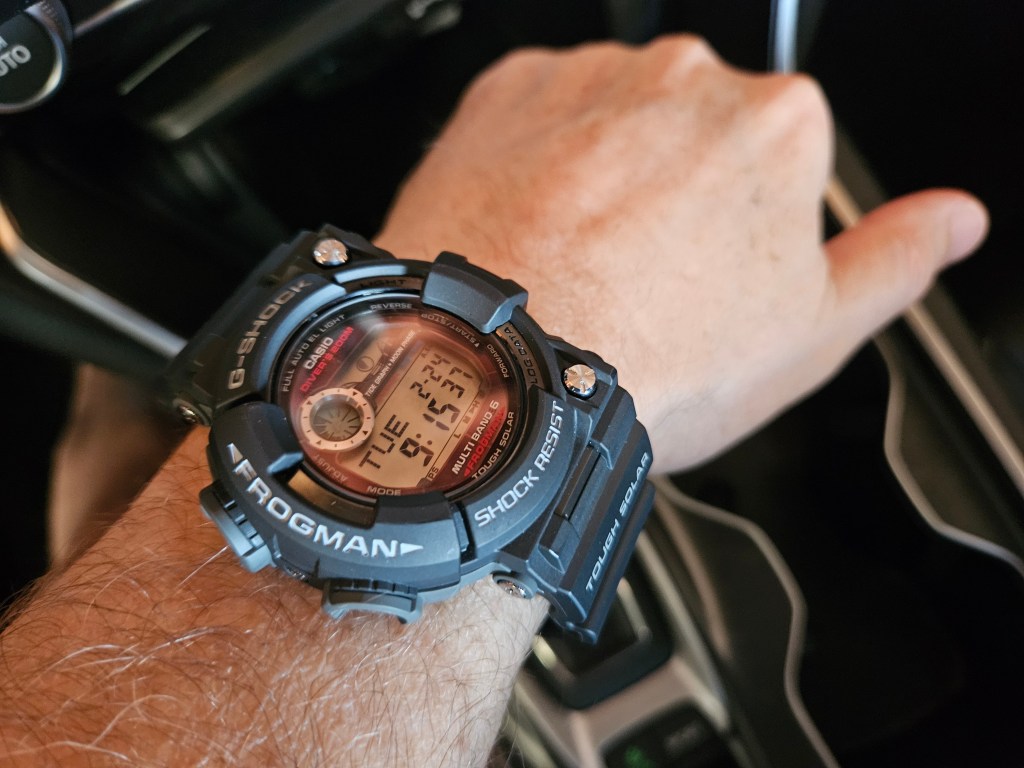
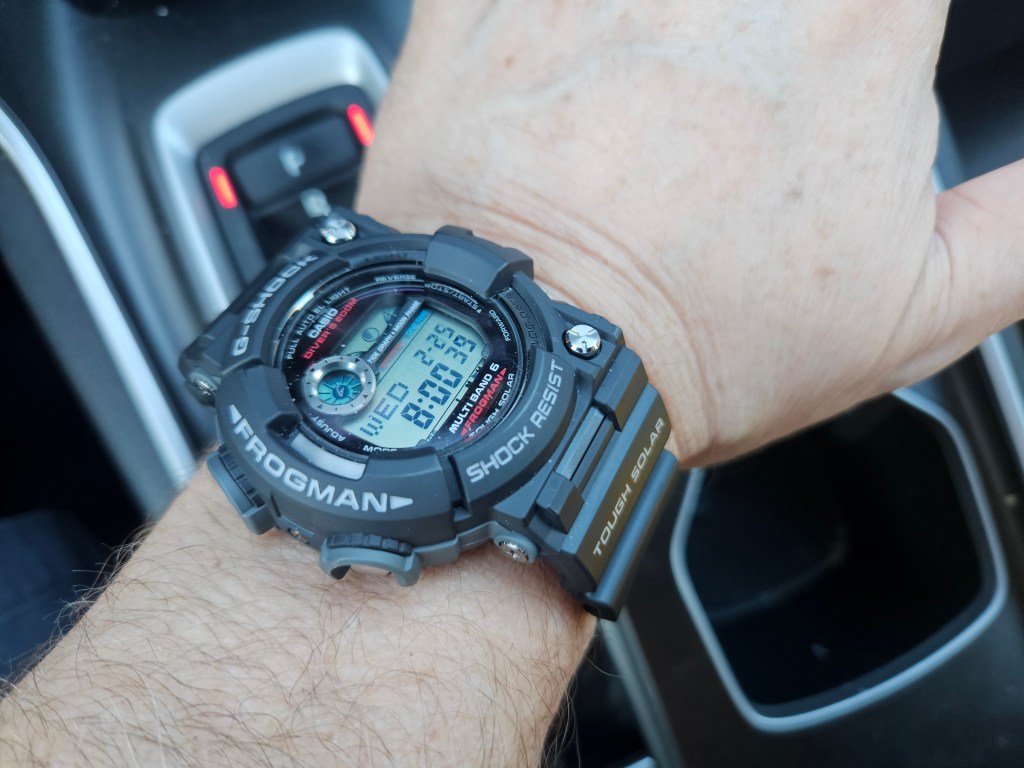
    Yes, the Frogman is a legitimate tool—ISO-rated, solar-powered, atomic-syncing, built like a bunker. It tracks tides. It handles world time. It could probably survive a minor meteor event.

    But let’s be honest.

    The Frogman is not a symbol of horological gravitas.
    It is a giant, unapologetic wrist toy.

    And that’s the point.

    This is not the watch of a restrained aesthete sipping espresso while discussing movement finishing. This is the watch of a twelve-year-old who never lost his appetite for adventure. The Frogman doesn’t whisper refinement. It shouts, Let’s go break something. It belongs just as comfortably on your wrist while you’re teaching rhetoric as it does while you’re wandering the house in gym shorts and a robe, pretending you might dive into the Pacific at any moment.

    So stop apologizing.

    Look at the thing. Smile.

    You’ve spent years marinating in the mythology of seriousness—heritage, prestige, restraint, the quiet dignity of brushed steel. Enough. Watches were never meant to be solemn artifacts of personal identity. They were meant to delight the eye, engage the hand, and give you a small surge of pleasure every time you check the time.

    What you’re practicing now is Gravitas Shedding—the psychological act of discarding the heavy costume of the “serious collector” and admitting a simple truth: if the hobby isn’t fun, it isn’t sustainable.

    Function still matters, of course. The watch should be well made, reliable, and usable. But once those boxes are checked, joy becomes the real criterion. The worst fate for any watch isn’t inadequacy—it’s boredom.

    Many enthusiasts have told me every collection needs at least one G-Shock for exactly this reason. A pressure valve. A reminder that watches don’t have to be precious.

    So after fifteen years of on-again, off-again longing, I finally did it.

    Last month I checked Sakura and saw the Frogman was out of stock. Prices on eBay were absurd. I assumed the window had closed. Case dismissed. Desire filed away.

    Then it reappeared.

    $440.
    $506 after shipping.

    Decision made.

    Now I have a new assignment: learn the dual-time function and actually use the thing when I travel. If I’m going to own a watch that can track the world, I might as well let it earn its keep.

    And I’ll admit it—I’m looking forward to the arrival more than I expected.

    I own beautiful mechanical divers. But when I picture myself in front of a classroom, talking about argument structure and logical fallacies, I don’t see a polished luxury piece on my wrist.

    I see the Frogman.

    Big. Black. Slightly ridiculous. Completely confident.

    Will it become my daily watch?
    Will it replace the others?
    Will it become my signature?

    That’s the experiment.

    The watch is on the way.

    We’ll see what happens.

  • Horological Deconversion: When the Romance Finally Breaks

    Horological Deconversion: When the Romance Finally Breaks

    I recently wrote an essay arguing that pursuing mechanical watches in a digital world is a kind of elegant absurdity—an expensive devotion to obsolete technology while the rest of civilization marches toward sensors, satellites, and software. My proposed remedy was simple and slightly heretical: sell the mechanicals and replace them with an atomic or Bluetooth G-Shock. Accuracy, durability, zero drama. Efficiency instead of romance. Sanity instead of ritual.

    The piece was meant to provoke. Not just readers—me. Writing, after all, is less self-expression than self-interrogation. As Kafka put it, it’s the axe for the frozen sea. Sometimes the ice you crack belongs to your own illusions.

    What began as a tongue-in-cheek thought experiment turned into something less comfortable. It forced me to examine the possibility that my love for mechanical watches isn’t love at all—it’s theology.

    Over the years I refined my taste, sold the excess, and curated a tight collection of mechanical divers. Vintage aesthetic. Tool-watch credibility. A faint whiff of James Bond climbing out of the ocean with a harpoon gun and moral certainty. I told myself this evolution reflected discernment, maturity, identity.

    But the thought experiment raised a harder question: Did I discover my taste—or manufacture it?

    Human beings have a habit of building sacred spaces inside a profane world. Perhaps my watches became sacred cows—objects elevated not because they were necessary, but because I needed something to stand against modern life. Mechanical time as resistance. Analog as virtue. Nostalgia as courage.

    In this story, I cast myself as a quiet rebel.

    But what if the story is fiction?

    What if I’m not resisting anything at all? What if I’ve simply joined a small tribe of aging enthusiasts who reassure each other that spending thousands on obsolete machines is an act of character rather than consumerism?

    At that point, the romance starts to look like cosplay.

    Thousands spent on purchase. Thousands more on service. All to reenact a cinematic memory of youth. The whole enterprise begins to resemble those baseball fantasy camps where middle-aged men pay to take batting practice with retired heroes and pretend, for a weekend, that the dream never ended.

    The thought experiment did something dangerous: it planted a fantasy.

    Sell everything.

    Replace the collection with one or two G-Shocks.

    Start over.

    The appeal isn’t the watch. It’s the psychological reset. The possibility of closing a chapter and reclaiming the mental bandwidth the hobby quietly occupies. Change, after all, is the most intoxicating drug available to a restless mind.

    I’ve felt this kind of impulse before.

    In 2005, after three decades of gym culture, I was standing in an LA Fitness in Torrance, wiping someone else’s sweat off a treadmill while pop music pounded overhead and everyone talked about nothing. The thought hit me with sudden clarity: I need to get out of here.

    Within a week I’d left the gym, bought kettlebells, started power yoga in my garage, and never went back. At the time it felt impulsive. In hindsight, it was alignment—something deep finally overriding inertia.

    I sometimes wonder if watch collectors experience the same internal shift—the moment when accumulation feels less like passion and more like weight. The urge to take a wrecking ball to the collection. To simplify. To breathe.

    This moment has a name: Horological Deconversion—the quiet psychological turn when watches stop looking like identity and start looking like artifacts of habit, mythology, and sunk cost.

    I know someone who went through it. A serious collector. Deeply invested. One day he had the overwhelming urge to sell everything and replace the collection with a $20 Casio F-91W. Eventually he did. He told me the move saved his sanity.

    He still reads the forums. Still watches the madness unfold. But now he’s an observer, not a participant. The zoo is still interesting when you’re no longer inside the cage.

    Anyone who sells their mechanical collection, buys a single indestructible digital, and walks away lighter will have my respect. Not because minimalism is virtuous, but because exits are hard. Leaving a closed system always is.

    There’s something quietly heroic about it—the horological version of a Shawshank escape. Crawl through the tunnel. Emerge on the other side. Stand in the rain and realize the prison was partly self-built.

    And somewhere beyond the walls, there’s a small, durable watch keeping perfect time—and a life of freedom and expanding possibilities.

  • Why a G-Shock Frogman Makes More Sense Than a Mechanical Collection

    Why a G-Shock Frogman Makes More Sense Than a Mechanical Collection

    If you come to me and confess that you’re curious about my watch hobby—intrigued, even—and ask for guidance so you can pursue the passion with the same enthusiasm, I won’t welcome you into the brotherhood.

    I’ll stop you at the door.

    If you are currently free from thoughts of watches, I will advise you to remain free. Walk away. Continue your life as a relatively sane and solvent human being. Because the mechanical watch hobby, viewed without romance or nostalgia, makes less and less sense in the modern world.

    You are paying premium money for obsolete technology in an age that worships useful technology. Why spend six thousand dollars on a Swiss machine that tells you the time when a five-hundred-dollar fitness watch can monitor your heart, track your sleep, detect arrhythmias, and quietly send your vital signs to your doctor before you collapse in a parking lot?

    Mechanical watches don’t make you healthier. They make you sentimental.

    The future is not kind to sentiment. As the world moves away from mechanical timekeeping, competent service will become slower, rarer, and more expensive. Your treasured watch will eventually be packed into a padded box and shipped across the country—or the ocean—where it will sit for months awaiting lubrication, regulation, or a gasket replacement. When it returns scratched, delayed, or mysteriously altered, you’ll enter a corporate complaint system so backlogged it feels less like customer service and more like geological time.

    Meanwhile, the social currency that once justified the expense is quietly evaporating.

    There was a time when a fine mechanical watch signaled professional success. Doctors noticed. Lawyers noticed. Bankers noticed. Today, most people don’t know a Rolex from a Fossil, and many don’t notice watches at all. The design language of luxury horology is becoming a private dialect spoken by a shrinking tribe.

    This is where the collector encounters Analog Futility Syndrome: the slow, uncomfortable realization that enormous resources are being poured into a technology that no longer solves a modern problem. The pleasure remains—but it is shadowed by a faint, persistent question: Why am I doing this?

    Meanwhile, the cultural signaling has inverted.

    Show up wearing a $500 solar-powered G-Shock that works everywhere, never needs service, survives abuse, and keeps atomic time, and people read something entirely different. Efficiency. Practical intelligence. Optimization. The G-Shock wearer looks like a person who solves problems, not one who collects them. The same watch works at the office, on a trail, or on a flight across time zones. It whispers competence. It suggests you might belong to MENSA. Or at least that you don’t spend your evenings arguing about bezel fonts.

    So if you ask me how to become a watch enthusiast, I will not guide you toward Swiss luxury and its Ferrari-like maintenance costs. I will point you toward the solar, radio-controlled, GPS-enabled tools that actually serve a modern life.

    A GPS Master of G Rangeman.
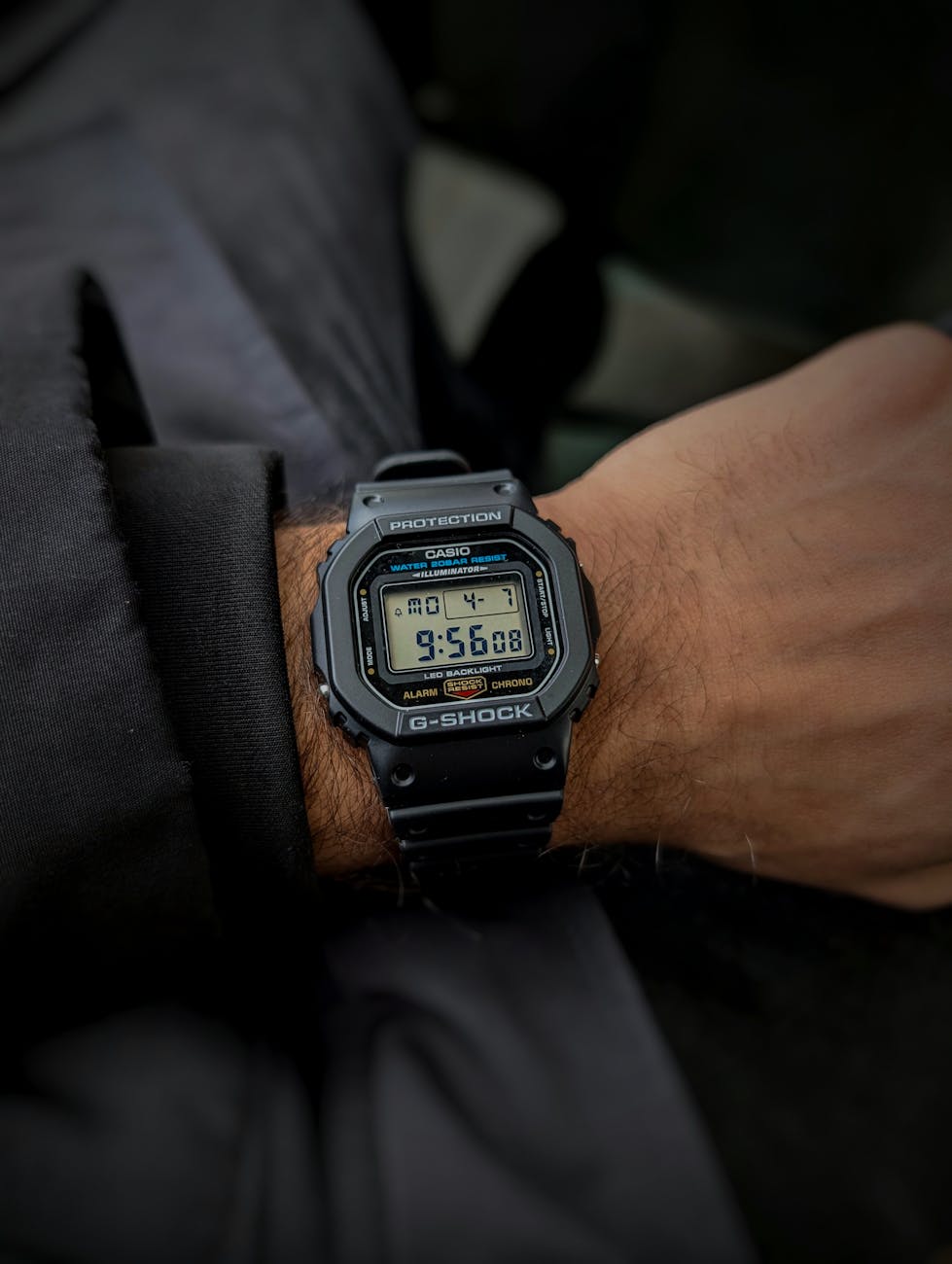
    A radio-controlled square.
    The digital Frogman.

    Real time anywhere. Light weight. Near-zero maintenance. Functional serenity.

    Writing this advice to you has caused something strange to happen to me while composing it. The argument has pointed an accusatory finger toward me. What began as guidance for you has become a prosecution of my imbecilic watch hobby.

    The longer I write, the more irritated I become at my own years of horological excess—years spent chasing mechanical romance while quietly accumulating cost, inconvenience, and low-grade anxiety.

    I may have to sell everything.

    I may have to replace the entire collection with a single indestructible digital watch and walk away.

    You think I’m exaggerating. I am not.

    Writing this has triggered a full-blown Horological Renunciation Fantasy: the emotionally charged vision of liquidating every mechanical piece and replacing them with one maintenance-free instrument—liberation not from watches, but from the psychological gravity of owning too many of them.

    The fantasy is seductive. I can’t imagine being happy right now unless I sell all my mechanicals and replace them with a digital Frogman.

    And that should tell you everything you need to know about the hobby.

  • Absolutes and the Ruin of Watch Collecting

    Absolutes and the Ruin of Watch Collecting

    It’s often said that comparison is the mother of misery. No matter how high you climb in any pursuit, there’s always someone perched above you, dangling their boots over the edge. The distance between you and them can feel vast—so vast it erases the climb you already made. In watch collecting, this happens fast. You finally land your grail: a Seiko GMT diver that cost real money, money that made you flinch. You admire it. You feel complete. Then a friend casually flashes a five-thousand-dollar Grand Seiko and—poof—your triumph collapses. You don’t feel lucky. You feel inadequate.

    If comparison is the mother of misery, then she has a meddlesome sister. Call her Aunt Absolute. Aunt Absolute is just as ruinous. She whispers that contentment requires perfection. Not just a great watch, but the right watch. Not just a collection, but the collection. The correct rotation. The correct strap. The correct bracelet. She promises peace once everything clicks into place forever.

    This hunger for absolutes usually rides shotgun with an OCD streak in the hobby. The flaw in that mindset is simple: the hobby refuses to stay still. Tastes change. Knowledge deepens. Bodies age. Jobs shift. Moods fluctuate. Absolutes hate variables, and watch collecting is nothing but variables. To the absolutist, change feels like threat, and threat breeds anxiety. In its ugliest form, that anxiety convinces you your collection is one wrong move away from collapse. Sell a watch. Swap a strap. Wear a bracelet again. The whole thing topples. This is Jenga Anxiety—the chronic fear that a single adjustment will destabilize not just your watches, but the identity you’ve built around them. Adaptability feels like fragility. Experimentation feels like self-destruction.

    I lived under Aunt Absolute’s roof for about two years. I refused bracelets entirely. Every watch sat on Divecore FKM straps. The system was clean. The rules were rigid. I was happy—until the FKM “forever chemical” scare cracked the foundation. I reassessed. I adjusted. Now four watches live on straps and four on bracelets. The collection breathes. I have options. And yes, I forgot how good a bracelet can feel until I let myself enjoy one again.

    That experiment proved something important. I didn’t need absolutes to enjoy the hobby. I didn’t need perfection. Flexibility wasn’t failure—it was freedom. The watches didn’t lose meaning when the rules softened. They gained it.

    Will I stay flexible, or will I drift back toward absolutism? History suggests vigilance is required. But if I feel Aunt Absolute tugging at my sleeve again, I’ll remind myself of a simple truth: absolutism is the aunt of misery.

  • When a Strap Solved Everything—and Instagram Ruined It

    When a Strap Solved Everything—and Instagram Ruined It

    I don’t work for Divecore straps. I don’t have an affiliate link. I don’t even remember how I found them. They just appeared one day, like a cult recruiter with good posture. All I know is this: once I tried them, something clicked. The fit was right. The comfort was immediate. The look was honest. So I did what any rational watch obsessive does when he thinks he’s reached enlightenment—I stripped every watch off its bracelet, slapped on black or orange FKM Divecore straps, and declared myself finished.

    Done.
    Happy.
    At ease.

    That phrase—at ease—matters. A seven-watch collection, unified by one strap philosophy, felt merciful. There was no mental juggling, no wrist gouging from metal end links, no micro-adjustment rituals to accommodate the daily swelling and shrinking of my aging, temperamental wrist. The system was clean. Elegant. Humane. For once, the hobby felt like a hobby instead of a low-grade engineering problem.

    Then, in August of 2025, Instagram did what Instagram does best: it ruined my peace. Someone informed me—solemnly, heroically—that a study had been released about FKM straps and PFAS “forever chemicals.” The straps in the study were abused like props in a MythBusters episode—conditions so extreme they bore little resemblance to actual wrist life—but still. With plastic contamination already saturating the planet, did I really need to marinate my arteries in additional synthetic mystery?

    So off came the FKM. On went the “safe” alternatives: urethane, silicone, vulcanized rubber. They were… fine. Adequate. Technically acceptable. Emotionally inert. I wore them the way you eat airline chicken—without complaint, but without love. And yes, I feel compelled to say it again: I still don’t work for Divecore.

    Feeling vaguely bereaved, I did what many men do when they sense disorder: I tried to impose balance. I put stainless steel bracelets back on some heavy hitters. I even bought a gunmetal, monochromatic dive watch on a bracelet, as if symmetry itself could rescue me. I now had four watches on straps and four on bracelets. The collection looked fantastic. Museum-worthy. Spreadsheet-perfect.

    And yet—I was less happy.

    That’s when I recognized the familiar enemy: Cognitive Load Creep. The slow, insidious return of mental fatigue as the collection grows more complex. Straps versus bracelets. Balance logic. Adjustment rituals. The hobby quietly mutates into unpaid systems management. Every glance at the watch box now came with a background hum of decision-making. And whenever that hum gets loud enough, a voice appears.

    You lost the plot.

    And it’s right.

    The plot was never variety.
    The plot was never balance.
    The plot was happiness.

    Happiness, in the watch hobby, is hard to define—but it’s easy to identify its opposites: stress, obsession, second-guessing, wheel-spinning, FOMO anxiety, mental overload, and the constant sense that you’ve taken on more than you can metabolize. If your watches feel like a to-do list, something has gone wrong.

    I’m trying to learn from this chapter. I know, intellectually, that less really is more. I know stress is poison. I also know I have a flair for melodrama. I can turn a strap swap into a Greek tragedy. I pine. I brood. I catastrophize like an adolescent waiting for a love note reply that never comes. It’s embarrassing. It’s funny. And I’m certain I’m not alone. Watch people are wired this way—OCD-prone, sentimentally overloaded, forever narrating their own inner turmoil.

    So what’s next?

    I don’t know. There’s no blueprint. No masterplan. No illuminated exit sign pointing toward Horological Sanity. The best I can do is remain watch-agnostic, laugh at my own compulsions, and tell the truth about whatever move I make next—if I make one at all.

    The world, I assure you, is not holding its breath.

    But a fellow watch obsessive might be.

  • Why You Can’t Pursue the Watch Hobby in Solitude

    Why You Can’t Pursue the Watch Hobby in Solitude

    I should have known at thirteen that seventeen would be brutal. At thirteen, Janis Ian’s “At Seventeen” was already circulating through the house like a prophecy. I liked the song well enough, but my mother loved it. It was her time machine back to high school—loneliness, rejection, the ache of not measuring up. More than once I watched her eyes fill as the song drifted out of our Panasonic portable radio. That was her loneliness anthem. I needed my own. Mine was “Watching and Waiting” by the Moody Blues—a song for someone alone in the dark who senses there is something greater beyond himself and aches to make contact with it. Less teenage rejection, more metaphysical hunger.

    By seventeen, starting college, I was profoundly lonely. According to Erik Erikson, this is the stage defined by intimacy versus isolation, and I was losing badly. I felt it in my bones as a socially maladroit bodybuilder shuffling through classes by day and working nights as a bouncer at a teen disco called Maverick’s in San Ramon. Picture it: me at the door, arms crossed, watching a parade of thrill-seekers gyrate, flirt, and dissolve into noise. The job didn’t cure my loneliness; it distilled it. I was close enough to touch the crowd and miles away from belonging to it.

    One morning after a late shift, I dreamed I was living in the Stone Age. I was alone in a cave, wrapped in animal skins, stepping out into a gray, indifferent sky. I raised my arms toward the clouds, reaching for something—anything—that might answer me. In the background, “Watching and Waiting” played like a prayer I hadn’t yet learned how to pray. The dream was sad and beautiful, which felt like progress. As Kierkegaard noted, despair’s worst form is not knowing you’re in it. At least I knew. And as the Psalmist understood long before therapy existed, grace tends to follow sorrow once the sorrow has been fully felt.

    People hate being alone. They’ll sit through ads on YouTube rather than listen ad-free on Spotify because YouTube lets them comment, scroll, argue, agree—experience the song with others. Solitude may be cleaner, but communion is warmer. Which brings me to watches. What is the watch hobby in isolation? Nothing. A watch on a deserted island is just a lump of steel keeping time for no one. The hobby exists only because a community animates it—supports it, debates it, sometimes overfeeds it. A watch on your wrist is a semiotic flare. It says something. Others read it. You read them back. That exchange is the point.

    This is what I mean by Horological Communion: the quiet fellowship formed when watches are not hoarded as private trophies but offered as shared symbols. Meaning emerges only when the object is seen, recognized, and answered—at meetups, in forums, in comment sections, across a knowing glance from one wrist to another. Without that communion, the watch is mute. It ticks, faithfully, but it says nothing at all.

  • The Watch Miserabilist

    The Watch Miserabilist

    The Watch Miserabilist is a man determined—by temperament, guilt, vanity, and a punishing inner prosecutor—to turn a pleasurable hobby into a moral catastrophe. He stares at his collection as if it were evidence in a trial against him and sighs, “These watches mock me. I am unworthy. I have nowhere to wear them.” He glances down at his Omega Planet Ocean while seated in a windowless man cave and concludes, with theatrical despair, that the watch has exposed him as a fraud. Luxury, in his hands, becomes an accusation.

    He shuffles around his lair like a contemporary Gollum: threadbare robe, bloodshot eyes, four-day beard, posture of defeat. He looks vaguely unhoused. The contrast is brutal—this exhausted homunculus lugging around a six-thousand-dollar slab of Swiss engineering on his wrist. The watch gleams with purpose; the man does not. You can practically hear the object wondering how it ended up here. Whatever redemption the Miserabilist hoped the purchase would bring has failed spectacularly. The watch did not save him. It only sharpened the irony.

    Despite owning a dozen coveted Swiss watches, his YouTube channel limps along with fewer than fifty subscribers. His voice is saturated with despair—thick, damp, unventilated. Viewers last about five seconds before clicking away, not because the watch isn’t beautiful, but because the misery is suffocating. The sadness radiates through the screen. You can almost smell the robe. No lume shot can redeem a tone that sounds like it’s been steeped overnight in self-loathing.

    The uncomfortable truth is that every watch obsessive carries a trace of the Watch Miserabilist within. It’s the voice of guilt and nihilism that wants to poison enjoyment, to insist that pleasure is illegitimate, that beauty must be justified, that desire is suspect. This voice must be acknowledged—but never indulged. You laugh at it. You recognize it. You keep it at arm’s length. Because once coddled, it metastasizes. The Watch Miserabilist is not wisdom. It is a disease, and left unchecked, it will devour every ounce of joy in its path.

  • The Exit Watch That Blew the Exit

    The Exit Watch That Blew the Exit

    There comes a moment in every watch influencer’s career when he announces, with ceremonial gravity, that he has found his Exit Watch. This watch, he assures his audience, is different. It stands apart from the rest of the collection not merely in design, but in destiny. It promises completion. Closure. A sense that the long pilgrimage through steel and lume has reached its ordained end.

    The watch is so magnificent that it demands narrative consequences. The influencer hints at “big changes.” New content. A reimagined channel. Perhaps fewer uploads, perhaps deeper reflections. The implication is clear: the Exit Watch has not merely ended a collecting phase—it has matured the man.

    Then the watch arrives.

    It is flawless. Better than expected. The case sings. The dial radiates authority. The bracelet feels engineered by monks. The unboxing video trembles with reverence. For approximately forty-eight hours, the influencer experiences peace.

    Then something goes wrong.

    The watch does not quiet desire. It amplifies it. Instead of satiation, there is hunger—acute, feral, unprecedented. The Exit Watch behaves less like a sedative and more like a stimulant. New watches begin to haunt his thoughts. He starts browsing late at night. He rationalizes. He reopens tabs he swore were closed forever. The collection multiplies wildly, untethered from logic or restraint.

    Within months, the spiral is complete. The influencer is on the brink of losing his sanity, his marriage, and his house—saved only by a merciful uncle who wires sixty thousand dollars to send him to a rehab facility in the Utah desert. There, stripped of his collection, he learns to play the flute, hunt his own food, and live without Wi-Fi. He emerges thinner, quieter, and reconciled to a solitary G-Shock Frogman, worn not for pleasure but for survival.

    This is Exit Watch Reversal: the affliction in which a watch intended to conclude a collecting arc instead detonates it. The subject does not experience closure, but acceleration—as though the watch has unlocked a previously dormant appetite and handed it the keys.