Category: FOMO and Its Discontents

  • I Am the Frogman

    I Am the Frogman

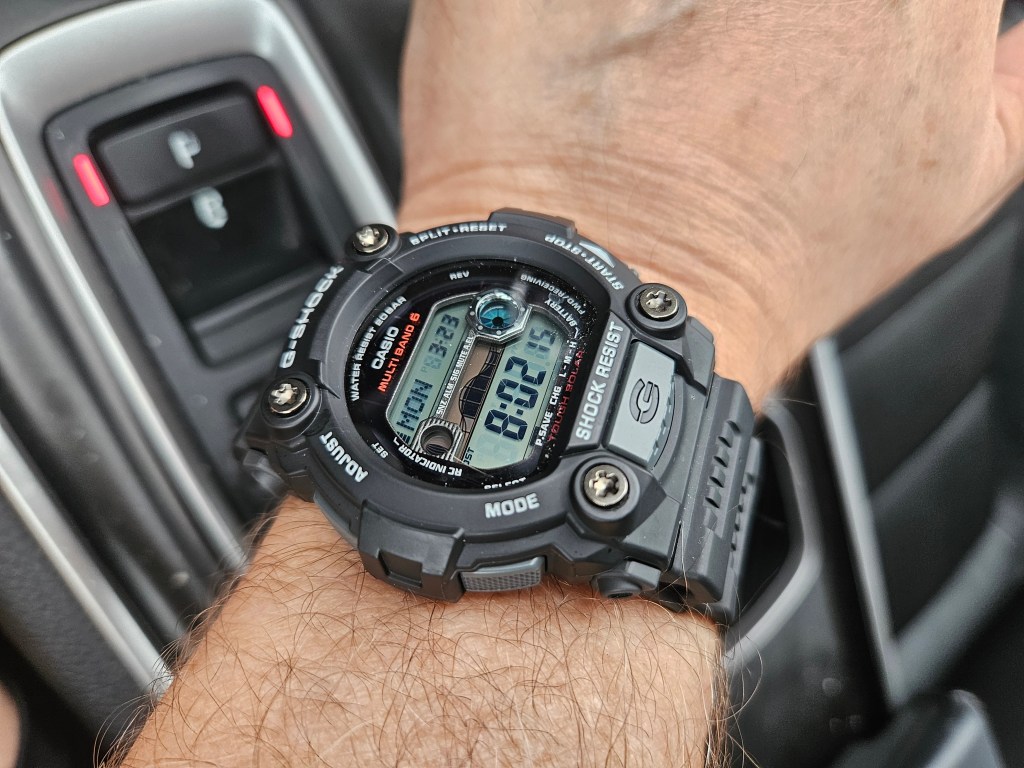
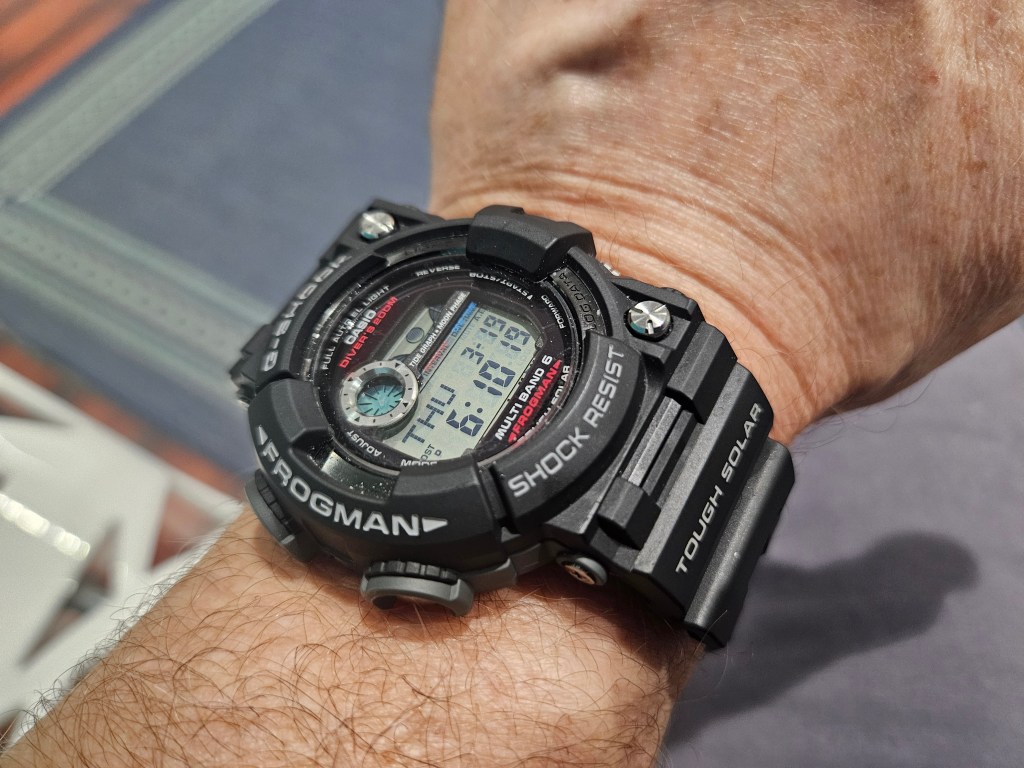
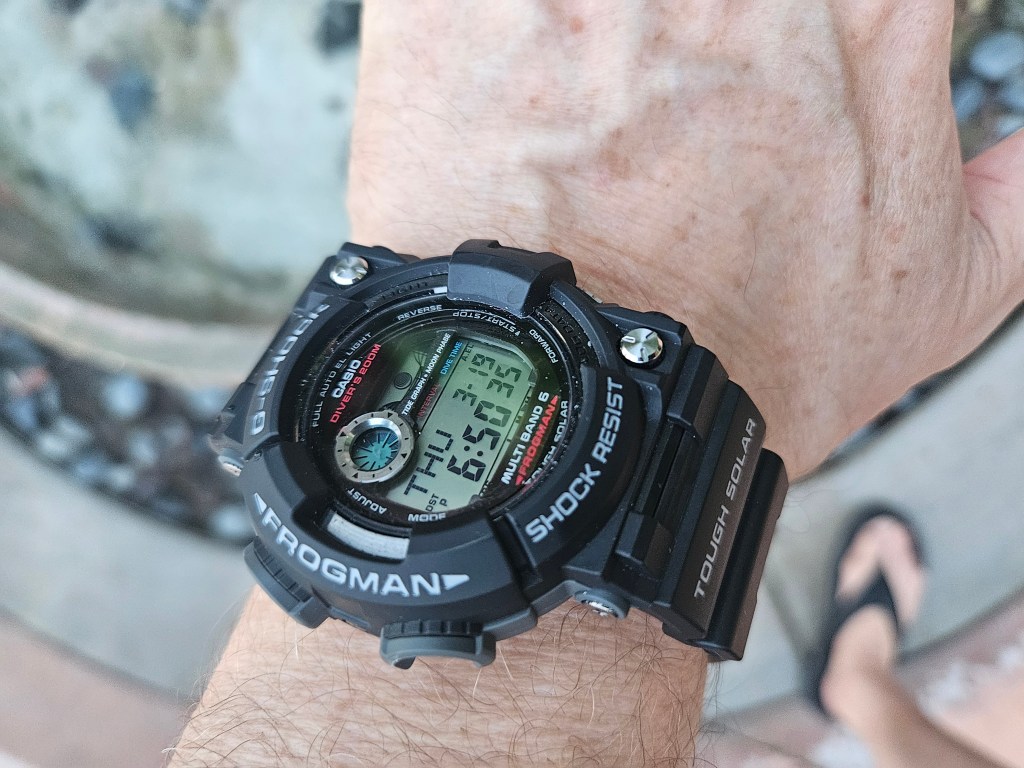
    I used to tell people I didn’t like the G-Shock Frogman GWF-1000.

    It’s oversized. It’s digital. It looks like something the wardrobe department would strap onto a second-tier superhero—Aquaman’s anxious cousin, assigned to guard the aquarium gift shop. On a 64-year-old man, it doesn’t whisper confidence. It screams midlife distress—the horological equivalent of jet-black hair dye and a motorcycle you’re afraid to start.

    And yet, for the past six months, it hasn’t left my wrist.

    My mechanical divers—polished steel, sapphire crystals, analog dignity—sit untouched, lined up in their box like former lovers trying to understand what went wrong.

    “How could you do this to us?” they seem to ask.

    “You are dead to me,” I reply.

    At this point, the relationship between my wrist and the Frogman is no longer metaphorical. It is psychological. Possibly spiritual. There may be paperwork involved.

    Let me be clear: this attachment is not based on taste. On a man my age, the Frogman doesn’t look stylish. It looks like evidence being quietly assembled by concerned family members.

    But it is not coming off.

    Because something happened.

    Not gradually. Not subtly.

    Change.

    When I started wearing the Frogman, I felt different—sharper, more contained, more adult. My appetite shrank. My focus tightened. I developed the kind of self-control normally associated with retired Marines and monks who eat lentils without complaint.

    Three meals a day. No snacks. No “kitchen reconnaissance missions.”

    Then something even stranger happened.

    My wife and daughters didn’t say a word, but their behavior shifted. The eye-rolling stopped. The subtle household demotion—from “head of family” to “eccentric roommate”—quietly reversed.

    Somehow, I had acquired gravity.

    I was no longer the suburban performance artist of half-finished plans and questionable purchases. I had become a man whose decisions suggested forethought rather than impulse.

    A man who appeared, alarmingly, to be in charge.

    But the real change was this:

    My nightmares stopped.

    Not reduced. Not improved.

    Stopped.

    For decades I lived with them—night after night, a private theater of dread that never closed. Then the Frogman arrived, and the nightmares scattered into darkness like silverfish when the lights come on.

    Now my dreams are peaceful. I run through fields of berries. In the voice of John Lennon, I sing, “I am the Frogman.”

    Explain that.

    A resin watch—battery, rubber strap, digital display—accomplished what therapy, discipline, and time could not.

    Part of me wants to leave the miracle alone. When something rescues you from overeating, ridicule, and nocturnal terror, you don’t interrogate it. You say thank you and keep your mouth shut.

    If it isn’t broken, don’t fix it.
    If you don’t understand the blessing, don’t analyze it.

    Unfortunately, I am a curious man.

    I want mechanisms. Theories. Experts. I want to understand how a mass-produced object rewired my habits, my household_toggle status, and my sleep cycle.

    That investigation is the project ahead—the study of what I can only call the Frogman Elixir Effect: a transformation so complete that the man who bought the watch no longer quite exists.

    I am no longer the wearer.

    I am the Frogman.

    Before we go further, I should correct something.

    Earlier, I said I thought the Frogman was ugly.

    That was a lie.

    Why I lied is a matter for future therapy—some mixture of denial, self-protection, and the fear of becoming the man who falls in love with industrial resin.

    The truth is this:

    The moment I saw it, I loved it.

    Not liked. Loved.

    It was, and remains, the most beautiful thing I have ever seen.

    Now that the truth is out, we can proceed honestly.

    At work, my colleague Dave noticed the change. One afternoon he suggested I attend a support group in the basement of a nearby church—men, he said, who believed they had also become Frogmen.

    Out of curiosity, I went.

    There were two dozen of us. Same age. Same watch.

    When the meeting began, we introduced ourselves the only way that felt accurate:

    “I am the Frogman.”

    Our counselor, Terry, immediately informed us that this was impossible. Only one of us could be the Frogman.

    Complicating matters, Terry was wearing the same model. There were rumors he believed he was the authentic Frogman and was using the group to establish theological authority. None of us trusted him.

    Still, we met every Wednesday.

    And something was undeniable.

    We had all changed.

    Better habits. Better focus. Better discipline. The same quiet upgrade in self-command. It was like taking creatine for the psyche. A testosterone booster for decision-making. Samson’s weapon—though one member insisted Samson actually used a donkey’s jawbone and demonstrated this point by raising his Frogman like a sacred artifact.

    The group is going well.

    Because the journey is no longer about wearing a watch.

    It is about fusion.

    What Terry eventually helped us name was Horological Identity Fusion—the state in which the boundary between wearer and object dissolves. The watch is no longer an accessory. It is a psychological extension. Removing it would feel less like changing gear and more like abandoning a role.

    Or losing a limb.

    And once that fusion occurs, something strange happens.

    You don’t wear the tool.

    You become the person the tool assumes you are.

  • The Frogman Conversion: When a Mechanical Loyalist Defects

    The Frogman Conversion: When a Mechanical Loyalist Defects

    Over the last twenty years of my watch madness, I have pilgrimaged to the Land of Mechanical Divers and have felt comfortable there. I have friends in the community who live in a distant tribe, the Land of G-Shock Precision. I respect them, I hear their calls from the distance–a prairie, a tundra, a rocky coast. I even sometimes run into them at Costco. I consider them honorable friends of mine, these G-Shock wearers, but I have always seen myself of someone who comes from another tribe. I did try to venture into their territory from time to time, purchasing handsome $100 G-Shocks, but I never bonded with them, and I ended up giving them away as gifts, and felt relieved afterwards. 

    This isn’t to say I am immune from the allure of G-Shock. There is one in particular that has smitten me for well over ten years. It is the Frogman GWF-1000. Unlike my mechanical divers, this is no analog beast. It is digital atomic. I have always been drawn to its professional tool look, its massive wrist presence, its lineage to the Seiko Arnie, and its bold asymmetry.

    So I told myself I would get one G-Shock to the fold. It would be more of a gimmick piece, an adornment for cosplay, a sort of joke. But I was wrong. Very wrong. As soon as I put it on my wrist, it felt it had melded to my skin, and it was part of me. The words “Tough Solar” seemed like a beckoning call of reassurance. 

    But what really killed me was the unexpected. I always have had a philosophic contempt for digital time, equating it with soulless phones and smartwatches. Digital time was a betrayal of my analog retro diver vibe. Or so I thought. As I looked down at my Frogman’s digital atomic readout, I found myself loving the legibility and accuracy more than my analog divers. 

    Take the classic cars from my youth. Those late-60 models of Mustang and Barracuda. Yes, they are lookers. But they don’t drive well compared to today’s cars. They squeak, they bounce, they have subpar climate control. Get into a new car and you can’t compare the technology and the comfort to vintage cars of old. Wearing my Frogman, I felt I had exited a creaky vintage car and was now gliding inside a technical marvel.

    I hate to admit this, but I now resent squinting my eyes at analog watches. I hate even more wondering why it is acceptable that a watch that costs thousands of dollars is less accurate than my atomic Frogman. 

    I don’t know what is happening to me. I don’t know where my mind will be in six months. All I know is this Frogman and its comforting atomic digital readout is not leaving my wrist.

    Friends of the watch community, hear me: You may be witnessing a Tribal Migration Event: the moment a collector crosses a long-standing identity boundary—mechanical to quartz, analog to digital, diver to tool watch—and discovers unexpected belonging. What begins as a temporary visit or novelty purchase becomes a relocation of allegiance. The emotional shock comes not from the new watch itself but from the realization that one’s horological identity was less fixed than previously believed.

  • The Year of No Watches: When a Channel Chooses Integrity Over the Algorithm

    The Year of No Watches: When a Channel Chooses Integrity Over the Algorithm

    You are a YouTuber whose world runs on watches. You talk about them, film them, arrange them under flattering light, and dream about the next one before the current one has even settled on your wrist. New arrivals are the oxygen of the channel. Unboxings pay the bills. Acquisition is the content engine.

    And that’s exactly the problem.

    At some point, you realize that if you want to stay honest—with yourself and with your viewers—you need to stop buying watches for a year.

    Not slow down.
    Not “be more selective.”
    Stop.

    What you need is the horological equivalent of a metabolic reset. A fast. A purge. A period of spiritual autophagy in which the toxins of hype, comparison, and compulsive novelty are allowed to clear out of your system. You know the risks. The algorithm prefers excitement. Viewers love new toys. Sponsors like movement. A quiet year may cost you clicks, growth, and easy revenue.

    But integrity rarely trends.

    So you adopt the discipline of Kafka’s Hunger Artist and deny yourself the very thing your audience expects you to crave. In this world, the practice has a name: Horological Autophagy—a deliberate refusal to acquire, designed to cleanse the mind of consumption reflexes and restore the ability to judge watches without the intoxicating influence of “the next one.”

    This is more than restraint. It is a public commitment: a Watch Hiatus. A creator’s declaration that credibility matters more than novelty, that thought will replace acquisition, and that authenticity will carry the channel even if the metrics wobble. During this period, the content shifts. Fewer arrivals. More reflection. Less stimulation. More judgment. The organizing principle is no longer “What’s new?” but “What actually matters?”

    To outsiders, the move may look like deprivation. It isn’t. It’s rehabilitation. Constant buying dulls appreciation the way constant noise dulls hearing. Remove the flow of new watches, and something unexpected returns: patience, clarity, and the ability to enjoy what you already own without immediately wondering what should replace it.

    The point of the fast is not suffering. The point is recovery.

    And the deeper shift is this: the channel stops serving the appetite and starts serving the audience. Traffic, sponsorship leverage, and the small intoxication of self-importance move to the background. The mission changes from feeding desire to strengthening judgment.

    Because the strongest signal a creator can send is not enthusiasm.

    It’s restraint.

    So go forward without the safety net of new purchases. Let the numbers fluctuate. Let the algorithm frown. Choose substance over spectacle, discipline over dopamine.

    The year without buying isn’t a retreat from the hobby.

    It’s the moment you finally take control of it.

  • Groundhog Day on the Wrist: Designing a Real Way Out

    Groundhog Day on the Wrist: Designing a Real Way Out

    Every watch enthusiast eventually reaches a quiet, uncomfortable realization: nothing is wrong, yet nothing is better. The buying continues. The selling continues. The research tabs multiply like bacteria. Straps change, configurations evolve, tracking numbers arrive, boxes open—and satisfaction remains stubbornly flat. This is Wheel-Spin Awareness: the moment you see that activity has replaced progress. The hobby is moving. You are not.

    When the experience starts to feel like Groundhog Day, planning an exit isn’t defeat. It’s clarity. But exits are not impulsive gestures. Nobody tunnels out of Shawshank on a whim. Real exits are engineered. They require structure, foresight, and the uncomfortable acceptance that enthusiasm alone will not save you.

    Some collectors attempt the most seductive mistake of all: the Exit Watch Strategy. The logic sounds reasonable—one last piece, something definitive, something magnificent. An eight-thousand-dollar Omega Planet Ocean, perhaps. The final watch. The forever watch. In reality, the high-status purchase rarely closes the appetite. It recalibrates it. The baseline moves upward. The supposed finale becomes a new beginning, only now the hobby operates at a more expensive altitude. Acquisition does not end the cycle; it refinances it.

    Exits are built through subtraction, not upgrade. Selling a watch. Giving one away. Reducing the collection below your comfort level. These moves feel severe, but severity creates momentum—the way a dieter’s first decisive cut breaks the inertia of overeating. You cannot drift out of a cycle. You have to step out.

    Expect resistance. Fellow travelers will tell you you’re quitting too soon. That you’re in your prime. That there’s more to discover, more references, more history, more brands. But this decision isn’t about age, money, or exhaustion. It’s about happiness.

    Seven months ago, I had it. Seven Seiko divers. Divecore straps. A simple rotation. No friction. No noise. Then came the fatal impulse—the collector’s original sin: If it’s good, improve it. I mixed the formula. Added variety. Chased upgrades. Introduced “pizzazz.” The result was not improvement but agitation. Anxiety replaced ease. Purchases were followed by regret, then resale, then the familiar churn. Motion returned. Meaning disappeared. The wheel spun again.

    That experience clarified something uncomfortable: an exit is not a preference. It’s an adherence problem. A real exit requires abstinence.

    And once you see that, the issue stops being about watches.

    The same impulse drives overeating. The same impulse feeds late-night scrolling, forum surfing, YouTube spirals, and the endless sugar rush of hype and comparison. The excess is external, but the clutter is internal. What looks like a hobby problem is often a bandwidth problem.

    What I want now is lean across the board:
    a lean collection,
    a lean body,
    a lean mind.

    Less gear. Less noise. Less social-media static masquerading as information. Less FOMO posing as enthusiasm. All of it functions like empty calories—brief stimulation followed by agitation and fatigue.

    Which is why the goal isn’t simply to quit buying watches. The real objective is an Integrated Exit Strategy: a deliberate reduction of excess across domains—possessions, intake, media exposure, cognitive clutter. The watch exit becomes part of a broader recalibration. Not deprivation, but stabilization.

    Less consumption.
    Less distraction.
    More control.
    More quiet.

    Because the true opposite of obsession isn’t indifference.

    It’s internal steadiness.

  • From Bicep Envy to Rolex Envy

    From Bicep Envy to Rolex Envy

    As a teenage bodybuilder, you suffered from classic body dysmorphia—the iron game’s most reliable side effect. Your arms measured a thick, hard-earned 19 inches. Impressive by any sane standard. But Arnold’s were 23. He owned the Rolex of physiques: cathedral pecs, mountain biceps, mythological proportion. You, by comparison, felt like you were wearing a plastic Timex.

    You could bench 400 pounds. Across the gym, a human forklift was casually repping 500 to warm up his joints. He was the champion. You were the fraud. The mirror didn’t show muscle; it showed deficiency. Reality had no vote. Comparison ran the court.

    Years later, the iron left your life, but the disease simply changed wardrobes.

    Now you collect watches. You watch Bosch. Titus Welliver stalks through Los Angeles wearing a Rolex Submariner like a badge of existential authority. Lance Reddick appears in the same universe, his TAG Heuer sitting on his wrist with the quiet confidence of a man who signs warrants and ends conversations.

    It isn’t the watches that get to you. It’s the gravity. The presence. The sense that the watch is merely the visible edge of a life lived at full command.

    Then you look down.

    Your Citizen Eco-Drive stares back—accurate, reliable, environmentally responsible. The watch of a reasonable man. The watch of an overweight suburbanite who owns a good coffee maker and worries about cholesterol. For a brief moment, you consider curling into the fetal position and asking the universe for a refund.

    The condition has a name: Watch Dysmorphia.

    Watch Dysmorphia is a status-perception disorder in which satisfaction with one’s watch—and by extension, one’s life—collapses under the pressure of upward comparison. The object on the wrist may be handsome, capable, even excellent. None of that matters. Against the symbolic weight of a Rolex on a television detective or the effortless confidence of a higher-status wearer, adequacy feels like failure.

    Like its muscular ancestor, the disorder ignores objective reality. A solid Citizen becomes a narrative of smallness. A respectable collection becomes evidence of mediocrity. The luxury watch is no longer a tool for telling time; it becomes a portable mythology of power, competence, and gravitas. When you look at your own wrist, you aren’t checking the hour—you’re reading a verdict.

    The result is predictable: dissatisfaction, restless upgrading, momentary relief, then renewed deficiency. Not because the watch is lacking, but because comparison has quietly rewritten the terms of enough.

    To live with Watch Dysmorphia is to learn a hard law of modern life:

    Comparison is the mother of misery.

  • Waiting for the Next Drop: The Life of the Permanent Preorder

    Waiting for the Next Drop: The Life of the Permanent Preorder

    A man in his seventies from Europe posts auto-dubbed videos about G-Shocks with the intensity of a street prophet announcing the end times. His eyes bulge with evangelical urgency. He does not merely review watches; he radiates them. In one recent video, he leaned toward the camera and said, with grave reassurance, “I know you can’t wait for this year’s G-Shocks to become available, but until they are, I will help you pass the time with a sneak preview.”

    Pass the time.

    The phrase landed like a diagnosis. There we were—a global congregation of grown adults—looking for ways to anesthetize the hours until the next release. Life, for the watch addict, begins to resemble a holding pattern: existence reduced to the long, airless interval between one novelty hit and the next. The unboxing is the event. Everything else is the waiting room.

    This is Interval Dependency Syndrome: the condition in which a collector’s emotional life organizes itself around the gaps between launches. Ordinary days feel hollow, like static between radio stations. Meaning returns only when a preorder opens, a shipment clears customs, or a tracking number shows movement. Time is no longer inhabited. It is endured—stretched thin and restless—until the next dopamine delivery arrives.

    What unsettled me most was not the message but the messenger. A man in his seventies, serving as the Pied Piper of perpetual anticipation, guiding younger collectors deeper into a life structured around the next release window. There is something quietly alarming about old age spent in permanent prelaunch mode—experience accumulated, years spent, and still the horizon defined by sneak previews.

    At some point the question becomes unavoidable: if your life is organized around passing the time, when exactly do you plan to live it?

  • Leaving Action Park: The Day Your Watch Obsession Loses Its Voltage

    Leaving Action Park: The Day Your Watch Obsession Loses Its Voltage

    In the 1980s, some of my New Jersey friends spent their summers at a place that now sounds less like a water park and more like a liability experiment: Action Park. After watching the documentary Class Action Park, I was reminded that this was no ordinary recreational facility. It was a carnival of abrasions, concussions, electrocutions, and broken bones—a gauntlet designed by people who apparently believed safety was a form of weakness. And yet, for the locals, surviving Action Park wasn’t a warning; it was a credential. If you came out scraped, bruised, and still standing, you belonged. You were tough. You were one of them. When a former employee explained the park’s eventual collapse, his answer was simple and almost philosophical: like everything else, it just took its course.

    Watch obsession operates the same way. When you’re deep inside it, the madness feels permanent. The research, the tracking, the buying, the selling, the late-night forum autopsies—it grips you with the conviction that this is who you are now. But no obsession sustains peak intensity forever. Eventually the voltage drops. The chase slows. The emotional temperature falls. And when it does, you enter what might be called a Tribal Burnout Exit—the quiet unwinding of an identity built around a shared fixation. The relief is immediate: less pressure, less noise, less compulsion. But the sadness follows close behind. You don’t just lose the obsession; you lose the tribe, the language, the rituals, the daily structure that gave shape to your time.

    This is the strange aftertaste of recovery. You escape the psychological Action Park—but you also miss the ride. The hobby that once exhausted you also organized your days and connected you to people who spoke your dialect of madness. Without it, the calendar can feel oddly spacious, even exposed.

    That’s why the end of watch madness shouldn’t be treated as a victory lap but as a transition plan. Obsessions always have a shelf life, whether you admit it or not. When this one burns out—and it will—you’ll need something sturdier, quieter, and healthier to take its place. Otherwise, the mind, uncomfortable with empty space, will simply go looking for the next amusement park.

  • The Taco Bell Effect: How Fast Food and Watches Keep You Hungry

    The Taco Bell Effect: How Fast Food and Watches Keep You Hungry

    My daughters wanted Taco Bell for dinner. I could have abstained, assembled a respectable salad, and preserved my nutritional dignity. Instead, I chose the chicken soft tacos—modest, reasonable, practically virtuous by fast-food standards. And Taco Bell, as always, performed its engineered magic. Somewhere in Irvine, a laboratory of flavor chemists continues its quiet mission: maximize salt, fat, texture, and novelty until the brain lights up like a slot machine. The tacos tasted fantastic. Dopamine rang the bell. I walked away feeling disciplined, even proud—two tacos and a side of sliced bell peppers. Look at me, a responsible adult navigating fast food with restraint.

    Then, about an hour later, the bill came due.

    My appetite didn’t return politely. It kicked the door in. Hunger surged with a strange urgency, as if the meal had not fed me but awakened something restless and unfinished. I ate an apple. Still hungry. I opened a bag of Trader Joe’s Organic Elote Corn Chip Dippers. Still hungry. I cut a thick slice of sourdough and buried it under peanut butter. The sensation wasn’t indulgence—it was pursuit, as though my metabolism were trying to collect a debt the tacos had promised but never paid.

    I was still hungry when I finally surrendered—not to satiety, but to sleep, the only reliable way to close the kitchen.

    Clearly, I had suffered from the Taco Bell Effect: the paradoxical state in which a highly engineered, intensely satisfying experience delivers maximum sensory pleasure and minimum lasting fulfillment, triggering a rebound surge of appetite shortly after consumption. Designed for flavor density, salt, fat, and rapid dopamine, the meal convinces you—briefly—that you’ve eaten well and even responsibly. Then, an hour later, your metabolism files a formal protest. Hunger returns louder than before, prowling the kitchen like a debt collector. The Taco Bell Effect isn’t overeating; it’s under-satiation disguised as satisfaction—a culinary confidence trick in which the experience feels indulgent, the calories look reasonable, and the aftermath sends you negotiating with apples, chips, and peanut butter while wondering how two tacos opened a hunger portal instead of closing one.

    The Taco Bell Effect and the compulsive watch purchase run on the same psychological circuitry: both deliver stimulation without closure. Taco Bell gives you flavor, salt, fat, and novelty, but not satiety; the experience excites the appetite rather than resolving it. A compulsive watch purchase works the same way. You get the hit—research, tracking, unboxing, wrist shots, forum validation—but the emotional hunger remains untouched. Instead of quieting desire, the purchase sharpens it. Within days, you’re browsing again, comparing again, chasing the next micro-difference the way a fast-food meal sends you back to the pantry. In both cases, the problem isn’t excess; it’s insufficient psychological fullness.

    The illusion that traps people is the calorie logic of the hobby: “It’s only one watch,” just as “It’s only two tacos.” But the real metric isn’t the size of the purchase—it’s the behavior that follows. A healthy acquisition produces satiety: you stop looking, you forget the market, you wear the piece without agitation. A Taco Bell watch, by contrast, is engineered for stimulation—limited editions, countdown drops, spec debates, influencer hype. It tastes intense but digests poorly. The result is the horological equivalent of metabolic whiplash: the dopamine spike fades, and the mind, still unsatisfied, starts hunting again.

  • When Wrist Presence Dies and Play Takes Over

    When Wrist Presence Dies and Play Takes Over

    In my early forties, I was intoxicated by wrist presence. I wanted watches so large they could signal low-flying aircraft. The bigger the case, the smaller my sense of self. These weren’t timepieces; they were emergency beacons for a man negotiating a quiet identity crisis. I wasn’t checking the time. I was broadcasting relevance.

    My vanity, however, was narrowly focused. I didn’t need a luxury car or a curated wardrobe. A sensible Honda Accord, a pair of jeans, a T-shirt, and a reasonably functional body were enough. The watch did the heavy lifting. It carried the narrative, the authority, the illusion of significance. For twenty years, this arrangement felt efficient: a minimalist life wrapped around a maximalist ego.

    Then, sometime in my sixty-third year, the chemistry changed. The thrill soured. The signature piece that once delivered a dopamine surge now felt like an old campaign slogan from a war already lost. I had entered what can only be called Vanity Burnout—the moment when the performance loop collapses and status objects lose their voltage. The competitive theater of self-presentation gives way to something quieter, less theatrical, and far more honest.

    I still love my divers. But the relationship has changed. They no longer feel like conquests. They feel like companions. The manic gleam is gone, and no amount of Instagram flexing or YouTube rumination will bring it back. The truth is blunt: every ticking second is a small reminder that the clock is not decorative. Time—the final minimalist—has stripped away the illusion of permanence and replaced it with perspective.

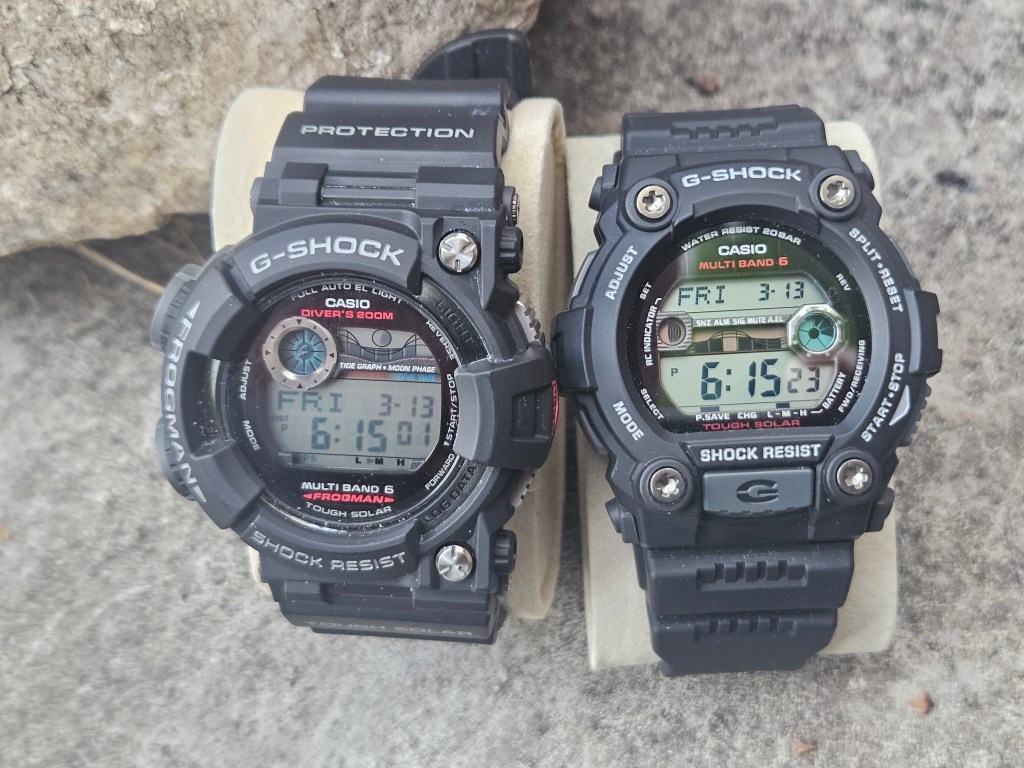
    And yet, in about a week, a G-Shock Frogman will arrive from Japan.

    It is enormous. It is loud. It borders on cosplay. By any rational standard, it contradicts everything I’ve just said.

    But this is not a relapse into status anxiety. Something else is happening. When the need to impress dissolves, the wrist becomes a private stage. The watch is no longer a signal to the world; it’s a toy for the soul. Certain territories remain protected—ritual, hobby, the small theater of personal delight.

    The vanity has burned off.

    The play instinct has not.

    And when I strap on that absurd, tactical Frogman, I won’t be announcing anything to anyone.

    I’ll just be smiling.

  • Beware of the Appetizer Watch

    Beware of the Appetizer Watch

    A week ago, you ordered a G-Shock Frogman from Sakura Watches in Japan. Five hundred dollars of stainless steel caseback confidence and amphibious authority. It hasn’t shipped. It hasn’t moved. It may not even be awake yet. And already you’re pacing like a father in a maternity ward.

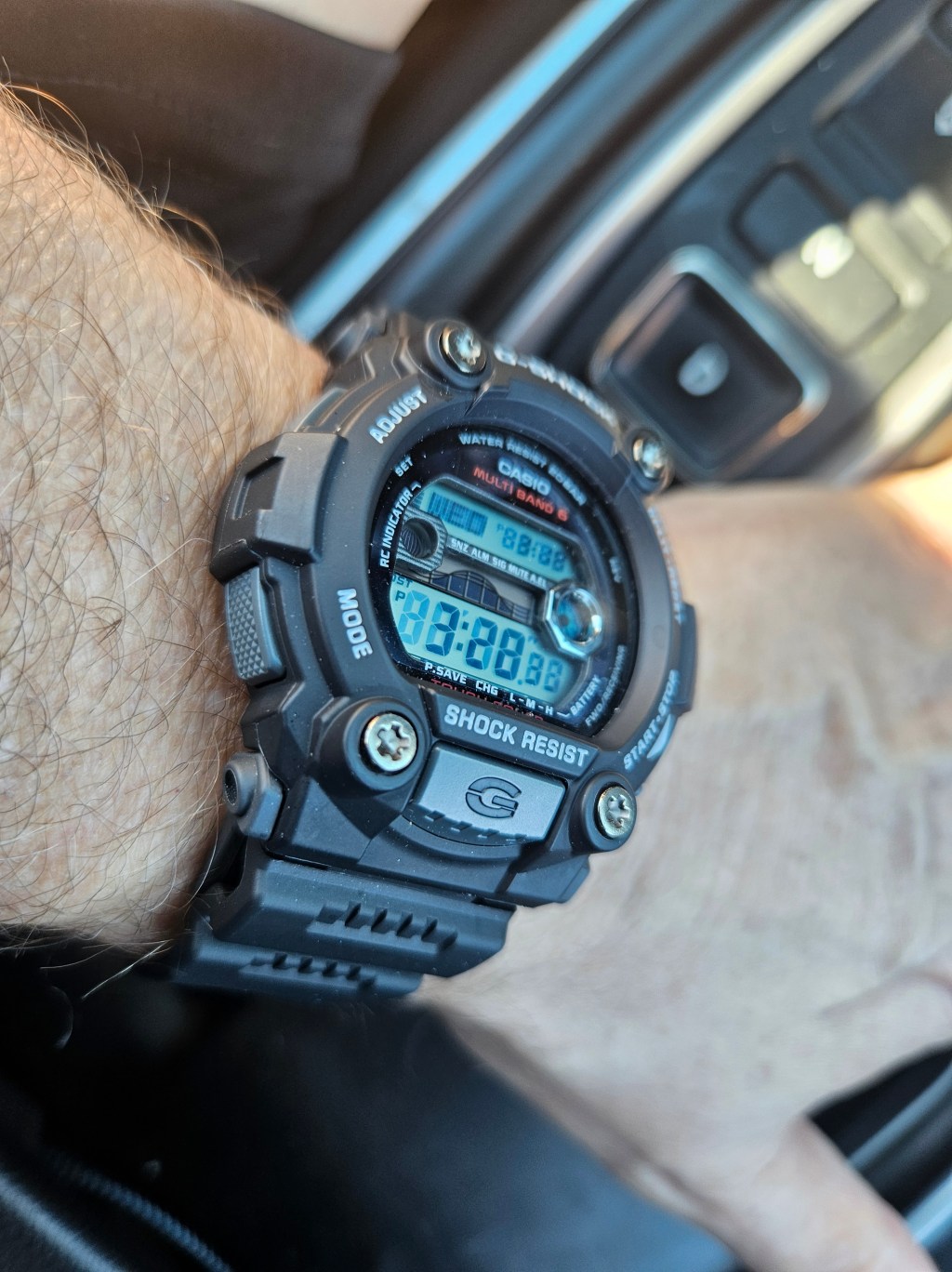
    This is when the mind proposes a solution—reasonable, economical, almost virtuous. Why not a small interim purchase? Something modest. Something practical. Enter the Rangeman. Two hundred dollars. Which, compared to five hundred, is practically free. In fact, you’d be irresponsible not to buy it. You need something to wear. Something to distract you. Something to manage the emotional volatility of waiting.

    You have now encountered the Appetizer Watch: the elegant fiction that a secondary purchase is a financial non-event simply because a larger purchase already exists. The math is creative, the tone is prudent, and the outcome is predictable. Compulsion, dressed in the language of thrift.

    But then a harsher voice cuts through the negotiation. If you need a consolation prize while you wait, you are not a collector. You are a child in a checkout line demanding gum. You don’t want to greet your Frogman as a man who held the line. You want the hero’s entrance, not the emotional equivalent of, “I couldn’t wait, so I bought a snack.”

    Because you understand something deeper: if you numb the waiting, you weaken the arrival. This is the Anticipation Dilution Effect—the emotional law of acquisition. The longer the buildup, the sharper the impact. Buy a Rangeman now, and the Frogman lands with a shrug instead of a thunderclap. You didn’t wait for the moment. You softened it.

    So you wait. You refresh the shipping page. You rehearse the wrist shot in your mind. And somewhere inside, you see him—the impatient little creature banging a plastic spoon against the inside of your skull, demanding immediate gratification.

    Once you see that inner infant, you can’t unsee him. He lives there now. Not defeated. Not reformed. Just exposed—your permanent reminder that beneath the language of discipline and discernment sits a toddler with Wi-Fi and a credit card.