Category: Health and Fitness

  • When Your Hobby Becomes a Dungeon

    When Your Hobby Becomes a Dungeon

    Has it occurred to you that you’re spending too much time alone—and that the solitude isn’t helping your watch hobby but slowly poisoning it? That the long, quiet hours with your collection have pushed you past enjoyment and into analysis, past appreciation and into fixation, until proportion itself has quietly slipped out the back door?

    And has it occurred to you that the mental energy you pour into dial variations, strap pairings, and hypothetical upgrades might be better spent building something harder and far more valuable—an honest relationship with yourself, and real connection with the people who actually know your name?

    These questions force a difficult reexamination of the word hobby.

    A hobby is supposed to restore you. It should lower your blood pressure, widen your perspective, give you a small place in life where curiosity and pleasure coexist. But if you find yourself anxious, restless, endlessly tweaking, forever chasing a version of perfection that retreats the moment you approach it, then something has inverted.

    You don’t have a hobby.

    You have a dungeon.

    And the uncomfortable truth is this: no one locked you inside. You walked in voluntarily because the dungeon offers something seductive—control, predictability, measurable outcomes. Relationships are messy. Self-knowledge is uncomfortable. Family and friendship require vulnerability. Watches, by contrast, sit quietly while you measure them.

    So you remain underground, starving yourself of companionship and growth while laboring over configurations, rotating straps like a medieval scribe illuminating manuscripts no one will ever read. Your social life migrates to forums and comment sections, where you form parasocial alliances with other inmates who speak your language and share your captivity.

    What you’re experiencing has a name: the Horological Isolation Loop.

    It’s a self-reinforcing cycle. Too much solitude intensifies watch preoccupation. Increased preoccupation reduces engagement with real life. What begins as peaceful hobby time hardens into solitary rumination—comparison charts, resale calculations, endless scrolling, the low-grade anxiety of optimization. Gradually, the watch world doesn’t supplement your life.

    It replaces it.

    And here’s the quiet danger: you’re no longer choosing solitude for reflection. Solitude is choosing you.

    At that point, the path forward divides.

    You can maintain the status quo—another unboxing, another strap experiment, another night spent refining a system that never quite feels finished.

    Or you can design an exit strategy: fewer hours with the watches, more hours with people; less optimization, more living; less wrist analysis, more life experience.

    The watches will survive either way.

    The question is whether you will.
  • Chrono-orexia: When a Bracelet Feels Like Olive Oil

    Chrono-orexia: When a Bracelet Feels Like Olive Oil

    A few years ago, I heard a radio segment about Orthorexia nervosa, a condition defined by an obsessive devotion to dietary purity. A restaurant server called in with a story. She delivered a salad that was supposed to be dry—no dressing, no oil, no compromise. Somewhere between kitchen and table, a single drop of olive oil landed on a leaf. When the plate arrived, the customer broke down in tears. One glossy molecule of fat, and her world collapsed. Not her meal—her world.

    At the time, I listened with clinical curiosity. Today, I recognize the pathology. It simply changed mediums.

    My watch hobby drifted into a similar territory, a condition I now call Chrono-orexia.

    I wasn’t obsessed with watches in general. That would have been healthy. My fixation narrowed into a doctrine: vintage Seiko divers only, each mounted on a high-end strap. Bracelets were forbidden—horological olive oil. When the system was intact—seven Seiko divers, all properly strapped—I experienced something close to psychological equilibrium. Seven was not a number; it was a perimeter. Inside that perimeter, anxiety quieted. Outside it, chaos waited.

    Chrono-orexia is a purity disorder of the collector’s mind. The hobby stops being about enjoyment and becomes a moral system. Only certain brands. Only certain configurations. Only a sacred number. The watches themselves become secondary to the architecture of the rules. Satisfaction comes not from wearing them but from knowing the system is intact.

    Like Orthorexia, the condition is fragile. One deviation—a bracelet where straps are law, an eighth watch where seven is doctrine—and the nervous system lights up. The collector no longer curates objects; he protects a psychological boundary. At its extreme, Chrono-orexia turns a pleasure into a defensive ritual, governed by an internal commandment that confuses rigidity with control and purity with peace.

    Recently, my condition has been tested.

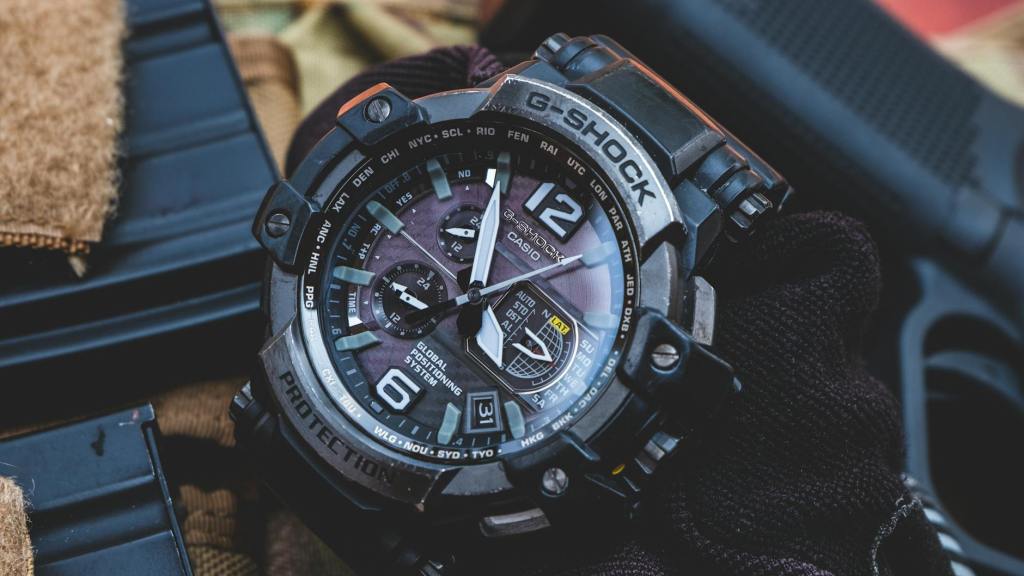
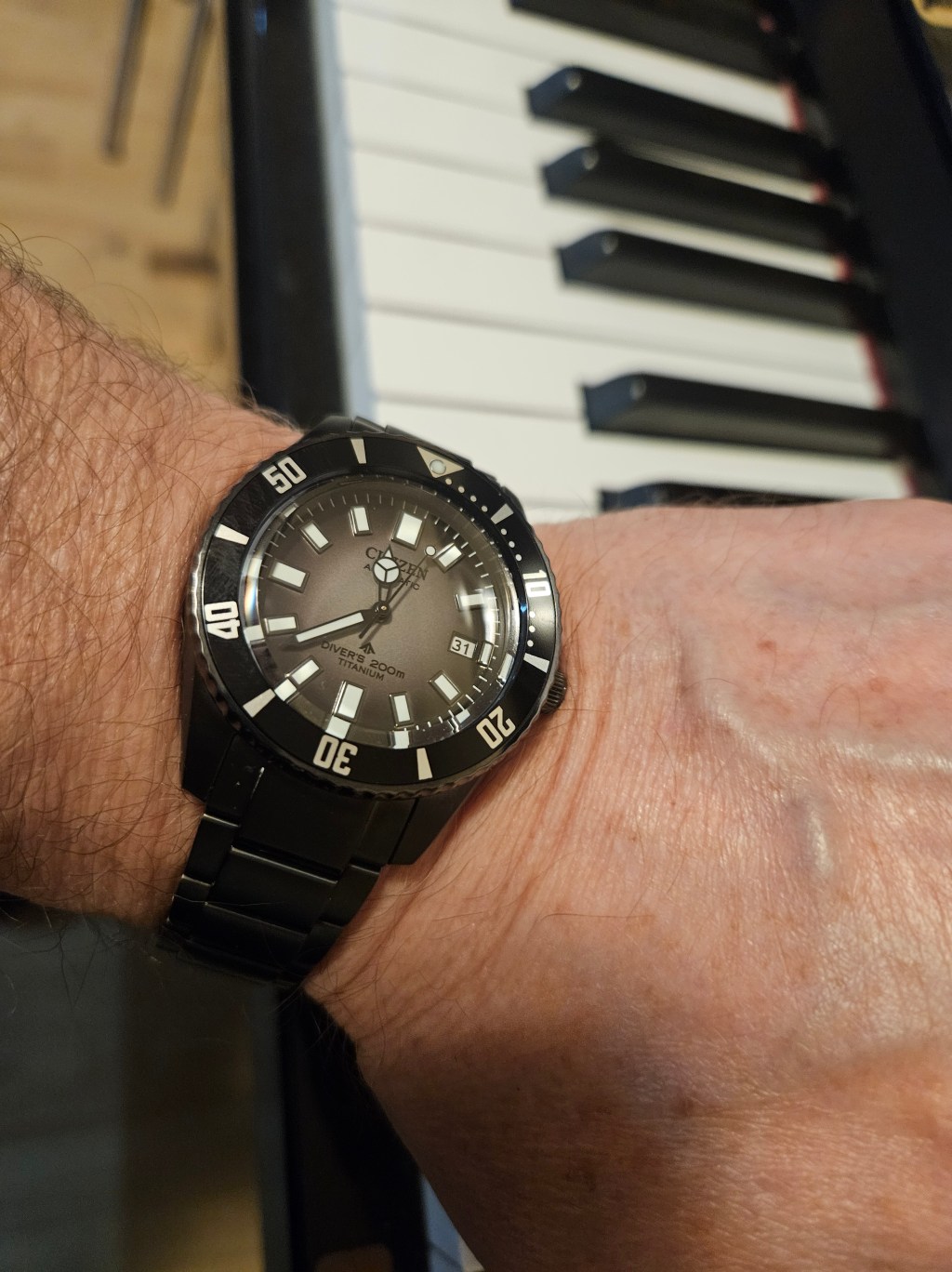
    I acquired two watches that break the covenant: a Citizen Super Titanium diver on a bracelet and a G-Shock Frogman. The Frogman at least respects the strap orthodoxy, but the Citizen arrives gleaming in stainless heresy. Worse, the additions push my collection beyond the sacred number of seven.

    The system is compromised in two ways: bracelet contamination and numerical excess.

    I haven’t collapsed into tears like the olive-oil diner, but I do find myself hovering at a psychological crossroads. Do I purge the Citizen and restore doctrinal purity? Or does obedience to the rule deepen the pathology? Would learning to tolerate imperfection loosen the grip of Chrono-orexia—or would it erode the very structure that keeps my collecting anxiety contained?

    There is a voice inside me that will not negotiate. It speaks in commandments, not suggestions:

    Thou shalt not have one drop of oil upon thy collection.

    I remain agnostic.

    Part of me believes the healthy response is flexibility—that a hobby should breathe, not suffocate under doctrine. Another part suspects the rules are not the illness but the treatment, the scaffolding holding back a larger chaos.

    Agnosticism, it turns out, is just a polite term for ongoing torment.

  • From Bicep Envy to Rolex Envy

    From Bicep Envy to Rolex Envy

    As a teenage bodybuilder, you suffered from classic body dysmorphia—the iron game’s most reliable side effect. Your arms measured a thick, hard-earned 19 inches. Impressive by any sane standard. But Arnold’s were 23. He owned the Rolex of physiques: cathedral pecs, mountain biceps, mythological proportion. You, by comparison, felt like you were wearing a plastic Timex.

    You could bench 400 pounds. Across the gym, a human forklift was casually repping 500 to warm up his joints. He was the champion. You were the fraud. The mirror didn’t show muscle; it showed deficiency. Reality had no vote. Comparison ran the court.

    Years later, the iron left your life, but the disease simply changed wardrobes.

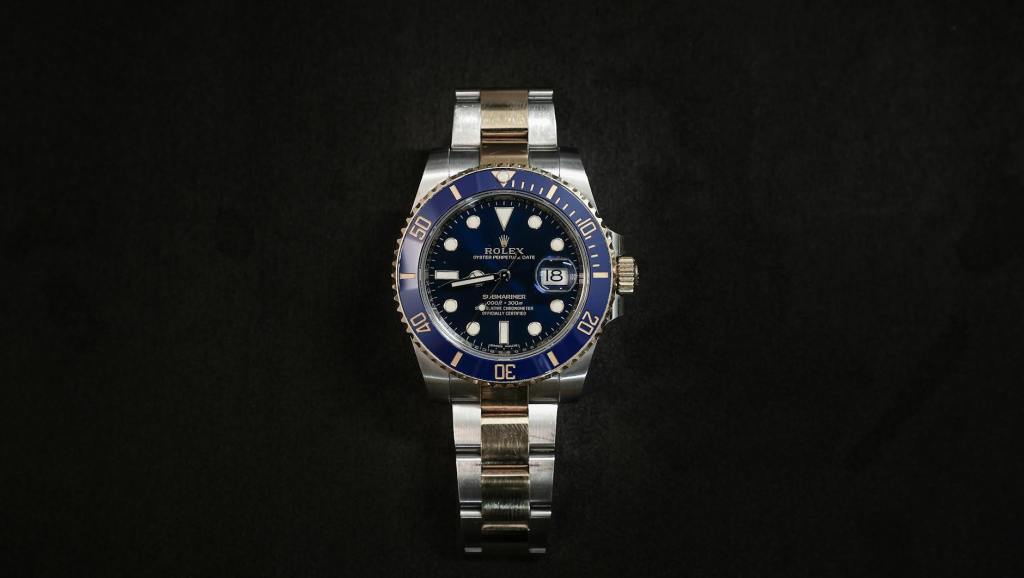
    Now you collect watches. You watch Bosch. Titus Welliver stalks through Los Angeles wearing a Rolex Submariner like a badge of existential authority. Lance Reddick appears in the same universe, his TAG Heuer sitting on his wrist with the quiet confidence of a man who signs warrants and ends conversations.

    It isn’t the watches that get to you. It’s the gravity. The presence. The sense that the watch is merely the visible edge of a life lived at full command.

    Then you look down.

    Your Citizen Eco-Drive stares back—accurate, reliable, environmentally responsible. The watch of a reasonable man. The watch of an overweight suburbanite who owns a good coffee maker and worries about cholesterol. For a brief moment, you consider curling into the fetal position and asking the universe for a refund.

    The condition has a name: Watch Dysmorphia.

    Watch Dysmorphia is a status-perception disorder in which satisfaction with one’s watch—and by extension, one’s life—collapses under the pressure of upward comparison. The object on the wrist may be handsome, capable, even excellent. None of that matters. Against the symbolic weight of a Rolex on a television detective or the effortless confidence of a higher-status wearer, adequacy feels like failure.

    Like its muscular ancestor, the disorder ignores objective reality. A solid Citizen becomes a narrative of smallness. A respectable collection becomes evidence of mediocrity. The luxury watch is no longer a tool for telling time; it becomes a portable mythology of power, competence, and gravitas. When you look at your own wrist, you aren’t checking the hour—you’re reading a verdict.

    The result is predictable: dissatisfaction, restless upgrading, momentary relief, then renewed deficiency. Not because the watch is lacking, but because comparison has quietly rewritten the terms of enough.

    To live with Watch Dysmorphia is to learn a hard law of modern life:

    Comparison is the mother of misery.

  • The Wrist That Ate the Workday

    The Wrist That Ate the Workday

    Working from home is supposed to be a privilege. Deliver the numbers, meet the deadlines, and you’re spared the slow death of freeway traffic and fluorescent lighting. Your company trusts you. Your productivity is tracked by a sleek little monitoring app that converts your workday into a tidy efficiency score.

    Unfortunately, your desk shares airspace with the enemy.

    The lacquered watch box sits there like a silent casino. You glance at the watch on your wrist. Nice. Solid choice. But what about the others? You lift the lid. A row of polished faces looks back at you—steel, lume, sapphire, promise. You’re supposed to be refining actuarial tables, tightening the language in your report, making sure the graphs don’t embarrass you in front of management.

    Instead, you swap.

    The new watch feels right. For three minutes.

    Then doubt creeps in. Maybe the diver was too heavy. Maybe the field watch better matches your “work-from-home professional” persona. Swap again. Back to the box. Another selection. Another micro-adjustment to your identity. Meanwhile, the cursor blinks on an unfinished paragraph, and your productivity score quietly bleeds out.

    You know the behavior is neurotic. You also know you’re waiting for a moment of revelation—for one watch to settle onto your wrist and announce, in a calm and authoritative voice, This is the one. The watches remain silent. So you keep rotating, chasing a verdict that never comes.

    What you have is Chrono-Proximity Compulsion.

    The disorder is simple: when your collection lives within eyesight, your brain enters a loop—check, compare, swap, repeat. Each decision feels minor, harmless, even rational. In aggregate, they shred your attention into chrome-plated confetti. The watches stop telling time and start interrupting it. Work hours dissolve into wrist experiments, each swap chasing a mythical state of alignment between object, mood, and self.

    The cure is drastic but effective.

    You remove the collection from the battlefield. Down to the basement it goes—sealed in a treasure trunk, out of sight, out of negotiation. No lineup. No options. No silent chorus asking to be chosen.

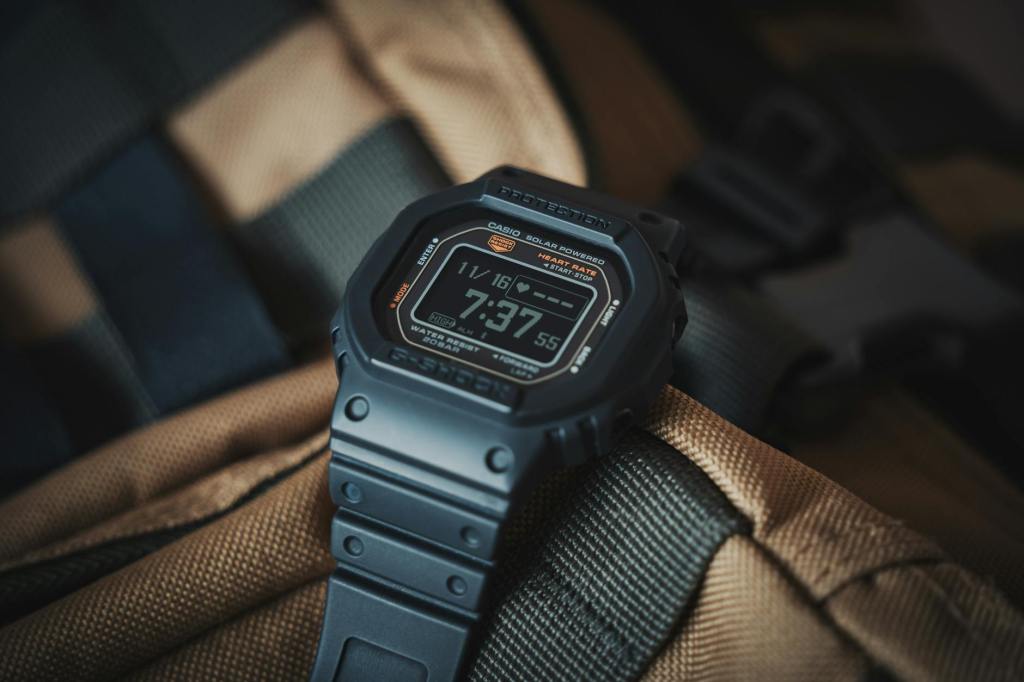
    On your wrist remains the G-Shock GW5000.

    It does not flatter you. It does not whisper about heritage, craftsmanship, or lifestyle. It does not ask to be admired or reconsidered. It delivers one message, blunt and unromantic: Get back to work.

    For the first time all day, the cursor moves.

    And the efficiency app finally has something to measure.

  • Six Months with a Torn Rotator Cuff and a Reality Check

    Six Months with a Torn Rotator Cuff and a Reality Check

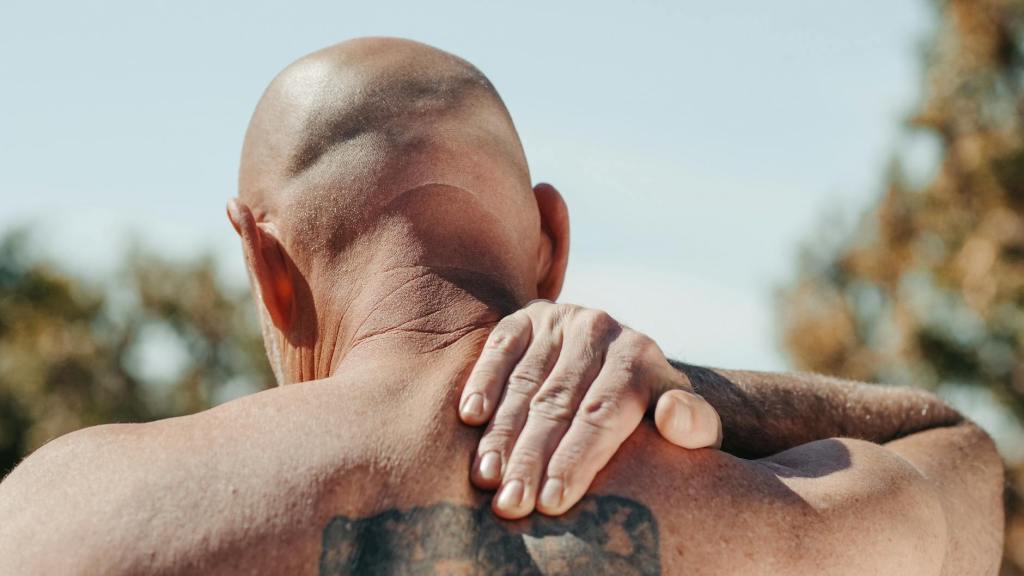
    Six months ago, I didn’t tear my left rotator cuff in a moment of heroism or catastrophe. There was no dramatic pop, no cinematic collapse. This was a slow, quiet betrayal—the accumulated result of too many kettlebell sessions, too much weight, and too few rest days. Overtraining doesn’t announce itself. It keeps a ledger. One day the bill comes due.

    The injury delivered more than pain. It delivered anxiety. Every movement carried a whisper of threat: one wrong reach, one careless angle, and the shoulder might unzip itself. I moved cautiously, slept poorly, and began a small, private relationship with fear. I visited the doctor, the physical therapist, and the ultrasound technician. I chose the conservative path—no MRI, no surgery—just the long road of rehab: light weights, resistance bands, patience.

    Subjectively, the progress is real. Mobility has improved. Pain has eased. I’d estimate I’m about 70 percent back. But the injury has one cruel habit: the 3 a.m. wake-up call of throbbing pain. Lying still is the enemy of a damaged shoulder. Arthritis settles in like a squatter. The strange irony is that movement helps. Blood flow is medicine. A light workout often feels better than rest, which violates every instinct you have when something hurts.

    The questions, however, remain. If full mobility returns in a few months, will the nighttime arthritis fade, or is this now part of the landscape? When I’m “healed,” does that mean I can return to moderate kettlebell presses, or is the future a permanent treaty with lighter loads and humility? Injury has a way of rewriting your contract with ambition.

    My current training schedule reflects that renegotiation: two kettlebell sessions, two power yoga sessions, and two rounds a week on the Schwinn Airdyne—the machine I’ve come to call the Misery Machine. Kettlebells and yoga feel like disciplined bliss. The Airdyne feels like punishment administered by a research facility with questionable ethics. I’m less a human being and more of a lab rat. I don’t exercise on it so much as survive it.

    If the bike is the physical grind, the real psychological battle is food. I know what to eat. I actually crave healthy food. My staples read like a nutritionist’s love letter: buckwheat groats, steel-cut oats, chia, hemp, pumpkin seeds, molasses, soy milk. High protein. High magnesium. Clean and intentional.

    The problem isn’t what I eat. It’s how much—and why. Food is how my family connects. A couple nights a week means takeout. Mendocino Farms sandwiches that arrive with the caloric density of a small planet. Bread, desserts, shared indulgence. These moments feel like love, and they also keep me about thirty pounds heavier than I’d like to be.

    There’s a hard truth here that no diet book can soften: you can’t pursue food like a hobby and expect to look like a fitness model. Appetite has consequences. Pleasure has a price. At some point you stop negotiating with reality, make your choices, accept the outcome, and move forward without the luxury of self-pity.

    The shoulder, at least, is improving. Slowly. Imperfectly. But better.

  • When Too Much Self-Awareness Kills the Hobby

    When Too Much Self-Awareness Kills the Hobby

    Your watch doomsday routine was entertaining at first. The addiction jokes, the madness metaphors, the psychological autopsies—it all had bite. But over time, the act hardened into a script. Same diagnosis, same grim prognosis, same weary punchline: the hobby is a pathology and you are its patient. What began as sharp self-awareness slowly turned into background noise. When every watch conversation ends in a cautionary tale, the insight stops sounding wise and starts sounding tired.

    Yes, the hobby has its absurdities. Grown men tracking bezel action like lab technicians. Endless forum debates about lume longevity and strap chemistry. The theater of acquisition, the drama of regret. It’s funny because it’s true. But truth has a shadow side: if you keep rehearsing the dysfunction, you begin to believe dysfunction is the whole story. And it isn’t. Watches are also craft, design, history, engineering, ritual, friendship, and—most dangerously of all—simple pleasure.

    Push the pessimism too far and you commit a quiet act of vandalism against your own life. Years of learning, refining your taste, and assembling a disciplined collection suddenly feel like evidence in a case against yourself. Instead of appreciation, you feel suspicion. Instead of satisfaction, you feel embarrassment. The hobby becomes a courtroom where enjoyment is treated as a character flaw.

    So ease off the throttle. Keep your critical edge—persnickety is part of the fun—but let some sunlight into the room. You don’t need to romanticize the hobby, but you don’t need to prosecute it either. Otherwise, you’ll fall into the Self-Sabotage Loop: the habit of undermining your own enjoyment by endlessly rehearsing the hobby’s worst traits—addiction, immaturity, manipulation—until pleasure itself feels irresponsible. That’s the trap. Too invested to quit. Too cynical to enjoy.

    The goal isn’t innocence. It’s balance. Own the flaws. Then wear the watch anyway.

  • Waiting for the Next Drop: The Life of the Permanent Preorder

    Waiting for the Next Drop: The Life of the Permanent Preorder

    A man in his seventies from Europe posts auto-dubbed videos about G-Shocks with the intensity of a street prophet announcing the end times. His eyes bulge with evangelical urgency. He does not merely review watches; he radiates them. In one recent video, he leaned toward the camera and said, with grave reassurance, “I know you can’t wait for this year’s G-Shocks to become available, but until they are, I will help you pass the time with a sneak preview.”

    Pass the time.

    The phrase landed like a diagnosis. There we were—a global congregation of grown adults—looking for ways to anesthetize the hours until the next release. Life, for the watch addict, begins to resemble a holding pattern: existence reduced to the long, airless interval between one novelty hit and the next. The unboxing is the event. Everything else is the waiting room.

    This is Interval Dependency Syndrome: the condition in which a collector’s emotional life organizes itself around the gaps between launches. Ordinary days feel hollow, like static between radio stations. Meaning returns only when a preorder opens, a shipment clears customs, or a tracking number shows movement. Time is no longer inhabited. It is endured—stretched thin and restless—until the next dopamine delivery arrives.

    What unsettled me most was not the message but the messenger. A man in his seventies, serving as the Pied Piper of perpetual anticipation, guiding younger collectors deeper into a life structured around the next release window. There is something quietly alarming about old age spent in permanent prelaunch mode—experience accumulated, years spent, and still the horizon defined by sneak previews.

    At some point the question becomes unavoidable: if your life is organized around passing the time, when exactly do you plan to live it?

  • From Wrist to World: The Long Climb Out of Gollumification

    From Wrist to World: The Long Climb Out of Gollumification

    At a certain depth, the watch obsessive stops merely owning watches and begins inhabiting them. He lives in beat rates and power reserves, dreams in lume, and speaks a dialect composed entirely of tolerances, metallurgy, and micro-adjustments. This language becomes his native tongue—and everyone else’s becomes a foreign one. Instead of translating himself back into ordinary conversation, he doubles down. Why speak about people, work, or weather when there are case coatings, anti-magnetism ratings, and the eternal question of 20mm versus 22mm?

    This is Gollumification: the slow psychological narrowing that occurs when a hobby expands to occupy the territory once reserved for identity, emotion, and social life. The enthusiast begins to interpret the world through horological logic. Reliability matters more than warmth. Precision outranks connection. Conversations become monologues disguised as education. Over time, the technical vocabulary hardens into a private dialect that excludes anyone not fluent in the faith.

    The social consequences arrive quietly. Friends feel the intensity and step back. Family members nod politely, then change the subject, then eventually stop asking. Their distance confirms the collector’s growing suspicion that the outside world lacks depth or appreciation. The loop closes: fewer people, more watches; more expertise, less range as a human being.

    Advanced Gollumification produces a curious asymmetry. The collection becomes refined, curated, museum-worthy. The collector becomes narrower, guarded, and faintly brittle—capable of explaining torque tolerances at length but uncomfortable with ordinary emotional exchange. He manages mechanisms with surgical care while neglecting the untidy maintenance of relationships.

    Some drift into this state gradually, the behavioral accretion so slow they don’t notice the cave forming around them. Others embrace it knowingly, wearing their social withdrawal like a badge of purity. If the world doesn’t understand watches, the problem must be the world.

    Rarely, something interrupts the descent. A spouse’s fatigue. A child’s indifference. The uneasy realization that the collection is thriving while the rest of life is running on reserve. This is the beginning of De-Gollumification.

    De-Gollumification is the difficult return from horological exile—the moment the collector recognizes that memorizing every movement specification is not the same as being present in his own life. The shift begins with a painful inventory: relationships neglected, conversations hijacked, attention diverted into stainless steel and sapphire. The enthusiast steps back from the private dialect of lume performance and lug geometry and relearns the language of ordinary human exchange.

    The watches remain, but their jurisdiction shrinks. Identity migrates back to where it belongs. The collector stops leading with the wrist and starts leading with attention. The transition is humbling and occasionally disorienting, like emerging from a quiet bunker into daylight.

    Successful De-Gollumification does not require selling the collection. It requires abandoning the bunker. The pieces stay. The spell breaks. There are fewer lectures and more listening, fewer unboxings and more presence. The whisper of my precious gives way to something healthier and far more difficult: our life.

  • Leaving Action Park: The Day Your Watch Obsession Loses Its Voltage

    Leaving Action Park: The Day Your Watch Obsession Loses Its Voltage

    In the 1980s, some of my New Jersey friends spent their summers at a place that now sounds less like a water park and more like a liability experiment: Action Park. After watching the documentary Class Action Park, I was reminded that this was no ordinary recreational facility. It was a carnival of abrasions, concussions, electrocutions, and broken bones—a gauntlet designed by people who apparently believed safety was a form of weakness. And yet, for the locals, surviving Action Park wasn’t a warning; it was a credential. If you came out scraped, bruised, and still standing, you belonged. You were tough. You were one of them. When a former employee explained the park’s eventual collapse, his answer was simple and almost philosophical: like everything else, it just took its course.

    Watch obsession operates the same way. When you’re deep inside it, the madness feels permanent. The research, the tracking, the buying, the selling, the late-night forum autopsies—it grips you with the conviction that this is who you are now. But no obsession sustains peak intensity forever. Eventually the voltage drops. The chase slows. The emotional temperature falls. And when it does, you enter what might be called a Tribal Burnout Exit—the quiet unwinding of an identity built around a shared fixation. The relief is immediate: less pressure, less noise, less compulsion. But the sadness follows close behind. You don’t just lose the obsession; you lose the tribe, the language, the rituals, the daily structure that gave shape to your time.

    This is the strange aftertaste of recovery. You escape the psychological Action Park—but you also miss the ride. The hobby that once exhausted you also organized your days and connected you to people who spoke your dialect of madness. Without it, the calendar can feel oddly spacious, even exposed.

    That’s why the end of watch madness shouldn’t be treated as a victory lap but as a transition plan. Obsessions always have a shelf life, whether you admit it or not. When this one burns out—and it will—you’ll need something sturdier, quieter, and healthier to take its place. Otherwise, the mind, uncomfortable with empty space, will simply go looking for the next amusement park.

  • Stop Writing About Your Obsession Before It Gets Worse

    Stop Writing About Your Obsession Before It Gets Worse

    You may be tempted to turn your watch obsession into literature. The idea has a certain romance. You picture yourself channeling Dostoevsky, producing a modern Diary of a Madman, transforming your horological unraveling into art—brave, raw, cathartic. You imagine clarity emerging from confession, insight distilled from chaos.

    But this is a dangerous illusion.

    Writing about your obsession does not drain it. It feeds it. The writer inside you is not a therapist; he is a scavenger. He needs material. And if the material isn’t dramatic enough, he will improve it. Soon you are not merely observing your compulsions—you are staging them, heightening them, curating your own instability for narrative effect. What began as self-examination becomes performance. You are now caught in a Pathology Amplification Loop: the act of writing about the fixation rehearses it, enlarges it, and gives it emotional weight. Reflection becomes rehearsal. Analysis becomes reinforcement.

    There is a second problem. Writing about watches keeps your attention locked on watches. For someone trying to loosen the grip of a fixation, this is the cognitive equivalent of hosting a wine tasting during sobriety. You are not stepping away from the stimulus. You are polishing it, describing it, lighting it for dramatic effect. Attention is fuel, and you are pouring it directly onto the fire.

    There is a third cost, and it is social. Confessional obsession reads less like literature and more like a slow-motion car crash. Your friends may be sympathetic, but sympathy has limits. Once people see the full machinery of your fixation—the spreadsheets, the rationalizations, the psychic weather reports—they quietly step back. You are still invited to gatherings. You are still greeted warmly. But you are no longer the person they choose for long conversations over coffee. Everyone has their own burdens. Few volunteer to carry someone else’s.

    The wiser move is not literary but physical. Shift the energy out of the head and into the body. Walk long distances. Lift something heavy. Eat food that grew in soil rather than in a laboratory. Maintain a modest calorie deficit. Build routines that produce fatigue instead of rumination. When watch thoughts rise, do not interrogate them, narrate them, or mine them for prose. Dismiss them the way you clear your throat when a cold threatens—briefly, calmly, without ceremony.

    The goal is not a better story.

    The goal is less story.