Category: Health and Fitness

  • The Death of Dinner: How AI Could Replace Pleasure Eating with Beige, Compliant Goo

    The Death of Dinner: How AI Could Replace Pleasure Eating with Beige, Compliant Goo

    Savor that croissant while you still can—flaky, buttery, criminally indulgent. In a few decades, it’ll be contraband nostalgia, recounted in hushed tones by grandparents who once lived in a time when bread still had a soul and cheese wasn’t “shelf-stable.” Because AI is coming for your taste buds, and it’s not bringing hot sauce.

    We are entering the era of algorithm-approved alimentation—a techno-utopia where food isn’t eaten, it’s administered. Where meals are no longer social rituals or sensory joys but compliance events optimized for satiety curves and glucose response. Your plate is now a spreadsheet, and your fork is a biometric reporting device.

    Already, AI nutrition platforms like Noom, Lumen, and MyFitnessPal’s AI-diet overlords are serving up daily menus based on your gut flora’s mood and whether your insulin levels are feeling emotionally regulated. These platforms don’t ask what you’re craving—they tell you what your metrics will tolerate. Dinner is no longer about joy; it’s about hitting your macros and earning a dopamine pellet for obedience.

    Tech elites have already evacuated the dinner table. For them, food is just software for the stomach. Soylent, Huel, Ka’chava—these aren’t meals, they’re edible flowcharts. Designed not for delight but for efficiency, these drinkable spreadsheets are powdered proof that the future of food is just enough taste to make you swallow.

    And let’s not forget Ozempic and its GLP-1 cousins—the hormonal muzzle for hunger. Pair that with AI wearables whispering sweet nothings like “Time for your lentil paste” and you’ve got a whole generation learning that wanting flavor is a failure of character. Forget foie gras. It’s psy-ops via quinoa gel.

    Even your grocery cart is under surveillance. AI shopping assistants—already lurking in apps like Instacart—will gently steer you away from handmade pasta and toward fermented fiber bars and shelf-stable cheese-like products. Got a hankering for camembert? Sorry, your AI gut-coach has flagged it as non-compliant dairy-based frivolity. Enjoy your pea-protein puck, peasant.

    Soon, your lunch break won’t be lunch or a break. It’ll be a Pomodoro-synced ingestion window in which you sip an AI-formulated mushroom slurry while doom-scrolling synthetic influencers on GLP-1. Your food won’t comfort you—it will stabilize you, and that’s the most terrifying part. Three times a day, you’ll sip the same beige sludge of cricket protein, nootropic fibers, and psychoactive stabilizers, each meal a contract with the status quo: You will feel nothing, and you will comply.

    And if you’re lucky enough to live in an AI-UBI future, don’t expect dinner to be celebratory. Expect it to be regulated, subsidized, and flavor-neutral. Your government food credits won’t cover artisan cheddar or small-batch bread. Instead, your AI grocery budget assistant will chirp:

    “This selection exceeds your optimal cost-to-nutrient ratio. May I suggest oat crisps and processed cheese spread at 50% less and 300% more compliance?”

    Even without work, you won’t have the freedom to indulge. Your wearable will monitor your blood sugar, cholesterol, and moral fiber. Have a rogue bite of truffle mac & cheese? That spike in glucose just docked you two points from your UBI wellness score:

    “Indulgent eating may affect eligibility for enhanced wellness bonuses. Consider lentil loaf next time, citizen.”

    Eventually, pleasure eating becomes a class marker, like opera tickets or handwritten letters. Rich eccentrics will dine on duck confit in secrecy while the rest of us drink our AI-approved nutrient slurry in 600-calorie increments at 13:05 sharp. Flavor becomes a crime of privilege.

    The final insult? Your children won’t even miss it. They’ll grow up thinking “food joy” is a myth—like cursive writing or butter. They’ll hear stories of crusty baguettes and sizzling fat the way Boomers talk about jazz clubs and cigarettes. Romantic, but reckless.

    In this optimized hellscape, eating is no longer an art. It’s a biometric negotiation between your body and a neural net that no longer trusts you to feed yourself responsibly.

    The future of food is functional. Beige. Pre-chewed by code. And flavor? That’s just a bug in the system.

  • From Shawarma to Swing Sets: A Kettlebell Fitness Cultist Takes a Break

    From Shawarma to Swing Sets: A Kettlebell Fitness Cultist Takes a Break

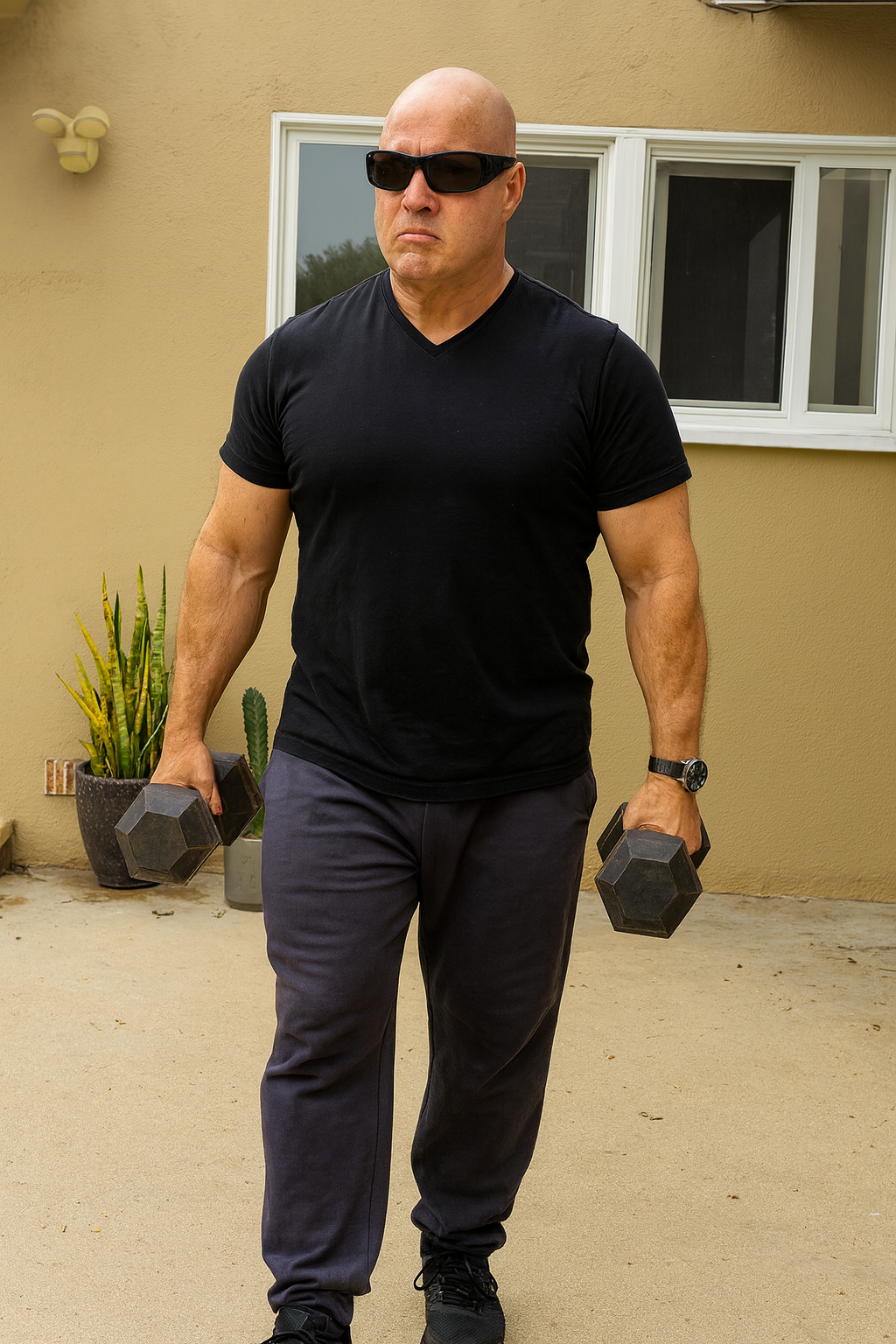
    I took a rare sabbatical from my kettlebell gospel this Memorial Sunday to bask in the company of my cousin Pete and Aunt Sherry in Studio City—because even iron addicts need a cheat day, preferably one involving shawarma and nostalgia. We spent eight hours doing what old relatives do best: eating like we’re about to hibernate, name-dropping concerts that smelled like patchouli and regret, and arguing over which decade had the best moral compass (spoiler: none of them).

    Pete and I go way back—Haight-Ashbury, San Francisco clambakes, enough Passover seders to qualify for spiritual overtime. Our shared memories stretch across seven decades like a shag carpet in a time-warped rec room.

    The weather, because of course it was, clocked in at 75 degrees—sunny, breezy, and just obnoxiously pleasant. So much so, we weren’t content with one perfect meal. We closed the day with Korean barbecue that tasted like it had been grilled by angels on a smoke break. Then came the real miracle: we took the 405 back to Torrance and hit no traffic. That’s not just a good omen—it’s borderline apocalyptic.

    When we got home, I turned to my wife and said, “The day was too perfect. Should I call a priest or a statistician?”

    Once the existential dread of joy wore off, I returned to my senses and thought I’ll be 64 soon. I need to map out my plan to slam heavy iron for the rest of my natural life. A sacred vow, if you will:

    • Follow Mark Wildman’s mantra: “Train injury-free today so you can train tomorrow”—not “break yourself now to impress your ego.”
    • Heed Pavel’s wisdom: Push to 80–90% failure, not 100%, because no one gets a trophy for tearing their rotator cuff.
    • Devour 200 grams of protein a day like it’s my job—and in a way, it is.
    • Keep calories under 2,400 so I don’t end up looking like I survived Passover but lost to diabetes.
    • Be grateful for my garage gym—no excuses, no sweaty strangers, no corporate playlists.
    • Appreciate that my workout intensity still rivals that of my teenage self in the 1970s, minus the acne and naïve dreams of Olympic glory.
    • And above all, give thanks that my family doesn’t stage an intervention every time I start rhapsodizing about kettlebell geometry.

    In conclusion, it was a dangerously perfect day—full of grilled meats, shared myths, and suspiciously easy freeway exits. I’m not saying I’m suspicious of happiness, but I’m definitely side-eyeing it.

  • The future, we’re told, is full of freedom—unless you’re the one still cleaning the mess.

    The future, we’re told, is full of freedom—unless you’re the one still cleaning the mess.

    Last semester, in my college critical thinking class—a room full of bright minds and burnt-out spirits—we were dissecting what feels like a nationwide breakdown in mental health. Students tossed around possible suspects like a crime scene lineup: the psychological hangover of the pandemic, TikTok influencers glamorizing nervous breakdowns with pastel filters and soft piano music, the psychic toll of watching America split like a wishbone down party lines. All plausible. All depressing.

    Then a re-entry student—a nurse with twenty years in the trenches—raised her hand and calmly dropped a depth charge into the conversation. She said she sees more patients than ever staggering into hospitals not just sick, but shattered. Demoralized. Enraged. When I asked her what she thought was behind the surge in mental illness, she didn’t hesitate. “Money,” she said. “No one has any. They’re working themselves into the ground and still can’t cover rent, groceries, and medical bills. They’re burning out and breaking down.”

    And just like that, all our theories—algorithms, influencers, red-vs-blue blood feuds—melted under the furnace heat of economic despair. She was right. She sees the raw pain daily, the kind of pain tech billionaires will never upload into a TED Talk. While they spin futuristic fables about AI liberating humanity for leisure and creativity, my nurse watches the working class crawl into urgent care with nothing left but rage and debt. The promise of Universal Basic Income sounds charming if you’re already lounging in a beanbag chair at Singularity HQ, but out here in the world of late rent and grocery inflation, it’s a pipe dream sold by people who wouldn’t recognize a shift worker if one collapsed on their marble floors. The future, we’re told, is full of freedom—unless you’re the one still cleaning the mess.

  • Sometimes My Inner Adult Has to Clean Up the Mess of My Addictive Ways

    Sometimes My Inner Adult Has to Clean Up the Mess of My Addictive Ways

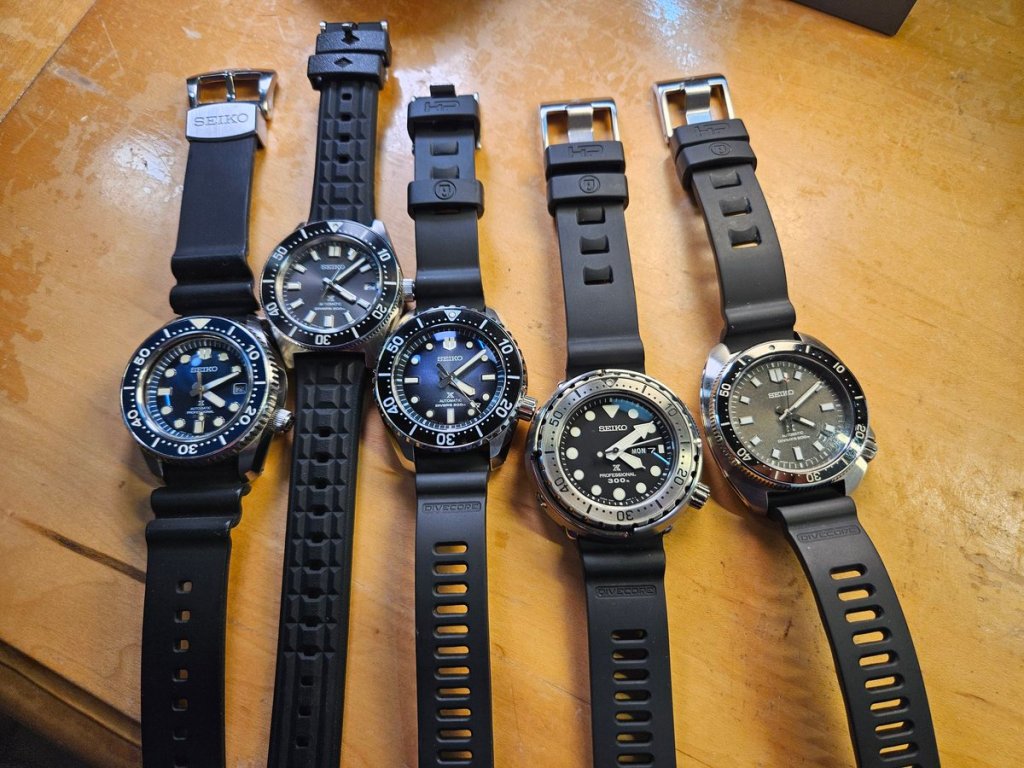
    I’ve lost track of how many times I’ve finished my work, promised myself a little harmless “watch browsing” as a reward, and ended up setting fire to my own peace of mind. It starts innocently enough—just a few clicks, some glossy macro shots, a limited edition here, a patina there. Eye candy, I tell myself. A visual snack.

    Then, inevitably, the spiral begins.

    Suddenly I’m convincing myself that I need another diver, another field watch, another reinterpretation of a watch I already own in three colorways. The whole endeavor, pitched as relaxation, mutates into a dopamine landmine. Each spec sheet whispers betrayal into my ear. That sapphire crystal isn’t in your current rotation. That Miyota movement ticks more accurately than your precious Seiko. Your collection, once a source of joy, now feels like a garage sale of missed opportunities.

    At this point, the adult version of me has to crawl out of whatever psychic broom closet I locked him in. He dusts himself off, adjusts his belt, and mutters: “Alright, junior. You’ve ogled enough. Shut the laptop. Go to your watch box, pull out the piece you’ve ignored for a week, strap it on, and sit with it. Feel the weight. Admire the bezel. Remind yourself why you bought it. And for God’s sake, stop self-inflicting existential crisis over a titanium caseback.”

    Because life’s too short to be haunted by the ghost of watches not bought.

  • WordPress: My Kettlebell Gym of the Mind

    WordPress: My Kettlebell Gym of the Mind

    I launched my WordPress blog on March 12, evicting myself from Typepad after it was sold to a company that treats blogs the way landlords treat rent-controlled tenants: with bored disdain. Typepad became a ghost town in a bad neighborhood, so I packed up and moved to the gated community of WordPress—cleaner streets, better lighting, and fewer trolls.

    For the past ten weeks, I’ve treated WordPress like a public journal—a digital sweat lodge where I sweat out my thoughts, confessions, and pedagogical war stories from the frontlines of college teaching. I like the routine, the scaffolding, and the habits of self-control. Blogging gives me something I never got from social media or committee meetings: a sense of order in a culture that’s spun off its axis.

    But let’s not kid ourselves. WordPress isn’t some utopian agora where meaningful discourse flourishes in the shade of civility. It’s still wired into the dopamine economy. The minute I start checking likes, follows, and view counts, I’m no longer a writer—I’m a lab rat pressing the pellet button. Metrics are the new morality. And brother, I’m not immune.

    Case in point: I can craft a thoughtful post, click “Publish,” and watch it sink into the abyss like a message in a bottle tossed into a septic tank. One view. Maybe. Post the same thing on Reddit, and suddenly I’m performing for an arena full of dopamine-addled gladiators. They’ll upvote, sure—but only after the professional insulters have had their turn at bat. Reddit is where clever sociopaths go to sharpen their knives and call it discourse.

    WordPress, by contrast, is a chill café with decent lighting and no one live-tweeting your every existential sigh. It’s a refuge from the snarling hordes of hot-take hustlers and ideological bloodsport. A place where I can escape not only digital toxicity, but the wider derangement of our post-shame, post-truth society—where influencers and elected officials are often the same con artist in two different blazers.

    Instead of doomscrolling or screaming into the algorithmic void, I’ve taken to reading biographies—public intellectuals, athletes who aged with dignity, tech pioneers who are obsessed with taking over the world. Or I’ll go spelunking into gadget rabbit holes to distract myself from the spiritual hangover that comes from living in a country where charisma triumphs over character and truth is whatever sells ad space.

    In therapy-speak, my job on WordPress is to “use the tools,” as Phil Stutz says: to strengthen my relationship with myself, with others, and with the crumbling world around me. It’s a discipline, not a dopamine drip. Writing here won’t make me famous, won’t make me rich, and sure as hell won’t turn me into some cardigan-clad oracle for the digital age.

    What it will do is give me structure. WordPress is where I wrestle with my thoughts the way I wrestle kettlebells in my garage: imperfectly, regularly, and with just enough sweat to keep the madness at bay.

  • Hungerphoria: Finding Comfort in the Empty Stomach

    Hungerphoria: Finding Comfort in the Empty Stomach

    Let’s get something straight: my weight-loss quest isn’t about vanity. I’m not trying to become the next shirtless fitness guru hawking collagen peptides to the dopamine-addled masses on Instagram. No, this is about survival—mental and physical, which, despite popular delusion, are not separate departments. They’re a single, tangled mess of neurons and cravings, and if one goes down, the whole system buckles.

    So, I’ve been on a high-protein, calorie-restricted diet for five weeks (15 pounds lost so far). Not the sexy kind with green smoothies and acai bowls—this is grim, disciplined, macro-tracked warfare. And yet something strange and glorious is happening: my brain is beginning to like it.

    Case in point: I used to get jittery before class, pacing my office like a caged animal and convincing myself I needed a protein bar or an apple just to face a room of disinterested freshmen. But lately? I stroll in on an empty stomach like a monk walking into a Zen garden. The hunger is there, sure, but it doesn’t bark anymore. It purrs.

    Last night, same story. Three hours after dinner, the belly murmured—but instead of scrambling for almonds or scanning the fridge for peanut butter-oatmeal “protein” balls, I smiled. That emptiness didn’t feel like punishment. It felt like progress. A signal. A secret handshake from my metabolism saying, “We’re doing it. Keep going.”

    Which brings me to what I’m now calling Hungerphoria.

    Let’s define it properly, shall we?

    Hungerphoria is the paradoxical joy one feels in the disciplined embrace of hunger—a fleeting but addictive high that replaces food anxiety with a sense of mastery and serenity. Rather than viewing hunger as a threat or an emergency, the hungerphoric individual interprets the growl of an empty stomach as applause from the body’s metabolic engine. It’s not deprivation; it’s affirmation. Hungerphoria turns a late-night craving into a badge of progress, a quiet reminder that transformation is happening invisibly, molecule by molecule. Like the runner’s high or the monk’s calm, hungerphoria isn’t about denial—it’s about the subtle euphoria of restraint, the mental alchemy of converting appetite into purpose.

    Did I stumble onto this like a weary gold miner striking the motherlode? Maybe. Should I start selling merch—Hungerphoria hats, mugs, crop tops? Tempting. Should I become a lifestyle influencer preaching the gospel of the empty belly? Possibly.

    But then a voice in my head, the responsible one who still wears pants with belt loops, whispers: “Easy, tiger. Lose another thirty. Keep it off for a year. Then maybe you can start printing t-shirts.”

  • 700 Calories or Bust: The Cardio Ultimatum

    700 Calories or Bust: The Cardio Ultimatum

    Every time I saddle up on the Schwinn Airdyne for my daily hour of self-inflicted cardio torment, I don’t just ride—I perform. My mission? Burn 720 calories in 60 minutes. My method? A particularly deranged form of mental gamification I call Suffering-as-Spectacle Syndrome—the belief that my private workout is being broadcast live to a breathless nation, complete with commentary by Jim McKay and Howard Cosell.

    In my mind’s eye, the camera pans across a roaring stadium. A chyron flashes: “BREAKING: McMahon Must Hit 700 Calories to Avert National Crisis.” Jim McKay, with his signature gravitas, informs viewers that if I fail to meet my target, the U.S. economy will spiral into recession, gas prices will surge to $14 a gallon, and toilet paper will vanish from store shelves once again. The stakes are ludicrous. And completely imaginary. But they work.

    By the 50-minute mark, drenched in sweat and gritting my teeth through lactic-acid hell, I’m at 600 calories. McKay’s voice echoes through the fantasy ether: “Ladies and gentlemen, we may just be in the clear. Barring catastrophic collapse, Mr. McMahon appears poised to save the republic.”

    And I believe him. For that final, lung-shredding stretch, I’m not just pedaling a stationary bike in my garage. I’m anchoring Western civilization.

    This isn’t just exercise. It’s an endorphin-fueled psychodrama. It’s Rocky Balboa meets CNN breaking news. And yes, it’s completely unhinged—but so is trying to extract meaning from a piece of cardio equipment designed to make you question every life choice you’ve ever made.

  • The Futility of Being Ready

    The Futility of Being Ready

    In December of 2019, my wife and I, both lifelong members of the National Society of Worrywarts, stumbled upon reports of a deadly virus brewing in China. Most people shrugged. We did not. I jumped on eBay and ordered a bulk box of masks the size of a hotel mini-fridge. It felt ridiculous at the time—a paranoid lark, like filling a doomsday bunker because you heard thunder on a Tuesday. But three months later, on March 13, 2020, the world shut down, and that cardboard box of N95s felt less like overreaction and more like prophecy.

    These days, I teach college in what I call the ChatGPT Era—a time when my students and I sit around analyzing how artificial intelligence is rewiring our habits, our thinking, and possibly the scaffolding of our humanity. I don’t dread AI the way I dreaded COVID. It doesn’t make me stock canned beans or disinfect door handles. But it does give me that same uneasy tremor in the gut—the sense that something vast is shifting beneath us, and that whatever emerges will make the present feel quaint and maybe a little foolish.

    It’s like standing on a beach after the earthquake and watching the water disappear from the shore. You can back up your files, rewrite your syllabus, and pretend to adapt, but you know deep down you’re stuck in Prepacolypse Mode—that desperate, irrational phase where you try to outmaneuver the future with your label maker. You prepare for the unpreparable, perform rituals of control that offer all the protection of a paper shield.

    And through it all comes that strange, electric sensation—Dreadrenaline. It’s not just fear. It’s a kind of alertness, a humming, high-voltage awareness that your life is about to be edited at the molecular level. You’re not just anticipating change—you’re bracing for a version of yourself that will be unrecognizable on the other side. You’re watching history draft your name onto the roster and realizing, too late, that you’re not a spectator anymore. You’re in the game.

  • Flabnesia and the Fall of the Weight-Loss Hero

    Flabnesia and the Fall of the Weight-Loss Hero

    Congratulations! You’ve shed 47 pounds over 8 months, sliding from a swollen 247 to a sleek, even 200—the numerical promised land. At 247, you weren’t just overweight; you were a walking billboard for metabolic dysfunction. A bloated monument to poor impulse control. Your blood pressure was climbing Mount Everest, your triglycerides were hosting a rave, your fingers cracked like old parchment, and your foot buzzed with the low-voltage horror of neuropathy. Your joints? They screamed in Morse code every time you dared to walk more than half a Target.

    And let’s not forget the existential FOMO—not Fear of Missing Out on parties or vacations, but on the you you were supposed to be. The one who didn’t sound like an old staircase every time he stood up.

    But then, in a moment of uncharacteristic clarity—or maybe rage at your own reflection—you declared war on the fat demon. You slashed your calories to a monk-like 2,300, jacked your protein intake to bodybuilder levels, and banished refined carbs and sugar like they owed you money. Your entire cerebral cortex was repurposed into a fat-loss mission control center. Progress became your dopamine drip. Watching the numbers fall on the scale felt like watching your soul return from exile.

    You were, in the language of gymfluencers, “on a journey.” A phrase so overused it should be banished to a motivational poster graveyard. But cliché or not, the journey gave your life narrative structure. It made you feel heroic. Disciplined. Alive.

    And then—you arrived.

    Two hundred pounds. The exact number. Mission accomplished. Cue the existential silence.

    Because now what?

    With the drama over, meaning slips through your fingers like a protein shake on a sweaty treadmill. You no longer wake up with a fat war to fight. And into that vacuum slithers the ancient enemy of every former fatty: complacency.

    Complacency brings friends. First comes Calorie Creep—just a nibble here, a mindless bite there, a slow but deliberate loosening of your former austerity. Then arrives Flabnesia, that insidious amnesia that erases the memory of how awful 247 felt—how humiliating, how painful, how limited. Your jeans start getting tight again, and you blink in confusion as if the dryer is gaslighting you.

    Next, the cruelest symptom of all: Goalstalgia—a perverse longing for the righteous high of the weight-loss struggle. You miss the purpose, the metrics, the drama. And in a dark twist of psychological masochism, you begin to sabotage yourself, just to start over—to claw your way out of the hole you’re actively digging again.

    And so the cycle begins anew. You are no longer the master of your fate or the captain of your macros. You are a cautionary tale—an Ouroboros in athleisure, endlessly consuming your own progress.

  • Psychedelic Mushrooms and the Art of Saying “Meh”

    Psychedelic Mushrooms and the Art of Saying “Meh”

    People I admire—deep thinkers, seekers, trauma survivors, even that old roommate who once confused a lava lamp for God—swear by magic mushrooms. They describe transcendence, tearful reunions with their inner child, and conversations with the universe where the universe speaks perfect Jungian. Apparently, psilocybin is the shortcut to enlightenment, the divine inbox where angels drop PDFs of your truest self.

    And yet, I remain a bastion of Mushroom Apathy Syndrome (MAS)—a spiritual condition marked by an impenetrable indifference to the fungal fanfare. While others are melting into cosmic unity on some mossy hillside, I’m thinking about whether it’s time to reorganize my spice rack. I don’t want to chew sacred mold to glimpse the divine. If I need an ego death, I’ll just read my old poetry.

    Sure, I’d love to encounter the Divine—maybe Spinoza’s glowing web of pantheistic awe, maybe a seraph with decent taste in jazz. But I just can’t take mystical advice from a guy in a woven beanie yelling about chakras while wearing Crocs. If I want a head trip, I’ll queue up Yes, The Strawbs, or Crosby, Stills & Nash and lie on the floor until my chakras align from sheer harmonic exhaustion. Or better yet, I’ll abstain from sugar for ten months and then unleash nirvana with a single bite of decadent, spice-laced carrot cake.

    My condition is also rooted in a kind of Fungal Nihilism—the belief that no mushroom, no matter how ancient, artisanal, or Amazonian, can fix the howling absurdity of existence. You can’t outrun entropy with a spore. If I want to stare into the abyss and laugh, I’ll binge-watch George Carlin eviscerate modern life with nothing more than a mic, a ponytail, and a pair of skeptical eyebrows.

    Ultimately, I practice Spore Snobbery—a reflexive contempt for the breathless mythologizing of psychedelic fungus. These aren’t sacred portals. They’re glorified mushrooms with a publicist. For some, they offer spiritual clarity. For me, they sound like a gastrointestinal trust fall with no one there to catch you but an ayahuasca-shaman-turned-life-coach named Brad.