There is much talk of fasting these days—of autophagy, detox, purification of body and soul. The same fever has infected the watch world. Some enthusiasts advocate “watch fasting”: three days without a timepiece to cleanse the spirit of horological excess. I reject both proposals. When I attempt a dietary fast, I do not achieve enlightenment. I achieve dizziness, weakness, and the productivity of a fainting Victorian poet. Remove food and I unravel. Remove a watch and my brain enters a static-filled void. I lose focus. I pace. I glance at my wrist like a man who misplaced his passport.
Extremes, in other words, are overrated. Instead of starvation, I recommend discipline. A week of plant-based, whole foods—no sugar, no alcohol, no nonsense—does more for the body than theatrical deprivation ever could. You nourish rather than annihilate. You purify without collapsing.
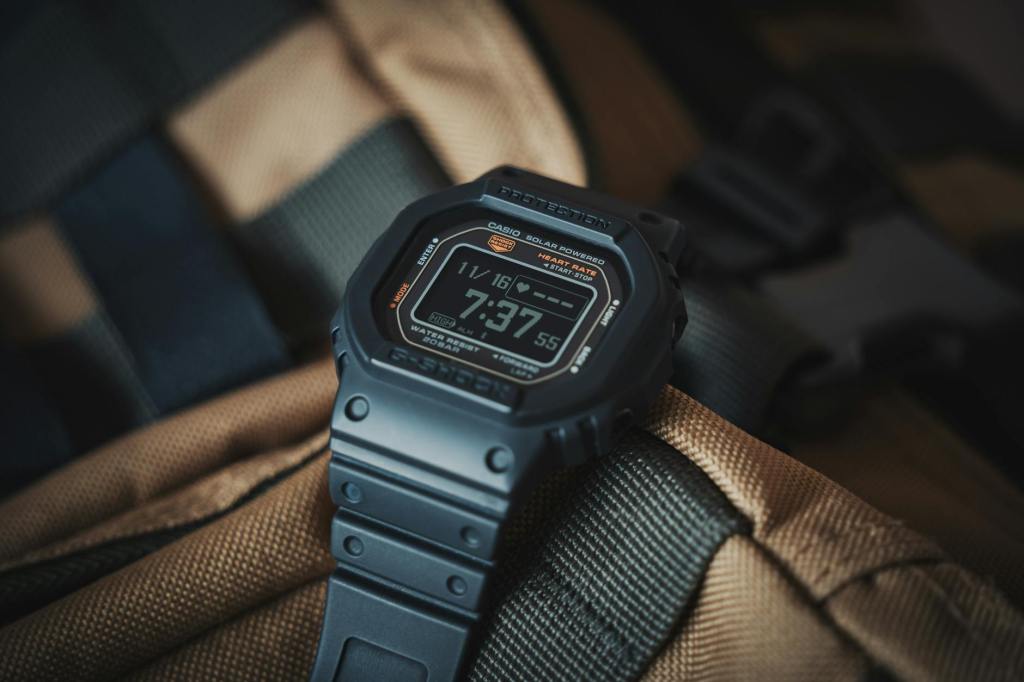
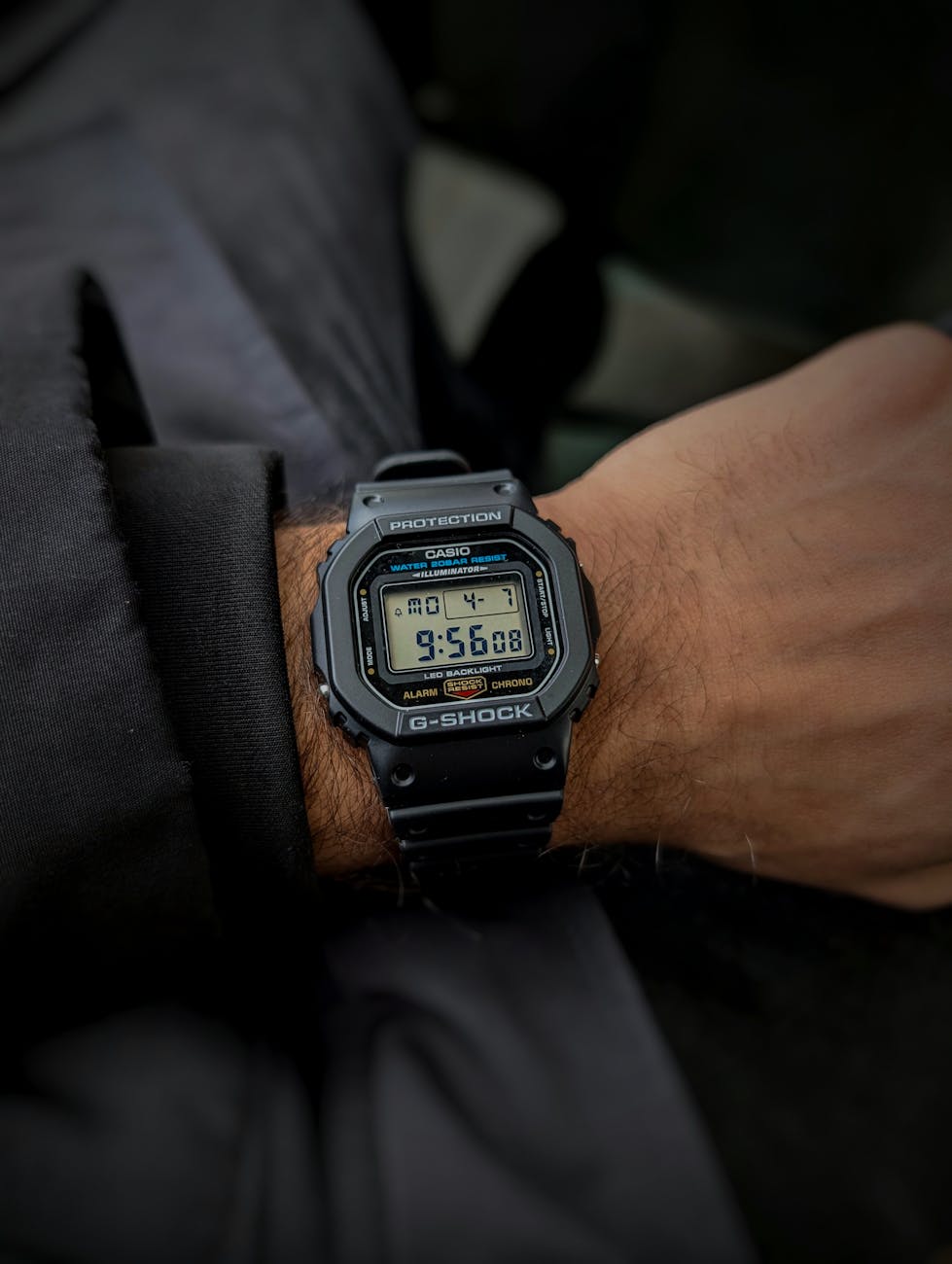
The same logic applies to the wrist. Do not go bare. That’s just drama disguised as virtue. Instead, strap on the purest expression of timekeeping available: the Casio G-Shock GW-5000U. It is the plant-based diet of watches—unprocessed, essential, stripped of additives.
The GW-5000U refuses to perform. It does not preen under café lighting or whisper about artisanal lineage. It sets itself by atomic signal, drinks sunlight for fuel, and absorbs impact with the stoic indifference of poured concrete. Steel inner case. Screw-down caseback. Resin shell that treats concrete like a suggestion. Its numerals are blunt. Its function unquestionable. You strap it on and the debate ends. No servicing calendar. No accuracy anxiety. No heritage cosplay. Just time—accurate, silent, delivered without commentary.
Critics will protest that greatness requires romance: a sweeping seconds hand, a mechanical heartbeat, a nostalgic tic-tic murmur. That argument mistakes sentiment for superiority. The GW-5000U is a tool refined to its logical endpoint—solar-powered, radio-synchronized, shockproof, water-resistant, and priced for sane adults. It is the anti-vanity watch. In a hobby swollen with status theater and fragile egos disguised as “journeys,” this square slab of Japanese pragmatism stands there like a silent judge. It does not care if you notice it. That is precisely why you should.
Wear it and something strange happens. The noise quiets. The acquisition itch cools. This is the Purist Reset—the ritual cleansing from horological excess, the return to first principles. When the GW-5000U occupies your wrist, every other purchase becomes negotiable. The spiritual contaminants of the hobby undergo their own autophagy. The mania thins. The mind steadies.
There are reports—whispered in forums and dimly lit comment sections—of collectors who put on the GW-5000U and never felt compelled to rotate again. They rode off into a minimalist sunset, cured not by abstinence but by sufficiency.
Before you rush out and buy one, however, a practical warning: its crystal sits exposed. It is honest. It will scratch if you are careless. Protect it with a thin 9H tempered glass shield—clear, precise, invisible. Think of it as sunscreen for the ascetic. Purity does not require recklessness.
Do not starve. Do not dramatize. Eat clean. Wear clean. And let the square do its quiet work.



 Cinemorphosis