Category: Health and Fitness

  • The Geography of Friendship

    The Geography of Friendship

    I spoke today with a colleague I’ll call E, a man I’ve known for nearly three decades. In passing, I asked about D, our retired colleague, who’d always seemed to be E’s closest companion on campus. E didn’t hesitate: “Haven’t seen him since he retired four years ago.” I was floored. For thirty years I’d watched them laugh in hallways, share office gossip, and linger in each other’s doorways. To me, they were inseparable. To E, apparently, they were work buddies on a time clock. Now? His friends are his neighbors. Brutal clarity, no sentimentality.

    I didn’t judge him, though I did wince. I had mistaken their daily collisions for lifelong intimacy. What E reminded me of—casually, almost cheerfully—is the old truth: out of sight, out of mind. My ego resists this; I prefer to imagine I leave such an indelible mark that absence alone couldn’t erase me. But who am I kidding? Friendship is built on repetition and proximity, not myth. Remove the daily face-to-face, and even the warmest ties cool into background noise.

    Romantic love, of course, cheats this law. Passion bends molecules. Couples endure years of distance with letters, FaceTime, and masochistic longing. But friendship? Friendship doesn’t migrate well. It doesn’t live in the bloodstream. It lives in the cafeteria, the break room, the neighbor’s driveway. In other words, friendship needs geography. Love can survive exile; friendship needs a shared zip code.

  • The World’s Unwanted Alarm Clock

    The World’s Unwanted Alarm Clock

    No one warned me, but I should have seen it coming: creeping toward your mid-sixties is less a rite of passage than a crisis of competence. Or, to be precise, it’s a progressive misalignment with the modern world. You drop references to Danish Go-Rounds, Screaming Yellow Zonkers, Tooter Turtle, and All in the Family and watch blank faces stare back at you. You still assume that appliances are built with the sturdiness of yesteryear, only to find that today’s models disintegrate if you breathe on them sideways. This misalignment breeds a special kind of incompetence—egregious, preventable, humiliating.

    You can swallow vats of triglyceride omega-3 fish oil, but the short-term memory still slips away without mercy. You forget where you parked your socks (on the couch), that you meant to watch the final episode of that crime docuseries on Netflix, that a Costco-sized case of 12-gallon trash bags lurks in the garage, or that you already ground tomorrow’s coffee beans. The indignities pile up like unopened mail.

    These lapses, coupled with your fossilized references to extinct foods and beloved TV shows, render you a creature out of phase with the universe—an alien with wrinkles, blinking in confusion, flashing your unearned senior discount at the box office like it’s a badge of relevance.

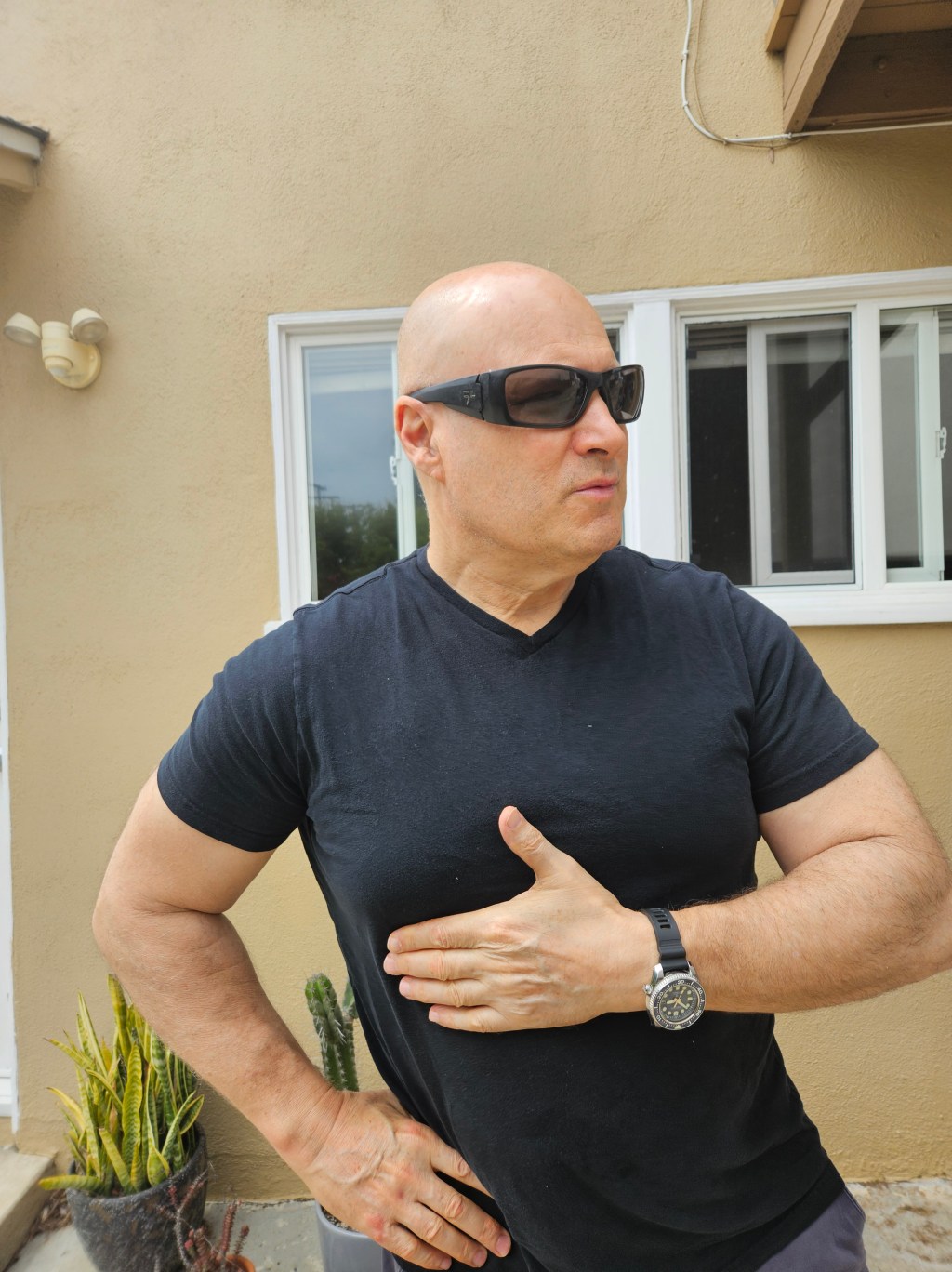
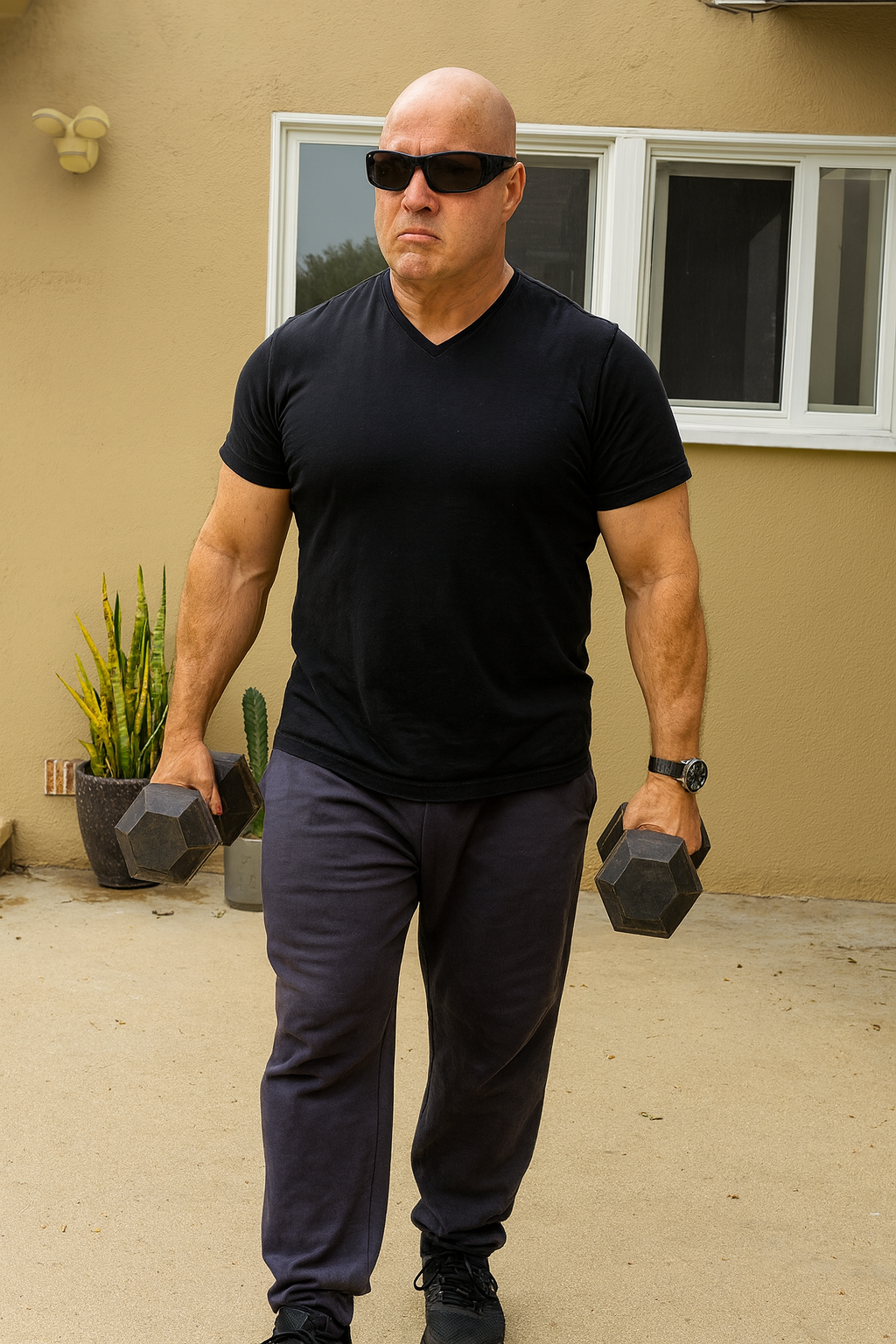
    You can flex all you want against this verdict. Wolf down 200 grams of protein daily, clang kettlebells in the garage, and polish yourself into the semblance of a beaming bodybuilder who could pass for forty-four instead of sixty-four. But that delusion ends the second you get behind the wheel at night. Your depth perception is a cruel joke. The glare of headlights and streetlamps slices into your worn irises like laser beams, reminding you that biology—not discipline—is running the show.

    Like it or not, you’re aging in real time, a public spectacle of decline, the unwelcome prophet of mortality who shatters the younger generation’s illusion that time is indefinite. To them, you are as pleasant a presence as a neighbor’s dog barking at a squirrel at six a.m.—loud, unnecessary, and impossible to ignore.

    Congratulations–you’ve become the world’s unwanted alarm clock. 

  • My Lifelong Marriage to Convenience

    My Lifelong Marriage to Convenience

    There is much to admire about centering our lives on convenience. We save time and resources, avoid wasted effort, and maximize efficiency in the name of what is too often called “optimization.” A life built around convenience often becomes a quest for “life hacks.” But if our behavior is less inventive, we don’t call it a hack at all—just a preference.

    For example, I refuse to go to the gym. It’s inconvenient, time-consuming, costly, and exposes me to airborne illnesses. I prefer to work out in the garage. That’s not a life hack—it’s just easier. The same goes for meals: having a bowl of oatmeal with protein powder and soy milk instead of lunch or dinner isn’t clever or innovative. It’s simply what I do when my family is out and I’m eating alone. Spending more than five minutes on a meal under those circumstances feels unnecessary. Calling a bowl of steel-cut oats or buckwheat groats a “life hack” would be grandiose.

    During the pandemic, three-fourths of my classes moved online through Canvas, a Learning Management System (LMS). Hard copies disappeared. Graded documents were uploaded to the platform, which was remarkably efficient. I didn’t have to drive to campus. The college saved on electricity. That was five years ago, and my classes remain online. I now drive less than 3,000 miles a year. Online classes have made me very efficient. Once you taste efficiency, it’s nearly impossible to go back to inefficiency.

    I admit I’m a less than admirable parent. I don’t like driving my teen daughters to their social functions—birthday parties, football games, dance practices, amusement parks. I find it all inconvenient. That’s my choice. If I were truly devoted to convenience, I wouldn’t have become a parent at all. And certainly not a cat owner. Kitty litter, flea control, vet visits, and travel arrangements are an affront to any serious commitment to convenience.

    As desirable as convenience is, some personalities—mine included—turn it into a pathology. We center our lives around it, and any violation of our convenience policies breeds resentment. Many of these resentments are unreasonable. I resent old age and death, primarily because they are inconvenient. Doctor appointments and funerals interfere with my routine.

    Convenience culture also makes us adore routine. I suspect routine is the groom to the bride of convenience.

    Even my worldview is infected by this impulse. I am an agnostic, which I despise, because it is inconvenient. Agnosticism demands reading and constant reflection. I’ve consumed books by agnostics, atheists, universalists, infernalists, and the post-mortem-salvation curious. While Elizabeth Anderson’s critique of scripture has many compelling points, her notion of morality as nothing more than evolution feels inadequate. Paul’s vision of humanity as fallen and divided is more persuasive and mirrors my own psychology. I wish I could settle happily into Anderson’s worldview. It would be so convenient.

    Speaking of religion, Jesus preached a gospel of inconvenience. His willingness to sacrifice his life in such a manner stands as the very opposite of convenience. For devotees of the gospel of ease, following Jesus is nearly unthinkable—a path that demands nothing less than a Damascus-level upheaval like Paul’s.

    When I think of convenience, I’m reminded of Chris Grossman, a wine salesman I worked with in the 1980s. He was brilliant and affable but had no close relationships. He admitted he didn’t care much for life. He had tried having a girlfriend once and said it was awful—not because of her, but because it was too inconvenient. By his late thirties, he was a bachelor. He ate the same foods every day for simplicity’s sake and once a year drove his Triumph to a car show in Carmel. I loved him for it, because I knew we were both soulmates in convenience culture.

    Some of us are more diseased by this devotion to convenience than others, and it often lowers our standards. I am appalled by factory farming and would like to be vegan. Perhaps if I lived alone, I could do it. But in a family of omnivores, that move would not go over well. I could prepare plant-based meals for myself, but I don’t—partly because of the inconvenience. Vegans I’ve spoken to say the hardest part isn’t the food but the social ostracism.

    I’m already the black sheep in my family—the anti-social shut-in whose quirks are laughed at on good days and resented on bad ones. If I imposed a vegan diet, I fear it would alienate me further, and I’d have to grovel my way back into some semblance of connection.

    As a lifelong neurotic who already alienates people more than I’d like, I know that repairing frayed relationships is an excruciating, arduous task. And it’s so inconvenient.
  • The Aesthetic Pharmaceutical Complex (a College Essay Prompt)

    The Aesthetic Pharmaceutical Complex (a College Essay Prompt)

    Write a 1,700-word argumentative essay that evaluates this claim: GLP-1 weight-loss drugs (e.g., Ozempic/Wegovy) offer a Faustian bargain–they blunt appetite and deliver rapid results, but at significant cultural, moral, and social costs. Examine whether these drugs simply cure an individual problem or whether they reshape appetite, pleasure, gender and marital dynamics, class inequality, body aesthetics, and personal agency in ways that should alarm us.

    Use Rebecca Johns (“A Diet Writer’s Regrets”), Johann Hari (“A Year on Ozempic…”), Harriet Brown (“The Weight of the Evidence”), Sandra Aamodt (“Why You Can’t Lose Weight on a Diet”), and at least two additional reputable sources of your choice. Address both sides: acknowledge the medical benefits (for diabetes, metabolic disease, disability reduction) while testing the claim that GLP-1s amount to a societal deal with the devil — trading desire, culinary culture, and autonomy for narrow aesthetic and market outcomes.

    Be sure to define terms (e.g., “Faustian bargain,” “GLP-1 drugs,” “body aesthetics”), offer evidence, and include a clear counterargument and rebuttal.


    Five Sample Thesis Statements (with mapping components)

    1. Thesis 1
      GLP-1 drugs are a Faustian bargain: they deliver rapid weight loss and metabolic benefit, but they also erode culinary pleasure, exacerbate social inequality, and replace disciplined habits with pharmaceutical dependence.
    • Mapping: (1) immediate medical and psychological benefits, (2) cultural costs to food and pleasure, (3) social/economic consequences and dependence.
    1. Thesis 2
      While GLP-1 medications can rescue lives in a clinical sense, their mainstreaming industrializes thinness—privileging aesthetics over health, amplifying economic divides, and outsourcing self-control to corporations and prescribers.
    • Mapping: (1) clinical life-saving benefits, (2) commercialization of body aesthetics, (3) economic and ethical fallout.
    1. Thesis 3
      GLP-1 drugs pose an ethical dilemma: they promise to erase cravings and curb addiction, but in doing so they risk flattening human desire, unsettling intimate relationships, and converting a public-health problem into a luxury aesthetic market.
    • Mapping: (1) pharmacological suppression of appetite, (2) impact on relationships and social life, (3) marketization and inequality.
    1. Thesis 4
      The rise of GLP-1s reframes weight management from moral failing to medicalized consumerism—undeniable benefits for some masked by troubling costs: cultural loss, shifting marital dynamics, and a dangerous dependence on biotech fixes.
    • Mapping: (1) medical reframing of obesity, (2) cultural and interpersonal costs, (3) risks of technological dependence.
    1. Thesis 5
      GLP-1 drugs give individuals the power to silence hunger, but that power comes tethered to troubling social outcomes: it amplifies privilege, intensifies pressure for aesthetic conformity, and weakens the role of habit and self-discipline in healthy living.
    • Mapping: (1) appetite suppression and individual gains, (2) exacerbation of aesthetic and class pressure, (3) erosion of habit-based agency.

    Counterargument (fair, strong):
    Proponents of GLP-1 drugs argue that calling them a “Faustian bargain” ignores the very real medical and social benefits these medications deliver. For many patients—especially those with type 2 diabetes, obesity-related hypertension, or mobility-limiting weight—GLP-1s reduce blood sugar, lower cardiovascular risk, and unlock functional gains that years of dieting could not. Early reports also show improvements in mood, self-efficacy, and social participation: when chronic hunger is quieted, people can exercise more, sleep better, and engage with life instead of being consumed by food preoccupation. From this perspective, the drugs restore agency rather than remove it; they are tools that expand options for people trapped by biology, food environments, and limited access to behavioral medicine. To label them morally corrosive risks stigmatizing patients who finally find relief.

    Rebuttal:
    That claim deserves respect—but it doesn’t dissolve the deeper social harms that mainstreaming GLP-1s threatens to produce. Medicine can relieve individual suffering while simultaneously reshaping culture in ways that reward aesthetic conformity and widen inequality: when a pharmaceutical becomes the fastest route to thinness, weight status shifts further from a health metric to a marketable badge of status, attainable first by those with money, time, and prescriber access. The drugs also substitute biochemical fixes for social solutions—affordable nutritious food, safer neighborhoods for exercise, workplace protections—that address root causes of metabolic disease; this medicalization risks absolving policymakers and corporations of responsibility. Finally, the long-term psychosocial costs are real: appetite suppression can blunt pleasure and disrupt food’s role as social glue, and couples who diverge in access to these drugs face novel tensions over desirability, divided resources, and identity. In short, GLP-1s can be miracles for patients; they can also be catalysts for cultural and economic shifts that deserve critical scrutiny before we call the bargain a fair trade.

  • Exit Stage Left: A Teacher’s Final Act

    Exit Stage Left: A Teacher’s Final Act

    I’m fewer than four semesters away from retirement—June 2027, the final curtain—and I’d be lying if I said I wasn’t scared. For nearly forty years I’ve worn the armor of a college classroom persona: bigger, bolder, more disciplined than the fragile, fumbling man who hides inside. Teaching gave me a stage and a referee’s whistle. Without it, who am I? Just the broken man-child without a supervisor, left to his own devices.

    During the pandemic, when colleagues were clawing to get out, I puffed out my chest and declared I was born ready for retirement. I pictured myself a disciplined Renaissance man: mornings at the piano, afternoons writing, evenings lifting kettlebells in the garage, book in hand before bed. A gilded schedule, as though I were independently wealthy. Now those boasts feel like hot air. Structure is one thing. The man animating that structure is another. In the classroom, the stakes were high: thirty pairs of eyes asking, Are you boring? Do you know what you’re talking about? The pressure kept me sharp, funny, and, occasionally, wise. No one lets you coast when you’re trapped under fluorescent lights for two hours with judgmental twenty-year-olds.

    Bitter irony: I’m leaving just as I finally got it right. It took me decades to balance theater with approachability, to drop the drill-sergeant persona that once scared students into silence, to actually build a classroom where people learned and laughed. Now I can scaffold essays like an architect and coax timid students into crafting arguments brick by brick. And just as the machinery is humming, I’m stepping offstage. Melancholy doesn’t begin to cover it.

    And then retirement makes you pay with loads of endless paperwork. Work forms that warn you that you cannot rescind your decision. Medicare forms with their cryptic alphabet soup (A, B, C, D), switching to my wife’s insurance, navigating private plans that read like IKEA instructions translated from Martian. I’ve joked I’d rather do faculty assessment reports than wrestle with retirement forms, and I meant it.

    Meanwhile, time itself heckles me. I’ll be sixty-four in six weeks. At my cousin’s seventy-fifth birthday, the guests—all seventysomethings—mingled like ghosts of futures to come. One cousin, seventy-eight, told me that old age makes you invisible. You still occupy space, but people’s eyes skip over you, as if you’re furniture. Old age is rude like that: the world resents you for hogging resources after your best years are spent. You should apologize for existing. Step aside, old man.

    So here I am, staring down a three-headed monster: paperwork, invisibility, and the slow evaporation of the job that kept me sane. What’s the plan? At six years old, I invented a companion—James, my imaginary friend. I’d knock on the apartment wall and tell my parents James wanted to play. They laughed, which only confirmed that James and I were onto something.

    Now, on the cusp of retirement, I feel his absence. Because when I think of retirement, I think of loneliness, and when I think of loneliness, I think of Gollum—squatting in the cave, muttering “precious” as he caresses the ring. Only for me, the ring isn’t a piece of jewelry. It’s youth. Precious, lost youth. I stroke it with nostalgia and curse it with bitterness. How dare people treat me like I’m invisible, when old age has taught me more than their Google searches ever will? And yet—I know this bitterness is the opposite of wisdom.

    So maybe I do need James back. But not the sweet, knock-on-the-wall James of childhood. I need James 2.0: a drill-sergeant life coach who will slap me across the face and bark: Stop whining. You’ve got love. You’ve got lights on in the house. You’re walking into retirement with more than most people ever dream of. Be grateful. And don’t you dare let this next chapter kick your ass.

  • Food as Storytelling, Not Spreadsheet

    Food as Storytelling, Not Spreadsheet

    I screened The Game Changers for my student-athletes, pausing every few minutes like a referee blowing the whistle on another bogus call. The film is a carnival of half-baked studies and overcooked claims about the superiority of a plant-based diet, and I wasn’t about to let it slide. Still, I tried to be generous: a well-planned plant-based diet can be a heart’s best friend. But then we hit my favorite scene, the one I couldn’t resist rewinding. Derrick Morgan, the former Tennessee Titans linebacker, is feasting with teammates on a vegan spread prepared by his wife, Charity. The science was questionable, but the spectacle of love, respect, and camaraderie at that table was undeniable. I told my students, “This—right here—is what eating is about. Not macros, not calculators, not the cold math of nutrition. It’s love.” A volleyball player nodded so hard in agreement, I swear I almost heard her whisper “Amen.”

    Because what is food without community? Nothing but calorie slop shoveled into our mouths like feral beasts at the trough. Food made with love is alchemy: it transforms ingredients into joy, health, and communion. Yet here we are, obsessed with mimicking the hollow thinness of the GLP-1 crowd, mistaking the absence of appetite for virtue. We’ve lost the plot. Food isn’t just fuel; it’s the oldest social technology we have, a medium for bonding, story-telling, and remembering why we bother to sit at a table together in the first place. Strip away the love, and you might as well be gnawing protein paste in solitary confinement.

  • Quarterback Hell: America’s Favorite Demigod and the Price of Glory

    Quarterback Hell: America’s Favorite Demigod and the Price of Glory

    In her New Yorker essay “Consider the Quarterback,” Louisa Thomas plunders Seth Wickersham’s American Kings and paints the quarterback not as a football player, but as America’s most tortured mythological beast. Quarterbacks embody our national delusions about leadership and manhood; they manage violence and spectacle at once, parading each week into a gladiatorial hell where one misread or misthrow detonates in front of millions. Actors can flub a line, pop stars can botch a note, tech bros can tank a product and still recover. A quarterback’s mistake, by contrast, is immortalized on ESPN in slow-motion high definition. Surviving this gauntlet elevates him beyond celebrity—he becomes a demigod, but one forged in a furnace that melts sanity along with steel.

    Wickersham’s question—what happens when you achieve the dream of being a star NFL quarterback?—turns out to be a warning label. The answer is grotesque. Yes, genius is displayed on the field: the audibles, the poise, the impossible throws. But the book catalogues the price—alcohol, depression, busted marriages, fatherhood disasters, chronic pain, and, at the core, narcissism metastasized into pathology. “Football, it seems, can unleash the kind of narcissistic personality that normal society might constrain,” Thomas notes. Being a quarterback isn’t a job; it’s a metamorphosis, one that can turn men into monsters.

    That Faustian bargain echoes across sports. Once you buy into a mission of athletic greatness, you accept self-destruction as the down payment. Ronnie Coleman illustrates this truth with brutal clarity. His eight Mr. Olympia titles were purchased with 800-pound squats, deadlifts, and a training style that would make orthopedic surgeons salivate. The bill: spinal fusions, hip replacements, shattered hardware in his back, and a daily life of chronic pain, crutches, and wheelchairs. And yet Coleman, a family man without scandal, smiles through it all. He insists he’d repeat it, no regrets—because the wreckage of his body was, to him, a fair trade for immortality.

    Coleman is a useful counterpoint because, compared to the quarterback, he got off easy. Bodybuilding stripped his mobility but not his humanity. The quarterback, however, inherits the same orthopedic carnage plus something darker: brain trauma, depression, addiction, and the corrosive narcissism required to play the role. Football elevates these men into Olympian figures—half god, half brand—while hollowing out their hearts and souls. To be a quarterback is to win everything the culture worships, and to lose everything that makes life worth living.

  • Farmer’s Walks, Rotator Cuffs, and the Ghosts of TypePad

    Farmer’s Walks, Rotator Cuffs, and the Ghosts of TypePad

    Everyday I try to learn something new, though today’s lessons felt like a report card in masochism. After three weeks of doing the Farmer’s Walk—barefoot, lugging kettlebells across hot pavement like some deranged strongman wannabe—my feet staged a revolt. Now I shuffle around in cushioned flip-flops, praying for pardon from my inflamed soles.

    Lesson two: a rotator cuff tear heals on its own calendar, not mine. Gone are the days of explosive kettlebell theatrics; now I creep through slow, deliberate rows like a man tiptoeing past a sleeping dragon.

    But the real education arrived online. When TypePad collapsed and I ferried a few dozen radio-obsessive posts over to Cinemorphosis, I stared into the abyss of my own archive. What I saw wasn’t noble enthusiasm but neurotic Internet poisoning: the frenzied output of a man hooked on the performance of being “a journalist,” even if only in cosplay. The early 2000s gave me all the symptoms of attention addiction—posting too often, sharing too much, mistaking volume for meaning.

    I’m grateful to have deleted X and demoted Facebook to a ghost town. My writing belongs elsewhere now. On Cinemorphosis I can stretch out, let literature, culture, music, television, even dreams bloom into full color. It feels like stepping through a door into a new world, one I don’t intend to leave.

  • The Pea Protein Plague

    The Pea Protein Plague

    For three days, I flirted with the fantasy of going vegan in the protein department. Out went my dependable whey; in came Orgain’s peanut butter-flavored vegan powder ($32), built on the gritty backbone of pea protein. Waiting in the wings was OWYN Pro Elite in dark chocolate ($47), still sealed, still smug.

    But curiosity didn’t last. It curdled into resolve — the kind of resolve born from three days of gut-twisting cramps so vicious they stole my ability to work out. Imagine the irony: my protein obsession, meant to fuel training, knocked me out of the gym entirely. Not just any protein, but vegan protein, embraced in part to end my petty larceny of cow’s milk from calves. My humanitarian mission dissolved in a haze of bloating and despair.

    So I texted my neighbor Holly, handed over $80 of organic powders, and felt as if I were banishing demons. She was delighted. Her family loves vegan protein powder for their smoothies. I was both exorcised and relieved. Good riddance to powders that turned my insides into a war zone.

    Looking forward, I’ll still be a thief — but only a petty one. A scoop of whey stirred into my morning buckwheat groats. Two modest helpings of plain Greek yogurt with honey at lunch and after my nap. A splash of stolen milk here and there. I hope the calves understand: my theft is not egregious, just survivable.

    Still, my diet is 90 percent plants, enough to keep my conscience propped up. My protein intake will slide from 180 grams to about 140, and so be it. I’ll trade hypertrophy for digestive peace.

    Because let me say it clearly: some of us must never touch pea protein again. It expands inside us like an alien organism, leaving us to wish for death’s consoling embrace. Never again.

  • The Difference Between Thriving and Withering on a Vegan Diet

    The Difference Between Thriving and Withering on a Vegan Diet

    Like many people, I want to believe that a plant-based diet can deliver optimal nutrition for everyone—from casual gym-goers to powerlifters and elite athletes. It’s a hopeful vision: strong bodies built on beans and lentils instead of beef. But a memory from 2019 lingers in my mind and keeps me cautious.

    That year I had a nursing student in my class. She was sharp, disciplined, a straight-A student who also worked as a personal trainer at Gold’s Gym. On top of all that, she was a powerlifter. Under the guidance of an experienced coach, she decided to go vegan. For the first several months, everything looked fine. But after about nine months, the cracks showed. Her skin grew pale, her training stalled, she felt weak and lightheaded, and worst of all—her hair began to fall out in clumps. When she abandoned the vegan diet, her health rebounded.

    At the time, I didn’t know what I know now. Maybe she was missing key amino acids like lysine or leucine. Maybe she wasn’t using vegan protein powders that could have filled the gap. Maybe she didn’t know that a vegan diet contains no creatine at all, and a simple 5-gram daily supplement might have made the difference. The truth is, neither of us will ever know.

    This is what haunts me: a vegan diet can be excellent for cardiovascular health and a powerful humanitarian stand against factory farming, but only if it’s done with knowledge and precision. Done carelessly, it can lead to exactly what my student experienced—decline, weakness, and disillusionment.

    I can’t know for certain whether a few smart adjustments would have allowed her to thrive. But I can’t shake the suspicion that with the right tools—a quality vegan protein blend, a steady supply of B12, an algal omega-3 supplement, and a scoop of creatine—her story could have ended very differently. Instead of decline and disillusionment, she might have been proof that a plant-based diet, done right, can power even the most demanding athletic lives.