Category: Health and Fitness

  • The Fallacy of False Priorities, Watch Edition

    The Fallacy of False Priorities, Watch Edition

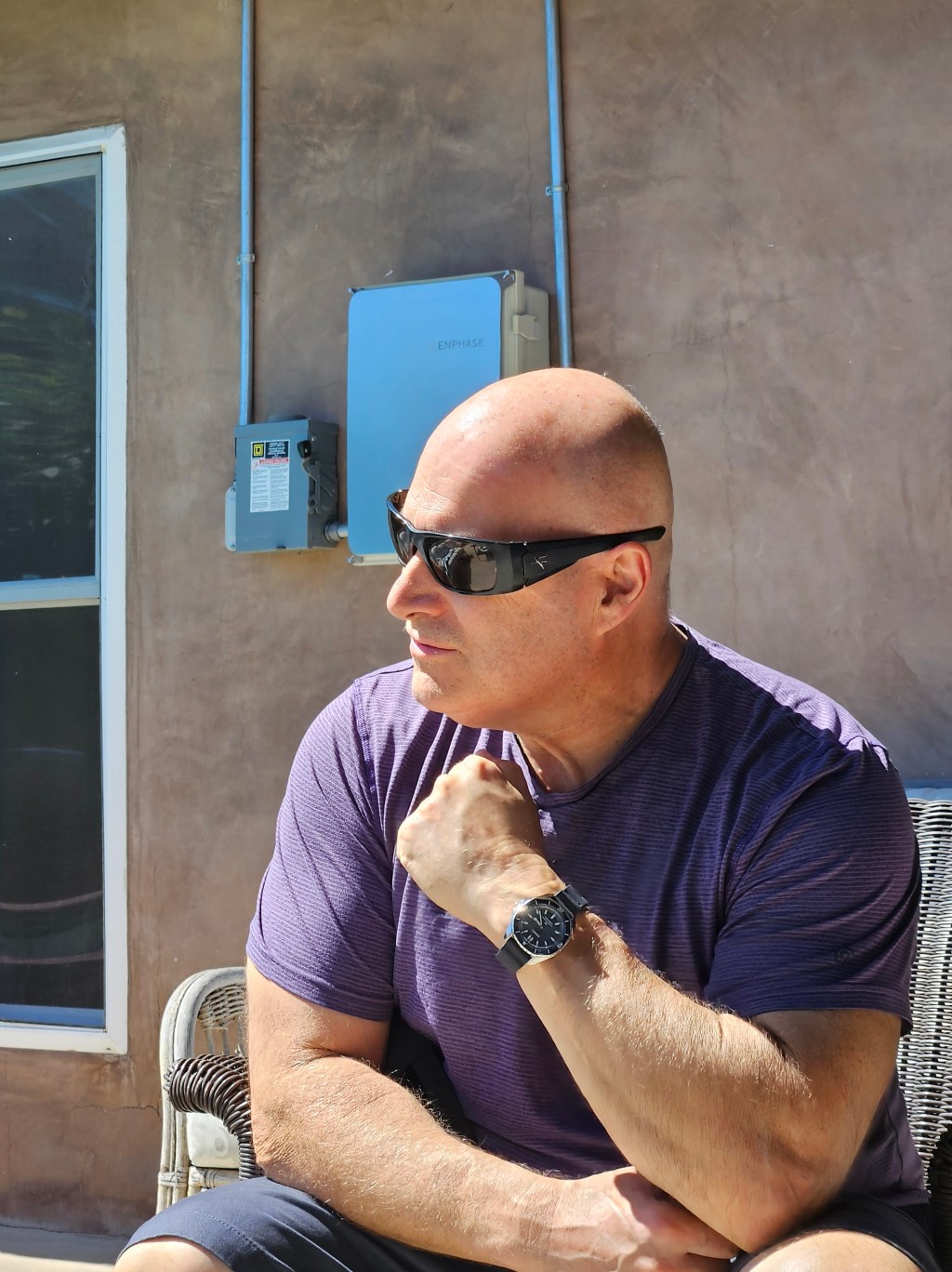
    “The double-minded man is unstable in all his ways.” Guilty as charged. Case in point: my tortured relationship with FKM Divecore straps.

    The Notre Dame study had me spiraling—researchers tortured the material with solvents, heat, and abrasion until they squeezed out PFAS “forever chemicals” and then warned these might leach into human skin. Ever since, I’ve gone back and forth, back and forth, like a malfunctioning metronome, on whether to keep wearing the straps I love more than any other rubber I’ve tried in two decades of watch collecting.

    Of course, no one wants to think of their wristwear as a poison delivery system. But context matters. First, FKM is highly stable under real-world conditions; the lab tests were more horror show than practical scenario. Second, it’s the manufacturing process that endangers workers, not the end-user. Third, if we’re ranking PFAS risks, drinking unfiltered water, eating from PFAS-coated packaging, or cooking on scratched Teflon are solid tens on the risk scale, while wearing an FKM strap is a lonely little one. That’s the Fallacy of False Priorities: panic over the trivial while ignoring the obvious.

    Even so, the issue isn’t a Nothing Burger. Divecore’s own Paul admits handling FKM worries him, and he’s working on alternative materials—silicone, vulcanized silicone, HNBR—to protect his workers and reassure consumers. That’s just smart business.

    Meanwhile, I’m not without options. My strap drawer holds factory Seiko silicones and urethanes, plus top-tier Tropic straps made of vulcanized rubber. They’re fine, but none hold a candle to the sleek perfection of Divecore FKM. I tried swapping them in, but they feel like consolation prizes—serviceable, never glorious.

    So I made a deal with myself: enjoy my pristine FKMs for now, and when the new HNBR or silicone Divecore straps arrive, I’ll switch. Sounds reasonable. Except once you’ve let the idea of PFAS seeping into your skin lodge in your brain, it refuses to leave. I’ve written about it on Instagram, made a YouTube video, and now I’m stuck in an obsessive loop, second-guessing every strap change as though I were rewriting my will.

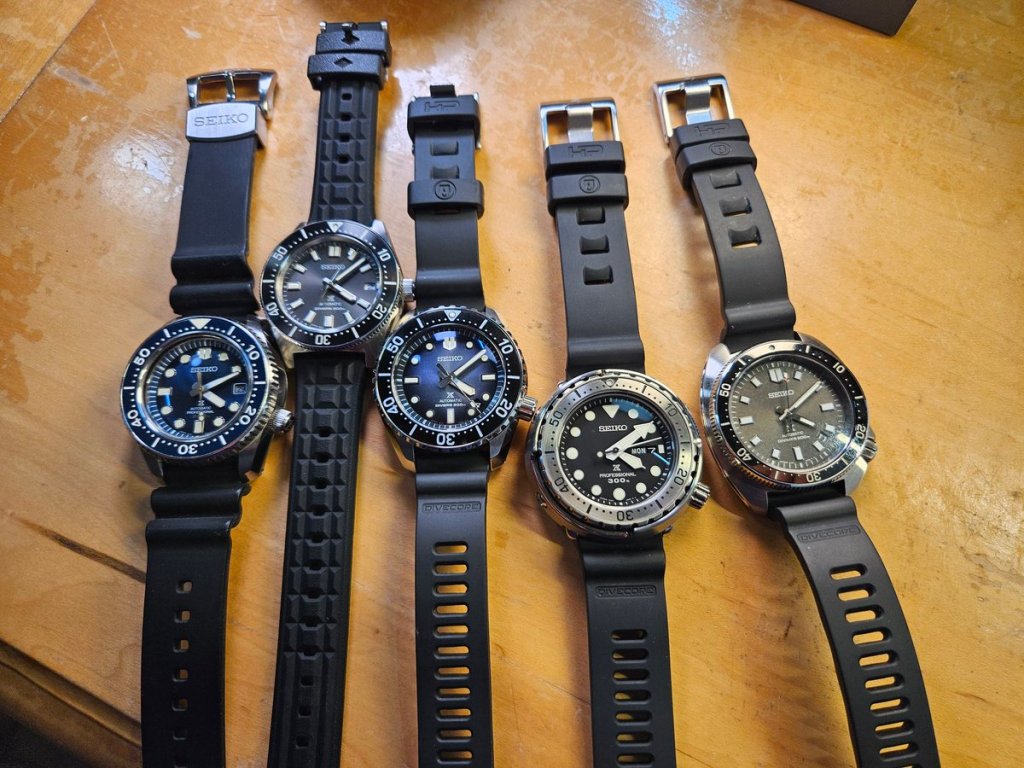
    Which brings me back to my original point: the double-minded man is unstable in all his ways. And right now, that man is staring at seven watches, toggling between glory and paranoia, wishing he could strap on peace of mind.
  • The Influenza of the Mind

    The Influenza of the Mind

    Last week, one of my teen daughters caught a cold. She shrugged it off with the stoicism of a soldier, and I barely noticed she was sick. Then my wife came down with it five days ago. It hit her harder, but she still managed to run errands, wrangle housework, and conquer the Everest of six laundry baskets stuffed with clothes that needed folding.

    Then there was me. Yesterday, after my afternoon nap, I felt aches and pains and immediately began writing my obituary. Sprawling out on the couch in the living room, I put on the docuseries The Kingdom on ESPN but had to close my eyes, then take another nap because I was “so unwell.” 

    Convinced I was succumbing to something sinister, I staggered into the kitchen and cooked dinner. The salmon, broccoli, and rice all came out overcooked—not because I was incapacitated, but because I was deep into Internet articles about PFAS “forever chemicals.” Nothing like a side of toxic paranoia with your charred protein.

    My family tolerated the burnt offering, attributing it to my alleged illness. But once I slumped onto the couch after dinner to watch Below Deck, I went full opera tenor: sighs, groans, complaints, the whole libretto of impending doom. My family, unimpressed, mocked me. “Illness always makes me morbid and lugubrious,” I explained, as if quoting from a Victorian diary.

    My daughters laughed. My wife rolled her eyes: “Here we go. The man flu.” I thought about citing research suggesting men actually suffer more with the flu, but even I knew I’d already overshared.

    “Maybe you’re just tired,” my wife said. “Maybe you shouldn’t work out tomorrow.”

    I declared that one missed workout would cause my muscles to shrivel like neglected houseplants. “I’m doomed,” I muttered, then retreated to bed before nine like a bereft invalid.

    This morning, I awoke braced for catastrophe—a full-blown cold, a fever, the Grim Reaper at my door. Instead, I felt…fine. Perfectly fine. My wife and daughter had been right. I wasn’t sick. I was just tired.

    The truth is, when I sense illness creeping in, I go from zero to tragic opera in seconds. I suffer from Influenza of the Mind, a performance illness that turns me into a paranoid man-baby. Last night’s theatrics were not the noble struggle of a fading patriarch, but the wailings of a melodramatic hypochondriac in need of nothing more than eight hours of sleep.

  • The John Deere Shoulder Massacre

    The John Deere Shoulder Massacre

    A month ago, I developed “golfer’s elbow”—a tender, nagging ache in my inner right elbow, courtesy of my stubborn devotion to single-arm kettlebell rows. Instead of backing off like a sensible adult, I “modified” the exercise into something more idiotic: a lawnmower pull, yanking the kettlebell skyward like I was trying to start a rusty John Deere.

    The good news: within a couple of weeks, the elbow pain disappeared. The bad news: two weeks ago, my left rotator cuff staged a protest and tore, lightly but persistently. The pain has lingered, not as vicious as before, but enough to remind me that recovery at sixty-four runs on geological time. If it truly is a minor tear, I’m looking at six to twelve weeks before my shoulder forgives me.

    When—if—this shoulder heals, I have no illusions about returning to my “factory settings.” The glory days of kettlebell carnage six days a week are behind me. The new plan: three or four sessions, lighter weights, and absolutely no more lawnmower rows. Instead, I’m pivoting to Zone 2 circuit training—steady sweat, elevated heart rate, endorphins over ego, sanity over low-rep bravado.

    For me, exercise isn’t just exercise—it’s therapy. It’s the way I shut down the mental chatter and scrub the cobwebs out of my skull. A life coach wants me to analyze my feelings. I’d rather blast them out with sweat and iron.

    Still, I know this is whack-a-mole. One injury heals, another pops up. That’s the deal when you insist on playing Atlas with kettlebells well past the warranty period. The only answer is to be smarter. The lawnmower row? It was my dumbest idea yet. Never again.

  • What Is the Risk of FKM Rubber Watch Straps in the Overall Scheme of Things?

    What Is the Risk of FKM Rubber Watch Straps in the Overall Scheme of Things?

    PFAS, the so-called “forever chemicals,” deserve our attention. They accumulate in the body, persist in the environment, and have been linked to cancer and organ toxicity. The question is not whether they are harmful—the science is clear enough on that—but how much risk each type of exposure carries.

    To live reasonably healthy lives in a world saturated with PFAS, we need to focus on reducing the high-risk exposures. Think of a scale from one to ten. At the top end—a full ten—you find firefighting foam, Gore-Tex fabrics, stain-resistant carpets, certain cosmetics, fast-food wrappers, fish and meat from contaminated waters, Teflon pans, unfiltered drinking water, and some dental flosses. At the bottom—a one—are minor exposures like wearing athletic clothing, sitting on treated upholstery, applying certain sunscreens, or strapping on an FKM watch band.

    On this spectrum, FKM straps rank very low. The lab studies that raised alarms subjected the rubber to extreme torture—solvents, high heat, and abrasion—to force PFAS out. That doesn’t resemble daily life. Normal wear—exposure to sweat, sunlight, or water—isn’t nearly enough to release meaningful amounts of PFAS. Compared to drinking contaminated water, eating food in PFAS-coated packaging, or scraping dinner out of a Teflon pan, the risk from a strap is trivial. If the PFAS risk ladder runs from one to ten, FKM sits squarely at one: background noise against the heavy hitters.

    In the end, acceptable risk is a personal calculation. For me, the sensible path is to avoid the high-risk exposures and stop fixating on the negligible ones. That means changing out my water filter, skipping fast-food packaging, and ditching old Teflon pans. But when it comes to wearing my FKM watch straps, I’m not going to lose sleep.

  • No Age Is for Cowards: Worry as Full-Time Employment

    No Age Is for Cowards: Worry as Full-Time Employment

    When I was six, my Grandma Mildred came to visit us at the Royal Lanai apartments in San Jose. This was around 1967. Like any neurotic little kid, I peppered her with endless questions about an upcoming event. Most of them revolved around food: what would we eat, would there be enough, and what if the deviled eggs ran out? Eventually, Grandma sighed and told me, “You worry too much.”

    Really? Another thing to worry about? Thanks, Grandma. Now I could add “chronic worrying” to my list of anxieties. Would it turn me into a puddle like the Wicked Witch? Would I self-destruct under the sheer weight of my own nerves?

    Flash forward fifty-eight years. Spoiler: I still worry like a professional. My bandwidth jams up with the dumbest obsessions—like finding the right rubber strap for my Seiko diver. I’ll lose sleep and dive so deep into Internet rabbit holes you’d think I was chasing doctorates in linguistics and ophthalmological physics simultaneously.

    Food isn’t any easier. Reading How Adam Smith Can Change Your Life, I encountered Hillel’s famous line: “If I am not for myself, who will be for me? If I am only for myself, who am I?” Roberts added that anyone who would sacrifice millions of lives to save a finger is “a monster of inhuman proportions.” Cue existential panic: If I chow down on Greek yogurt and whey protein while ignoring the industrial torture of animals, what kind of person does that make me?

    That question dredged up a memory. Years ago, while doing valet duty at my twins’ school, I chatted with Lucianna, a Brazilian parent. She told me about growing up on her uncle’s dairy farm, where calves were torn from their mothers so humans could have their milk. She remembered the calves wailing all night, a sound so haunting she’s sworn off dairy for life. Her story still rings in my ears.

    So here I am, designing my new plant-based meal plan: buckwheat groats, tofu, tempeh, nut butter, soy milk, a stack of supplements, and protein powder. I’m ready to begin. But, of course, my inner worry machine kicks in:

    • What about my omnivore family? My tofu will feel like an accusation on their dinner table.
    • What about my friends and relatives? I’ll be dismissed as a moral buzzkill, banished to the Lonely Dungeon.
    • What about vacations? Hunting for vegan options in Miami or Oahu will turn relaxation into reconnaissance.
    • What about protein and Omega-3s? My muscles will wither, my brain will curdle, and I’ll be left a vegan husk.
    • What about cheating? What if, in a moment of weakness, I scrape a lemon-pepper shrimp into my mouth while clearing plates? Then I’ll hate myself, because I’ll have violated both my morals and my macros.

    And so the worrying goes. Yet maybe this is the point. Doing the right thing rarely comes gift-wrapped in comfort. It comes with sweat, tension, and plenty of struggle.

    My grandfather once told me when he was eighty and drowning in doctor visits: “Old age is not for cowards.” I’ll amend that. No age is for cowards. Living—really living—means confronting fears, fighting cowardice, and resisting the bondage of compulsive worrying. And if anyone has the secret sauce for escaping this mental hamster wheel, I’m all ears.

  • Confessions from Planet Soy: A Vegan’s Double Life

    Confessions from Planet Soy: A Vegan’s Double Life

    On your vegan planet—a lonely sphere orbiting light years away from your family’s meat-slicked universe—you begin the day with your ritual bowl: buckwheat groats buried under vegan protein powder, drowned in plain soy milk, jeweled with berries, peanuts, walnuts, and a dusting of cinnamon. To wash it down, you baptize your dark roast coffee with soy milk and stevia, a brew that tastes like contrition disguised as virtue.

    Next comes your supplement sacrament: creatine, magnesium, B-12, turmeric, algal oil omega-3. You don’t take pills—you swallow the illusion of control.

    After your workout, tofu takes center stage—sautéed over cucumbers, peppers, and arugula, slicked with balsamic, buried under nutritional yeast, Calabrian chili sauce, and herbs. Beans are optional, as though this carnival of legumes were still missing a clown. Alternatively, cube the tofu, simmer it in Thai peanut sauce, and pretend it’s indulgent.

    Post-nap comes the protein potion: more powder, more soy milk, leftover tofu blitzed in the blender, maybe apple slices draped in nut butter. You tell yourself this is food; your ancestors might call it penance.

    Dinner is a coin toss: tofu tacos loaded with vegetables, or the trusty oatmeal rerun—protein powder, berries, peanuts, soy milk. Meanwhile, across the table, your omnivorous family devours salmon, chicken, and spaghetti and meatballs. You watch the plates like contraband. Temptation comes later, as you clear dishes: a forkful of salmon swallowed in secret, or chicken “accidentally” folded into tomorrow’s tofu salad.

    And then? The halo slips. You tumble from vegan heaven into flexitarian purgatory, the dietary halfway house for frauds, traitors, and the morally spineless. Yet you persist. This new regimen gives you clarity, structure, and—against all reason—happiness. Whether that happiness is genuine or the first symptom of nutritional madness, we’ll investigate another day.

  • Letter of a Reluctant Vegan

    Letter of a Reluctant Vegan

    Dear Family and Friends,

    My conscience has dragged me, kicking and screaming, into veganism—at least in the realm of eating. I’m not claiming sainthood. There will still be leather on my belt and my chair, but food is the resource I consume daily until I croak, so food is where the battle line is drawn.

    Frankly, it feels absurd to have to write this letter. What am I supposed to do—show up at your barbecue with a thawed hockey puck of a veggie burger and no explanation? Consider this fair warning.

    I don’t pass judgment on those who can’t afford the luxury of organic lentils, nut butters, and vegan supplements. I judge only myself. I have the means. I have no excuse.

    For my Christian in-laws, who may brand this heresy, I’ll admit: Scripture says God gave us animals for food, and Jesus Himself ate fish. But tell me—do you really see Jesus slurping down a farm-factory tilapia raised in ammonia haze, or God green-lighting slaughterhouses where conveyor belts double as hell’s architecture? I don’t.

    Yes, animals in antiquity suffered in the kill, but the industrial scale today—the torture factories, the mass indifference to pain—requires a numbness of conscience that is staggering. Hunting is one thing. Outsourcing the deed to workers inhaling ammonia until their fingernails fall off is quite another.

    I can already hear the rebuttal: “Why fret over animals when humans suffer?” To which I reply: false dilemma. I can care about both. Just as I can walk and chew gum, I can oppose sweatshops and factory farms.

    Still, I know my silence won’t protect me. Even if I never lecture, my plate of tofu will speak volumes. My very behavior will look like an indictment. Mockery is inevitable.

    And sure, I could rationalize my way back. It would be easier to eat one family meal instead of making them salmon while I steam buckwheat groats. I could shrug and say, “The animals are doomed anyway, so I might as well enjoy them.” I could hide behind biology: “I’m an omnivore; meat is natural; animal protein is more bioavailable.” But to do this would be cowardice—a lazy suppression of conscience.

    I owe my family the best version of me, not the morally diminished one. So here I stand, vegan plate in hand. The road is awkward, lonely, and a little ridiculous, but it’s the road my conscience demands.

  • When Your Tofu Judges Your Family

    When Your Tofu Judges Your Family

    Let’s say your guilty conscience finally gets the better of you. You can no longer justify devouring Thai-glazed chicken tenders, Mongolian beef, or coconut-curry fish stew while imagining the farm-factory horror that produced them. So you make the noble pivot: buckwheat groats for breakfast, organic nut butter toast, tofu and tempeh sizzling over cucumbers and arugula, and two daily scoops of plant-based protein powder to cover your macros. Milk? Gone. Soy in your coffee now, because conscience trumps cream.

    Do you miss meat? Absolutely—especially when your neighbor fires up the barbecue and the smell of charred ribs floats over the fence like weaponized nostalgia. But you march on, telling yourself that your cousin’s cardiologist called a vegan diet the “gold standard” for heart health.

    And yet, your cravings turn out to be the easy part. The real battlefield isn’t in the kitchen—it’s in the living room, the backyard, the family reunion. Your relatives haven’t sipped the vegan Kool-Aid and don’t appreciate the implicit sermon you’re preaching with every salad. You can swear you’re not judging them, but your plate of tofu says otherwise. Moral condemnation wafts from you like incense whether you intend it or not.

    Socially, you’ve become a problem guest. You show up at a barbecue with your vegan hockey puck, and suddenly you’re the party’s designated buzzkill—part leper, part nag, part mascot of guilt. Expect to eat your soy patty alone while everyone else passes the brisket.

    Economically, you’ve got blind spots too. Sure, you can afford organic tempeh and boutique supplements, but when you hint that everyone should go vegan, you’re ignoring the single mom shopping with food stamps, or the families living where tofu costs more than ground beef. To them, your “ethical choice” sounds like aristocratic scolding.

    Culturally, you risk stomping on traditions. Grandma’s meat stew isn’t just calories; it’s love in a ladle. Lecture her about vegan virtue, and you’re not just critiquing dinner—you’re insulting her lineage. And good luck explaining your plant-based gospel to Inuit communities who rely on seals and whales for survival. You’ll sound less like a prophet and more like a nincompoop.

    So here you are, impaled on the horns of the vegan dilemma. On one side, you can’t play the sanctimonious scold without alienating everyone around you. On the other, your conscience insists that, as a well-fed suburbanite, you are morally obligated to avoid meat. The path forward is thorny, precarious, and socially awkward. But welcome to the real world: nobody said doing the right thing would come with applause.

  • The Fix-It Myth: Why Self-Help is Just a Car Manual for Broken Humans

    The Fix-It Myth: Why Self-Help is Just a Car Manual for Broken Humans

    In her essay “Improving Ourselves to Death,” Alexandra Schwartz skewers our obsession with “setting goals” and the self-help prophets who profit by defining them. These gurus peddle life hacks as if they were cheat codes for existence, promising that with the right app, cue, or wearable gadget, you too can become a shiny human upgrade—an iPhone with abs.

    Their gospel is simple: optimization. A body that runs like a Swiss watch. A brain that hums like a Tesla battery. The result is a consumer barrage of homilies, buzzwords, and dopamine-chasing gadgets—all in service of transforming you into the ultimate product: yourself.

    But Schwartz argues that self-help is nothing more than a mirror, reflecting our dreams, neuroses, and insecurities. And one illusion persists like an American birthright: the Fix-It Myth. The fantasy that we are just machines—cars in need of a tune-up. Find the right manual, grab the right tools, and presto: you’re repaired, maybe even upgraded, ready to roar back onto the freeway of productivity.

    This myth has metastasized in the gig economy, where survival depends on perpetual hustle. We’ve convinced ourselves we must be perfectly fine-tuned—capable of juggling three jobs, dabbling in day trading, and hoarding enough cash to claw our way into a coveted zip code.

    At the core of this delusion is what therapist Phil Stutz calls the “Moment Frozen in Time”: a fantasy snapshot where everything is perfect—you look flawless, your soulmate is flawless, your calendar is conflict-free, and every day is a spa day in Shangri-La. The billion-dollar self-help industry feasts on this fantasy, offering secret codes that promise to deliver the life of a minor deity.

    Gwyneth Paltrow plays High Priestess of the Perfection Myth, hawking jade eggs and kale smoothies as though they were Eucharist wafers. On the Manosphere side, we’ve endured the spectacle of the Liver King—reduced from ancestral beef oracle to fallen fraud—and the smirking jiu-jitsu bodybuilder Mike Israetel, who at least delivers his advice with more honesty than theatrics.

    Stutz, however, refuses to sell the dream. His blunt counter-sermon: life is pain, uncertainty, and work. The faster you accept this, the happier you’ll be—because reality, not fantasy, is the only terrain where resilience and joy can actually grow. Otherwise, you’re just another maladapted child clinging to the hope of effortless bliss.

    And all the while, we’ve marinated in two decades of social media’s dopamine fever swamp: the endless scroll of FOMO, flexing, and fraudulence. Maybe the truest life hack isn’t another app or guru, but closing the laptop, lacing up your shoes, pounding out a five-mile run, and letting endorphins—not Instagram—clear your head.

  • Building a Bulwark Against Dopamine

    Building a Bulwark Against Dopamine

    Charles Duhigg, in The Power of Habit, insists that the real magic of self-improvement isn’t magic at all—it’s repetition, consistency, and time. Muscle memory married to good habits rewires the brain so that willpower stops being a daily knife fight. Instead, habits act as a bulwark, a fortification that keeps temptation outside the walls.

    Take my relationship with German Chocolate Cake. I adore it. But I eat it once a year because I never buy it. The thought of driving downtown, circling for parking, and elbowing through bakery lines kills the craving faster than broccoli. If people on TV are flaunting cake, I’ve trained myself to default to popcorn and an apple, which is like swapping bourbon for chamomile tea. Still, despite this culinary Maginot Line, I live fifteen pounds heavier than I want to be—proof that the fortress has weak spots.

    The Internet, however, is a stronger adversary than cake. Social media rewires the brain more ruthlessly than sugar. Twitter/X trained me to think in quips, Facebook taught me to beg for likes like a starving dog scratching at the door. I finally quit both. I post on Facebook once a month and promptly forget about it. I’m saner for it.

    But YouTube? That’s my heroin. I’ve been making watch-obsession videos for over a decade and built a modest following of 10,000. When a video pops, YouTube showers me with fireworks like a slot machine jackpot. When it flops, I get a scolding message: “This video isn’t bringing in as many of your subscribers as usual.” It’s the algorithm wagging its finger like a principal telling me I’ve failed society.

    YouTube has rewired my brain in both noble and grotesque ways. On the one hand, I’m sharper at public speaking, better at spinning essays into expositions, and more skilled at civil engagement with various personalities. On the other hand, I care too much about metrics, let them colonize my self-worth, and live half my life inside the algorithm’s funhouse mirror. I now inhabit parallel universes—the physical world and the YouTube world—fleeing one when the other displeases me.

    The problem is that the Internet’s temptations can’t be quarantined. My work machine is also my dopamine slot machine. One new tab, one click, and I’m plunging into a carnival of junk content, drenched in FOMO syrup and neon distraction. Cal Newport is right: when you toggle between focused work and dopamine junk food, the brain leaves behind a sticky residue that smothers concentration. I’ve felt that sludge firsthand, and I despise myself for swimming in it.

    As Duhigg notes, the brain is “constantly looking for ways to save effort” by making routines automatic. That’s useful for the monk who wakes at dawn to meditate, but disastrous for someone whose screen offers the New Tab to Nowhere. If only I could build a stronger bulwark against the carnival in my browser, I might actually live lighter, work deeper, and—dare I say it—be happier.