Blog

  • The Smart-Right Principle

    The Smart-Right Principle

    One afternoon in Mrs. Eckhart’s fifth-grade class, I finished my reading assignment with nearly an hour to spare. Faced with that glorious stretch of unclaimed childhood time, I did what any aspiring future contributor to Mad Magazine might have done.

    I built a submarine.

    Not an actual submarine, of course. I drew an enormous one on a sheet of white construction paper, complete with rows of portholes. Every window framed a tiny character, and every character had something ridiculous to say.

    One man was making pancakes and inviting the crew to breakfast.

    A woman with curlers in her hair refused to leave her cabin because she wasn’t presentable.

    Another sailor complained that his cereal box had promised a free toy that was nowhere to be found.

    Someone couldn’t nap because everyone else was making too much noise.

    Another had a piece of apple peel wedged between his teeth and regarded this minor inconvenience as civilization’s greatest crisis.

    The submarine was less a military vessel than an underwater apartment complex populated entirely by neurotics.

    I loved it.

    I imagined myself one day writing and illustrating absurd little worlds where everyone took trivial problems with magnificent seriousness.

    Then Mrs. Eckhart stopped beside my desk.

    Her red bouffant seemed to rise another inch as she studied my masterpiece. Her eyebrows arched with the unmistakable expression adults reserve for children who have somehow managed to disappoint them in unusually creative ways.

    “Is this how you spend your time in my classroom?” she asked.

    “I finished the assignment,” I said. “I was just drawing quietly.”

    She ignored my explanation.

    Instead, she began reading the dialogue bubbles aloud in a voice dripping with sarcasm. The class erupted in laughter.

    My submarine, moments earlier the crown jewel of my artistic career, had become evidence in a public trial.

    Then came the sentence.

    “I want your parents to sign this.”

    She turned the paper over and wrote a note explaining that I had spent class drawing cartoons instead of doing schoolwork.

    That evening I presented the evidence to my father.

    He read the note.

    He looked at me.

    Then he sighed.

    “You pissed off your teacher.”

    “I don’t know why,” I protested. “I finished my work. I wasn’t bothering anybody.”

    “That doesn’t matter.”

    “I didn’t do anything wrong.”

    “You insulted her.”

    I stared at him.

    “I don’t understand.”

    He leaned back in his chair.

    “By finishing early and drawing cartoons, you told her her work wasn’t challenging enough.”

    “But I never said that.”

    “You didn’t have to.”

    “I wasn’t criticizing her.”

    “She thought you were.”

    I still resisted.

    “But I was right.”

    My father nodded.

    “Maybe.”

    Then he delivered one sentence I have remembered for more than half a century.

    “It’s better to be smart than to be right.”

    At ten years old, I found this profoundly irritating.

    “I thought they were the same thing.”

    “They aren’t.”

    He explained that technical correctness and practical wisdom often occupy different neighborhoods.

    Perhaps I had violated no classroom rule.

    Perhaps I had every right to draw after completing my assignment.

    None of that altered the outcome.

    My teacher felt disrespected.

    Once that happened, being right became largely irrelevant.

    Only years later did I understand that my father had given me a lesson far more valuable than any fifth-grade reading assignment.

    He had introduced me to The Smart-Right Principle: the recognition that factual correctness often matters less than the social intelligence required to achieve a constructive outcome. Winning the argument while damaging the relationship is rarely a genuine victory.

    Children naturally believe that justice consists of discovering who is objectively correct.

    Adults eventually discover that human beings seldom react to objective correctness.

    They react to perceived respect.

    Or disrespect.

    Intention often loses to interpretation.

    I intended nothing more inflammatory than entertaining myself after finishing my work.

    Mrs. Eckhart interpreted my drawing as a silent declaration that her assignment had failed to occupy me.

    Whether she was objectively right no longer mattered.

    Her perception became reality.

    I have watched this drama replay itself countless times throughout adulthood.

    Employees prove their managers wrong while destroying their careers.

    Husbands win arguments that cost them intimacy.

    Politicians deliver devastating rebuttals that persuade no one.

    Professors publicly expose weak reasoning while privately humiliating students who might otherwise have remained eager to learn.

    Every participant leaves convinced that truth prevailed.

    Usually only resentment does.

    The Smart-Right Principle does not ask us to abandon truth.

    It asks us to recognize that truth travels through relationships.

    People rarely remember whether you were technically correct.

    They remember how you made them feel while proving it.

    Ironically, my father never suggested that Mrs. Eckhart had behaved wisely.

    He simply understood something I did not.

    Life is not graded like a geometry proof.

    You do not receive full credit merely because your logic is impeccable.

    Human beings are not propositions.

    They are creatures of pride, dignity, insecurity, gratitude, vanity, and interpretation.

    Ignore those realities, and you may spend the rest of your life winning arguments while quietly losing people.


  • The Character Paradox

    The Character Paradox

    If you believe that human beings are capable of genuine self-improvement, Jeffrey Rosen’s The Pursuit of Happiness is an excellent place to begin. On its opening page, Rosen quotes the Renaissance physician Paracelsus: “Even as man imagines himself to be, such he is, and he is also that which he imagines.”

    Most of us imagine ourselves becoming happier. That is hardly surprising. The more revealing question is what kind of life we imagine will make us happy.

    A little philosophy quickly dispels the fantasy that happiness can be built from immediate gratification. Pleasure is fleeting. Appetite is insatiable. Every indulgence briefly satisfies only to awaken the desire for another. The great philosophical tradition proposes a different path. Happiness is not something we consume. It is something we become.

    Rosen traces this tradition through Benjamin Franklin and ultimately back to Cicero’s Tusculan Disputations. There, Cicero argues that the soul must be “tranquilized by restraint and consistency.” The happy person is neither consumed by fear nor driven by restless ambition. He is not perpetually distressed, intoxicated by meaningless excitement, or enslaved by craving. He possesses something rarer: inner equilibrium. His happiness rests not upon favorable circumstances but upon a well-ordered character.

    Rosen summarizes the idea with admirable clarity. The pursuit of virtue is about being good, not feeling good. Feelings are unstable companions. Character endures. America’s Founders therefore understood the pursuit of happiness as a lifelong effort to cultivate virtue by using reason to govern destructive emotions, improve oneself, and become more capable of serving others.

    The argument is compelling.

    It also raises an unsettling question.

    Can moral character actually be cultivated, or is philosophy merely watering seeds that were already planted?

    Over the years I have spoken with many people whose childhoods were marked by neglect, abuse, or abandonment. A few told me they made a solemn vow that their own children would never endure what they had suffered. Their painful upbringing became a moral education. They transformed misery into compassion.

    Others traveled a different road.

    Their adult lives became faithful reproductions of the homes that had wounded them. Chaos produced more chaos. Addiction generated more addiction. Cruelty echoed across another generation.

    Why?

    Why does one person convert suffering into wisdom while another converts it into repetition?

    Were different choices responsible?

    Or were deeper differences already present long before those choices appeared?

    Perhaps character truly is destiny.

    But if so, where does character come from?

    Is it patiently built through discipline, habit, and moral instruction?

    Or does moral instruction simply awaken something that was already waiting to be awakened?

    I sometimes wonder whether the very act of picking up Rosen’s The Pursuit of Happiness hints at an answer. Perhaps people do not seek goodness by accident. Perhaps they are drawn toward it because some quiet part of them already recognizes its voice.

    That possibility reveals what I call The Character Paradox: the enduring question of whether moral character is principally cultivated through disciplined choice or gradually revealed by the dispositions already present within us.

  • The Glum Principle

    The Glum Principle

    One of the most unforgettable cartoon characters from my childhood was a tiny Lilliputian from The Adventures of Gulliver named Glum. Glum appeared to have been placed on earth for one purpose: to extinguish hope before it had a chance to embarrass itself. Whenever his friends devised a clever plan to escape disaster, Glum would clear his throat and deliver his familiar three-point sermon.

    “It’ll never work.”

    “We’ll never make it.”

    “We’re doomed.”

    Glum never offered an alternative. He didn’t solve problems. He protected them.

    As a child, I found him amusing. As an adult, I recognized him immediately.

    He lives inside me.

    He probably lives inside you.

    Glum is the patron saint of what I call The Glum Principle: the tendency of the inner saboteur to mistake pessimism for realism, undermining action before reality has rendered its verdict. Glum derives enormous comfort from certainty, particularly the certainty that everything is about to collapse. His pessimism becomes a self-fulfilling prophecy. By convincing everyone to surrender before the battle begins, he manufactures the defeat that later serves as evidence that he was right all along.

    Stephen Pressfield encountered the same character and gave him a different name.

    He called him Resistance.

    In The War of Art, Resistance is the invisible force that whispers, “Start tomorrow,” “You’re not talented enough,” or “Who do you think you are?” It is perfectly content for you to live a life of comfortable mediocrity, provided you mistake your surrender for prudence.

    Psychiatrist Phil Stutz identifies the same adversary in The Tools.

    He calls it Part X.

    Different vocabulary.

    Same miserable roommate.

    You never evict him. You merely learn to stop letting him hold the house keys.

    Every morning he wakes up eager to renegotiate yesterday’s victories. Every meaningful life is therefore less a destination than a daily engagement with the same familiar opponent. The battle itself becomes part of the point. Character is forged not by eliminating the inner saboteur but by repeatedly refusing to obey him.

    Religious traditions have been describing Glum for thousands of years.

    Judaism calls him the yetzer hara, the evil inclination. The struggle is real, but so is human responsibility. God has equipped us with sufficient moral strength, discipline, and wisdom to resist our lower impulses. Victory requires vigilance, habit, and obedience rather than supernatural replacement.

    Pauline Christianity offers a far darker diagnosis.

    Writing in Romans, Paul confesses that he repeatedly does the very things he hates and neglects the things he longs to do. His problem is not ignorance. It is inability.

    “I do not do the good I want,” he laments, “but the evil I do not want is what I keep on doing.”

    Paul’s Glum is more than a troublesome inclination.

    He is a tyrant.

    The human self has become so compromised that no amount of discipline, mindfulness, or moral exertion can overthrow him. What is needed is not better habits but a new nature—a kind of spiritual heart transplant accomplished through Christ.

    This marks one of Christianity’s great departures from many other traditions.

    Judaism, Stoicism, Buddhism, and much of modern self-help begin with the conviction that human beings, though flawed, possess the capacity to cultivate virtue through disciplined practice. Daily habits, mindful attention, moral training, and repeated acts of self-government gradually strengthen the better self.

    Paul is unconvinced.

    For him, the dragon cannot be domesticated.

    It must die.

    The debate has never really ended.

    One side believes the road to flourishing is paved with discipline.

    The other believes discipline alone merely teaches Glum better manners.

    That is why Romans remains one of history’s most unsettling books.

    It is, in many ways, the ultimate anti-self-help manual.

    It insists that the deepest problem is not that we lack better techniques.

    It is that the person trying to use those techniques is himself in need of redemption.

  • The Collective Willpower Principle

    The Collective Willpower Principle

    The television comedy Loudermilk centers on Sam Loudermilk, a recovering alcoholic played by Ron Livingston, whose permanently disappointed, basset-hound face seems genetically incapable of approving of humanity. Loudermilk is a music critic, an addiction counselor, and an equal-opportunity offender. He insults friends, strangers, and fellow recovering addicts with such relentless precision that sarcasm becomes his native language. His group meets in a church overseen by a perpetually exasperated priest who seems forever one wisecrack away from throwing Loudermilk onto the sidewalk.

    The characters spend much of the series antagonizing one another. They lie, relapse, brood, sabotage themselves, and exchange insults with the affectionate brutality of siblings who have survived the same dysfunctional childhood. The comedy is shamelessly outrageous, yet beneath the profanity and chaos lies genuine tenderness. Loudermilk understands something profound: broken people often love one another more honestly than polished ones.

    I eventually realized I had become an evangelist for the show. Whenever the opportunity arose, I urged people to watch it.

    That became unmistakably clear during a visit to my favorite watch store.

    I have been patronizing the same shop for nearly twenty-five years. The Owner and the Assistant know me well enough to recognize my recurring condition: chronic horological temptation. Visiting the store has become something like the Saturday beauty salons my mother frequented during the late 1960s. Women would spend hours having their hair done while gossiping, laughing, and catching up on neighborhood life. The appointment wasn’t merely cosmetic. It was communal. Hair happened to be the excuse.

    For me, watches became the excuse.

    Over two decades, the Owner and Assistant have resized bracelets, regulated movements, replaced batteries, and quietly indulged my fascination with mechanical jewelry. They are master technicians, equal parts craftsmen and therapists for anxious watch enthusiasts.

    One afternoon I stopped in to have a bracelet adjusted on one of my Seiko divers. As the Assistant removed a link, I mentioned Loudermilk and described its recovering alcoholics driving one another crazy with their compulsive, self-destructive behavior.

    His expression changed immediately.

    He stepped away from his workbench and leaned against the counter.

    “I watch it,” he said. “I’m an alcoholic.”

    He told me he had been attending five recovery meetings every morning, despite not being “a morning person.” For years he had dismissed his drinking because, in his culture, men routinely drank enormous quantities of alcohol well into old age. It seemed normal—until it wasn’t. Eventually he realized alcohol was dismantling his life one drink at a time.

    He had been sober for thirteen days.

    Thirteen days.

    Long enough to glimpse hope.

    Not nearly long enough to trust it.

    I thanked him for telling me. What surprised me was not his honesty—we had known each other for almost twenty years—but his willingness to speak so openly while another customer browsed nearby carrying a Chihuahua tucked comfortably in her arms.

    Then something unexpected happened.

    The woman looked up.

    “I love Loudermilk,” she announced.

    “What a shame they canceled it after only three seasons.”

    The Assistant immediately objected.

    “It could still come back.”

    For several minutes they debated the show’s fate with the enthusiasm normally reserved for constitutional amendments or playoff baseball.

    I smiled, said goodbye to both of them, and walked toward the parking lot.

    Halfway across the sidewalk, the obvious finally occurred to me.

    I loved Loudermilk because, in my own way, I belong to its congregation.

    I am an addict.

    Not an alcoholic.

    But addiction wears many disguises.

    To be an addict is to discover that you are inhabited by two competing selves. One seeks discipline, moderation, and long-term flourishing. The other wants immediate gratification and endlessly whispers that one more purchase, one more indulgence, one more exception surely won’t matter.

    The battle is exhausting because it never quite ends.

    The encouraging news is that the adult gradually becomes stronger. Every act of restraint weakens the impulsive child within. Every healthy habit transfers a little more authority to the wiser self.

    The sobering news is that the child never entirely disappears.

    One unexpected trigger.

    One careless decision.

    One rationalization.

    Suddenly the old voice is speaking again with astonishing confidence.

    That is why Loudermilk revolves around a support group.

    Recovery is rarely a solitary achievement.

    Human beings are remarkably poor at borrowing strength from their future selves.

    We are much better at borrowing it from one another.

    That is the quiet wisdom beneath all the profanity and comic dysfunction. The addicts keep returning because they understand something the rest of us prefer to ignore. Self-mastery is not simply an individual accomplishment. It is often a communal one.

    The show illustrates what I call The Collective Willpower Principle: certain forms of self-mastery cannot be sustained through determination alone but require the borrowed strength of a community committed to the same struggle.

    Perhaps that explains why I left the watch store feeling unexpectedly hopeful.

    Three strangers—a recovering alcoholic, a watch addict, and a woman carrying a Chihuahua—had briefly formed a fellowship around a television comedy.

    The subject wasn’t really Loudermilk.

    It was the shared recognition that every one of us is trying to keep some unruly part of ourselves from taking over the wheel.

  • Soul Foreclosure

    Soul Foreclosure

    I recently dreamed that I committed an act of generosity so spectacularly foolish that it could only occur in a dream.

    A stranger down on his luck needed a car.

    I rented him mine.

    Not for an afternoon.

    For a week.

    When the week ended, the car was supposed to return.

    It didn’t.

    The rental agency proved as reachable as Atlantis. Every phone call dissolved into voicemail. Every inquiry disappeared beneath geological layers of paperwork. Somewhere inside an administrative labyrinth, my car had ceased being an automobile and become a bureaucratic rumor.

    At first I searched.

    Then I inquired.

    Eventually I surrendered.

    I began the strange process of constructing a life around the absence of something I had once considered indispensable.

    That was when the letters started arriving.

    Apparently my missing car had been abandoned in some restricted location, and because it remained there, I was responsible for an endless procession of fines. Whose property it occupied could not be determined. Every answer generated three new forms. Every digital trail branched into ten more dead ends. Bureaucracy reproduced like mold in a damp basement.

    No one could tell me where my car was.

    Everyone could tell me I owed more money.

    The dream became increasingly surreal.

    The car was gone.

    Yet it continued ruining my life.

    I woke with the uneasy conviction that the car had never been a car.

    It was something far more important.

    The dream reminded me of Thomas Dolby’s haunting 1982 song “One of Our Submarines,” in which loss lingers like an unanswered transmission from beneath dark water. Something precious has vanished. The silence becomes its own form of communication.

    That is exactly how the dream felt.

    Looking back, I think it illustrates what I call Soul Foreclosure: the unsettling conviction that something essential to one’s identity has quietly slipped beyond one’s reach, leaving behind an acute sense of incompleteness whose object cannot be clearly named.

    The dream never directly told me what had been lost.

    It merely allowed me to experience the loss.

    The missing car became the perfect symbol because a car is more than transportation. It carries us through the world. It grants direction, mobility, and agency. To lose it is to lose not merely a possession but the very instrument by which one moves toward the future.

    The bureaucratic nightmare only deepened the metaphor.

    The missing soul could not be recovered through diligence.

    Forms multiplied.

    Digital records contradicted one another.

    Every attempt at resolution produced another layer of confusion.

    The system itself had become the villain, a paper-pushing Minotaur guarding a labyrinth whose prize no one could locate.

    Perhaps that is why I woke with such melancholy.

    I wasn’t grieving a car.

    I was grieving the suspicion that somewhere along the journey through adulthood, paperwork, obligations, and the thousand administrative distractions of modern life, I had mislaid some vital part of myself.

    The truly unsettling part was not that I couldn’t find it.

    It was that life kept sending me invoices for its absence.

  • Waiting for the Norwegian Sweat Lodge

    Waiting for the Norwegian Sweat Lodge

    I often think about something Samuel Wilson Fussell wrote in his memoir Muscle. At the height of his bodybuilding obsession, he resented the hours between one workout and the next. Training made life bearable. Everything else was simply waiting.

    I understand that feeling better than I wish I did.

    Every workout is Christmas morning.

    The days between workouts are spent writing exercise programs the way children write Christmas lists. Should I begin with kettlebell swings? Goblet squats? Romanian deadlifts? Reverse lunges? The anticipation becomes its own form of pleasure. I don’t merely look forward to training. I ache for it.

    I’m almost sixty-five, and my one-hour kettlebell sessions in the garage have become my transcendental escape. They feel less like exercise than boarding a flight to a Norwegian sweat lodge hidden deep within a pine forest. There, steam rises through the trees like incense. The air is clean. My mind finally grows quiet. For an hour, I take a vacation from my own neuroses.

    Age, however, imposes its own theology.

    Injury is now the unforgivable sin.

    At twenty-five, I could bully my body into submission. At sixty-five, my body is the senior partner in the relationship. It insists on negotiation. I have to lift lighter, move smarter, recover longer, yet still wander close enough to my physical limits that my muscles receive the message without my tendons filing a formal complaint. Fifty years under the barbell have taught me where that narrow path lies. The art is approaching the cliff without tumbling over it.

    I cannot exaggerate how much I treasure those three weekly workouts.

    Three.

    No more.

    My body has cast its vote.

    The remaining days belong to the Schwinn Airdyne.

    Calling it “cardio” feels charitable. The Airdyne is less Norwegian sweat lodge than medieval torture device, a machine apparently designed by monks who believed salvation was achieved only through prolonged respiratory distress. If I could replace every Airdyne session with kettlebells, I would do it tomorrow. Unfortunately, my joints have become more persuasive than my enthusiasm.

    Training, however, is only half the bargain.

    Then comes eating.

    Or, more precisely, eating the right amount.

    People often say, “Just eat healthy.”

    That’s charming.

    I can eat salmon, berries, oatmeal, Greek yogurt, beans, and vegetables until I resemble a prosperous bear preparing for hibernation. My problem has never been distinguishing broccoli from doughnuts. My problem is that my default setting is abundance.

    Real nutrition isn’t merely choosing healthy foods.

    It’s choosing enough healthy foods—and then stopping.

    That is where the real battle begins.

    Like most people, I live with a steady stream of food noise humming in the background of my consciousness. Portion control doesn’t silence that noise. It merely lowers the volume enough that I can hear myself think.

    Yesterday was a perfect example.

    Breakfast was oatmeal, protein powder, soy milk, and berries. Lunch was a shrimp-and-tuna salad. After my afternoon nap came plain Greek yogurt with mango. Dinner was salmon over a salad with white rice and garbanzo beans, followed by an apple.

    Roughly 2,400 calories.

    Objectively, I ate well.

    Subjectively, I was hungry for most of the day.

    Not Hungry with a capital H.

    Not the desperate hunger of starvation.

    Just small-h hunger.

    And over the years I have learned something the fitness influencers rarely advertise between shirtless selfies and discount codes:

    Successful weight management is usually hungrier than unsuccessful weight management.

    If you’re never a little hungry, there’s a good chance you’re eating enough to maintain exactly the body you already have.

    That isn’t a tragedy.

    It’s simply arithmetic.

    If I want the leaner, stronger body my kettlebell training is trying to build, then I must accept small-h hunger as the price of admission.

    So I make peace with it.

    Because somewhere in the distance, beyond another measured meal and another day of anticipation, I can already see that Norwegian sweat lodge rising from the forest. Steam drifts through the evergreens like a veil. The kettlebells are waiting.

    And, like Christmas morning, it will be worth every hour I spent waiting.

  • The Bad Apple Principle

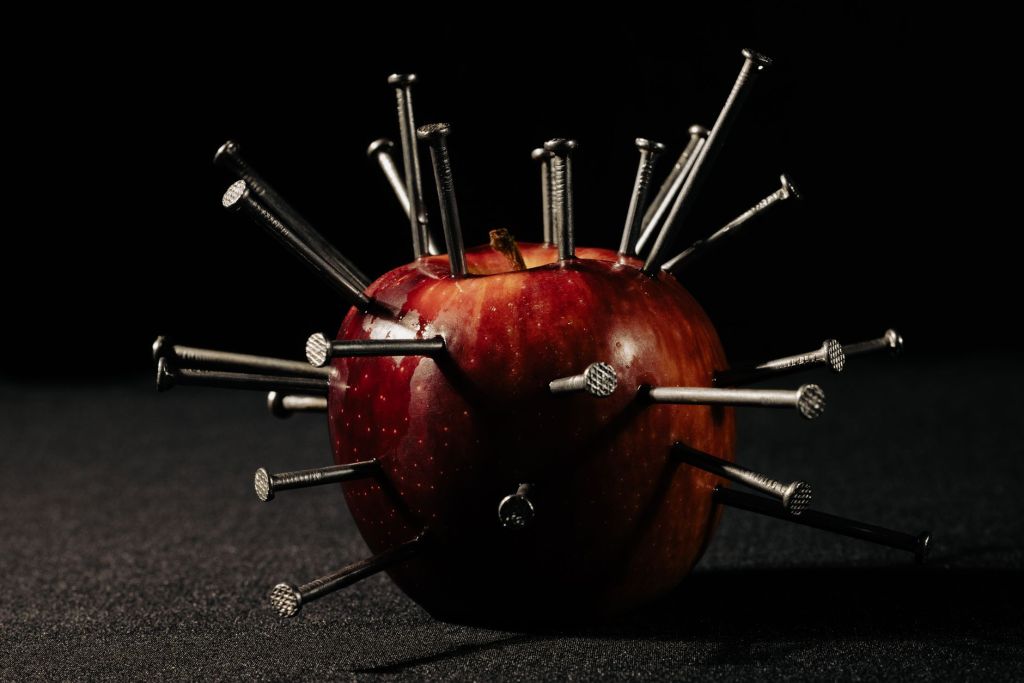
    The Bad Apple Principle

    This morning, while swinging kettlebells in my garage, I listened to Larry Mantle’s AirTalk. The topic was dogs in restaurants, or more precisely, the small but talented minority of dog owners determined to convince the rest of us that civilization has been overrated.

    The complaints were familiar. Dogs licked strangers’ hands. Seemingly placid dogs lunged at smaller ones. Playful dogs darted under servers carrying trays of hot food. Then came the owners of “service dogs” who informed restaurant staff that the rules were for lesser mortals. Their pets, like minor royalty, possessed diplomatic immunity.

    I suspect more than ninety percent of dog owners are perfectly considerate. They keep their dogs under control, respect boundaries, and would never dream of turning a restaurant into an off-leash park.

    They are also irrelevant.

    Restaurants don’t write policies for them.

    They write policies for the other ten percent.

    That observation led me to a melancholy truth about institutions. Bureaucracies are not designed around our best behavior or even our typical behavior. They are designed around our worst behavior. They must assume that somewhere, someone will abuse every privilege, exploit every loophole, and confuse entitlement with freedom.

    That is The Bad Apple Principle: the misconduct of a small minority determines the restrictions imposed upon the responsible majority.

    The principle explains far more than dogs in restaurants. It explains airport security, locked toothpaste at CVS, liability waivers, plagiarism software, surveillance cameras, password requirements, and a thousand other bureaucratic irritations. Every rule we grumble about has a backstory, and that backstory almost always begins with someone who behaved just badly enough to make the rule inevitable.

    The idea reminded me of a book I devoured when I was ten: Laurence J. Peter’s The Peter Principle. Ever since, I’ve had a weakness for elegant ideas distilled into memorable names.

    Naturally, I immediately imagined writing my own bestseller:

    The Bad Apple Principle: Why Good People Live by Bad People’s Rules.

    Then reality intruded.

    The entire thesis fits comfortably inside a single paragraph.

    Knowing the publishing industry, however, I’m sure a seasoned nonfiction writer could stretch it into fifteen brisk chapters, three airport interviews, a TED Talk, and a podcast tour. My contribution would simply be to wave wistfully from the sidelines, muttering, “Yes, but the title was mine.”

  • Waiting for My Redemptive Metamorphosis

    Waiting for My Redemptive Metamorphosis

    Perhaps every human being spends part of life waiting for a Great Mutation.

    Mine arrived on Saturday evenings in 1978.

    I sat alone in the living room watching The Incredible Hulk.

    Dr. David Banner was gentle, decent, almost saintly. He endured humiliation with the patience of Job until one indignity too many awakened something volcanic inside him. Then came the transformation. Muscles swelled. Clothes exploded into ribbons. The ordinary man disappeared, replaced by a mythical giant who seemed immune to every weakness that had tormented him only moments before.

    The scenes overwhelmed me.

    I cried.

    Not because they frightened me.

    Because I wanted them to happen to me.

    I didn’t merely want to become stronger.

    I wanted to mutate.

    I wanted my own body to erupt into something so magnificent that weakness, humiliation, fear, and self-consciousness would vanish forever.

    Then the rage would subside.

    The green giant would disappear.

    David Banner would return.

    And every week came the scene that broke my heart.

    Banner walked alone down a deserted highway while Joe Harnell’s haunting piano theme, “The Lonely Man,” floated over the closing credits.

    That was the person I recognized.

    Not the Hulk.

    David Banner.

    The solitary wanderer searching for redemption.

    As a child, I mistook that longing for innocence.

    Only much later did I recognize the quiet narcissism hidden inside the fantasy. I imagined myself not simply misunderstood but somehow destined for an extraordinary transformation that would finally justify my existence. I wasn’t content to become a better version of myself. I wanted to become another kind of being altogether.

    Looking back, I can see that I was already rehearsing the emotional architecture of the religious conversion that awaited me only a year later.

    Long before I met Jesus, I was already waiting for salvation.

    Lou Ferrigno represented one path.

    Jesus represented another.

    Both promised transformation.

    Both seemed capable of replacing the frightened, inadequate boy with someone purified, powerful, and whole.

    The muscles were never the destination.

    They were the sacrament.

    What I truly longed for was what I now call Redemptive Metamorphosis: the hope that one overwhelming transformation—physical, spiritual, artistic, or psychological—could permanently redeem a life by replacing the flawed self with a new and purified identity.

    For years I believed that transformation might begin with a barbell.

    Only later did I realize I had been searching for something far heavier to lift than iron.

  • The Words That Wouldn’t Stay on the Page

    The Words That Wouldn’t Stay on the Page

    No one ever spoke like Jesus.

    For Emmanuel Carrère, Christ’s uniqueness lies not primarily in miracles or doctrine but in language itself. Borrowing the linguistic term hapax legomenon—a word that appears only once in an entire body of literature—he suggests that Jesus is a kind of human hapax: an unrepeatable event in the history of speech.

    Carrère returns to a brief scene in John’s Gospel. Temple guards are sent to arrest Jesus, yet they return empty-handed. Asked why they failed, they offer no legal argument or strategic excuse. They simply say:

    “No one ever spoke like this man.”

    For Carrère, those few words explain more than volumes of theology.

    Even if one discarded the miracle stories, doubted the Virgin Birth, questioned the Resurrection, and rejected every supernatural claim, the sayings of Jesus would still stand beside those of Buddha, Laozi, Confucius, and history’s greatest spiritual teachers. Something unprecedented happened in the way Jesus spoke. His words possess what I would call Verbal Singularity: the condition in which a person’s manner of speaking is so original, arresting, and irreducible that it cannot be understood as merely another variation on earlier traditions.

    The New Testament captivates Carrère for another reason as well.

    Certain episodes possess the awkward texture of genuine memory.

    Who invents the anonymous young man who flees naked from Gethsemane after escaping from his linen garment? Carrère suspects the humiliated youth may even have been Mark himself, quietly preserving his own embarrassing cameo in the Gospel.

    Or consider the paralyzed man whose friends dismantle a roof simply to lower him into an overcrowded room before Jesus.

    These moments feel almost too peculiar to be fictional. They are oddly specific, narratively unnecessary, and gloriously resistant to polish. Their very strangeness gives them the texture of remembered experience rather than literary invention.

    The overt miracles leave Carrère far less persuaded.

    The Virgin Birth, the bodily Resurrection, and other supernatural claims strike him as theological architecture constructed after the fact. They belong to the realm of belief, and Carrère cannot honestly persuade himself to believe them.

    Yet disbelief has never extinguished fascination.

    Quite the opposite.

    He remains captivated by the singular force of Jesus’ language and by those small, seemingly incidental details that often feel more historically persuasive than the miracles themselves. The sayings continue to haunt him long after the doctrines have ceased to convince him.

    As a novelist, Carrère cannot help but marvel at the achievement.

    Every fiction writer dreams of creating a character who feels alive.

    Jesus does something far more astonishing.

    He steps off the page and into history, inspiring the largest and most enduring movement the world has ever known.

  • When Love Becomes Too Perfect

    When Love Becomes Too Perfect

    Carrère is captivated by Christianity’s vision of salvation, yet he recoils from its radical demands. The Gospel asks us to loosen our grip on the very things most people consider life’s greatest blessings. Marriage, children, wealth, reputation, and ambition all become secondary to membership in the family of Christ. Even love is transformed. Rather than reserving our deepest affections for spouses, children, and friends, Jesus appears to call us to a love that embraces every person without distinction.

    Here Carrère hesitates.

    Can love that is distributed equally still be called love?

    Or does it become so universal that it loses the very qualities that make it recognizably human?

    Perhaps love can become so perfect in theory that it dissolves in practice. I would call this Affection Dilution: the condition in which extending equal love to all people weakens the depth, intimacy, and preferential character that give love its meaning within families and close friendships. A love that refuses to distinguish between one’s child and a stranger risks becoming less an experience than an abstraction.

    Carrère contrasts this Christian vision with what he sees as the Jewish ideal of the good life. There, holiness is not achieved by retreating from the world but by inhabiting it faithfully. One marries. One raises children. One prospers through honest work. One celebrates weddings, feasts, and holy days. One delights in generosity, hospitality, longevity, and community. The covenant is lived not apart from earthly existence but within it. Family and flourishing are not distractions from God; they are among the ways God is honored.

    Christianity, by contrast, often appears suspicious of those very satisfactions. Earthly success fades. Family loyalties yield to discipleship. Wealth becomes a spiritual hazard. This world is not the destination but the waiting room for another kingdom.

    Carrère never fully resolves the tension between these two visions of the good life.

    My sense is that his temperament inclines him toward the Jewish embrace of earthly flourishing. He admires Christianity’s uncompromising moral vision, but he cannot surrender the conviction that family, friendship, beauty, and the ordinary joys of this world are not obstacles to a meaningful life. They are, in many ways, the very substance of it.