Retirement changes your relationship with time because retirement changes your proximity to death.
For most of your life, mortality resembles a dark castle somewhere beyond the horizon. You know it exists. You have seen illustrations. You have read stories about people who unfortunately arrived there. But the castle remains pleasantly obscured behind enormous banks of cumulus clouds, and you have been granted the psychological luxury of assuming that several mountain ranges, a river, and perhaps a small European principality stand between you and its front gate.
You have time.
At thirty-five, this belief requires almost no effort. At forty-five, you may occasionally notice one of the turrets poking through the clouds, particularly when a parent becomes ill or an old friend dies. Then work intervenes. There are classes to teach, children to raise, bills to pay, meetings to attend, groceries to buy. The clouds roll back in.
Then you retire.
Or, more precisely, you press Submit on the retirement application.
The clouds vanish.
There is the castle.
Good God.
It’s much closer than advertised.
This is the Castle-Proximity Principle: the closer you move toward the visible end of life, the harder it becomes to experience time as an inexhaustible resource. The castle has not suddenly moved toward you. You have simply reached the point in the journey where atmospheric conditions no longer conceal its location.
Retirement is particularly effective at clearing the weather because work has served for decades as a kind of chronological camouflage. As long as another semester waits in the future, you remain inside the machinery of ordinary adult life. There will be another fall schedule, another spring semester, another opening-day meeting, another batch of freshman essays, another argument about Student Learning Outcomes. The repetition itself creates the illusion of permanence.
Then you announce your final semester.
Suddenly every event acquires the word last.
Last fall semester.
Last opening-day meeting.
Last final exam.
Last student who submits six pages of AI-generated oatmeal and looks wounded when you ask whether he participated in its manufacture.
The castle emerges from the mist.
And standing at the entrance is someone you recognize from childhood illustrations.
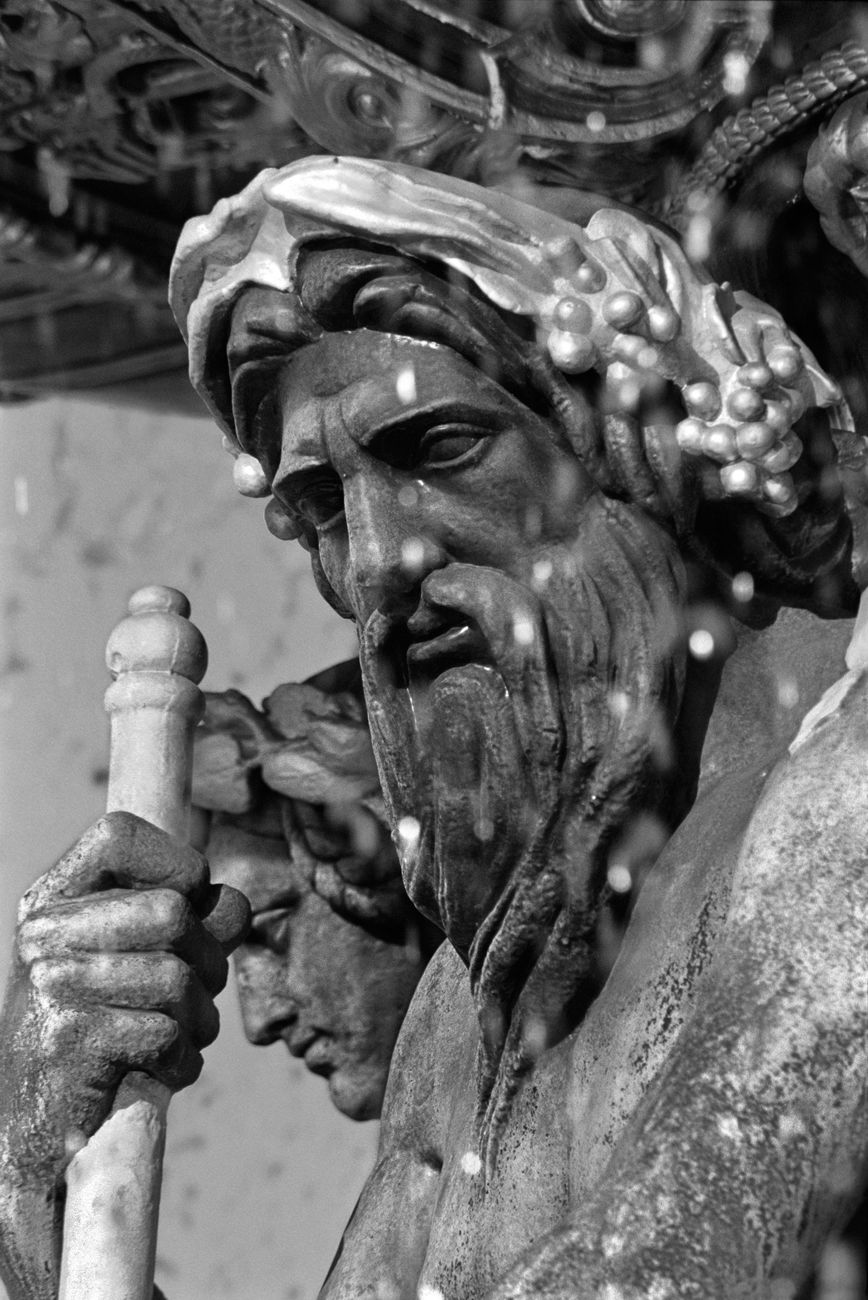
Father Time.
Unfortunately, he isn’t carrying a birthday cake.
He is holding a ledger.
This is the Kronos Audit: the late-life reckoning in which finite time forces you to examine not merely how long you have lived but what you have done with the life you were given.
The audit is comprehensive.
Father Time is apparently unconcerned with privacy.
He wants the public records and the private ones. The work you completed and the work you avoided. The people you helped and the people you neglected. The books you wrote and the books you merely announced you were going to write. The hours spent exercising, creating, loving, teaching, reading, listening, and paying attention.
He also wants the screen-time report.
This is where things become uncomfortable.
Psychiatrist Phil Stutz gives a name to the force that makes the Kronos Audit such an unpleasant prospect. He calls it Part X. Steven Pressfield, in The War of Art, calls a similar force Resistance. Different terminology, same infernal sales representative.
Part X does not generally appear in your living room with horns and sulfurous breath. That would make him too easy to identify. He appears as convenience.
Skip the workout.
Start the writing tomorrow.
Don’t make the telephone call.
Stay angry.
Buy something.
Watch another episode.
Scroll for twenty minutes.
Have another snack.
You deserve it.
Part X specializes in transforming the squandered life into a series of perfectly reasonable afternoons.
Resistance operates much the same way. It rarely commands you to abandon your life’s work forever. That would sound suspicious. It merely suggests that you postpone it until tomorrow, preferably after you have checked your email, researched a laptop, watched several YouTube reviews of the laptop, compared processors, investigated whether 64GB of RAM might provide useful “future-proofing,” and discovered that somehow it is lunchtime.
No single offense looks particularly damning.
That is the genius of the operation.
A wasted life is rarely wasted dramatically. You don’t wake one morning and announce, “Beginning today, I shall squander my remaining years on trivia, consumerism, resentment, and short-term gratification.”
You lose the life ten minutes at a time.
That is why the Kronos Audit becomes more severe as the castle approaches. At twenty-five, wasting an afternoon seems almost mathematically insignificant. You possess what feels like an industrial supply of afternoons. At sixty-five, the inventory has become visible.
You begin counting.
How many healthy years?
How many trips?
How many books?
How many summers with your family?
How many mornings when your mind remains sufficiently sharp to write something worth reading?
How many miles can your legs still carry you?
The questions can become morbid if you allow them to. The objective is not to turn retirement into a death vigil in which you sit beside an hourglass watching grains of sand fall while whispering, “There goes another one.”
The point is accountability.
Stutz argues that Part X seduces us with the fantasy of exemption. Other people may have to obey the laws governing effort, discipline, sacrifice, consequences, aging, and time, but somehow we imagine that special accommodations have been made for us. Tomorrow will always be available. Our bodies will tolerate neglect. Relationships will survive inattention. Talent will remain indefinitely on standby until we finally decide to use it.
Father Time has reviewed the exemption request.
Denied.
This is the moral force behind the Kronos Audit. Your life is not merely a possession you were issued for private amusement. Time creates responsibility precisely because it is finite. If you possess capacities for love, thought, creation, service, friendship, physical effort, curiosity, and attention, repeatedly surrendering those capacities to trivial gratification eventually becomes more than a scheduling problem.
It becomes a way of disappearing before you are dead.
And perhaps that is what makes Part X genuinely frightening. Death will eventually take your life regardless of what you do. Part X offers to take it earlier, in installments.
An hour here.
An afternoon there.
A year spent waiting to begin.
The castle will eventually receive all of us. No exercise program, spiritual practice, writing regimen, retirement strategy, or Mediterranean diet has yet defeated that particular zoning ordinance.
But there is a considerable difference between arriving at the castle after having lived and arriving after having spent decades hiding from life in increasingly comfortable rooms.
Which brings us, inevitably, to the eggshell-white Honda Accord Hybrid.
Father Time opens the ledger.
“Forty years of teaching.”
“Yes.”
“Writing?”
“Every morning.”
“Family?”
“My center.”
“Exercise?”
“I suffer voluntarily on an Airdyne.”
He nods approvingly.
Then he turns the page.
“Explain the new Honda.”
“I needed better gas mileage.”
“How far do you drive?”
“Well, Costco is two miles away.”
Father Time looks over his glasses.
I clear my throat.
“It gets almost fifty miles per gallon.”
Silence.
Somewhere behind me, Part X smiles.


Leave a Reply