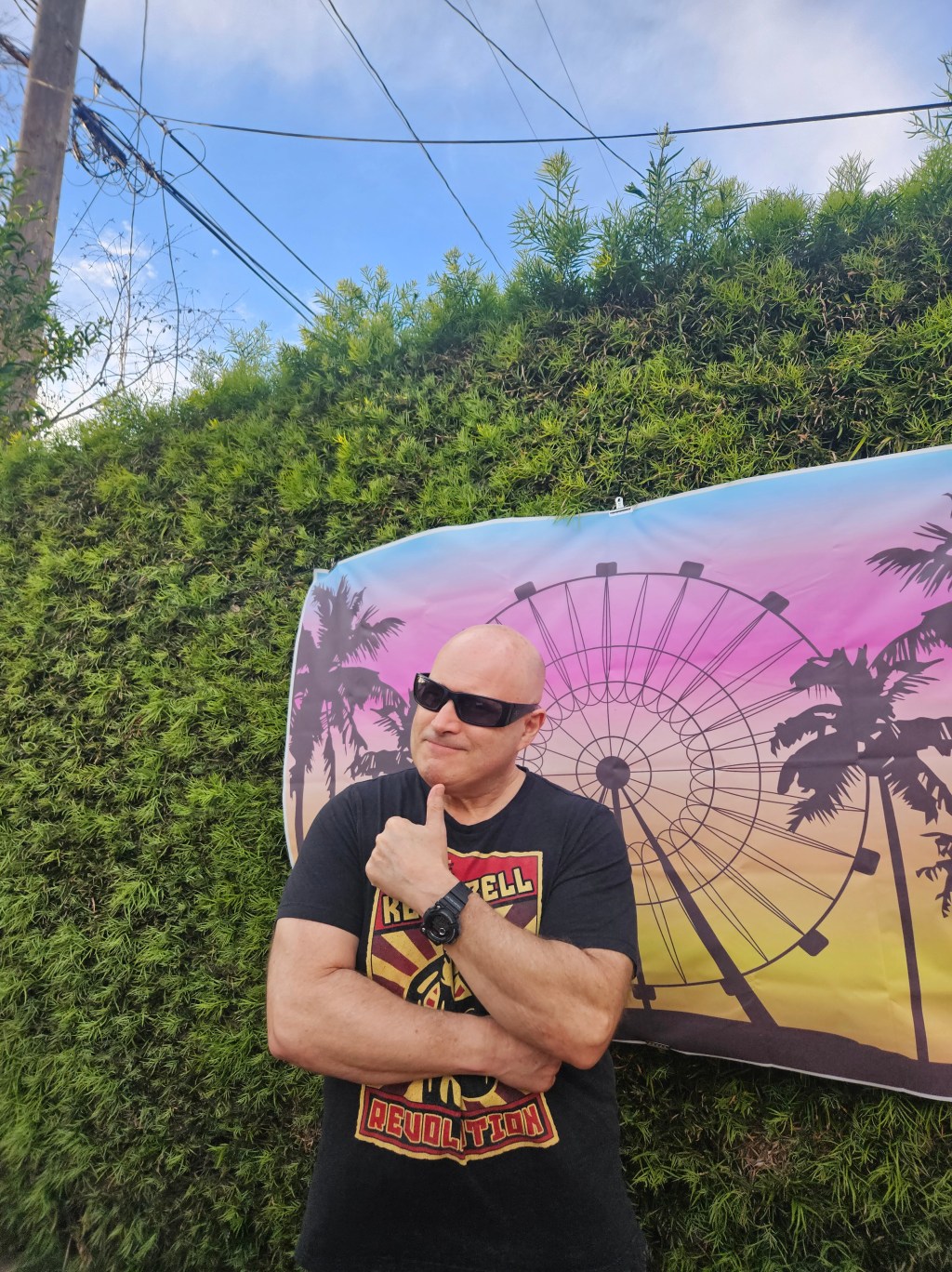
For over ten years, I had a YouTube channel mostly dedicated to my tormented relationship with watches. If you wanted to watch a man losing his mind as he travailed inside the fever swamp of watch addiction, you had come to the right place. Perhaps the algorithms encouraged me to become even crazier for the sake of audience capture. Or perhaps I didn’t need the algorithms. I was doing an excellent job of becoming unhinged by my watch obsession all by myself. Just pause on that for a moment. I didn’t need the algorithms to go crazy. I had done it the natural way. Give me a round of applause.
But like all good things, that particular kind of crazy came to an end. As I entered my sixties, my bandwidth for dealing with that kind of stress diminished, and new priorities took its place: staying healthy, planning for retirement, and recognizing that I had very little time left to worry about rotating watches on my wrist. As a result, my watch obsession lost much of its intensity. My relationship with watches is vastly different today from what it was even five years ago.
How much I’ve changed became apparent yesterday when I was cleaning out my office at work. I found a notebook from several years ago in which I had written dozens of what were supposed to be my Master Lists of the Ultimate Watch Collection. In my attempt to arrive at a definitive Master List, I had revised it over and over. Some lists contained only five premium watches. Others had a dozen. Still others fell somewhere in between. I recognized the frenzied handwriting of a man trying to save himself from drowning in quicksand.
When I opened the notebook and examined those lists, I was overcome with pain. I could see a man dealing with enormous anxiety, using his watch obsession as a diversion from confronting its real causes. Of course, the real causes of anxiety could never have been about watches or the Great Watch Questions: Is my Holy Grail a Tudor, an Omega, or a Grand Seiko? The true causes surely had more to do with love, connection, and mortality.
But the man who made those lists was oblivious to that fact. He believed that arriving at the Ultimate Master Watch List would somehow bring him peace. He was clearly delusional.
As I studied those lists, I saw a man struggling with unresolved personal torment. Reading them was painful because they gave me a window into someone I barely recognized. At the same time, I did recognize him, but only from a great distance.
I was reminded of the terrible scene in The Man Who Would Be King when Peachy Carnehan, played by Michael Caine, holds the crowned head of Daniel Dravot, played by Sean Connery. The crowned head was the end result of a man’s misguided quest to become a god.
My story was the same but slightly different. In the movie version of my past life, there was no crowned head. Instead, there was a severed forearm with an eight-inch wrist adorned with a luxury timepiece. I was the star of a movie titled The Man Who Would Be Watch.
Because I’m no longer that man, my YouTube channel has changed. I talk more about the challenges of being in my sixties, retirement, and my misalignment with a world I barely recognize. By charting the course of my actual life, I am violating the principles of social media branding. I’ve deviated from my previous watch obsession, which means I’ve abandoned what business strategists call my content pillars and content buckets.
A business strategist would shake his finger at me and say, “Do not abandon those content pillars and content buckets. Those are the tools that give audiences recognizable themes, comfort, and familiarity. Those are the tools that keep your audience coming back for more.”
I would like to offer that business consultant a rebuttal.
First, I’m all for content pillars and content buckets. I chronicled my watch addiction with honesty and due diligence, but the addiction was like a riverboat on a fast-moving river. It was bound to slow down and enter a tributary. In my case, the tributary was this small matter of age and mortality. I can’t pretend that the riverboat is still at the beginning of its journey. It’s nearing the end. No amount of business strategy, or tossing around terms like content pillars and content buckets, is going to stop that.
My YouTube channel was always about chronicling my obsessions. If those obsessions were reconfigured by life events beyond my control, such as growing older, then the moral thing to do was to comment on those changes. In that regard, I’ve done nothing to abandon my channel’s mission or brand. I’ve stayed true to it.
For many years, I was The Man Who Would Be Watch. But now I’m more like Peachy Carnehan. I’m the storyteller. I may be broken and half-crazed, but at least I’m still alive.
What good is maintaining your content pillars and content buckets if you’re no longer around to deliver them?


Leave a Reply