Tag: family

  • The Accidental Tourist, Redux

    The Accidental Tourist, Redux

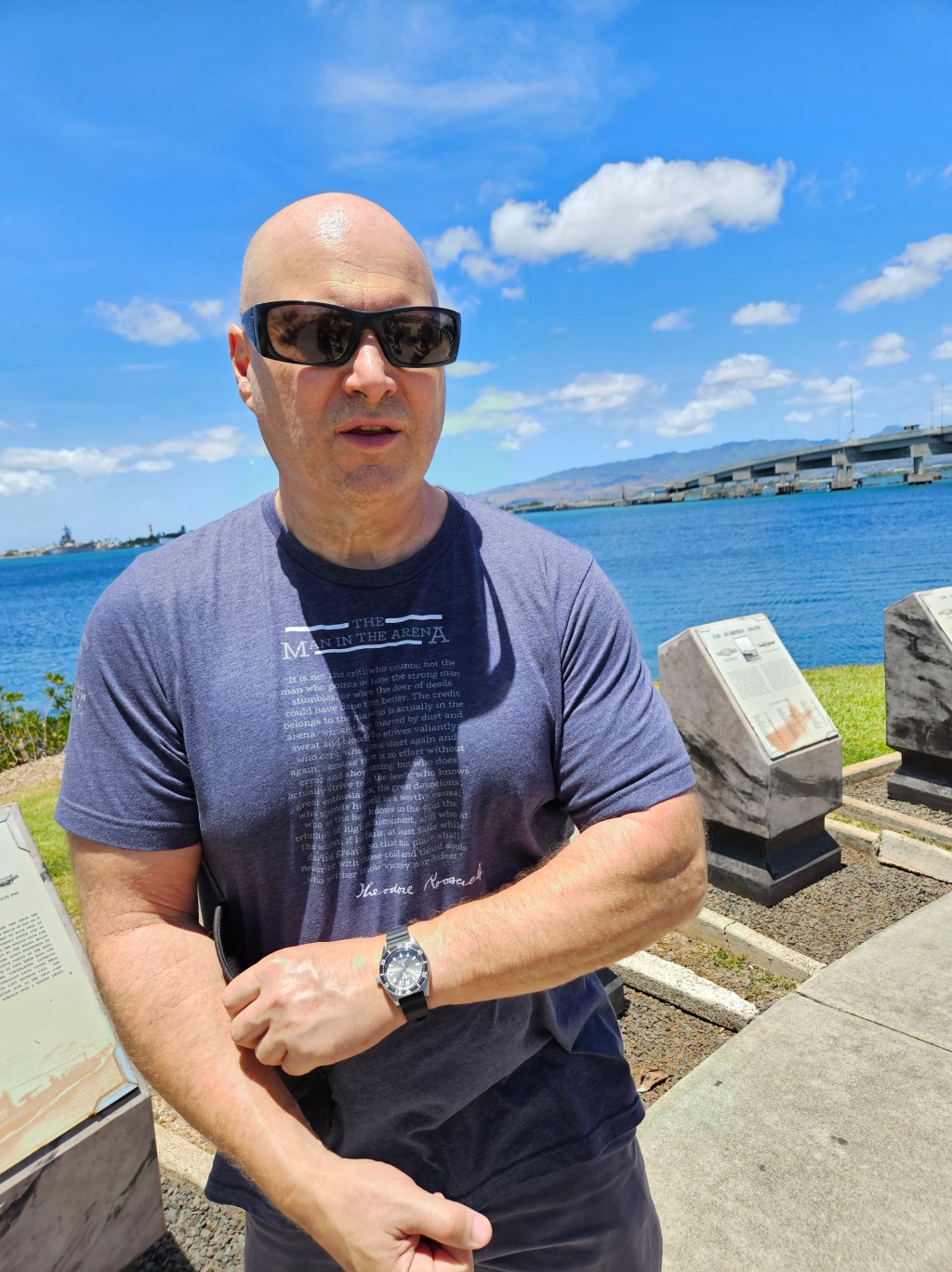
    Yesterday, we flew from LAX to Honolulu aboard a gargantuan United jet so large I half expected to see shag carpet and a spiral staircase to a smoking lounge. The thing was practically a flying condominium—wide-bodied, high-ceilinged, and just roomy enough to avoid triggering my usual claustrophobia. Even while pinned to the aisle seat as fellow passengers formed a stagnant TSA-themed flash mob to jam their overpacked luggage into the overhead bins, I managed to breathe.

    I passed the flight in my usual state of high-functioning dread, retreating into Jim Bouton’s Ball Four on Audible through my Sony noise-canceling headphones—the only legal form of sedation I can stomach at 35,000 feet. Forget reading, forget movies, forget chit-chat. Air travel reduces me to a vibrating vessel of cortisol unless I can disappear into the low, comforting drone of a narrator’s voice. It’s less entertainment and more emergency emotional triage.

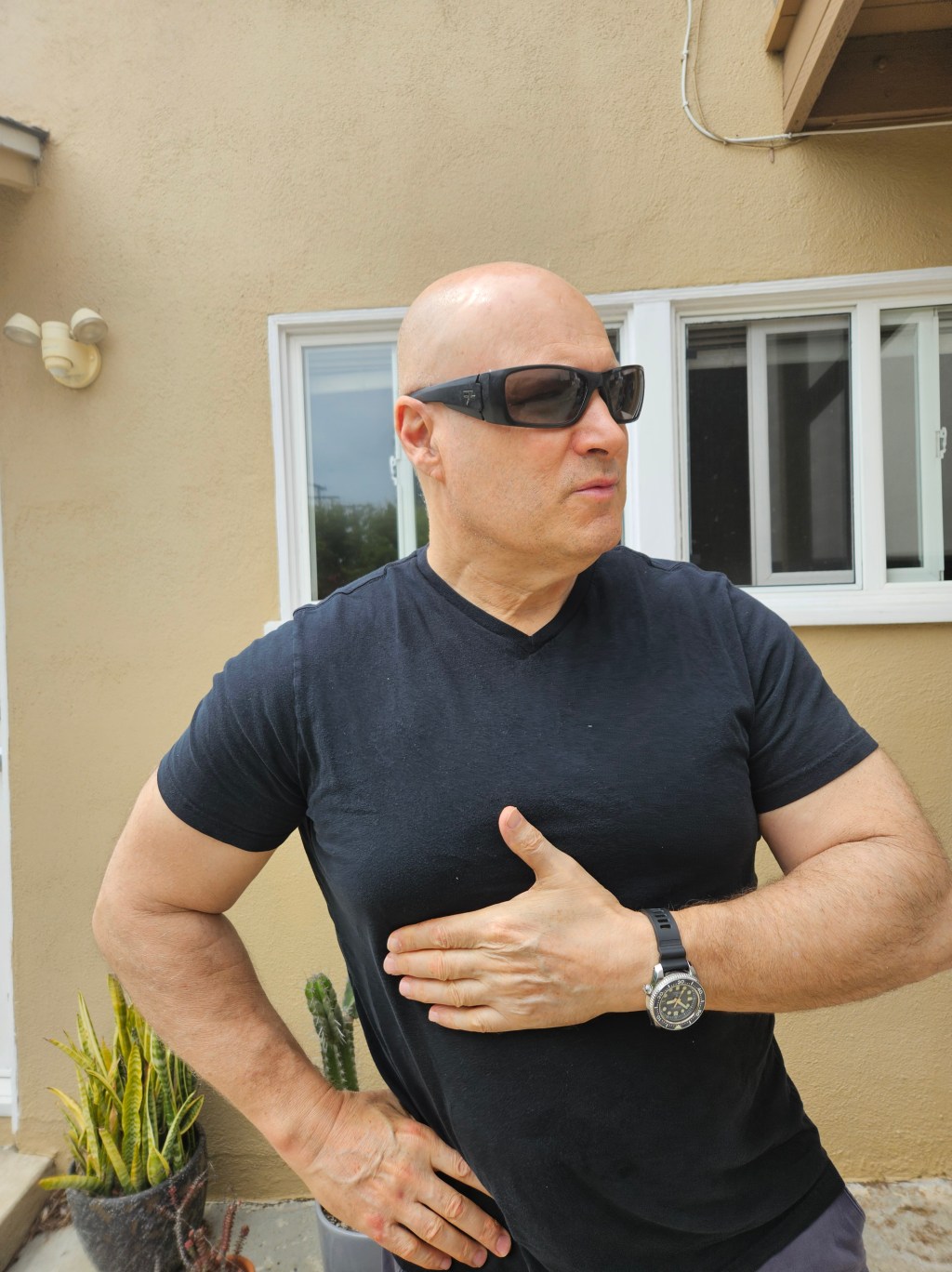
    Mid-flight, I spotted a man in first class—reclined, smug, his chest puffed like a hawk surveying the terminal. He wore a Rolex Submariner, its gleaming bracelet catching the light like a flex. For a moment I considered violating my long-standing ban on watch bracelets. But then I re-centered myself. No, I thought. No shiny metal shackles. Stay true to your rubber-strap asceticism.

    As we deplaned and shuffled past the first-class cabin, it looked less like a luxury lounge and more like the aftermath of a Roman orgy. Gargantuan seats sat slumped under rumpled cashmere blankets, like spent emperors. Empty champagne flutes glistened in the overhead lights. Half-melted caviar pearls clung to fine china, and artisanal pizza crusts lay abandoned, their truffle oil sheen dulled by neglect. It was less aviation and more archaeological dig—excavating the indulgences of the airborne elite.

    After getting our luggage, we skipped the usual rental car shuttle chaos (unlike in Maui or Kauai) and simply walked across the street to pick up our reserved vehicle. It was almost… dignified.
    Pro Tip: Disconnect your Sony headphone app before navigating to the hotel, or your phone will whisper silent directions to your eardrums while you make wrong turns into private military roads.

    This morning’s Embassy Suites breakfast buffet was a competent affair—dark coffee, lukewarm eggs, and a waffle station overseen by a teenager with the haunted eyes of someone six minutes into an eight-hour shift. Still, it did the job. Sustenance secured.

    Before the trip, friends warned me that Oahu lacks the charm of the smaller islands. So far, I find that advice overstated. Yes, there are people. But they’re spread out, like tourists in a theme park operating at 60% capacity. Manageable. Tolerable. Occasionally amusing.

    What continues to fascinate me is the ABC Store phenomenon. Every island has them, and each one is a bustling shrine to overpriced macadamia nuts, sunburned tourists, and cold bottled water with just enough condensation to feel spiritual. They are the Walmarts of Waikiki, the cathedrals of caffeine and aloe, always stocked, always staffed by saints, always crawling with those of us trying to patch together a sense of stability while wearing flip-flops and SPF 70.

    As I sit here contemplating the beach and the impossibility of relaxing, I realize something: I don’t know how to vacation. I don’t know how to unplug. I don’t know how to vanish. Perhaps it’s time I reread Anne Tyler’s The Accidental Tourist and finally admit I’m the kind of man who travels with headphones, anxieties, and an internal spreadsheet of projected discomforts.

  • Naked at the Piano Store

    Naked at the Piano Store

    Last night I dreamed I was dragged, not willingly, to what can only be described as a nocturnal daycare megachurch for toddlers. A female friend insisted I come with her, and because I lack boundaries in dreams, I agreed. It was night—an odd time for finger paints and tantrums—but the daycare manager, a woman in her forties with the strained face of someone who’d long since traded dreams for wet wipes, greeted us like this was normal.

    Almost immediately, a child began howling with the primal rage of someone denied a third juice box. I was conscripted to console him. My solution? A trip to a movie theater—because nothing says early childhood healing like surround sound. The child settled, spellbound by whatever played on screen. The strange part? I couldn’t see it. Or hear it. Apparently, the film was perceptible only to children. Perhaps it was Baby’s First Metaphysics. Or an encrypted Pixar feature accessible only through a purified heart.

    At some point, without ceremony or explanation, I slipped away and found myself on a college campus in daylight. My brother was waiting in a parking lot that looked like a car dealership I had overfunded. I had more cars than common sense and a key ring jangling with so many keys it looked like I had robbed a locksmith. He wanted me to follow him to our mother’s house. It suddenly felt urgent. Cosmic, even.

    I got in my vehicle—a car awkwardly tethered to a trailer—and, for reasons known only to dream logic, I drove from the trailer. It took me several minutes to realize I was operating a vehicle from behind, without a windshield or visibility. I was essentially piloting a missile blindfolded.

    Eventually I stopped—miraculously not dead—and found myself balanced at a deadly incline on an overpass. I had parked inches from becoming a traffic statistic. Bystanders stood around, but no one was mad. No one honked. It was as if my recklessness had occurred in a different dimension of social expectation.

    Near the overpass stood a shopping plaza featuring Yamaha grand pianos, each with the sticker shock of a midlife crisis: $26,000 apiece. I considered entering, comforted by the notion that I had “deep pockets”—but the moment I thought it, I realized I was naked. Fully, publicly naked. Oddly, this didn’t mortify me. I was as invisible as a ghost no one remembered to summon.

    Still, I decided not to enter the piano store and sit bare-bottomed on an $8,000 piano bench. Even dream logic has hygiene limits.

    I wandered into a pair of adjacent, carefully curated Edens—two burial gardens laid side by side, one Jewish, one Christian. Both were equal parts reverence and real estate, immaculately landscaped like death had hired a design team. The air was golden with sunlight, the kind that flatters grief and makes you forget about decay.

    Mourners floated among the headstones in their ceremonial best—linen suits, black veils, tailored despair. The Jewish and Christian worshippers moved in peaceful parallel, as if the afterlife had negotiated a truce that the living never quite managed. Gift shops nestled among the tombstones sold tasteful souvenirs—stone etchings, pressed lilies, probably a limited-edition Torah-meets-Gospels keychain. Everything was clean, sacred, and suspiciously well-funded.

    That’s when she appeared—a Quaker woman in a starched bonnet, all radiant calm and pioneer wisdom. She approached like someone who could knit an entire theological treatise while making a pot of herbal tea. Her smile was unshakeable, beatific in that unnerving Quaker way that suggests she knows something you don’t, but she’ll never say it out loud.

    She asked, in a voice smooth as chamomile, why I looked so troubled.

    I told her the truth: “I’m lost. I’ve been driving blind—literally—and now I’ve crash-landed in a dual-faith necropolis. Also, I’m naked. No clothes, no GPS, no plan. I think I took a wrong turn at sanity.”

    She didn’t flinch. Of course she didn’t. She’d seen worse. She probably taught Sunday school to ghosts.

    She smiled. Help was at hand.

    She summoned a tall man in a radiant yellow tunic—somewhere between a monk and a spa manager—who told me the directions home were complicated and could only be followed on foot. What about my car? My trailer? My sprawling fleet of unnecessary transportation?

    “Let it go,” he said, as if he’d read Marie Kondo for the Soul.

    Suddenly, I was surrounded by Quakers. They had me sit on a wooden chair as the daylight shifted to an amber hush. They prayed in Latin, pouring syllables over me like baptismal water. It was solemn. It was sacred. It was disorienting.

    When it ended, the woman in the bonnet asked if I’d been converted.

    “Not exactly,” I said. “But I did have a religious phase in high school. I was a big fan of Rufus Jones. Fundamental Ends of Life—ever read it?”

    She hadn’t. She was more of a George Fox girl. Fair enough.

    I thanked them for the baptism but declined the full spiritual onboarding. I had priorities: get to my mother’s house, find some clothes, and maybe return for the piano if I could be properly trousered.

    I descended a steep, stone staircase into dense green foliage. At the bottom, I hoped, would be pants—and clarity.

  • Reginald, Kent, and the Shark-Infested Sea of Self-Improvement

    Reginald, Kent, and the Shark-Infested Sea of Self-Improvement

    Last night, I dreamed I was twenty again. I was in attendance at a spectral dinner party filled with strangers and vague regret. I was young again, which is to say, raw and restless, clutching a satchel full of unformed ambitions and unfiltered loneliness. 

    A wealthy young man appeared, oozing charisma and vaguely European cheekbones, a demigod of fashion and cosmetics, the kind of person whose cologne smells like entitlement. He leaned in and offered me a revelation disguised as skincare: two miracle creams. One, to be applied to the crown of my head, was called Reginald. The other, for my back, was Kent. He spoke of them with the hushed reverence usually reserved for ancient scrolls or Swiss watches. These weren’t mere moisturizers—they were spiritual lubricants. Balms that promised not just hydration, but orientation. 

    Then, as if summoned by a higher capitalist calling, he vanished mid-conversation, leaving me with a business card and a lead on where to find a lifetime supply—somewhere by the sea. And so began the quest.

    To be worthy of Reginald and Kent, one had to wear formal attire, because of course one did. I found myself in a tailored black suit, wading through surf with fellow seekers, sharks gliding around our ankles like corporate anxieties. I held my leather dress shoes in hand, lest the saltwater stain them—a fool’s hope, given the bloodthirsty tide. Later, I caravanned with aging rock royalty—Peter Gabriel, Jackson Browne, Boz Scaggs—who casually discussed their rendezvous plans in Capri or St. Barts. For a moment, I basked in the illusion of belonging. But as the conversation turned to private jets and generational wealth, the truth descended: I was no musician. I had no bookings. My only claim to transformation lay in acquiring my precious creams.

    The journey devolved into a surreal slog. It rained as I crossed a deserted college courtyard. My business shoes were doomed. A younger version of S—someone I wouldn’t meet until decades later—appeared like a ghost from my professional future, pointing the way with a sense of urgency. I ran, I hitchhiked, I boarded phantom trains, only to land back at the shark-infested beach, no closer to the mythic Land of Body Cream. 

    Then, through the humid haze of beachside commerce and quaint seaside cafes, I saw Rachel—yes, that Rachel—from a hot tub party in Livermore, 1988. 

    Seated at a weathered café table under a string of flickering patio lights, I unspooled my sorrow before her, pouring it out like a battered thermos with a cracked seal—dripping, lukewarm, and uninvited. I mistook my own rawness for profundity, believing that the sheer weight of my unfiltered confession would conjure tenderness, maybe even love. But Rachel didn’t flinch. She studied me like a dissection project and began her work with clinical precision. Her words carved deep and clean, a verbal autopsy that exposed every rot-soft corner of my character. And just when I thought the vivisection complete, she found new organs of dysfunction to prod and slice. Her fury wasn’t wild—it was righteous, surgical, sustained.

    She stormed off, heels tapping out a verdict on the pavement. I sat stunned in the wreckage of myself, staring at the space she had vacated, still warm with contempt. That’s when the restaurant owner appeared—a woman with the weary kindness of someone who’s witnessed too many romantic collapses and kept score. She told me she’d filmed the entire scene. “You’ll want to study this,” she said, handing me the video with a nod toward the attic stairs. “It might help.” I obeyed without a word.

    I climbed into that attic, its rafters bowed with time, and watched the footage on an aging monitor. Again and again. I rewound every insult, paused on each flinch of mine, cataloged every truth she hurled like a polished blade. It became my gospel of failure. I spent the rest of my life up there—alone with my ghosts and her voice—striving to earn back something I’d never really had: the right to reenter the world and claim Reginald and Kent, the sacred creams of redemption I still believed might set me right.

  • Open House: A Dream of Chaotic Enlightenment

    Open House: A Dream of Chaotic Enlightenment

    Last night, I dreamt that my wife and twin daughters converted our quiet domestic haven into a full-blown educational commune for the neighborhood. The front door was flung open like we were hosting a TED Talk and a bake sale simultaneously. Strangers streamed through the kitchen in orderly lines, signing up for courses with the brisk determination of people enrolling in Pilates or personal enlightenment. No one had asked me. No one had told me what the curriculum was. My role? Apparently, ornamental.

    But oddly enough, I didn’t throw a tantrum or fake a migraine. Instead, I adapted. I bought a new outfit—something suitably intellectual yet vaguely cinematic—and began holding spontaneous salon-style lectures in the bedroom, where I engaged in hushed conversations with film critics about the forgotten brilliance of F. Scott Fitzgerald. I planted my flag on “Winter Dreams,” declaring it the Rosetta Stone of his genius. While chaos bloomed in the kitchen and children shrieked over multiplication tables or modern dance or whatever anarchic pedagogy my family had cooked up, I stood in front of my closet planning my next wardrobe change like a one-man off-Broadway production.

    My lectures—always held in the bedroom, never the common areas—became my sanctum. The rest of the house was a beehive of subjects I neither taught nor understood. Adults hunched over tables. Kids ran mock elections. My family presided over it all with evangelical confidence, while I stayed in my curated corner, delivering monologues in crisp linen. The living room had been repurposed into something between a Montessori lab and a call center. It was, frankly, terrifying.

    What astonished me most was not the unannounced academic uprising, but my unexpected willingness to go along with it—as long as I could dress the part. Normally, I recoil from hosting so much as a dinner party, but here I was, participating in a family-led movement to educate the masses. Maybe I was possessed. Or maybe I’ve reached a stage in life where purpose can be borrowed, like a blazer, so long as it fits well and looks good under good lighting.

  • Camry vs. Accord: The Obsession That Killed My Career

    Camry vs. Accord: The Obsession That Killed My Career

    Last night I dreamed I was adrift in a farmer’s market purgatory, toggling between two dried fruit stalls like a man on a doomed pilgrimage. At one end stood my friend Adam, hawking dried apricots beside his immaculate new Honda Accord, polished to a showroom glint. At the other, Andre offered prunes with the calm assurance of a man backed by a brand-new Toyota Camry.

    I paced between them, acting like a mildly deranged Consumer Reports correspondent. I asked about mileage, comfort, tire pressure, road feel. Adam, ever candid, confessed that his Accord’s 19-inch tires required constant babysitting—a weekly ritual of crouching beside his car like a penitent monk, pumping air into finicky rubber. Andre, on the other hand, practically preened. His Camry had no such neediness. His tires, he implied, were stoic and self-reliant, like Roman centurions.

    As my dithering grew more manic, Adam and Andre began to notice. They called each other—yes, in the dream they phoned each other mid-market—and the temperature dropped. Andre, initially genial, grew terse. Adam smirked defensively over his dried apricots. The whole affair soured like old fruit.

    Then, like a man possessed, I made my declaration. I would buy the Camry. Not for the horsepower. Not for the design. But because I refused—refused!—to spend my golden years crouching beside a car, inflating tires like a desperate cyclist.

    No sooner had I made my proclamation than the dream world pivoted sharply, as dreams do. I was no longer in a farmer’s market—I was on a college campus. But not my college. Not the place where I once held a proud tenure-track post. No, I had been demoted. My prestigious job had evaporated. I was now an adjunct at some podunk backwater school with low ceilings and fluorescent lights that hummed with institutional malaise.

    Why the fall from grace? Simple. My years spent obsessing over the Camry-vs-Accord dilemma had not gone unnoticed. While I was inhaling tire PSI data and fondling prune samples, my absence from the college became conspicuous. The administrators, ruthless as vultures in blazers, terminated me. I had toggled too long. My career had flatlined.

    I woke at 5 a.m. in a wash of dread and despair—not from the dream’s end, but from the clatter of the real world: an Amazon delivery person, fumbling at the gate, dropping a box on the porch like a coffin lid.

    I opened it. Inside was a stainless steel bathroom trash can, taller, sleeker, with built-in liners—my daughter’s request. Unlike our old can, which was a rust-streaked monument to hygienic defeat, this one gleamed with a kind of futuristic dignity. Its surface mirrored my face: puffy, sleepless, faintly haunted.

    And yet, in its shimmering steel, I saw something unexpected: hope. Renewal. The modest redemption of functional design.

    A new beginning, sealed in plastic wrap.

  • Everyone Has an Origin Story. Here Is Mine

    Everyone Has an Origin Story. Here Is Mine

    The Road Trip That Made You Possible

    Everyone has an origin story. You are no exception. Yours begins with your father. Without your father’s sheer audacity and competitive determination, you wouldn’t even be here today. Long before you were a glint in his eye, your father was locked in a battle of epic proportions—an all-out, no-holds-barred contest for the affections of your eighteen-year-old mother. And this wasn’t just any competition. His rival? None other than John Shalikashvili, future United States General and Chairman of the Joint Chiefs of Staff. Their battlefield? The smoky, beer-soaked bar scene of Anchorage, where the stakes were higher than a highball glass during happy hour.

    Their duel for your future mother’s heart took a brief Christmas ceasefire when Shalikashvili retreated to his tactical command center in Peoria, Illinois, while your father returned to Hollywood, Florida, to soak up some sunshine and plot his next move. But as he lounged by the pool, your father realized that victory in this romantic Cold War required swift and decisive action. So he cut his vacation short, crammed himself into a cream-colored 1959 Morris Minor—a vehicle that looked like it had been assembled from the Island of Misfit Toys, complete with a coat hanger for an antenna and door handles barely clinging on by the grace of duct tape—and embarked on the most high-stakes road trip of the 20th century.

    Halfway through this odyssey, the car’s fuel filter decided to go on strike, leaving your father stranded in the middle of nowhere. When the local auto parts store couldn’t supply a replacement, your father—who would later perform engineering miracles at IBM—pulled off a MacGyver-level feat of mechanical wizardry. Armed with nothing but a prophylactic and a paperclip, he fashioned a makeshift fuel filter that was equal parts creative desperation and mechanical blasphemy. This duct-taped miracle kept the fuel pump from either flooding the engine or abandoning ship entirely, depending on its mood.

    Driven by the urgency of love and the fear of losing ground to Shalikashvili’s brass-polished charm, your father powered through the journey, ignoring his growling stomach like a man possessed. Subsisting on loaves of bread devoured like a feral squirrel, he soldiered on, skipping meals because, who needs food when you’re racing against the clock to prevent a military coup over your future wife?

    After a ferry ride that probably felt like crossing the River Styx, your father finally arrived in Anchorage, a full forty-eight hours before Shalikashvili could swoop in with his military swagger and irresistible authority. Nine months later, you were born, the ultimate trophy in this love-struck arms race.

    Even before you took your first breath, your father’s victory over Shalikashvili imparted some crucial life lessons: The competition is fierce, and life is a zero-sum game where you’re either a winner or a nobody. To survive, you must find a competitive edge, and if you ever get complacent, rest assured, someone will move in on your turf faster than you can say “ranked second.”

    As a teenage bodybuilder obsessed with becoming Mr. Universe, opening a gym in the Bahamas, and silencing your critics, you often thought about bodybuilding great Ken Waller stealing Mike Katz’s shirt before a competition in the movie Pumping Iron. Something as trivial as a missing shirt could send your opponent into a tailspin, disrupt his focus, and rattle his confidence like a cheap shaker bottle. Like Mr. Universe Ken Waller, your father taught you that power is a road paved with relentless cunning, ruthless strategy, and a healthy dose of underhanded shenanigans. 

    But underneath the shenanigans and Machiavellian flair, your father taught you one core truth: sweat more than everyone else. Out-hustle, out-grind, outlast. In his gospel, sweat wasn’t just effort—it was currency. The person who left the biggest puddle won. 

  • Barbells and Boundaries

    Barbells and Boundaries

    Late one Saturday afternoon, you were marooned in your bedroom, held hostage by the epic saga playing out in your kitchen. Paul Bergdorf, a plumber with the emotional subtlety of a freight train, had been battling the kitchen sink since morning. His oversized toolbox had exploded across the linoleum floor like a mechanical crime scene. Every few minutes, you heard a grunt or a thud, the sounds of a man locked in mortal combat with ancient pipes.

    Your mom strolled into your room with a face that mixed gratitude with a romantic optimism that always smelled like a warning.
    “It’s so nice of him to do this,” she said.
    “What’s that supposed to mean?” you asked.
    “He’s not charging me.”
    “Of course he is.”
    “No, he’s a friend.”
    “He’s not your friend, Mom. You just met him.”
    “His name is Paul Bergdorf. One of my girlfriends introduced me to him.”
    “This isn’t going to end well.”
    “Keep your voice down.”

    Right then, Bergdorf bellowed from the kitchen, proudly declaring that the sink had been fixed. Your mom hurried away. You stayed in your room, knocking out reverse barbell curls while watching through the sliding glass door that connected your room to the atrium. Beyond that was the kitchen, where Bergdorf stood like a sweaty gladiator, wiping his greasy mitts on a rag. He looked like a bloated baby trying to cosplay as a man: massive belly, oil-streaked jeans, beat-up boots, and that tragic attempt at a combover. His blue eyes were permanently glazed, his nose red and bulbous like a squashed tomato, and the house now reeked of his sweat mingled with low-grade cologne.

    He turned the faucet on, then off, proudly displaying his handiwork. “Now before I go,” he said, puffing out his chest, “I just want to say—I may not be the best-looking guy around, but I can grill a damn good steak. I’m talking big, thick, juicy slabs of meat. How about joining me next weekend for a barbecue?”

    “That’s very nice, but no thanks,” your mom said, her tone firm.

    Your forearms burned from the 50 reverse curls, but you kept going, switching to wrist curls as if preparing for battle.

    “I’ll get us some prime steaks,” he pressed on. “You won’t believe how tender they’ll be.”

    “Thanks again, but I’m busy.”

    “All I ask is one chance to serve up the most delicious barbecued steak you’ve ever had.”

    “No, really. I’m not available.”

    “Just pick any weekend,” he insisted, “and I’ll deliver a steak you’ll never forget.”

    Your forearms were bulging. That was it. You dropped the barbell, stormed down the hall, past the dining room, and burst into the kitchen like a SWAT team with a moral objection.

    “How many times does she have to say no?” you demanded.

    “Hey, let’s cool it,” Bergdorf replied, raising his hands. “I was just asking your mom out. I fixed the sink. It’s the least I could do.”

    “If you want to volunteer your plumbing skills, great. But fixing a drain doesn’t entitle you to date privileges.”

    “I just wanted to make her a steak!”

    “Okay, we get it. You’re a steak wizard. Good for you. Now pack up your tools and get the hell out.”

    You towered over him, finger pointed at the front door like an Old Testament angel. Bergdorf glared, shoved his tools into the truck, slammed the door, and roared off, trailing a plume of driveway dust behind him.

    Your mom just stood there, stunned.
    “You scared him away,” she said.
    “Next time, let’s just pay the plumber.”

  • Nicknames Are a Life Sentence

    Nicknames Are a Life Sentence

    You sat in the soaked bleachers of Canyon High on a rainy Friday night, the stadium lights casting a sickly greenish-yellow haze across the field. The Canyon Cougars were facing off against the Hayward Farmers, but all eyes were on their freshman linebacker phenom, Jack Del Rio—part football player, part demigod in cleats.

    Next to you, Liz huddled under a massive umbrella. Between the two of you sat a bag of popcorn that had long since surrendered to the rain, each kernel tasting like soggy regret.

    Off to the side, you noticed the girl they called the Tasmanian Devil. She was marooned on a solitary slab of bleacher, her jacket soaked, mascara melting like the villain in a low-budget horror flick. No umbrella, no allies, just rain and raw adolescence.

    “Tasmanian Devil’s got that look,” you said to Liz, chewing a kernel that crumbled into sadness on your tongue.

    “What look?” she asked.

    “The one that says she knows her life is a steaming pile of crap.”

    Liz nodded slowly. “Poor thing.”

    “Do we even know her real name?” you asked.

    She gave a small shrug.

    “Exactly. She’s been sentenced to that nickname for life. Might as well tattoo it on her forehead.”

    As the game dragged on, the rain lightened into a mist, coating everything in a kind of apocalyptic glow. The crowd buzzed as Del Rio took the field, and a man behind you barked, “That kid’s going pro, you mark my words.”

    You leaned toward Liz. “Jack Del Rio and the Tasmanian Devil—two trains, opposite tracks. One’s off to glory, the other’s derailing into a swamp.”

    “We could invite her over,” Liz offered.

    You waved like a deranged game show host. “Need an umbrella? Want to join us?”

    She shook her head. Her eyes stayed on the ground. Her jacket soaked through like a sponge left in a car wash.

    “At least you tried,” Liz said with a sympathetic smile.

    You shifted the conversation. “You mad at your dad?”

    “No,” you said, surprising even yourself. “If anything, I’m relieved. There’s less tension now. No more walking on eggshells.”

    Liz nodded. “After my dad left, my mom never dated. She’s allergic to men. She’s got this fortress of piano recitals, farmer’s markets, and gin rummy with Grandma. Her friend circle is basically a man-repellent sorority.”

    You sighed. “I’m dreading my mom dating. She’s too nice, too open. Men could run circles around her.”

    “You can’t control everything,” Liz said.

    “There’s this awful book called How to Pick Up Girls! It’s like a predator’s playbook. If some sleazeball uses that on her, I swear I’ll Hulk out.”

    Liz laughed. “You can’t be a bouncer at your own house.”

    You squared your shoulders. “Watch me.”

  • The Cinnamon Apocalypse

    The Cinnamon Apocalypse

    You shaved with your father’s vintage Gillette Super Speed razor and immediately sliced the tip of your chin. A small crimson droplet formed—a blood-signed pact with manhood. You showered, scrubbed away the dried blood, threw on jeans, and topped it off with your prized Larry Csonka Miami Dolphins jersey.

    When you stepped into the living room, your mother was parked on the couch, Carly Simon lamenting through the speakers as she ate raw hamburger meat with Lawry’s Seasoned Salt, her fingers slick and red like she’d just committed a low-grade crime. She stared forward with the calm of someone contemplating Earth’s pending expiration date.

    “Mom, can’t you cook that?” you asked, half-gagging, half-pleading.

    Without looking at you, she speared another bloody hunk and took a bite.

    Then came the honk. You bolted outside to find Gutierrez in his orange Karmann Ghia, a discount rock star with his bushy sideburns. Susan Bowman, the blonde British exchange student, sat next to him. Crammed in the back were Rick Galia, Cheryl Atkins, and Liz Murphy, packed tighter than socks in a suitcase.

    “I can’t fit,” you said.

    “No problem,” Galia said. “Cheryl and I will get in the trunk.”

    “You can’t be serious.”

    “We’re creating a mobile make-out den. McMahon, close the trunk.”

    You did.

    In the back seat with Liz, you caught the scent of strawberries and ginger from her hair and cinnamon gum on her breath. She looked like a holiday ornament come to life in her green sweater. Your hands were sweating like you were mid-squat with a barbell.

    You thought about that puberty film in biology—the one where a guy lifts his arms to reveal industrial-grade sweat stains. Not helpful.

    At the pizza parlor, you all hit the salad bar and settled in. Galia whipped out a wad of cash like a game show host. “Dinner’s on me.”

    Turns out his dad’s shark-bitten surfboard sold for two grand. You doubted the story until you remembered Galia could sell sand at the beach.

    You hated the pizza, said so, and earned your first dose of “Greenridge snob” accusations.

    Afterward, at the theater, Shampoo was sold out. So was The Apple Dumpling Gang. You all opted for One Flew Over the Cuckoo’s Nest, but had 40 minutes to kill.

    Truth or Dare began. Your confession? You had a cousin who dated Ginger from Gilligan’s Island. Weak. Then came the bionic beach vision fantasy. Stronger, but still humiliating.

    Liz, amused, asked if your muscles were bionic too and squeezed your bicep. You were melting inside.

    In the theater, she rubbed her boot against the metal chair in front of her. The sticky sound made you want to crawl into the floorboards. She did it again.

    “Please stop,” you whispered.

    She grinned. “Conditioning.”

    The other couples were busy kissing. You were busy dying inside.

    After the movie, you all piled back into the car. Cheryl sat on Galia’s lap. Gutierrez drove you home.

    Outside your Eichler house, you turned to Liz and mumbled something about a good time. She responded by popping her gum and planting a cinnamon tsunami of a kiss on you.

    And that’s when you snapped.

    With a caveman scream, you launched upward, tearing through the convertible’s soft top like a hormone-fueled jack-in-the-box. You stood half-exposed above the car as the others gawked in stunned silence.

    “What the hell, McMahon?” Gutierrez shouted.

    “I don’t know. I think I’m stuck.”

    Liz was laughing like a lunatic. Neighbors came out filming. A Great Dane named Thor barked in chaos.

    Then your dad appeared with a flashlight and a robe that looked like it had survived Woodstock. “Jeff?”

    “Unfortunately.”

    “I’ve got a hacksaw.”

    He sawed you free. You climbed out, brushed off the canvas bits, and said, “I’ll pay the deductible.”

    Gutierrez waved it off. Galia said the kiss must’ve been nuclear.

    You retreated to your room, tried to decompress with bodybuilding magazines, and realized your mouth still tasted like cinnamon.

  • The Gospel of Squats

    The Gospel of Squats

    In seventh grade, while your father was off playing superhero in the Peace Corps—presumably saving the world one mosquito net at a time—you were marooned in Nairobi, Kenya. Your days were spent juggling soccer balls with local kids whose knees seemed invincible, bonding with mood-swinging chameleons, and trying to convince yourself that your Action Man dolls (the British knockoff of G.I. Joe) were more than just inert plastic with bad articulation. When the dolls failed to deliver, you escaped into glossy American sports magazines, fantasizing about transforming your spaghetti frame into the hulking majesty of Reggie Jackson or Greg Luzinski. You didn’t realize it yet, but you were becoming a social alien—an unintentional exile from your former Bay Area self, the human equivalent of a chameleon stuck on a disco strobe.

    Coming back to California in 1974 to attend Earl Warren Junior High felt like being dropped into a strange new planet where bad perms and bell-bottoms were considered high fashion. When kids talked about “doobies,” you imagined something slimy from the ocean depths, and “bong” sounded like an unfortunate percussion instrument. Naturally, you said all this out loud. Your classmates—high-functioning experts in pot, Zeppelin, and humiliation—saw you for what you were: a clueless alien with a warped pop culture radar. “This kid thinks a bong is a wind chime” became your unofficial welcome-back slogan.

    Enter Lou Kruk, your P.E. teacher: part demigod, part drill sergeant, part Baywatch extra. He stood over six feet tall with the torso of an ice cream cone, mahogany tan legs bursting out of gym shorts so tight they could’ve been airbrushed. His lion-like hair, aviator sunglasses, and windbreakers gave him the aura of a man who taught dodgeball by day and raced Porsches by night. He did, in fact, drive a Porsche. He also owned a sailboat. And his girlfriend looked like a magazine ad for champagne and yacht clubs.

    Kruk’s voice thundered like Wolfman Jack having a meltdown, and he blasted Herb Alpert & The Tijuana Brass while ordering you to deadlift your body weight. During one rope climb session in the cafeteria, he interrupted class to verbally annihilate a group of bullies with a monologue worthy of a Greek tragedy. “He’s already in the gutter! You want to put your boot on his head too?” The bullies melted. You, meanwhile, silently vowed to name your first child Lou.

    On day one of Olympic Weightlifting, Kruk preached the gospel of the front squat. Feet flat, butt to the floor—no exceptions, no mercy. You took this commandment personally. You practiced until your glutes sang hymns of soreness. Your squats got so deep they could’ve hit oil. And when Kruk pointed to you as the Platonic ideal of squat form, the gym practically knelt.

    Eventually, you were powering through front squats with 200 pounds like they were grocery bags. The day you nailed a dozen reps at 225, the entire gym went silent. You weren’t lifting; you were levitating. Your thighs bloomed into grotesque botanical wonders. 

    Soon, you were squatting everywhere. At your locker. In algebra. As goalie during PE soccer games (to your teammates’ horror, as balls flew by into the net). You became known as “Squats,” and also “Thunder Thighs,” titles you wore like medals pinned to your hypertrophic quads. You didn’t care about ridicule anymore. You were a squat apostle, a zealot for quad dominance in the 148-pound class, where you snatched and clean-and-jerked like an adolescent Hercules hopped up on whey and divine purpose.

    You basked in Kruk’s approval like a reptile soaking up solar validation. His nods, his booming laughter—they were your sacraments. You became an unsolicited preacher, spreading the word of the front squat like a sidewalk prophet. For you, the squat wasn’t just exercise. It was theology. It was identity. It was the key to everything: confidence, masculinity, self-worth. Every rep was a sermon. Every deep descent into the squat rack brought you closer to the divine.