Tag: fiction

  • How Soon Is Theft?

    How Soon Is Theft?

    In 1990, I was in my late twenties, a newly minted college writing instructor drifting through life with the ethereal soundtrack of The Smiths, the Cocteau Twins, The Trash Can Sinatras, and The Sundays rattling in my head. One afternoon on Hollywood Boulevard with my girlfriend, I did what any self-respecting young melancholic would do: I bought Smiths T-shirts and posters like sacred relics. The crown jewel was my “How Soon Is Now” poster, a portrait of an angst-drenched youth in a gray cable-knit sweater, gazing downward as if staring into the abyss. I taped it proudly to my office door, a shrine to my tribe. Within a week, it was gone—stolen.

    The theft still smolders decades later. It wasn’t just the insult of having something ripped from my door; it was the betrayal of the faith I placed in The Smiths’ congregation. Their music was heartbreak bottled into beauty, sadness transmuted into community. To love The Smiths, I believed, was to be incapable of theft. Fans were supposed to be fellow pilgrims on the same road to melancholy salvation. You don’t rob your brother of his relics. You light a candle with him and hum “There Is a Light That Never Goes Out.”

    But there it was: my poster ripped away not by a barbarian from the outside, but by a fellow initiate. The irony was unbearable. If The Smiths could not protect us from base impulses, if their music could not ennoble even their most ardent listeners, then what was art worth? Wasn’t it supposed to make us better, kinder, less brutish? The theft of that poster wasn’t just petty larceny. It was the murder of a principle.

    To this day, I remember the empty rectangle of tape marks left on my office door, staring back at me like a smirk from the abyss. The thief didn’t just pocket a poster; they handed me a lesson in nihilism, gift-wrapped in Morrissey’s sorrowful croon. And I’ve been suspicious of beauty ever since, knowing it can inspire devotion and betrayal in the same breath.

  • The Bodybuilding Gollum of Shepherd College

    The Bodybuilding Gollum of Shepherd College

    In Jordan Castro’s Muscle Man, paranoia has a name: Harold, a disgruntled English professor who stalks the halls of Shepherd College convinced his masculinity is shriveling under fluorescent lights and academic jargon. The place is no sanctuary of learning but a mausoleum of joyless theory—an institution where semiotics and power structures reign supreme, while Harold dreams of biceps, protein macros, and shredded abs. To him, the Priests of the Intellect are laughable scarecrows, their bodies soft as tomatoes skewered on toothpicks, their credibility dissolving with every Oreo they dunk between papers on Derrida.

    Banished to a basement classroom without sunlight, Harold becomes a musclebound Gollum snarling at his colleagues above, who bask in daylight and collegial belonging. Faculty meetings are his personal hell: an ordeal as odious as wisdom-teeth extractions performed by a dentist with no anesthetic and no soul. While his peers pontificate about “backward design” and “cohorts,” Harold visualizes his metabolism torching fat, each fiber of muscle flexing like a Renaissance sculpture coming alive.

    What makes Harold truly unhinged is Shepherd College itself—a cult in mortar and brick, built on the deranged philosophy of the late R.K. Mort, who declared that architecture should “infect” and “haunt” its inhabitants. Mort’s disciples fawn over his absurdities as if he were an academic messiah, turning the college into a dehumanizing theme park of theory. It’s Severance with faculty ID cards.

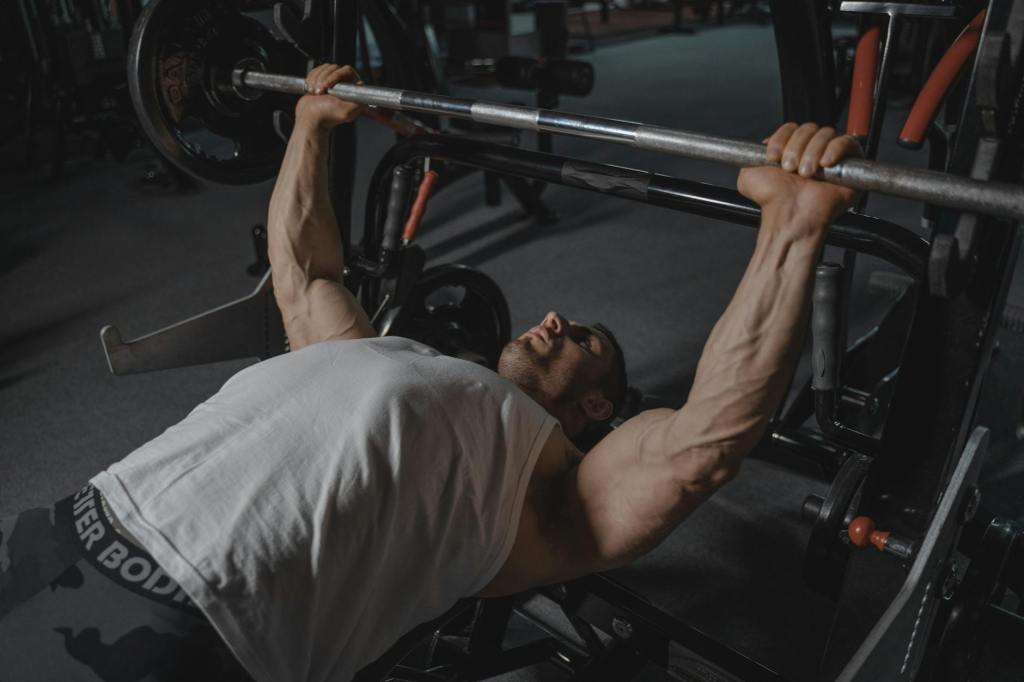
    As a lifelong bodybuilder trapped in academia myself, I relate to Harold’s plight more than I’d like to admit. Yet I nearly hurled the book across the room when Harold showed up to his interminable meeting without food. A man obsessed with protein who forgets to pack a meal? Unforgivable. In my forty years of teaching, I never once forgot to bring my Tupperware of chicken breast or Greek yogurt to the institutional trenches. I wanted to shout at the page: “Get in the game, Harold! Respect the gains!” Still, his misfit rage and comic pathos hook me. Harold may be a wreck, but he’s my kind of wreck.

    I’m only two chapters in but eager to consume the entirety of this delicious satire.

  • The Shock Jock Who Forgot to Pivot

    The Shock Jock Who Forgot to Pivot

    I still tune in to Howard Stern now and then, but most of what I hear these days sounds like a half-hearted reprise of his old shtick—sophomoric gags, body-function chatter, and adolescent innuendo that once jolted the airwaves but now just sag. In his prime, Stern was combustible: he blended pranks, irreverence, and enough genuine insight to keep his circus from collapsing. He earned his Radio Hall of Fame status by kicking down doors no one else dared touch.

    Now, as rumors of his retirement bubble and I endure his weary, autopilot banter with Robin, three thoughts claw at me. First: they don’t sound like they’re having fun anymore. This is a zombie act, plodding through the motions. Second: filling three hours of airtime every single day is a Sisyphean curse—nobody has that much worth saying without stuffing the sausage with sawdust. Third: we all have a shelf life. Relevance expires, and dignity demands a graceful exit.

    Stern’s curse is worse than most. His career persona—edgy, raunchy, forever pandering to prurience—has gone stale, but he’s trapped in it. The irony is brutal: a man smart enough to evolve chose to calcify. A decade ago, he could have pivoted, shed the shock-jock skin, and re-emerged as the wise veteran with conversations that mattered. Instead, while podcasts multiplied like caffeinated rabbits, he let himself be left behind.

    But maybe it isn’t too late. Imagine Howard 2.0: no longer the carnival barker of Sirius, but the philosopher-in-residence of his own café, sipping coffee and musing about culture, mortality, and meaning. Not fifteen hours of filler a week, but four hours of distilled insight—an hour twice a week, sharp and substantive. Podcasting is radio’s heir, and radio is in his DNA. Reinvention is the only antidote to irrelevance, and if he can summon the nerve, Stern could still surprise us.

  • The Man Who Always Waved

    The Man Who Always Waved

    When my twins were born in 2010, I spent years pacing the sidewalks of my Torrance neighborhood with them—first in a stroller, then a wagon, and eventually on their own unsteady feet. Along those same sidewalks shuffled old couples with dogs, walkers, and time to spare. Sometimes one half of a pair would vanish, leaving the other to walk alone, and soon enough that figure too disappeared from the neighborhood stage. I never knew most of their names, yet I felt tethered to them; they would smile at my daughters, wave with fragile hands, and in that exchange I saw the cycle of life laid bare: the beginning in my stroller, the ending in their absence.

    One man I did know by name—Frank. I don’t recall how we met, but I remember the details: his beige Volvo station wagon, the clever mirror nailed to the tree behind his house so he could back out with precision. Frank looked to be in his late sixties in 2010. He walked the neighborhood with brisk efficiency, always in uniform—olive shorts, white T-shirt, glasses perched on his nose, a beige bucket hat shading his face, and a small wristwatch on a leather band, which he consulted like a man keeping an appointment with life itself.

    He reminded me of a restrained Ned Ryerson from Groundhog Day: perhaps square at first glance, but steady, decent, reliable. No matter how intent he was on his route, he never failed to lift a hand in greeting. The wave was never exuberant, never perfunctory—it was graceful, automatic, the gesture of a man who seemed stitched together with quiet goodness. His wife matched him in cheer, and though I never learned her name, she radiated authenticity. They were a pair who seemed to exist outside of fashion, untouched by fads or pretensions.

    Over time, I realized they had become more than neighbors to me. They were a balm against my cynicism, proof that stability, kindness, and simple decency still existed in a world that seemed allergic to all three. Which is why, six months ago, while lifting weights in my garage, I felt a chill: What happened to Frank? I hadn’t seen him in ages. He would be in his eighties now. Surely he hadn’t slipped away unnoticed?

    Then, this morning, as I turned into my neighborhood after dropping my daughters at high school, I saw him. Frank, unchanged, same outfit, same bucket hat, same little watch. I raised my hand. He raised his. And before I knew it, a tear streaked my cheek.

  • Radical Boring: The Oatmeal-Based Lifestyle Brand No One Asked For

    Radical Boring: The Oatmeal-Based Lifestyle Brand No One Asked For

    Next month I’ll be 64, which apparently means my taste buds have joined AARP. My diet is now narrower than my tolerance for small talk: buckwheat groats, oatmeal (rolled or steel-cut, because why not keep things spicy), Greek yogurt with berries and honey, and peanut butter-and-honey sandwiches on dark bread. While normal humans dream of steak and champagne on a Paris-bound jet, I fantasize about oatmeal for dinner. Forget first class—I’m on the Oatmeal Express, and my only beverage service is dark roast coffee, soy milk, and sparkling water, which is just soda pretending it went to finishing school.

    I know what’s happening. I’m regressing. I crave mush, porridge, pablum—the kind of food that comes in jars with smiling cartoon fruit. My kettlebell workouts, five days a week, are my only defense. I sweat buckets, swing heavy weights, and imagine I look like a Viking—but in truth, it’s just a grown man clinging to his giant metal pacifier. Exercise has become my lullaby. When I collapse afterward, I feel less like a warrior and more like a sedated infant.

    Of course, at a family birthday party, one cousin reminded me that growth only happens when we leave our comfort zones. I nodded while thinking, No thanks, I’ve had enough character development for one lifetime. At this stage, I don’t want adventure. I want oatmeal. I don’t want novelty. I want predictability. I’m not only becoming a baby—I’m pioneering a whole new lifestyle brand called Radical Boring.

    My big act of rebellion? When my twins turn sixteen in six months, they will take my wife’s 2014 Accord, she’ll inherit my 2018 Accord, and I’ll step into the future—so long as the future, a 2026 Accord that comes in “canyon river blue.” My wife begged me not to get silver or gray again, so this is me living dangerously. Of course, I’ll rarely drive it. I’ll open the garage, admire the shiny paint, then close the door and scuttle back inside for a soothing bowl of oatmeal.

    My family laughs at me. They think I’m absurd, predictable, hopelessly domestic. But at least I’m consistent. And if authenticity means being true to yourself, then yes—I am authentically a 64-year-old content with my porridge, my pacifier workouts, and my canyon river blue Honda. Call it returning to the womb if you want. I call it destiny.

    And now, having confessed this ridiculous self-revelation, I find myself thinking of my literary kindred Ariel Levy and her An Abbreviated Life—a memoir I clearly need to revisit, if only to confirm that my brand of absurdity has precedents.

  • Words of Wisdom in a World of Publishing Hallucinations

    Words of Wisdom in a World of Publishing Hallucinations

    Last night I dreamed I was at the Aspen Institute, where I took the stage as a guest speaker while snowflakes pirouetted past the classroom windows like bored ballerinas. Dozens of young writers—already published, already duped—sat before me, waiting to be enlightened. I told them the truth their publishers had concealed with a smile and a contract: the marketing promises were fairy dust, the royalty checks were jokes, and their “book deals” were little more than elaborate scams. They would earn a pittance, and the betrayal would sting worse than any bad review.

    Some of them glared at me like I’d just blasphemed against their gods, but others—emboldened by rage—shouted the names of their novels and memoirs into the snowy air. A nineteen-year-old tech billionaire from India cried out the title of his memoir: The Gunther Effect. I made him repeat it three times, as if conjuring a spell, so the words wouldn’t slip away. Against my better judgment, I was intrigued.

    By popular demand, I returned for a second sermon. This time, I was flanked by professors and “established” writers who knew the game as well as I did. Their lectures weren’t brilliant, but they didn’t have to be. For me, just focusing on one speaker, narrowing the scattered kaleidoscope of my mind into a single lens, felt like mental hygiene—a purging of the Internet’s endless distractions. I thought, This is what I miss: the monastic joy of being a student, concentrating on one voice instead of chasing dopamine scraps.

    And slowly, the room shifted. The students began to understand that my colleagues and I weren’t cynics but keepers of the ugly gospel. We had the keys to the vault, the passwords to real power. We were the Priests and Priestesses of Light and Success, consecrated by disillusion. Hands shot up like candles in a vigil, their questions burning against the snowfall outside, and we were exalted, gratified, almost holy in the glow of their hunger.

  • C.Crane Solar Radio: Attention to Details Makes It a Winner

    C.Crane Solar Radio: Attention to Details Makes It a Winner

    20250115_153540

    The C. Crane Solar Radio, paired with the optional AC adapter, arrived on Day 9 of the Los Angeles fires—perfect timing for some disaster preparedness. My first impression? Surprisingly compact and, dare I say, stylish. Its buttons and controls are refreshingly intuitive, a rare quality in emergency gadgets that usually look like they were cobbled together by paranoid survivalists.

    Then I met the battery door—a stubborn slab of plastic that wouldn’t budge. My fingers failed, so out came the Swiss Army knife, turning what should’ve been a simple battery swap into minor surgery.

    20250115_150949

    Once powered up (on batteries, to avoid interference), I tested FM reception. Not bad. It’s sensitive, though slightly weaker than my Sangean PR-D12 when pulling in 89.3, a notoriously tricky station here in Torrance. Still, it handled it well. KUSC 91.5, though, was a lost cause—same as the PR-D12. Odd, since during my obsessive radio blogging days in the mid-2000s, 91.5 was crystal clear. Maybe it’s not the radios. Maybe it’s today’s electromagnetic smog choking the airwaves.

    Later that evening, as I tackled the dishes, the FM sound impressed me. 89.3 came through loud and clear, delivering crisp voices on the news.

    AM performance? Initially disappointing—distant, hollow, like voices echoing from a well. My friend Mark reminded me that modern homes are electronic war zones. Between Wi-Fi routers, smart devices, and God knows what else, AM hardly stands a chance.

    But then I tweaked the settings. Switching the bandwidth filter from 2.5kHz to 4kHz transformed the AM performance. Suddenly, it shined.

    The speaker is pleasant but modest. This is a small radio, after all. Luckily, the hidden High Power Audio Mode (press buttons 1 and 5) gives it a subtle boost—not exactly concert hall quality, but enough to rise above kitchen noise.

    Where the C. Crane Solar Radio really excels is in its power versatility—two battery types, a solar panel, and a hand crank. Practical, yet it doesn’t scream apocalypse gear.

    So, where does it fit in my collection? The PR-D12 stays in the garage for kettlebell workouts. The Solar Radio earns a spot over the kitchen sink, likely becoming my wife’s go-to. With solid FM performance, customizable AM tuning, and thoughtful design, the C. Crane Solar Radio gets the details right—and comes out a winner.

    20250115_150937
  • A Nostalgic Ode to the Tecsun PL-660

    A Nostalgic Ode to the Tecsun PL-660

    20250123_150400

    Against every shred of common sense I possess, I’ve joined several Tecsun radio forums—a decision akin to a sugar addict moving into Willy Wonka’s Chocolate Factory and sleeping under the chocolate river. It’s not just unwise; it’s a slow, delicious path to ruin. Within minutes, the forum zealots were chanting in unison: “You must own a PL-660 or PL-680! These are relics from the Pre-DSP Glory Era, back when Tecsun radios were free from the infernal chuffing, muting, and choppy tuning that plague DSP models. Think smooth analog cruising versus a hyper-caffeinated, turbocharged sports car.” Naturally, I bit the bait.

    The timing was serendipitous—or dangerous, depending on your perspective. During the height of my radio obsession, circa 2008, I owned a black Tecsun PL-660, and it was the crown jewel of my collection. But, as is the curse of all obsessions, I sold it during a fleeting moment of sanity, a decision that haunted me. When the January 2025 Los Angeles Fires reignited my passion for radios—because what better time to tinker with antennas than during a climate apocalypse?—the one radio I truly mourned was the PL-660.

    Enter eBay, the Pandora’s box of impulse purchases. I tracked down a silver PL-660 from a seller in Canada. At $68, it felt like a steal. Add $30 for shipping, tax, a Tecsun adapter from Anon-Co, and four AA rechargeable batteries, and suddenly my “steal” was a $140 splurge. But what’s money when you’re reuniting with a long-lost love?

    When the silver PL-660 arrived, it was nearly pristine, as if frozen in time. The box, manual, and accessories were all there, minus the adapter. I tested its AM and FM performance and, unsurprisingly, found it nearly indistinguishable from my PL-880—a radio I’d been coddling like a newborn in my bedroom. Sure, the 880’s speaker has a richer timbre, but the 660 holds its own. AM reception? The 660 might edge out the 880, but given the ever-shifting electrical interference in my house, testing it felt like comparing snowflakes in a blizzard. FM? Practically identical.

    And yet, here’s the kicker: I prefer the PL-660. Why? Nostalgia, for starters. It’s been 15 years since I last held one, and its reunion felt like meeting an old friend who hasn’t aged a day. But it’s more than sentimentality. The PL-660 exudes Pre-DSP mystique, wearing its analog pedigree like a hero’s badge of honor. Add to that the rumors swirling on the forums about the PL-680 taking its final lap before extinction, and I developed a textbook case of FOMO.

    Aesthetically, the 660 is a triumph. The PL-880, while a solid performer, looks like it was designed by two committees: one in charge of the radio chassis, the other tasked with slapping on an oversized speaker as an afterthought. In contrast, the PL-660 feels like it was forged from a single, unified block of silver (or black, if you’re lucky enough to find one). It’s monolithic, almost talismanic, with a heft that whispers, “This is not a toy.” Holding it feels like gripping a miniature obelisk of radio perfection.

    PL 880 & Uemura 1

    Naturally, I’m already scheming to buy a second PL-660 or perhaps its sibling, the PL-680, to keep as a “backup”—because if you love a radio enough, redundancy becomes an art form. And, because I can never leave well enough alone, I know I’ll spend the coming weeks obsessively swapping locations, putting the 660 in the bedroom, then the kitchen, then back again, until my brain short-circuits. Who needs stability when you can have perpetual indecision?

    In fact, I barely made it to my office to write this without feeling pangs of longing for the 660, which I’d left momentarily in the kitchen. Thirty minutes apart, and I was already waxing poetic about its brilliance, muttering, “Dude, you really love radios.” And it’s true—I do. Probably too much. But that’s the magic of radios: they’re not just devices; they’re companions, time machines, and portals to a world that feels more tactile and real than anything on your smartphone.

    Do I still love my PL-880? Of course. It’s a marvel of engineering, a steady presence in my life. But the PL-660? That’s my muse, my reminder of why I fell in love with radios in the first place. The 660 isn’t just a radio; it’s a reflection of who I am—an overthinking, signal-chasing, nostalgia-driven mess. And I wouldn’t have it any other way.

  • Sangean PR-D12 Is Solid on FM and AM in the Right Environment

    Sangean PR-D12 Is Solid on FM and AM in the Right Environment

    The following is from my now defunct Herculodge blog. I realized when I did radio testing again in 2025 that RFI (radio frequency interference) is a far greater challenge than it was in 2008. I need to play my radios on batteries, not AC adapters, and keep them away from walls, which is a shame because I really want the Sangean HDR-19, a wall adapter-only radio, which has gone up in price about $80 since even a couple of months ago.

    Since the Los Angeles Fires tore through Southern California in January 2025, I realized my household was embarrassingly underprepared for live news coverage. Streaming devices and smart speakers suddenly felt flimsy when the sky turns orange. I needed something sturdier, more reliable—like a good, old-fashioned radio.

    Enter Sangean, a brand I trusted a decade ago. I fondly remembered their radios delivering a warm, bass-heavy sound—pleasant, if not exactly hi-fi. My ancient PR-D4 still hums along in the garage, proof that Sangean builds workhorses. So, naturally, I picked up their new DSP-chip PR-D12, curious to see how it stacked up against its analog ancestor.

    The verdict? The D12 is brighter and more balanced than the D4, though the warmth I loved has cooled a bit. FM reception is a mixed bag. From Torrance, Pasadena’s 89.3 comes in strong with three bars and crystal clarity on the D12. On the D4? Same signal strength but with a thin veil of static, unless I awkwardly angle the antenna like I’m searching for alien life.

    But then things get weird. 91.5, my go-to classical station, sings smoothly on the D4 but sputters on the D12—two weak bars and static, no matter how I threaten the antenna.

    AM? Forget it. 640 AM is listenable but laced with floor noise on both radios. I twist and turn the radios to align the internal ferrite antennas like I’m cracking a safe, but the noise stays. Worse, AM talk radio voices sound like they’re broadcasting through a burlap sack. Long-term listening? Not a chance.

    What the D12 does have going for it is user-friendliness. Four preset pages with five slots each make navigating stations painless—perfect for my wife, who refuses to wrestle with complex manuals that read like an SAT prep book. She’s happy with 89.3 and 89.9 blasting clear and loud, so the D12 earns its spot in the kitchen.

    Still, I can’t shake the feeling I need something more commanding, like the soon-to-arrive Tecsun PL-990x. Maybe it’ll crack the code on AM audio bliss. Until then, the PR-D12 holds the line—solid, if not inspiring.

    Moderate recommendation.

    Update:

    I told my fellow radio enthusiast friend Gary about how I could not listen to the AM sound on the PR-D12 or my PR-D4, and he expressed the same sentiment. He said the only AM he can listen to from his vast radio collection is his now defunct C.Crane CC Radio-SW, which is a clone of the Redsun RP-2100. This made me sad because many years ago I enjoyed listening to AM on my Redsun RP-2100, but I fried it when I put the wrong AC adapter in it. Getting good AM sound out of a radio is hard these days. 

    Second Update:

    Three days after writing this review, I moved the PR-D12 to the garage where it sounds great on AM so I blame the kitchen, not the PR-D12. 

  • The Lobster That Lifted Kettlebells

    The Lobster That Lifted Kettlebells

    Last night, I slipped into a dream where I was less man and more detective cliché: trench coat, team at my side, the whole noir package. We prowled the tiled underworld of a health club, where women lay dead in the shower stalls. The air carried a rank perfume—pungent, briny, unmistakable. It was the signature of our quarry, The Alligator Man, a serial killer who apparently marinated in fish guts before slaughter.

    Our trap was absurd but effective. We laced another health club’s showers with his own scent, as if baiting him with eau de swamp monster. Sure enough, the predator slithered into the stall, and I lunged. But instead of the hulking brute I expected, I clutched a young, handsome man, small enough to vanish in a crowd. His boyish face said innocent; his stench said otherwise. I locked eyes with him and announced, with grim satisfaction, that he was evil—and that evil was about to rot in a cell forever.

    Then, with dream logic’s usual whiplash, I found myself at a holiday party with my family. My wife had crafted me a lobster costume: claws for hands, a scarlet exoskeleton, and a hat shaped like a boiled crustacean’s head. I looked like a seafood platter at a masquerade ball. I ate cake while dodging feline landmines—the hosts’ cats had redecorated the house with cat mess. The carpet was stained with these “accidents.” With cake fork in hand, I declared this exhibit A for my lifelong “no pets policy.”

    The party oozed past midnight into the pale gray of morning. Bored stiff and craving endorphins, I trudged home. Still zipped inside my lobster suit, I cranked up a kettlebell workout in the living room. My claws clacked as I swung iron, the sweat pooling beneath my polyester shellfish skin.

    Headlights swept across the window. My wife and twin daughters walked in. I assumed they, too, had abandoned the litter-box bacchanal. She spotted me mid-squat, lobster claws snapping, and didn’t so much as flinch. I worried she’d rage over my soaking her handmade costume in salt and sweat. Instead, she simply yawned, brushed past my lobster theatrics, and announced she was going to bed. Evil had been vanquished, cats had soiled carpets, and the lobster workout was apparently just another Tuesday in her world.