
I am a recovering Baby Boomer, a man spending his adult life in slow convalescence from my generation’s excesses, delusions, appetites, and spectacular lapses in judgment. We were a gullible people, easily hypnotized by charisma, pseudoscience, and televised absurdity. We watched self-proclaimed psychic Uri Geller bend spoons on The Merv Griffin Show while audiences reacted as though Moses himself had just parted the Red Sea with silverware. We read The Secret Life of Plants by Peter Tompkins and became convinced our begonias possessed emotional needs and that our geraniums required not merely sunlight and water but emotional affirmation and perhaps a little Barry Manilow. We devoured comic-book advertisements promising Charles Atlas physiques, X-ray vision, and Sea Monkeys sophisticated enough to establish maritime republics. Television commercials showed eager blondes like Farrah Fawcett rubbing shaving cream onto the cheeks of Joe Namath while exhausted housewives suffered public humiliation for failing to remove “ring around the collar.” Even bad breath became a moral catastrophe. One whiff of halitosis and television implied your marriage, career, social standing, and perhaps your begonias would collapse simultaneously.
Then came the great cultural psychedelicization of suburbia. We witnessed Woodstock, ogled at Hugh Hefner’s satin-lined Pleasure Palace, and absorbed the full narcotic force of Hair. I can personally testify that once “The Age of Aquarius” entered the bloodstream of my San Jose neighborhood, things deteriorated rapidly. One moment neighbors were making peach preserves while drinking Florence Henderson-approved Tang beneath respectable patio umbrellas. The next moment those same backyards had been transformed into hot-tub diplomacy zones populated by nudists, swingers, divorcees, and mustachioed men named Skip discussing transcendental meditation beside tiki torches. Divorces multiplied like mushrooms after rain. Wheat germ became mandatory. Tanning without sunscreen evolved into a civic religion. Entire adults developed an inexplicable longing to go on tour with The Partridge Family. We were sold a vision of freedom defined almost entirely by consumer pleasure-seeking, and like gullible Labradors chasing a tennis ball off a cliff, we lunged after it enthusiastically.
To this day, Boomers remain burdened by what can only be described as a Hydra-headed collection of addictions, nostalgias, and narcissistic compulsions. We benefited from affordable housing, cheap college tuition, generous job markets, and an economy that still allowed mediocrity to purchase a respectable ranch home with avocado-colored appliances. Yet instead of building ladders for future generations, many of us climbed upward and kicked the rungs away behind us while lecturing younger people about “hard work.” Retirement only intensifies the pathology. Rather than volunteering or developing civic virtue, many Boomers retreat into nostalgia pageants. They attend fantasy baseball camps where aging Hall of Famers teach sixty-eight-year-old insurance salesmen how to bunt. They go on African safaris and return home narrating their adventures in the booming voice of Commander McBragg. They attend The Rolling Stones concerts hoping the pelvic gyrations of octogenarian rock stars will somehow exempt them from mortality itself. Culture critics have noticed all this and responded with flamethrowers. Bruce Cannon Gibney portrays Boomers as empathy-deficient sociopaths in A Generation of Sociopaths. Lyman Stone argues we ruined everything. Jim Tankersley accuses us of devouring resources and fleeing responsibility like drunken Vikings looting the treasury. Meanwhile Joe Queenan observed that Boomers possess the supernatural ability to transform even the most banal activities into monumental spiritual “events” requiring extensive planning, emotional reflection, and enough data analysis to launch a moon mission.
As someone born near the tail end of the Baby Boom in 1961, I would now like to contribute my own testimony to the prosecution. My story concerns cereal. But the word cereal is hopelessly inadequate for describing the psychological labyrinth into which my generation willingly wandered. Cereal sounds harmless, like something discussed by dietitians or dentists. No, what consumed us was something far larger and more immersive: the Cerealverse. To become lost in the Cerealverse is to undergo a form of infantilization in which the rituals, mascots, sugar rushes, and comforting repetitions of childhood cease being temporary pleasures and instead become an entire operating system for adult life. You believe you are moving forward, maturing, evolving. In reality, you are merely orbiting the same tiny constellation of appetites and nostalgic comforts over and over again like a trapped satellite incapable of escape. The Cerealverse does not merely feed you. It suspends you in a permanent state of emotional adolescence while convincing you that your stagnation is happiness.
I can’t talk about infantilization without mentioning Cap ‘N Crunch. My mother indulged my appetite for this sugary cereal and bought me all its variations: Cap ‘N Crunch with Crunch Berries, Peanut Butter Cap ‘N Crunch, and then the renamed versions of the same-tasting cereal: Quisp, Quake, and King Vitamin. Quaker cereals took their winning formula of corn and brown sugar flavors and sold several variations with different mascots and names.
As a kid watching these cereals being advertised on TV, it was clear that too much of a good thing was not a problem. On the contrary, I felt compelled to taste-test all these cereal varieties the way a sommelier would taste dozens of Zinfandel wines from the same region or a musicologist would listen to hundreds of different versions of Rachmaninoff’s Second Symphony.
Eating six versions of Cap ‘N Crunch afforded me the illusion of variety while eating the same cereal over and over. I was a preadolescent boy who wanted to believe I had choices but at the same time didn’t want any choices.
You will sometimes hear about the man who is in his sixth marriage, and his wives in terms of appearance, temperament, and personality are all more or less the same. The man keeps going back to the same woman but wants to believe he has “found someone new” to give him the hope of a new life.
What you are witnessing is infantilization, the illusion that you are moving forward when in fact you are trapped in a Moebius strip. A Möbius strip creates the illusion of movement while trapping you inside the same continuous surface forever. You keep traveling forward, yet mysteriously return to the exact psychological point where you began. The horror of the Möbius strip is not that it stops you from moving. The horror is that it allows you to move forever while never truly arriving anywhere.
To illustrate this horror properly, allow me to transport you back to the late 1970s when I worked as a bouncer at Maverick’s Disco in San Ramon, California. The job paid the princely sum of three dollars an hour—roughly ten cents above minimum wage—which at the time felt like entrance into the capitalist elite. The compensation package also included unlimited soft drinks and nightly exposure to enough polyester jumpsuits, platform shoes, and chemically fortified feathered hairdos to trigger multiple fire-code violations simultaneously. At first I considered the job a masterstroke of efficiency. I was killing two birds with one stone: earning money while prowling the disco floor performing involuntary lat spreads in tight shirts, all while socializing with an endless parade of beautiful women marinated in Jean Naté, cigarette smoke, and disco lighting. Like Cap’n Crunch, the disco promised nonstop excitement, sugar-rush pleasure, and cartoon happiness. But beneath the glitter and bass lines lurked something much darker than depression. It produced anhedonia—the condition in which the brain becomes so overexposed to stimulation that pleasure itself begins to short-circuit. When I think of anhedonia now, I think immediately of Maverick’s Disco.
Because every night at the disco was supposedly “another exciting night,” yet every night was exactly the same. The same swaggering men in open-collared satin shirts. The same women adjusting their mascara beneath bathroom mirrors. The same Bee Gees songs vibrating through nicotine fog. The same desperate hunt for validation disguised as fun. Over time, the repetition became spiritually suffocating. Humanity itself began to look repetitive, fraudulent, vain, and emotionally trapped inside a giant behavioral loop. Working there reminded me strangely of the moment I stopped enjoying The Flintstones as a child. One afternoon I noticed that while Fred and Barney drove their stone-age car down the highway, the background scenery—trees, rocks, buildings—repeated endlessly in a looping cycle. Once I saw the wraparound background, the illusion collapsed permanently. I was no longer watching prehistoric adventure. I was watching cost-cutting animation techniques. The magic died instantly. Maverick’s Disco produced the same revelation. Every Friday and Saturday night I watched customers arrive radiating grand expectations of glamour, romance, transcendence, and reinvention. Then at closing time I watched those same faces stumble toward the parking lot glazed over with exhaustion, disappointment, loneliness, and stale gin. Yet the following weekend they returned to repeat the ritual all over again like worshippers trapped in a polyester Möbius strip. At some point I realized the disco itself had become the wraparound background of my own life, and that realization terrified me. I understood dimly that I did not merely need to quit the job. I needed to escape an entire stagnant mode of existence before I calcified inside it permanently.
Sadly, escaping the Cerealverse—or any form of infantilized comfort addiction—is never so simple. The programming begins early. The imprinting runs deep. Even now, navigating my sixties, I remain vulnerable to the gravitational pull of bowls filled with sugary mush and edible nostalgia. Much of the blame belongs to Euell Gibbons, the patron saint of crunchy Boomer mysticism. Gibbons presented himself as a woodland prophet—a bearded naturalist survival guru who appeared in commercials for Grape-Nuts explaining with dead-serious authority that many parts of a pine tree were edible. This bizarre botanical trivia somehow qualified him, in the minds of millions of Boomers, to lecture the nation about nutrition and moral virtue. The subliminal message was unmistakable: eat Grape-Nuts and you too could survive alone in the wilderness wearing nothing but a loincloth and carrying a buck knife. Never mind that the cereal itself possessed the texture of roofing gravel and was responsible for enough chipped molars to enrich the American dental industry for decades. Eating Grape-Nuts produced a crunch so violent it could drown out the kitchen radio. Yet none of that mattered because the Boomer generation elevated cereal consumption into a kind of spiritual discipline. Granola, wheat germ, and gravel-like fiber clusters ceased being mere breakfast foods and evolved into moral performances, edible declarations that one was enlightened, natural, spiritually purified, and metabolically superior to the unwashed masses whose kitchen cabinets were not overflowing with mason jars of buckwheat groats, flaxseed meal, carob powder, and steel-cut oatmeal dense enough to patch potholes in municipal highways.
It is impossible to contemplate the Cerealverse without returning to the early 1970s when my family shopped at a San Francisco Bay Area grocery store called Co-Op, a market proudly advertised as “owned by the people,” which gave the place the atmosphere of a food store crossed with a minor political uprising. The employees were unnervingly friendly. Many of the men had beards thick enough to shelter migratory birds and wore wilderness gear purchased from the store’s adjoining “Wilderness Supply Store,” a retail annex catering to customers who wished to survive both societal collapse and a weekend camping trip near Mount Tamalpais. Everyone at Co-Op seemed to exist somewhere on the Hippy Spectrum, ranging from mellow acoustic-guitar environmentalist to full-blown anti-capitalist survival mystic. The store boasted the town’s first daycare center for children while parents shopped and the first recycling center long before suburban America learned to pretend it cared about the planet. Alongside bins of organic produce sat a modest but influential bookstore stocked with sacred countercultural scripture: Zen and the Art of Motorcycle Maintenance, The Secret Life of Plants, Chariots of the Gods?, The Peter Principle, and towering above them all like the Vegetarian Torah itself, Diet for a Small Planet. The food inventory looked less like groceries than supplies for an agrarian uprising: carob honey ice cream, wheat germ, granola, brown rice, tofu, Japanese yams, and alfalfa-sprout cultivation kits complete with mason jars so suburbanites could grow revolutionary vegetation beside their kitchen sinks.
Co-Op was therefore more than a grocery store. It was a sanctuary for people rebelling against what they ominously called The Man. Eating granola drenched in organic honey was not merely breakfast but a political declaration, a crunchy repudiation of corporate America performed with wooden spoons and sandals. Every overflowing bowl of wheat germ signaled moral superiority over the poor unenlightened masses still eating Wonder Bread and Frosted Flakes beneath the fluorescent tyranny of Safeway. Yet the movement possessed a glaring contradiction large enough to require its own waistline. For all their rhetoric about health, moderation, and spiritual purification, many of these granola apostles suffered from a condition I came to think of as Granola Belly. They consumed calorie-dense granola, wheat germ, honey, nuts, seeds, and carob desserts with the evangelical intensity of people who believed organic calories somehow obeyed different laws of thermodynamics. As I wandered the aisles with my parents, I observed these rotund revolutionaries waddling past bins of lentils and herbal teas, their expanding stomachs bouncing beneath ponchos and safari vests while they discussed sustainable farming and the evils of processed sugar between bites of honey-coated granola containing enough caloric density to sustain minor civilizations.
Looking back, the granola faithful of the Co-Op era were the spiritual ancestors of a distinctly Boomer contradiction: the fusion of lofty ideals with spectacular self-indulgence. They strutted through their people-owned utopia imagining themselves guerrilla warriors in the battle against corporate oppression while simultaneously consuming enough “natural” food to feed small Scandinavian fishing villages. Their granola bowls became sacramental objects, edible proof of enlightenment and rebellion. Yet like so many Boomer crusades, the movement eventually collapsed beneath the weight of its own appetites. They denounced consumer culture while buying fifty-pound sacks of artisanal oats. They preached moderation while drowning yogurt in rivers of organic honey. They fantasized about escaping modern decadence while polishing off entire tubs of carob ice cream. Their growing bellies became physical manifestations of a generation uniquely skilled at confusing indulgence with liberation. Nothing better captures the Boomer spirit than a man in hiking boots and a macramé vest lecturing others about corporate tyranny while absentmindedly eating twelve hundred calories of “healthy” granola.
Like those self-indulgent Boomer hippies waddling through Co-Op with honey in their beards and granola in their intestines, I too became trapped inside the Cerealverse. My attraction was not merely to cereal’s sugary, infantile comfort but to its deeper promise: the fantasy of a frictionless existence. As a preadolescent boy fantasizing about growing into a baseball slugger with the heroic bulk of Reggie Jackson and Greg Luzinski, I imagined myself living as a carefree bachelor whose weekly grocery shopping consisted entirely of loading a cart with towering stacks of cereal boxes—Froot Loops, Sugar Pops, Cap’n Crunch, Count Chocula, and whatever other brightly colored sugar delivery systems the cereal industry was using to infantilize America’s youth. In my fantasy, adulthood was not about responsibility, marriage, or civic engagement. It was about ease. Convenience. Minimal friction between appetite and gratification. My spiritual guide for this philosophy was Uncle Norman from The Courtship of Eddie’s Father. In one episode, Uncle Norman explained to young Eddie that he had discovered the secret to avoiding dishes and wasting time at the dinner table: eat every meal standing over the kitchen sink. Demonstrating the method by consuming an entire head of lettuce directly above the drain basin, Norman proudly explained that his technique eliminated unnecessary cleanup, table setting, and other exhausting rituals associated with civilization itself. At that moment my brain detonated with revelation. The Uncle Norman Method became not merely a humorous TV gimmick but a governing life principle that would shape my habits, aspirations, and psychological orientation for decades.
Aspiring to become a disciple of Uncle Norman, I began envisioning an entire lifestyle engineered around minimizing friction with reality. Why make a bed when a sleeping bag could simply be flopped across the mattress indefinitely like a tarp covering abandoned machinery? Why water plants when plastic foliage required no emotional commitment? Why learn to cook when cereal, toast, bananas, and yogurt cartons could sustain human existence with minimal labor? I planned to work within a five-mile radius of my home and only date women living inside my zip code because romance should never involve excessive driving. I saw no need for a laundry hamper since dirty clothes could be deposited directly into the washing machine drum until a sufficient mound accumulated to justify pressing START. Color coordination became unnecessary because I would own only black clothing, transforming my wardrobe into the textile equivalent of a low-budget European art film. Since bedsheets themselves struck me as unnecessary complications, the linen closet could instead house protein powder, brewer’s yeast, and protein bars. Grocery shopping would always occur during low-traffic morning hours to avoid crowds and unnecessary human interaction. Before entering restaurants, I would study menus online with military diligence so I could order instantly without burdening waiters or fellow diners with indecision. The moment the bill arrived, my credit card would already be positioned and ready for extraction like a gunslinger preparing for a duel. Most importantly, I vowed never to own a truck because trucks attract acquaintances who suddenly remember your existence whenever couches need moving.
It is painfully clear to me now that the Uncle Norman Method emerged directly from the Cerealverse and that its deeper logic depended upon disengagement from the world itself. Infantilization, after all, is partly a yearning to return to the womb—to retreat from complexity, responsibility, unpredictability, and emotional entanglement. Depression often disguises itself as convenience. You tell yourself you are simplifying your life when in reality you are shrinking it. The Uncle Norman Method was not really about efficiency. It was about withdrawal. It was a way of quietly informing the world: “I can no longer process your noise, obligations, and chaos. I am dimming the lights, retreating into my cave, and marinating in my routines. Please do not disturb me unless absolutely necessary.” There is an episode of Seinfeld in which Jerry remarks that a man wearing gray sweatpants in public is essentially announcing that he has given up on life. Cereal as a staple food operates the same way. A bowl of cereal declares that the effort required to create a meal exceeds your emotional willingness to participate in existence. The Uncle Norman Method therefore was not enlightened minimalism. It was glorified laziness camouflaging exhaustion, melancholy, and retreat from adulthood beneath the sugary crunch of processed grain.
I can assure you that as a man in his sixties with a wife and teenage daughters, behaviors aligned with the Uncle Norman Method are not greeted as signs of enlightened efficiency. They are treated more like symptoms requiring intervention. By Friday evening I am often so psychologically depleted from the workweek that the very idea of preparing dinner or driving somewhere for takeout feels like being assigned a humanitarian relief mission in a war zone. In these moments, the seductive logic of the Cerealverse returns with full narcotic force. More than once I have proposed what I considered a magnificent family innovation: “Oatmeal Night.” I present the concept with the enthusiasm of a Silicon Valley disruptor unveiling revolutionary technology. “Picture it,” I proclaim. “A glorious oatmeal bar! A Dutch oven filled with perfectly cooked steel-cut oats. Glass bowls overflowing with blueberries, bananas, diced sweet potatoes, walnuts, pecans, raisins, chocolate chips—an evening of rustic abundance and nutritional splendor!” My family responds as though I have proposed surviving winter inside a roadside bunker while rationing grain during the Dust Bowl. Their synchronized eye rolls contain a single unified message: Dad is once again trying to convert exhaustion into philosophy. They refuse to participate in my retreat from civilization disguised as Scandinavian peasant cuisine.
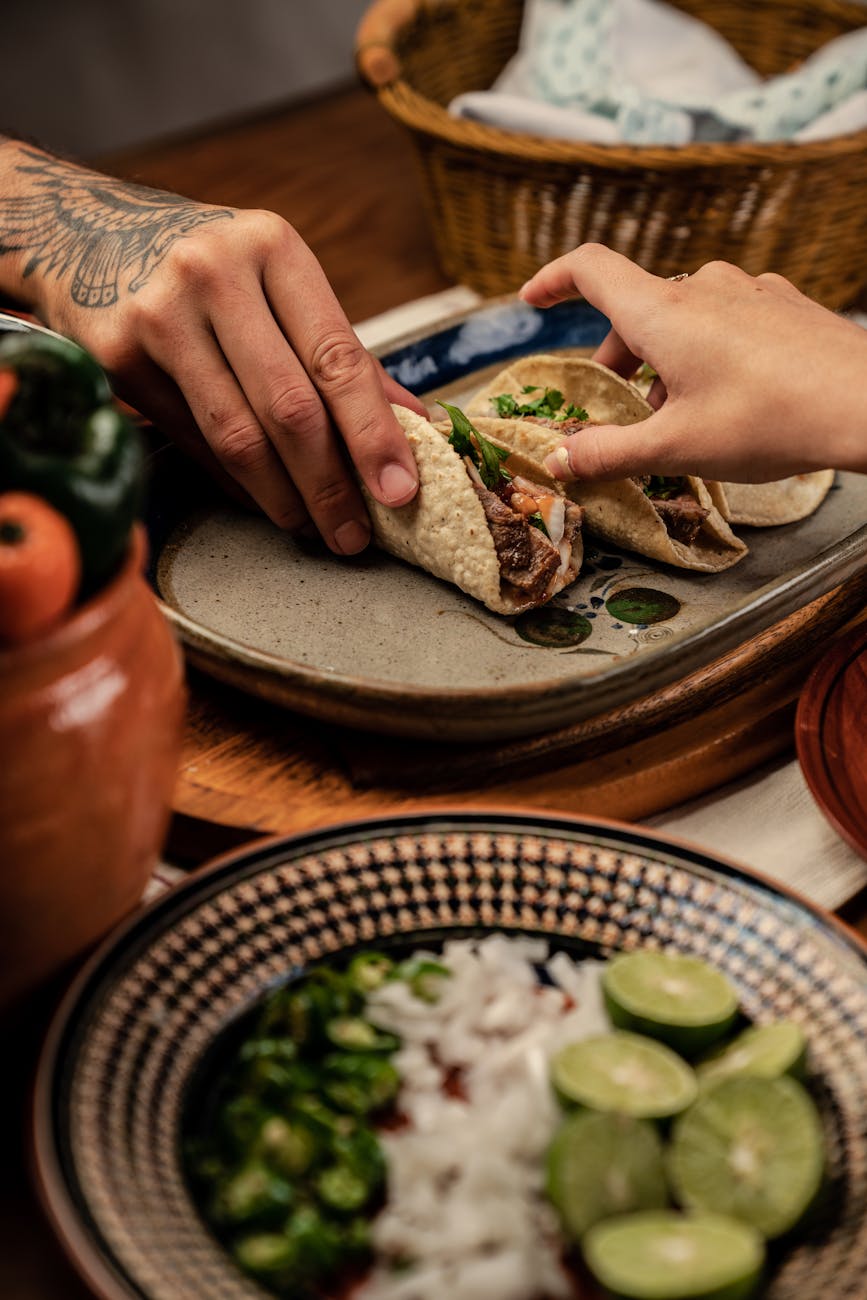
Because to live inside the Cerealverse is ultimately a form of exile. It is separation—not merely from cooking, effort, or dishes—but from life itself. I am reminded of something Stephen Colbert once said while discussing hell with Bill Maher. Colbert remarked that hell is separation from God. That definition stayed with me because it perfectly describes the spiritual condition of the Cerealverse. To be trapped there is to become severed from vitality, intimacy, effort, sensuality, and communal joy. You become disconnected from the very things that make existence rich and earthly. Fortunately, if there exists such a condemned state, there must also exist its opposite—a glimpse of heaven. To understand that heaven, we must travel back to 1969 and the first time I tasted homemade salsa. Our neighbors, Mike and Felice Orozco, made salsa entirely from ingredients grown in nearby backyard gardens. The salsa sat upon the coffee table inside a volcanic-looking tureen as though it were some sacred artifact requiring both reverence and caution. You could smell it the instant you entered the house: chilies, onions, garlic, tomatoes—alive, aggressive, unapologetically real. The aroma alone made every jarred supermarket salsa taste like liquefied bureaucracy.
And then there was the color. Not the synthetic red of restaurant chains or the dull industrial redness of mass production, but a deep ruby crimson possessing the vivid authority of something born directly from sun, soil, sweat, and care. I have eaten excellent salsa across decades of restaurants and dinner tables, but nothing has ever equaled the salsa Felice Orozco taught my mother to make in the late 1960s. Even now, when a Mexican restaurant serves a salsa remotely approaching that standard—even halfway—I regard it as evidence of moral seriousness in the kitchen. Because Felice Orozco’s salsa was never merely food. It was philosophy disguised as a condiment. It carried within it a quiet but radical argument about what matters in human life. Families passing down recipes are not merely exchanging ingredients; they are transmitting devotion, memory, discipline, continuity, and love.
Unlike the frictionless emptiness promised by the Cerealverse, this salsa required labor, patience, mess, participation, and community. There was nothing optimized about it. No shortcuts. No convenience strategy. Just human beings gathering together, giving their time, energy, and affection to produce something fleeting and beautiful. That salsa was a masterpiece not because it was authentic, artisanal, or fashionable, but because it was made by people who cared about one another deeply enough to create something unforgettable together.
As someone who has spent decades trapped inside the Cerealverse and beholden to the Uncle Norman Method, I can assure you that Felice Orozco’s salsa was love itself, a gift from God.








 Cinemorphosis