Tag: food

  • The Sandwich Shop of Eternal Regret

    The Sandwich Shop of Eternal Regret

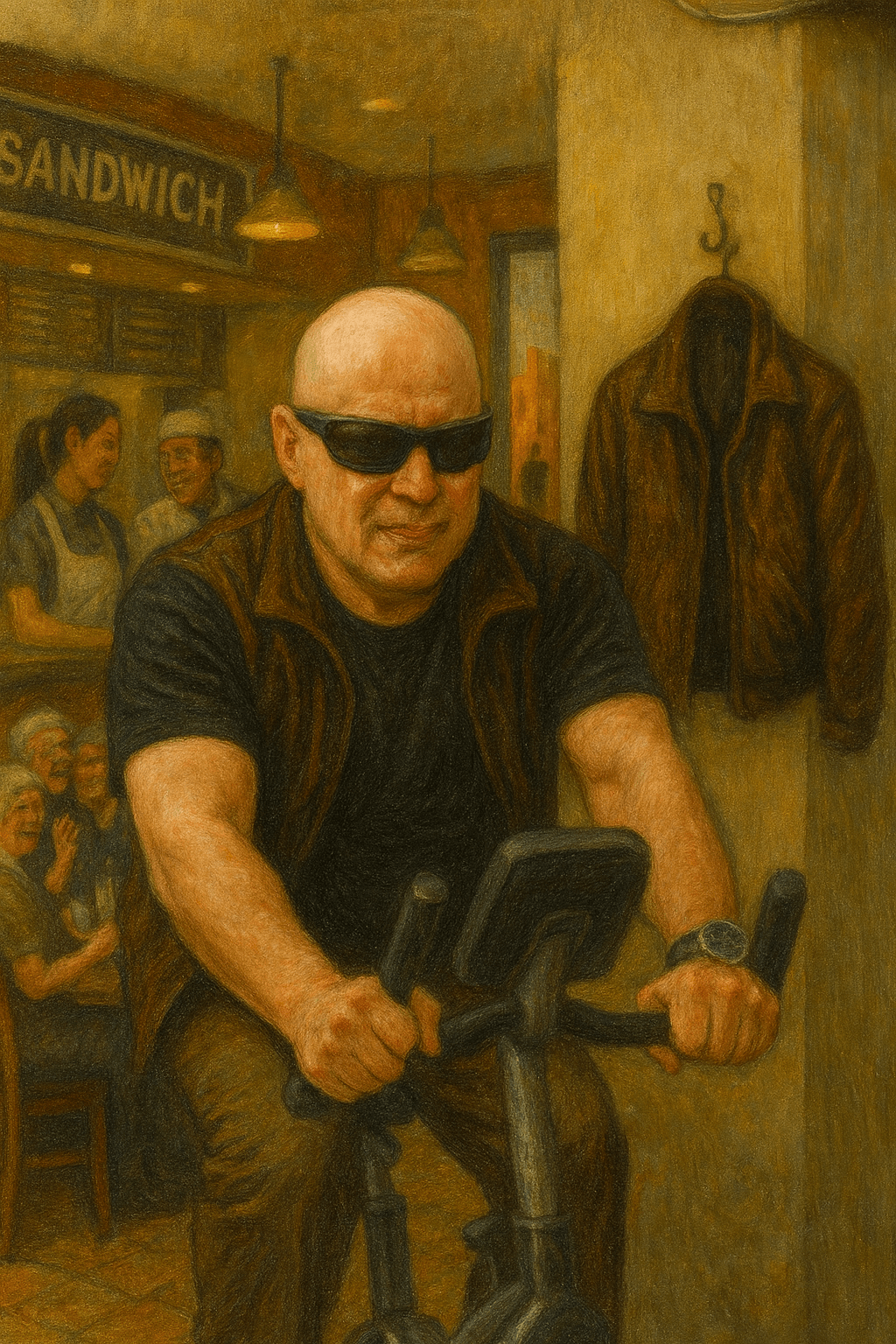
    Last night, I dreamed I retired too early, lost my tenure, and found myself cobbling together two humiliating jobs to survive. By day I was a part-time writing instructor, hustling between second-rate colleges. By night I was reduced to a takeout delivery boy for the sandwich shop where my wife cheerfully worked.

    If there was a silver lining, it was this: while waiting for her to assign me deliveries, I could pedal furiously on a stable of exercise bikes provided by the restaurant. Because, naturally, this wasn’t just a sandwich joint — it was part health club, part tourist mecca. At one point, a gaggle of Danish tourists descended, cackling in a booth for hours, treating the sandwich shop as though it were the Eiffel Tower of their itinerary.

    My wife flourished. She collaborated with the shop’s original owners, a warm couple from Hong Kong, brainstorming new sandwiches and ambitious upgrades, while I sweated like a condemned man on the bikes. Fortunately, I had a secret weapon: a dark brown leather jacket with supernatural properties. Each time I donned it before a delivery, every bead of sweat, every impurity, vanished as though I’d been baptized anew.

    But there was more. To scrape together a living, I also moonlighted in a third job — mysterious manual labor in a basement with a nameless partner. To reach this purgatory, I rode a bus into the “forbidden city,” a nightmare realm painted in muted oranges, where the architecture sulked in jagged, miserable shapes and its citizens were shackled to endless toil. It was a geometry lesson in despair.

    I was heartsick, regretting my decision to retire early. Only when the bus carried me back to the sandwich shop did relief arrive. There, I could mingle with long-lost friends and international tourists, ride the exercise bikes, and cling to the reassuring thought that my leather jacket would always purge me of sweat and shame.

  • The Pea Protein Plague

    The Pea Protein Plague

    For three days, I flirted with the fantasy of going vegan in the protein department. Out went my dependable whey; in came Orgain’s peanut butter-flavored vegan powder ($32), built on the gritty backbone of pea protein. Waiting in the wings was OWYN Pro Elite in dark chocolate ($47), still sealed, still smug.

    But curiosity didn’t last. It curdled into resolve — the kind of resolve born from three days of gut-twisting cramps so vicious they stole my ability to work out. Imagine the irony: my protein obsession, meant to fuel training, knocked me out of the gym entirely. Not just any protein, but vegan protein, embraced in part to end my petty larceny of cow’s milk from calves. My humanitarian mission dissolved in a haze of bloating and despair.

    So I texted my neighbor Holly, handed over $80 of organic powders, and felt as if I were banishing demons. She was delighted. Her family loves vegan protein powder for their smoothies. I was both exorcised and relieved. Good riddance to powders that turned my insides into a war zone.

    Looking forward, I’ll still be a thief — but only a petty one. A scoop of whey stirred into my morning buckwheat groats. Two modest helpings of plain Greek yogurt with honey at lunch and after my nap. A splash of stolen milk here and there. I hope the calves understand: my theft is not egregious, just survivable.

    Still, my diet is 90 percent plants, enough to keep my conscience propped up. My protein intake will slide from 180 grams to about 140, and so be it. I’ll trade hypertrophy for digestive peace.

    Because let me say it clearly: some of us must never touch pea protein again. It expands inside us like an alien organism, leaving us to wish for death’s consoling embrace. Never again.

  • The Difference Between Thriving and Withering on a Vegan Diet

    The Difference Between Thriving and Withering on a Vegan Diet

    Like many people, I want to believe that a plant-based diet can deliver optimal nutrition for everyone—from casual gym-goers to powerlifters and elite athletes. It’s a hopeful vision: strong bodies built on beans and lentils instead of beef. But a memory from 2019 lingers in my mind and keeps me cautious.

    That year I had a nursing student in my class. She was sharp, disciplined, a straight-A student who also worked as a personal trainer at Gold’s Gym. On top of all that, she was a powerlifter. Under the guidance of an experienced coach, she decided to go vegan. For the first several months, everything looked fine. But after about nine months, the cracks showed. Her skin grew pale, her training stalled, she felt weak and lightheaded, and worst of all—her hair began to fall out in clumps. When she abandoned the vegan diet, her health rebounded.

    At the time, I didn’t know what I know now. Maybe she was missing key amino acids like lysine or leucine. Maybe she wasn’t using vegan protein powders that could have filled the gap. Maybe she didn’t know that a vegan diet contains no creatine at all, and a simple 5-gram daily supplement might have made the difference. The truth is, neither of us will ever know.

    This is what haunts me: a vegan diet can be excellent for cardiovascular health and a powerful humanitarian stand against factory farming, but only if it’s done with knowledge and precision. Done carelessly, it can lead to exactly what my student experienced—decline, weakness, and disillusionment.

    I can’t know for certain whether a few smart adjustments would have allowed her to thrive. But I can’t shake the suspicion that with the right tools—a quality vegan protein blend, a steady supply of B12, an algal omega-3 supplement, and a scoop of creatine—her story could have ended very differently. Instead of decline and disillusionment, she might have been proof that a plant-based diet, done right, can power even the most demanding athletic lives.

  • Confessions from Planet Soy: A Vegan’s Double Life

    Confessions from Planet Soy: A Vegan’s Double Life

    On your vegan planet—a lonely sphere orbiting light years away from your family’s meat-slicked universe—you begin the day with your ritual bowl: buckwheat groats buried under vegan protein powder, drowned in plain soy milk, jeweled with berries, peanuts, walnuts, and a dusting of cinnamon. To wash it down, you baptize your dark roast coffee with soy milk and stevia, a brew that tastes like contrition disguised as virtue.

    Next comes your supplement sacrament: creatine, magnesium, B-12, turmeric, algal oil omega-3. You don’t take pills—you swallow the illusion of control.

    After your workout, tofu takes center stage—sautéed over cucumbers, peppers, and arugula, slicked with balsamic, buried under nutritional yeast, Calabrian chili sauce, and herbs. Beans are optional, as though this carnival of legumes were still missing a clown. Alternatively, cube the tofu, simmer it in Thai peanut sauce, and pretend it’s indulgent.

    Post-nap comes the protein potion: more powder, more soy milk, leftover tofu blitzed in the blender, maybe apple slices draped in nut butter. You tell yourself this is food; your ancestors might call it penance.

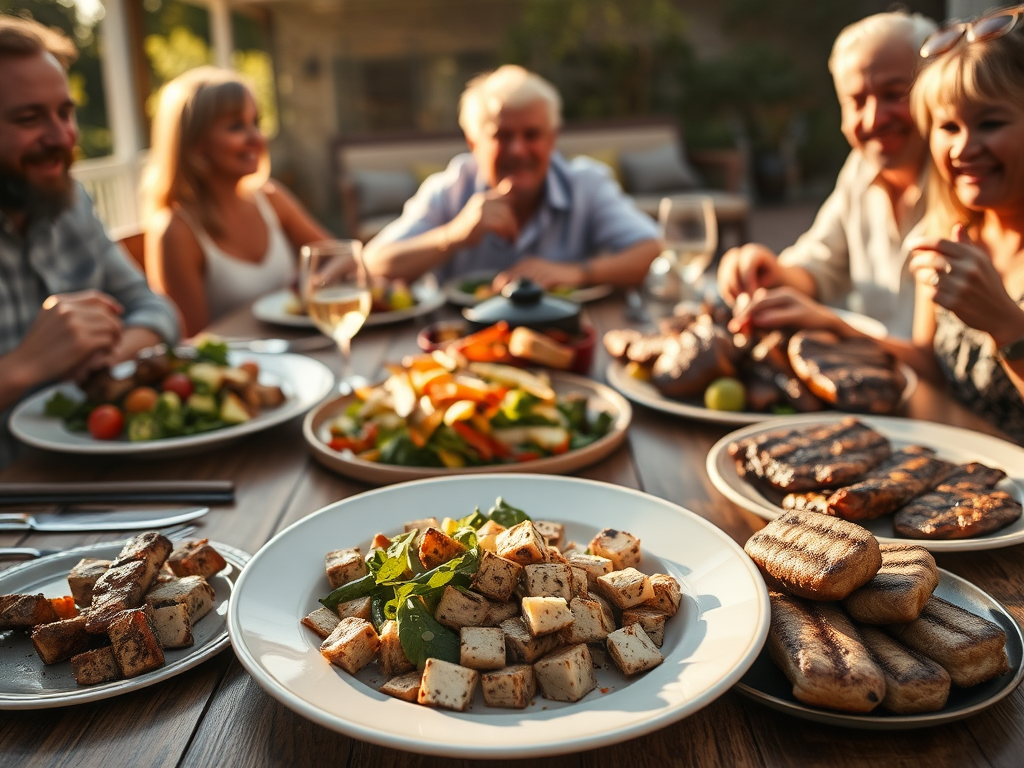
    Dinner is a coin toss: tofu tacos loaded with vegetables, or the trusty oatmeal rerun—protein powder, berries, peanuts, soy milk. Meanwhile, across the table, your omnivorous family devours salmon, chicken, and spaghetti and meatballs. You watch the plates like contraband. Temptation comes later, as you clear dishes: a forkful of salmon swallowed in secret, or chicken “accidentally” folded into tomorrow’s tofu salad.

    And then? The halo slips. You tumble from vegan heaven into flexitarian purgatory, the dietary halfway house for frauds, traitors, and the morally spineless. Yet you persist. This new regimen gives you clarity, structure, and—against all reason—happiness. Whether that happiness is genuine or the first symptom of nutritional madness, we’ll investigate another day.

  • Letter of a Reluctant Vegan

    Letter of a Reluctant Vegan

    Dear Family and Friends,

    My conscience has dragged me, kicking and screaming, into veganism—at least in the realm of eating. I’m not claiming sainthood. There will still be leather on my belt and my chair, but food is the resource I consume daily until I croak, so food is where the battle line is drawn.

    Frankly, it feels absurd to have to write this letter. What am I supposed to do—show up at your barbecue with a thawed hockey puck of a veggie burger and no explanation? Consider this fair warning.

    I don’t pass judgment on those who can’t afford the luxury of organic lentils, nut butters, and vegan supplements. I judge only myself. I have the means. I have no excuse.

    For my Christian in-laws, who may brand this heresy, I’ll admit: Scripture says God gave us animals for food, and Jesus Himself ate fish. But tell me—do you really see Jesus slurping down a farm-factory tilapia raised in ammonia haze, or God green-lighting slaughterhouses where conveyor belts double as hell’s architecture? I don’t.

    Yes, animals in antiquity suffered in the kill, but the industrial scale today—the torture factories, the mass indifference to pain—requires a numbness of conscience that is staggering. Hunting is one thing. Outsourcing the deed to workers inhaling ammonia until their fingernails fall off is quite another.

    I can already hear the rebuttal: “Why fret over animals when humans suffer?” To which I reply: false dilemma. I can care about both. Just as I can walk and chew gum, I can oppose sweatshops and factory farms.

    Still, I know my silence won’t protect me. Even if I never lecture, my plate of tofu will speak volumes. My very behavior will look like an indictment. Mockery is inevitable.

    And sure, I could rationalize my way back. It would be easier to eat one family meal instead of making them salmon while I steam buckwheat groats. I could shrug and say, “The animals are doomed anyway, so I might as well enjoy them.” I could hide behind biology: “I’m an omnivore; meat is natural; animal protein is more bioavailable.” But to do this would be cowardice—a lazy suppression of conscience.

    I owe my family the best version of me, not the morally diminished one. So here I stand, vegan plate in hand. The road is awkward, lonely, and a little ridiculous, but it’s the road my conscience demands.

  • When Your Tofu Judges Your Family

    When Your Tofu Judges Your Family

    Let’s say your guilty conscience finally gets the better of you. You can no longer justify devouring Thai-glazed chicken tenders, Mongolian beef, or coconut-curry fish stew while imagining the farm-factory horror that produced them. So you make the noble pivot: buckwheat groats for breakfast, organic nut butter toast, tofu and tempeh sizzling over cucumbers and arugula, and two daily scoops of plant-based protein powder to cover your macros. Milk? Gone. Soy in your coffee now, because conscience trumps cream.

    Do you miss meat? Absolutely—especially when your neighbor fires up the barbecue and the smell of charred ribs floats over the fence like weaponized nostalgia. But you march on, telling yourself that your cousin’s cardiologist called a vegan diet the “gold standard” for heart health.

    And yet, your cravings turn out to be the easy part. The real battlefield isn’t in the kitchen—it’s in the living room, the backyard, the family reunion. Your relatives haven’t sipped the vegan Kool-Aid and don’t appreciate the implicit sermon you’re preaching with every salad. You can swear you’re not judging them, but your plate of tofu says otherwise. Moral condemnation wafts from you like incense whether you intend it or not.

    Socially, you’ve become a problem guest. You show up at a barbecue with your vegan hockey puck, and suddenly you’re the party’s designated buzzkill—part leper, part nag, part mascot of guilt. Expect to eat your soy patty alone while everyone else passes the brisket.

    Economically, you’ve got blind spots too. Sure, you can afford organic tempeh and boutique supplements, but when you hint that everyone should go vegan, you’re ignoring the single mom shopping with food stamps, or the families living where tofu costs more than ground beef. To them, your “ethical choice” sounds like aristocratic scolding.

    Culturally, you risk stomping on traditions. Grandma’s meat stew isn’t just calories; it’s love in a ladle. Lecture her about vegan virtue, and you’re not just critiquing dinner—you’re insulting her lineage. And good luck explaining your plant-based gospel to Inuit communities who rely on seals and whales for survival. You’ll sound less like a prophet and more like a nincompoop.

    So here you are, impaled on the horns of the vegan dilemma. On one side, you can’t play the sanctimonious scold without alienating everyone around you. On the other, your conscience insists that, as a well-fed suburbanite, you are morally obligated to avoid meat. The path forward is thorny, precarious, and socially awkward. But welcome to the real world: nobody said doing the right thing would come with applause.

  • Self-Interest with Sauce: Why Your Finger Isn’t Worth a Million Lives

    Self-Interest with Sauce: Why Your Finger Isn’t Worth a Million Lives

    In How Adam Smith Can Change Your Life, Russ Roberts quotes the Talmudic sage Hillel: “If I am not for myself, who will be for me? If I am only for myself, who am I?” Roberts riffs on this by pointing out Smith’s hard edge: if you would sacrifice millions of lives to save a single finger, you are “a monster of inhuman proportions.”

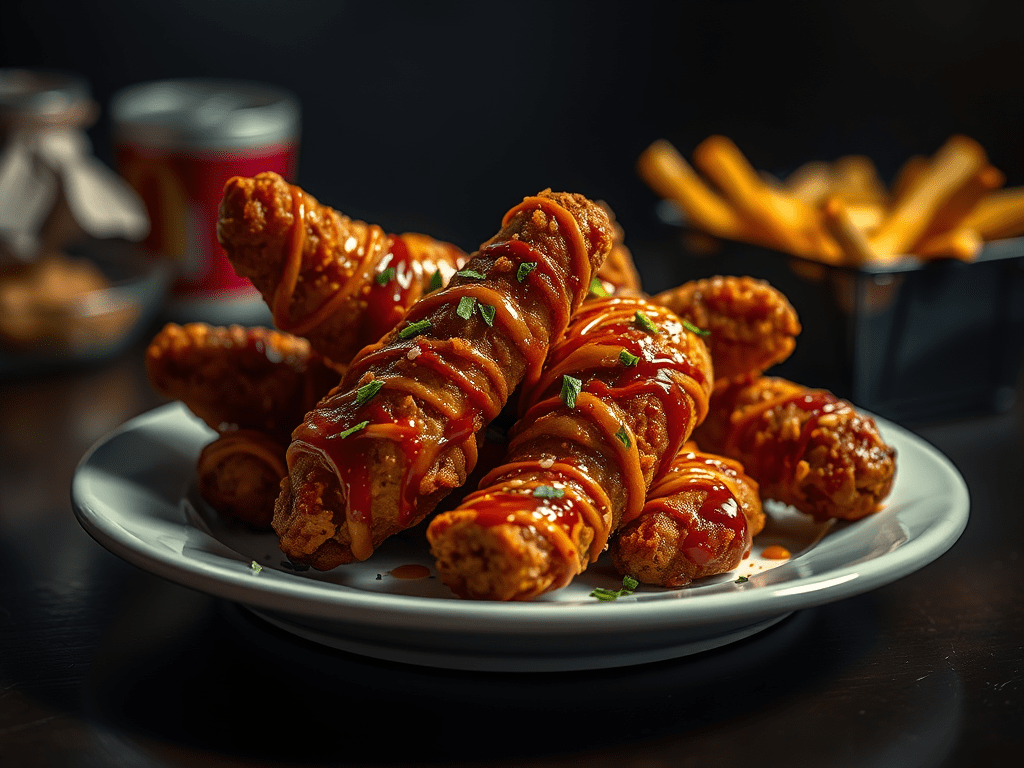
    Which, of course, made me think of chicken tenders. A few nights ago I had the Sweet Thai Glazed chicken at Starbird—fast food so transcendent it felt like a religious conversion, crispy shallots and herb aioli included. I wanted to go back the next day. And the next. My self-interest is crystal clear: eat more Starbird. The problem? My pursuit of gustatory bliss comes at the expense of chickens. Just as my hunt for bioavailable whey protein powders comes at the expense of cows.

    So—am I a monster? If I turned vegan, would that absolve me, or would I just uncover a longer list of moral failings still clinging to my name tag? Because the world isn’t eating less meat. It’s eating more, mostly factory-farmed, while pretending not to notice the conveyor-belt cruelty behind the menu. Ignore it long enough and moral numbness sets in, the kind that doesn’t just ruin animals but corrodes us too, spreading in ripples like bird flu, mad cow, or the next “mystery wet market disease.”

    And cruelty isn’t the only place where “self-interest” mutates into its evil twin. Consider America’s sacred cow: gun freedom. Other nations see mass shootings, change laws, and reduce tragedies. America, however, doubles down—choosing an idea of freedom that keeps killing us. Here, “self-interest” looks less like wisdom and more like suicide with better branding.

    That’s the trouble with self-interest. It’s a slippery little devil with at least two sharp horns. First: it lets us rationalize immoral behavior until we become monsters congratulating ourselves for our appetites. Second: it convinces us that policies which maim us—like endless guns, endless meat—are somehow in our “best interest.”

    In reality, self-interest is a hornet’s nest: buzzing passions, compulsive hungers, warped myths, and counterfeit happiness. To live in true self-interest means sorting out the destructive impulses from the behaviors that actually make us moral and happy. But most people never attempt the sorting, because the road to ruin is wide, comfortable, and paved with chicken tenders, while the road to virtue is narrow, steep, and has terrible Yelp reviews.

  • The Gospel of Broccoli

    The Gospel of Broccoli

    For the last two decades, I’ve gorged myself on a certain genre of book: part self-help, part pop psychology, part personal confession, and part armchair sociology. They’re all cut from the same cloth. Sometimes the title is blunt and monosyllabic—Grit, Flow, Blink. The kind of title that slaps you with FOMO and whispers: you’re missing out on the one great discovery of our age.

    The author inevitably casts themselves as an intellectual Indiana Jones, unearthing some dark corner of human frailty—our laziness, our compulsions, our doomscrolling brains—and holding it aloft like a cursed artifact. But don’t worry: they’ll swap your vice for a virtue. Where once was sloth, you’ll now install grit. Replace despair with tenacity, chaos with routine, cowardice with courage. Each quality is presented as if it were a rare mineral dug from the Earth’s molten core, not something your grandmother muttered at you over meatloaf.

    I’ll grant them this: these books are smooth. The anecdotes are lively, the arguments persuasive, the storytelling slick enough to convince you that eating your vegetables is an act of revolution. And yet—I wince. These books are built on a template so predictable you can spot the seams. They’re self-help in disguise, draped in academic robes to save the reader the shame of browsing the “Inspiration” aisle.

    Their authors remind me of medieval minstrels and troubadours, wandering into our living rooms and cubicles to hose down our cobwebbed souls with disinfectant. They don’t strum lutes anymore—they host podcasts, deliver TED Talks, and keynote conferences. We line up for their sermons because they make us feel clean. They are the secular priests of our age, baptizing us in chapter-length homilies and promising to purge our modern sins.

    The journey they lead us on is as predictable as a Disney ride: first the dark woods of dysfunction, then the bright meadows of redemption. The simplicity borders on smugness, and yet—I still buy the ticket. Why? Because sometimes I need to be scolded into eating my broccoli. These books are broccoli dressed up in filet mignon plating: familiar, obvious, slightly sanctimonious, but undeniably good for me in small, bitter doses.

  • The Terrarium of the Gods

    The Terrarium of the Gods

    Last night I dreamed I was prowling for beachfront property in the dead of night when I stumbled upon a terrarium the size of several football fields—an absurd, glass-walled Eden under artificial light. Some plots were shameless cons, swindler specials dressed up with tacky lawn ornaments and fake palm trees. Others, however, had loamy, dark soil that practically hummed with fertility. Over the PA system, an NPR announcer’s warm, soporific voice guided prospective dreamers like me, pointing out which plots were worth my attention.

    I claimed a plot perfect for herbs, tomatoes, and peaches, imagining future harvests under this climate-controlled dome. Then I set off to find my family, who were dining on the rooftop of a nearby hotel, high above the night and the surf. When I arrived, they were lit with merriment, clinking glasses with friends, laughter rolling across the table like a tide.

    Leo, a family friend with the generosity of a man who’s just inherited a brewery, pressed a frosty glass stein of amber beer into my hand. I’m not much of a beer drinker, but curiosity won, and I took a long pull. It was cold, crisp, and shockingly delicious—like a liquid reprieve from all earthly woes. Before I could savor the moment, a teenage boy with only the flimsiest link to Leo snatched the stein from my hand and drained it with feral efficiency. I seethed but swallowed my annoyance.

    Leo, undeterred, promised reinforcements: more beer, plus sandwiches from “the downstairs stash.” He led me to a cold-storage room the size of a cathedral. Inside, shelves groaned under the weight of sandwiches—no ordinary deli fare, but hand-crafted masterpieces assembled by World Series legends of the 1970s. Every sandwich bore a tag in looping script: Dave Winfield. Reggie Jackson. Willie Stargell. Dave Parker. Jim “Catfish” Hunter. Preserved by refrigeration so perfect, the bread seemed freshly baked, the lettuce still crisp, as though the ballplayers had just stepped away from the cutting board.

    We loaded up on sandwiches and pitchers, returned to the rooftop, and feasted under the city lights. The beer was endless, the view intoxicating. For a fleeting moment, I felt like I had not only bought the best plot in the terrarium but inherited the whole ridiculous world.

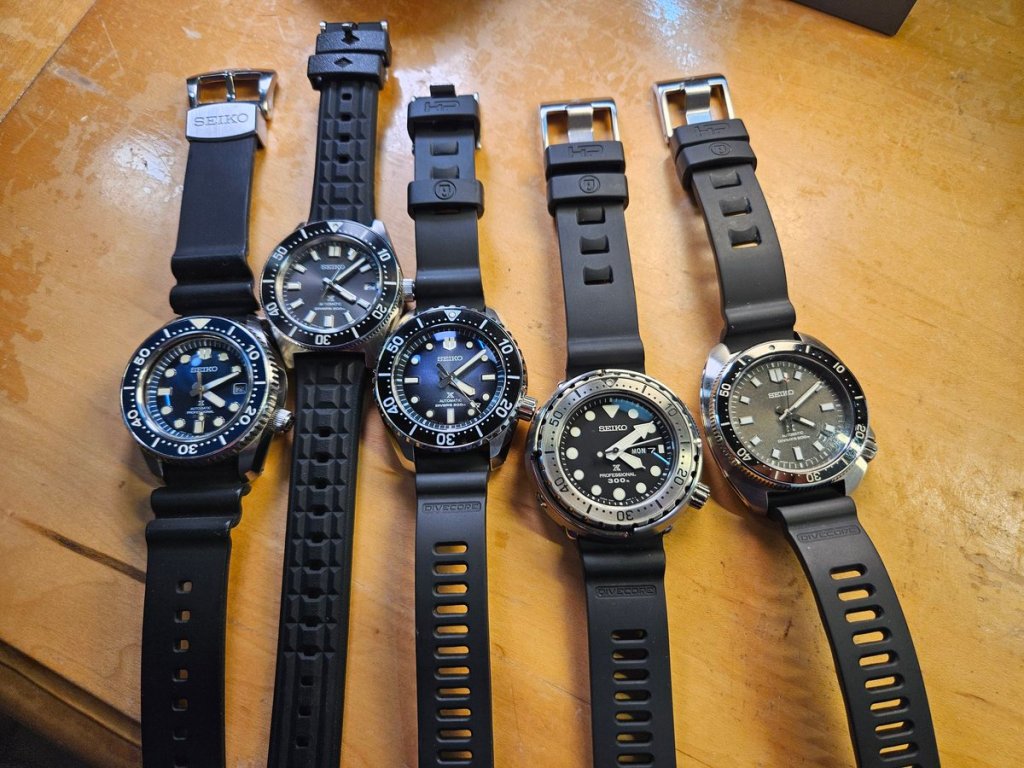
  • Will Optimization Kill the Joy of Mechanical Watches?

    Will Optimization Kill the Joy of Mechanical Watches?

    Sometimes I wonder how technology might assassinate my love for timepieces. Picture this: a $200 spool of 3-D printer feedstock spits out your $10,000 grail watch. Eight years later, when the mechanical movement needs servicing, you don’t take it to a watchmaker—you print another.

    If watch-printing is as easy as making pancakes, I’d have thousands. Would I be happy? No. I’d be the spoiled rich kid sulking in his palatial bedroom because Mom and Dad bought him every toy but a bazooka.

    “Son, I bought you everything.”
    “But I want a bazooka.”
    “They’re illegal.”
    “I don’t care!”

    When everything is instant, the “holy grail” becomes an inside joke. The magic dies in the flood of abundance. Just ask the diamond industry. Lab-grown stones are flawless, cheap, and undetectable to the human eye—obliterating the romance of bankrupting yourself for an engagement ring. Watches could be next.

    And that’s just one front. On another, tech billionaires are funding biohackers to keep us ticking for 900 years. If I’m going to live to 85, time feels urgent. If I’m going to live to 900, time is a leisurely brunch. Chronological time starts to matter less than biological time—the wear and tear written in my cells.

    In that world, your Rolex Submariner won’t tell you what matters. Your doctor-prescribed smartwatch will, tracking cardiovascular vitality, antioxidant levels, and the sorry truth of your lifestyle choices. Refuse to wear it, and your insurance premiums explode tenfold or you’re cut off entirely. Privacy? Gone. Your vitals are known to your insurer, employer, spouse, dating app matches, and the guy at your gym checking your actuarial risk.

    When the mechanical watch dies, so does your privacy. And somewhere, Dale Gribble from King of the Hill is finding the conspiracy angle.

    Give it five years. Our “watch collector meet-up” will look more like group therapy for mechanical-watch dinosaurs funding their therapists instead of their ADs. But fear not—obsession never dies, it just changes costume. Post-watch, your new drug will be optimization.

    You’ll strap on your OnePlus Watch 3, buy a $2,600 CAROL resistance bike, and simulate being chased by a saber-toothed tiger because “hormesis”—that holy word—demands mild ordeals to make you live forever. Resistance intervals, intermittent fasting, cold plunges. Goodbye winding bezels; hello gamified cell stress.

    Our poster boy? Bryan Johnson—the billionaire fasting himself pale, zapping his groin nightly to maintain the virility of a high school quarterback. Critics say he looks like a vampire who’s just failed a blood test. I say he’s the future. Picture him at 200, marrying a 20-year-old and siring a brood. Male Potency and Reproductive Success: the distilled recipe for happiness.

    Except I’m kidding. The truth: peer-reviewed science says we might beat the big killers before 90—heart disease, cancer, stroke, Alzheimer’s—but the biological ceiling is still ~100. Eventually your organs quit. All the optimization in the world won’t rewrite that.

    As a watch obsessive, I know the tyranny of time. The biohackers are fixated on biological time as if it’s the only kind that matters. But the Greeks knew a third: kairos—the moment saturated with meaning, purpose, connection. All the Bryan Johnsons in the world can’t 3-D print that.

    Live 200 years without kairos and you’re not a winner; you’re a remake of Citizen Kane with a garage full of exotic cars and no friends.

    A long time ago, a friend told me about the night cocaine hollowed him out so completely that he didn’t care his best friend was kissing his girlfriend. Then a voice in his head said, “Dude, you should care.” He went to rehab the next day. That’s soul work.

    And that’s what’s missing from the longevity cult: soul work. Without it, all the tech, watches, and optimized mitochondria in the world are just a shiny grift.