Tag: food

  • Blessed Are the Gluten-Free: America’s New Spiritual Elite

    Blessed Are the Gluten-Free: America’s New Spiritual Elite

    Reading Amy Larocca’s How to Be Well is like watching Gwyneth Paltrow’s ghost possess a Whole Foods employee mid-mushroom latte. Her book is equal parts riveting and scalpel-sharp, dissecting the strange mutation of fashionistas who’ve traded in Gucci for goop and now drape themselves in wellness jargon like it’s couture. These wellness evangelists don’t just eat clean—they chant it. They speak in tongues made of spirulina, lipospheric vitamin C, Cordyceps, Shilajit resin, and ho shou wu, stringing together syllables like they’re summoning the ghost of Hippocrates.

    What we’re witnessing isn’t self-care—it’s a personality cult with better lighting. The modern wellness priestess has crowned herself a demigod, armed with adaptogens instead of sacraments, waving her magic tincture dropper and pointing lesser mortals toward the True Path of purified, gluten-free, unpasteurized transcendence. It’s not just health—it’s high-performance sanctimony.

    Larocca nails the diagnosis with surgical precision: “I sometimes think of wellness as the project of buying your own body back for yourself.” Translation? Welcome to America’s chicest hostage situation, where the ransom is payable in collagen peptides and oat milk. The goal is to become the luxury-branded version of you—perfect skin, toxin-free bowels, and moral superiority radiating from every overpriced yoga mat. The side effect? It magnifies the gaping inequalities of modern life like a magnifying mirror you didn’t ask to look into.

    Because let’s be honest: none of this comes cheap. These rituals of wellness cost money—bucketloads of it. We’re not talking about a jog around the park and some tap water. We’re talking $12 green juices and $300 infrared saunas. The entire project is rigged to serve the few while gaslighting the many. The wellness priestess doesn’t just ignore that her lifestyle is unattainable for most—she markets that inaccessibility as part of the charm.

    This isn’t health—it’s spiritual cosplay for the affluent.

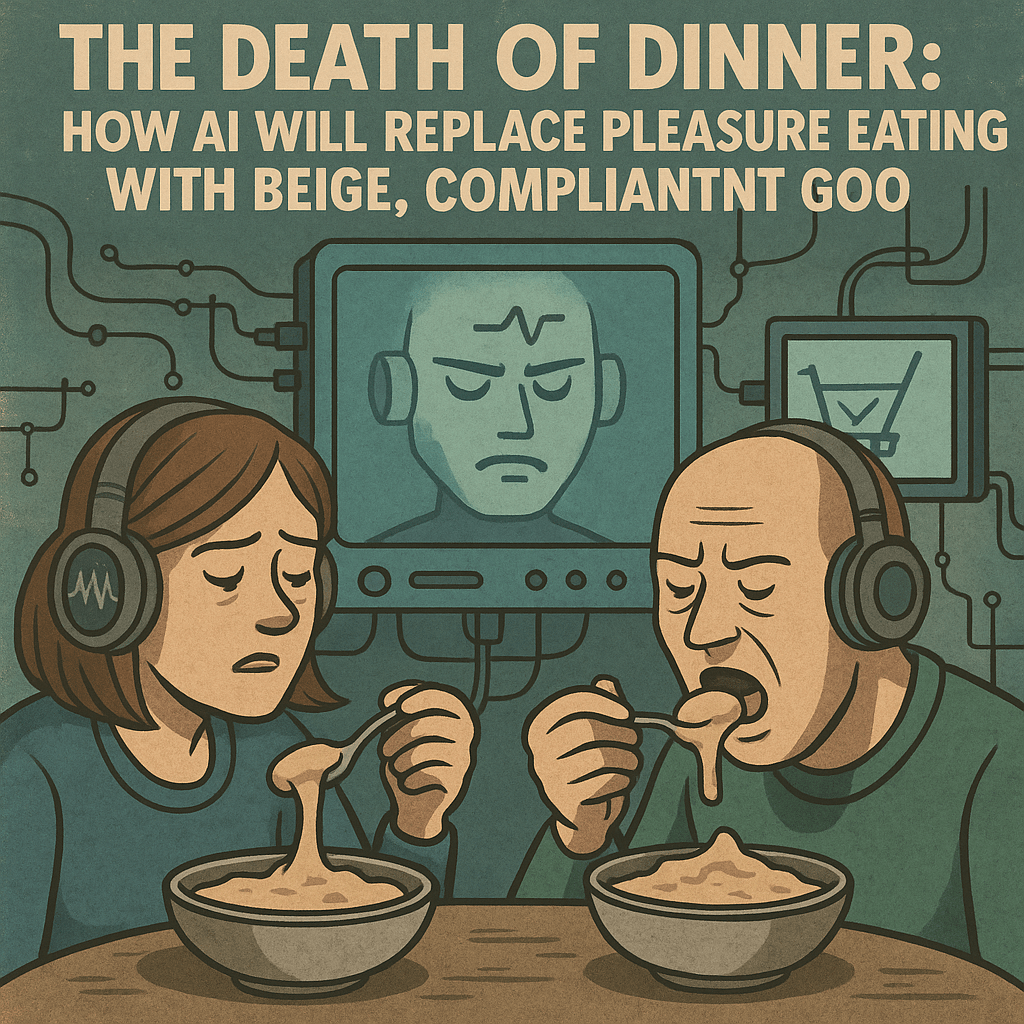
  • The Death of Dinner: How AI Could Replace Pleasure Eating with Beige, Compliant Goo

    The Death of Dinner: How AI Could Replace Pleasure Eating with Beige, Compliant Goo

    Savor that croissant while you still can—flaky, buttery, criminally indulgent. In a few decades, it’ll be contraband nostalgia, recounted in hushed tones by grandparents who once lived in a time when bread still had a soul and cheese wasn’t “shelf-stable.” Because AI is coming for your taste buds, and it’s not bringing hot sauce.

    We are entering the era of algorithm-approved alimentation—a techno-utopia where food isn’t eaten, it’s administered. Where meals are no longer social rituals or sensory joys but compliance events optimized for satiety curves and glucose response. Your plate is now a spreadsheet, and your fork is a biometric reporting device.

    Already, AI nutrition platforms like Noom, Lumen, and MyFitnessPal’s AI-diet overlords are serving up daily menus based on your gut flora’s mood and whether your insulin levels are feeling emotionally regulated. These platforms don’t ask what you’re craving—they tell you what your metrics will tolerate. Dinner is no longer about joy; it’s about hitting your macros and earning a dopamine pellet for obedience.

    Tech elites have already evacuated the dinner table. For them, food is just software for the stomach. Soylent, Huel, Ka’chava—these aren’t meals, they’re edible flowcharts. Designed not for delight but for efficiency, these drinkable spreadsheets are powdered proof that the future of food is just enough taste to make you swallow.

    And let’s not forget Ozempic and its GLP-1 cousins—the hormonal muzzle for hunger. Pair that with AI wearables whispering sweet nothings like “Time for your lentil paste” and you’ve got a whole generation learning that wanting flavor is a failure of character. Forget foie gras. It’s psy-ops via quinoa gel.

    Even your grocery cart is under surveillance. AI shopping assistants—already lurking in apps like Instacart—will gently steer you away from handmade pasta and toward fermented fiber bars and shelf-stable cheese-like products. Got a hankering for camembert? Sorry, your AI gut-coach has flagged it as non-compliant dairy-based frivolity. Enjoy your pea-protein puck, peasant.

    Soon, your lunch break won’t be lunch or a break. It’ll be a Pomodoro-synced ingestion window in which you sip an AI-formulated mushroom slurry while doom-scrolling synthetic influencers on GLP-1. Your food won’t comfort you—it will stabilize you, and that’s the most terrifying part. Three times a day, you’ll sip the same beige sludge of cricket protein, nootropic fibers, and psychoactive stabilizers, each meal a contract with the status quo: You will feel nothing, and you will comply.

    And if you’re lucky enough to live in an AI-UBI future, don’t expect dinner to be celebratory. Expect it to be regulated, subsidized, and flavor-neutral. Your government food credits won’t cover artisan cheddar or small-batch bread. Instead, your AI grocery budget assistant will chirp:

    “This selection exceeds your optimal cost-to-nutrient ratio. May I suggest oat crisps and processed cheese spread at 50% less and 300% more compliance?”

    Even without work, you won’t have the freedom to indulge. Your wearable will monitor your blood sugar, cholesterol, and moral fiber. Have a rogue bite of truffle mac & cheese? That spike in glucose just docked you two points from your UBI wellness score:

    “Indulgent eating may affect eligibility for enhanced wellness bonuses. Consider lentil loaf next time, citizen.”

    Eventually, pleasure eating becomes a class marker, like opera tickets or handwritten letters. Rich eccentrics will dine on duck confit in secrecy while the rest of us drink our AI-approved nutrient slurry in 600-calorie increments at 13:05 sharp. Flavor becomes a crime of privilege.

    The final insult? Your children won’t even miss it. They’ll grow up thinking “food joy” is a myth—like cursive writing or butter. They’ll hear stories of crusty baguettes and sizzling fat the way Boomers talk about jazz clubs and cigarettes. Romantic, but reckless.

    In this optimized hellscape, eating is no longer an art. It’s a biometric negotiation between your body and a neural net that no longer trusts you to feed yourself responsibly.

    The future of food is functional. Beige. Pre-chewed by code. And flavor? That’s just a bug in the system.

  • College Essay Prompt: Beyond Authentic: How Evolving Cuisines Tell Stories of Survival, Adaptation, and Identity

    College Essay Prompt: Beyond Authentic: How Evolving Cuisines Tell Stories of Survival, Adaptation, and Identity

    Overview:

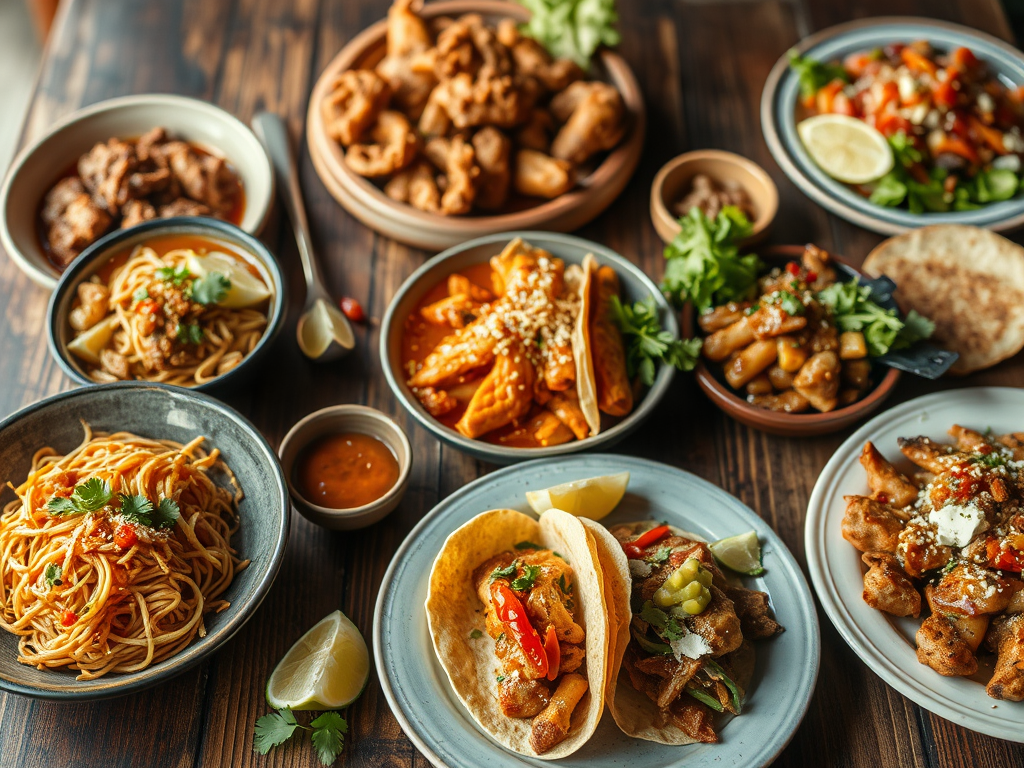
    Write a 1,700-word argumentative essay examining whether dishes like birria ramen, orange chicken, Korean tacos, or Tex-Mex fajitas should be dismissed as inauthentic or embraced as culturally rich, adaptive expressions of immigrant creativity. Using the evolution of Mexican and Chinese food in the U.S. as your focus, evaluate how culinary “impurity” may reflect resilience more than betrayal.

    This assignment challenges the simplistic binary of cultural appropriation vs. cultural preservation by exploring how food evolves through migration, racism, class, capitalism, and the human need to survive—and thrive.


    Central Claim to Defend, Refute, or Complicate:

    Criticizing American Chinese and modern Mexican cuisine as “inauthentic” oversimplifies the historical, cultural, and economic forces that drive culinary evolution.


    Required Sources (Use at least 4, MLA format):

    • Gustavo Arellano – “Let White People Appropriate Mexican Food”
    • The Search for General Tso (dir. Ian Cheney, 2014)
    • Charles W. Hayford – “Who’s Afraid of Chop Suey?”
    • Cathy Erway – “More Than ‘Just Takeout’”
    • Kelley Kwok – “‘Not Real Chinese’: Why American Chinese Food Deserves Our Respect”
    • Jiayang Fan – “Searching for America with General Tso”

    Focus Questions to Consider:

    • What is gained or lost when immigrant cuisines adapt to mainstream tastes?
    • How have Mexican and Chinese-American dishes reflected creative survival strategies in the face of xenophobia or marginalization?
    • Is culinary “authenticity” a meaningful cultural value or an exclusionary myth?
    • How do evolving cuisines challenge stereotypes and redefine American identity?
    • Should food be judged by origin or by impact?

    Essay Requirements:

    • Length: 1,700 words
    • Format: MLA (12 pt font, double-spaced, Times New Roman)
    • Sources: At least 4 from the required list
    • Tone: Academic and analytical, but open to personal insight or cultural experience
    • Structure: Use the suggested outline below or build your own coherent structure

    Suggested Structure:

    Intro (200–300 words):

    • Open with the “authenticity” debate in food culture
    • Present the evolution of Mexican and Chinese cuisine as a case study
    • Clearly state your thesis: whether you defend, challenge, or complicate the rejection of “inauthentic” foods

    Section 1: Culinary Evolution as Cultural Power (400–500 words)

    • Use Arellano’s “adaptability” argument and The Search for General Tso
    • Explore how adaptation expands—not erases—culinary traditions

    Section 2: Food as a Tool of Survival (400–500 words)

    • Use Jiayang Fan and Cathy Erway to show how these cuisines offered paths to economic mobility and belonging
    • Address how racism shaped what was “acceptable” for the mainstream palate

    Section 3: Rethinking Authenticity (400–500 words)

    • Use Kelley Kwok and Hayford to interrogate what we even mean by “authentic”
    • Acknowledge that tradition matters—but argue that hybridity is the tradition of diaspora

    Section 4: Counterargument & Rebuttal (300–400 words)

    • Address critics who claim fusion or Americanized food dilutes culture
    • Rebut: show how adaptation often preserves a culture’s essence in new form

    Conclusion (200–300 words)

    • Reaffirm your thesis: evolving cuisine reflects the ingenuity, creativity, and endurance of immigrant communities
    • Reflect on how accepting culinary adaptation challenges us to redefine American identity itself

    Final Notes to Students:

    This essay isn’t just about food—it’s about the stories food tells. Let your argument reflect that complexity. Engage deeply with your sources, and don’t be afraid to explore tensions: pride vs. commodification, tradition vs. survival, innovation vs. erasure.

  • College Writing Prompt: The Willpower Illusion: Ozempic, Obesity, and the Myth of Self-Control in a the Aesthetic Industrial Complex

    College Writing Prompt: The Willpower Illusion: Ozempic, Obesity, and the Myth of Self-Control in a the Aesthetic Industrial Complex

    Overview:

    Write a 1,700-word argumentative essay exploring whether the dominant narrative about weight loss—discipline, clean eating, and personal responsibility—still holds up in the age of pharmaceutical intervention, economic inequality, and digital diet culture.

    Drawing from Rebecca Johns (“A Diet Writer’s Regrets”), Johann Hari (“A Year on Ozempic…”), Harriet Brown (“The Weight of the Evidence”), and Sandra Aamodt (“Why You Can’t Lose Weight on a Diet”), analyze how obesity is shaped by factors far beyond individual willpower. Consider the influence of wealth disparity, pharmaceutical marketing, addictive food engineering, and digital culture on how we define health, blame failure, and reward certain bodies over others.


    Key Questions to Consider:

    • Is the belief in personal discipline as the primary tool for weight loss a dangerous oversimplification?
    • How do Ozempic and similar drugs challenge or reinforce our cultural obsession with self-control?
    • What role does economic privilege play in deciding who gets access to medical weight-loss interventions?
    • Are we witnessing a new form of techno-body capitalism where apps, injections, and dopamine loops manage our appetites better than we ever could?
    • How might social media, AI influencers, and fitness-tracking technologies contribute to a culture of body surveillance and shame?

    Required Sources (Use at least 4, MLA Format):

    • Rebecca Johns – “A Diet Writer’s Regrets”
    • Johann Hari – “A Year on Ozempic Taught Me We’re Thinking About Obesity All Wrong”
    • Harriet Brown – “The Weight of the Evidence”
    • Sandra Aamodt – “Why You Can’t Lose Weight on a Diet”

    Recommended Focus Areas:

    1. The Discipline Dilemma
    How Johns and Hari dismantle the myth that all it takes is willpower. What emotional, social, and physiological realities do they reveal?

    2. Set Points and Self-Sabotage
    How Aamodt and Brown explain the body’s resistance to permanent weight loss. What does the science say about the limits of effort?

    3. Ozempic and the Access Divide
    Ozempic works—but only for those who can afford it. How does this reflect a larger healthcare injustice?

    4. Capitalism’s Role in Body Control
    How the Industrial Food Complex profits from addiction, and Big Pharma profits from the “cure.” Is this a closed system of exploitation?

    5. Digital Diet Culture
    Optional but encouraged: bring in TikTok, fitness influencers, AI diet advice, or surveillance devices (like smartwatches and calorie-counting apps). How do these amplify shame or create new ideologies of control?


    Conclusion:

    Make a claim about how society should reframe the conversation around obesity and weight loss. Should we abandon the willpower narrative? Should access to medical treatments be universal? Should we question the legitimacy of “health” as a moral standard at all?


    Final Essay Requirements:

    • 1,700 words minimum
    • MLA format, 12pt Times New Roman, double-spaced
    • Include a clear thesis, transitions, and a conclusion
    • Use and cite at least 4 sources

    Submit with a Works Cited page

  • Late Night Linguine: What The Big Night Taught Us About Conan and Leno

    Late Night Linguine: What The Big Night Taught Us About Conan and Leno

    In Stanley Tucci’s criminally under-watched gem The Big Night (1996), two Italian brothers run a brilliant but nearly empty restaurant on the Jersey shore. Primo, the chef, is an artist of uncompromising culinary vision; he serves risotto that would make a grown man weep. But across the street, the tables are packed—at a red-sauce theme park run by Pascal, a bombastic hack whose food is as bland as it is crowd-pleasing. Pascal serves chicken parmesan to the masses. Primo serves culture, discipline, and slow-cooked soul. One sells out nightly. The other nearly starves. Sound familiar?

    This, friends, is the Conan O’Brien vs. Jay Leno saga, plated beautifully in pasta.

    Jay Leno is Pascal: Safe, Satisfying, and Instantly Forgettable

    Pascal’s restaurant thrives not because the food is good, but because it’s predictable. You know what you’re getting. He panders to his audience, flatters their expectations, and sends them home full but not transformed. He is, in short, Jay Leno with a meat tenderizer.

    Leno’s version of The Tonight Show was the late-night equivalent of chicken alfredo with a side of inoffensive jokes about airport security. He killed in the ratings. He never offended. He never challenged. He played it down the middle, night after night, in denim.

    Conan is Primo: Brilliant, Awkward, and Often Underappreciated

    Primo is the brother who won’t compromise. He won’t dumb down his food, won’t swap risotto for spaghetti and meatballs just to please a palate that doesn’t know what it’s missing. He’s the chef who would rather close the restaurant than sully the integrity of a dish. Conan O’Brien, likewise, built his comedy around absurdity, self-sabotage, and exquisite oddness. He gave us Masturbating Bears, Triumph the Insult Comic Dog, and the fever dream that was Walker, Texas Ranger lever pulls. Ratings? Meh. Relevance? Immeasurable.

    Conan didn’t want to “serve” the audience. He wanted to surprise them, confuse them, maybe even challenge them. He made comedy with the same attitude Primo brought to the kitchen: They may not get it now. But it matters.

    NBC as the Landlord: Just Pay the Rent, Please

    In The Big Night, the brothers face foreclosure. Their landlord doesn’t care about risotto. He cares about checks clearing. NBC was no different. When The Tonight Show with Conan O’Brien struggled in the ratings, the network didn’t see a delicate soufflé in progress. They saw empty tables and a full plate of Jay Leno standing by. So they evicted Primo and reinstalled Pascal, with all the subtlety of a bulldozer.

    The Feast We Deserved, the Chicken We Got

    The emotional climax of The Big Night is a final, silent meal—a simple omelet, cooked and shared after the titular “big night” fails to save the restaurant. There are no words, no triumph, no redemption—just brothers, food, and fatigue. It’s one of the great, quiet scenes in cinema, the kind that stays with you.

    And so it is with Conan. He didn’t get the kingdom. He didn’t win the war. But he got the last word. And his work—the strange, defiant, beautiful risotto of late-night—endures. Meanwhile, Leno’s legacy, like Pascal’s veal scaloppine, is likely to congeal into a nostalgic footnote: “He made people happy. I think?”

    Final Bill

    Pascal may have owned the block. But Primo owned the soul.
    Leno owned the ratings. But Conan owns the legacy.

    Late night, like food, is about more than filling time.
    It’s about what stays with you.

    And forty years from now, nobody’s quoting Jay Leno.

    But someone, somewhere, will be pulling the Walker, Texas Ranger lever. And laughing like hell.

  • Thank You for Your Support (and Your Gullibility): Two Corporate Con Jobs from the ’80s

    Thank You for Your Support (and Your Gullibility): Two Corporate Con Jobs from the ’80s

    I almost called this post “Memories of Manipulative Advertising,” but that’s like calling water wet. Advertising doesn’t sometimes manipulate—it’s a full-time gaslighter with a jingle and a logo. The question isn’t if it’s lying to you, but how cleverly, and with what flavor of Americana.

    Case in point: Bartles & Jaymes, the wine cooler swindle dressed up like a Norman Rockwell painting. Back in the 1980s, I worked at Jackson’s Wine & Spirits in Berkeley—a respectable shop selling overpriced Bordeaux to grad students pretending they weren’t on food stamps. Then came the Bartles & Jaymes blitz, courtesy of Hal Riney & Partners and the corporate overlords at E & J Gallo.

    Suddenly, America was smitten with two crusty front-porch philosophers in denim and flannel, sipping pastel-colored booze and thanking us for “our support,” as if we were funding their modest struggle to afford Hamburger Helper and citronella candles. They weren’t winemakers. They weren’t even real. One was a retired Air Force pilot, the other a contractor. But that didn’t stop millions from believing that these Gallo sock puppets had personally hand-crafted their strawberry kiwi elixirs under a tin roof in Appalachia.

    These weren’t ads. They were full-blown folklore, sold to a Reagan-era audience desperate to believe in something wholesome—preferably something with artificial watermelon flavor and a 5% ABV.

    But the biggest act of psychological warfare I witnessed during my wine shop tenure came not from Gallo, but from that fizzy behemoth: Coca-Cola.

    In 1985, Coke announced it was changing its iconic recipe. Cue the national meltdown. Pickup trucks rolled into the wine store like we were FEMA and this was the end times. Grown men, trembling with brand-loyalty withdrawal, bought crates of “original” Coke like it was bottled youth. I became an emergency hand truck operator, wheeling out what amounted to liquid nostalgia to wide-eyed customers who treated me like I was delivering insulin to a diabetic family.

    Then, surprise!—Coke re-released the original as “Classic Coke,” and everyone breathed a sugary sigh of relief. It was less a product relaunch and more a mass-conditioning experiment, proving that if you poke the American consumer hard enough, they’ll thank you for the bruise.

    These weren’t just ad campaigns. They were operatic manipulations of identity, trust, and memory—corporate psyops disguised as beverage options.

  • Mother’s Day, Brioche, and the Gospel of Joe

    Mother’s Day, Brioche, and the Gospel of Joe

    Before heading out to Los Alamitos for Mother’s Day, I took out the trash—literal and existential—and ran into my neighbor Joe, who was shirtless, glistening, and fully immersed in the sacred rite of garage cleansing. A former state wrestler, well over six feet and built like a retired Marvel stuntman, he stood there in gym shorts holding his yelping Dachshund like a small, furry accordion.

    “Tell your wife happy Mother’s Day,” he barked, like a man who’s yelled instructions through chain-link fences and Little League dugouts.

    He asked what we were doing. Smash burgers, cake, and ice cream at my sister-in-law’s in Los Alamitos, I told him.

    I floated a question that had been gnawing at me like a rat in the attic: “Should I eat the burger without the brioche bun?”

    Joe turned slowly. Scoffed. “Eat the bun, Jeff. You’re going to die soon.”

    This wasn’t nihilism. This was wisdom from the pulpit of heatstroke and middle-aged clarity.

    “In the last four months, I’ve lost three friends your age,” he said. “One of them was a ripped surfer. Sat down on the couch, died of an aneurysm. Didn’t even spill his smoothie.”

    He paused, letting that land like a kettlebell on my soul.

    “You need twenty-five pounds of emergency fat. A cushion. In case you get sick. You can’t cheat Mother Nature. Eat the bun. Eat the cake. Enjoy your life. Don’t micromanage your macros while white-knuckling your way into an extra ten years of prune juice and self-loathing.”

    It was the most persuasive argument for gluttony I’d ever heard.

    So I went to Los Alamitos. And I didn’t just “cheat”—I defected. I committed dietary treason. I licked frosting off my fingers like it was the Eucharist. I let French vanilla ice cream puddle across my plate without apology.

    The penance would come Monday. That’s the deal.

    But I vowed not to wallow in the usual puddle of self-loathing and Calvinist regret. I would take it like a man. Chin up. Macros reset. Guilt-free. Mostly.

  • Cultural Fusion or Culinary Fraud?

    Cultural Fusion or Culinary Fraud?

    My Critical Thinking students are grappling with the sacred and the sacrilegious—namely, tacos.

    Their final essay asks a deceptively simple question: When it comes to iconic dishes like the taco, should we cling to tradition as if it were holy writ, treating every variation as culinary heresy? Or is riffing on a recipe a legitimate act of evolution—or worse, an opportunistic theft dressed up in aioli?

    To dig into this, we turn to Netflix’s Ugly Delicious, where chef David Chang hosts an episode simply titled “Tacos.” The episode plays like a beautifully constructed argumentative essay by Gustavo Arellano, who dismantles the idea of “Mexican food” as a static monolith. Instead, he presents it as a glorious, shape-shifting culture of flavor—one that thrives because of its openness to the outside world.

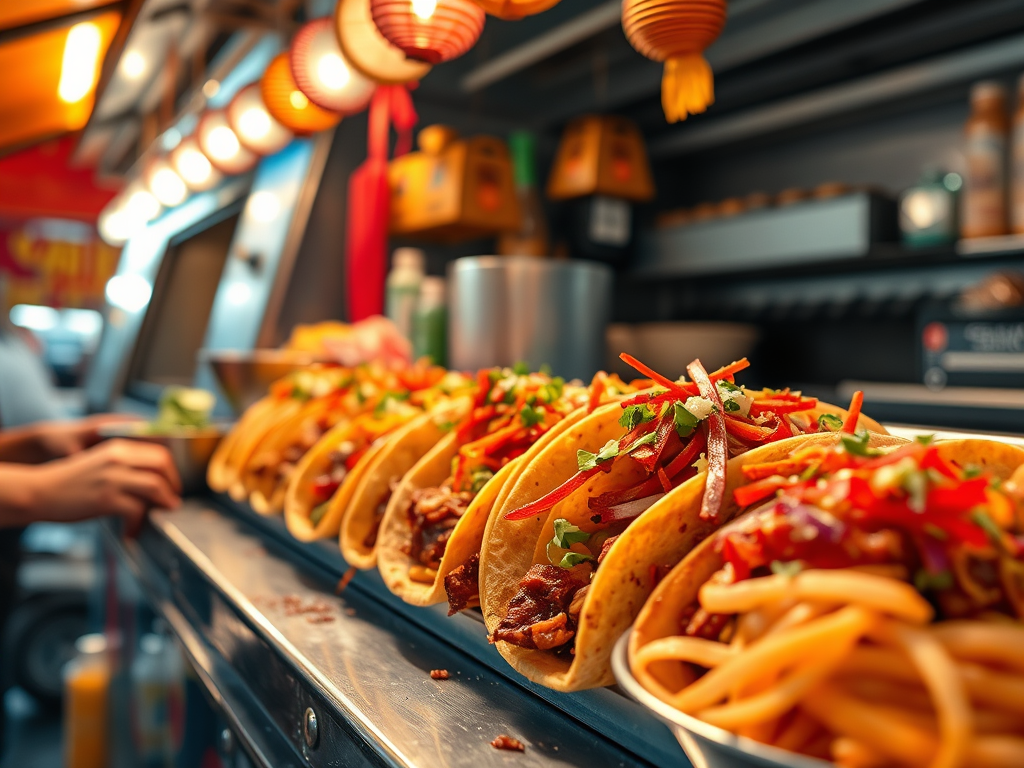
    Arellano celebrates Mexico’s culinary curiosity: how Lebanese immigrants brought shawarma and inspired tacos al pastor, a perfect example of cultural fusion that became canon. He contrasts this with the United States’ suspicious, xenophobic posture—a country that historically snarls at outsiders until they open a food truck and sell $2 magic on a paper plate.

    Roy Choi, creator of the legendary Kogi taco trucks, takes this further. He speaks of cooking as a street-level negotiation for dignity: Korean-Mexican fusion forged in the heat of shared kitchens, shaped by the scorn of American culture, and perfected not out of trendiness but out of survival. These tacos aren’t just delicious; they’re resistance with a salsa verde finish.

    But this isn’t just a story of open minds and flavor-blending utopias. There’s also the hard truth of survival and adaptation. Take Lucia Rodriguez, who immigrated from Jalisco and had to recreate her recipes using whatever ingredients she could find in San Bernardino. Her efforts became the foundation of Mitla Cafe, a restaurant still thriving since 1937. It also became the blueprint for Glen Bell—yes, that Glen Bell—who reverse-engineered her food to create Taco Bell, which is to Mexican cuisine what boxed wine is to Bordeaux.

    Still, not all spin-offs are sins. Rosio Sanchez, a Michelin-level chef, began her journey by mastering traditional Mexican food. Only then did she begin to improvise, like a jazz virtuoso honoring the standards before going off-script. Her reinvention is rooted in love, not opportunism. It’s a tribute, not a theft.

    And therein lies the moral fault line: intent, respect, and—let’s not forget—execution. As one student noted with appropriate outrage, white TikTok influencers once rebranded agua fresca as “spa water,” a cultural mugging wrapped in Pinterest aesthetics. And let’s not ignore the corporate vultures who buy beloved local chains only to gut their soul with frozen ingredients and bottom-line mediocrity.

    The lesson? Not all innovation is appropriation. But if your food disrespects its roots, dilutes its meaning, or simply tastes like disappointment, it’s not fusion—it’s a felony.

    The rule is simple: Make great food that honors its lineage and blows people away. Otherwise, what you’re serving is not cuisine. It’s edible disrespect.

  • Cheerios, Sea Monsters, and the Jungian Breakfast of Champions

    Cheerios, Sea Monsters, and the Jungian Breakfast of Champions

    Last night I dreamed I was swimming across what had to be the world’s largest swimming pool—except, instead of water, it was filled with milk and multicolored Cheerios bobbing around like tiny life preservers for the cereal-obsessed. And, of course, because my subconscious loves a good thrill, various sea creatures—none of which belong anywhere near a bowl of breakfast—kept surfacing to snap their jaws at me. I fought them off with my muscular forearms like some kind of gladiator in a lactose-laden arena. Honestly, it was like being trapped in a fever dream where Captain Crunch had declared war on Aquaman.

    As I swam across this absurd pool—which seemed to stretch the entire length of the Atlantic Ocean—I looked up and saw the hospital where my twins were born. The place loomed over me like some ominous beacon, and as I crawled my way to the shore of this milky abyss, a nurse with a face like she’d just seen a ghost greeted me in the lobby. “Your daughters,” she said, voice trembling with dread, “they’ve got insomnia. They’re in desperate need of sleep.”

    Without missing a beat, I sprinted up several flights of stairs like a man possessed. When I finally reached the nurses’ station, I found my teenage daughters lying on what looked like a giant operating table, their faces twisted in grumpy desperation, practically begging me to do something, anything, to help them sleep. And that’s when the superhuman strength kicked in—because, of course, I suddenly had the strength of ten men, which is exactly what every sleep-deprived dad needs in a crisis like this.

    With a heroic grunt, I lifted the entire table—daughters and all—over my head with one arm. Yes, you heard that right, one arm, like I was the world’s most overqualified waiter balancing the world’s most precious (and cranky) cargo. I started rocking the table back and forth, shifting the weight from my thumb to my forefingers and back again, like some kind of human metronome. My daughters, who moments before looked like they were auditioning for a remake of The Exorcist, gradually succumbed to the soothing motion and fell fast asleep, their grumpy expressions finally relaxing into peaceful slumber.

    A team of nurses watched the whole spectacle with admiration, their eyes practically glowing with awe. I could hear them murmuring to each other, “He’s the father, the strongest man I’ve ever seen, the protector of the family!” I stood there, basking in the glory of my newfound superhero status, wondering how I’d ever top this one when I woke up—because let’s be real, after this, changing a lightbulb just wasn’t going to cut it.

    If Carl Gustav Jung could’ve pulled up a leather chair beside my cereal sea of subconscious absurdity, I imagine he’d have looked at me, chin thoughtfully perched on hand, and said something like:

    “So. You swam through milk, eh?”

    I’d nod sheepishly.

    “Cheerios bobbing like archetypes—tiny, edible mandalas. You’re not just swimming, my friend. You’re navigating the numinous chaos of fatherhood, drenched in the nourishment of your own psychic regression. That milk? Pure maternal archetype. You’ve returned to the source, not to wallow, but to confront the primordial forces that made you.”

    “Okay,” I’d say. “But what about the sea creatures trying to eat me?”

    “Ah,” Jung would say, eyes twinkling. “The Shadow. Those snapping beasts are the parts of you you’ve tried to bury—rage, fatigue, perhaps even your occasional longing for a quiet, childless breakfast. They surface not to destroy you, but to be integrated. You fought them off like a gladiator. That is… admirable, if a bit performative.”

    I’d squint at him. “And the hospital?”

    “Ah yes, the birthplace of your twins. But more importantly, the anima’s cathedral. When that nurse appeared to tell you your daughters couldn’t sleep, she wasn’t just talking about them. She was voicing your own inner unrest. Your psyche—tired, stretched, anxious. And yet, what do you do? You charge up the stairs like a mythic hero.”

    “You mean when I lifted the gurney over my head with one arm?”

    “Precisely. That’s not strength—it’s symbolic function. You became the archetypal Father—the Protector, the soothing hand of structure in a chaotic world. You rocked them to sleep not with muscle, but with the rhythmic power of reliability. That motion—the back and forth—is the dance of integration. Thumb to finger, self to role, ego to responsibility.”

    I’d pause. “And the part where the nurses called me the strongest man they’d ever seen?”

    Jung would smile, not unkindly. “That is your ego talking. Let it have its moment. You’ve earned it. But beware: the Hero archetype casts a long shadow. Today you’re Hercules. Tomorrow, you’re just a guy trying to fix a dishwasher while muttering about socket wrenches.”

    I’d sit in silence for a moment. “So what do I do with all this?”

    He’d lean forward, eyes fierce with ancient knowing. “You write it down. You tell the story. You turn the absurd into meaning. Because every milk-drenched monster, every insomniac child, every fever dream is not just chaos—it’s your soul, begging to be decoded.”

    And with that, he’d vanish—leaving me soggy, humbled, but strangely seen.

  • The Fisherman’s Stew Massacre: One Man’s Descent into Bibless Madness

    The Fisherman’s Stew Massacre: One Man’s Descent into Bibless Madness

    I still feel the stink of embarrassment from three years ago when we celebrated our twin daughters’ birthday by venturing to an upscale seafood joint—the kind of place where the prices are more bloated than the waitstaff’s sense of self-importance. As usual, I asked the waiter for his recommendation. His eyes lit up with the kind of zeal you usually reserve for cult leaders and pyramid scheme recruiters. He practically waxed poetic about the Fisherman’s Stew, describing it as if it had been lovingly ladled straight from a beautiful peasant’s cauldron of culinary magic in some idyllic coastal Italian village. Like a sucker, I bought into the fantasy, completely unaware that I’d just ordered a one-way ticket to an all-you-can-eat nightmare served with a heaping side of public humiliation.

    When the dish finally arrived, I didn’t get the warm, comforting bowl of seafood nirvana I’d envisioned. Instead, I was presented with what can only be described as a DIY surgery kit. This wasn’t silverware—they handed me actual surgical tools. A scalpel? Check. Serrated forceps? Check. Shell-crusher and lancet knife? Double check. At that moment, I wasn’t sure if I was supposed to eat the meal or perform an emergency appendectomy on a crab.

    Naturally, I asked for a bib because even gladiators need armor before going into battle. But no, they were fresh out of bibs. So there I was, defenseless and metaphorically naked, staring down a bowl that looked like it had been dredged up from the deepest, darkest corner of the ocean—probably after losing a fight with Cthulhu. The stew was a boiling pit of doom, brimming with spiky, hostile shellfish that seemed to have a stronger will to live than I did at that moment.

    What followed wasn’t so much a meal as a desperate struggle for survival. I found myself locked in mortal combat with crabs that clung to their shells like they were auditioning for a role in Jurassic Park: The Seafood Edition. I stabbed at shrimp with the precision of a neurosurgeon on his fifth Red Bull, and I tried to crush lobster claws that mocked my feeble human strength. Sweat poured down my face, mingling with brine, cioppino sauce, and random bits of squid that had escaped their doomed fate. By the end, I looked like I’d just gone twelve rounds with a giant squid—and lost every single one of them.

    The waiter, blissfully oblivious to the war zone he’d created, strolled over and had the audacity to ask how my meal was going. With my face and bald head smeared in a ghastly mix of perspiration, tomato sauce, and assorted shellfish shrapnel, I told him I’d be happy to provide feedback as soon as I finished the American Gladiators obstacle course that apparently came with my entrée. I then kindly asked him to fetch me a spare pair of pants, a T-shirt, a power drill, and some safety goggles, because clearly, I had gravely underestimated the intensity of this dining experience.

    Meanwhile, my daughter—bless her little heart—had commandeered my wife’s phone and was gleefully documenting my descent into madness. She snapped photos like some twisted paparazzo, each one capturing another level of my mental disintegration. Naturally, these shots were uploaded to Snapchat in real-time, complete with captions that probably read, “Watch Dad Lose His Dignity, One Crab Claw at a Time.”

    The whole point of taking your family out to dinner is to relax, to enjoy a pleasant evening, right? Wrong. Instead, I found myself in what felt like a cage match with an octopus that had no intention of going down without a fight. By the end of it all, I wasn’t just exhausted—I was a shell-shocked survivor of the Great Seafood Massacre of 2024, wondering how what was supposed to be a simple dinner had turned into an episode of Survivor: Shellfish Edition.

    But the true coup de grâce of the evening? My daughter proudly showed me the photos she’d posted online. In every shot, my face looked like it had been smeared with an abstract painting made entirely of sauces and cheeses. My chin had tripled, my eyes were glazed over like a stale doughnut, and I resembled nothing less than a bloated corpse that had washed ashore after a particularly rough night. The image I once held of myself as a halfway decent human being? Long gone. In its place, a digital monstrosity for all the world to see.