Tag: food

  • Cerealphilia

    Cerealphilia

     Cereal is more than a grain; it’s an existential dream of happiness and the maternal embrace. As kids, we didn’t just eat cereal—we engaged in epic love affairs with cartoon mascots, played mind-bending board games on the back of the box, and embarked on treasure hunts for plastic trinkets buried deep within the sugary abyss. We sent box tops to claim submarines, shirts, hats, and other merchandise that, in hindsight, had all the utility of a chocolate teapot.

    My cereal obsession reached such dizzying heights that I fantasized about growing up to be a Major League baseball star who exclusively dined on cereal for breakfast, lunch, and dinner. In my dreams, I was a grocery store legend, cart packed to the brim with Cap’n Crunch, Franken Berry, Count Chocula, Froot Loops, and Lucky Charms. Cereal was my ticket to mindless self-gratification, whisking me away with Pinocchio to Paradise Island, where we’d lose our minds, sprout donkey ears, and bray like beasts in a symphony of sugary delirium.

    In the 1970s, cereal spun tales of the good life and ultimate success. We gorged on granola, wheat germ, Wheaties, and Special K, convinced we were one spoonful away from becoming paragons of health, fitness, and suburban nirvana. One of the era’s cereal prophets was Euell Gibbons, the outdoor enthusiast who, with a straight face, asked us in Grape-Nuts ads, “Ever eat a pine tree? Many parts are edible.” Gibbons spun a yarn about Grape-Nuts that promised to ground us in the Earth, bestow vitality, and arm us with survival skills fit for a post-apocalyptic rainforest escapade equipped with nothing but a buck knife and a loincloth. In reality, eating the gravel-like cereal resulted in thousands of dentist visits for chipped teeth and a crunch so deafening, it drowned out the morning radio.

    Despite all this, Grape-Nuts still haunt my cravings. The crunch and malty flavor have me hooked. I’ve read that Grape-Nuts are the only store-bought cereal that hasn’t been subjected to extrusion, that nefarious heating process that murders nutrients. Instead, Grape-Nuts are baked like a loaf of bread, ensuring that each bite is a dense, jaw-breaking tribute to my childhood.

    There was a time in my adult life when I raged against the societal norms that prevented me from consuming cereal for all three meals. I longed for cold store-bought cereal for breakfast, oatmeal for lunch, and buckwheat for dinner. I envisioned my cereals adorned with peanut butter, walnuts, chia seeds, hemp seeds, and berries to pack in nutrients and calories. But my plan was thwarted by my wife and twin daughters, who, in their maddeningly rational mindset, refused to partake. Clearly, I was on the brink of an eating disorder, or perhaps my subconscious was grasping for the lost comfort and convenience of my cereal-drenched youth.

    Yuval Noah Harari has plenty to say about our destructive quest for comfort and convenience in Sapiens. He argues that as foragers, hunting animals and gathering fruits, we were sharp, alert, fit like Special-Ops fighters, and generally happy. But when we settled down to farm, convinced we were making life easier, we fell for history’s biggest con. Agriculture, which brought us mountains of grains and cereals, was the dawn of obesity, tooth decay, impotence, arthritis, hernias, scoliosis, rampant thievery, economic disparity, starvation, infectious disease, mass animal cruelty, and misogyny. We weren’t duped by people but by wheat, rice, and potatoes—plants that manipulated us into cultivating them, chaining us to the fickle rhythms of the harvest, and inflicting more misery than any human could.

    Maybe I was getting played by cereal. It wormed its way into my psyche, hijacked my thoughts, and turned me into a zombie who couldn’t watch TV without retreating to the kitchen for a bowl of cold cereal by 7 p.m., seeking the soothing crunch as I stared, glassy-eyed, at the screen.

    My excessive thoughts on cereal point to Cerealphilia–a condition in which love for cereal evolves from innocent childhood affection into a full-blown emotional dependency masquerading as nutritional strategy. Cerealphilia sufferers don’t just eat cereal—they commune with it, fantasize about it, and defend it with the fervor of a late-stage cult member. Symptoms include justifying cold cereal for dinner as “wholesome,” craving the cardboard crunch of Grape-Nuts like a Pavlovian hit, and resenting anyone who dares suggest you diversify your diet. At its core, Cerealphilia is comfort-seeking disguised as health enlightenment, a warm milky bath for the soul stirred with nostalgia, rebellion, and a sprinkle of dietary delusion.

    Diagnostic Checklist for Cerealphilia:

    1. Box-top Hoarding: You’ve considered raiding your attic for vintage box tops in case the Cap’n ever reopens the mail-order treasure vault.
    2. Cereal Monogamy: You’ve eaten Cap’n Crunch in more variations than you’ve had actual romantic partners.
    3. Midnight Communion: Your idea of unwinding involves a mixing bowl of cereal and a trance-like TV binge by 7 p.m.—without fail.
    4. Grape-Nuts Evangelism: You’ve told someone, without irony, that “many parts of a pine tree are edible” while crunching through Grape-Nuts like a woodland druid.
    5. Multi-Box Illusionism: You “rotate” between six cereal boxes to simulate dietary variety while consuming 99% corn and sugar in slightly different shapes.
    6. Mascot Emotional Investment: You’ve had an existential crisis over the retirement of Quake the Coal Miner.
    7. Snack Shame Evasion: You justify an evening bowl by claiming it’s your “light dinner” or “a superior protein vehicle.”
  • Déjà Chew 

    Déjà Chew 

    When I was a kid, my mother indulged my insatiable appetite for sugary cereal, Cap’n Crunch, in all its glorious variations: Cap’n Crunch plain, Cap’n Crunch with Crunch Berries, Peanut Butter Cap’n Crunch, and the audaciously renamed versions that tasted exactly the same: Quisp, Quake, and King Vitamin. I felt a burning compulsion to taste-test all these varieties with the meticulousness of a sommelier sampling dozens of Zinfandels or a fromager savoring different types of Camembert, or a musicologist analyzing hundreds of versions of Rachmaninoff’s Second Symphony. Eating six versions of Cap’n Crunch was my way of embracing the illusion of variety while devouring the same cereal over and over again. I was a preadolescent boy, steadfast in my desire to believe I had choices, yet paradoxically terrified of making any. It’s like hearing about the man who’s on his sixth marriage, each wife a near-carbon copy of the last in appearance, temperament, and personality. The poor sap keeps circling back to the same woman, convincing himself he’s “found someone new” and pinning his hopes on a fresh start. That was me with Cap’n Crunch. I was stuck in a sugary Groundhog Day, endlessly looping through bowls of the same old cereal under different guises. Not only was I stagnant in my food choices, but I was also regressing into a sugar-coated stupor. My love for cereal, which persists to this day, was my way of vanishing into a chosen comfort zone. In that sugary sanctuary, I found both bliss and oblivion, content to float along in a sea of crunchy sameness, convinced I was exploring new culinary frontiers.

    This type of delusional behavior points us to Déjà Chew–the eerie sensation that every “new” cereal tastes exactly like the last one you swore was different. The uncanny sensation of culinary déjà vu happens when, despite the flashy new box, the novelty-shaped marshmallows, or the misleading “limited edition” label, your spoon hits the same old sugary slurry you’ve been eating since the Nixon administration. Déjà Chew convinces you you’re exploring new taste frontiers, when in fact you’re just riding a merry-go-round of processed nostalgia. It’s the foodie equivalent of dating your ex’s identical twin and calling it personal growth. One bite in, you know exactly where this is going—but you chew on, comforted by the illusion of variety and the soothing crunch of your own arrested development.

  • Crustodianism

    Crustodianism

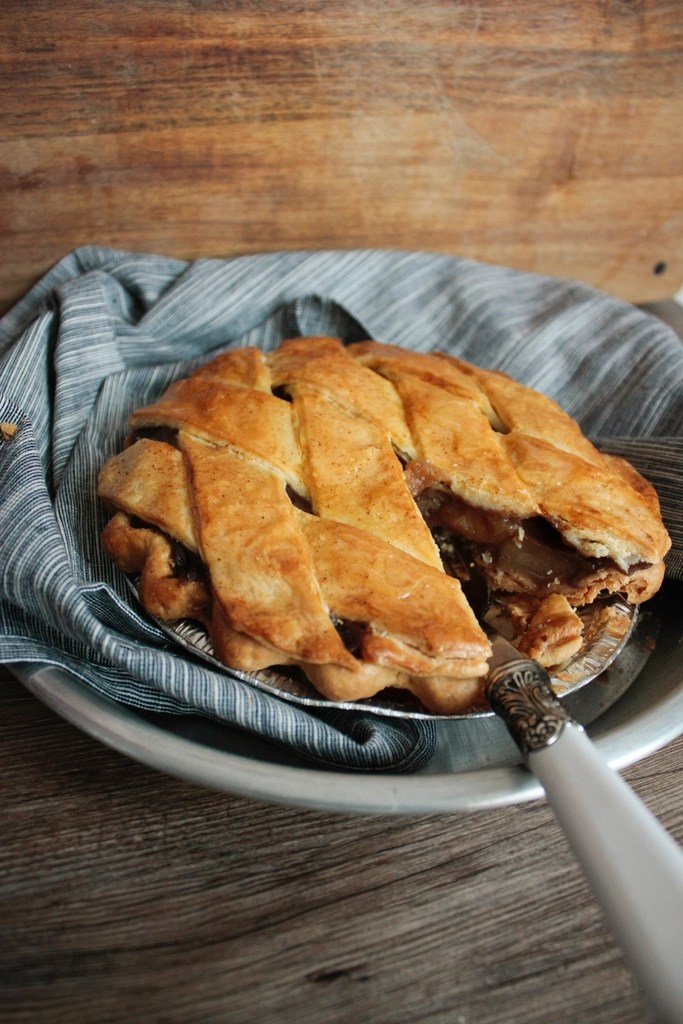
    Many moons ago, my wife and I watched the 2006 HBO documentary Thin, which chronicles the tragic existence of girls in a Florida rehab clinic for eating disorders. These poor souls were ensnared in a vicious cycle of depression, self-loathing, and lies, their recovery rates abysmally low and fatality rates tragically high. After this emotional gut-punch, we desperately needed a palate cleanser, so we turned to a pie-baking contest featuring Midwestern women in Christmas sweaters, lovingly toiling over pie crusts. These wholesome warriors of the kitchen were a stark contrast to the aforementioned sufferers. It dawned on me that pie baking is the antithesis of anorexia—a condition of solipsism where one disappears into the self, whereas pie baking is a testament to community, love, and selfless devotion to butter and flour.

    Imagine, if you will, a world where the kitchen isn’t just a hub of culinary creation but a sacred temple of love, where pie-baking is the highest form of devotion. In this sanctified realm, every Midwestern woman in a Christmas sweater is a culinary high priestess, her rolling pin a scepter of affection, her pie crust a canvas for heartfelt artistry. The Pie Baking Contest is an epic battleground where these valiant women gather, their aprons fluttering like superhero capes, ready to channel pure, unadulterated love into their pies. The stakes are absurdly high, the competition fierce, but the atmosphere? Pure camaraderie and joy.

    Here, pie baking is not just a quaint pastime; it’s an epic saga of love, community, and unyielding devotion. These heroines approach their craft with the precision of neurosurgeons and the passion of Renaissance artists. Flour fills the air like enchanted snow, butter is blended into dough with the deftness of a master illusionist, and apples are peeled and sliced with the ferocity of a seasoned samurai. Each pie is a labor of love, a tangible expression of their deepest affections. As they sweat and toil over their creations, the kitchen morphs into a bustling hub of warmth and connection.

    Baking pies, slinging spaghetti and garlic bread, or whipping up a dish of hot and sour Tom Yum Goong soup demands a healthy soul, one that’s plugged into the matrix of family and community. We therefore don’t journey solo but soar with a merry band of culinary adventurers, armed with spatulas and mixing bowls, ready to conquer the next great feast. So, skip the guilt and embrace the butter—life’s too short for bland food and empty kitchens.

    Baking pies points us to the valuable custom of Crustodianism–the sacred, soul-healing act of cooking not merely for sustenance, but as a devotional rite—an expression of love, fellowship, and culinary redemption. Born at the crossroads of Midwest Christmas sweater sincerity and battle-hardened pie crust tenacity, Crustodianism elevates the domestic act of baking into a communal liturgy. The Crustodian is no mere cook; she (or he, apron optional) is a caretaker of tradition, a therapist armed with a rolling pin, a high priest of carbs performing ritual alchemy with butter, flour, and tears of joy.

    In contrast to the solipsistic void of disordered eating, where nourishment is seen as the enemy, the Crustodian sees food as communion. A warm casserole becomes a life raft. A triple-layer coconut cream pie becomes a bridge to the lonely. A pot of stew bubbles with the echoes of ancestral affection. Cooking, in this frame, is the antidote to isolation—the proof that one has not given up on the world but doubled down on its delicious potential.

    Crustodianism isn’t just about the food. It’s about saying, “I made this for you,” and meaning it with your whole buttery soul. It’s about reclaiming joy, reclaiming appetite, and yes, reclaiming your place at the table—preferably next to someone you love, with a second helping on the way.

  • Longing to Return to the Syrupocene Era

    Longing to Return to the Syrupocene Era

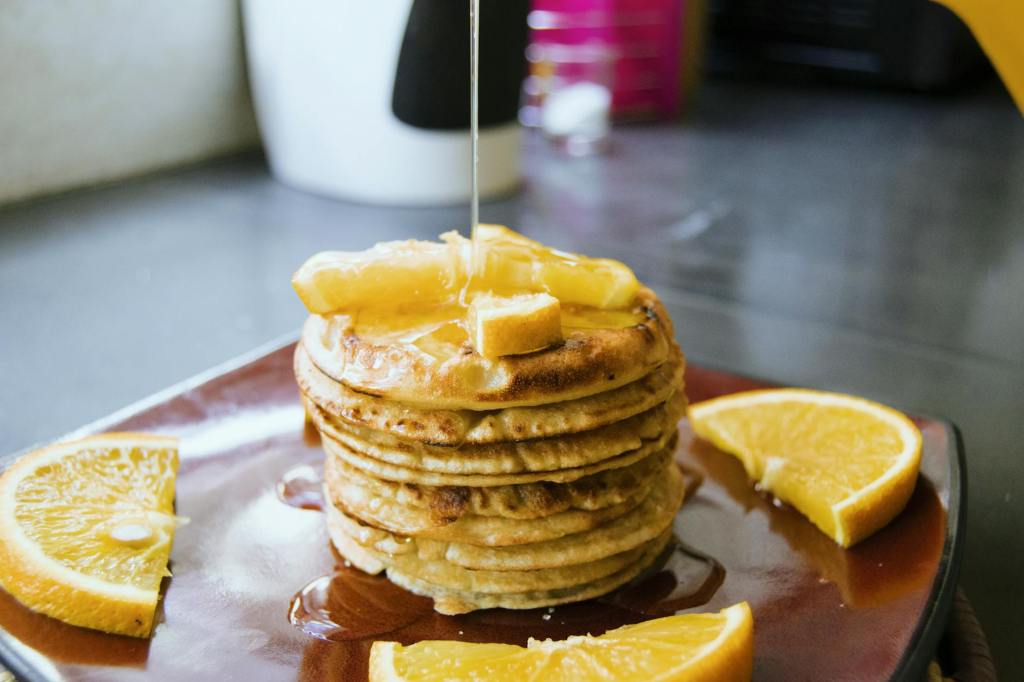
    Back in the 60s and 70s, nutritional concerns were as relevant to us as an old vinyl record in a streaming world. We were blissfully unaware of things like sugar grams and carbohydrate counts. On weekend mornings, my parents would sometimes treat me to a local pancake house, where I indulged in my favorite dish: apple pancakes. Now, picture this: a stack of ten flapjacks, each one a marvel of culinary excess. To say the pile was monumental is like calling Mount Everest a hillock. As I sat next to it, I looked like a hapless Lilliputian standing beside a mountain of golden, buttery goodness. The age-old question had to be asked: Was I going to eat these pancakes, or were they going to consume me in a pancake avalanche? Spoiler alert: I ate them. Every last one. These pancakes were no ordinary breakfast fare. They were brimming with cinnamon-spiced apple compote, slathered in creamy butter, and drenched in what must have been a half-gallon of maple syrup. If I had spilled that syrup, it would have created a sugar tsunami. To wash down this syrupy mountain, I guzzled down several tall glasses of orange juice, which was basically just liquid sugar with a side of citrus. The sheer volume of insulin-spiking sugars and carbohydrates I ingested could have given a modern endocrinologist a cerebral hemorrhage. I was consuming enough sugar to make Willy Wonka look like a health food advocate. After these epic breakfasts, rather than running outside to join my friends in their energetic games, I would slump into bed in a state of what could only be described as a Carbohydrate Coma. I was so catatonic, my friends might as well have been playing a game of “Guess Where’s the Sleeping Kid?” The trauma inflicted on my pancreas was beyond imagination. It was like a small factory working overtime without a break, pumping out insulin at a rate that would have made any modern dietitian faint. In those days, gluttony was a virtue, and self-indulgence was a badge of honor. We reveled in our ignorance, blissfully ignoring the fact that our indulgences would make today’s health-obsessed populace break out in a cold sweat. So there I was, a child of the 60s and 70s, living in an era where pancakes and orange juice were not just meals but monumental feats of indulgence. Our motto was simple: “Why worry about nutritional concerns when you can have another stack of apple pancakes?” Our golden era of gluttony was truly a feast for the ages—literally and metaphorically.

    This memory points us to the Syrupocene Era–a mythic golden age spanning the 1960s and 70s when nutritional ignorance reigned supreme, and breakfast was less a meal and more a caloric Greek tragedy performed in maple-soaked acts. The Syrupocene was a time when food pyramids hadn’t been built, glycemic indexes hadn’t been discovered, and “carb-loading” wasn’t a fitness strategy—it was a lifestyle.

    During the Syrupocene, children guzzled orange juice like it was an IV drip from the gods, consumed pancakes in stacks that could double as insulation, and considered butter a vegetable. It was a utopia of food denialism, where a carbohydrate coma was mistaken for a nap and diabetic shock was just “a sleepy Sunday morning.” The only sugar tracker in town was your mother asking, “Do you want more syrup, honey?”

    The Syrupocene didn’t end with an apocalypse—just a quiet whimper as food labels, cholesterol, and science crept in like puritans at a Mardi Gras parade. But those who lived through it still carry the memory: a wistful ache for the era when gluttony was innocent, ignorance was delicious, and a pancake wasn’t a sin—it was a ten-layered sacrament.

  • Sundae Grailism

    Sundae Grailism

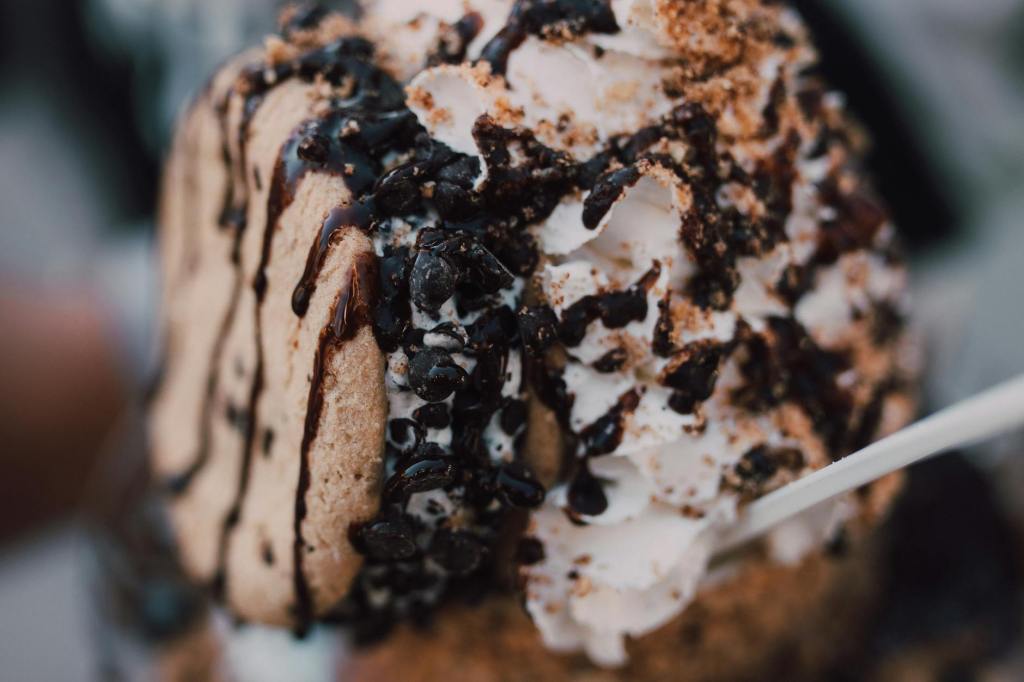
    When I was a kid growing up in the San Francisco Bay Area in the 1970s, there was an ice creamery called Farrell’s. In a child’s imagination, Farrell’s was the equivalent of Willy Wonka’s Chocolate Factory. You didn’t go to Farrell’s often, maybe once every two years or so. Entering Farrell’s, you were greeted by the cacophony of laughter and the clinking of spoons against glass. Servers in candy-striped uniforms dashed around with the energy of marathon runners, bearing trays laden with gargantuan sundaes. You sat down, your eyes wide with awe, and the menu was presented to you like a sacred scroll. You don’t need to read it, though. Your quest was clear: the legendary banana split. When the dessert finally arrived, it was nothing short of a spectacle. The banana split was monumental, an ice cream behemoth. I was as if the dessert gods themselves had conspired to create this masterpiece. Three scoops of ice cream, draped in velvety hot fudge and caramel, crowned with mountains of whipped cream and adorned with maraschino cherries, all nestled between perfectly ripe bananas. Sprinkles and nuts cascaded down the sides like the treasures of a sugar-coated El Dorado. As you took your first bite, you embarked on a journey as grand and transformative as any hero’s quest. The flavors exploded in your mouth, each spoonful a step deeper into the enchanted forest of dessert ecstasy. You were not just eating ice cream; you were battling dragons of indulgence and conquering kingdoms of sweetness. The sheer magnitude of the banana split demanded your full attention and stamina. Your small arms wielded the spoon like a warrior’s sword, and with each bite, you felt a mixture of triumph and fatigue. By the time you reached the bottom of the bowl, you were exhausted. Your muscles ached as if you’ve climbed a mountain, and you were certain that you’d expanded your stomach capacity to Herculean proportions. You briefly considered the possibility of needing an appendectomy. But oh, the glory of it all! Your Farrell’s sojourn was worth every ache and groan. You entered the ice creamery as an ordinary child and emerged as a hero. In this fairy-tale-like journey, you had undergone a metamorphosis. You were no longer just a kid from the Bay Area; you were now a Jedi of the dessert world, having mastered the art of indulgence and delight. As you returned home, the experience of Farrell’s left a lasting imprint on your soul. You regaled your friends with tales of your conquest, the banana split becoming a legendary feast in the annals of your childhood adventures. In your heart, you knew that this epic journey to Farrell’s, this magical pilgrimage, had elevated you to the ranks of dessert royalty, a memory that would forever glitter like a golden crown in the kingdom of your mind.

    These indulgences point to Sundae Grailism–the childhood phenomenon in which a dessert outing—particularly involving elaborate confections like banana splits—takes on the structure, stakes, and emotional intensity of an Arthurian quest. Sundae Grailism transforms a simple trip to an ice cream parlor into a mythic pilgrimage where sprinkles are sacred relics, whipped cream is a divine cloud cover, and the spoon is Excalibur.

    Children afflicted with Sundae Grailism don’t just want dessert—they are summoned to it. They enter Farrell’s or any suitably over-the-top ice creamery with the gravity of knights entering Camelot, guided by visions of the elusive Banana Split of Destiny. The menu is not read—it is interpreted like scripture. Every bite of caramel-drizzled glory is a chapter in the epic. By the end of the journey, they’re bloated but victorious, stained with fudge and swagger, ready to regale the kingdom (a.k.a. the school lunch table) with tales of conquest and near-digestive ruin.

    Sundae Grailism is not just about sugar—it’s about transcendence, myth-making, and the belief that, under the right fluorescent lighting and with enough maraschino cherries, a kid can become legend.

  • Appetyranny

    Appetyranny

    One of the most memorable TV ad campaigns of my youth in the late 1960s was “How Do You Handle a Hungry Man?” The stakes were sky-high. Imagine the scene: a harried housewife in her perfectly pressed apron, hair teased to high heaven, facing off against her husband, the archetypal Hungry Man. He enters the kitchen with the imposing gait of a lumberjack who’s felled a forest, his appetite as vast as the Grand Canyon. He casts a skeptical eye over the bubbling pot on the stove, nostrils flaring like a bloodhound on the scent. The tension is palpable. But fear not! With a dramatic flourish, she opens a can of Campbell’s Manhandlers soup, the magical elixir that transforms her kitchen into a culinary Colosseum. She pours the contents into a pot, and it’s as if she’s summoned the culinary gods themselves. The soup is no ordinary broth; it’s a veritable cornucopia of steak chunks, peas, and potatoes, swimming in a rich, hearty base that promises to tame even the most insatiable of appetites. As the aroma wafts through the kitchen, her husband’s eyes widen in delight. He grabs a spoon and dives in, and the transformation is instantaneous. His previously skeptical demeanor melts away, replaced by pure bliss. He slurps the soup with the gusto of a Viking at a medieval banquet, and she watches, triumphant. The jingle plays in the background, a triumphant anthem to her victory over hunger.

    The food industry at the time was relying on Appetyranny–the 1970s advertising-driven psychosis in which a woman’s entire self-worth was measured by her ability to quell the beastly hunger of her man. Fueled by jingles and canned soup, Appetyranny framed female failure not in terms of character or intellect, but in spoonfuls: if he’s still hungry, you’re unlovable.

    It was the golden age of culinary gaslighting, where a man’s growling stomach was treated like a ticking bomb, and your job—housewife, mother, woman—was to neutralize it with sodium-laced beef sludge. Fail, and you risked suburban scandal. Succeed, and you were serenaded by baritone jingles that implied your marriage had been saved by soup.

    Side effects of Appetyranny include:

    • The belief that men turn feral without starch by 6 p.m.
    • Buying food with names like Manwich, Sloppy Joe, or Hearty Beef ‘n’ Barley
    • Mistaking Campbell’s labels for emotional validation
    • A lifelong association between love and ladles

    Appetyranny wasn’t just marketing. It was a meat-chunk manifesto from the patriarchal pantry, where the kitchen timer doubled as a ticking bomb of feminine adequacy.

  • Snackrilege

    Snackrilege

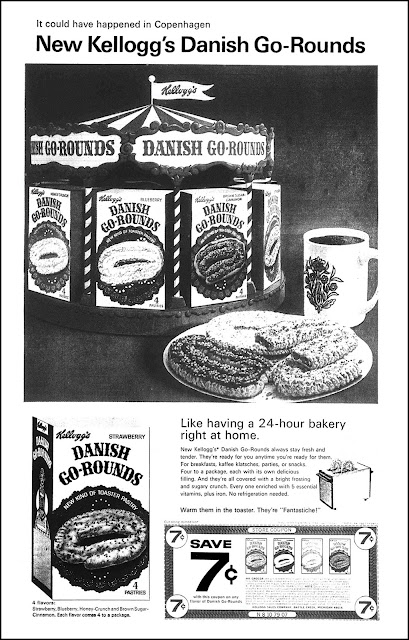
    Introduced by Kellogg’s in 1968, Danish Go-Rounds were like the golden fleece of breakfast pastries. Imagine Pop-Tarts, but with the sophistication of a five-star dessert. The brown sugar-cinnamon Danish Go-Rounds were so addictive, they made crack look like a mere curiosity. At the ungodly hour of 2 a.m., millions of Americans would wake up in cold sweats, their cravings driving them to frenzied searches for the Nectar of the Gods—only to find their precious pastries had vanished into thin air. Then, in a move so baffling it felt like a conspiracy against breakfast enthusiasts everywhere, Kellogg’s pulled the plug on Danish Go-Rounds in the mid-seventies. They kept the Pop-Tarts, those cardboard-like impostors that tasted like they were designed by a committee of flavorless robots. The heartbreak was palpable. It was as if a divine bakery had been shut down and replaced with a factory that churned out glorified toaster insulation. The eradication of Danish Go-Rounds is now remembered as one of the most colossal institutional blunders in history—up there with the fall of Rome and the invention of the Rubik’s Cube. The void they left was so immense, it bored a gaping chasm in my soul. My heart, once full of pastry-filled joy, now echoed with the hollow sound of Pop-Tarts’ lifeless crunch. While Danish Go-Rounds faded into the annals of breakfast history, Pop-Tarts flourished like a tasteless, mass-produced phoenix. This shift symbolized the erosion of artisanal craftsmanship and the triumph of consumer complacency. It heralded the rise of such culinary horrors as Imperial Margarine, Tang, Space Food Sticks, Boone’s Farm Apple Wine, and SlimFast—products so tragic they make a TV dinner look like a gourmet feast. The Gastronomic Time Traveler had to bear witness to this disheartening transition, seeing the demise of pastries that were practically food royalty. In their place, we got a parade of processed atrocities that made the culinary landscape look like a dystopian nightmare. So there I was, left to mourn the loss of Danish Go-Rounds, savoring the bitter taste of what once was, while choking down the unworthy replacements that flooded the market. It was a breakfast apocalypse, and I was living in its soggy aftermath.

    My undying grief over the extinction of Danish Go-Rounds introduced me to Snackrilege–The soul-crushing betrayal one experiences when a beloved snack—usually a glorious artifact of pre-1980s food engineering—is unceremoniously discontinued and replaced with a bland, mass-produced imposter that tastes like cafeteria foam and broken dreams.

    Snackrilege is not just a disappointment; it’s a culinary excommunication. It’s the moment you realize Kellogg’s didn’t just discontinue Danish Go-Rounds—they blasphemed the sacred breakfast pantheon by pretending a Pop-Tart could ever fill that flaky, spiraled void.

    Symptoms of Snackrilege include:

    • Grief rage in the frozen aisle
    • Late-night Google searches for defunct product petitions
    • Emotional hoarding of expired boxes found on eBay
    • Screaming “It used to mean something!” at a toaster

    Snackrilege marks the exact point where food nostalgia turns into holy indignation. It’s not about the pastry. It’s about what we lost—flavor, artistry, and the illusion that breakfast was once made by pastry angels instead of lab interns with degrees in corn syrup engineering.

  • Chocotrickery

    Chocotrickery

    When I wasn’t honing my superhero powers, I was a rock star—at least in the hallowed halls of Katherine R. Smith Elementary. Every Friday during Show and Tell, I transformed into Micky Dolenz from The Monkees. I strutted into Mrs. Gilarde’s kindergarten class in my emerald green corduroy flares, aka the “Monkees pants,” ready to dazzle. My friends and I performed the “Theme Song” with such confidence that we shunned instruments, relying solely on the raw, unfiltered power of our vocals. The girls’ ear-piercing screams nourished my hungry self-esteem. Show and Tell Fridays became my therapy, where I reveled in the adoration of my screaming fans. I’d come home giddy, the shrieks of the girls still ringing in my ears like a symphony of validation. Exhausted from the grueling demands of being a five-year-old rock god, I devoured snacks like a tiny, ravenous beast. Oscar Mayer liverwurst sandwiches on Wonder Bread, meatloaf sandwiches drowning in ketchup, grilled cheese oozing butter, Rice Krispy Squares, Hostess berry pies, and Ovaltine-laced milk by the gallon—all disappeared down my gullet.

    Ah, Ovaltine. Marketed as a nutritional elixir but clearly a placebo in a milkshake’s clothing—a clever ruse setting the stage for future food gimmickry. They could’ve sold me anything with that chocolatey lie, and I’d have believed it was manna from heaven. Looking back, my daily ritual of inhaling these calorie bombs was a prelude to a life of chasing comfort in sugary deceit and processed delights.

    Ovaltine introduced me to Chocotrickery–the food industry’s sleight of hand in disguising dessert as “nutritional fuel” for growing kids—most notoriously embodied in the form of chocolate milk powder like Ovaltine, Nesquik, or other faux health elixirs disguised as academic performance enhancers and muscle juice for tiny rock stars.

    Chocotrickery is the corporate wizardry that convinced millions of children (and their exhausted, hopeful parents) that dumping sugar-cocoa dust into milk transformed it into a brain-boosting, bone-fortifying superdrink. In reality, it was more like chocolate frosting in liquid drag.

    Children caught in the throes of Chocotrickery didn’t just drink a beverage—they drank the fantasy: that they’d grow taller, smarter, cooler, and possibly even become Micky Dolenz if they stirred it long enough. It’s the original bait-and-sip scheme, the gateway to a lifetime of falling for healthwashed comfort foods wrapped in the sparkle of cartoon endorsements and pseudo-scientific promises.

    Chocotrickery is how nostalgia tastes when it’s spiked with glucose and lies.

  • How 60s TV Gave Us Kibblelust

    How 60s TV Gave Us Kibblelust

    As a kid in the 1960s, I was utterly mesmerized by the tantalizing dog food commercials on TV. Gaines-Burgers, those succulent patties that looked like ground hamburger, and Gravy Train nuggets, which magically transformed into rich, brown gravy with just a splash of water, had my salivary glands working overtime. It was clear that the advertisers had one devious goal: to make dog food so visually appealing that even humans would crave it. And did they succeed.

    I marched up to my dad one day, eyes wide with canine envy, and declared that I wanted to be a dog just so I could savor these advertised delicacies. His face twisted in confusion, then horror, and then a resignation that only a parent can truly master. Determined to cure me of my bizarre wish, he whisked me off to a local bistro and ordered me a French Dip with au jus sauce.

    As the sandwich arrived, dripping with savory goodness, my dad leaned in and asked, “So, how do you like your French Dip?”

    I took a bite, my taste buds doing a happy jig, but instead of expressing my appreciation like a normal human child, I couldn’t resist. I let out a guttural growl, dropped to all fours, and began scratching an imaginary itch with my hind leg, much to the mortification of my father and the bewilderment of the bistro patrons.

    Dad’s face turned a shade of crimson that would have made a ripe tomato jealous. He sighed deeply, clearly questioning his life choices, while I continued my canine performance, convinced that I had discovered the next best thing to Gravy Train. It was then that I realized: the allure of dog food had turned me into a French Dip-devouring, itch-scratching spectacle of childhood absurdity.

     The irrational, often childhood-onset hunger triggered by the hyper-curated presentation of pet food in commercials—particularly dog food stylized to look more appetizing than anything in your pantry. Kibblelust is not mere curiosity; it’s a visceral craving born from the fantasy that somewhere, out there, dogs are eating better than you are.

    Sufferers of Kibblelust may experience symptoms such as food envy toward canines, a desire to bark in public, or in extreme cases, dropping to all fours in a bistro after biting into a French Dip, convinced it’s the closest a human will come to Gravy Train transcendence.

    This condition typically begins with 1960s-70s advertising campaigns involving burger-shaped meat slabs and gravy-generating pellets and is usually cured by a parent’s panicked intervention and a stern lesson in food hierarchy.

    Kibblelust represents the first great betrayal of consumer trust: when you realize advertisers are not above making animal food look better than human cuisine—and you fell for it.

  • The Santa Claus of Donuts Must Die

    The Santa Claus of Donuts Must Die

    Let’s start with the obvious: your family bonds over food because food is reliable. It doesn’t argue with you about politics, it doesn’t criticize your life choices, and it doesn’t ask to borrow your car. It just shows up, warm and sugary, like a friend who never judges. And when you show up holding that pink box of donuts? You’re not just a guy walking through the front door—you’re the Santa Claus of Donuts, bearing gifts that turn your living room into a dopamine theme park. Everyone lights up. You are loved. You are admired. You are a hero.

    Until the sugar crash hits and you’re lying on the couch wondering how a simple box of pastries turned into a hostile takeover of your waistline. Again.

    You, my friend, have what polite society calls an “addictive personality,” but let’s not sugarcoat it (pun intended). You go overboard like it’s your patriotic duty. One treat turns into three. One bite into a blackout. You need boundaries, not Pinterest recipes.

    So here’s your prescription. It’s boring, brutal, and blessedly effective:

    Breakfast: Plain Greek yogurt, a scoop of protein powder, flaxseeds, chia seeds, and a handful of berries. Also, coffee. Strong enough to slap you awake and maybe shake loose some of your delusions.

    Lunch: A salad—yes, a salad—with actual protein in it. Maybe chicken. Maybe tuna. Add a scoop of cottage cheese if you hate joy a little less that day. Have some fruit so you don’t hallucinate cookies.
    Dinner: Protein again. Vegetables. Herbal tea, like the sad monk you are becoming. Cap it off with an apple and the faint memory of dessert.
    Snack Defense Protocol: If you start prowling like a raccoon between lunch and dinner, shove a carrot in your mouth, sip some green tea, and crack open a diet root beer. It’s not a thrill, it’s a strategy.

    And let us not forget why you had to slam the snack door shut like it owed you money: snacks are traitors. They pretend to be innocent little diversions—just a handful here, a nibble there—but they’re silent assassins. Those calories accumulate like guilt after a Vegas weekend, slowly padding your frame while you’re busy telling yourself you’re “cutting back.”

    Now, let’s address the hard truth, as spoken by the philosopher-king of overweight comedians, Tom Segura: “You don’t lose weight until you hate your fatness more than you love food.” Yes, it’s harsh. But he’s not wrong.

    Still, let’s reframe it with a little less bile and a touch more clarity:
    You won’t change until you prefer discipline to chaos. Until your craving for stability outweighs your need for a dopamine hit. Until your love of self-respect outweighs your love of Cheez-Its.

    You don’t need another meal plan—you need a code. A way of eating that doesn’t just fill your stomach, but recalibrates your priorities. Food is not your therapist. Food is not your friend. Food is fuel. And you? You’re not Santa Claus anymore. You’re something better: a man in control of his appetite, his identity, and his damn life.

    Now go make that yogurt bowl like it’s a holy ritual and not a punishment. The rest will follow.