Tag: life

  • Why I Refuse to Journal Like a Good Little Introvert

    Why I Refuse to Journal Like a Good Little Introvert

    One of my most cherished moments of accidental transcendence happened somewhere between the cow-scented fields of Bakersfield and the fog-choked sprawl of San Francisco in the spring of 1990. I was climbing the Altamont Pass in a battered 1982 Toyota Tercel that handled like a shopping cart when The Sundays’ “Here’s Where the Story Ends” crackled to life on the radio. Harriet Wheeler’s voice—equal parts cathedral and confession booth—floated through the speakers, and suddenly I wasn’t commuting through California; I was levitating above it. I wasn’t driving—I was ascending. In that moment, I stumbled into something bigger than myself, gifted by two Brits, David Gavurin and his partner Wheeler, who recorded their luminous dispatches, then vanished from the stage like saints escaping the tabloid apocalypse.

    They made beauty, and then they walked away. No farewell tour, no social media mea culpas, no sad attempts at reinvention. Just a few perfect songs and the audacity to say, that’s enough. They’re my heroes—not for what they did, but for what they didn’t do. They resisted the narcotic of attention. They said no to the stage and yes to obscurity, which in our fame-gluttonous culture is the moral equivalent of monkhood.

    I, by contrast, never quite shut up.

    I’ve been peddling stories since high school, where I’d hold court at lunch tables, unspooling feverish tales of misadventure like a cracked-out bard. At 63, I still haven’t kicked the habit. But unlike the craven influencer class, I hope I’m not just hustling dopamine hits. I tell stories because I need to make sense of this deranged carnival we call modern life. It’s an instinct, like blinking or checking the fridge when you’re not even hungry.

    Some stories are survival tools disguised as art. Viktor Frankl wrote to preserve his sanity in a death camp. Phil Stutz prescribes narrative like medicine. And when I hear a brilliant podcaster dissect the absurdity of daily life, it feels like eavesdropping on salvation. It’s not just performance—it’s connection. Human beings, after all, are just gossiping apes trying to explain why the hell we’re here.

    Storytelling is the futile, glorious act of forcing chaos into coherence. It’s pinning butterflies to corkboard. Life is all noise—emails, funerals, fast food, missed calls—and stories give it a beat, a structure, a moral, even if it’s just “don’t marry a narcissist” or “never trust a man who wears sandals to a job interview.”

    So why not keep it to myself? Why not scribble in a journal and hide it in the sock drawer next to my failed dreams and mismatched batteries? Because I find journaling about as appealing as listening to my own Spotify playlist on repeat in a sensory deprivation tank. No thanks. I don’t want to be alone with my curated echo chamber. I want a café. A digital one, maybe, with only a few scattered patrons. But still—voices, questions, and the hum of others trying to make sense of it all.

    I’ll never be famous. I’ll never go viral. But if someone reads my ramblings and thinks, me too—then that’s enough. I’m not trying to be an algorithm’s golden child. I’m just trying to find some order in the mess. Just like I always have.

  • Luxury Is Relative: Tales from the Desert of Almost

    Luxury Is Relative: Tales from the Desert of Almost

    Fresh off the bus from the bustling Bay Area, I found myself marooned in Bakersfield, a sun-bleached corner of California that could only generously be described as a town. With zero friends and even fewer social obligations, I embraced my solitude like a monk embracing a vow of silence. My one-bedroom apartment became my sanctuary—no roommates, no forced small talk, just me and the sweet luxury of never having to negotiate over chores or TV channels.

    My companions? A stack of CDs featuring Morrissey, The Smiths, and other bands that sounded like a group therapy session set to a minor key. I was working on a novel Herculodge, my dystopian magnum opus in which society punishes the overweight with Orwellian fervor for failing to meet state-mandated body standards.

    When I wasn’t writing, I’d plink away on my Yamaha ebony upright, conjuring up self-indulgent sonatas that only the most pretentious of muses could appreciate. I didn’t read music so much as let it ooze out of me—luscious chords here, shameless glissandos there—while imagining some ethereal goddess materializing in my living room to stroke my ego as I struck a soulful pose.

    Compared to the misery of my college days in the Bay Area, my Bakersfield digs were practically a five-star resort. Back then, I wasn’t so much living as squatting in a hovel that had the audacity to pretend it was a room. The place featured a gaping hole in the wall strategically located at bed level, inviting in gusts of cold air so fierce they felt like the Bay’s fog had developed a personal vendetta against me. Sleeping wasn’t just uncomfortable; it was a survival sport. I’d huddle under layers like I was gearing up for an Everest expedition—jacket, hat, and sometimes gloves if the wind got particularly sassy.

    My diet was a tragicomedy in three acts: breakfast, lunch, and dinner. Cheerios were the headliner, while bean-and-cheese burritos played the understudy whenever I was feeling particularly adventurous. These “burritos” were nothing more than refried sludge wrapped in a tortilla that had all the elasticity of cardboard. The cheese? It was the kind that refused to melt out of sheer spite, clinging to the tortilla like it was serving a life sentence. Each bite was a bleak reminder that I wasn’t starving, but I wasn’t thriving either.

    Transportation was another chapter in my tale of woe. My chariot was a ten-year-old Toyota Tercel that was less a car and more a mobile disaster waiting to happen. It rattled like a haunted maraca, and driving it felt like piloting a coffin with wheels. The brakes let out a tortured groan every time I approached a stop sign, as if they were begging me to put the poor thing out of its misery. On the infamous Bay Area hills, I clung to the steering wheel with a white-knuckled grip, praying the Tercel wouldn’t decide to pack it in and roll backward into oblivion, taking out a few unsuspecting cyclists along the way. Fixing it was a twisted game of financial Russian roulette: repair the brakes or eat for a week—one of us had to suffer.

    Money was as scarce as warmth in that drafty hole I called a room. Every broken item (and there were many) required a DIY fix involving duct tape, a prayer, and whatever scraps I could scavenge. Even gathering enough change for a trip to the laundromat felt like winning the lottery. “Luxury” back then meant adding an extra spoonful of salsa to my sad burritos—living on the edge by upping the spice in a meal that was otherwise flavorless and depressing.

    Looking back, it’s a miracle I escaped that purgatory with my sanity—or whatever passed for sanity. That cold, drafty hole taught me resilience, but more than anything, it taught me how to laugh at the sheer absurdity of trying to survive in a city that demands gold while you’re barely scraping together tin.

    So here I was, newly settled in this desert hideaway, craving a hint of the luxury I’d been denied. On weekends, I tanned my lean, 195-pound frame by The Springs’ apartment pool—a so-called “luxury” pool that only deserved the title because the sign said so. No real friendships blossomed at that pool—friendships are messy and overrated—but I did collect some “acquaintances,” a bizarre cast of characters who could only exist in this sun-scorched limbo.

    I wasn’t thriving, but at least I wasn’t freezing or eating cardboard masquerading as food. And in a place like Bakersfield, that was about as close to paradise as you could hope for.

  • Beauty Without Performance: The Quiet Legacy of The Sundays

    Beauty Without Performance: The Quiet Legacy of The Sundays

    Harriet Wheeler and David Gavurin of The Sundays gave the world my favorite song of all time: “You’re Not the Only One I Know.”
    I didn’t just fall for that song — I tumbled headfirst into their entire body of work across three albums, each one a quiet masterclass in melancholy and grace. I saw them live twice, but the 1990 show at Slim’s in San Francisco left a scar on my heart that never quite healed. Somewhere between the ringing guitars and Harriet’s bittersweet voice, I understood something about beauty that hurt — the way only true beauty can.
    I bought a Sundays T-shirt that night, and decades later, my teenage daughter wears it like a badge of honor as if carrying the torch for a band she never saw but somehow still feels.

    Wheeler and Gavurin, true to form, refused to play the roles we demanded of them.
    After making their brief, brilliant splash on the music scene, they disappeared — not in disgrace, but in quiet triumph.
    No messy social media fade-outs. No tragic reunion tours at casino amphitheaters. Just two people choosing domestic obscurity over the ceaseless meat grinder of public performance.
    Rumor has it Harriet became a schoolteacher. I hope that’s true. There’s something magnificent about the idea of her trading in the spotlight for a chalkboard, living in the kind of real, unperformed life that fame devours.

    Meanwhile, their fanbase — myself included — obsessed for years, combing through blogs and Reddit threads for any sign of a comeback that never arrived.
    But the more I think about it, the more I admire Wheeler and Gavurin’s refusal to extend the brand of themselves indefinitely.
    The same beauty that made their music shimmer with timeless sadness likely steered them away from the terminal exhibitionism that seems to consume so many artists.
    Their art wasn’t a ladder to fame — it was a lifeboat out of it.

    They should know this much:
    The same Sunday’s T-shirt I once wore to death now lives on, worn proudly by my daughter, proof that real magic — the kind you don’t sell, the kind you don’t explain — doesn’t need an encore.

  • New Yorker’s Remorse Syndrome

    New Yorker’s Remorse Syndrome

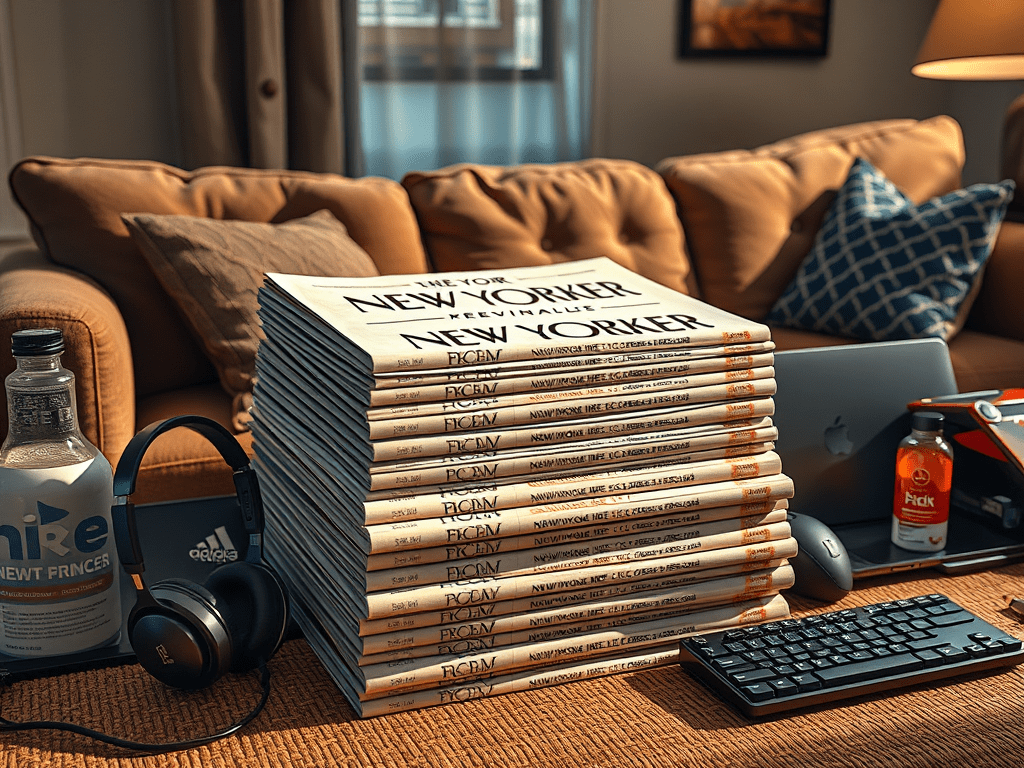
    It’s a charming form of cosplay, really — striding around as a “well-informed citizen” while sinking ungodly hours into consumer research. Watches, radios, headphones, laptops, Chromebooks, mechanical keyboards, high-end sweatshirts, orthopedic luxury sneakers, protein powders, protein bars, athletic-grade water bottles — an entire temple of optimized living, curated with clerical devotion.

    Meanwhile, out in the real world, society is fraying like an ancient flag in a hurricane. Yeats’ prophecy is no longer a chilling warning — it’s a project status update.
    The center isn’t holding. The center left the chat months ago.
    But instead of reckoning with the slow dissolve of civil society, it’s so much easier, so much kinder to the blood pressure, to compare toaster ovens with touchless air fryer settings.

    Yes, yes, I know — one must be informed. George Carlin gave us front-row tickets to the Freak Show. We owe it to the species, or at least to our own dim dignity, to bear witness.
    But honestly? Some days, it feels like sanity demands partial withdrawal. A news podcast here. A curated briefing there. Enough to feign civic engagement at parties without having to call a therapist immediately afterward.

    This brings me to the shrine of guilt at the center of my living room: the great, unread New Yorker stack.
    I have subscribed since 1985, back when Reagan was doing his best kingly impression and nobody had heard of an iPhone.
    The stack now functions less as reading material and more as a kind of grim altar — a silent accusation in glossy print.
    Friends glance at it and nod approvingly, as if my very possession of these magazines implies moral seriousness.
    I let them believe.
    Inside, I know better.
    I know that I am a fallen monk, a heretic of intellectual duty, choosing the velvet lure of consumer escapism over the weighty gospels of sociopolitical collapse.

    I have a diagnosis: New Yorker’s Remorse Syndrome — a condition in which one publicly performs allegiance to Enlightenment values while privately seeking refuge among comparison charts and Amazon star ratings.
    The mind knows what it ought to do.
    The heart, however, prefers shopping for the perfect water bottle while Rome burns quietly in the background.

  • How I Outsmarted the Algorithm and Found a Human Being at Lowe’s

    How I Outsmarted the Algorithm and Found a Human Being at Lowe’s

    Today, I embarked on a noble and deeply aggravating quest: buying a refrigerator.
    I knew exactly which model I wanted — the research was done, the decision made — and I almost bought it online. But Lowe’s website, in its infinite wisdom, offered no civilized scheduling options. Buy today, and you’re rewarded with delivery tomorrow, whether you like it or not. I needed four more days — a minor concession to the gods of logistics, apparently beyond the website’s feeble imagination.

    So I drove to the Lowe’s on Skypark in Torrance, muttering curses at the indignities of modern retail. I marched straight to the Refunds desk, where two clerks stood idle, marooned in a sea of boredom. I said, with the slight guilt of a man about to break protocol, “I know I’m supposed to go to Appliances and hunt down a salesperson, but can you help me?”

    And then — like a choir of angels tuning up in aisle five — one of them smiled and said, “Well, since Appliances is busy, I’ll help you.”
    Her words were a warm poultice slapped onto my stress-riddled soul, the perfect antidote to the week’s ordeal: a refrigerator emergency caused by my seven-year-old Kenmore, which froze over, sneered at my hair dryer attack on its blocked freezer drain, and essentially told me to go pound sand.

    Within ten minutes, the deal was done. I floated out of Lowe’s light as a helium balloon, buoyed by the rarest of modern mercies: competent, unsolicited human kindness.
    Yes, by the time my contractor widens the kitchen doorway to accommodate this new metallic beast, and I pay for the fridge, warranty, and the luxury of hauling my dead Kenmore to appliance hell, I’ll be out two thousand dollars.
    But for a fleeting, golden moment, I remembered that the world, battered as it is, can still be shockingly decent.


  • The Postcard Life: Why Perfection Always Rings Hollow

    The Postcard Life: Why Perfection Always Rings Hollow

    I can’t shake an interview I heard thirty years ago—an offhand confession that stuck to me like burrs on a wool coat.
    Terry Gilliam, the Monty Python animator turned fever-dream film director, was talking with Charlie Rose. Gilliam described a moment straight from a high school dream: he was walking the Santa Monica Pier on a twilight evening, a beautiful woman on his arm, the beach shimmering under a dying sun. It was the kind of moment that screams You’ve Made It! if you’ve ever been a teenage boy with a tragic imagination.

    And yet, Gilliam said, he felt nothing. Not euphoria. Not awe. Just… flatness. Like he wasn’t even in his own life but rather trapped inside one of his own cartoons—a two-dimensional fantasy drawn by someone who had seen too many movies and lived too little.
    That was his grim epiphany: we don’t chase life—we chase the idea of it.

    Gilliam’s teenage dream had come true, but it rang hollow because it wasn’t connection he had caught. It was a postcard of connection, a lifeless image polished smooth by years of expectation.

    I’ve thought about that moment a lot, especially in the slow burns of my own life, in all the arenas where the blueprint of perfection crashed hard against the walls of reality.
    Take teaching: I’ve taught college writing for forty years. More times than I care to admit, I walked into class with what I believed was a masterstroke of a lesson plan—polished, structured, airtight. And then I delivered it like a robot with tenure. The students, bless them, tried not to visibly expire.
    Only when I threw away the script and talked to them like a breathing, flawed human being did I finally see heads lift and eyes focus.

    It’s the same poison at work: that blueprint, that false idol of how it’s supposed to be.
    Therapist Phil Stutz calls it the Magical Moment Frozen in Time—a mental snapshot of ideal beauty, love, success, whatever, that we spend our lives trying to recreate. And like the cruelest mirage, it recedes the closer we get.
    Because it’s not life.
    It’s a knockoff. A counterfeit so slick, it fools even the person living it.

    It’s sobering, humiliating even, to realize how often my life has been a performance for an audience that doesn’t exist—measuring real experiences against some fantasy standard cooked up in the caves of my mind.
    Maybe Plato had it right all along: we’re prisoners staring at shadows, mistaking flickers on the wall for the blazing, complicated, imperfect mess that is actual life.
    And every time we chase the shadow instead of the fire, we walk the Santa Monica Pier at sunset, hand in hand with a beautiful illusion, and feel… nothing.

  • How I Accidentally Found Laptop Bliss with the Acer Chromebook 516GE

    How I Accidentally Found Laptop Bliss with the Acer Chromebook 516GE

    I own a couple of monster Acer gaming laptops—top-tier, fire-breathing beasts packed with high-powered processors and NVIDIA GPUs muscular enough to render Middle-earth in 4K without breaking a sweat.
    Not that I’m a gamer. I’m just the lucky soul who was handed these brutes for review.

    They work like a dream if the dream involves hauling around seven pounds of hot, whirring metal that sounds like it’s preparing for lunar liftoff whenever you so much as open a YouTube tab. One of them now lives tethered to a monitor as my desktop replacement. The other, in an act of familial charity (and an unspoken prayer to the gods of lighter tech), I gifted to my daughter after she murdered her Chromebook via the ancient teenage art of “gravity testing.”

    Suddenly laptopless for bedroom lounging and travel, I embarked on a quest—not for more horsepower, but for something portable, civilized, sane.
    After some research, I landed on the Acer Chromebook 516GE, the so-called Gaming Edition. Except here’s the truth: I don’t game on it. I write. I blog. I watch videos. I listen to Spotify and plow through my Kindle backlog like a caffeine-addled librarian. And if I had to distill my experience with the 516GE into a single word, it would be this: clean.

    Clean because the thing weighs a little over three pounds, not seven. Clean because it boots in seconds, without the bloated tragedy of trial software and manufacturer junk lurking in every corner. Clean because it feels secure and unobtrusive, like good tech should.

    The QHD screen looks fantastic—sharp enough that reading, writing, and watching feel almost decadent. And the speakers? A revelation.
    Sure, reviewers have whined about them, but compared to the sonic misery most laptops offer, the 516GE sounds three times better—good enough that I no longer instinctively reach for headphones.

    In fact, I like this clean, uncluttered experience so much that if I were in the market for another machine, I’d be dangerously tempted by the new king of the Chromebook hill, the Acer Spin 714.
    But for now, I’m content—writing in bed, traveling light, and marveling at the fact that somewhere along the way, my laptop experience stopped feeling like a hostage negotiation and started feeling… well, human again.

  • Against the Grain: My College Students’ Quiet Rebellion Against the Cult of the Self

    Against the Grain: My College Students’ Quiet Rebellion Against the Cult of the Self

    My college students, nineteen on average, stand on the jagged edge of adulthood, peering into a world that looks less like a roadmap and more like a shattered windshield. Right now, we’re writing essays about the way social media—and the exhausting performance of self-curation—has sabotaged authenticity and hijacked the very idea of a real, breathing identity.

    Here’s the surprising part: they already know it.

    Unlike the last crop of dopamine junkies willing to sell their souls for a handful of TikTok likes, these students have developed a healthy, almost contemptuous disdain for “influencers”—those human billboards who spend their days manicuring their online selves like desperate bonsai trees, hoping to monetize the illusion of a perfect lifestyle. My students don’t want to be “brands.” They don’t want to hawk collagen supplements to strangers or play the carnival game of parasocial friendships with people they’ll never meet.

    No, they’re too busy wrestling with reality.

    They’re trying to adapt to a fast-changing, frequently chaotic world where entire industries collapse overnight and finding a career feels like rummaging through a haystack with oven mitts on. They are focused—ruthlessly so—on their careers, their families, and the relationships that breathe life into their days. There’s no time for performative outrage on Twitter. There’s no energy left for airbrushed TikTok dances in rented Airbnbs masquerading as real homes.

    What’s even more heartening?
    They are learning. They’re not Luddites fleeing technology; they’re studying how to use it. They’re exploring tools like ChatGPT without fear or delusion. They’re discussing things like Ozempic, not as magic bullets, but as case studies in how rapidly tech and biotech can transform human lives—for better or for worse.

    Underneath all this practicality hums a deeper current: a hunger for something more than survival. They know life isn’t just paying the bills and uploading sanitized highlight reels. It’s also about spiritual nourishment—found in beauty, art, connection, and the sacred rituals that make the unbearable parts of existence worth slogging through.

    They understand, in a way that seems almost instinctual, that social media platforms—those carnival mirrors of human desire—don’t offer that kind of connection. They see the platforms for what they are: hellscapes of manufactured anxiety, chronic FOMO, and curated loneliness, where everyone smiles and no one feels seen.

    In their quiet rejection of all this, my students aren’t just adapting.
    They’re rebelling—wisely, stubbornly, and maybe, just maybe, showing the rest of us the way back to something real.

  • The PreSnackalithic Era

    The PreSnackalithic Era

    In the Before Snack Times of the early 70s, we didn’t have helicopter parents hovering over us, micromanaging our every move with a suffocating schedule of dance classes, gymnastics, karate, swim lessons, math tutors, writing coaches, soccer practices, chess clubs, computer coding, mindfulness meditation, and Ashtanga Yoga. We didn’t have smartphones tracking us like we were secret agents with microchips implanted in our necks. For the entire day, our parents had absolutely no clue where we were or what we were up to. We’d saunter off after breakfast, either on foot or aboard our trusty bicycles, and were expected to return only by dinner. During that endless stretch of freedom, we’d navigate through construction sites strewn with lumber, nails, electrical wires, and bottomless ditches, all of which screamed, “Adventure awaits!” We gravitated toward mud, streams, and rivers like moths to a flame, setting up wooden ramps to perform Evel Knievel-level stunts over bodies of water. The messier and more perilous the terrain, the more irresistible it became. These hazardous playgrounds were usually bordered by rusty barbed-wire fences and “Do Not Enter” signs, which not only failed to deter us but ignited our rebellious spirits to trespass with even more gusto. Inside these danger zones, we’d be chased by furious steers, territorial cows, and muscle-bound guard dogs. Occasionally, a disgruntled landowner would fire warning shots at us with a pellet gun, a token gesture that barely fazed us. In the ravines behind our homes, we crafted forts, swung from vines, ignited firecrackers, and leaped into piles of poison oak. We encountered black widows, rattlesnakes, bobcats, coyotes, and even the occasional mountain lion. After a day of flouting every conceivable health and safety code, we’d trudge home at night, our bodies caked in filth, bruises, and scratches. But our parents, bless their oblivious hearts, never inquired about our whereabouts or escapades. As long as we took a bath and cleaned up, they were content to feed us hearty helpings of turkey pot pies, meatloaf, chili, and tacos. They knew we needed the energy to wake up the next morning and dive headfirst into another day of mayhem. Back then, we had little time for snacking. Our days were filled with wilderness adventures, where our imaginations ran wild. This level of playfulness, chaos, and enchantment is as extinct as the dinosaurs in today’s Snack Age, where parents meticulously micromanage their children’s activities and pacify their appetites with chips, juice boxes, chocolate chip granola bars, fruit rolls, and Happy Meals.

    Before Snack Times is sometimes referred to as the PreSnackalithic Era–the rough-and-tumble epoch of the early 1970s when childhood ran on chaos, sunburns, and a single daily meal of meatloaf or tacos—long before the rise of the Snack Age. In the PreSnackalithic Era, children roamed unsupervised like feral philosophers, fueled not by organic apple slices or protein-packed squeeze pouches, but by sheer mischief and an occasional stolen sip from a warm garden hose. Helmets were for astronauts, schedules were a myth, and sustenance came only when the streetlights flickered on and the meatloaf hit the table. Snack culture had not yet risen from the primordial ooze, and the only “mindfulness” was making sure you didn’t get bitten by a rattlesnake while building a fort in a construction site. Parents parented with the laissez-faire wisdom of, “If he’s not home by dinner, we’ll worry.” And worry they rarely did.

  • Chewtality

    Chewtality

    Every morning during my teenage years, I’d stagger out of bed and make my daily plea to the heavens: “God, please grant me the confidence and self-assuredness to ask a woman on a date without suffering from a full-blown cerebral explosion.” And every morning, God’s response was as subtle as a sledgehammer to the forehead: “You’re essentially a walking emotional landfill, a neurotic mess doomed to wander the planet bereft of charm, romantic grace, and any semblance of healthy relationships. Get used to it, buddy.” And thus commenced my legendary odyssey in the land of perpetual non-dating.

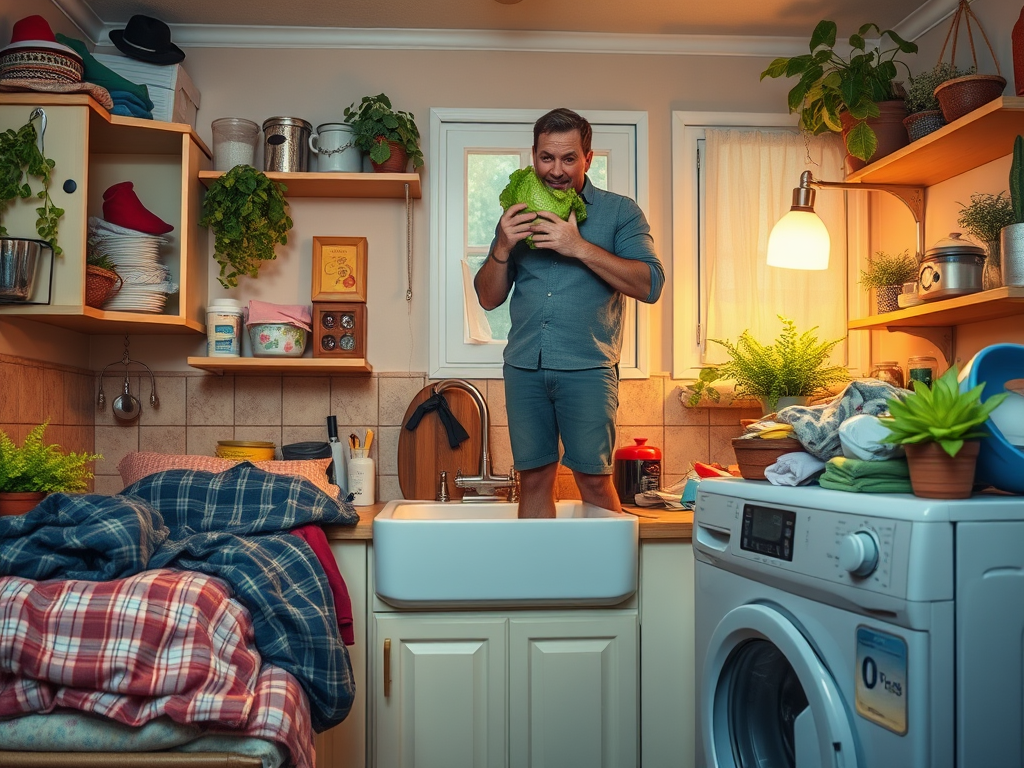
    This was not the grand design I had envisioned. No, the blueprint was to be a suave bachelor, just like my childhood idol, Uncle Norman from The Courtship of Eddie’s Father. At the ripe age of eight, I watched in awe as Uncle Norman demonstrated his revolutionary kitchen hack: why bother with dishes when you can devour an entire head of lettuce while standing over the sink? He proclaimed, “This way, you avoid cleanup, dishes, and the pesky inconvenience of sitting at a table.” In that glorious moment, I was struck with a revelation so profound it reshaped my entire existence. The Uncle Norman Method, as I would grandiosely dub it, became my life’s guiding principle, my personal beacon of satisfaction, and the defining factor of my existence for decades.

    Channeling my inner Uncle Norman, I envisioned a life of unparalleled convenience. My bed would be perpetually unmade because who needs sheets when you have a trusty sleeping bag? I’d never waste time watering plants—plastic ones were far superior. Cooking? Please. Cereal, toast, bananas, and yogurt would sustain me in perpetuity. My job would be conveniently located within a five-mile radius of my house, and my romantic escapades would be strictly zip code-based. Laundry? My washing machine’s drum would double as my hamper, and I’d simply press Start when it reached capacity. Fashion coordination? Not a concern, as all my clothes would be in sleek, omnipresent black. My linen closet would be repurposed to stash protein bars, because who needs linens anyway?

    I’d execute my grocery shopping like a stealthy ninja, hitting Trader Joe’s at the crack of dawn to dodge crowds, while avoiding those colossal supermarkets that felt like traversing a grid of football fields. 

    Embracing the Uncle Norman Way wasn’t just a new approach to dining; it was a radical overhaul of my entire lifestyle. The world would bow before the sheer efficiency and unadulterated convenience of my new existence, and I would remain eternally satisfied, basking in the glory of my splendidly uncomplicated life.

    Of course, it didn’t take long for my delusion to expand into a literary empire—or at least, that was the plan. The world, I was convinced, desperately needed The Uncle Norman Way, my magnum opus on streamlining life’s most tedious inconveniences. It would be part manifesto, part self-help guide, and part fever dream of a man who had spent far too much time contemplating the finer points of lettuce consumption over a sink. Each chapter would tackle a crucial element of existence, from the philosophy of single-pot cooking (aka, eating directly from the saucepan) to the art of strategic sock re-wearing to extend laundry cycles. I even envisioned a deluxe edition featuring tear-out coupons for discounted plastic plants, a fold-out map of the most efficient grocery store layouts, and, for true devotees, a companion workbook to track their progress toward the ultimate goal: Maximum Laziness with Minimum Effort™.

    Naturally, I imagined its meteoric rise to cultural dominance. Talk show hosts would marvel at my ingenuity, college professors would weave my wisdom into philosophy courses, and minimalists would declare me their messiah. Young bachelors, overwhelmed by the burden of societal expectations, would turn to my book in their darkest hour, finding solace in the knowledge that they, too, could abandon the tyranny of dishware and lean fully into sink-based eating. The revolution would be televised, one head of lettuce at a time.

    Uncle Norman’s “system” introduced me to Chewtality–the ruthless prioritization of caloric input over culinary pleasure, a lifestyle doctrine where taste, ambiance, and social norms are discarded like expired salad dressing. It’s the stoic efficiency of consumption that transforms meals into mechanical refueling sessions, often while hunched over a sink, shirtless, chewing with the urgency of a man on parole from dignity.

    Rooted in the gospel of Uncle Norman, Chewtality celebrates the unsentimental art of eating for sustenance and speed. Why savor when you can shovel? Why sit when you can hover? Why use plates when God invented hands and the stainless steel basin? This isn’t just a meal strategy—it’s a worldview: one where the blender pitcher is a chalice, the saucepan is a throne, and the lettuce head is both entree and ideology.

    In its highest form, Chewtality produces a false sense of superiority—an unshakable belief that your Spartan choices signify enlightenment, when in reality, you’ve just spent dinner crouched over the sink eating raw spinach like a raccoon with a library card.