Tag: life

  • Master Po vs. My Perfect Alibi

    Master Po vs. My Perfect Alibi

    In 1972, on the dust-choked battlefield otherwise known as the Independent Elementary playground, Miguel Torres and I were locked in a holy war over an alleged clipping penalty. Gary Kauffman—self-appointed referee, rules committee, and prophet of doom—had flagged me during tag football, a call that would hand my team the loss. Words got hot. “Cheater” ricocheted between us like a stray bullet. Then Miguel’s fists did the talking—left, right, a percussion solo on my jaw.

    I cried—not because I stood there like a department-store mannequin while his knuckles composed a sonata on my face, but because I was blind. I hadn’t read the storm system building in my friend—barometric pressure falling, hostility rising—and I was stunned that my protest could yank that much fury out of someone who’d traded Twinkies with me at lunch.

    The recess bell shrieked. We jogged back to class, me sniffling, my face a throbbing geography lesson. Mrs. Eckhart opened My Side of the Mountain, but I heard only the drumbeat in my skull and the soft crush of my pride underfoot. I retreated inward to the place my imagination had been furnishing for months: a quiet stone courtyard outside the Shaolin Temple, the same one that glowed from our black-and-white TV. The river whispered nearby. Incense drifted like daydreams. And there stood my spiritual guide, Master Po—blind as justice, sharp as a scalpel.

    “Master Po,” I said, still tasting the copper of humiliation, “you once taught me that weakness prevails over strength and gentleness conquers. Yet my team lost, my friend rearranged my face, and I stood there helpless. Where was gentleness then?”

    “Grasshopper,” he said, “you mistake stubbornness for virtue. You are the rigid branch that neither sees the distant hills nor hears the cooling wind—and so you snap. Begin by seeing. Begin by listening.”

    “What am I not seeing? What am I not hearing?”

    He tilted his head. “For one, you did not hear the expletives cannoning from your mouth—shrapnel of spit landing on your friend’s cheeks. For two, you did not see your own finger spearing his chest, drilling his solar plexus as if mining for a confession.”

    “So I was ticking off Miguel without even knowing it?”

    “Precisely, Grasshopper. You cherry-pick facts to star in your favorite film—You, the Noble Victim—while everyone else auditions for Villain. Myth-making is a miraculous tool for preserving self-esteem. It is also the shortest road away from The Way.”

    “I don’t myth-make.”

    He raised an eyebrow in the patient way only the blind can. “When you were six, you slept at your aunt and uncle’s and wet the bed. Instead of accepting the weather report from your own bladder, you blamed…the Pee Fairy.”

    I winced. “I remember. It was quick thinking.”

    “What else do you remember?”

    “That I repeated the lie until it became embroidered truth. I argued anyone who doubted me into silence. The Pee Fairy did it. Obviously.”

    “Exactly,” he said. “When you muddle truth long enough, you lose your own outline. You become your costume.”

    “How do I follow The Way?”

    “Do not costume yourself. Do not curate a personality for the world like outfits for the first day of school. Let time carve you. Emerge by erosion, not construction.”

    “I’m eleven,” I said. “Time carves slowly. Also, if I don’t finish my social-studies questions by sixth period, I’ll be carving them in detention.”

    He smiled. “By doing nothing, everything is done.”

    “Try that on Mrs. Eckhart.”

    “You have much to learn, Grasshopper.”

    Back in the fluorescent glare of fifth grade, Mrs. Eckhart’s voice returned, turning pages into wind through trees. I pressed a cool palm to my cheekbone, felt the ache, and wondered if wisdom always arrived late—long after the bell, after the punch, after you realize you were yelling at a friend and mistook your echo for righteousness. Maybe gentleness isn’t an instant shield; maybe it’s a habit you grow, a small current under the noise, the kind that keeps a rigid branch from snapping when the playground becomes a courtroom and you’ve already sentenced yourself to innocence.

  • My Doppelganger in Dark Sweats

    My Doppelganger in Dark Sweats

    Last night I dreamed that a baby had been abandoned in the flower garden outside my San Francisco apartment. His thin wail rose above the city hum, but no one seemed to hear it but me. The world went on—cars passing, neighbors coming and going—while I alone stood transfixed by that cry. I lifted the baby from the dirt, his skin warm and impossibly soft, and held him against my chest. Standing at the threshold of the apartment I rented with my wife and our stray orange cat, I prayed for holiness and wept, as though the infant had been dropped from heaven for me alone to fail or redeem.

    Inside, the apartment felt like an expensive tomb—luxurious, dim, deliberately shadowed, as if light itself were rationed. I fed the child and watched him feed, marveled at the smallness of his breaths. When his parents arrived, both scientists, I confronted them. They were calm, rational, and convinced me of their legitimacy with clinical precision. Their excuse was airtight, their affect detached, and in the end, I surrendered the baby, though my faith in their explanation felt paper-thin.

    Then the parents and the baby were gone. At this point, my role inside the apartment was clear: My wife and I were educators using the apartment to host seminars on DNA and algorithms for college students. The air smelled faintly of coffee and ozone. During one of these sessions, the true apartment owner appeared: my thirty-year-old doppelgänger, tall, lean, dressed in the sleek anonymity of wealth—dark designer sweats, minimalist sneakers. He admired the apartment I had borrowed as though validating his own taste: the kitchen gadgets gleamed like relics, the food neatly arranged, the DVDs alphabetized. His presence was eerie—a reflection of my own mind rendered in a sharper resolution. We talked about the future buyer of the apartment, another iteration of us—older, familiar, running on the same mysterious algorithm encoded in our shared DNA.

    When the lecture ended, my wife and I returned the keys to my younger self and walked hand in hand along the apartment’s tennis courts. The sky had the bruised hue of evening. I told her that everything—the baby, the double, the science lectures—had overwhelmed me. I broke down, crying again for the purity I had felt when I prayed over the abandoned child. That moment at the doorstep remained the still point of the dream: holiness in the act of holding something utterly helpless, something untouched by algorithm or ownership.

  • Discontinued at the Light

    Discontinued at the Light

    At a red light yesterday, ferrying my daughters home from school, my car-spotter’s radar pinged. I scan traffic the way birders scan treelines, always hoping for the rare specimen with that elusive look. Something unusual flashed past—and in a beat I clocked it: a 2023 Nissan Maxima, the model’s final year. A voice in my head muttered, “Discontinued.” The word tolled like a small funeral bell, as if it weren’t about the Nissan at all but about me. You’re nearly sixty-four. You are discontinued.

    I refuse to go out like that. Aging is one thing; embalming yourself in morbid commentary is another. I don’t want to spend the next twenty years muttering “discontinued” at traffic, toast, or mirrors. That’s not wisdom. That’s a tantrum with better vocabulary.

    Let’s call morbidity what it is: the childish whining of a narcissist. Who escapes aging? Only the people who don’t get the privilege. Getting old means you’ve been alive for a long time and you’re still here. The refrain—“Discontinued,” “You’re washed up,” “It’s all over”—isn’t just bleak; it’s lugubrious, a mental ailment missing from the DSM-5-TR. Fine, I’ll name it myself: narcissistic morbidity. You moan about your age until you bore everyone around you, including the poor soul trapped inside your skull. You act like you invented birthdays.

    What makes my case extra ridiculous is that I’m in decent shape. I work out. I eat a high-protein diet. Yes, I’m fifteen pounds over fighting weight, but I don’t look like a cautionary tale. I should be grateful, robust, hearty, glad. And yet the diseased little sportscaster in my cranium keeps calling the game: I’ll be driving my daughters, spot a car out of production, and use it as my cue to point at myself—“Discontinued.”

    If I were a comedian, this would be a layup: a man in his sixties drowning in self-pity, heckled by his own internal voice. There’s material for days. But punchlines only work if you know your heckler’s origin story.

    Here’s the reveal: the voice isn’t new. I’ve had it since childhood, a fog machine that kept me holed up drawing and reading while calamity forecasts scrolled across my mind. “The circus will be closed. A lion will escape. There’ll be a riot. Let’s not go. Don’t worry about me; I’ll entertain myself.” “The ice-cream place won’t have my flavor. Let’s stay home; I’ll eat cereal.” “If I throw a party, no one will come. Cancel my birthday this year—and the years after. Who needs a birthday anyway?”

    My gloomy companion even had a cartoon avatar: Glum, the tiny pessimist from The Adventures of Gulliver, late ’60s. Dressed in green, eternally peckish, and permanently resigned—“It’s hopeless.” “We’ll never make it.” “It’ll never work.” “We’re doomed.” He was my first soulmate: snack-oriented, catastrophe-forward.

    Back then TV specialized in a certain archetype—the Dead Weight Character—the one who drags the mission, sandbags morale, and sabotages the plan by simply existing. Land of the Giants fielded Commander Alexander Fitzhugh, a selfish criminal who once gnawed a giant scientist’s rabbit pellets and urged his tiny crew to feast with him because of “nutrition,” a word he repeated over and over as he consumed rabbit pellets. They saw humiliation; he saw survival. Dead Weight comes in many flavors.

    And then there was the greatest Dead Weight of them all: Dr. Zachary Smith of Lost in Space, immortalized by Jonathan Harris, patron saint of theatrical dread. His alliterative insults aimed at the Robot taught me that language could purr, hiss, and bite. Dr. Smith is, frankly, the reason I went to college and became an English major. If you’re going to sabotage a mission, at least do it with diction.

    So if I must live with an inner prophet of doom, I might as well upgrade his elocution. If the voice insists on heckling—calling me discontinued at stoplights and breakfast tables—then give it rhetorical muscle and meter. Let it speak in crafted sentences, not groans. Aging will still arrive right on schedule, but at least the narration won’t be dead weight.

  • Latte Palace at the End of the Earth

    Latte Palace at the End of the Earth

    Last night I dreamed that my mother and her family—gone twenty years and counting—came back to life as if they’d only stepped outside for air. No trumpet blast, no spectral fog. Just my aunt’s kitchen in Los Angeles: sunlight on the vinyl, the smell of coffee and waffles, forks tapping plates like tiny hammers. My mother kissed my cheek the way she used to, a quick press and a pat—quality control for the living.

    Between bites of waffles and scrambled eggs my grandfather announced, in the same voice he used for weekend errands, that we were driving to a mansion in Alaska. He said “mansion” as if it were around the corner, not at the end of the continent and a climate shift away. Heads nodded. Coats appeared. Dream logistics are ruthless: one cut and we were already rolling, my grandfather at the wheel of a weary sedan, a caravan of relatives stacking up behind us like punctuation.

    The city dissolved. Los Angeles flattened into a silver slab, then a bright white riddle. Snow stitched itself across the windshield; the tires made that soft, murderous hush you hear on ice. My grandfather drove with cheerful indifference to physics, tapping the wheel to music only he could hear. I watched the road bloom and vanish and thought: so this is how resurrection handles transportation—no chariot of fire, just black ice and a bench seat.

    We crested a hill and there it was: a palace poured in espresso and cream, a latte-colored sprawl with too many windows and the kind of confidence money wears when it doesn’t expect to be told no. Someone in the back called it “Politburo chic,” and the phrase snapped into place—midcentury power with an indoor fur policy. The façade implied heated floors and quiet compromises. The roofline looked like it had read every memo and approved half of them.

    What struck me wasn’t that my family had returned; it was how casual I felt about it. My mother was alive. My grandfather was alive. Aunts and uncles murmured behind me, inventorying snacks, debating rooms. And I sat there with the calm of a man who receives an impossible package on his porch and signs without reading the label. Maybe grief is software and last night the update finally took.

    We idled at the circular drive while the house regarded us with its many eyes. I tried to imagine the foyer: the smell of wax and cold marble, a staircase that curves with the arrogance of a purebred. My brain kept blurring the picture like a censor’s bar. I could sense chandeliers, a staff of refined butlers. 

    But I woke up before entering the mansion. Now more than anything, I feel tantalized by what was inside that mansion. Now I’ll never know. 

  • State of the Misalignment Situation

    State of the Misalignment Situation

    I had hoped my blog, Cinemorphosis, would feed my video essays—serve as a compost heap of half-baked thoughts that could later bloom into something cinematic and worthy of making video essays. Instead, the blog has swallowed the energy that once went into my videos. What was meant to be a support system has become a rival ecosystem. The crossover I imagined—the blog fueling the videos and the videos enriching the blog—never happened. It turns out writing and filming come from different parts of the brain, and those parts refuse to share the same neural conference room.

    Friends say, “Don’t sweat it, McMahon. Just lean into the blog and let the videos go.” Easy advice for people who aren’t haunted by the specter of irrelevance. I can’t shake the feeling that the video essays keep me sharper—more visible, more alive. The blog satisfies my mind; the camera keeps me from turning into dust.

    Sam Harris once said he can spend five years writing a book, agonizing over edits and the publishing gauntlet, only to reach a few thousand readers—if he’s lucky. Meanwhile, a one-hour podcast can reach millions overnight, and snippets of it go viral before the author’s espresso cools. That line haunts me. The medium matters. The way we reach people has become part of the message.

    I see the same logic in my own small way. A blog post I’m proud of might earn a few dozen engagements. A decent video essay? Thousands of views, maybe more. But numbers only tell part of the story. The real draw is the vitality the videos demand—something performative, almost athletic. When I’m on camera, I feel like I’m “getting my reps in,” keeping mentally limber. The blog is therapy; the videos are training.

    Still, there’s a fine line between vitality and vanity. Part of me believes the videos keep me youthful, engaged, even relevant. Another part suspects it’s all just a resistance workout against mortality. Staying fit is one thing; refusing to age gracefully is another. Desperation doesn’t wear well on men over sixty, even under good lighting.

    So maybe writing suits me better now. Maybe the written word is the right pace for a man learning to accept that his eyesight, patience, and tech literacy are all in slow retreat. Maybe I should only return to video when I have something worth saying—something that isn’t just a performance of endurance.

    Which brings me to the real question: what do I still have to contribute?

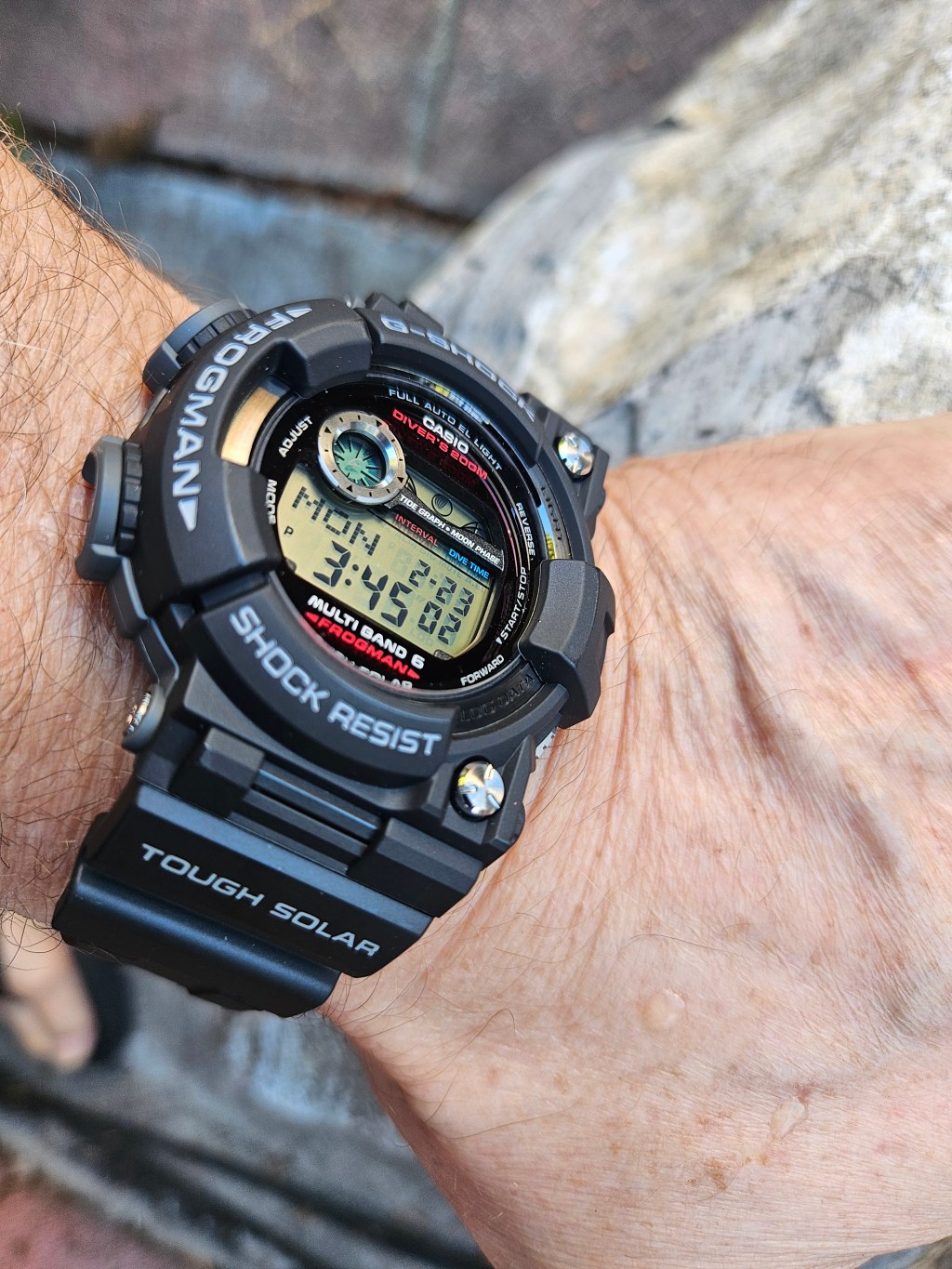
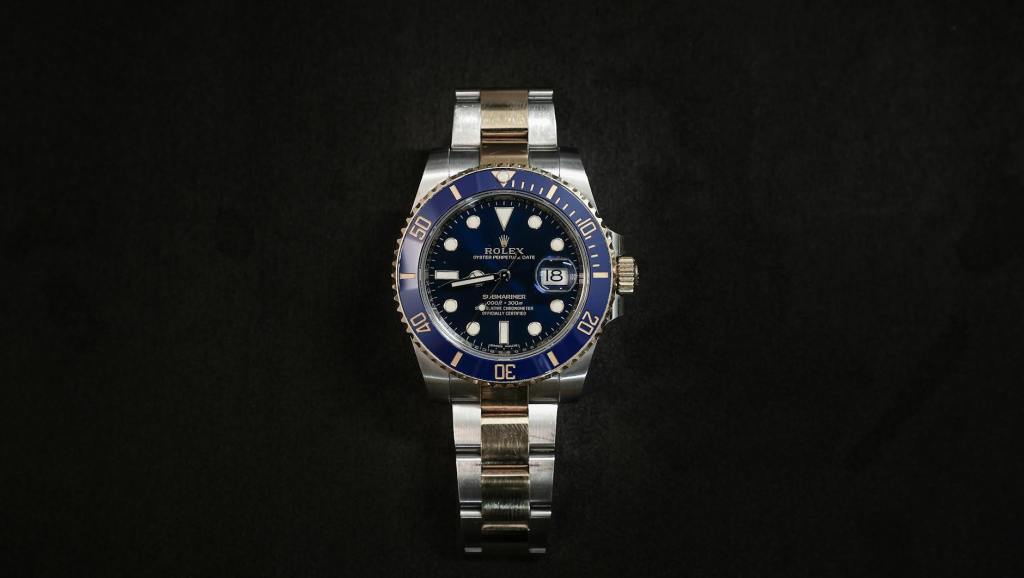
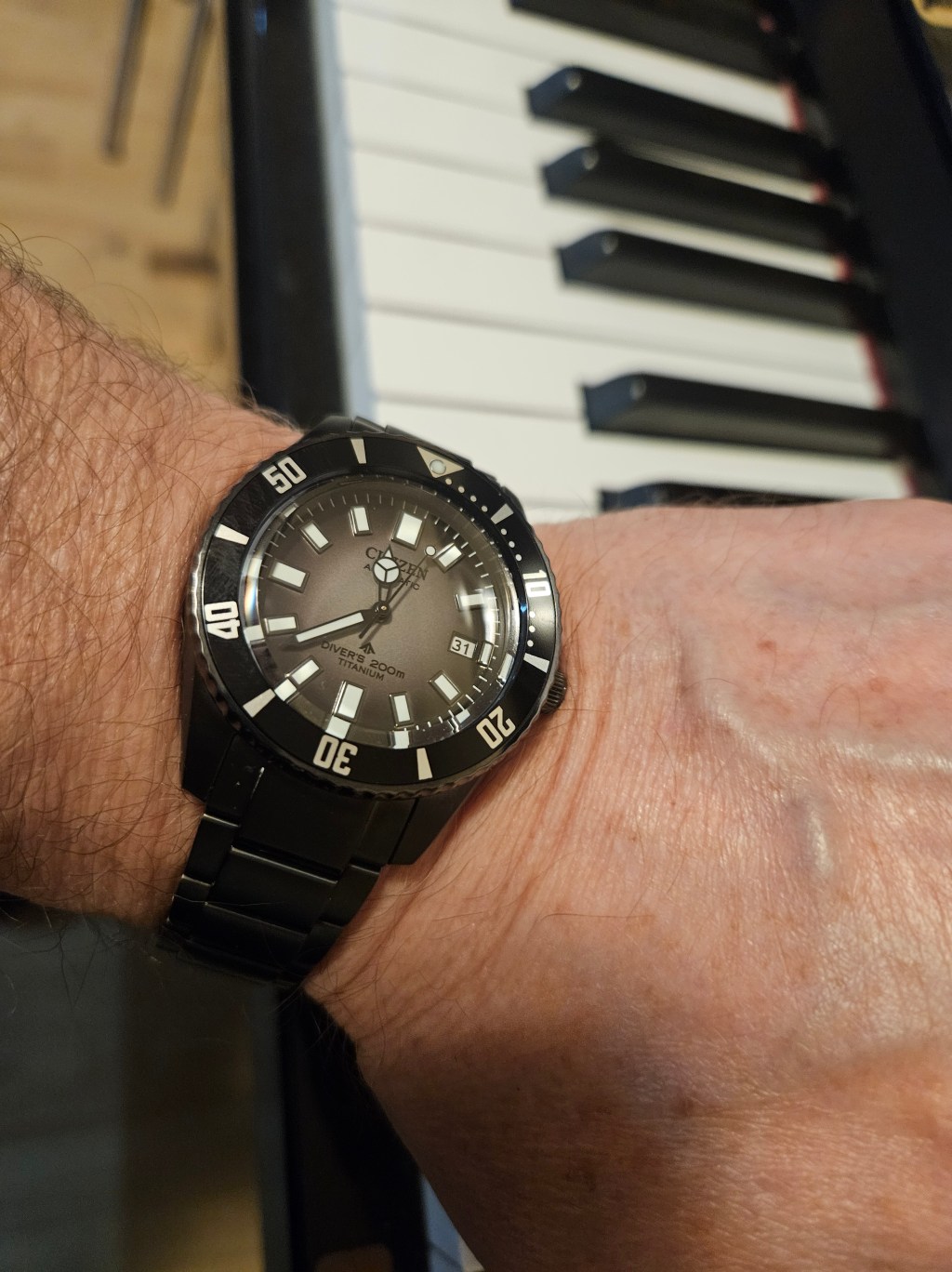
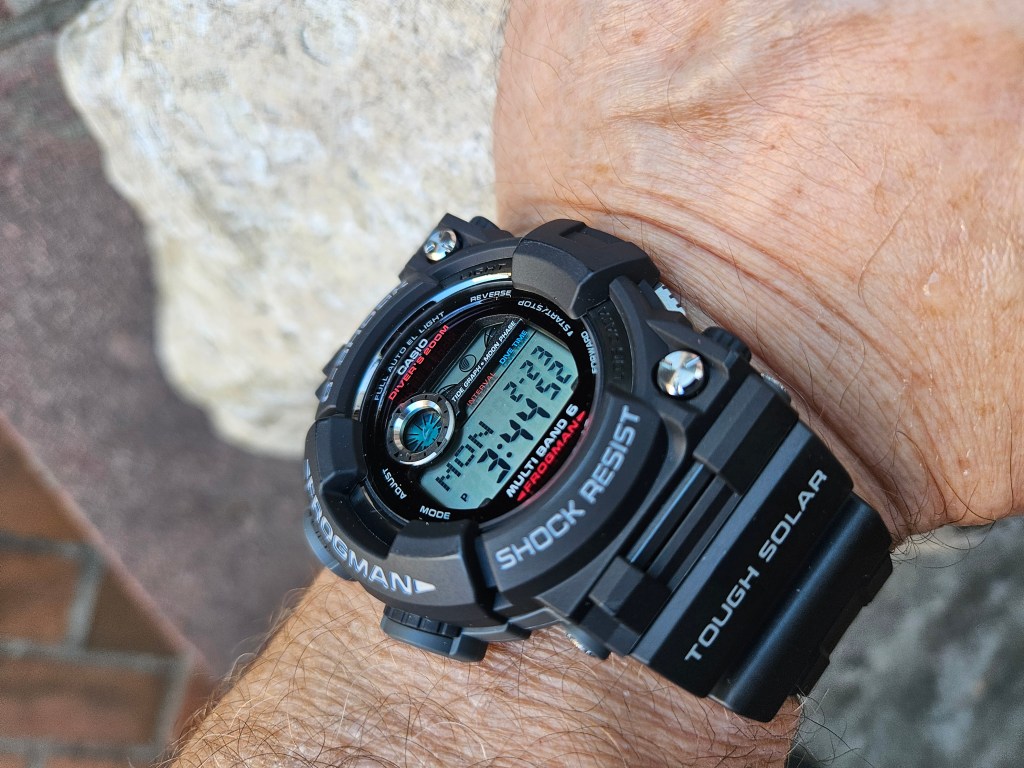
    For over a decade, my YouTube channel orbited around my watch obsession. That obsession gradually narrowed until it became monastic—just diver watches, all on straps. I convinced myself that a collection larger than seven would doom me to spiritual ruin. I also stopped flipping watches like a Wall Street day trader, deciding it was bad for my mental health. That slowdown siphoned the manic energy that used to fuel my videos. The creative rush didn’t vanish—it simply rerouted into blog posts about my newest fixation: alignment. Or more precisely, misalignment.

    Because if I’m honest, I feel increasingly out of sync with the modern world. I adapt to new technology at the pace of continental drift. TikTok bewilders me. Smartphones offend my thumbs. Driving at night now feels like a scene from Apocalypse Now. My relevance, visibility, and patience are fading in a culture that worships youth and touchscreens.

    My anxieties about self-worth and mortality are now on the front burner, while watch collecting—the “Watch Potency Principle,” the “wrist-rotation anxiety”—has been moved to the back burner where it is simmering to a lukewarm stew.

    To illustrate my current state: two weeks ago, I bought a new LG OLED TV, which was fine—until I broke two Samsungs in one day trying to move them. I manhandled the first 55-inch like it was a kettlebell, frying half its pixels in a single jerk. Then I jammed my thumb straight through the second screen while relocating it from my daughter’s room. My wife, the household adult, had to carry the new Roku replacement into our bedroom as I stood there looking like a Neanderthal who’d just discovered electricity—and promptly electrocuted himself.

    My war with technology didn’t end there. The new garage door opener came with instructions written in a dialect of cruel mockery. The installer vanished without explaining how to sync it with my phone, so my wife once again had to step in and figure it out. Now I open the garage door through an app, and every time I hear the alert that the door is moving, I step back in awe—half-terrified, half-mesmerized—like a caveman who’s just invented fire.

    I feel both too old for this world and too infantile to function in it. A man-baby marveling at his gadgets, bewildered by his own house. Think about that. My house has become a museum for technology of the future while I wander through it like a mesmerized tourist. My mouth is agape and my daughters say to me, “Relax, Dad, this is our house.” I respond by saying, “No it’s not. It’s a museum of strange and wonderful things that I don’t know how to use.” 

    These are the moments that give me content for my blog Cinemorphosis. I post almost daily, while it takes me weeks to metabolize these experiences into something coherent enough for a video essay. Writing helps me think; filming helps me pretend I’m still current.

    So that’s my current state of affairs. This channel used to be State of the Watch Collection. Now it’s more like State of the Man Who Can’t Sync His Garage Door Opener.

  • Caveman Meets Garage App

    Caveman Meets Garage App

    In March 2005, at 43, I was besotted with my Classic iPod and its holy clickwheel. It took a minute to learn how to tether it to desktop iTunes and wrangle my playlists (mostly podcasts), but I did it without pestering my wife, and I was proud. A newer iPod arrived soon after; I refused to learn its tricks. Once I master a gadget, it becomes my comfort zone—I’d rather live there than relocate.

    I listened to podcasts all night and during post-workout naps. My life felt archived in that iPod, which—ridiculously, wonderfully—made me feel plugged into the modern world.
    My wife, less sentimental, declared it obsolete. The future was smartphones. I recoiled. They looked like bricks of chaos—apps, updates, notifications—houseplants with demands, only worse because I had to squint at ant-sized text.

    By 2014, I still clung to the iPod. It wasn’t cheap loyalty: the headphone jack snapped about once a year, and I’d pay $70 at the local shop to resurrect it. Then September 2014 arrived, our twin daughters started preschool, and my wife insisted I get a smartphone—for school runs, doctor visits, playdates. Texting was essential; parenthood demanded it.

    So I pried my fingers off the fossil and bought a Galaxy S4 at Costco. To my surprise, downloading podcasts was blissfully easy. As a podcast machine, the phone was a star. Everything else? Lame. I hated watching tiny videos, reading tiny text, and spelunking for apps. The phone became a super-iPod; the rest of its features were just extra chaos. Texting was torture—my fat fingers whacked the wrong letters, and I backspaced my way through tedium. I barely used the thing except for podcasts. My wife envied my perpetually 90% battery; to console her, I’d brag that after an all-night podcast binge I dropped to a shocking 80%.

    Yes, smartphones are addiction machines that track, nudge, and strip privacy. True. But I only use a sliver of their powers because the tactile experience annoys me.

    Part of me resents the smartphone for killing the rotary landline. That dial’s ratcheting click felt like reciting a secret code to open a cave. Beige, avocado, mint green, custard—those phones had heft that implied quality, with long, flexible cords that snaked across the room. Conversations were events; an ear would grow tender and force the ritual mid-call ear swap. Now the landline is dead—and so, largely, are conversations, replaced by texts and emojis. Speed and convenience exacted their toll: degraded communication, which means degraded friendships.

    Cory Doctorow gave us enshittification—how tech optimizes itself into garbage. I’d love to say that’s why I resist. But that’s too pat. I’m simply slow to adapt. Incompetent with new tools. My memory refuses the steps; I have to re-teach myself, again and again.

    Recently, my wife synced my phone to our garage door. A week later, I tapped the app and watched the door rise, gawking like a caveman who just discovered fire and is already imagining a barbecued brontosaurus rack. It’s a good trick. I still keep Genie remotes in the house and car as backups, but the phone option is lovely. This isn’t enshittification; it’s the opposite—unsuckification. Some things that used to suck don’t have to anymore.

    In fact, I’m eager for toilet + AI matrimony: a throne that reads biomarkers, prescribes medication, screens like a colonoscopy, and spares me the waiting room. I’m also rooting for a custom GLP-1 patch that recalibrates appetite so a morning bowl of porridge with protein powder—and another in the late afternoon—actually sates me. Easy weight management, better markers, minimal dishes.

    All of this is part of the unsuckification project.

    I’ll admit it: I’m older, I resist change, and new tech gives me a headache. But if modern tech can spare me a colonoscopy, open heart surgery, and the indignities of being twenty pounds overweight, then sign me up. 

  • Comparison Is the Mother of Misery

    Comparison Is the Mother of Misery

    The mother of misery is comparison. In fourth grade I plunged into despair because I couldn’t draw like Joseph Schidelman, the illustrator of Charlie and the Chocolate Factory. About the same time, baseball humbled me: my bat speed wasn’t in the same galaxy as Willie Mays, Dick Allen, or Henry Aaron. In my teenage bodybuilding years, I had muscles, but nothing like that of Arnold Schwarzenegger, Sergio Oliva, and Frank Zane; I wisely retired the fantasy of becoming Mr. Universe and managing a gym in the Bahamas. In college, as an aspiring intellectual, I flogged myself for lacking Vladimir Nabokov’s wit and velocity. My chances of becoming a famous novelist were equal to my odds of winning Mr. Olympia. Later, when I flirted with composing and singing, I heard Jeff Buckley’s soul pour through the speakers and realized my voice would mainly trigger a neighborhood dog-barking contest and a chorus of angry neighbors. Decades passed. My classroom persona faced a generation handcuffed to smartphones and ChatGPT. I scrambled for “edutainment” tricks to dodge irrelevance, but the gap widened no matter how I danced.

    The sting doubled when I watched Earthquake (Nathaniel Stroman) flatten an audience with a preacher’s cadence and bulletproof wisdom. His special Joke Telling Business left me muttering, “If I had Earthquake’s power, I could resuscitate my teaching career and stroll into old age with a shred of dignity.”

    Meanwhile, fresh incompetencies arrived like junk mail. I broke two Samsung TVs in one day. I failed to sync my new garage door opener to my phone. My wife had to rescue me from my own maladroit tech spiral. The result was predictable: I was condemned to the Shame Dungeon.

    Down in the basement of depression, I noticed another casualty: my YouTube channel. I usually post once a week and have for over a decade—mostly about my obsession with diver watches. But as sanity demanded I stop flipping watches, I ran out of new divers to discuss. I tried pivoting—open with a little watch talk, then segue to a wry misadventure with a morsel of human insight. If I nailed the landing, I’d get a few thousand views and enough comment energy to believe the enterprise mattered.

    But with my sixty-fourth birthday closing in, the doubts got loud. I don’t want to do “watch talk,” and I’m too mortified to perform a perky, self-deprecating monologue about my misalignment with the universe.

    I keep hearing Mike Birbiglia in my head: you must process your material before you present it; the set has to be a gift, not your live catharsis. The healing happens before you step onstage. You speak from the far shore, not mid-drowning. Otherwise, you’re asking the audience to be your therapist.

    So I’m stuck at a fork: Will this current fear and anxiety about age and disconnection pass through the refinery of my psyche and emerge as something worthy? Or will I remain in the Shame Dungeon, comparing myself to Earthquake, and decide that with talent like his prowling the earth, my best move is to hide under a rock?

    Here’s the dilemma plain: Hiding isn’t viable; it starves the soul. But serving the world a plate of unprocessed mediocrity is just as unforgivable. If I’m going to tell a story about breaking two TVs and my garage-opener meltdown, I have to deliver it with Earthquake’s power and confidence. Otherwise I’ll stay home, mope on the couch, and binge crime documentaries—losing myself in bigger, cleaner tragedies than my own.

  • The Sycophant Parade That Followed Charlie Sheen

    The Sycophant Parade That Followed Charlie Sheen

    I’ve got nothing against Charlie Sheen, which makes it stranger that I’ve never actually seen him act. Not a single episode of Two and a Half Men. Not one Charlie Sheen film. When I see his face, I think of a sensibility I avoid on sight: handsome, cute, smarmy—smirk plus wink. That brand of humor feels predictable and annoying. And yes, I admit the obvious contradiction: since I’ve never watched him, I can’t swear the schtick is real. Call it intuition—enough to keep me away.

    What did reach me was the public meltdown—what I remember as the “Tiger Blood Tour”—where addiction didn’t deliver humility but its opposite: bluster so loud it became a punchline. 

    So out of mild curiosity I watched the two-episode docuseries aka Charlie Sheen, and left neither admiring nor loathing him. Mostly, I felt sad—for him and for his family—because he seemed to have no guardrails, no one capable of stopping the wrecking ball before it knocked down everyone nearby.

    The most disturbing part isn’t Sheen; it’s the swarm. The morally bankrupt enablers, the sycophants, the fans who latch onto his fame and power as he self-destructs. At peak collapse they fed on the trainwreck like zombies on a buffet line, dressing in his party uniform, cheering as he staggered on and off private jets, becoming an intoxicated parody of himself. Love? Concern? Not in evidence. The meltdown was entertainment—an addictive feast for empty lives. My biggest challenge watching wasn’t parsing Sheen; it was resisting misanthropy.

    There is, thankfully, a pulse of humanity. Sean Penn, a childhood friend, offers wise, sobering context about Sheen’s volatility; so do Terry Todd and Sheen’s older brother Ramon Estevez. But watching Sheen narrate himself from a diner in Hawthorne, California is only partially satisfying. The charm flickers, the unease shows, yet the self-analysis feels shallow—short on the rigorous introspection required to grapple with the demons that keep derailing him.

    I left with the sense that his family and friends have been doing the heavy lifting for years—like he hasn’t had one life coach but several dozen—while he sits in a booth, reminiscing about the agony of being an artistic genius with impulses mere mortals can’t grasp. Whatever sobriety he’s achieved, he still reads as weakened and impoverished by the same consuming egotism that keeps baring its fangs.

  • Eternal Embarrassment

    Eternal Embarrassment

    Nietzsche imagined hell as reliving your life on loop—eternal recurrence. A demon forces you to endure every joy and misery again. Let’s revise the experiment: not your whole life, just the embarrassing parts on repeat. Eternal embarrassment. If that isn’t the full biography, it’s certainly old age. You no longer fit the world. Your butt shrinks; belts stop doing their job. Cheeks sag. Your neck goes a little fleshy. Your interior vocal editor—never stellar—finally quits, so you talk more than anyone asked for, mostly about how cold you are and how the TV volume is too low. You’ve slowed down, and the world—amped on Red Bull—won’t wait.

    In two weeks, I broke two Samsung TVs, failed to sync my phone with the new garage-door opener, threw an infantile tantrum, and my wife had to bail me out. She could have gone full prosecution; instead, her annoyance was tempered by pity. She saw me trying—earnest home-improvement flailing—and, when I stumbled, she picked up the pieces. I was left embarrassed and nursing a small crisis of confidence.

    So I went hunting for redemption. My family had been grumbling about dinners. Thursday’s Caesar-with-chicken-skewers had overstayed its welcome; they wanted better lunch ingredients—better bread, meats, cheese, and more interesting condiments. As the designated Saturday Trader Joe’s runner, I sat at my computer, family gathered around, actually listened, and updated the list like I was drafting a treaty.

    Next morning—Saturday—I launched my ritual at Hawthorne and Del Amo, a tradition I’ve upheld with the zeal of a cultist for twenty-two years. Grocery shopping isn’t a chore; it’s a military operation. My $350 haul is executed with Navy SEAL precision. Delays, obstacles, small talk? Enemies of efficiency. Armed with the evolving list, I dart through aisles like I’m on Supermarket Sweep, a stopwatch ticking in my skull. 

    That morning, I stepped out of my gunmetal gray Honda, I caught a reflection in the store window—an angle so unforgiving it announced, We’ve had one too many second helpings. I looked away. Denial is cheaper than therapy. In my mind I’m a sleek, youthful me—190 pounds of toned potential, not the spectacle of a 225-pound man auditioning for the Dad-Bod Calendar.

    Inside, my confidence was restored. The staff knows me; they greet me with the friendly heckling reserved for clockwork regulars. If I show up off-schedule, they act like I’ve survived a plane crash. One cheeky clerk calls me the “Larry Csonka of Trader Joe’s.” I play along: “There’s been a Larry Csonka sighting in aisle five.” The rapport was golden—until The Incident. The shelf was barren of unsweetened soy milk—the only plant milk with actual protein. I spotted Mary, the assistant manager, stocking canned goods. I asked, politely, if there was soy milk in the back. She said she’d check, then resumed stacking cans like bullion. Assuming she’d forgotten, I quietly asked another employee to check. Fatal misstep.

    By the time I looped back with bread and pastries, Mary had stocked the soy milk—and wore a look that said I’d insulted her canned-goods ethics. In that instant, I crossed the border from beloved regular to pushy customer. Two decades of goodwill, spilled across the linoleum for a stupid carton of soy. If I could time-travel, I’d go home and order a case of Edensoy on Amazon. Once, I entered like Larry Csonka at a Super Bowl parade; now I skulked, head low, list clutched like a last shred of dignity.

    Trader Joe’s was supposed to be my safe space, but I botched it—just like the “simple” garage-door purchase. Simple things kept flowering into fiascos. I was busy processing shame and embarrassment when Nietzsche drifted back in: eternal recurrence. Except my condition was worse. Who needs to replay old humiliations when fresh ones keep arriving on the conveyor belt?

  • The Garage Door Incident and the Fight with Balrog

    The Garage Door Incident and the Fight with Balrog

    Most people paddle along. We don’t have all the answers, but we keep the canoe upright. If you’re like me—diagnosed with low-grade depression, dysthymia—you brave forward and maintain emotional homeostasis by doing your duty to yourself, your friends, and your family. You exercise. You eat right. You post milestones on social media and affirm the tribe’s values, harvesting likes like daylight vitamins. You save for a rainy day.

    That’s what I did. So when the garage door opener finally died after twenty-five years, I called the repair company that had been nursing it for a decade and paid a thousand dollars for a replacement. The tech arrived—mid-thirties, dark blue baseball cap, beard, sunglasses—affable and chatty. We covered carne asada tacos, the garage door racket, and daily protein quotas. In under an hour he had the new Genie humming. And yet: the in-house wall button turned into a ghost button (opens nothing, closes nothing); he issued only one new remote, leaving my wife remote-less; and he didn’t sync the unit to the Genie app. “Easy,” he said, packing up. “Just follow the directions.” Then he vaporized.

    For the next two hours, I tried to enter the unit ID and sync via Bluetooth. Problem: the buttons weren’t labeled, the manual’s diagrams didn’t match my unit, and the app’s pictures didn’t match either. I called my neighbor Joe. He said the same company had given him two remotes—minimum. “Did you already pay?” he asked. “Yes.” “You blew it. He should’ve synced your phone before he left. You’ll never see him again.” I protested that he seemed nice. “He’s gone, dude.” Then, after a long pause: “Call and demand they come back—and threaten a bad Yelp review.” I phoned the tech; he said he’d try to fit me in “tomorrow,” which I translated as never. The company promptly sent me a link to post a Google review. I wrote a calm, three-star warning: skilled install, but details ignored; don’t pay until the phone is synced and both remotes are in hand. I pasted the same on Yelp. Not spiteful—just a PSA. And then the shame arrived like a stomach punch. I felt as if I’d betrayed him—though he’d arguably betrayed me. Why was I ashamed? Because I felt stupid for failing at the sync.

    ChatGPT didn’t rescue me, and the failed DIY made me feel worse—ashamed and anxious. Getting the garage fully functional had become a talisman for my emotional homeostasis. Without it, I began to tilt into the abyss. My wife came home from her middle school job; I explained the mess. She said she’d help later—first, a mountain of paperwork. I tried to stay quiet but kept circling back to the tech’s “betrayal.” My posture turned desperate and wounded; the tension thickened. She retreated to the bedroom to grade and watch TV. She wanted nothing to do with me. I don’t blame her. I’d become an emotional siren labeled The Garage Door Incident.

    The next day the tech never called. My wife, apparently an engineer in a former life, pulled off the white plastic cover on the unit, found the Bluetooth button, and synced our phones. She also programmed the second remote I’d bought on Amazon. She fixed everything the tech didn’t. I thanked her. She answered—kindly, but surgical—that I’m like her sixth-graders: no patience; I want the world to stop until my problem is solved. When I spin out like that, she needs distance. I nodded. Fair.

    That was three days ago. Since then, something has shifted. I’ll call it a Balrog Moment: Gandalf and the demon in Moria, the bridge cracking, both plunging into darkness. My shame—for incompetence, impatience, and those two negative reviews—shook my homeostasis. I dropped into a shaft of depression, self-doubt, and nihilism. My paddling rituals—coffee, workouts, piano, posting pungent morsels on social media, even drafting my biting book Speedos at Sunset: How Not to Age Gracefully in Public—suddenly felt flimsy, even ridiculous.

    This morning, staring into that abyss, I decided not to look away. The loss of homeostasis—the Balrog Moment—is the marrow of the book. The pain is vast; it drowns, it devours, it cross-examines everything I am. I’ve been sucked into a vortex of nihilism and self-doubt, and yet here I am, hunting for tools to claw back dignity, rebuild self-confidence, and find alignment in a world that keeps knocking me off center.