Tag: life

  • Last Car Syndrome

    Last Car Syndrome

    I was nearly sixty-four, four decades of teaching college writing having corroded whatever patience I once had, and I found myself drowning in self-disgust. My life, once measured in lectures and essays, had narrowed to a single, grotesque question: Camry or Accord? I fretted over it as if I were choosing a confession—Catholic or Presbyterian—with my eternal soul dangling over the dealership lot. The absurdity didn’t escape me. I had real problems: blood markers creeping upward, a rotator-cuff tear ruining kettlebell workouts, bedrooms that needed painting, twin daughters who needed driver’s training, retirement forms stacked like little gravestones, and the scramble to joint bank accounts so my younger wife wouldn’t face probate nightmares. And yet I could not stop watching YouTube reviews and refreshing Reddit threads that compared the new Camry to the Accord.

    I vacillated like a madman.

    Driving to pick up the girls from high school, I’d spot an Accord and sigh: “Ah, the Accord EX-L in Canyon River Blue. Very peaceful. Not a bad car to die in.” A second voice—practical, bored—would snap back, “It’s a car, not a coffin, dummy!” So I’d argue with myself: “But this will be the last car I ever buy. Surely it is my Death Car.” “God, you’re morbid! How can I live with you? Get away from me!”

    The next day I’d see a Camry SE in Heavy Metal and melt. “Look how it fits that color—everything’s right. Under thirty-three K and it feels Lexus-adjacent.” My inner realist would applaud the improvement: “At least you’re not talking about death. Progress.” Then the skeptic: “But the Accord is quieter. I need quiet. And the Accord dealership is walking distance—drop it off, walk home. That’s handy.” Followed by doubt: “Wait—people say the new Accord looks like a Ford Taurus. Can I live with that kind of ridicule?”

    It went on and on. My wife learned to read my posture: the slight slump, the hand rubbing the back of my neck—the tell that I was about to launch into Camry-Accord hell. She would cut me off before I even opened my mouth: “Stop right there, buster. I don’t want to hear it. Just make your damn decision!”

    For a while I wallowed alone in the torment.

    Then one morning I woke up and declared I didn’t need a car at all. I’d driven, on average, three thousand miles a year for the last decade—hardly the mileage of a man who needed a shiny new vehicle. The decision felt radical: my daughters could take the older Accord, my wife the newer one, and I’d borrow a car when necessary. No purchase. No shiny new vehicle gathering dust like a suburban reliquary in the garage. Why buy something to admire between piano practice and Netflix binges? I told myself the choice was genius. 

    But after snacking on a virtuous bowl of buckwheat groats with unsweetened soy milk, banana slices, pumpkin seeds, cinnamon, and a dash of manuka honey, the energizing snack snapped me out of my delusion.. Suddenly the whole farce of my deliberation looked naked: I was suffering from Last-Car Syndrome: the unconscious understanding that in my mid-sixties, my next car purchase was essentially my Death Car, so I avoided the purchase like I avoided death. 

    Fortified by my power breakfast, I stood up, chest puffed like a man claiming moral clarity, and barked at the ceiling, “Who am I kidding? I’m buying a new car. I deserve it.”
    So now it’s only a scheduling question—six months from now, or next week.

  • The Camera, the Angel, and the Mantra

    The Camera, the Angel, and the Mantra

    Last night I dreamed I was drifting up the coast with my twin daughters, sermonizing like a broken record: There is a physical world and there is a spiritual world. I said it so often I sounded like a street preacher who’d lost his pamphlets but kept his conviction.

    We stopped at a retreat, the entrance nothing more than a ladder plunging into a meadow. Down we went, rung by rung, my mantra trailing after us like incense: physical and spiritual, spiritual and physical.

    In the meadow stood an angelic blonde, late teens, all halo and camera gear, fiddling with a tripod as if she were about to capture the resurrection. Beside her was her younger brother, a sweet kid who instantly bonded with my daughters—proof that love doesn’t check the itinerary before showing up.

    I told the angelic sister this was an inconvenient day for romance, since we were traveling north to find the rest of our family. Still, watching affection bloom like an invasive weed, I conceded we might linger a little longer. My daughters, I suggested, could teach her brother the finer points of philosophy, relationships, and all the grand illusions we adults mistake for wisdom. She nodded, grateful, and asked where we were headed. I repeated: north, always north.

    Her camera squatted in the grass, looking familiar—something from an earlier chapter of the dream, mediocre at best. I bit my tongue rather than insult her equipment, repeating inwardly my refrain: The world is both physical and spiritual.

    Meanwhile, my daughters and the boy turned the ladder into a playground, climbing and descending until their thighs grew visibly muscular—an anatomical exclamation point underscoring my point. The body is flesh, the soul is fire, and the dream was happy to remind me of both.

  • The Death Car Dilemma: How One Man Escaped the Camry-Accord Abyss

    The Death Car Dilemma: How One Man Escaped the Camry-Accord Abyss

    At nearly 64, with four decades of college writing instruction corroding his patience, Aiken Riddle found himself drowning in self-disgust. His life, once measured in lectures and essays, had shrunk to a tormenting question: Camry or Accord? He obsessed over the choice as though he were deciding between Catholicism and Presbyterianism, his eternal soul dangling in the balance. The absurdity wasn’t lost on him. He had genuine problems—blood markers creeping north, a torn rotator cuff ruining kettlebell workouts, rooms that needed paint, twin daughters who needed driver training, retirement forms stacked like gravestones, and joint bank accounts to secure before death turned his finances into a probate nightmare for his younger wife. Yet he couldn’t stop watching the YouTube videos and Reddit pages comparing the new Camry and Accord. 

    He vacillated like a madman.

    One day while driving to his twins’ high school to pick them up, he would see an Accord and would say to himself with a sigh, “Ah, the Accord EX-L in Canyon River Blue. A very peaceful color. Not a bad car to die in.” Then another voice would say, “It’s a car, not a coffin, dummy!” Then he’d retort: “But this will be the last car I ever buy. Surely, it is my Death Car.” Upon which he’d rebuke himself, “God, you’re morbid! How can I live with you? Get away from me!”

    Then the next day while picking up his girls from their school, he’d see a Camry SE in Heavy Metal and would say, “Ah, the Camry seems to be made for that color. Everything fits perfectly. Plus for under thirty-three K, I’m getting a taste of Lexus.” Upon which his other self would say, “At least you’re not talking about death. That’s an improvement.” Then he would say, “But the Accord is a quieter ride. I need quiet. Plus, the Accord dealership is walking distance away. I can drop off the Accord and walk home. That tips the advantage to Accord. But, wait, people are saying that the new Accord body style looks like an old Ford Taurus. Can I live with such ridicule?”

    Over the ensuing days, he would go back and forth. It reached the point that his wife could tell by his body language that he was about to talk about his Camry-Accord dilemma and she would interrupt him even before he opened his mouth: “Stop right there, buster! I don’t want to hear it. Just make your damn decision!”

    So he was alone in his torment. 

    One day he woke up and said he didn’t need a car. He calculated that for the last decade he had only driven three thousand miles a year. That hardly merited getting himself a new car. The decision was final: His daughters would take the old Accord and he’d give the newer one to his wife. He would simply borrow their cars when he needed them. 

    The decision was genius. He would not be less obliged to drive when he felt his driving skills had compromised over the last decade. He was by nature a recluse. His decision to not buy a car helped his cause. Why spend forty thousand dollars so I can behold a rarely-driven car in my garage before returning to the living room to play the piano or watch Netflix?

    He learned that sometimes a decision is not either/or. There is sometimes another option, and not getting anything can be the best one of all.  

  • Pleasure Island with Humidity: My Obsession with It’s Florida, Man

    Pleasure Island with Humidity: My Obsession with It’s Florida, Man

    I find myself embarrassingly smitten with It’s Florida, Man on HBO Max, a six-episode documentary romp that most critics dismiss with a shrug. The Hollywood Reporter’s Daniel Fienberg summed it up with clinical indifference: “The premise is very straightforward. Each half-hour recounts a real-life mishap of the kind that helped Florida develop its national reputation as a meme in state form . . .”

    Fienberg is right about the meme, but he undersells the spectacle. Florida isn’t just weird—it’s a hallucinatory soup pot where the heat never turns down. A bubbling Bouillabaisse of runaways, con artists, half-baked dreamers, and humidity-pickled misfits; the broth gets richer, stranger, and more intoxicating by the hour. Novelists like Carl Hiaasen dip their ladles in and remind us with glee: “You couldn’t write this if you tried.” Comedian Marc Maron, who has roamed the continental madhouse, concurs: there is no asylum wing quite as deranged as the Sunshine State.

    The final episode, “Mugshot,” is my favorite. A wanted man from Pensacola turns into a social-media celebrity after his mugshot detonates across Instagram. The local police, suddenly auditioning for daytime television, turn their manhunt into a Jerry Springer-style circus, complete with suspect-shaming and moral squalor masquerading as civic duty. You couldn’t script it unless you were drunk, desperate, and willing to risk being fired by HBO for turning in satire disguised as reportage.

    As a college writing instructor, I confess I watch shows like this with an ulterior motive: I’m always looking for essay prompts hidden in the wreckage. It’s Florida, Man practically delivers one to my desk, gift-wrapped in neon: “Freedom and its Discontents.” Not the noble kind of freedom—what philosophers used to call “freedom for”—where self-discipline leads to self-agency, flourishing, and mastery, the Cal Newport variety of cultivated freedom. No, Florida, Man wallows in the basement: “freedom from.” Freedom from the Id, from restraint, from consequence, from sobriety. It’s Pleasure Island on a peninsula, and the longer you stay the faster your ears sprout into donkey ears, your voice degenerates into animal brays, and your dreams curdle into swamp gas.

    It’s Florida, Man isn’t just entertainment. It’s anthropology of the grotesque, a front-row ticket to America’s most unruly carnival, where freedom is mistaken for license and the monsters are very much real.

  • On Watches, Aging, and Invisibility

    On Watches, Aging, and Invisibility

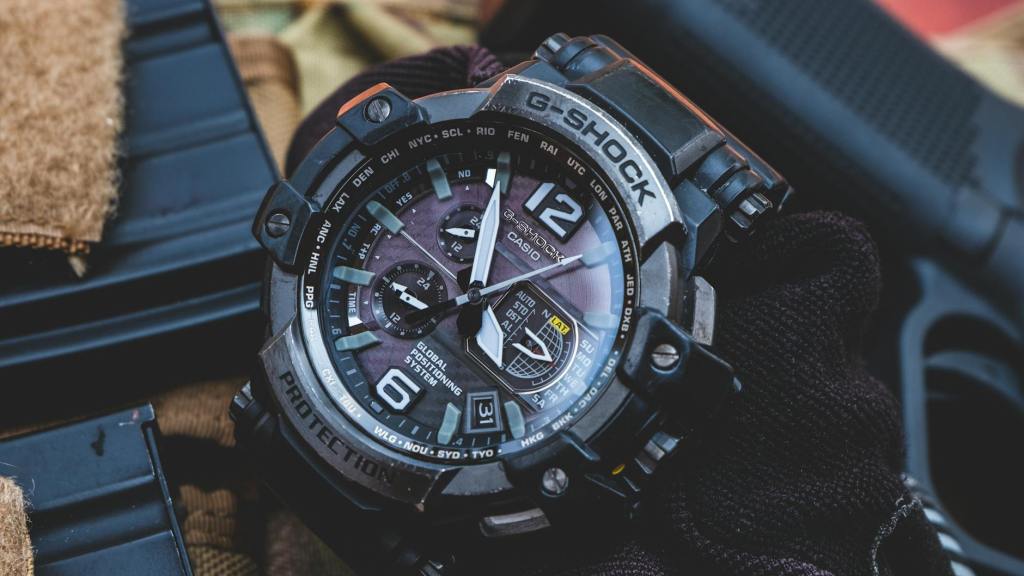
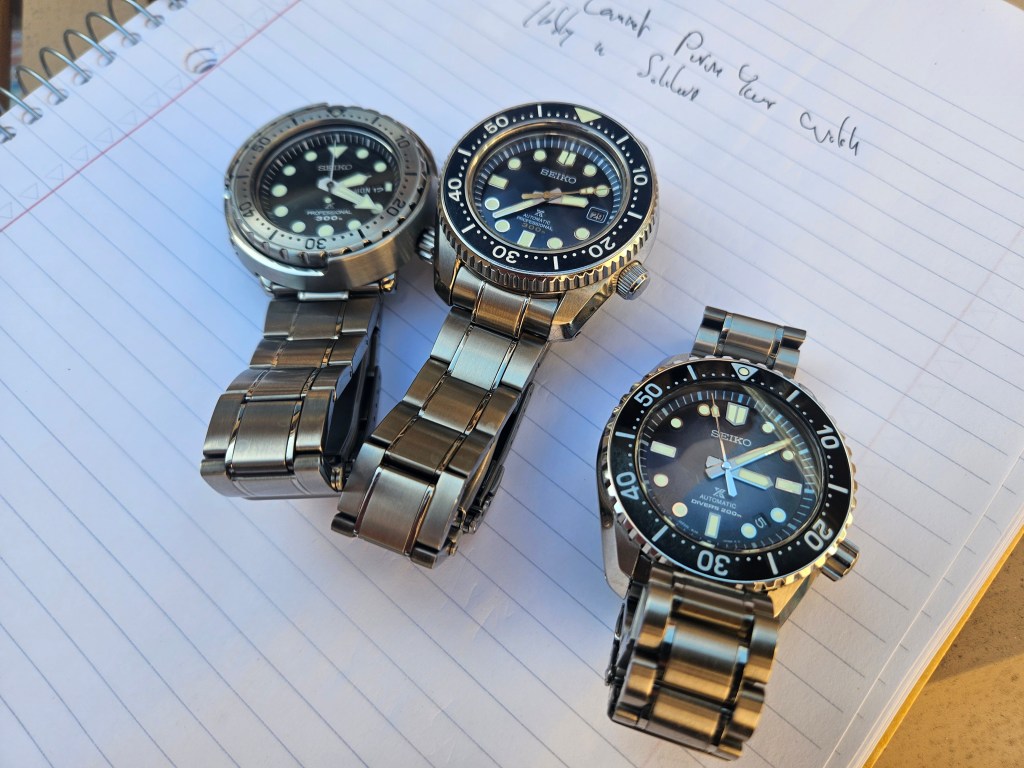
    Today I strapped on my Seiko Tuna diver, a hulking slab of steel that announces itself the moment you walk into a room. I don’t exactly want the attention, but let’s be honest: the watch is a radar blip that keeps me from fading into the wallpaper, just another suburban relic limping through the final trimester of existence.

    This fear of invisibility gnawed at me after my cousin Pete’s 75th birthday party in Studio City. His brother-in-law Jim, a retired ophthalmologist at 77, leaned in and muttered, “The worst part of aging is people stop seeing you.” Those words have been rattling around in my skull ever since. Old age, it seems, is less about wisdom and more about turning into a frayed recliner everyone resents but no one wants to haul to the curb.

    I’ll be 64 soon, and I know the rules: Father Time has a master plan, and it doesn’t include my vanity. Sure, you can still play piano with arthritic fingers, hike with a knee brace and a back girdle, and keep a smartwatch ready to call in helicopter rescue if you tumble into a viper-filled canyon. But invisibility is baked into the contract. You can fight it with kale salads and kettlebells, but in the end, your processor slows, your refresh rate lags, and the world swipes past you at 5G speed.

    Take the Samsung QLED my wife bought at Sam’s Club in 2021. Four years later, the picture is fine, but the processor is a fossil. Menus freeze, apps take two minutes to load, and the whole thing wheezes like a Pentium II running Windows 11. Samsung cheaped out on the chip, and now I’m stuck with a dinosaur. My solution? Upgrade to an LG OLED, not because I need perfect pixels, but because I want a TV with an AI 4K processor that doesn’t choke when I click Netflix. The irony isn’t lost on me: I’m furious at Samsung for selling me a laggy processor, yet here I am, trudging through life as a laggy processor. My younger colleagues adapt to new tech in a snap; I freeze and buffer. I’m a Boomer Samsung in a Gen Z OLED world.

    Nature is no kinder than tech. Watch the documentaries: Scar the lion rules the pride until Skip, the younger challenger, finally takes him down. Scar hobbles into the brush, invisible, forgotten, licking his wounds. That’s the arc. You don’t argue with it; you acknowledge it, maybe laugh about it, then go buy a $50 German Chocolate Cake at Torrance Bakery and eat the whole delicious thing. Because if invisibility is inevitable, you might as well go out with frosting on your face.

  • Exit Stage Left: A Teacher’s Final Act

    Exit Stage Left: A Teacher’s Final Act

    I’m fewer than four semesters away from retirement—June 2027, the final curtain—and I’d be lying if I said I wasn’t scared. For nearly forty years I’ve worn the armor of a college classroom persona: bigger, bolder, more disciplined than the fragile, fumbling man who hides inside. Teaching gave me a stage and a referee’s whistle. Without it, who am I? Just the broken man-child without a supervisor, left to his own devices.

    During the pandemic, when colleagues were clawing to get out, I puffed out my chest and declared I was born ready for retirement. I pictured myself a disciplined Renaissance man: mornings at the piano, afternoons writing, evenings lifting kettlebells in the garage, book in hand before bed. A gilded schedule, as though I were independently wealthy. Now those boasts feel like hot air. Structure is one thing. The man animating that structure is another. In the classroom, the stakes were high: thirty pairs of eyes asking, Are you boring? Do you know what you’re talking about? The pressure kept me sharp, funny, and, occasionally, wise. No one lets you coast when you’re trapped under fluorescent lights for two hours with judgmental twenty-year-olds.

    Bitter irony: I’m leaving just as I finally got it right. It took me decades to balance theater with approachability, to drop the drill-sergeant persona that once scared students into silence, to actually build a classroom where people learned and laughed. Now I can scaffold essays like an architect and coax timid students into crafting arguments brick by brick. And just as the machinery is humming, I’m stepping offstage. Melancholy doesn’t begin to cover it.

    And then retirement makes you pay with loads of endless paperwork. Work forms that warn you that you cannot rescind your decision. Medicare forms with their cryptic alphabet soup (A, B, C, D), switching to my wife’s insurance, navigating private plans that read like IKEA instructions translated from Martian. I’ve joked I’d rather do faculty assessment reports than wrestle with retirement forms, and I meant it.

    Meanwhile, time itself heckles me. I’ll be sixty-four in six weeks. At my cousin’s seventy-fifth birthday, the guests—all seventysomethings—mingled like ghosts of futures to come. One cousin, seventy-eight, told me that old age makes you invisible. You still occupy space, but people’s eyes skip over you, as if you’re furniture. Old age is rude like that: the world resents you for hogging resources after your best years are spent. You should apologize for existing. Step aside, old man.

    So here I am, staring down a three-headed monster: paperwork, invisibility, and the slow evaporation of the job that kept me sane. What’s the plan? At six years old, I invented a companion—James, my imaginary friend. I’d knock on the apartment wall and tell my parents James wanted to play. They laughed, which only confirmed that James and I were onto something.

    Now, on the cusp of retirement, I feel his absence. Because when I think of retirement, I think of loneliness, and when I think of loneliness, I think of Gollum—squatting in the cave, muttering “precious” as he caresses the ring. Only for me, the ring isn’t a piece of jewelry. It’s youth. Precious, lost youth. I stroke it with nostalgia and curse it with bitterness. How dare people treat me like I’m invisible, when old age has taught me more than their Google searches ever will? And yet—I know this bitterness is the opposite of wisdom.

    So maybe I do need James back. But not the sweet, knock-on-the-wall James of childhood. I need James 2.0: a drill-sergeant life coach who will slap me across the face and bark: Stop whining. You’ve got love. You’ve got lights on in the house. You’re walking into retirement with more than most people ever dream of. Be grateful. And don’t you dare let this next chapter kick your ass.

  • How Soon Is Theft?

    How Soon Is Theft?

    In 1990, I was in my late twenties, a newly minted college writing instructor drifting through life with the ethereal soundtrack of The Smiths, the Cocteau Twins, The Trash Can Sinatras, and The Sundays rattling in my head. One afternoon on Hollywood Boulevard with my girlfriend, I did what any self-respecting young melancholic would do: I bought Smiths T-shirts and posters like sacred relics. The crown jewel was my “How Soon Is Now” poster, a portrait of an angst-drenched youth in a gray cable-knit sweater, gazing downward as if staring into the abyss. I taped it proudly to my office door, a shrine to my tribe. Within a week, it was gone—stolen.

    The theft still smolders decades later. It wasn’t just the insult of having something ripped from my door; it was the betrayal of the faith I placed in The Smiths’ congregation. Their music was heartbreak bottled into beauty, sadness transmuted into community. To love The Smiths, I believed, was to be incapable of theft. Fans were supposed to be fellow pilgrims on the same road to melancholy salvation. You don’t rob your brother of his relics. You light a candle with him and hum “There Is a Light That Never Goes Out.”

    But there it was: my poster ripped away not by a barbarian from the outside, but by a fellow initiate. The irony was unbearable. If The Smiths could not protect us from base impulses, if their music could not ennoble even their most ardent listeners, then what was art worth? Wasn’t it supposed to make us better, kinder, less brutish? The theft of that poster wasn’t just petty larceny. It was the murder of a principle.

    To this day, I remember the empty rectangle of tape marks left on my office door, staring back at me like a smirk from the abyss. The thief didn’t just pocket a poster; they handed me a lesson in nihilism, gift-wrapped in Morrissey’s sorrowful croon. And I’ve been suspicious of beauty ever since, knowing it can inspire devotion and betrayal in the same breath.

  • I’m in a YouTube Video Slump and I Don’t Know Why

    I’m in a YouTube Video Slump and I Don’t Know Why

    My WordPress dashboard tells me I’ve posted on Cinemorphosis for 152 days in a row, as if it’s awarding me the Blogging Olympics medal for “Most Neurotic Streak.” I don’t post daily out of discipline so much as survival. Writing is my mental hygiene—my daily scrub against chaos. Free therapy without the billable hours.

    YouTube, however, is another story. I haven’t made a video essay in over two weeks, and the gap feels like a cyst growing on my confidence. The longer I wait, the heavier the silence becomes, like trying to deadlift after skipping the gym for a month. I want to post, but not just to feed the beast. I don’t want to churn out recycled monologues about my watch obsession or let YouTube’s algorithm turn me into a carnival barker with clickbait headlines and fake urgency.

    It’s not as if I lack material. College just started, and I’m teaching the entire athletic department. A room full of goal-driven athletes who actually follow instructions? For a writing professor, that’s better than tenure. And as a relic from the muscle era of the 70s—Olympic lifts, protein shakes, and the occasional posing oil—I feel a strange kinship with them. We’ve already launched into our first essay assignment: the crisis of masculinity and how Bro influencers like the Liver King peddle snake oil dressed in bison liver. These guys exploit the anxieties of young men the way payday lenders exploit the broke. Can’t buy a house? Don’t worry, kid, buy abs. Tongue-tied around women? No problem, creatine is your Cyrano de Bergerac. The students are eating it up, and for once, their feedback has been better than protein pancakes.

    So why can’t I translate this into a video essay? Maybe because my brain recently short-circuited over something ridiculous: watch straps. I fell down the rabbit hole of FKM rubber straps after reading a study claiming they leach chemicals into your skin. My beloved Divecore straps—once the apex of wrist comfort—suddenly looked like toxic bracelets. I agonized for days, debating whether to bin them, keep them, or wrap my wrists in cheesecloth. The obsession drained me like a bad relationship. In protest, my mind and body staged a walkout, shutting down further watch chatter. For now, I’m taking a mental break. I’m grateful for the watches I have, but I don’t want to rejoin the strap wars or churn out videos about my latest dive into consumer madness.

    So here I am, taking a mental breather, trying to avoid the treadmill of compulsive content. It’s humbling to admit that the blogging streak hides a creative stall. But I know the video essays will return. They always do. Once I shake off the chemical paranoia and algorithm anxiety and process my thoughts, I’ll be back in the groove—hopefully with something worth watching.

  • Radical Boring: The Oatmeal-Based Lifestyle Brand No One Asked For

    Radical Boring: The Oatmeal-Based Lifestyle Brand No One Asked For

    Next month I’ll be 64, which apparently means my taste buds have joined AARP. My diet is now narrower than my tolerance for small talk: buckwheat groats, oatmeal (rolled or steel-cut, because why not keep things spicy), Greek yogurt with berries and honey, and peanut butter-and-honey sandwiches on dark bread. While normal humans dream of steak and champagne on a Paris-bound jet, I fantasize about oatmeal for dinner. Forget first class—I’m on the Oatmeal Express, and my only beverage service is dark roast coffee, soy milk, and sparkling water, which is just soda pretending it went to finishing school.

    I know what’s happening. I’m regressing. I crave mush, porridge, pablum—the kind of food that comes in jars with smiling cartoon fruit. My kettlebell workouts, five days a week, are my only defense. I sweat buckets, swing heavy weights, and imagine I look like a Viking—but in truth, it’s just a grown man clinging to his giant metal pacifier. Exercise has become my lullaby. When I collapse afterward, I feel less like a warrior and more like a sedated infant.

    Of course, at a family birthday party, one cousin reminded me that growth only happens when we leave our comfort zones. I nodded while thinking, No thanks, I’ve had enough character development for one lifetime. At this stage, I don’t want adventure. I want oatmeal. I don’t want novelty. I want predictability. I’m not only becoming a baby—I’m pioneering a whole new lifestyle brand called Radical Boring.

    My big act of rebellion? When my twins turn sixteen in six months, they will take my wife’s 2014 Accord, she’ll inherit my 2018 Accord, and I’ll step into the future—so long as the future, a 2026 Accord that comes in “canyon river blue.” My wife begged me not to get silver or gray again, so this is me living dangerously. Of course, I’ll rarely drive it. I’ll open the garage, admire the shiny paint, then close the door and scuttle back inside for a soothing bowl of oatmeal.

    My family laughs at me. They think I’m absurd, predictable, hopelessly domestic. But at least I’m consistent. And if authenticity means being true to yourself, then yes—I am authentically a 64-year-old content with my porridge, my pacifier workouts, and my canyon river blue Honda. Call it returning to the womb if you want. I call it destiny.

    And now, having confessed this ridiculous self-revelation, I find myself thinking of my literary kindred Ariel Levy and her An Abbreviated Life—a memoir I clearly need to revisit, if only to confirm that my brand of absurdity has precedents.

  • Radio Obsession 2015: State of the Radio Collection: “I’ve Got What I Want”

    Radio Obsession 2015: State of the Radio Collection: “I’ve Got What I Want”

    IMG_6254

    When I got bit by the radio bug in 2004 and bought every Grundig, Eton, Kaito, and Tecsun being released, I started my radio education. At the time, I also bought some vintage Panasonic, Sony, and Telefunken radios. 

    Has my passion died? Not really. Here’s the thing. I’ve got what I want. And I know my limitations regarding my tech skills, so I only use my mint Panasonic RF-888 shown below when I want a taste of vintage glory. My beloved Panasonic RF-877 “GI-Joe Radio” (top of the post) shown has amazing FM/AM reception but its sound is intermittent due to oxidization inside the pot. I may have to hire someone to clean it out. 

    IMG_6252

    I’m resigned to the fact that while I have the best modern radios for suiting my listening needs, none of them have the majesty of a Panasonic RF-2200 or a lesser priced GE Super Radio II. 

    In any event, here’s my current collection:

    IMG_6250

    The C.Crane SW Radio plays in my workout den/office. I wanted it in my bedroom but its FM antenna too easily hooked on my elbow when I was getting up in the dark, so back in the den it went. Strengths: FM and loud sound. Weaknesses: None. 

    IMG_6258

    C.Crane 2E plays in the kitchen. I bought this a year ago evidencing that I’ll still buy a new radio if I am confident that it is an upgrade to what I already own. The 2E proves to be better than its previous incarnation in terms of sound and FM reception but only by a hair. Weakness: Like all my radios, 640 AM is too strong in Torrance and gets overload in the sound of squawking goose. I gave up on 640 and now listen to Leo Laporte podcasts.

    IMG_6263

    C. Crane Plus in the girls’ bathroom. Nearly as good as the 2E. Ed bought this for me for 7 dollars at Fryes. My greatest radio deal ever.

    IMG_6262

    Tivoli Songbook in the master bathroom. It’s small so it fits on the tiny bathroom table. FM is fine. AM is subject to interference.

    IMG_6259

    Sangean WR-2 plays in the master bedroom. I love that its earbud jack is in the front. FM is great. AM is above average. Problems: The on-off button sometimes needs to be pressed 3-5 times to operate, a condition that can be improved with a Q-Tip dab of Deoxit.

    So there you have it. I still love my radios. I don’t buy them much anymore, not because I’ve lost my passion but because I’ve got what I want.   Related articles