Tag: life

  • What Happens After Peak Watch Addiction? 

    What Happens After Peak Watch Addiction? 

    When I uploaded my first YouTube video fifteen years ago, I approached the medium with all the technical sophistication of America’s Funniest Home Videos circa 1990. I had recently fallen under the spell of Seiko and Citizen watches and possessed exactly enough knowledge to be dangerous. I wasn’t a curator. I was a caveman who had just discovered fire. My videos consisted largely of me staring in astonishment at a titanium Citizen Promaster, hoping viewers might catch the same contagious wonder. My outfits were not professional. I was wearing a bathrobe with Cheerios clinging to the lapel and a milk mustache under my nose.

    The set looked as though a laundromat had exploded behind me. Laundry baskets overflowed with unfolded clothes. The lighting was so dreadful that viewers could never be entirely certain whether I was filming from my office or haunting a Medieval dungeon. As for focus, let us simply say that sharp images were treated as an optional feature rather than a design requirement.

    Eventually I purchased a better camera and developed a passing acquaintance with lighting and autofocus. But while I was taking baby steps, YouTube entered the Space Age. Channels began deploying drones over great white sharks, robotic camera rigs that glided through African safaris, helicopters circling erupting volcanoes, and editing suites that looked as though they had been borrowed from Christopher Nolan.

    I, meanwhile, was Fred Flintstone pedaling my Stoneage vehicle into a Tesla convention.

    Curiously, as YouTube marched into the future, I wandered in the opposite direction.

    I rarely make traditional watch videos anymore. Partly that’s because my collection has stabilized. I no longer acquire enough watches to justify another breathless “State of the Collection” update, a genre that now feels about as fresh and exciting as Hootie & the Blowfish.

    But something deeper also changed.

    I became uncomfortable participating in what I now recognize as the economics of envy. Every glossy close-up, every dramatic wrist roll, every thumbnail promising the next grail watch risks manufacturing dissatisfaction in viewers who were perfectly happy with their collections until five minutes earlier. I know because I spent years falling into exactly that trap myself.

    Instead of filming watches, I began interrogating the psychology behind collecting them.

    The channel gradually evolved into something resembling a podcast with occasional wrist shots. I developed a lexicon describing the peculiar madness of watch collecting and eventually self-published a book containing more than one hundred entries. Among them is what I call The Watch Potency Principle: as a collection expands, each individual watch loses a little of its emotional power. Eventually the collector experiences a crisis, sells everything in pursuit of liberation, discovers that liberation is strangely unsatisfying, and begins buying watches all over again. Repeat until death. Tolkien called this Gollum. I called it the process of Gollumification. 

    Having spent years dissecting the disease, I find myself with surprisingly little left to diagnose.

    That leaves my YouTube channel in an awkward adolescence.

    I don’t want to retire it because I genuinely enjoy making video essays. But I no longer possess the manic enthusiasm that algorithms adore. I am still a watch collector, just no longer in my Peak Addiction Period. Unfortunately, emotional equilibrium is terrible for audience engagement. YouTube rewards obsession far more enthusiastically than contentment.

    The truth is, I am also an extraordinarily boring man.

    I live in suburban Torrance. There is precious little cinematic drama in watching me search for a parking space at Costco, call a plumber when the shower backs up, or negotiate a family summit over the proper method for removing a daddy longlegs from my daughter’s bedroom wall. The algorithm craves spectacle. I offer plumbing invoices.

    People sometimes ask why I don’t pivot into politics.

    The answer is simple. Modern politics has become professional wrestling with legislation attached. Policy increasingly serves as the pretext for performance. Every public figure must become either the Hero or the Villain. Every disagreement requires apocalyptic language. Every debate ends with someone declaring civilization itself to be on the brink of collapse.

    I have no talent for that performance because I can see the stage directions.

    If my channel survives, it has to survive because I mean what I say, not because I have mastered the latest choreography of outrage.

    So here I am.

    I am sixty-four years old. I have spent forty years teaching writing, fifty years lifting weights and obsessing over nutrition, and twenty-five years collecting watches. By any reasonable measure, I should know exactly who I am.

    Instead, I find myself confronting an unexpected truth.

    I still don’t know what I want to be when I grow up.

    Perhaps that uncertainty is no longer something to hide.

    Moving forward with the uncertainty is the story.

    If my YouTube channel has a future, I suspect it won’t be about watches at all. It will be about what happens after the obsessions cool, after the algorithms lose interest, and after a man discovers that the hardest collection to curate is not the one in his watch box, but the unfinished life still ticking quietly inside himself.

  • I’m a Radio Man Trapped in a YouTube Video

    I’m a Radio Man Trapped in a YouTube Video

    On the final episode of The Gist, Mike Pesca—who is leaving to assume an executive role at a still-undisclosed institution—lamented the passing of an older form of media. He spoke about the intimacy of hearing a voice without being forced to watch it. A voice enters your home stripped of spectacle. It asks for attention rather than demanding it. It does not require jump cuts, dramatic lighting, animated captions, exaggerated facial expressions, or an algorithm trained to hijack your dopamine receptors. Pesca admitted that one reason he was ending The Gist was simple: he no longer wished to compete in the circus.

    He spoke warmly of Julia Turner, whose Culture Gabfest has also come to an end. He noted that Marc Maron has little interest in becoming another video personality. Although Pesca didn’t mention them, Jesse Singal and Katie Herzog of Blocked and Reported have similarly resisted reshaping their podcast into a YouTube product. Pesca observed that the retirement of Maron, the disappearance of Culture Gabfest, and the end of The Gist signal “the end of an era.”

    Listening to him, I realized I have been mourning that era for some time.

    Shortly afterward, David Greene closed an episode of Left, Right & Center by announcing the retirement of NPR’s Don Gonyea. Another unforgettable voice was disappearing from my daily life. I found myself oddly saddened. I wasn’t losing a face. I was losing a companion. Don Gonyea will be missed. So will Marc Maron. So will Mike Pesca. 

    It finally dawned on me while listening to Mike Pesca’s farewell episode of The Gist: I spent fifteen years making YouTube videos, but I was never really a YouTuber. I was a radio man trapped inside a YouTube video.

    I have never formed a deep attachment to YouTubers or Instagram personalities. I connect with voices. I grew up in the age of radio, when a voice carried enough authority to build an audience and enough warmth to become part of a family’s routine. I still remember the oversized preset buttons on my parents’ turquoise Chrysler Newport as Dionne Warwick asked if we knew the way to San Jose and The 5th Dimension floated “Up, Up and Away” through the speakers. In the 1970s, my mother’s Panasonic RF-1080 seemed permanently tuned to KGO 810 AM. Jim Eason, Jim Dunbar, and Ron Owens narrated our days with such consistency that they became as essential to the household as breakfast. When we visited my grandparents in Los Angeles, Michael Jackson drifted through the house while conversations about politics, books, and current events unfolded around him. Living among ideas was not an extracurricular activity. It was simply what adults did.

    Some of my happiest childhood memories involve nothing more than lying on a couch or sitting on the porch while an AM radio broadcaster called a baseball game. Those voices carried me into a dream world more comforting than the one outside my front door. Even now, I suspect that paradise sounds less like angels singing than a baseball announcer calmly describing a lazy fly ball to center field.

    When podcasts emerged in the early 2010s, they felt like radio reborn. I loved the voices. I loved the predictability. A good podcast possessed architecture. It opened with one segment, moved naturally into another, and arrived at a satisfying conclusion. As a writing instructor whose life revolves around lesson plans, outlines, and coherent arguments, I appreciated that structure. A podcast respected the listener’s attention instead of treating it as prey.

    Video rarely shows the same respect.

    Too often, it reshapes personalities into algorithmic caricatures. Everyone speaks with theatrical urgency. Every thumbnail depicts someone whose eyes appear to have witnessed the Second Coming or an alien invasion. Every headline promises that everything you believe has just been DESTROYED. Outrage has become less an emotion than a production budget.

    The internet has perfected a new facial expression: the clickbait gasp. Apparently, no thought is complete until someone opens his mouth wide enough to swallow the thumbnail.

    I find the entire performance exhausting.

    When I think back to watching The Dick Cavett Show as a ten-year-old, I remember almost nothing about the visuals. I remember Cavett’s voice—curious, literate, skeptical, and wonderfully patient. He made intelligence sound inviting rather than performative. Listening to him, I wanted to inhabit a world where thoughtful people spoke in complete sentences, entertained competing ideas, and considered nuance a virtue instead of a liability. Perhaps Cavett planted the seeds of elitism in me. If a conversation lacked subtlety, I assumed it lacked seriousness.

    Reflecting on Pesca’s farewell forced me to confront my own fifteen years on YouTube.

    Technically, I have always been hopeless. More than once I filmed a watch review so badly that the watch itself remained stubbornly out of focus while the comments section delighted in informing me of my incompetence. As YouTube evolved into an increasingly polished medium—with cinematic lighting, drone footage, elaborate editing, and graphics worthy of cable television—I never evolved with it.

    Nor, I eventually realized, did I want to.

    My interest gradually shifted away from close-up glamour shots of luxury watches and endless “State of the Collection” videos. I became more interested in why we chase possessions than in the possessions themselves. My videos became essays disguised as watch content. The algorithm, understandably, was unimpressed.

    Recently I noticed that six weeks had passed since I uploaded a video.

    I am not abandoning the channel. But I have become suspicious of speaking merely because the algorithm demands another upload. I have no desire to become someone who mistakes constant broadcasting for having something worth saying. Every new video should earn its existence. It should contribute something I have not already said. It should reflect genuine conviction rather than anxiety about disappearing.

    Perhaps that standard is impossibly high.

    Or perhaps it is simply what growing older feels like.

    I am sixty-four now. The older I become, the less interested I am in producing content and the more interested I am in producing thought. The algorithm rewards frequency. Age rewards discrimination.

    If I have learned anything from listening to voices like Mike Pesca, Don Gonyea, Dick Cavett, Jim Dunbar, and Marc Maron, it is that the medium was never the point. The point was never to command attention. It was to deserve it.

    Maybe that is the real end of the era—not the disappearance of podcasts, but the fading belief that a single thoughtful voice, speaking without spectacle, is enough.

    I hope it still is.

  • Aging Gracefully Requires an Understanding of the Drowning Tank Principle

    Aging Gracefully Requires an Understanding of the Drowning Tank Principle

    Sometime in your mid-sixties, you will begin to notice a subtle shift in the social weather. No one will insult you to your face. No one will announce that your expiration date has arrived. Instead, you will encounter what professional wrestling calls “go-home heat”—the unmistakable feeling that the audience is ready for you to leave the stage. Younger colleagues will drift toward one another while conversations quietly form around you instead of including you. Friends will become experts in the polite ghost. Invitations will thin out. You will occasionally find yourself speaking only to discover that the room has already moved on. 

    Resist the temptation to interpret this as cruelty. Much of it is simply the ordinary rhythm of generations replacing one another. You behaved similarly when you were younger, even if you lacked the self-awareness to recognize it. Your obligation now is not to indulge bitterness or self-pity but to practice dignity. 

    Above all, avoid Relevance Panic—the anxious conviction that you can reclaim youth through a sports car, a luxury watch, trend chasing, fashionable slang, or any other theatrical performance of perpetual cool. Such purchases and performances may buy a fleeting glance, but they cannot purchase belonging. When the applause fades, you are left not rejuvenated but embarrassed, having confused attention with affection.

    Whenever I think about growing old, I remember a Batman episode from my childhood. Batman and Robin were trapped inside a gigantic transparent tank while water dripped steadily from above. At first the water barely reached their waists. Then it climbed to their chests, then their shoulders, then their necks. Eventually it hovered just beneath their noses. The horror of the scene did not lie in sudden catastrophe but in relentless inevitability. There was no dramatic explosion, no spectacular villain, only the slow arithmetic of rising water. As a child I feared the tank because it threatened my heroes. As an older man I recognize that the tank was never about Batman. It was about us.

    That memory has become what I call the Drowning Tank Principle: the recognition that every human being occupies the same metaphorical tank while the water of mortality rises with implacable patience. Some people are still standing comfortably in ankle-deep water, convinced the tank is enormous. Others already feel the water pressing against their chests. A fortunate few continue to swim vigorously despite the rising tide. Those farther from the surface often feel an instinctive discomfort around those whose water has risen higher, not because older people have become less worthy but because they embody a future the young would rather postpone contemplating. We recoil from reminders of mortality almost as reflexively as we recoil from pain. The distance is often less an act of malice than an unconscious act of self-protection.

    Understanding the Drowning Tank Principle does not eliminate loneliness, but it transforms it. It reminds you that you are not being singled out by history. You are participating in the oldest drama the human race has ever staged. Every generation eventually discovers that the spotlight moves on, that youth is leased rather than owned, and that relevance has an expiration date. 

    The challenge, then, is not to claw your way back to center stage but to cultivate a deeper virtue: magnanimity. Accept the passing of your season without resentment. Become more generous as your audience grows smaller. Discover satisfaction in usefulness rather than visibility. The final triumph over the rising water is not remaining forever young—that fantasy belongs to fools—but becoming the sort of person who can watch the water rise without surrendering either dignity or grace.

  • The Museum of Youth

    The Museum of Youth

    The Getty Museum has a way of conspiring with beautiful weather to make mortality feel especially impolite. Today, the sky possessed the crystalline blue one imagines hovering over ancient Pompeii before Vesuvius interrupted everyone’s plans. The museum’s travertine terraces glowed in the California sun, and everywhere I looked were couples in their twenties, impossibly attractive and strolling with the unselfconscious confidence that only youth can afford. Watching them, I found myself seized by an irrational envy. They seemed to possess not merely smooth skin and stronger knees but entire decades still waiting to unfold before them. Their lives resembled gleaming new luxury cars rolling effortlessly off the showroom floor. Mine, by comparison, felt like an old jalopy whose owner had begun listening nervously for unfamiliar noises under the hood.

    I envied what they represented more than who they were. They still possessed unopened chapters, careers not yet exhausted, friendships not yet mourned, dreams still wrapped in factory packaging. Youth carries with it the intoxicating illusion that time is an inexhaustible natural resource rather than a rapidly depreciating asset. Standing among them, I felt like someone who had arrived late to a party only to discover that everyone else was just beginning. I attempted the usual remedies. I reminded myself how fortunate I have been, how much joy my life has contained, how many blessings I scarcely deserved. None of it helped. Self-awareness is an ineffective antidepressant. Instead, I found myself scolding my own melancholy, accusing myself of being simultaneously ungrateful, petty, and embarrassingly sentimental—as though shame were somehow an antidote to longing.

    Fortunately, despair has an enemy that rarely receives the credit it deserves: usefulness. Later that afternoon, my teenage daughter and I sat in the museum café eating burgers while the conversation drifted toward her latest fascination—the pop music of the 1970s. Suddenly I was no longer competing with twenty-five-year-olds for possession of the future. I was explaining why certain songs endure, introducing artists she had not yet discovered, and watching her curiosity gather momentum. In that ordinary exchange, something quietly shifted. My value no longer depended upon having decades ahead of me. It depended upon having decades behind me that were worth sharing.

    That afternoon reminded me that envy is often a failure of perspective. I had mistaken youth for significance when significance had been sitting across the table all along. The young couples wandering the Getty possessed one kind of wealth: possibility. I possessed another: memory, experience, hard-earned judgment, and a daughter who still found those things worth hearing. The museum’s masterpieces had survived centuries because they continued to speak across generations. Perhaps that is the better aspiration. We eventually stop being the newest exhibit in the gallery. Our task then is to become one of the paintings that still rewards anyone willing to stop, look closely, and listen.

  • Comfort Entrenchment

    Comfort Entrenchment

    You did not wake up one morning thirty pounds overweight the way you might wake up with the flu. Excess weight is not an event; it is the visible symptom of a long psychological and spiritual decline. For years you cultivated self-indulgence as though it were a birthright, choosing comfort over discipline so consistently that the choices accumulated into a second nature. The result is damage that extends beyond the body. Your appetites have colonized your habits, weakened your resolve, and dulled your capacity to endure hardship. You must therefore confront an uncomfortable truth: you suffer from Comfort Entrenchment—the gradual process by which repeated indulgence in convenience, pleasure, and ease becomes so normalized that discomfort feels intolerable and self-discipline appears unnatural. Over time, luxuries masquerade as necessities, and every sacrifice feels like an injustice.

    If there is consolation, it is that Comfort Entrenchment is hardly your private affliction. It has become one of the defining maladies of modern civilization. Even people of admirable character struggle against it. Consider the journalist Elizabeth Bruenig, a self-described Christian, who remarked during Mike Pesca’s final episode of Not Even Mad that she fears for her soul because each day she falls painfully short of Christ’s command to feed the poor and relinquish worldly comfort. She described herself as “an indoor housecat,” a metaphor of remarkable precision. The indoor housecat is well fed, safe, comfortable, and utterly unequipped for the rigors of the wild. It has traded resilience for security. Comfort Entrenchment performs the same quiet exchange upon us.

    It is no accident, then, that our culture has rediscovered Stoicism with such enthusiasm. Bookstores overflow with translations of Marcus Aurelius and Seneca. YouTube channels, podcasts, and newsletters preach voluntary discomfort, discipline, and resilience to audiences hungry for something they can scarcely name. Beneath the fascination with Stoicism lies a widespread intuition that modern life has made us too comfortable for our own good. We sense that our conveniences have become our captors, that the comforts designed to serve us have quietly assumed command. The popularity of Stoicism is therefore not merely an intellectual trend. It is a collective attempt to recover the toughness that Comfort Entrenchment has steadily eroded.

    The good news is that you have correctly diagnosed the disease. Most people never do. The bad news is that diagnosis alone changes nothing. There is no book, podcast, supplement, or inspirational slogan capable of delivering you from this condition. The cure is older and harsher than modern self-help literature cares to admit. You will have to surrender comforts you have mistaken for necessities. You will have to embrace hunger, fatigue, inconvenience, and delayed gratification rather than flee from them. You will have to pass through the fire instead of walking around it. There is no shortcut because the very habits that imprisoned you must be dismantled one sacrifice at a time. Only then will Comfort Entrenchment begin to loosen its grip, allowing you to recover not merely a healthier body but a stronger mind and a more integrated soul.

  • The First Forty-Eight Shows When the Fantasy Ends

    The First Forty-Eight Shows When the Fantasy Ends

    Twenty-six years ago, while I was teaching at Cal State Dominguez Hills, one of my students was a man in his late thirties who worked as a probation officer. Before that, he had been a prison guard. Our conversations often drifted from freshman composition to crime, punishment, and the psychology of offenders. One observation has stayed with me ever since. The older gang members, he explained, were rarely the ones who frightened him most. The “Old Gs” had lived long enough to understand consequences. They could negotiate, calculate, and occasionally be reasoned with. The truly terrifying offenders were the teenagers. They were impulsive, reckless, and detached from reality. They committed acts so irrational that even hardened career criminals regarded them with apprehension. “The Old Gs are scared of them,” he told me. At the time, the comment struck me as paradoxical. Today it feels almost self-evident.

    I have found myself thinking about that conversation while watching nearly a hundred episodes of The First 48, the remarkable series that follows homicide detectives as they race to solve murders before the trail grows cold. Again and again, the interrogation room fills with teenage boys. Many slump defiantly in their chairs, radiating annoyance rather than remorse, as though the detectives have interrupted an otherwise pleasant afternoon. They insist they know nothing. They deny what surveillance footage plainly shows. They contradict eyewitnesses with astonishing confidence, even when the evidence leaves virtually no room for doubt. Much of the violence appears heartbreakingly trivial—a slight, an insult, a perceived challenge to someone’s reputation. Masculinity has been reduced to performance: proving toughness, defending street credibility, and refusing to appear weak, no matter how catastrophic the consequences.

    The most revealing moments arrive when the performance finally begins to crack. Even after hours of deception, many of these teenagers continue demanding to be released. “I just want to go home,” they protest, genuinely bewildered that anyone would keep them in custody. Then comes the moment detectives often recognize before the suspect does. Watching through a one-way mirror, an investigator quietly observes, “It’s starting to dawn on him. He’s realizing this isn’t a game anymore.” You can almost see reality entering the room. Sometimes the teenager collapses into uncontrollable sobbing. Sometimes he erupts in rage, screaming at officers, pounding walls, or thrashing against restraints. The emotional explosion is not simply fear of prison. It is the violent collision between fantasy and consequence. The imaginary world in which bravado guaranteed invincibility suddenly gives way to one governed by handcuffs, courtrooms, grieving families, and prison sentences measured in decades.

    That, to me, is the deepest tragedy. These young offenders often seem to inhabit a fever dream in which they are the untouchable protagonists of their own stories, convinced that swagger, intimidation, or reputation can somehow suspend the ordinary laws of cause and effect. Reality arrives only after irreversible damage has been done—to victims, to families, and ultimately to themselves. One cannot help wondering how many parents, teachers, pastors, coaches, or counselors warned them where this road would lead. Perhaps they all did. But adolescence possesses a peculiar arrogance: the conviction that every caution applies to someone else. The young man who believes he is the smartest person in the room often discovers otherwise only after the interrogation begins. Every time I watch that realization settle across a suspect’s face, I hear my former student’s voice from twenty-six years ago. The Old Gs, he said, feared the teenagers—not because the teenagers were stronger or smarter, but because they had not yet learned that reality is undefeated.

  • The Watch Channel at a Crossroads

    The Watch Channel at a Crossroads

    My video production is on hold because I find myself interrogating my place in the watch world. I have little appetite for another “State of the Collection” video. That genre has become the YouTube equivalent of a sitcom reunion special: everyone knows the script before the opening credits roll. Likewise, I am convinced I have exhausted the lexicon of watch addiction. I have dissected acquisition syndrome, rationalization, buyer’s remorse, dopamine hits, grail watches, collection pruning, and every psychological contortion a watch enthusiast performs while pretending another purchase is somehow “different this time.” At some point, the commentary begins recycling itself, and I have no desire to become an echo of my former self.

    The irony is that none of this means I love watches any less. They remain as captivating—and as capable of hijacking my imagination—as they were twenty years ago. Two pieces continue to haunt me. The first is the Grand Seiko SBGP009, whose champagne-silver dial possesses the quiet authority of vintage elegance while its quartz movement drifts no more than ten seconds in an entire year. The second is the Orient Star M42 Diver 1964 Recreation (RE-AU0503N), a watch that somehow manages to look both nostalgic and purposeful without descending into retro cosplay. My greatest misfortune is that neither watch is outrageously expensive. The Grand Seiko costs only about three thousand dollars, and the Orient Star about one thousand. I almost wish they were twice as expensive. Overpriced luxury has an odd virtue: it occasionally protects us from ourselves.

    Meanwhile, most of my creative energy has migrated to my blog. There I can pursue ideas that would suffocate inside a fifteen-minute YouTube video. I can move from watches to literature, from moral philosophy to true crime, from AI to theology without asking whether the algorithm will punish me for changing lanes. The writing feels richer, stranger, and ultimately more meaningful. Unfortunately, blogs occupy the cultural equivalent of a deserted side street while YouTube resembles Times Square. One offers freedom without an audience; the other offers an audience that constantly demands the familiar. Whether I can remain content scribbling thoughtful essays into relative obscurity is a question I have not yet answered.

    One conclusion, however, no longer requires interrogation. I am an incurable watch enthusiast. There is no treatment, no twelve-step program, no miraculous cure. I have accepted that reality. My task is not to extinguish the fascination but to discipline it. I must keep reminding myself that admiring a watch is not the same thing as needing to own it. Beauty can be appreciated without becoming another possession. In fact, the older I become, the more I suspect that an overcrowded collection diminishes rather than enriches the experience, spreading affection so thinly that no single watch receives the attention it deserves. Perhaps the highest form of collecting is learning that appreciation sometimes reaches its fullest expression the moment you decide to walk away.

    Happy Fourth, everyone.

  • Every Watch Collector Dreams of Losing His Collection

    Every Watch Collector Dreams of Losing His Collection

    I’ve been obsessing over watches for more than twenty years. During that time I’ve come to know hundreds of fellow obsessives, and I’ve learned that we all suffer from the same peculiar affliction.

    Many of us eventually assemble collections that should, by any reasonable standard, satisfy us. Mine certainly should. I own watches I genuinely love and wear regularly. The hunt is largely over.

    Or so it would seem.

    Because every serious collector eventually asks the same deliciously irrational question.

    What if I had to start over?

    Suppose I came home from work and discovered that an earthquake, a burglary, or perhaps the Rapture had removed every watch from my collection. My watch box sat open like an abandoned nest.

    Tabula rasa.

    Nothing remained.

    What would I buy first?

    Among watch enthusiasts, this thought experiment produces an excitement that borders on religious ecstasy. It is Dorothy taking her first step onto the Yellow Brick Road. The adventure begins anew.

    The appeal isn’t difficult to explain.

    You would have the opportunity to lose your mind all over again.

    You could experience, for a second time, the exquisite madness of becoming a watch collector.

    When you were young in the hobby, you complained endlessly about the obsession. The endless research. The sleepless nights. The compulsive buying and selling. The dopamine dripping from every incoming package and every outgoing shipment.

    You called it addiction.

    You called it insanity.

    You swore that one day you would finally reach contentment.

    Then contentment arrived.

    And quietly, almost shamefully, you began missing the insanity.

    The seasoned collector sometimes resembles Neddy Merrill in John Cheever’s “The Swimmer.” Like Neddy, he imagines himself younger than he really is, setting out once more on an impossible journey, convinced that somewhere ahead waits the exhilaration of youth. Not because youth was wiser—it certainly wasn’t—but because everything still shimmered with possibility.

    That is what the empty watch box promises.

    Possibility.

    So what would I do if fate forced me to begin again?

    I’d like to think experience has made me wiser.

    I’d probably abandon mechanical watches altogether. I’d pursue precision instead of romance.

    Every watch would be solar-powered.

    Every watch would synchronize itself through atomic radio signals or GPS satellites.

    No winding.

    No battery changes.

    No time drift.

    Just effortless perfection beneath the endless Southern California sun.

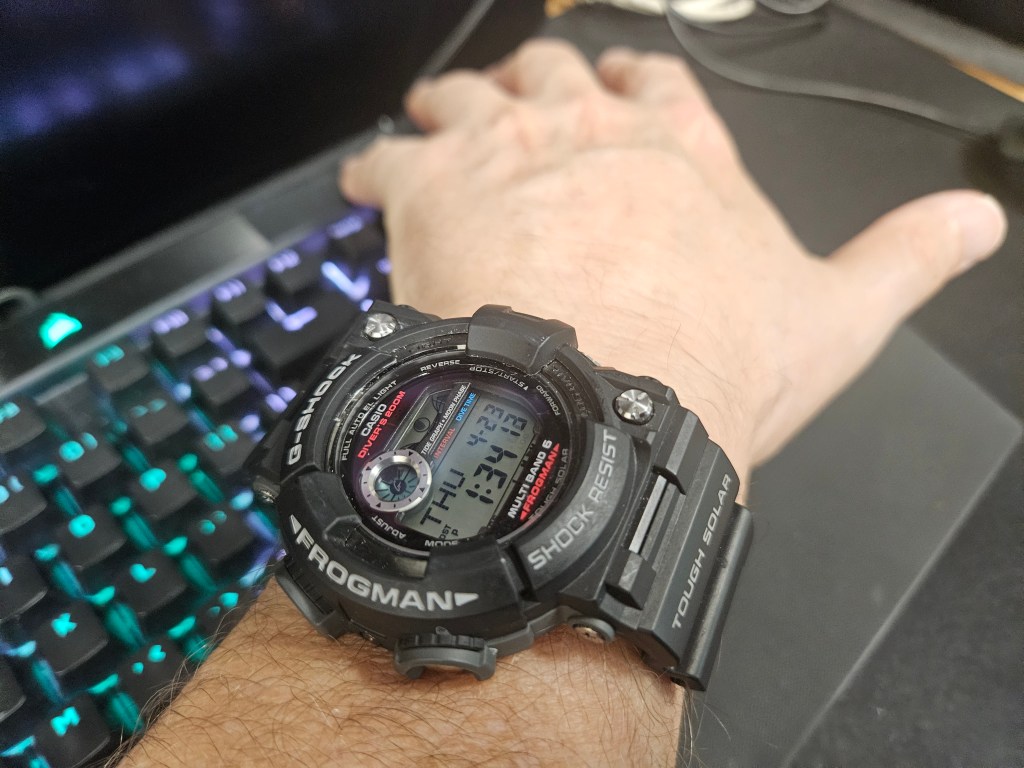
    The collection might include several digital G-Shocks, unquestionably a Frogman, a couple of Citizen Promasters, one or two Citizen Attesas, and perhaps a pair of Seiko Astrons.

    On paper, it sounds almost ideal.

    Until I imagine living with it.

    Then the doubts begin.

    I’d miss my Seiko mechanical divers.

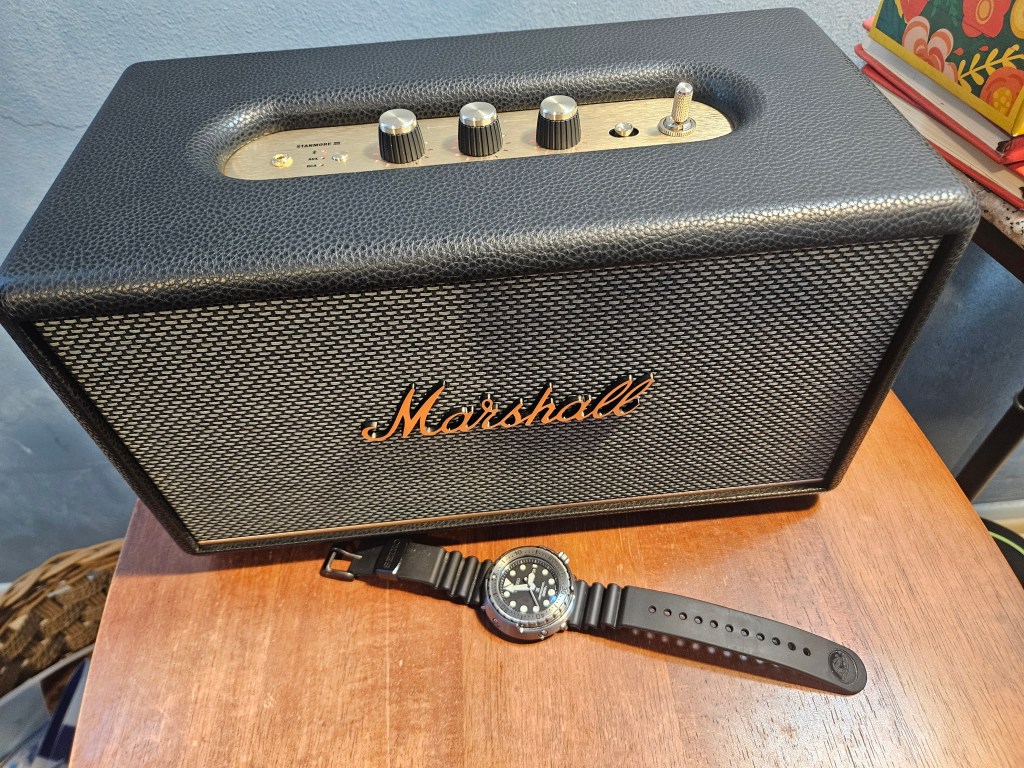
    I’d miss my quartz Tuna.

    I’d miss the gentle sweep of a mechanical seconds hand doing absolutely nothing more accurately than a quartz movement while somehow feeling infinitely more alive.

    Before long, I’d find myself rebuilding almost exactly the collection I own today.

    That’s when the embarrassing truth becomes impossible to ignore.

    The exercise was never about watches.

    It was about the rabbit hole.

    Collectors often imagine they’re addicted to acquiring things.

    I don’t think that’s quite right.

    We’re addicted to anticipation.

    To research.

    To comparison charts.

    To late-night YouTube reviews.

    To convincing ourselves that the next purchase will finally resolve the argument raging inside our heads.

    The object merely gives the obsession somewhere to land.

    Take away the watches, and we’d simply begin manufacturing another fantasy.

    The empty watch box isn’t appealing because it contains nothing.

    It’s appealing because it gives us permission to become beautifully irrational one more time.

    That is the secret longing of the seasoned collector.

    Not another watch.

    Another chance to go gloriously, ecstatically, and completely mad.

  • A Hundred Calories, Elaine Pagels, and Dvořák

    A Hundred Calories, Elaine Pagels, and Dvořák

    Yesterday I came within one hundred calories of eating only three meals.

    Around 7:30 in the evening, I made my daughter a bowl of oatmeal with protein powder, sliced peaches, banana, and vanilla unsweetened soy milk. She lost interest before she finished. Three lonely tablespoons remained in the bowl.

    As I carried it to the sink, a familiar voice appeared.

    “Don’t let perfectly good food go to waste.”

    Naturally, I obeyed.

    I polished off the leftovers before rinsing the bowl, thereby adding roughly one hundred unnecessary calories to my day under the noble banner of environmental stewardship.

    It’s remarkable how virtue always volunteers to represent appetite in court.

    Oddly enough, I didn’t feel especially guilty. One hundred calories is hardly the nutritional equivalent of robbing a bank.

    Later that evening, while my wife visited with friends, I watched Perfect Days. It is one of those rare films that quietly restores your faith in ordinary goodness. Its protagonist cleans public toilets with such humility and grace that he makes most ambitious people seem spiritually impoverished.

    The film’s generous silences reminded me of La Strada. Both movies revolve around souls so guileless they expose the vulgarity of everyone around them. As I watched Perfect Days, I kept thinking, This has the same moral weather as La Strada.

    Yesterday also taught me three lessons.

    The first concerns hunger.

    Going five or six hours between lunch and dinner is uncomfortable.

    That’s all.

    It isn’t torture.

    It isn’t a crisis.

    It isn’t an emergency requiring immediate intervention by almonds, protein bars, or peanut butter.

    It’s simply a mild inconvenience.

    Seeing it stripped of melodrama made me realize something about myself. If I insist on pampering every small discomfort, I’ll never accomplish anything worthwhile. I have no trouble punishing myself on the Airdyne or during a hard kettlebell workout. Physical exertion doesn’t intimidate me.

    Resisting the urge to snack?

    That turns out to be the harder discipline.

    And that’s precisely why I need to practice it.

    The goal is straightforward: 230 pounds down to 210.

    No heroics.

    Just consistency.

    The second lesson concerned reading.

    Or rather, the uncomfortable realization that I haven’t really been reading.

    Twice I “read” Elaine Pagels’ Why Religion? on my Kindle.

    Now I’m listening to the audiobook.

    The difference is almost embarrassing.

    The audiobook has revealed a memoir that is moving, intellectually rich, and deeply humane. I feel as though I’m absorbing ten times more than I ever did with the Kindle. My earlier readings now strike me less as acts of reading than as acts of turning pages while my mind wandered off to inspect some unrelated shiny object.

    Apparently my eyes were reading.

    My brain had clocked out.

    The only way I genuinely read on a Kindle is as a form of critical study. I sit at my desktop with the Kindle open on one monitor and Google Docs on the other. I take notes, write commentary, formulate questions, and argue with the author. That’s reading.

    Collapsing into bed with a Kindle at night turns out to be something else entirely.

    I’m beginning to suspect that bedtime belongs to printed books or audiobooks, while the Kindle belongs at my desk, where it can be interrogated rather than merely glanced at.

    Ironically, as I write this, another possibility occurs to me. Perhaps a split-screen setup on my laptop—with the Kindle on one side and Google Docs on the other—would recreate that same active engagement away from my desktop.

    That idea sounds far better now than it did five minutes ago.

    The third lesson came courtesy of Dvořák.

    Ever since buying a Marshall Stanmore III for the bedroom, I’ve fallen even more deeply in love with classical music. Last night I typed Dvořák’s name into the SiriusXM search bar, and the app rewarded me with an endless procession of Eastern European composers.

    The sound pouring out of that speaker is breathtaking.

    Rich.

    Warm.

    Expansive.

    The music doesn’t merely occupy the room.

    It ennobles it.

    In fact, it may be sabotaging my Kindle reading. Faced with music that beautiful, why would I pay attention to the printed page? The orchestra wins every time.

    Then bedtime arrives.

    I reach for the power button.

    And a strange thought enters my mind.

    Turning off music this beautiful feels almost morally questionable.

    Surely another symphony wouldn’t hurt.

    Perhaps just one more movement.

    This is, I admit, the most luxurious problem I’ve ever had.

    I won’t lose sleep over it.

    If my greatest dilemma is choosing between Dvořák and Elaine Pagels before bed, I have wandered into the safest corner of the First World.

  • The Watches Were Never the Addiction–It Was the Rabbit Holes

    The Watches Were Never the Addiction–It Was the Rabbit Holes

    Over the past twenty years, I’ve learned that I love watches a little too much.

    Not because I own too many.

    Because I expected too much from them.

    I made two mistakes. First, I convinced myself that the next watch would somehow complete me, that a particular dial, bezel, or movement would usher me into a higher state of existence. Second, I became addicted to flipping watches—not because I disliked them, but because every purchase, every sale, every unboxing delivered another hit of dopamine and another round of approval from fellow enthusiasts online.

    The watches became secondary.

    The chase became the hobby.

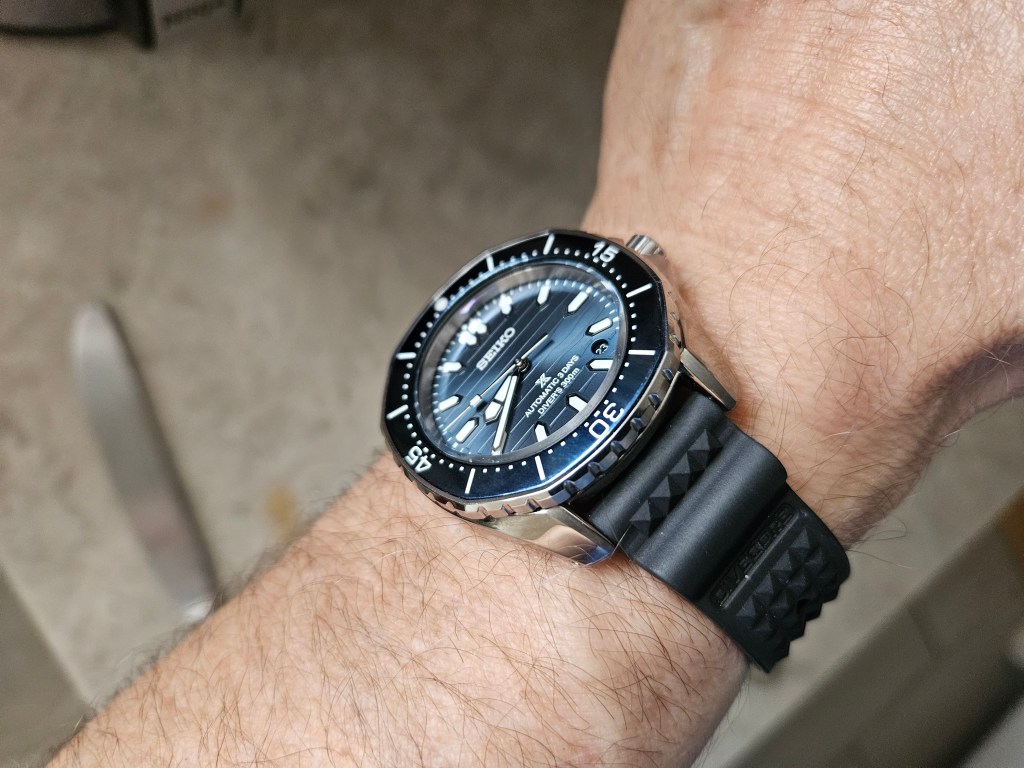
    Fortunately, my collection has settled into something resembling adulthood. I own five Seiko divers and five G-Shocks. After falling under the spell of G-Shock’s atomic precision—watches so obsessively punctual they correct themselves while I sleep—I have found myself drifting back toward my mechanical Seikos with fresh appreciation. As I write this, I’m wearing my Seiko SBDC203 Coastline Diver on a Divecore Waffle strap, watching its blue wave dial catch the light with quiet confidence.

    Oddly enough, I have nothing on my wish list.

    That statement would have sounded impossible a few years ago.

    I still admire watches. I linger over Citizen Attesas, Seiko Astrons, and Grand Seikos. My favorite watch ever made remains the Seiko SLA017, but I suspect our relationship will remain safely one-sided. I’ll admire it from afar on YouTube, where it can continue living its best life without emptying my wallet.

    That realization has spilled into other corners of my life.

    Once you discover that a watch cannot make you whole, you begin looking suspiciously at everything else trying to make the same promise.

    A forty-thousand-dollar Honda.

    A forty-thousand-dollar Toyota.

    A four-thousand-dollar luxury mattress.

    Consumer culture speaks with remarkable consistency.

    “Buy me,” it whispers. “Your new life begins here.”

    No, it doesn’t.

    At best, your new life begins with a slightly nicer object.

    The harder truth is that the improvements I actually want cannot be purchased.

    I want to become healthier.

    I want to lose twenty pounds.

    I want more discipline.

    I want to be fully present for my wife and daughters.

    I want to become the kind of man whose character quietly exceeds his possessions.

    No watch accomplishes that.

    No car does.

    No mattress does.

    The real danger isn’t believing that buying something will make me happy.

    That illusion is almost too obvious.

    The greater danger is subtler.

    It’s the research.

    I can disappear for hours into consumer rabbit holes with the enthusiasm of an archaeologist uncovering a lost civilization. I compare specifications, memorize model numbers, watch endless YouTube reviews, read forum debates, and convince myself that this painstaking investigation is somehow productive.

    It isn’t.

    It’s beautifully disguised procrastination.

    The internet has become a casino where information replaces slot machines. Every click offers the possibility that the next review, the next comparison, the next expert opinion will reveal the perfect purchase. Hours disappear without resistance.

    The acquisition isn’t the addiction.

    The pursuit is.

    That’s the part that frightens me.

    I have an obsessive personality. Obsession can be useful when it is harnessed toward writing, teaching, or improving my health. Left unattended, however, it happily attaches itself to titanium watch cases, mattress coil counts, automobile trim packages, fountain pens, headphones, or whatever shiny object wanders into view.

    Obsession doesn’t particularly care about the subject.

    It simply wants something to consume.

    Going forward, I want to become more suspicious of that impulse.

    Not because curiosity is bad.

    Curiosity is wonderful.

    But there is a profound difference between curiosity that enlarges your life and curiosity that distracts you from it.

    I want to spend fewer afternoons researching products and more afternoons becoming the kind of man who no longer needs them to feel complete.

    The irony is almost embarrassing.

    For years I believed I was searching for the perfect watch.

    What I was really searching for was the discipline to stop searching.

    ***

    For my fellow watch addicts, here is the link to my book The Man Who Lost His Mind to Watches: