Tag: love

  • The Brady Bunch Delusion: A FOMO-Fueled Fever Dream from Mount Shasta

    The Brady Bunch Delusion: A FOMO-Fueled Fever Dream from Mount Shasta

    In the blistering summer of 1971, when I was nine years old and fully convinced that the universe owed me something dazzling—preferably in Technicolor—my family and four others staked out a patch of wilderness on Mount Shasta. For two solid weeks, we rough-camped our way through a supposedly idyllic escape: fishing, water-skiing, dodging hornets, and marinating under the sun to a soundtrack of The Doors, Paul McCartney, Carole King, and Three Dog Night blasting from a battery-powered boom box the size of a microwave. It should have been paradise. It had all the ingredients. But for me, something essential was missing—specifically, a split-level ranch house with shag carpeting and Alice the maid humming in the kitchen.

    One morning, while the other families performed their pioneer cosplay—flipping pancakes and waxing poetic about fish guts—I was still swaddled in my sleeping bag, experiencing what I can only describe as a divine transmission. In my dream, I had been plucked from obscurity and absorbed into The Brady Bunch. Not as a guest star. As family. It all unfolded on a sun-drenched San Francisco street corner, beside a cable car gleaming like a chariot of middle-class destiny. Mike, Carol, Greg, Marcia, Peter, Jan, Bobby, and Cindy—smiling like cult recruiters in polyester—welcomed me into the fold. It was done. The adoption papers had been processed. I was now officially Brady-adjacent.

    The implications were staggering. Would I get my own room in this avocado-hued utopia? Or would I bunk with Greg and be forced to suffer his groovy condescension? Would I be featured in a Very Special Episode? Just as these critical logistics were about to be resolved, reality sucker-punched me. Mark and Tosh—my alleged friends—yanked me out of my dream state, barking something about going fishing. Fishing? I had just been inducted into America’s Most Wholesome Family, and now I was supposed to sit on a rotting log and bait a hook like some peasant?

    I sulked through the day like a dethroned sitcom prince, scowling at everything from the trees to the trout. But what could I say? That I’d just been psychically ejected from a pastel-tinted suburban heaven? That I was mourning the loss of a pretend life more emotionally satisfying than my real one? Try explaining that to your father, a military man in tube socks and Tevas, who barked, “We’re living in the wild!” with the enthusiasm of someone allergic to introspection.

    I didn’t want the wild. I wanted shag rugs and chore wheels. I wanted avocado-colored appliances and a staircase for dramatic entrances. I wanted to wake up in a house where even problems came with laugh tracks and gentle moral resolutions. But instead, I got mosquitoes, hornet attacks, and the cold reality that I was not, in fact, a Brady.

    But here’s the kicker: I wasn’t alone in this delusion. In the pre-digital 1970s, The Brady Bunch was the mother of all FOMO engines. Long before Instagram filtered our envy, Sherwood Schwartz’s sitcom utopia beamed into our wood-paneled living rooms and convinced millions of us that we’d been born into the wrong family. It wasn’t just television—it was aspirational family porn.

    And the letters poured in. Hundreds, maybe thousands, from children in broken homes offering to renounce their worldly possessions if they could just live under that sacred A-frame roof with Carol and Mike. The Bradys weren’t just a TV family—they were a mirage of emotional security, mass-produced and broadcast at 7 p.m., five nights a week. Sherwood Schwartz accidentally started a cult, and every kid in America wanted in.

    What no one knew, of course, was that the real Brady kids were unraveling offscreen. Drugs, affairs, backstabbing—your standard-issue Hollywood breakdown, now available in bell-bottoms. While we were fantasizing about solving our adolescent angst in a 30-minute morality play, the actors playing our surrogate siblings were spiraling. Turns out, the squeaky-clean family fantasy was just that: a brilliantly lit lie.

    And yet, we clung to it. Why? Because once you’ve tasted Brady-level manufactured bliss, the real world—be it Mount Shasta or your own dysfunctional dining room—feels insufficient. That’s the cruel brilliance of FOMO: it convinces you there’s a better life just out of frame. And if you don’t have it, something must be wrong with you.

    To this day, I still occasionally dream I’m floating inside that iconic title sequence, my face glowing in one of the boxes, beaming down at Bobby or Jan as if everything in the world had finally clicked. In that dream, I am forever young, forever welcome, and forever untouched by the grinding disappointments of real life. I am, for thirty glorious seconds, a Brady.

    And then I wake up. And it’s just me, my real family, and whatever wildness we’ve decided to romanticize that year.

  • The Gospel According to Lalo: Watches, Inadequacy, and the Quest for a Better Self

    The Gospel According to Lalo: Watches, Inadequacy, and the Quest for a Better Self

    Yesterday, the tour bus wheezed to a stop and dumped us in Little Havana like a sack of reluctant tourists. We wandered through downtown under a punishing sun, the air thick with the scent of café Cubano and bravado. That’s when I saw him: a man who looked exactly like Lalo Salamanca, minus the drug empire—crisp white shirt, swagger in his step, and two kids in tow. He wasn’t just crossing the street; he was gliding, chin up, radiating unfiltered, unstudied masculinity. And he wasn’t alone. Little Havana was teeming with these men—fathers who looked like they’d stepped out of a sepia-toned photo labeled Pride, circa Always.

    Meanwhile, there’s me—63 years old, 30 pounds overweight despite daily exercise and good intentions. My daughters joke that I look like Charlie Brown, and not in the charming, animated special way—more in the “existential dread in khakis” sense. I don’t walk across intersections like Lalo. I trudge. And if I’m holding hands, it’s probably because I’m being led away from a pastry counter.

    But as I watched those fathers—their confidence, their presence—I began to realize the true pathology behind my watch obsession. I wasn’t just collecting watches. I was searching for transformation. If I could find the watch, the perfect timepiece, it might just alchemize my Charlie Brown soul into something closer to Lalo—proud, magnetic, quietly heroic.

    Enter the Seiko Astron Nexter—$1,700 of satellite-synced wizardry and horological lust. It gleams. It commands respect. It’s whispering, “Buy me, and become the man you were meant to be.” But let’s be real: I barely go anywhere these days. My public appearances are limited to grocery store aisles and accidental mirror encounters. I’m not a man about town; I’m a man about tuna salad and ibuprofen.

    At 63, how many years of wrist real estate do I even have left? How long before I’m just another well-accessorized ghost, my legacy a drawer of luxury regret? The whole ritual—buying, flipping, rationalizing, repenting—is starting to feel less like a hobby and more like a slow, polished breakdown. This isn’t taste. It’s compulsion with a tracking number.

    Maybe it’s time to quit. I’ve got five watches already—each one a chapter in the memoir of my delusions. Maybe the next chapter isn’t about adding to the collection, but about burning the altar down.

    Here’s a wild idea: make self-denial the new dopamine hit. Let the new obsession be calorie restriction instead of case diameter. Let others chase sapphire crystals and ceramic bezels—I’ll chase a slimmer waistline, a clean mind, and the kind of inner quiet no chronograph can measure.

    Because maybe happiness isn’t behind a glass display case. Maybe it’s not ticking on my wrist. Maybe it’s the empty space where the craving used to be.

    Still… the Astron is beautiful. And it would look damn good on Lalo.

  • The Night Irony Beat the Monkees

    The Night Irony Beat the Monkees

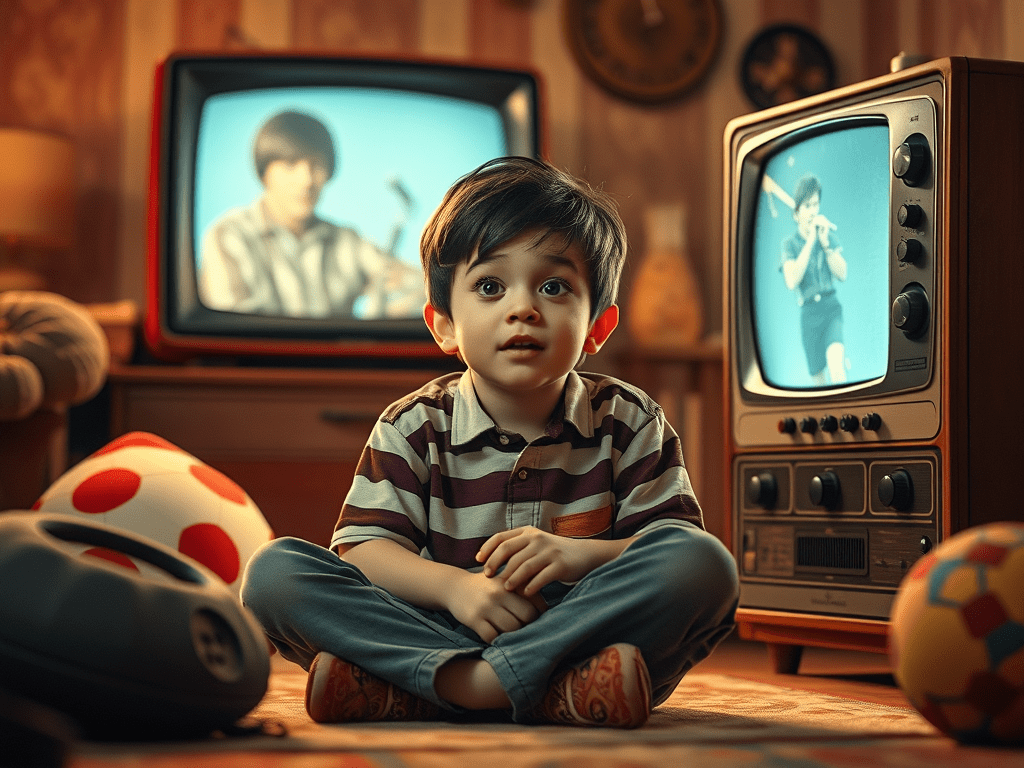
    On the night of October 16, 1967—just twelve days shy of my sixth birthday—the universe shoved my head in the toilet and flushed. I could hear the sound of childhood innocence circling the drain. Up to that moment, I was a full-time subscriber to the gospel of positive thinking. Life was fair. Good guys won. If you tried hard and smiled big, the world smiled back. Norman Vincent Peale had basically written the owner’s manual for my inner world.

    That illusion shattered during an episode of The Monkees.

    The episode was called “I Was a 99-lb. Weakling,” and I had parked myself cross-legged in front of the TV, popcorn in lap, expecting hijinks and musical numbers. Instead, I got a masterclass in betrayal and the savage laws of ironic detachment. My hero, Micky Dolenz—the clumsy, lovable soul who made failure seem like a jazz solo—was brutally outmuscled by Bulk, a flexing monolith of a man played by real-life Mr. Universe, Dave Draper. Bulk didn’t walk—he heaved himself through scenes, a sculpted rebuke to every noodle-armed dreamer in America.

    And right on cue, Brenda—the beachside Aphrodite with hair that shimmered like optimism—dropped Micky like a sack of kittens for Bulk, never once looking back.

    This wasn’t just sitcom plot; this was emotional sabotage. I watched, frozen, as Micky enrolled in “Weaklings Anonymous,” embarking on a training montage so grotesquely absurd it veered into tragedy. He lifted dumbbells the size of moon rocks. He drank something called fermented goat milk curd, a substance that looked like it had been skimmed off a medieval wound. He even sold his drum set—his very soul—to chase the delusion that muscles would win her back.

    And then came the twist.

    Just as Micky completed his protein-fueled crucible, Brenda changed her mind. She didn’t want Bulk anymore. She wanted a skinny guy reading Remembrance of Things Past. A man whose pecs had clearly never met resistance training, but whose inner life pulsed with French ennui. The entire narrative pirouetted into absurdity, and I watched my belief system crack like a snow globe under a tire.

    That’s when I first met irony.

    Not the schoolyard kind where someone says “nice shirt” and means the opposite—but the bone-deep realization that the universe isn’t fair, that effort doesn’t guarantee reward, and that life doesn’t play by the moral arithmetic taught in Saturday morning cartoons.

    It was that night I realized muscles weren’t the secret to power—language was. Not curls, not crunches, but craft. Syntax. Prose so sharp it could reroute the affections of beach goddesses and turn the tide of stories. That was the moment my childish faith in “try hard and you’ll win” collapsed, and in its place rose a darker, more potent creed: the pen is mightier not just than the sword, but than the bench press.

    That night, my writing life began—not with celebration, but with betrayal. A glittering lesson delivered in the cruel, mocking tone only irony can wield. And though it hurt, I never forgot it. Because the truth is: irony teaches faster than optimism. And it remembers longer, too.

  • Punchlines and Prenups: Why Comedians Make Surprisingly Solid Spouses

    Punchlines and Prenups: Why Comedians Make Surprisingly Solid Spouses

    In her essay “What Comedians Know About Staying Married,” Olga Khazan throws us a curveball: stand-up comics, those neurotic jesters fueled by dysfunction and oversharing, somehow have enviably strong marriages. Yes, the very people whose livelihoods depend on broadcasting their most humiliating personal stories to drunken strangers in dark clubs have—brace yourself—functional, long-lasting relationships.

    This sounds like the premise of a dark joke: A comedian walks into a marriage… and it actually works out?

    Khazan rattles off an eyebrow-raising list: Bert Kreischer (who once famously performed shirtless while talking about binge-drinking with Russian mobsters), Jerry Seinfeld, Jon Stewart, Tina Fey, Conan O’Brien, Adam Sandler, Ellen DeGeneres, Stephen Colbert, Tom Papa, Jim Gaffigan, and Nate Bargatze. Not exactly a group of low-key, emotionally regulated nine-to-fivers. And yet, many of them are married to the same person they were with when they were broke, bombing open mics, and sleeping on stained futons.

    So what’s the secret sauce—besides not cheating with the club manager or moving to L.A. for “more stage time” and never calling home again?

    According to Khazan, it’s that these comics are astute students of human nature. Their job is to analyze and exaggerate the absurdities of life, especially their own. They live in a constant loop of self-examination and observational sharpness, and when that lens is turned inward—not just for laughs, but for emotional insight—it becomes a tool for longevity. In other words, they have weaponized their neuroses for good.

    By that logic, therapists, philosophers, professors, and other caffeine-dependent, overthinking professionals should also have excellent marriage stats. (Spoiler: they don’t.) So the real takeaway isn’t that comedy makes you marriage material, but that a reflective worldview and the ability to call yourself on your own crap might.

    Still, Khazan digs deeper and finds another ingredient: collaboration. These comic couples are often not just married; they’re co-creators. Podcasts, YouTube channels, touring schedules, editing sessions—they’re not just paying the bills together, they’re building something. It’s the opposite of what she calls “mutual stagnation,” that slow marital death by couch, where both parties rot in front of The Great British Bake-Off, silently aging into human-shaped throw pillows.

    I had a flashback reading that: Estes Park, Colorado, 2002. I was the best man at my friend’s wedding. As I helped the priest unload a boxy camcorder from his Volkswagen Beetle, he said, “My brother’s getting divorced. No affair, no drama. They just didn’t grow.” That phrase haunted me. They just didn’t grow. They watched TV every night until they turned into living wallpaper.

    In contrast, the comic couples Khazan describes are building together, or at least sharing war stories from the front lines of the road. They’re not roommates with mutual dental insurance—they’re comrades. And while the rest of us are debating whether to splurge on Disney+ Premium, they’re debating how far they can push a bit about their sex life without getting served divorce papers.

    Khazan points out that this delicate dance—what to say on stage about your spouse and what to leave in the vault—requires real communication. These couples talk about boundaries. They negotiate what’s sacred and what’s fair game. That kind of honesty may not always be funny, but it’s the opposite of resentment.

    And the road? Turns out, time apart isn’t marital poison. It’s oxygen. When one half of the couple is in Omaha doing five shows in three nights, they’re not growing sick of each other’s chewing or laundry pile. They’re getting some much-needed space. Absence makes the heart grow fonder—and also less likely to stab someone for breathing too loudly.

    But ultimately, the golden ticket, according to Khazan, is metacognition: the ability to think about how you’re thinking. It’s that moment where you pause mid-freakout and realize, “Oh. I’m spiraling like a lunatic. Maybe I should stop yelling about the dishwasher and step outside.”

    It reminded me of a moment in my own marriage two decades ago. My wife and I were in the thick of some knock-down-drag-out verbal joust over—well, I have no idea. Whatever it was, we were spiraling fast. But then, mid-argument, I had an out-of-body experience. I hovered above the room like a judgmental ceiling fan and watched myself—a grown man—losing his mind over who knows what. In that moment of clarity, I clutched my stomach, declared I had “intestinal distress,” and locked myself in the bathroom for 45 minutes. Crisis averted. Marriage preserved. Thank you, metacognition.

    So maybe that’s the real lesson. You don’t need to be a comedian to make your marriage work. But it helps to be someone who’s spent a lifetime poking around in the attic of your psyche, who can recognize your own absurdity in real time, and who knows when to quit the bit and retreat to the bathroom before you say something irreversible.

    Marriage isn’t a punchline. But if you’re lucky, it’s a running joke you both keep writing together.

  • The Accountant, the Hotpants, and My First Taste of Rejection

    The Accountant, the Hotpants, and My First Taste of Rejection

    The summer of 1972, I was ten years old, flying solo from LAX to Miami, parked in the coveted window seat. Next to me, in the middle, sat a blonde woman in her mid-twenties, bronzed to an unnatural, almost radioactive orange, legs crossed confidently beneath pink hotpants with purple and white racing stripes that suggested speed, danger, and an implied warning to stay in my lane.

    In the aisle seat: her conversational hostage, a lean, dark-haired man of about the same age—an accountant, he would later reveal, which felt like foreshadowing.

    For five hours, I listened as they engaged in a dialogue so lively, so animated, I assumed I was witnessing the early chapters of a great love story. She was in dental hygiene school. He had a degree and a steady job. She exuded the kind of effortless confidence that made her gum seem like a gift from the gods when she passed us each a stick of Dentyne, explaining that it would help pop our ears. A public service announcement, delivered with charm.

    The accountant was decent-looking, well-spoken, clearly trying his absolute best—and for five relentless hours, he kept her engaged. They laughed, they shared stories, they existed in a pocket of perfect airborne intimacy. To my ten-year-old brain, this was an ironclad courtship ritual. The chemistry was undeniable.

    Then, the landing. The taxi to the gate. The moment of truth.

    He asked her out.

    She declined. Politely. Firmly. Efficiently.

    My ten-year-old self was staggered. How was this possible? Hadn’t they just shared an entire cinematic romance arc? The witty banter? The shared laughter? The synchronized gum chewing? And yet—nothing.

    I tried to crack the mystery. Maybe he was too bland. Maybe she had a boyfriend. Maybe she just needed to kill five hours before she got back to real life. Whatever the reason, I, a mere child, absorbed his rejection as if it were my own.

    To this day, I remain personally wounded that she turned him down. She turned us down. And for what? Some other guy in tighter pants?

    That flight should have been a lesson in the arbitrary brutality of romance, but all I really learned was that rejection hurts, even when it’s not technically yours.

  • First Love in Leningrad, Circa 1984

    First Love in Leningrad, Circa 1984

    The following evening found me slouched in a Leningrad discotheque, still nursing the kind of sore backside only a Soviet bus seat could deliver. I was stationed at a high-top table, reading A Clockwork Orange, trying to project an air of literary detachment while simultaneously avoiding eye contact with the throng of dancers twisting under the flickering neon lights.

    Then she appeared.

    Short, elfin, bespectacled—like an intellectual sprite who had wandered in from some parallel universe where bookish charm trumped disco fever. Her sandy-blonde hair framed a delicate face, and her gaze, sharp and assessing, landed squarely on me. “A very famous book,” she observed, nodding toward my well-worn copy.

    She introduced herself as Tula, a Finn on vacation, and without hesitation, slid into the seat across from me. We launched into a conversation that flowed as naturally as vodka at a Russian wedding—literature, music, the intoxicating allure of Russian novelists who knew how to suffer properly. I rattled off every book I had read, every philosophical revelation I had gleaned, and, with the reckless bravado of a twenty-something, confessed my grand ambition to write a novel.

    “You will be famous,” she declared with absolute certainty, as if she had peered through the murky fog of the future and spotted my name emblazoned on book covers. “I can feel it. You must visit me at Lake Saimaa. We will celebrate. Who knows. Perhaps I too will be a published novelist again. We can live together and be each other’s muse.”

    Flattered, I let my guard down. For two hours, we spoke like old friends who had simply taken too long to meet. Our mutual love for Russian literature, the music of Rachmaninoff, and the strange magnetic pull of doomed genius bound us together in a bubble of conversation. Then, as if she had been waiting for just the right moment, she reached into her purse, retrieved a small scrap of paper, and wrote down a title.

    “This,” she said, sliding it toward me, “is the book you must read.”

    I picked it up and saw the name—The Master and Margarita by Mikhail Bulgakov.

    She looked at me with the intensity of a woman who had just handed over a sacred text. 

    As we conversed under the glittering gold disco ball, the Bee Gees’ “Too Much Heaven” blared across the club. It became apparent through our self-revelations that neither of us had any romantic experience.  Tula At one point, she said, “I will never marry. I have, what do you say in English? Melancholy. Yes, I have melancholy. You know this word?”

    “Yes, I am no stranger to melancholy.”

    “I am so much like that,” she said.

    “That explains your love of Rachmaninoff.”

    She clasped her hands and almost became teary-eyed. “How I love Rachmaninoff. Just utter his name, and I will break down weeping.”

    I thought I was a depressive, but in the presence of Tula, I had the perkiness of Richard Simmons leading an aerobics class. 

    She asked me what I was doing in Russia. I explained that my grandfather was a card-carrying communist, a friend of Fidel Castro, and a supporter of the Soviet Union. He used a shortwave radio in his San Pedro house to communicate with Soviet sailors in nearby ships and submarines. He visited Cuba as often as he could to bring medical supplies that were in need there. One of his friends, a Hollywood writer, lived in exile in Nicaragua after being arrested in France by Interpol for driving a Peugeot station wagon filled with illegal weapons. My grandfather wanted me to fall in love with the Soviet Union and become a champion of its utopian vision, so he paid for me to go on a peace tour. Had I fallen in love with Russia as my grandfather had hoped? Not really. So far, I had been approached at the Moscow Zoo by a striking woman dressed in black and pearls who my tour guide Natasha warned me was a KGB agent trying to have me arrested for soliciting a prostitute. I was washing my hands at the newly built Olympic Hotel in Moscow when the bathroom sink fell out of the wall and against my torso, causing a bloody cut on my abdomen. I got a fever in Novgorod prompting a beautiful female doctor with a severe face to come into my hotel and give me a shot in the butt.  I was, as my fellow traveler Jerry Gold warned me, approached by young men on the subway who wanted to know if I had any American blue jeans to sell as a way of having me arrested for illicit black-market trading.  Everywhere I went in Russia–hotels, trains, restaurants–there were speakers playing grim chamber music as if the authorities were saying, “Try not to be too happy during your stay here.”

    Tula listened to me talk for a couple of hours with a wide gaze while touching my shoulder. “I need to see you again,” she said.

    We agreed to meet the next day at the Peterhof Royal Palace by the Samson Fountain. There is this giant garden the size of several football fields with monuments, gold statues, and fountains shooting streams of water straight into the blue sky. We sat on concrete steps around the fountains. It was close to ninety degrees as statues of gold naked bodies stood in various poses next to jets of erupting water in a spectacle called The Grand Cascade. Tula wore a short white dress and we sat on the steps. In the heat, we decided I would get us some ice cream.

    While I was walking toward the ice cream bar, a gypsy tried to hand off a baby to me the way a quarterback would hand off a football to a running back. It all happened so quickly. Before the baby was cradled in my chest, a fast-acting Russian police officer grabbed the baby, returned the baby to the gypsy, and shouted at her. I thought she would be arrested, but the officer appeared content with scolding her. She withered at his remarks and slumped away with the child in her arms.  

    I returned with the ice cream and told Tula about the incident with the gypsy. She said things like that happen all the time here.

    “But what was I supposed to do with the baby?”

    “Perhaps adopt it? Buy it? Save it from a life of misery? There is so much tragedy here.”

    “So I was supposed to fly back to the States with a baby? Go through customs and everything else?”

    “I know. It’s crazy.”

    “I don’t think I could be a parent. I don’t have the hardwiring for it.”

    “Me either. I’m too sad to be a parent. Sadness is a full-time job that leaves me with little energy for much else.”

    She finished her ice cream and smiled at me, then said, “You and I are like two kindred spirits meeting each other in this strange world.”

    “It’s hotter than hell out here.”

    “So will you marry someday?”

    I shrugged, then said, “I doubt anyone will take me.”

    “Don’t be so hard on yourself. If I were the marrying type, I would come to America and spend my life with you. We could live in California and be sad together. Wouldn’t that be lovely?”

    It actually sounded rather appealing. Tula and I living a life of sadness, writing novels together, marinating in Rachmaninoff’s Second Symphony while discussing the existential torment of Tolstoy and Dostoyevsky. What other kind of life was there?

    She stood up and said she had to catch her plane back to Finland and gave me a chaste kiss on the cheek.

    “I really hope you find happiness. You are such an outstanding person.”

    “Outstanding?”

    That adjective used to describe me was a bit hard to take. It was like a real estate agent trying to describe a decrepit property by the train tracks as palatial. I repeated the word outstanding with perhaps a trace of sarcasm and said goodbye to her. I never saw her again, but I still remember the vanilla ice cream–the best I’ve ever tasted. 

    Nine months later while back in my routine of working out, playing piano, and doing my college studies in the Bay Area, I received a letter from Tula. I was living with my mother and standing by our front yard’s loquat tree while holding the envelope and staring with fascination at the Finnish return address. Nearby some Mexican parrots were making a ruckus in a neighbor’s dogwood tree. It was a warm May. I walked under the porch light by the front door entrance and read Tula’s letter.

    Dear Jeff,

    So much has happened since I met you. I took your recommendation and read A Confederacy of Dunces. I laughed my ass off, but the book was so sad. I keep the book on my shelf and always think of you when I see it. Now for some big news. Brace yourself. You won’t believe this. I’m getting married! I have you to thank for this. I never thought I was the marrying type, but those two days I spent with you in Russia changed me. When I got back to Finland, I was restless, I thought about you constantly, and even at one time I had this mad idea that I should arrange to visit you, but a high school friend Oliver came into my life, and we began seeing each other, not as friends but as lovers. I have you to thank for this. Meeting you awakened a part of my soul that I had never known before. I hope that you don’t forsake love, as I had planned to do, that you too will find someone special in your life. You deserve it. You are an amazing man!

    Love Always,

    Tula

    I stood at the entryway and listened to the shrill cackles of the nearby parrots. 

    So I was the guy who had helped a sweet-souled depressive fall in love. No, I wasn’t the recipient of that love. But I was the lighter fluid to get the grill going. I was the spark, the catalyst, and the kindling to get Tula on the road to Loveville. I had made a difference.

    I went inside the house, walked into the living room, and played something sad at my ebony Yamaha upright.  I tried to imagine Tula as my sole audience, but she was replaced by the Russian Commander and I could see him mocking me. 

    “You are a charlatan,” I could imagine him saying. “You are an American charlatan in Russia. You must always be put in your place. You must drink warm beer till you puke your guts out. Only then can you find redemption for your vain self.”

    Over the years, I attempted to channel the absurdities of the totalitarian police state into my fiction, convinced I could capture its paranoia and bureaucratic lunacy in novel form. Herculodge depicted a dystopia where physical fitness was the highest moral virtue—where to be svelte was to be righteous, and to carry an extra pound was to invite public shaming and possible exile. Gym-Nauseam imagined a society where citizens willingly surrendered their freedom, not to a dictator, but to the tyranny of endless, punishing workouts, their lives consumed by squats, protein intake calculations, and the pursuit of an ever-elusive “goal weight.”

    As short stories, they worked—a sharp jab of satire, a bitter laugh at the madness of it all. But as novels? They were so catastrophically bad, they deserved their own show trial. Any competent literary tribunal would have sentenced me to hard labor in a Siberian gulag, where I could atone for my crimes against narrative structure by stacking bricks in the permafrost and reconsidering my life choices.

  • What devotion really looks like

    What devotion really looks like

    When I think of love in all its fullness, I dredge up a memory from 1982—a gem buried deep in my psyche from my early twenties. Back then, I was in college, slogging through a statistics course taught by a professor who looked like he’d been teleported straight out of a Dickens novel. Wild white hair defied gravity, crazed blue eyes darted around like they were searching for meaning, a nose as red as a warning light hinted at extracurricular activities with a bottle, and his overall aura was eau de whiskey. He was a kind man, though, in that shabby, endearingly tragic way.

    The class itself was a masochist’s delight, and by week four—when the sadistic monster called “standard deviation” reared its head—half of us were drowning. Among my classmates was an elderly African American couple in their early seventies and always dressed for church, who were either a heartwarming sitcom subplot or walking proof that God has a delicious sense of humor. The husband, a determined relic with a cane, announced on the first day of class that this was his seventh attempt at passing statistics. His wife, the embodiment of long-suffering devotion, was there not as a student but as his support system—a Bible-toting, knitting saint.

    The husband’s approach to learning was…unorthodox. While the rest of us quietly sunk in our seats, he would occasionally leap to his feet mid-lecture, his cane clattering dramatically, and hobble to the chalkboard. Pointing a finger like a preacher calling out sin, he’d declare, “That’s not the answer I got. Let me show you!” And then he’d scrawl his “solution” on the board—a series of hieroglyphics that no one could understand. 

    The professor, to his credit, tolerated these interruptions with the forbearance of a man who had seen worse (probably in his flask). Meanwhile, the wife would bow her head and whisper desperate prayers to “sweet Jesus” as if divine intervention might save her husband—or at least restore a shred of her dignity. Students stifled laughter behind cupped hands, and I sat there, torn between secondhand embarrassment and the sneaking suspicion that this was comedy gold worthy of Saturday Night Live.

    After class, I’d drive home and pop in a cassette of “Tiny Children” by The Teardrop Explodes—a song that paired perfectly with my mood of existential dread. I’d replay the scene in my mind: the old man’s quixotic battle with the chalkboard, the wife’s quiet perseverance. And then, like clockwork, I’d start crying. Not just because I was floundering as badly as he was with standard deviation or because my social skills were nonexistent, but because that woman had shown me something profound: the power of love. Real love—the kind that sticks with you through seven attempts at statistics, through public humiliation, through everything.

    I can still see that couple vividly. The husband’s determination, the wife’s quiet strength, and my own pathetic, lonely self, sitting there and learning—without realizing it—what devotion really looks like.

  • Where I Could Forever Be a Man-Child–Walt’s Gym

    Where I Could Forever Be a Man-Child–Walt’s Gym

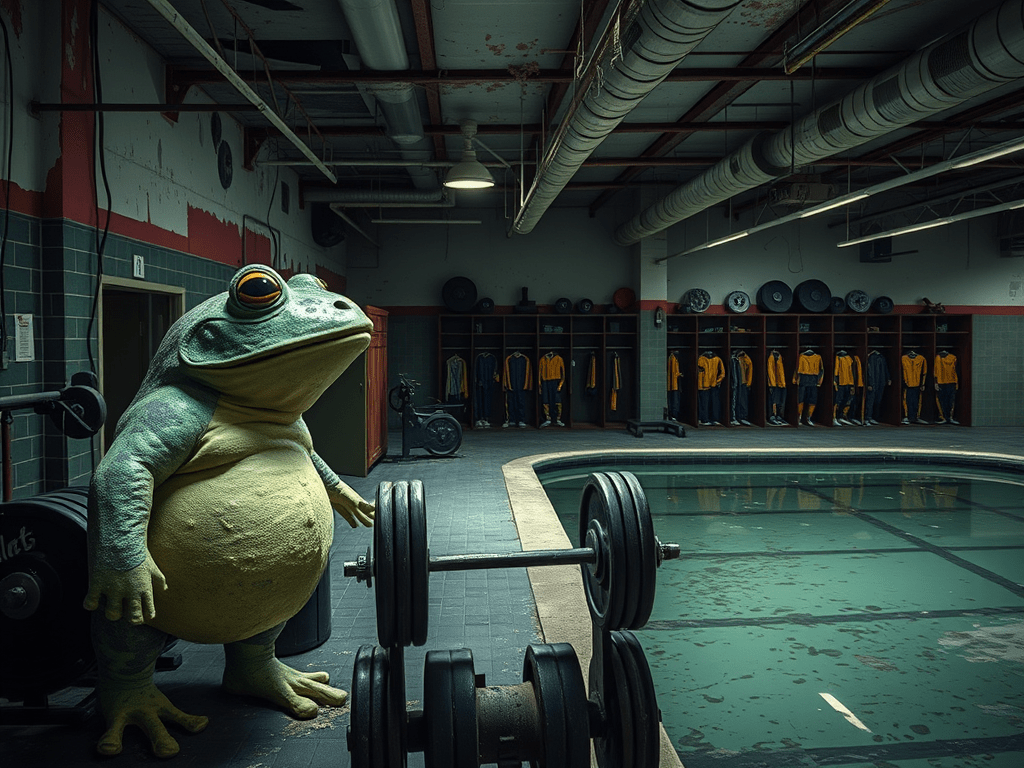
    By the time I hit fourteen, my sacred sanctuary was none other than Walt’s Gym in Hayward, California—a temple of iron that had started its inglorious life as a chicken coop in the 1950s. The place was a veritable swamp of fungus and bacteria, a thriving petri dish of maladies eager to latch onto the unsuspecting. Members whispered in hushed tones about incurable athlete’s foot, the kind that made dermatologists throw up their hands in defeat. Some swore that the strains of fungus and mold festering in the corners were so exotic they had yet to be classified by the most intrepid of mycologists. Roosting among the fungal shower stalls was an oversized frog that the pro wrestlers had affectionately named Charlie. I never saw Charlie myself, but I often wondered if he was a real creature or a figment of the wrestlers’ imagination, birthed by too many concussions and late-night benders.

    The locker room was perpetually occupied by a rotating cast of characters who looked like they’d been plucked straight out of a grimy noir film. There was always some bankrupt divorcee draped in a velour tracksuit and a gold chain thick enough to anchor a ship, hogging the payphone for marathon sessions with his attorney. He’d discuss his sordid life choices and the staggering attorney fees required to sweep his past under a rug large enough to cover the entire state of California.

    Out back, an unused swimming pool lurked, its water murky and black—a cauldron of plague, dead rats, and God knows what else. Walt, the gym’s owner and part-time crypt keeper, had a peculiar ritual. Every so often, he’d saunter outside, brandishing a pool net like a scepter, and scoop up some unfortunate deceased creature. He’d hold it aloft for all to see, like a demented priest presenting an unholy sacrament. This grim ceremony was invariably met with a thunderous round of applause from the gym-goers, who treated Walt’s rodent exorcisms like a halftime show. Walt would then toss the cadaver into a nearby dumpster with all the flourish of a Shakespearean actor delivering a monologue, bowing deeply as if he’d just conquered a dragon.

    Walt’s Gym showcased a walking fossil named Wally, an octogenarian who swore he was the original model for human anatomy textbooks—perhaps ones etched on cave walls. We all loved Wally. He was a beloved gym fixture even though he could be a pain in the butt. Wally’s routine was the stuff of myth: He’d righteously correct everyone’s form whether they asked for his advice or not. He’d monopolize the gym for hours, his workout punctuated by monologues worthy of an Oscar about his deadbeat relatives who “borrowed” money, his former lovers who once graced the silver screen, and his eternal battle with arthritis. Between sets, he’d often deliver a Ted Talk on muscle inflammation and the sorry state of the national economy. He delivered these soliloquies with the gravitas of a news anchor, then spent an eternity in the sauna and shower, emerging like a phoenix from the ashes only to douse himself head-to-toe in talcum powder, turning into a spectral beacon of gym dedication. When Wally spoke, he was engulfed in such a thick talcum haze you’d swear a lighthouse was about to blare its foghorn warning.

    The radio played the same hits on a relentless loop, as if the DJ had been possessed by the spirit of a broken record. Elvin Bishop’s “Fooled Around and Fell in Love,” The Eagles’ “New Kid in Town,” and Norman Connors’ “You Are My Starship” echoed through the gym like a soundtrack to my personal purgatory. As a kid navigating this adult world, the gym was my barbershop, my public square, where I eavesdropped on conversations about divorces, hangovers, gambling addictions, financial ruin, the exorbitant costs of sending kids to college, and the soul-sucking burdens of caring for elderly parents.

    It dawned on me then that I was at fourteen the perfect age: old enough to start building biceps like bowling balls, yet young enough to be spared the drudgery and tedium of adult life. The Road to Swoleville, I realized, was all about sidestepping the real world entirely. Why bother with mortgages and 401(k)s when I could disappear into my true paradise, the gym? As Arnold himself wrote in Arnold: The Education of a Bodybuilder, the gym was the ultimate Happy Place: “The weight lifters shone with sweat; they were powerful looking. Herculean. And there it was before me—my life, the answer I’d been seeking. It clicked. It was something I suddenly just seemed to reach out and find, as if I’d been crossing a suspended bridge and finally stepped off onto solid ground.”

    My “solid ground” was the 1976 incarnation of Walt’s Gym, a germ-infested, rat-plagued wonderland where dreams of muscle-bound glory were forged—and quite possibly the greatest place I’ve ever visited on this planet.

  • Transforming into Mope-a-saurus Rex

    Transforming into Mope-a-saurus Rex

    There’s ongoing debate over whether boomers willingly morph into Mope-a-saurus Rex—the scowling relic pacing his lawn and muttering about “kids these days”—or if the transformation is as unavoidable as hair loss and rising cholesterol. Maybe it’s some grim milestone on the aging checklist, or maybe it sneaks up, the natural side effect of realizing your cultural currency has expired while the youth livestream their way into the future. I’ll leave that existential puzzle for the philosophers to untangle.

    What I do know is that by the time Thanksgiving rolled around, I was still carrying the weight of grief like an overstuffed holiday plate. I’d said goodbye to my mother during the pandemic, standing outside a nursing home window and offering her love through a mesh screen, as if I were visiting someone in solitary confinement. Two years later, I watched my father—a proud infantryman in his day—fade to 130 pounds, his body surrendering to cancer. Since their passing, the world felt quieter, smaller, like someone had dimmed the lights without warning.

    So, when hosting Thanksgiving fell squarely on my plate, it wasn’t some Norman Rockwell fantasy. It was more like getting crushed by a baby grand piano dropped from the second floor. And instead of gracefully stepping aside, I just let it hit me—because honestly, moving felt like too much effort.

    The guest list wasn’t exactly daunting—just my perpetually single brother, whose dating apps seemed better at generating cautionary tales than romantic prospects, and two of my wife’s teacher friends, both middle school band directors still recovering from clarinet-induced PTSD. The conversation was polite, though it had all the flavor of plain oatmeal.

    Stuffed to the gills but somehow still shoveling pie like our lives depended on it, we trudged through the ritual of TV show recommendations. Each suggestion was delivered with the gravitas of a public service announcement—skip this series at your own peril. Apparently, failing to watch that one obscure, eight-part masterpiece would leave me culturally destitute, wandering through a desolate landscape devoid of punchlines and plot twists.

    Honestly, I enjoyed the company. The real villain of Thanksgiving wasn’t the guests—it was the dishes. The endless scrubbing that left my hands raw, the dishwashing marathon that stretched into eternity, the mountain of dirty plates multiplying like gremlins in the sink. That’s where the wheels came off.

    My wife, meanwhile, glided through the chaos like some kind of culinary sorceress, humming softly as she orchestrated the entire meal with the grace of a Michelin-starred maestro. She didn’t grumble. Not a single passive-aggressive sigh escaped her lips. She was the picture of serene competence.

    I, on the other hand, hovered around the kitchen like a useless NPC in a video game—occasionally moving a plate from table to sink and acting as though I’d just conquered Everest. At one point, I genuinely felt winded after rearranging the silverware. My contribution was so meager it felt performative, like a child pretending to be tired after “helping” Dad mow the lawn by pushing a plastic toy mower ten feet behind him.

    Somewhere between rinsing the roasting pan and glaring at the pile of silverware, it hit me—I was teetering on the edge of a Mope-a-saurus moment. The only thing preventing my full transformation was the vague sense of shame that my wife, who had just cooked for hours, wasn’t grumbling about the aftermath. That’s when you know you’re in trouble—when someone else’s superior competence and good cheer makes you feel like a defective appliance, sputtering through life with a flickering power cord and a weak motor.

    I’m such a fragile soul that after surviving the harrowing gauntlet of Thanksgiving dishes and the Herculean task of small talk, I felt entitled to a months-long convalescence—something involving soft blankets, intravenous fluids, and a team of specialists monitoring my vitals like I’d just summited Kilimanjaro in flip-flops. Surely, I had earned the right to collapse melodramatically onto a fainting couch and demand chicken soup by candlelight.

  • EATING THE UNCLE NORMAN WAY

    EATING THE UNCLE NORMAN WAY

    Every morning during my teenage years, I’d stagger out of bed and make my daily plea to the heavens: “God, please grant me the confidence and self-assuredness to ask a woman on a date without suffering from a full-blown cerebral explosion.” And every morning, God’s response was as subtle as a sledgehammer to the forehead: “You’re essentially a walking emotional landfill, a neurotic mess doomed to wander the planet bereft of charm, romantic grace, and any semblance of healthy relationships. Get used to it, buddy.” And thus commenced my legendary odyssey in the land of perpetual non-dating.

    This was not the grand design I had envisioned. No, the blueprint was to be a suave bachelor, just like my childhood idol, Uncle Norman from The Courtship of Eddie’s Father. At the ripe age of eight, I watched in awe as Uncle Norman demonstrated his revolutionary kitchen hack: why bother with dishes when you can devour an entire head of lettuce while standing over the sink? He proclaimed, “This way, you avoid cleanup, dishes, and the pesky inconvenience of sitting at a table.” In that glorious moment, I was struck with a revelation so profound it reshaped my entire existence. The Uncle Norman Method, as I would grandiosely dub it, became my life’s guiding principle, my personal beacon of satisfaction, and the defining factor of my existence for decades.

    Channeling my inner Uncle Norman, I envisioned a life of unparalleled convenience. My bed would be perpetually unmade because who needs sheets when you have a trusty sleeping bag? I’d never waste time watering plants—plastic ones were far superior. Cooking? Please. Cereal, toast, bananas, and yogurt would sustain me in perpetuity. My job would be conveniently located within a five-mile radius of my house, and my romantic escapades would be strictly zip code-based. Laundry? My washing machine’s drum would double as my hamper, and I’d simply press Start when it reached capacity. Fashion coordination? Not a concern, as all my clothes would be in sleek, omnipresent black. My linen closet would be repurposed to stash protein bars, because who needs linens anyway?

    I’d execute my grocery shopping like a stealthy ninja, hitting Trader Joe’s at the crack of dawn to dodge crowds, while avoiding those colossal supermarkets that felt like traversing a grid of football fields. 

    Embracing the Uncle Norman Way wasn’t just a new approach to dining; it was a radical overhaul of my entire lifestyle. The world would bow before the sheer efficiency and unadulterated convenience of my new existence, and I would remain eternally satisfied, basking in the glory of my splendidly uncomplicated life.

    Of course, it didn’t take long for my delusion to expand into a literary empire—or at least, that was the plan. The world, I was convinced, desperately needed The Uncle Norman Way, my magnum opus on streamlining life’s most tedious inconveniences. It would be part manifesto, part self-help guide, and part fever dream of a man who had spent far too much time contemplating the finer points of lettuce consumption over a sink. Each chapter would tackle a crucial element of existence, from the philosophy of single-pot cooking (aka, eating directly from the saucepan) to the art of strategic sock re-wearing to extend laundry cycles. I even envisioned a deluxe edition featuring tear-out coupons for discounted plastic plants, a fold-out map of the most efficient grocery store layouts, and, for true devotees, a companion workbook to track their progress toward the ultimate goal: Maximum Laziness with Minimum Effort™.

    Naturally, I imagined its meteoric rise to cultural dominance. Talk show hosts would marvel at my ingenuity, college professors would weave my wisdom into philosophy courses, and minimalists would declare me their messiah. Young bachelors, overwhelmed by the burden of societal expectations, would turn to my book in their darkest hour, finding solace in the knowledge that they, too, could abandon the tyranny of dishware and lean fully into sink-based eating. The revolution would be televised, one head of lettuce at a time.