Tag: mental-health

  • It’s Time to Replace the Manoverse

    It’s Time to Replace the Manoverse

    The Manoverse—if we’re still calling it that—is less a universe and more a glorified bachelor pad of delusion: part weight room, part cigar lounge, part bunker of arrested development. It’s where middle-aged men cosplay as lone wolves, though most couldn’t survive a weekend without their chiropractor, their wireless earbuds, or the approval of a group chat titled “Legends Only.”

    Here, masculinity is curated like a Spotify playlist: heavy on Joe Rogan and conspiracy theories, light on self-awareness. It’s a world built on protein powder, podcast epistemology, and the sacred belief that buying another tactical flashlight will somehow repair one’s crumbling sense of purpose. These men aren’t villains. They’re just… tired. Tired of being told to open up and tired of not knowing how. So instead, they talk about cigars and bourbon like it’s therapy and do deadlifts until their emotions herniate.

    It’s not toxic masculinity—it’s post-traumatic stoicism, sprayed with Axe and monetized via affiliate links. A more accurate word for Manoverse is Brocosytem–a thriving ecosystem of protein, posturing, and podcast quotes or Testosterzone– where men go to reclaim their abs, autonomy, and adolescent values.

    We need a wholesome place for masculinity–a place for strength and stewardship. We need a Manstead–a homestead of character; a grounded place where strength meets responsibility or a Mantlehood–which suggests taking up a mantle: carrying responsibility with humility and grace. Or we need a Manhaven–a sanctuary of stable, nurturing masculinity. Protective, not possessive.

    The self-satisfied podcasters of the so-called Manosphere have officially jumped the shark. Their recycled rants and tired performances have lost whatever relevance they once had. It’s clear they’ve outlived their cultural moment. What we need now are new voices—embodied, grounded examples of healthy masculinity—men who lead with integrity, vulnerability, and actual wisdom instead of volume and vanity.

  • Podcrash

    Podcrash

    Last night, I was in my kitchen, casually sharing shrimp, cocktail sauce, and champagne with public intellectuals Andrew Sullivan and Reihan Salam. As one does. We dove headfirst into the big topics: public policy, identitarianism, the collapse of critical thinking in echo chambers, and the shaky health of democracy. Between bites of shrimp and sips of champagne, we reveled in our status as lifelong learners, trading stories about childhood, lost pets, first crushes, and bouts of existential despair. The shrimp bowl magically replenished itself, and the champagne glasses never emptied. It was glorious—three intellectual heavyweights, solving the world’s problems, toasting to friendship and intellectual curiosity. For a fleeting moment, I felt like I’d reached peak existence: camaraderie, enlightenment, and a deeply inflated sense of self-worth, all in one glorious, shrimp-fueled evening.

    Only it didn’t happen.

    I was dreaming, my subconscious hijacked by The Dishcast. This is my nocturnal routine: When I go to bed at night, I fall asleep to a podcast and, before long, I’m the star guest. There I am, delivering profound manifestos about the human condition, my opinions urgently needed and universally admired.

    When I woke up, the camaraderie still lingered, as if Andrew and Reihan had just slipped out the back door, leaving only a faint echo of laughter.

    This happens all the time. In my dreams, I’m not just a listener—I’m part of the podcast universe, slapping backs, sipping champagne, and dropping truths no one dared to utter. Reality, by comparison, is disappointingly quiet.

    Clearly, podcasts are taking too much bandwidth in my brain. I’m not alone. Like millions of others, I’ve practically taken up residence in the world of podcasts. My life runs on a steady soundtrack of conversations and monologues, piped directly into my ears while I swing kettlebells, pedal my exercise bike, grade uninspired writing assignments, cook, eat, and scrub the kitchen into submission. Podcasts are my companions for post-workout naps, my co-pilots on the commute, and my salvation during middle-of-the-night insomnia—the kind where you wake up at 2 a.m., stare at the ceiling, and hope a familiar voice can lull you back to sleep before dawn.

    In total, I must rack up over a hundred hours of podcast listening every week. I spend more time in the podcast multiverse than in the real one, and inevitably, these voices have taken up permanent residency in my brain. Some of these parasocial relationships I welcome with open arms; others, I tolerate with the resigned grumbling of a bad roommate. And then there are the hosts who commit unforgivable sins—becoming smug, tedious, or worse, preachy—earning themselves a one-way ticket to oblivion. In this universe, the delete button is my only weapon, and I wield it without mercy.

    Living in the podcast world as I do—where most of my waking and sleeping hours are dominated by disembodied voices—I’ve started asking some uncomfortable questions. Have I, like millions of others, surrendered my brain to the podcasters, letting them hijack my mental real estate to my own detriment? Am I so immersed in podcast life that I’ve lost all perspective, like a fish in water, oblivious to how wet it is?

    What am I really after here? Entertainment? Wisdom? A surrogate friend? Or just noise to drown out the endless chatter in my own head? Why do some podcasts stick while others fall by the wayside? Are my favorites truly brilliant, or just slightly less irritating than their competition? Is it their buttery voices, sharp wit, or the fact that they don’t seem to realize they’ve become permanent fixtures in my inner monologue?

    Could I live without podcasts? Would the silence reveal things about myself I’m not ready to confront? What do I call that blissful, cozy state when I’m wrapped in the warmth of a trusted voice? Podcastopia? Earbud Nirvana? Sonic Solace? And is it possible to “love” a podcaster too much, like when I know their pet’s name but can’t remember my sibling’s birthday?

    Am I escaping something? Is this obsession a creative pursuit or an elaborate scheme to avoid existential dread? And most importantly, does this insatiable consumption mean something is deeply, hilariously wrong with me? Or does it point to something more profound—a need for a new word to describe the bottomless, soul-deep immersion of chasing episode after episode like a digital hunter-gatherer?

    Yeah, I’ve got questions. But it might be too late. I may already be The Man Who Loved Podcasts Too Much.

  • From Gutenberg to Doomscroll: A Brief History of Our Narrative Decline

    From Gutenberg to Doomscroll: A Brief History of Our Narrative Decline

    Richard Seymour, in The Twittering Machine, reminds us that writing was once a sacred act—a cerebral pilgrimage and a cultural compass. It charted the peaks of human enlightenment and the valleys of our collective idiocy. But ever since Gutenberg’s movable type cranked out the first printed tantrum, writing has also been big business. Seymour calls this “print capitalism”—a factory of words that forged what Benedict Anderson dubbed “imagined communities,” and what Yuval Noah Harari might call humanity’s favorite pastime: building civilizations on beautifully told lies.

    But that was then. Enter the computer—a Pandora’s box with a backspace key. We haven’t just changed how we write; we’ve scrambled the very code of our narrative DNA. Seymour scoffs at the term “social media.” He prefers something more honest and unflinching: “shorthand propaganda.” After all, writing was always social—scrolls, letters, manifestos scrawled in exile. The novelty isn’t the connection; it’s the industrialization of thought. Now, we produce a firehose of content—sloppy, vapid, weaponized by ideology, and monetized by tech lords playing dopamine dealers.

    The term “social media” flatters what is more accurately a “social industry”—a Leviathan of data-harvesting, behavioral conditioning, and emotional slot machines dressed in UX sugar-coating. The so-called “friends” we collect are nothing more than pawns in a gamified economy of clout, their every click tracked, sold, and repurposed to make us addicts. Sherry Turkle wasn’t being cute when she warned that our connections were making us lonelier: she was diagnosing a slow psychological implosion.

    We aren’t writing anymore. We’re twitching. We’re chirping. We’re flapping like those emaciated birds in Paul Klee’s the Twittering Machine, spinning an axle we no longer control, bait for the next poor soul. This isn’t communication. It’s entrapment, dressed up in hashtags and dopamine hits.

  • Rewind, Delete, Regret: The Cost of Editing Love

    Rewind, Delete, Regret: The Cost of Editing Love

    Eternal Sunshine of the Spotless Mind and Black Mirror’s The Entire History of You are thematically bound by a shared anxiety: the dangerous seduction of technological control over memory. In Eternal Sunshine, memory erasure is marketed as emotional liberation—a clean slate for the brokenhearted. Similarly, in “The Entire History of You,” the brain-implanted “grain” promises perfect recall, total clarity, and the ability to replay moments with photographic precision. Both stories probe a fundamental question: if we could edit our pasts—delete pain, scrutinize joy, control the narrative—would we be better off, or would we unravel?

    Both works reveal that tampering with memory doesn’t resolve emotional suffering; it distorts and magnifies it. In Eternal Sunshine, Joel and Clementine attempt to erase each other, only to circle back into the same patterns of love, longing, and dysfunction. Their emotional chemistry survives the purge, suggesting that memory is not simply data but something embedded in identity, instinct, and the soul. “The Entire History of You” flips the dynamic: instead of forgetting, the characters remember too much. Liam’s obsessive rewinding of moments with his wife becomes a self-inflicted wound, each replay deepening his paranoia and unraveling his sense of reality. The technology doesn’t heal him—it traps him in a recursive loop of doubt and resentment.

    The irony in both narratives is that the human mind, with all its flaws—forgetfulness, bias, emotional haze—is actually what allows us to forgive, to grow, to love again. Eternal Sunshine presents memory loss as a form of mercy, but ultimately asserts that pain and connection are inseparable. The Entire History of You warns that perfect memory is no better; it turns love into surveillance, and intimacy into evidence. In both cases, technology doesn’t enhance humanity—it reveals its brittleness. It offers a fantasy of control over the uncontrollable: the messiness of relationships, the ambiguity of feelings, the inevitability of loss.

    Thus, Eternal Sunshine serves as a philosophical and emotional precursor to “The Entire History of You.” Where one is melancholic and lyrical, the other is clinical and chilling—but both reach the same conclusion: to be human is to remember imperfectly. Whether we erase the past or obsessively relive it, we risk losing what actually makes relationships meaningful—our capacity to feel, forget, forgive, and fumble our way forward. Memory, in both stories, is less about accuracy than emotional truth—and trying to mechanize that truth leads only to alienation.

  • Why I Refuse to Journal Like a Good Little Introvert

    Why I Refuse to Journal Like a Good Little Introvert

    One of my most cherished moments of accidental transcendence happened somewhere between the cow-scented fields of Bakersfield and the fog-choked sprawl of San Francisco in the spring of 1990. I was climbing the Altamont Pass in a battered 1982 Toyota Tercel that handled like a shopping cart when The Sundays’ “Here’s Where the Story Ends” crackled to life on the radio. Harriet Wheeler’s voice—equal parts cathedral and confession booth—floated through the speakers, and suddenly I wasn’t commuting through California; I was levitating above it. I wasn’t driving—I was ascending. In that moment, I stumbled into something bigger than myself, gifted by two Brits, David Gavurin and his partner Wheeler, who recorded their luminous dispatches, then vanished from the stage like saints escaping the tabloid apocalypse.

    They made beauty, and then they walked away. No farewell tour, no social media mea culpas, no sad attempts at reinvention. Just a few perfect songs and the audacity to say, that’s enough. They’re my heroes—not for what they did, but for what they didn’t do. They resisted the narcotic of attention. They said no to the stage and yes to obscurity, which in our fame-gluttonous culture is the moral equivalent of monkhood.

    I, by contrast, never quite shut up.

    I’ve been peddling stories since high school, where I’d hold court at lunch tables, unspooling feverish tales of misadventure like a cracked-out bard. At 63, I still haven’t kicked the habit. But unlike the craven influencer class, I hope I’m not just hustling dopamine hits. I tell stories because I need to make sense of this deranged carnival we call modern life. It’s an instinct, like blinking or checking the fridge when you’re not even hungry.

    Some stories are survival tools disguised as art. Viktor Frankl wrote to preserve his sanity in a death camp. Phil Stutz prescribes narrative like medicine. And when I hear a brilliant podcaster dissect the absurdity of daily life, it feels like eavesdropping on salvation. It’s not just performance—it’s connection. Human beings, after all, are just gossiping apes trying to explain why the hell we’re here.

    Storytelling is the futile, glorious act of forcing chaos into coherence. It’s pinning butterflies to corkboard. Life is all noise—emails, funerals, fast food, missed calls—and stories give it a beat, a structure, a moral, even if it’s just “don’t marry a narcissist” or “never trust a man who wears sandals to a job interview.”

    So why not keep it to myself? Why not scribble in a journal and hide it in the sock drawer next to my failed dreams and mismatched batteries? Because I find journaling about as appealing as listening to my own Spotify playlist on repeat in a sensory deprivation tank. No thanks. I don’t want to be alone with my curated echo chamber. I want a café. A digital one, maybe, with only a few scattered patrons. But still—voices, questions, and the hum of others trying to make sense of it all.

    I’ll never be famous. I’ll never go viral. But if someone reads my ramblings and thinks, me too—then that’s enough. I’m not trying to be an algorithm’s golden child. I’m just trying to find some order in the mess. Just like I always have.

  • Luxury Is Relative: Tales from the Desert of Almost

    Luxury Is Relative: Tales from the Desert of Almost

    Fresh off the bus from the bustling Bay Area, I found myself marooned in Bakersfield, a sun-bleached corner of California that could only generously be described as a town. With zero friends and even fewer social obligations, I embraced my solitude like a monk embracing a vow of silence. My one-bedroom apartment became my sanctuary—no roommates, no forced small talk, just me and the sweet luxury of never having to negotiate over chores or TV channels.

    My companions? A stack of CDs featuring Morrissey, The Smiths, and other bands that sounded like a group therapy session set to a minor key. I was working on a novel Herculodge, my dystopian magnum opus in which society punishes the overweight with Orwellian fervor for failing to meet state-mandated body standards.

    When I wasn’t writing, I’d plink away on my Yamaha ebony upright, conjuring up self-indulgent sonatas that only the most pretentious of muses could appreciate. I didn’t read music so much as let it ooze out of me—luscious chords here, shameless glissandos there—while imagining some ethereal goddess materializing in my living room to stroke my ego as I struck a soulful pose.

    Compared to the misery of my college days in the Bay Area, my Bakersfield digs were practically a five-star resort. Back then, I wasn’t so much living as squatting in a hovel that had the audacity to pretend it was a room. The place featured a gaping hole in the wall strategically located at bed level, inviting in gusts of cold air so fierce they felt like the Bay’s fog had developed a personal vendetta against me. Sleeping wasn’t just uncomfortable; it was a survival sport. I’d huddle under layers like I was gearing up for an Everest expedition—jacket, hat, and sometimes gloves if the wind got particularly sassy.

    My diet was a tragicomedy in three acts: breakfast, lunch, and dinner. Cheerios were the headliner, while bean-and-cheese burritos played the understudy whenever I was feeling particularly adventurous. These “burritos” were nothing more than refried sludge wrapped in a tortilla that had all the elasticity of cardboard. The cheese? It was the kind that refused to melt out of sheer spite, clinging to the tortilla like it was serving a life sentence. Each bite was a bleak reminder that I wasn’t starving, but I wasn’t thriving either.

    Transportation was another chapter in my tale of woe. My chariot was a ten-year-old Toyota Tercel that was less a car and more a mobile disaster waiting to happen. It rattled like a haunted maraca, and driving it felt like piloting a coffin with wheels. The brakes let out a tortured groan every time I approached a stop sign, as if they were begging me to put the poor thing out of its misery. On the infamous Bay Area hills, I clung to the steering wheel with a white-knuckled grip, praying the Tercel wouldn’t decide to pack it in and roll backward into oblivion, taking out a few unsuspecting cyclists along the way. Fixing it was a twisted game of financial Russian roulette: repair the brakes or eat for a week—one of us had to suffer.

    Money was as scarce as warmth in that drafty hole I called a room. Every broken item (and there were many) required a DIY fix involving duct tape, a prayer, and whatever scraps I could scavenge. Even gathering enough change for a trip to the laundromat felt like winning the lottery. “Luxury” back then meant adding an extra spoonful of salsa to my sad burritos—living on the edge by upping the spice in a meal that was otherwise flavorless and depressing.

    Looking back, it’s a miracle I escaped that purgatory with my sanity—or whatever passed for sanity. That cold, drafty hole taught me resilience, but more than anything, it taught me how to laugh at the sheer absurdity of trying to survive in a city that demands gold while you’re barely scraping together tin.

    So here I was, newly settled in this desert hideaway, craving a hint of the luxury I’d been denied. On weekends, I tanned my lean, 195-pound frame by The Springs’ apartment pool—a so-called “luxury” pool that only deserved the title because the sign said so. No real friendships blossomed at that pool—friendships are messy and overrated—but I did collect some “acquaintances,” a bizarre cast of characters who could only exist in this sun-scorched limbo.

    I wasn’t thriving, but at least I wasn’t freezing or eating cardboard masquerading as food. And in a place like Bakersfield, that was about as close to paradise as you could hope for.

  • Against the Grain: My College Students’ Quiet Rebellion Against the Cult of the Self

    Against the Grain: My College Students’ Quiet Rebellion Against the Cult of the Self

    My college students, nineteen on average, stand on the jagged edge of adulthood, peering into a world that looks less like a roadmap and more like a shattered windshield. Right now, we’re writing essays about the way social media—and the exhausting performance of self-curation—has sabotaged authenticity and hijacked the very idea of a real, breathing identity.

    Here’s the surprising part: they already know it.

    Unlike the last crop of dopamine junkies willing to sell their souls for a handful of TikTok likes, these students have developed a healthy, almost contemptuous disdain for “influencers”—those human billboards who spend their days manicuring their online selves like desperate bonsai trees, hoping to monetize the illusion of a perfect lifestyle. My students don’t want to be “brands.” They don’t want to hawk collagen supplements to strangers or play the carnival game of parasocial friendships with people they’ll never meet.

    No, they’re too busy wrestling with reality.

    They’re trying to adapt to a fast-changing, frequently chaotic world where entire industries collapse overnight and finding a career feels like rummaging through a haystack with oven mitts on. They are focused—ruthlessly so—on their careers, their families, and the relationships that breathe life into their days. There’s no time for performative outrage on Twitter. There’s no energy left for airbrushed TikTok dances in rented Airbnbs masquerading as real homes.

    What’s even more heartening?
    They are learning. They’re not Luddites fleeing technology; they’re studying how to use it. They’re exploring tools like ChatGPT without fear or delusion. They’re discussing things like Ozempic, not as magic bullets, but as case studies in how rapidly tech and biotech can transform human lives—for better or for worse.

    Underneath all this practicality hums a deeper current: a hunger for something more than survival. They know life isn’t just paying the bills and uploading sanitized highlight reels. It’s also about spiritual nourishment—found in beauty, art, connection, and the sacred rituals that make the unbearable parts of existence worth slogging through.

    They understand, in a way that seems almost instinctual, that social media platforms—those carnival mirrors of human desire—don’t offer that kind of connection. They see the platforms for what they are: hellscapes of manufactured anxiety, chronic FOMO, and curated loneliness, where everyone smiles and no one feels seen.

    In their quiet rejection of all this, my students aren’t just adapting.
    They’re rebelling—wisely, stubbornly, and maybe, just maybe, showing the rest of us the way back to something real.

  • DeDopaminification: Breaking Up with the Machine That Loves You Too Much

    DeDopaminification: Breaking Up with the Machine That Loves You Too Much

    DeDopaminification is the deliberate and uncomfortable process of recalibrating the brain’s reward circuitry after years—sometimes decades—of synthetic overstimulation. It’s what happens when you look your phone in the face and whisper, “It’s not me, it’s you.” In a culture addicted to frictionless pleasure and frictionless communication, DeDopaminification means reintroducing friction on purpose. It’s the detox of the soul, not with celery juice, but with withdrawal from digital dopamine driplines—apps, feeds, alerts, porn, outrage, and validation loops disguised as “engagement.”

    In Alone Together, Sherry Turkle diagnosed the psychic fragmentation wrought by constant digital interaction: we’ve become people who talk less but text more, who perform connection while starving for authenticity. In one of her most haunting observations, she notes how teens feel panicked without their phones—not because they’re afraid of missing messages, but because they fear missing themselves in the mirror of others’ attention. Turkle’s world is one where dopamine dependency isn’t just neurological—it’s existential. We’ve been trained to outsource our worth to the algorithmic gaze.

    Anne Lembke’s Dopamine Nation picks up this thread like a clinical slap to the face. Lembke, a Stanford psychiatrist, makes it plain: the modern world is engineered to overstimulate us into oblivion. Pleasure is no longer earned—it’s swipeable. Whether it’s TikTok, sugar, or digital outrage, our brains are being rewired to expect fireworks where there used to be a slow-burning candle. Lembke writes that to reset our internal reward systems, we must embrace discomfort—yes, want less, enjoy silence, and learn how to sit with boredom like it’s a spiritual practice.

    DeDopaminification is not some puritanical rejection of pleasure. It’s the fight to reclaim pleasure that isn’t bankrupting us. It’s deleting TikTok not because you’re better than it, but because it’s better than you—so good it’s lethal. It’s deciding that your attention span deserves a tombstone with dignity, not a death-by-scroll. It’s not heroic or Instagrammable. In fact, it’s boring, slow, sometimes lonely—but it’s also real. And that’s what makes it revolutionary.

  • The Undying Curiosity of a Reluctant Earthling

    The Undying Curiosity of a Reluctant Earthling

    About ten years ago, I found myself standing on the sun-scorched lawn outside the campus library, chatting with a colleague who was edging into his sixties. I was freshly minted into my early fifties, just far enough along to start scanning the horizon for signs of irrelevance. Naturally, our conversation slid into that black hole topic older academics can’t resist: retirement—or, as my colleague eloquently rebranded it, “a form of extinction.” According to him, the day you stop teaching is the day your name starts sliding off the whiteboard of history. You don’t just stop working—you vanish. The world changes its locks, and your keycard stops scanning.

    From there, the conversation took its next logical step—death. And that’s when I said something that was equal parts earnest and glib:
    “Even at my lowest, most gut-punched moments, I’ve always had this strange, burning desire not only to live—but to never die.”
    Why? Because I am possessed by a compulsive need to know how it all turns out.

    On the grand scale:
    Was Martin Luther King Jr. right? Does the moral arc of the universe really bend toward justice—or is it more like a warped coat hanger, twisted in a fit of cosmic indifference?
    Will humanity eventually outgrow its primal stupidity and evolve into a species guided by reason?
    Or will we just become meat-bots—part flesh, part firmware—hunched under the cold glow of the Tech Lords who now sell us grief as a service?
    Will thinking, one day, come in capsule form—a sort of Philosophy 101 chewable tablet for those who can’t be bothered?

    But my curiosity isn’t all grandiloquent and philosophical. I want to know the dumb stuff, too.
    Who’s going to win the Super Bowl?
    What will dethrone the current Netflix darling?
    Who will succeed Salma Hayek as the reigning goddess of unattainable beauty?

    Like every other poor soul conscripted onto Planet Earth, I didn’t ask to be born. But now that I’m here, uninvited and overcommitted, I can’t help it—I want to see how this mess plays out.

    Still, I sometimes wonder: Am I just a naive late bloomer clinging to a plot twist that isn’t coming?
    Is there some ancient nihilist out there—smoking hand-rolled cigarettes and muttering aphorisms in a grim little café—who would look at me and sneer, “What’s the fuss, kid? It’s all the same. Same story, different soundtrack.”

    Maybe.
    But I think there’s a stubborn ember in me that keeps expecting irony to trump monotony, that believes the cynic’s spreadsheet of life’s futility has a few formula errors. Maybe my refusal to give up on surprise is what keeps my inner candle burning.

    And maybe, just maybe, that makes me an optimist in exile—still walking the fence between wonder and weary resignation, while the true cynics stand on the other side, arms crossed, whispering,
    “Don’t worry, you’ll be like us soon enough.”

  • The Watch Slow-Down: Confessions of a Reformed Wrist Addict

    The Watch Slow-Down: Confessions of a Reformed Wrist Addict

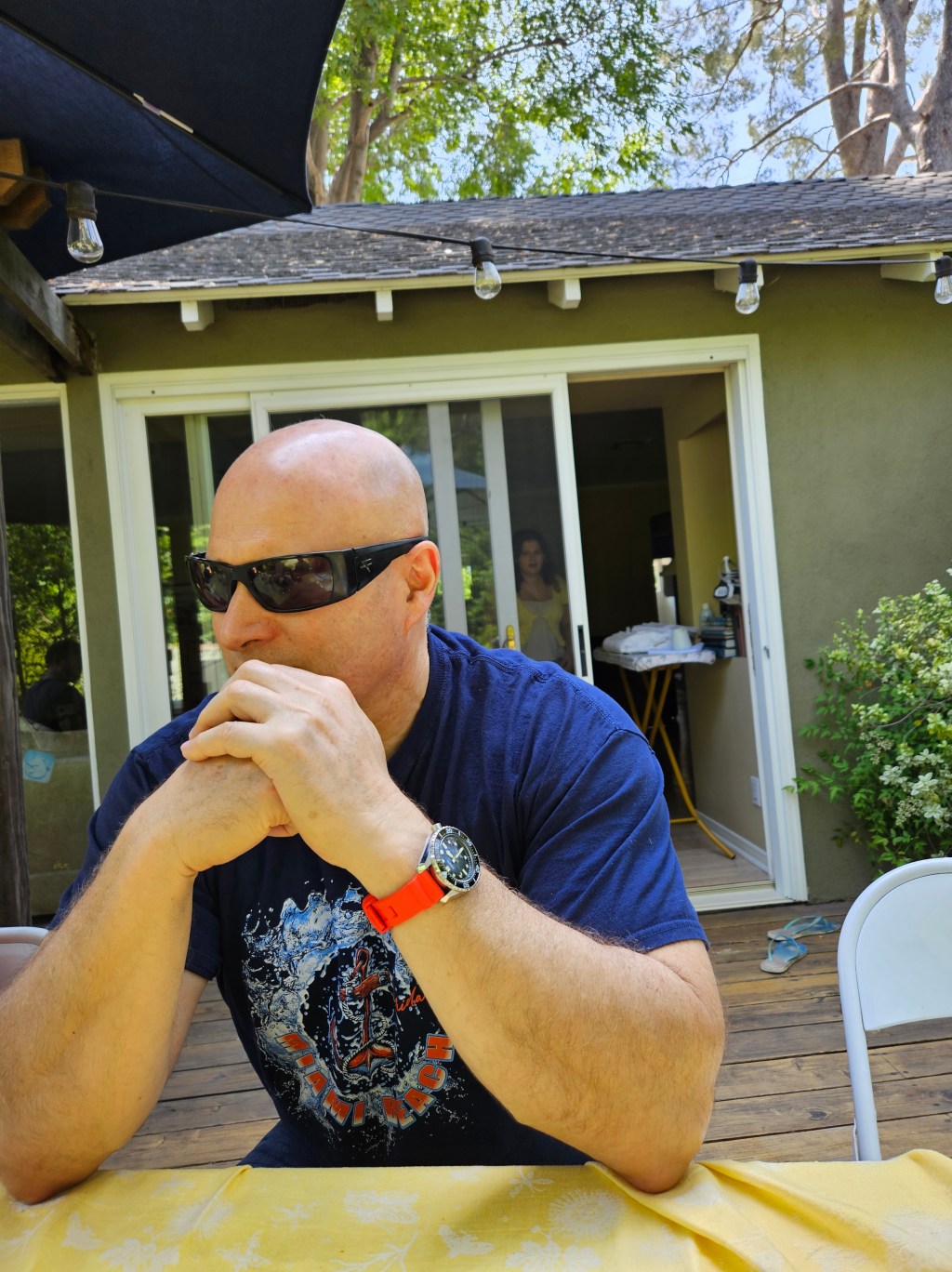
    At 63, the tectonic plates of my watch obsession finally shifted—and not with a polite tick-tock, but with the guttural crack of a midlife epiphany. For two decades, I was wrist-deep in the horological trenches, swapping bracelets for straps at 61 like it was some major spiritual awakening. Little did I know, that change was a mere amuse-bouche before the main course: total psychological detachment from the game. The forums? The drop chatter? The breathless anticipation of this week’s 44mm status symbol? I’ve danced that jittery dopamine jig too many times. The thrill is gone—and thank God for that.

    There’s also the inconvenient matter of time, that precious commodity I once used to justify swapping three watches before lunch. These days, I’m not auditioning for a Bond reboot, nor am I pacing the boardroom like a man with a GMT and something to prove. I don’t need a “hero piece” to validate my existence. I’m not branding myself in public spaces anymore—I’m inhabiting a quieter, more deliberate orbit, where the only eyes on my wrist are my own. Six or seven watches now feel like a well-edited playlist. The days of horological hoarding are over.

    I’ve thought about unpacking this transition on my YouTube channel, but the idea of filming another selfie in bad lighting feels absurd. I don’t need to see myself on screen clutching another dive watch like it’s the Holy Grail. Mortality, it turns out, is a hell of a lens to look through—and it’s clarified what actually matters. I don’t crave applause from collectors. I crave integrity, focus, sweat, creativity. I’m dropping weight, playing piano, swinging kettlebells, and gearing up to teach my next writing class—one populated entirely by college football players who will be writing about the ethics and technology of brain trauma in their own sport. That’s not just a syllabus. That’s a mission.

    Watches? I still love them. Deeply. But they no longer squat in the center of my brain, stirring up late-night eBay searches and existential unrest. That relationship has matured—or maybe just mellowed. The romance isn’t over, but the mania is. And in its place is something better: clarity, purpose, and a little more room on the wrist for life itself.