Tag: music

  • Blast from the Past: Grundig Satellit 750

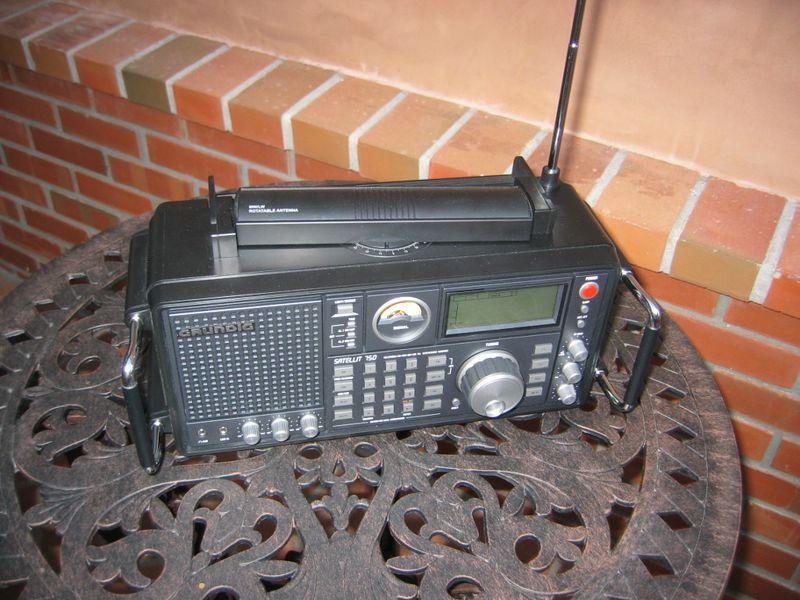
    IMG_3672


    Greg, a reader from Ann Arbor, Michigan, was kind enough to Fed Ex me his Grundig Satellit 750, which has a Kiwa speaker upgrade. Therefore, I have to assume the stock 750 speaker sound has less fidelity than the one I’ll be using by my bedside for the next two weeks. 

    As I will be using the 750 as a bedside radio, I’m not too worried about fidelity since I’m not cranking the thing up by any means. All that I ask is that its AM sound not be as harsh and punishing as my C.Crane CSW. Thankfully, the 750 is easier on the ears. 

    IMG_3674

    When I took out the 750, I was amazed like other Tecsun radios at how light the radio is (Tecsun makes many Grundig and Eton radios, including the GS750). I prefer my radios to be heavy like tanks, which is why several months ago I went on a vintage radio spree, getting my grubby hands on some classics so that I could use them as a point of comparison for some of today’s radios. 

    IMG_3675

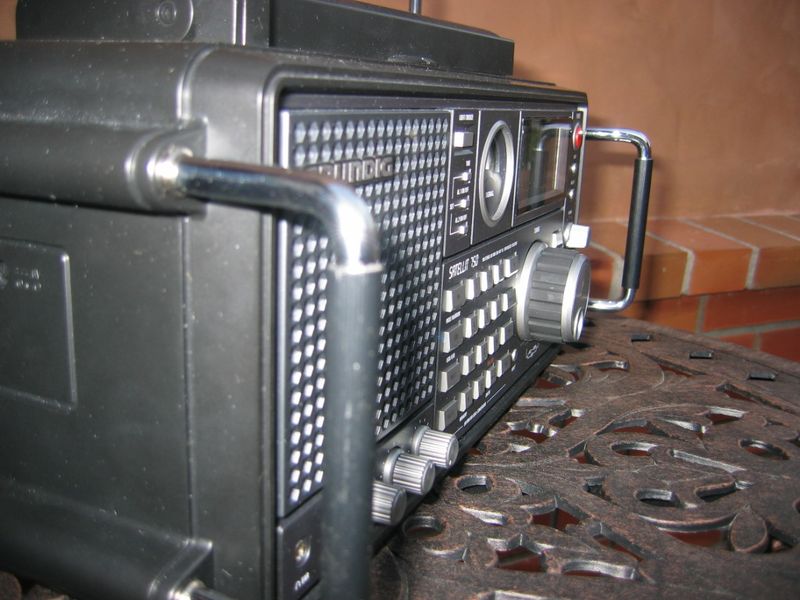
    Here’s the bright side of the GS750’s light weight: It makes a very good portable radio, much better than I initially thought. It’s easy to handle and not as big in person as you might think. If you’re a camper or do a lot of outdoor radio listening, I can recommend the GS750. 

    IMG_3679

    One thing I like about the 750 is the way it looks on my bedside table. Its cockpit control styling makes me feel like a little kid on a toy airplane or flying in a pretend rocket to Mars. 

    The 750 by your bed says boldly, “You have arrived at the Mothership.” Before I geek-out too much, let me transition to function and performance.

    The learning curve for time controls, direct key entry, and presets is fairly easy. It took me about five minutes to comprehend the manual; however, I have toyed around with Tecsun radios before, so I am fairly familiar with their functions.

    As a bedside radio, it’s nice that you can toggle through your stations with the up and down arrow buttons. 

    I haven’t used this radio at night yet and doubt it is illuminated sufficiently without my needing a pen flashlight. Clearly, the 750 is more of a general table radio than a clock radio, but I’m using it by my bedside because that is where I listen to radio most often and I want to get as many hours in as possible during my two-week loan.

    What about performance? Excellent on FM and AM. I was able to eliminate birdy on weak AM stations by rotating the rotational antenna, called a Gyro on vintage Panasonics. 

    The FM antenna is huge and can be rotated 360 degrees. There is also an FM antenna button that gives you varying degrees of attenuation to maximize reception. 

    I’d say FM was as strong as my current FM champion, my C.Crane CSW. Better yet, the GS 750’s AM sounds much better. 

    Truth be told, I am more impressed with the GS750 than I thought I’d be. I love its look, its performance is excellent, its functions and options are plentiful without being too busy. 

    I think if I were to buy one on Amazon for their sale price of $220 and free shipping, I’d have to put it in the workout room and move the Boston Acoustics Horizon Duo, a completely different kind of radio, in my bedroom. The question is will I buy a GS750? Hard to say. For about $150, I should be able to get a C.Crane CCRadio 2, which may be a better fit in my bedroom. While I am confident the CCRadio 2, made by Sangean, will match the GS750’s AM performance and have richer speaker sound, I am not convinced that its FM will be able to compete with the GS750’s.

    IMG_3680

    In any event, I don’t have to make a decision now. I have another two weeks with the GS750 to think it over.   

  • Blast from the Past: Telefunken Banjo Automatic

    Blast from the Past: Telefunken Banjo Automatic

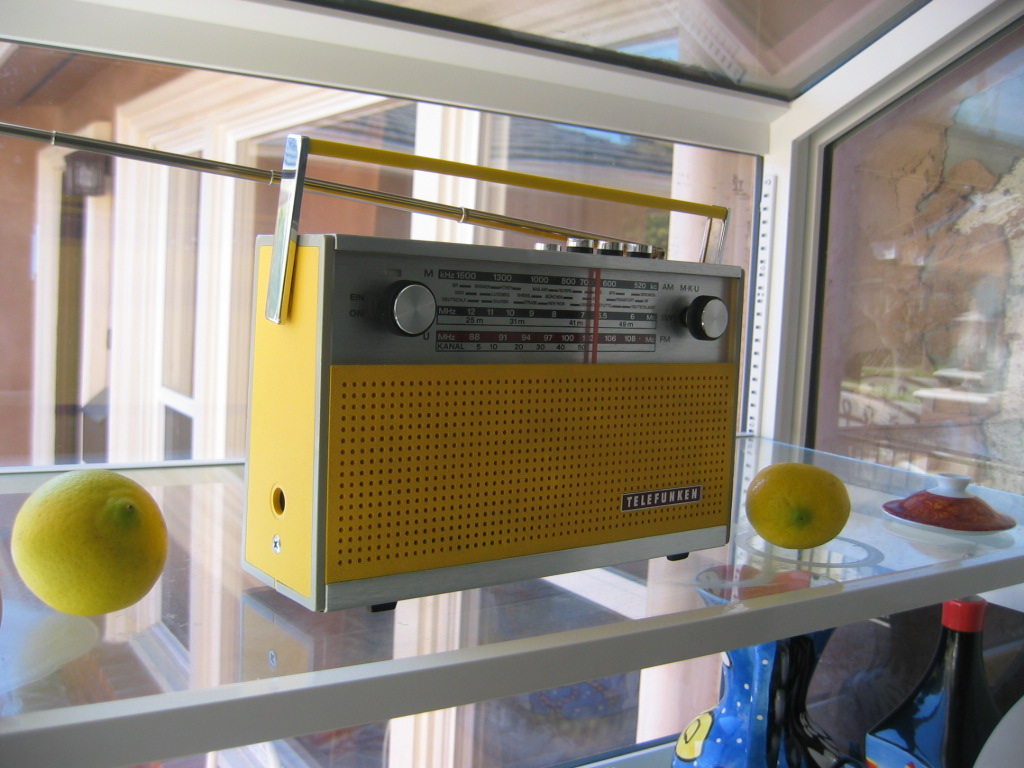
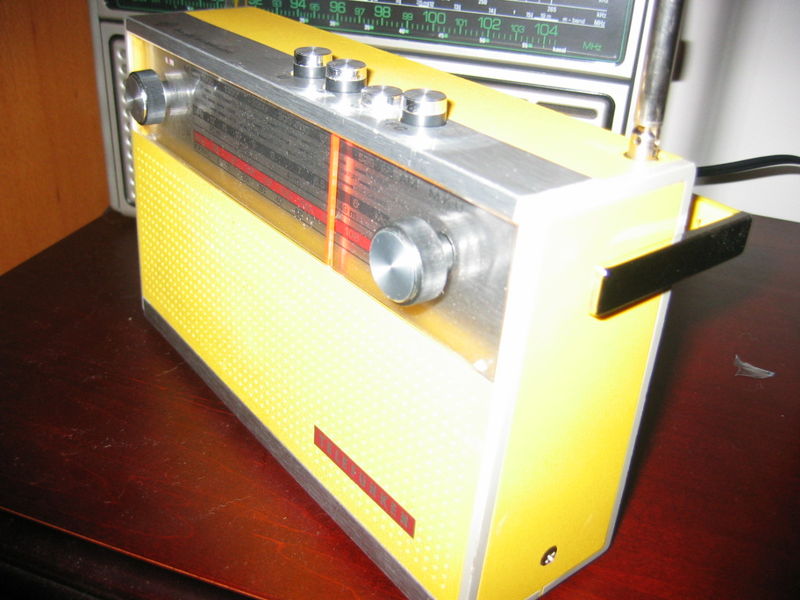
    Six inches tall and barely ten inches across, the Telefunken Banjo Automatic delivers a lot of effortless sound for a radio its size. This vintage came in good shape as the seller had cleaned it up, even took it apart and did a “deep clean” to all the knobs. So there’s no static to speak of. This arrived with no AC. It’s feeding of six C batteries.

    Don’t be fooled by the swanky yellow. This colorful radio has outstanding FM reception and while the AM is above average it cannot light a candle to my bigger, brawnier Telefunken Partner 700, which at $40, cost me about half of the Banjo price. 

    The Banjo’s controls are smooth, and this bright yellow Telefunken feels upscale through and through, but if you’re Telefunken hunting, I recommend the bigger Partner 700. As good as the spunky yellow Banjo is, its speaker sound and AM sound loses to its bigger, more serious cousin. 

    In some ways it’s not fair to compare the two Telefunkens. The Banjo is a smaller portable, the Partner a heavier table radio. If I compare the Banjo to the similar sized Sangean PR-D5, the Banjo wins in speaker sound. The PR-D5’s small stereo speakers are so tinny my ears have trouble picking up the sound. In contrast, the Banjo fills a room easily. The FM on the Banjo is better than the PR-D5 and AM sound is similar. Of course, the $80 PR-D5 is new and digital and has presets so the comparison doesn’t quite work either.

    One strange quirk about the Banjo that I’ve never encountered before is that AM numbers are inverse to the FM numbers so that 103.1 FM, for example, is close to 640 AM. Strange, but no big deal.

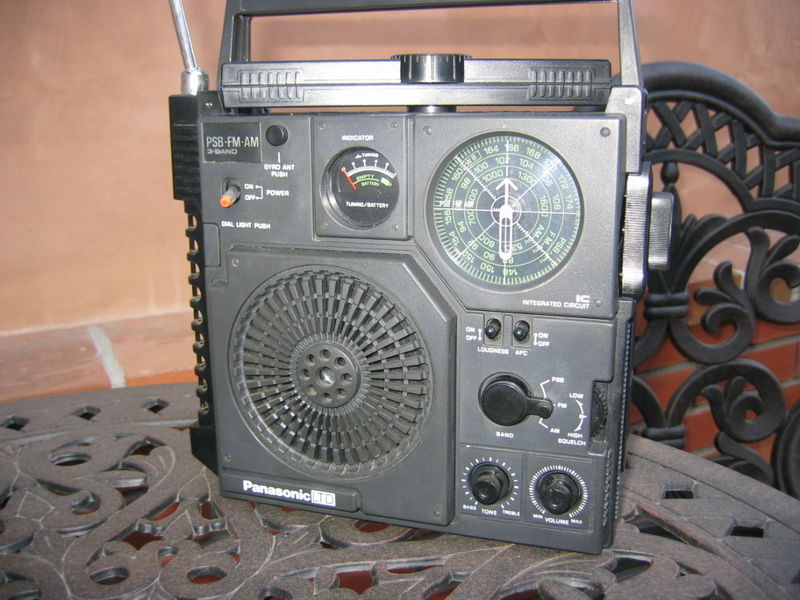
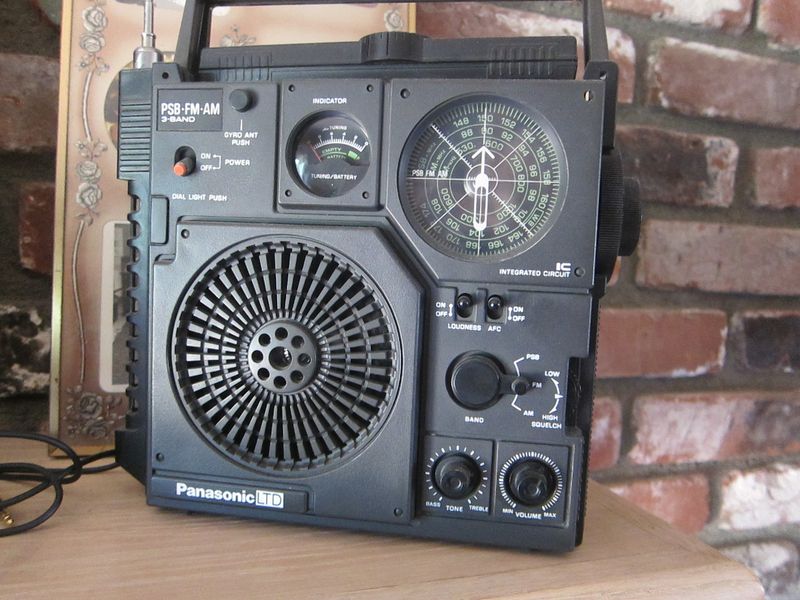
    If you’re looking for a small travel companion, the Banjo is high-end and will not disappoint. If you’re looking for the majesty of a Panasonic RF-3000 (one just sold for over $300) and want to save some dough, check out the Partner 700, which I stole for $40.

    IMG_3564
  • Blast from the Past: First Look at the Panasonic RF-877


    IMG_3460

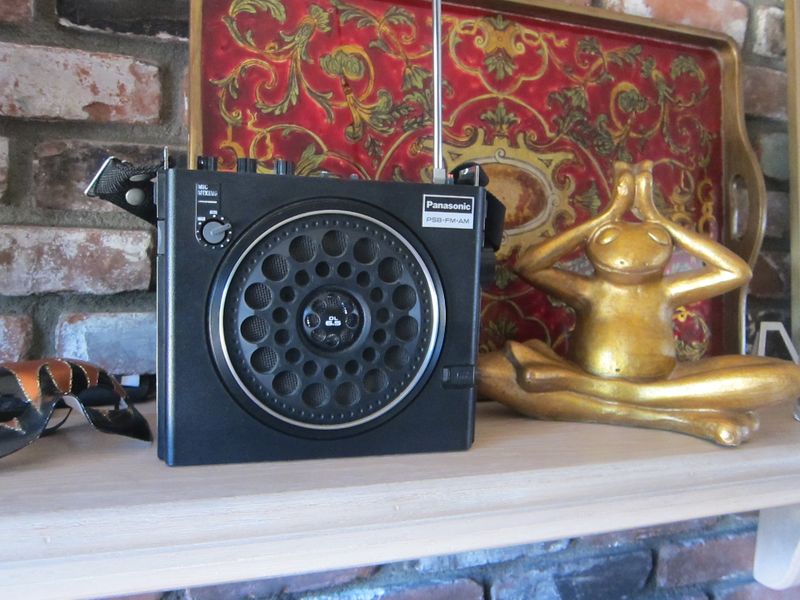
    Measuring nine inches across and almost ten inches high, the Panasonic RF-877 emerged from its box looking rather small. Something about its military bearing that suggested a larger size, but no matter, its looks did not disappoint. Evoking a past era when materials were of a higher grade and the distinction between phoniness and authenticity was sharply drawn, the sturdy RF-877 proved to be an apex performer. 

    Disclosed flaw was a missing antenna tip, which kept the bidding low. I bought the RF-877 for a parsimonious $62 plus $18 shipping. The question is does the missing tip compromise FM performance? A little, maybe. FM performance on weak stations such as 89.3, 88.9, 103.1 seemed only slightly compromised based on the tuning/battery indicator. The compromise is so negligible however that I do not feel compelled to replace or repair the telescopic FM antenna.

    IMG_3463

    AM sound, enhanced with the Gyro pop-up antenna, is the real standout here. The notorious 710 ESPN comes in with nor birdy background noise. 

    IMG_3466

    The speaker is clear and full, but does not offer as much sound as the RF-888. In terms of pure volume, the RF-888 appears to be three times stronger than the RF-877. Comparing the two, I find the heavier, more stout 888 to be a superior radio. I really like the RF-877, but I truly love the RF-888. Of course, the RF-888 cost me a handsome $210. While I prefer the RF-888, I give the RF-877, especially one with a fully-extending FM antenna, the highest recommendation. 

    Update: My esteem for the RF-877 has increased as I’ve become more familiar with it. As I write, the speaker sound is really filling my office rather well. I must say I was guilty of exaggerating the disparity of sound between the RF-877 and the RF-888.  I’m listening to the pennant match between the Rays and the Red Sox on the dreaded “birdy” station 710 AM. I popped up the Gyro AM antenna (6.5 inches long) and moved it until the birdy was completely gone. If you can find one of these “GI Joe” radios in mint condition for $150 or so, snatch it. 

  • Blast from the Past: Panasonic RF-3000, The Tank

    I picked up the package of the Panasonic RF-3000 and could already feel the presence of greatness evidenced by the density of the box. Inside was a 25-pound radio. What do today’s radios weigh? Two pounds?

    The heft of this vintage reminds me of a beloved car my parents bought, a brand new 1967 Chrysler Newport. My parents loved that car and would still have it today except that a troubled neighbor boy attempted to steal the car in 1974 or 1975. The car rolled down the steep hill of a street we lived on and was totaled (as a side note that same troubled boy stole another car a few years later, crashed it, and suffered permanent brain damage, but I digress).

    My point is today’s products are cheap and often chintzy. This can not be said of the solid looking RF-3000. Its only flaws are that twice the previous owner, suffering from dotage presumably, felt compelled to inscribe his social security on the radio. Perhaps this is a testament to his proprietary love of the radio, well deserved. In any case, the person managing the deceased radio owner’s estate disclosed this flaw on eBay. Sorry, there’s something unwittingly macabre about this review. Please let me proceed. 

    Why does a man want a heavy radio? The same reason a man wants 300-500 horsepower in his sport sedan. One word: Confidence. The RF-3000 delivers and more.  

    I turned on the RF-3000 and was stunned by crystal clarity and a salient quality of sound that in my subjective mind may eclipse its legendary brother, the RF-2200. Stations came in with ease. The birdy on the dreaded 710 AM vanished with a slight rotation of the hulking 3000. 88.9 KXLU came in loud and clear. Same for 89.3 and 103.1, other touchy stations. Let’s get real. The 3000 puts today’s radios to utter shame (forgive me, but hyperbolic emotion lends itself to cliche).

    IMG_3362

    This radio is huge. My wife says it looks like a relic from The Hatch in ABC’s hit TV show Lost. As I said earlier, it evokes the grand heft of my parents’ 1967 Chrysler Newport. 

    What did I pay for this booming radio that is so solid I am reminded of the hull of a cruise ship? A paltry $87. You can buy some mediocre radios out there for twice that much. I’m glad I snatched this thing. What a treasure. File the vintage RF-3000 as more grist for middle-aged curmudgeonly men to rant and bicker about the loss of quality in the Modern Age. 

    IMG_3363
  • Radio Obsession 2015: State of the Radio Collection: “I’ve Got What I Want”

    Radio Obsession 2015: State of the Radio Collection: “I’ve Got What I Want”

    IMG_6254

    When I got bit by the radio bug in 2004 and bought every Grundig, Eton, Kaito, and Tecsun being released, I started my radio education. At the time, I also bought some vintage Panasonic, Sony, and Telefunken radios. 

    Has my passion died? Not really. Here’s the thing. I’ve got what I want. And I know my limitations regarding my tech skills, so I only use my mint Panasonic RF-888 shown below when I want a taste of vintage glory. My beloved Panasonic RF-877 “GI-Joe Radio” (top of the post) shown has amazing FM/AM reception but its sound is intermittent due to oxidization inside the pot. I may have to hire someone to clean it out. 

    IMG_6252

    I’m resigned to the fact that while I have the best modern radios for suiting my listening needs, none of them have the majesty of a Panasonic RF-2200 or a lesser priced GE Super Radio II. 

    In any event, here’s my current collection:

    IMG_6250

    The C.Crane SW Radio plays in my workout den/office. I wanted it in my bedroom but its FM antenna too easily hooked on my elbow when I was getting up in the dark, so back in the den it went. Strengths: FM and loud sound. Weaknesses: None. 

    IMG_6258

    C.Crane 2E plays in the kitchen. I bought this a year ago evidencing that I’ll still buy a new radio if I am confident that it is an upgrade to what I already own. The 2E proves to be better than its previous incarnation in terms of sound and FM reception but only by a hair. Weakness: Like all my radios, 640 AM is too strong in Torrance and gets overload in the sound of squawking goose. I gave up on 640 and now listen to Leo Laporte podcasts.

    IMG_6263

    C. Crane Plus in the girls’ bathroom. Nearly as good as the 2E. Ed bought this for me for 7 dollars at Fryes. My greatest radio deal ever.

    IMG_6262

    Tivoli Songbook in the master bathroom. It’s small so it fits on the tiny bathroom table. FM is fine. AM is subject to interference.

    IMG_6259

    Sangean WR-2 plays in the master bedroom. I love that its earbud jack is in the front. FM is great. AM is above average. Problems: The on-off button sometimes needs to be pressed 3-5 times to operate, a condition that can be improved with a Q-Tip dab of Deoxit.

    So there you have it. I still love my radios. I don’t buy them much anymore, not because I’ve lost my passion but because I’ve got what I want.   Related articles

  • C.Crane Solar Radio: Attention to Details Makes It a Winner

    C.Crane Solar Radio: Attention to Details Makes It a Winner

    20250115_153540

    The C. Crane Solar Radio, paired with the optional AC adapter, arrived on Day 9 of the Los Angeles fires—perfect timing for some disaster preparedness. My first impression? Surprisingly compact and, dare I say, stylish. Its buttons and controls are refreshingly intuitive, a rare quality in emergency gadgets that usually look like they were cobbled together by paranoid survivalists.

    Then I met the battery door—a stubborn slab of plastic that wouldn’t budge. My fingers failed, so out came the Swiss Army knife, turning what should’ve been a simple battery swap into minor surgery.

    20250115_150949

    Once powered up (on batteries, to avoid interference), I tested FM reception. Not bad. It’s sensitive, though slightly weaker than my Sangean PR-D12 when pulling in 89.3, a notoriously tricky station here in Torrance. Still, it handled it well. KUSC 91.5, though, was a lost cause—same as the PR-D12. Odd, since during my obsessive radio blogging days in the mid-2000s, 91.5 was crystal clear. Maybe it’s not the radios. Maybe it’s today’s electromagnetic smog choking the airwaves.

    Later that evening, as I tackled the dishes, the FM sound impressed me. 89.3 came through loud and clear, delivering crisp voices on the news.

    AM performance? Initially disappointing—distant, hollow, like voices echoing from a well. My friend Mark reminded me that modern homes are electronic war zones. Between Wi-Fi routers, smart devices, and God knows what else, AM hardly stands a chance.

    But then I tweaked the settings. Switching the bandwidth filter from 2.5kHz to 4kHz transformed the AM performance. Suddenly, it shined.

    The speaker is pleasant but modest. This is a small radio, after all. Luckily, the hidden High Power Audio Mode (press buttons 1 and 5) gives it a subtle boost—not exactly concert hall quality, but enough to rise above kitchen noise.

    Where the C. Crane Solar Radio really excels is in its power versatility—two battery types, a solar panel, and a hand crank. Practical, yet it doesn’t scream apocalypse gear.

    So, where does it fit in my collection? The PR-D12 stays in the garage for kettlebell workouts. The Solar Radio earns a spot over the kitchen sink, likely becoming my wife’s go-to. With solid FM performance, customizable AM tuning, and thoughtful design, the C. Crane Solar Radio gets the details right—and comes out a winner.

    20250115_150937
  • The Love of Radios and the Power of Gezelligheid

    The Love of Radios and the Power of Gezelligheid

    20250226_132117

    The Love of Radios and the Power of Gezelligheid

    I’m fully aware that my love for radios borders on the irrational. When I see a certain type—say, the Tecsun PL-680 or PL-660—something in my brain short-circuits. I’m instantly enchanted, as if I’ve just glimpsed an old friend across a crowded room, and at the same time, I’m comforted, as if that friend just handed me a warm cup of coffee and told me everything was going to be alright.

    A radio isn’t just a device; it’s a symbol, though I haven’t quite worked out of what exactly. Maybe it represents the art of slowing down—of sitting in a quiet room, wrapped in a cocoon of music or in the company of voices so familiar they feel like beloved houseguests. Or maybe it’s something more primal, a sanctuary against the chaos of the world, a frequency through which I can tune out the profane and tune into something sacred.

    The word that comes to mind when I hold a radio is cozy—but not in the kitschy, scented-candle, novelty-mug kind of way. This is deeper than that, more akin to the Dutch word gezelligheid—a term that encompasses coziness, warmth, companionship, and the ineffable comfort of simply being. Radios don’t just play sound; they create atmosphere. They transport me back to Hollywood, Florida, sitting on the porch with my grandfather, the air thick with the scent of an impending tropical storm, the crackle of a ball game playing in the background like a heartbeat of another era.

    Many have abandoned radio for the cold efficiency of streaming devices and smartphones. I tried to do the same for over a decade. I failed. Because gezelligheid—that feeling of simple, enduring pleasure—isn’t something you can replace with an algorithm. Some things, no matter how old-fashioned, still hum with life.

  • Why You Prefer Your Radio to a Streaming Device

    Why You Prefer Your Radio to a Streaming Device

    880 and 660 with MM300

    If you’re like me, listening to classical music on your Tecsun PL-990 or PL-880 while reading a book is a real pleasure. You could listen to the same radio station on a computer or streaming device and it wouldn’t feel the same. 

    Your preference for listening to content on a high-performance radio rather than an Amazon streaming device likely stems from a combination of tactility, ritual, and authenticity.

    1. Tactility and Presence – Your radios are physical instruments with dials, knobs, and antennas, requiring interaction to fine-tune the signal. This act of engagement makes the listening experience feel more intentional, compared to simply clicking on a streaming app.
    2. Ritual and Skill – Tuning into a hard-to-get FM station on a high-performance radio, especially under varying atmospheric conditions, feels like an acquired skill. When reception is challenging, getting a clean signal feels like a small victory—something a streaming device doesn’t provide because it simply works or doesn’t.
    3. Authenticity and Directness – With FM radio, you’re receiving a direct broadcast, a real-time transmission from a tower to your receiver, unmediated by algorithms, compression, or internet connectivity. It feels like you’re catching a live signal out of the air, whereas streaming feels filtered through corporate infrastructure.
    4. Immediacy and Atmosphere – FM radio has static, subtle signal fluctuations, and environmental influence—all of which make the sound feel more alive compared to a clinically perfect digital stream. There’s a romance in the imperfection, much like the sweep of a mechanical watch’s second hand versus the precise ticking of a quartz.

    Connection to Your Watch Preferences:

    If you’re a radio person, you may also be a watch enthusiast, in which case  there’s a strong parallel between your love for high-performance radios and mechanical watches:

    • Mechanical watches and FM radios require physical mechanisms to operate—whether it’s gears and springs or ferrite antennas and signal processing. Quartz watches and streaming services, on the other hand, rely on microchips, batteries, and external data to function.
    • Both require skill and engagement—adjusting a radio for the best reception is akin to winding a watch, adjusting its timing, or understanding its movement. There’s an art to it.
    • Both provide a sense of tradition and independence—A mechanical watch keeps ticking without batteries, just as an FM radio pulls a signal out of the air without needing an internet connection. Both feel like they give you a direct, unfiltered experience rather than a pre-packaged digital one.

    Your attachment to radio over streaming—and mechanical over quartz—likely comes from a deeper appreciation for analogue, self-sufficient technology that requires a human touch. It’s about the process as much as the result.

  • A Nostalgic Ode to the Tecsun PL-660

    A Nostalgic Ode to the Tecsun PL-660

    20250123_150400

    Against every shred of common sense I possess, I’ve joined several Tecsun radio forums—a decision akin to a sugar addict moving into Willy Wonka’s Chocolate Factory and sleeping under the chocolate river. It’s not just unwise; it’s a slow, delicious path to ruin. Within minutes, the forum zealots were chanting in unison: “You must own a PL-660 or PL-680! These are relics from the Pre-DSP Glory Era, back when Tecsun radios were free from the infernal chuffing, muting, and choppy tuning that plague DSP models. Think smooth analog cruising versus a hyper-caffeinated, turbocharged sports car.” Naturally, I bit the bait.

    The timing was serendipitous—or dangerous, depending on your perspective. During the height of my radio obsession, circa 2008, I owned a black Tecsun PL-660, and it was the crown jewel of my collection. But, as is the curse of all obsessions, I sold it during a fleeting moment of sanity, a decision that haunted me. When the January 2025 Los Angeles Fires reignited my passion for radios—because what better time to tinker with antennas than during a climate apocalypse?—the one radio I truly mourned was the PL-660.

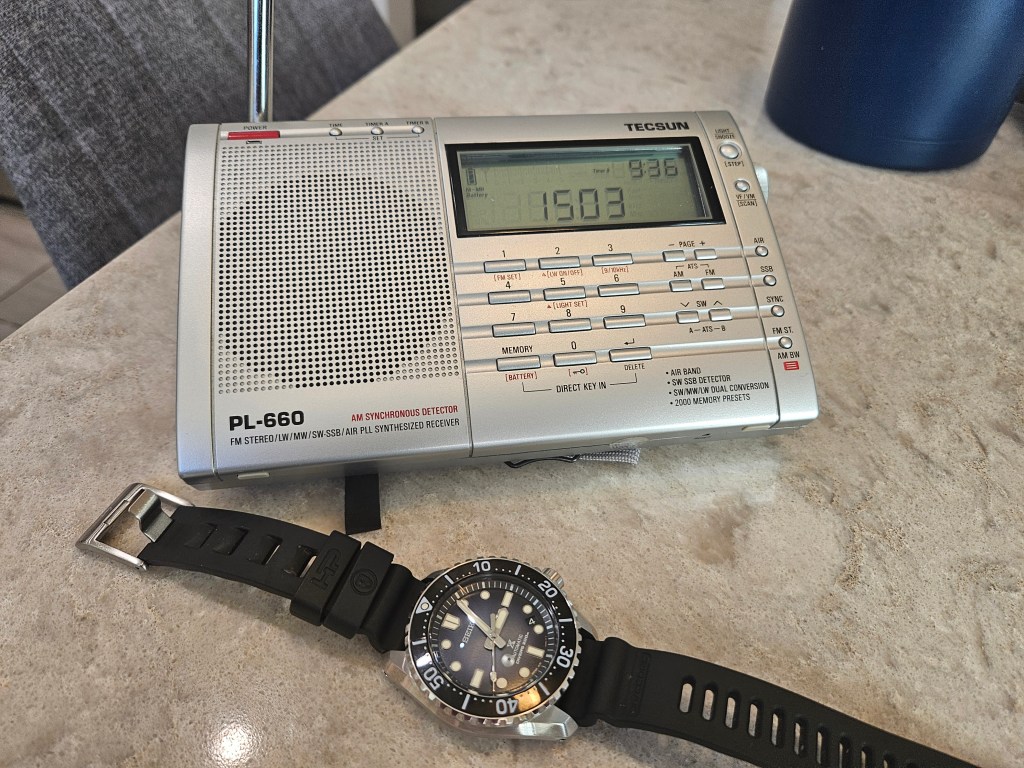
    Enter eBay, the Pandora’s box of impulse purchases. I tracked down a silver PL-660 from a seller in Canada. At $68, it felt like a steal. Add $30 for shipping, tax, a Tecsun adapter from Anon-Co, and four AA rechargeable batteries, and suddenly my “steal” was a $140 splurge. But what’s money when you’re reuniting with a long-lost love?

    When the silver PL-660 arrived, it was nearly pristine, as if frozen in time. The box, manual, and accessories were all there, minus the adapter. I tested its AM and FM performance and, unsurprisingly, found it nearly indistinguishable from my PL-880—a radio I’d been coddling like a newborn in my bedroom. Sure, the 880’s speaker has a richer timbre, but the 660 holds its own. AM reception? The 660 might edge out the 880, but given the ever-shifting electrical interference in my house, testing it felt like comparing snowflakes in a blizzard. FM? Practically identical.

    And yet, here’s the kicker: I prefer the PL-660. Why? Nostalgia, for starters. It’s been 15 years since I last held one, and its reunion felt like meeting an old friend who hasn’t aged a day. But it’s more than sentimentality. The PL-660 exudes Pre-DSP mystique, wearing its analog pedigree like a hero’s badge of honor. Add to that the rumors swirling on the forums about the PL-680 taking its final lap before extinction, and I developed a textbook case of FOMO.

    Aesthetically, the 660 is a triumph. The PL-880, while a solid performer, looks like it was designed by two committees: one in charge of the radio chassis, the other tasked with slapping on an oversized speaker as an afterthought. In contrast, the PL-660 feels like it was forged from a single, unified block of silver (or black, if you’re lucky enough to find one). It’s monolithic, almost talismanic, with a heft that whispers, “This is not a toy.” Holding it feels like gripping a miniature obelisk of radio perfection.

    PL 880 & Uemura 1

    Naturally, I’m already scheming to buy a second PL-660 or perhaps its sibling, the PL-680, to keep as a “backup”—because if you love a radio enough, redundancy becomes an art form. And, because I can never leave well enough alone, I know I’ll spend the coming weeks obsessively swapping locations, putting the 660 in the bedroom, then the kitchen, then back again, until my brain short-circuits. Who needs stability when you can have perpetual indecision?

    In fact, I barely made it to my office to write this without feeling pangs of longing for the 660, which I’d left momentarily in the kitchen. Thirty minutes apart, and I was already waxing poetic about its brilliance, muttering, “Dude, you really love radios.” And it’s true—I do. Probably too much. But that’s the magic of radios: they’re not just devices; they’re companions, time machines, and portals to a world that feels more tactile and real than anything on your smartphone.

    Do I still love my PL-880? Of course. It’s a marvel of engineering, a steady presence in my life. But the PL-660? That’s my muse, my reminder of why I fell in love with radios in the first place. The 660 isn’t just a radio; it’s a reflection of who I am—an overthinking, signal-chasing, nostalgia-driven mess. And I wouldn’t have it any other way.

  • The Tecsun PL-880 Fulfills My Expectations

    The Tecsun PL-880 Fulfills My Expectations

    20250122_144605

    I wanted a Tecsun in my bedroom—not some soulless streaming device, but a real radio, one with warmth, charm, and that inexplicable magic that only live broadcasts can offer. The idea was simple: a companion for afternoon naps and late-night reading sessions set to the soothing sounds of classical or jazz. After all, what better antidote to our algorithm-driven existence than the analog embrace of a good radio?

    Back in my radio-obsessed heyday around 2008, I foolishly sold my beloved Tecsun PL-660. Call it hubris, call it a lapse in judgment, but I’ve regretted it ever since. To atone, I snagged a used PL-660 for the kitchen and, for my bedroom sanctuary, opted for a Tecsun PL-880—a model lauded as a minor deity among radios.

    Now, let’s talk about my brief but painful dalliance with the PL-990. I ordered it from the reputable Anon-Co, expecting greatness, only to be greeted by an AM band as dead as a doorknob. Heartbreaking. Back it went, and in its place came the PL-880, slightly used but fully tested. And let me tell you, the speaker on the 880 is a revelation—warmer and more inviting than the 990’s. It’s like stepping into a cozy jazz club versus a sterile concert hall.

    The 880 arrived ready for action, with AM and FM defaults already set to North American standards—no fiddling required. On “DX” mode, the AM band delivers stunning clarity with zero floor noise or interference. It’s a joy to listen to, unlike 95% of the radios cluttering the market that barely rise above the status of glorified paperweights. FM performance is similarly impressive, though 89.3 gave me a little attitude when placed too close to the wall. A quick relocation to the bed or a spot away from the wall solved that, but the rest of the FM dial? Flawless. KCRW 89.9, in particular, comes through like it’s broadcasting from my nightstand, even while the battery charges.

    Speaking of AM, charging compromises its pristine reception, so I stick to battery power for those late-night AM sessions. Setting presets and navigating pages took a bit of patience—about 15 minutes of trial and error—but the interface is intuitive enough that even if you mess it up, direct entry is a breeze.

    In short, the PL-880 does exactly what I hoped it would: it fills my room with rich, crystal-clear sound, providing a listening experience that feels both luxurious and intimate. Sure, the PL-990 looks great and has fantastic build quality, but for my purposes, the 880 checks every box at a fraction of the cost. Why throw extra cash at a feature set I don’t need?

    Here’s the thing about being radio-obsessed: a radio isn’t just a gadget. It’s a companion, a quiet presence that connects you to a wider world while anchoring you in your own space. The PL-880 is just that—a welcome friend who’s already earned its place in my home.

    20250122_144540