Tag: music

  • Sangean PR-D12 Is Solid on FM and AM in the Right Environment

    Sangean PR-D12 Is Solid on FM and AM in the Right Environment

    The following is from my now defunct Herculodge blog. I realized when I did radio testing again in 2025 that RFI (radio frequency interference) is a far greater challenge than it was in 2008. I need to play my radios on batteries, not AC adapters, and keep them away from walls, which is a shame because I really want the Sangean HDR-19, a wall adapter-only radio, which has gone up in price about $80 since even a couple of months ago.

    Since the Los Angeles Fires tore through Southern California in January 2025, I realized my household was embarrassingly underprepared for live news coverage. Streaming devices and smart speakers suddenly felt flimsy when the sky turns orange. I needed something sturdier, more reliable—like a good, old-fashioned radio.

    Enter Sangean, a brand I trusted a decade ago. I fondly remembered their radios delivering a warm, bass-heavy sound—pleasant, if not exactly hi-fi. My ancient PR-D4 still hums along in the garage, proof that Sangean builds workhorses. So, naturally, I picked up their new DSP-chip PR-D12, curious to see how it stacked up against its analog ancestor.

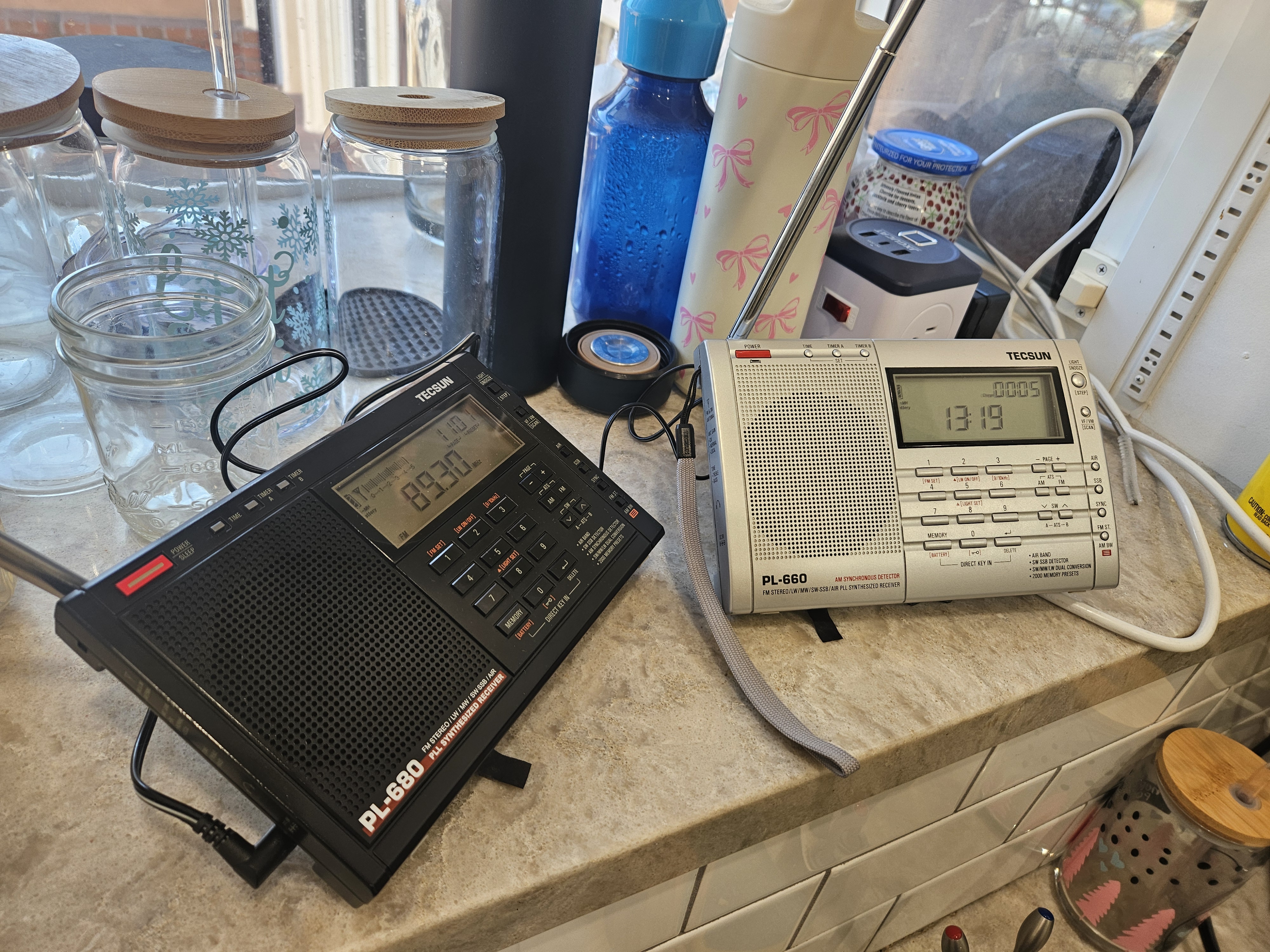
    The verdict? The D12 is brighter and more balanced than the D4, though the warmth I loved has cooled a bit. FM reception is a mixed bag. From Torrance, Pasadena’s 89.3 comes in strong with three bars and crystal clarity on the D12. On the D4? Same signal strength but with a thin veil of static, unless I awkwardly angle the antenna like I’m searching for alien life.

    But then things get weird. 91.5, my go-to classical station, sings smoothly on the D4 but sputters on the D12—two weak bars and static, no matter how I threaten the antenna.

    AM? Forget it. 640 AM is listenable but laced with floor noise on both radios. I twist and turn the radios to align the internal ferrite antennas like I’m cracking a safe, but the noise stays. Worse, AM talk radio voices sound like they’re broadcasting through a burlap sack. Long-term listening? Not a chance.

    What the D12 does have going for it is user-friendliness. Four preset pages with five slots each make navigating stations painless—perfect for my wife, who refuses to wrestle with complex manuals that read like an SAT prep book. She’s happy with 89.3 and 89.9 blasting clear and loud, so the D12 earns its spot in the kitchen.

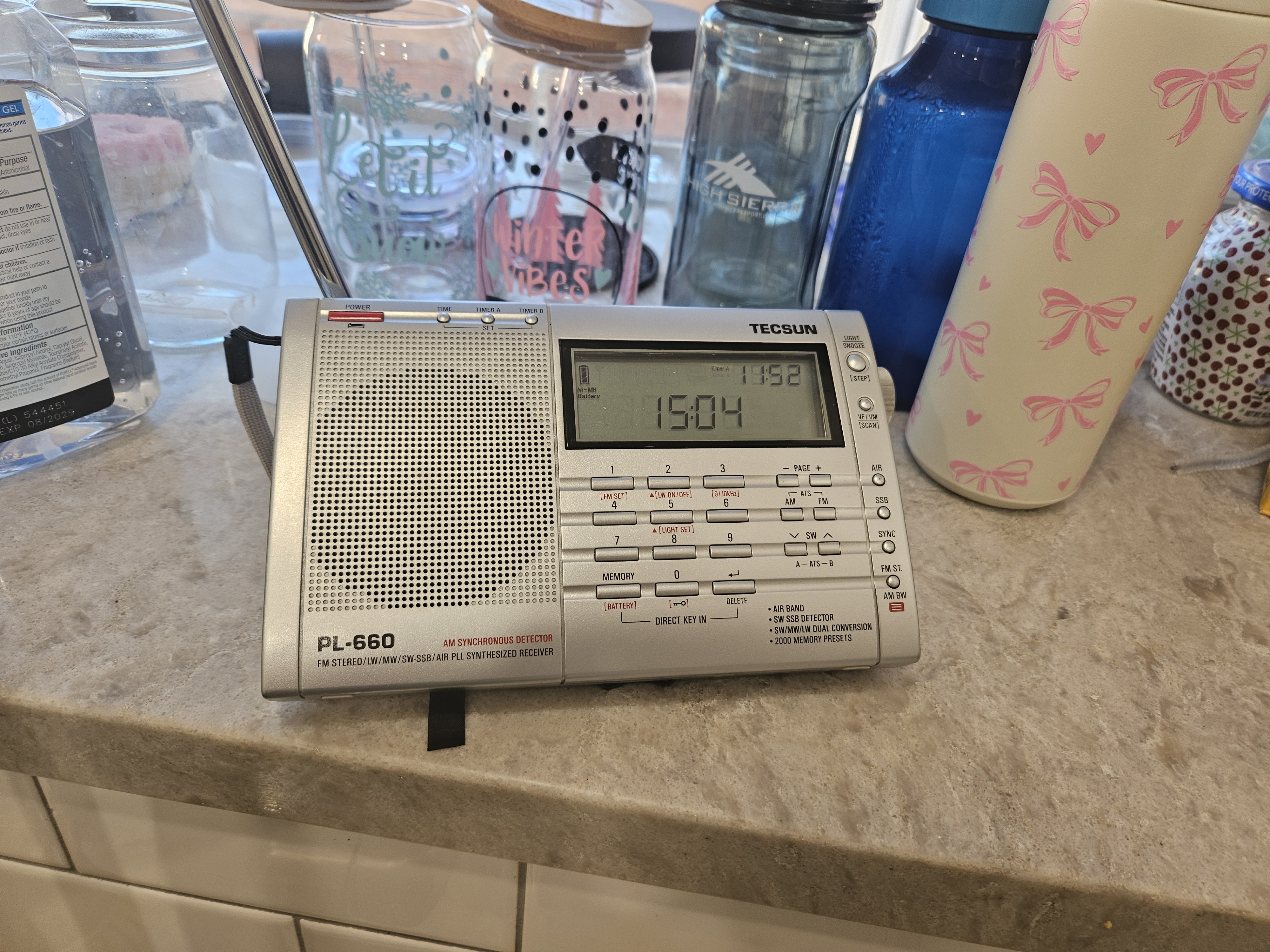
    Still, I can’t shake the feeling I need something more commanding, like the soon-to-arrive Tecsun PL-990x. Maybe it’ll crack the code on AM audio bliss. Until then, the PR-D12 holds the line—solid, if not inspiring.

    Moderate recommendation.

    Update:

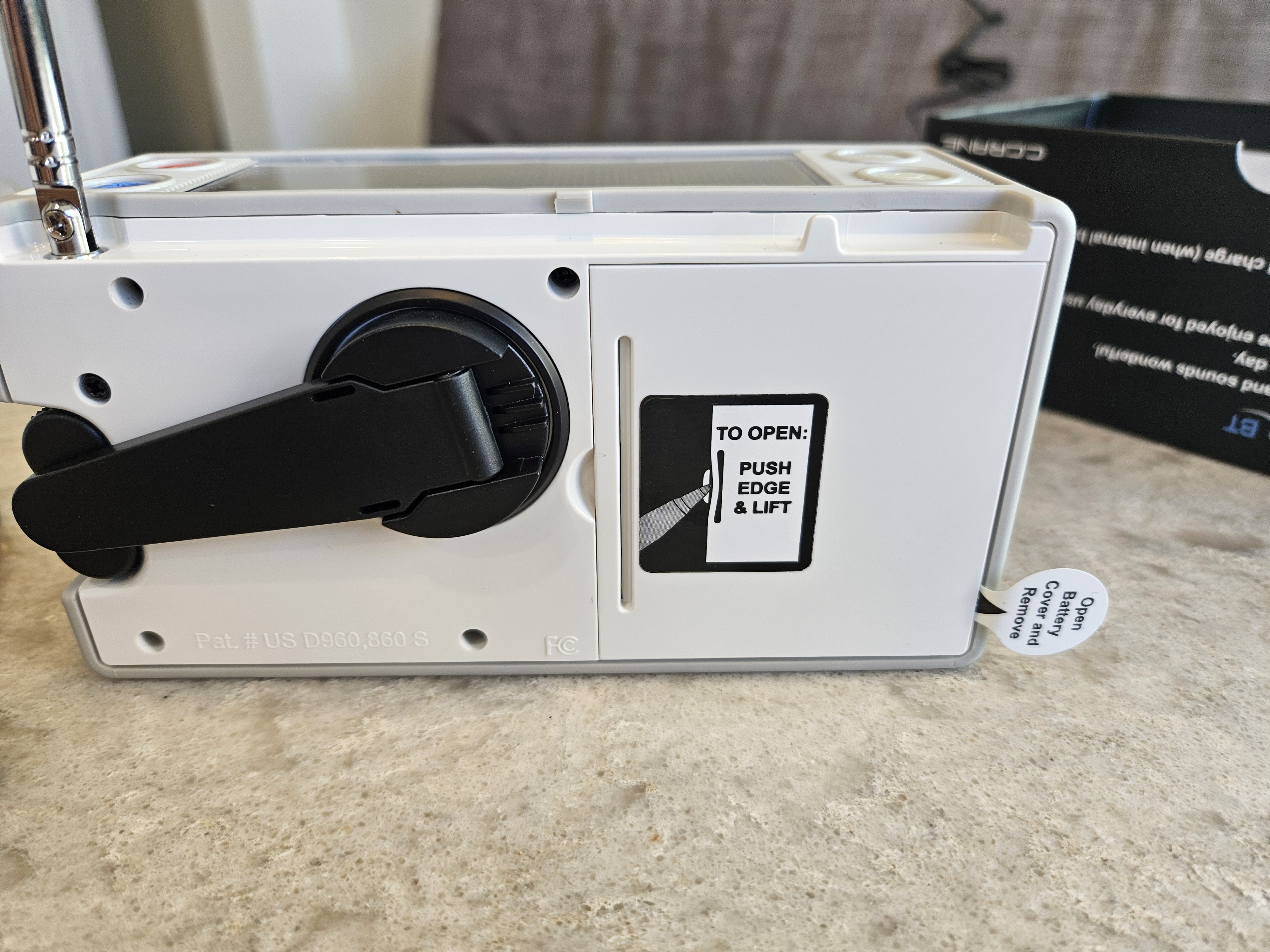
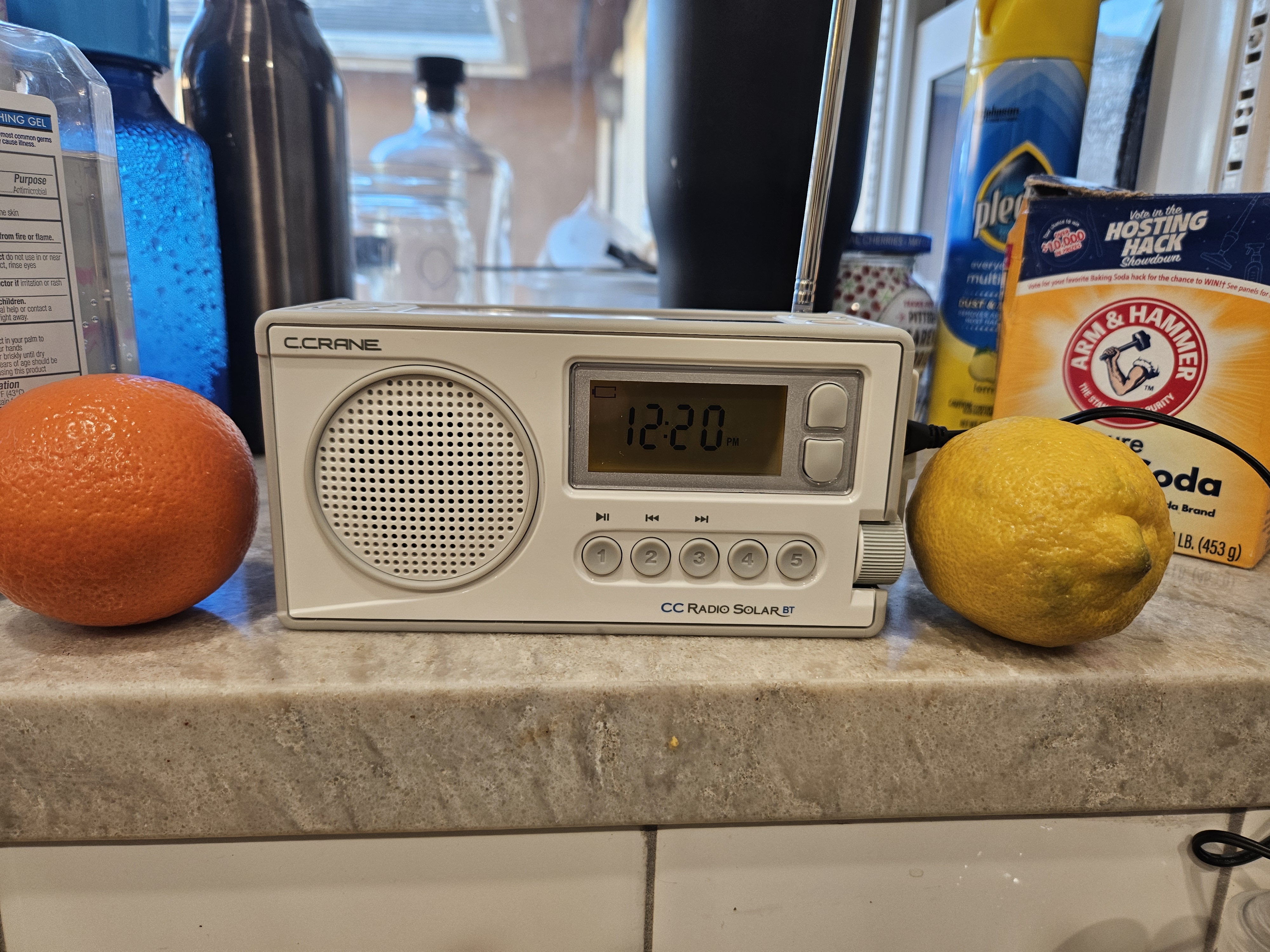
    I told my fellow radio enthusiast friend Gary about how I could not listen to the AM sound on the PR-D12 or my PR-D4, and he expressed the same sentiment. He said the only AM he can listen to from his vast radio collection is his now defunct C.Crane CC Radio-SW, which is a clone of the Redsun RP-2100. This made me sad because many years ago I enjoyed listening to AM on my Redsun RP-2100, but I fried it when I put the wrong AC adapter in it. Getting good AM sound out of a radio is hard these days. 

    Second Update:

    Three days after writing this review, I moved the PR-D12 to the garage where it sounds great on AM so I blame the kitchen, not the PR-D12. 

  • Qodosen DX-286: Purchased Twice, an Update

    Qodosen DX-286: Purchased Twice, an Update

    (originally posted on my Herculodge blog (on the defunct Typepad platform. I’m including an update on this post.)

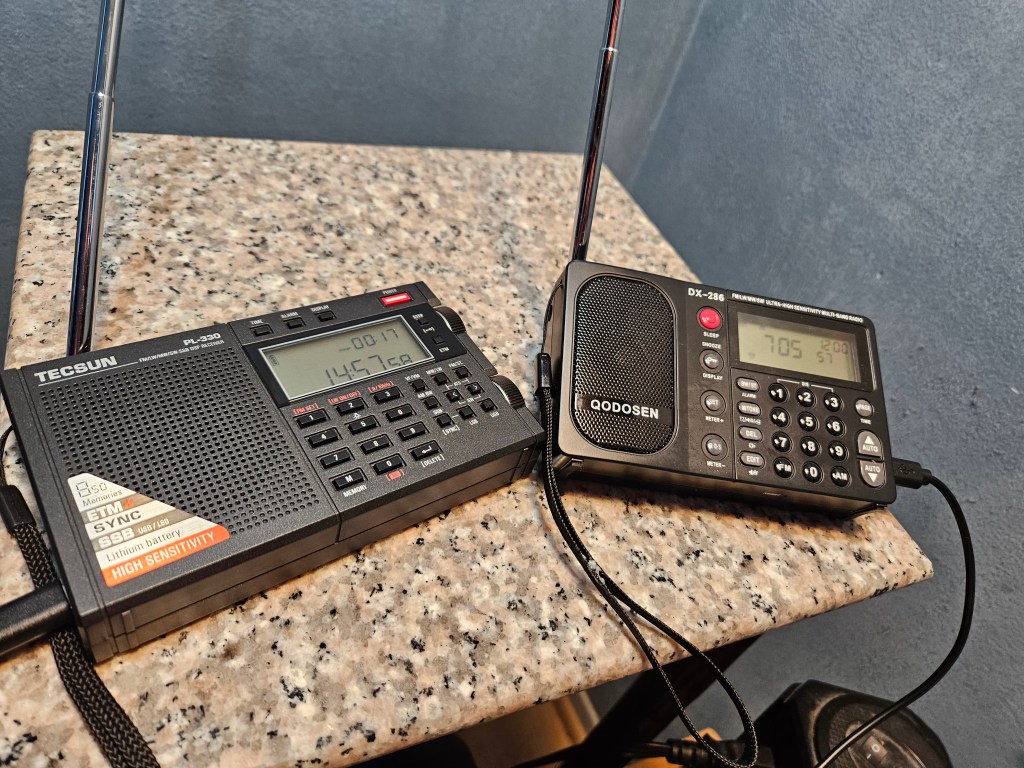
    The Qodosen DX-286 arrived last Sunday, Day 5 of the Los Angeles Fires, and I wasted no time putting it under the microscope. I scrutinized its build quality, tested its FM and AM performance, and after some thoughtful listening, I decided it was going back.

    To be fair, music sounded pleasant enough on the small mono speaker—soft, inoffensive, like background noise in a coffee shop. But voices? Hollow, thin, and oddly distant. It quickly became clear that this radio would only be tolerable if tethered to a pair of headphones. As for the physical design, the kickstand and battery door felt flimsy, as if one wrong move would snap them clean off. They inspired about as much confidence as a paper umbrella in a hurricane.

    AM reception? Surprisingly solid. FM? Good but not amazing. Despite all the hype about the Qodosen’s so-called super-powerful radio chip, it was no better than the Degen/Kaito 1103 I had over a decade ago. Sure, it effortlessly locked onto 89.3 from Pasadena, but it fumbled with the weaker college station 88.9, struggling like a kid lifting his first dumbbell.

    That’s when it hit me: I was never going to fall in love with this pint-sized radio. It felt like driving a rattling Mazda Miata through a wind tunnel—fun in theory, but exhausting in practice. So, I packed up the Qodosen and sent it back. I don’t blame Qodosen. I blame my unrealistic expectations and my failure to realize I didn’t want a radio this small for my bedroom. 

    In its place? The Tecsun PL-990X. Seven and a half glorious inches of luxury radio, a true cruiser compared to the jittery compact Qodosen. Don’t get me wrong—the DX-286 is a decent radio. I just realized I wanted something bigger, smoother, and built for the long haul. 

    Update:

    I rebought the Qodosen about a month after writing my original Herculodge review. I realized the speaker is excellent, its AM is superior to my Tecsun radios, and that it’s a keeper. One issue: The kickstand broke, so I play it flat on its back.

  • SZA in Our House: Why My Daughters and I Sigh When Taylor Swift Comes On

    SZA in Our House: Why My Daughters and I Sigh When Taylor Swift Comes On

    In my freshman writing class, I recently staged a little spectacle about thesis statements. To illustrate contrast, I pulled out two cultural heavyweights: SZA and Taylor Swift. Hyperbole was the hook. My admiration for SZA was real; my critique of Swift was exaggerated for theatrical effect. Still, my tirade sounded more like a roast than a teaching tool:

    “While Taylor Swift may rack up 25% more Spotify streams than SZA, numbers don’t tell the whole story—unless, of course, you mistake a stadium chant for art. SZA sings with depth and raw emotion, while Swift wheezes through her catalog like an underfed Victorian orphan. SZA’s sound is bold, kaleidoscopic, and alive, drawing from the lush soul of the ’70s. Swift, meanwhile, serves up limp sonic garnish—music with the texture and excitement of a wilted celery stalk rescued from beneath the fridge. SZA makes adult art; Swift makes musical mac and cheese for the kid’s menu at Chili’s.”

    In reality, I don’t think Swift is a wasteland of celery stalks and Victorian wheezing. I admitted to my students that Swift is likely a good person, a competent artist, and that I wish her well. My guilt lingered, though. Bombast is a teaching trick, but sometimes the fire singes the wrong target.

    That guilt sharpened when I stumbled across Spencer Kornhaber’s “How Did Taylor Swift Convince the World That She’s Relatable?” over morning coffee. One line hit me like a cold shower: “The most consequential American singer of the past 20 years, Swift can claim commercial achievements that equal or surpass those of the Beatles, Madonna, and Michael Jackson.”

    Relatability is her true superpower. Swift has broadcast her heartbreaks, doubts, and longings in ways that make her sound like a big sister or Greek chorus to her fans’ lives. Her brand isn’t just pop—it’s therapy with a backbeat.

    Kornhaber nails it: “Listening to a Swift song is like eating a candy bar that transmits a personal essay into your memory. If you eat enough candy bars, it becomes a novel, and then a series of novels, and then (this is when you become a Swiftie) a virtual-reality, open-world video game you play with friends and strangers.” It’s a metaphor that could apply to any great artist. I thought of The Truman Show, where daily life becomes the commodity, the spectacle, the art.

    Swift deserves her accolades. She is a master craftsman of polished, radio-ready memoir-pop. But her songs still strike me as a touch bland, like a dependable frozen dinner—satisfying but forgettable. My twin daughters agree. When a Swift track seeps out of SiriusXM Coffee House, we sigh in unison and silently wish it were SZA.

  • Typepad, R.I.P.: Obituary for a Dinosaur

    Typepad, R.I.P.: Obituary for a Dinosaur

    In 2006, I wandered into the Wild West of self-publishing and signed up with Typepad. Back then, blogs felt like a revolution: you could pour your obsessions straight into the digital void without begging gatekeepers for approval. I created three: Herculodge, where I indulged my radio fixation; The Breakthrough Writer, course content for my freshman comp class; and The Critical Thinker, the companion for my critical thinking students. Typepad cost me about $150 a year—a fair price for a soapbox in the dawn of the Blog Era.

    But by April 2025, my soapbox had turned into a rickety stool. Typepad was wheezing like a geriatric dinosaur stumbling into an unfamiliar world: constant downtime, glacial load times, the unmistakable stink of neglect. Research confirmed my suspicion—it had been sold, stripped for parts, and left to rot. I canceled my subscription. Out of nostalgia, I kept Herculodge in basic mode, mainly because its archive of radio reviews was still linked to Thomas Witherspoon’s venerable SWLing Post, a site that embodies everything good about radio: community, continuity, and voices across the airwaves.

    But in truth, Herculodge had gone dormant long ago. After the 2025 wildfires in Los Angeles, I went on a spree, bought a dozen radios, reviewed them all, and then, slowly, stopped. The flame flickered, and I moved on.

    Yesterday the official death notice arrived: “We have made the difficult decision to discontinue Typepad, effective September 30, 2025.” Translation: pull the plug, bury the dinosaur.

    This little obituary for Typepad drags me back to the Blog Era, when voices as sharp as Andrew Sullivan’s rose to the level of public intellectuals, while hobbyists like me tinkered in the shadows of niche obsessions, broadcasting to niche audiences. Blogs felt cozy, almost literary: you in a robe, cat on your lap, coffee steaming, ruminating about Virginia Woolf before hitting “publish.” Compare that to today’s Hot Take Era: dopamine-charged combatants spewing rage, preening for likes, and mistaking tribal points for thought.

    The end of Typepad is the end of that quieter world.

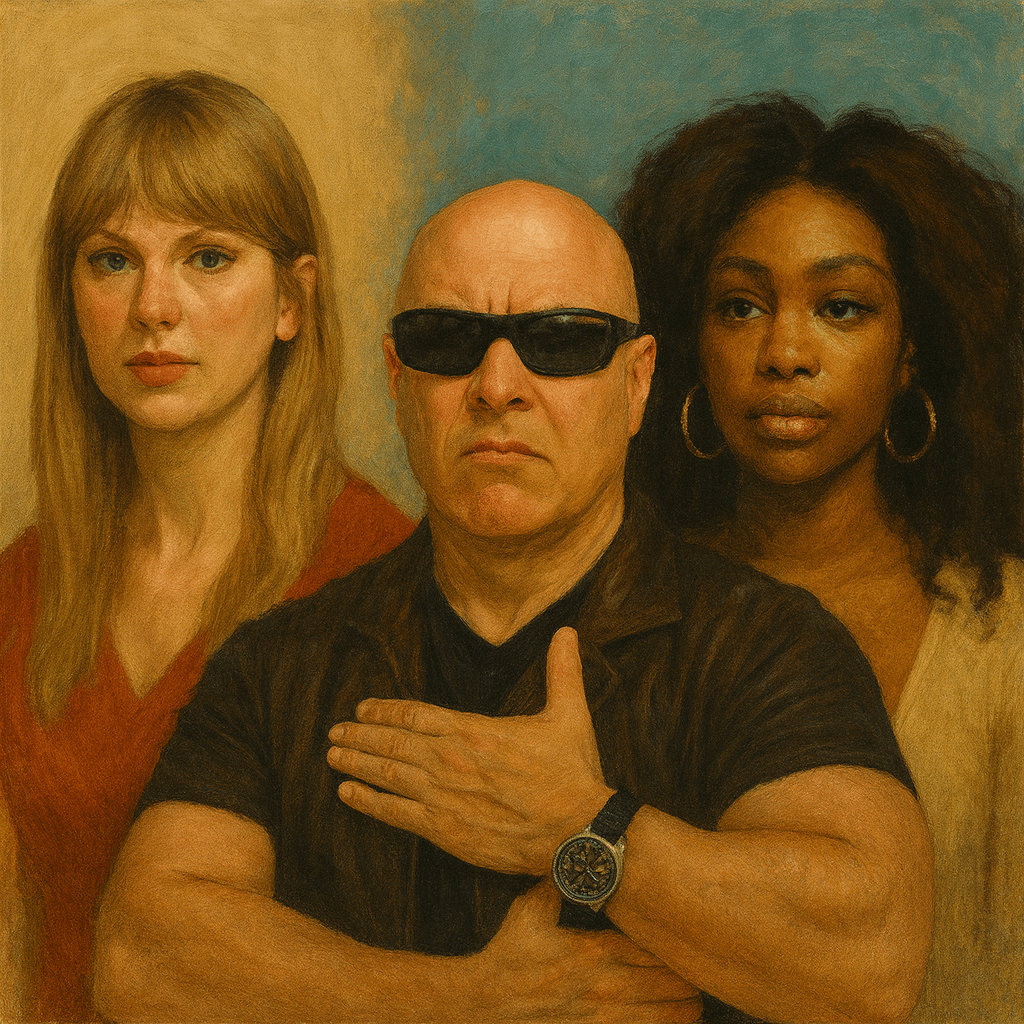
    I’ve since migrated to WordPress, which works better, loads faster, and hasn’t collapsed into irrelevance. I have mixed feelings about AI image generators: sometimes they hit the mark, but mostly they’re garish clip art pretending to be art. Still, I pay two hundred bucks a year to carve out a little order from the chaos, and it’s worth every cent. Cheaper than therapy, and with fewer platitudes.

    Typepad’s death isn’t tragic—it’s just the final shovel of dirt on an era already gone.

  • Not Just the Way You Are: The Untold Grit of Billy Joel

    Not Just the Way You Are: The Untold Grit of Billy Joel

    In high school, I was a sap for Billy Joel’s “Just the Way You Are”—a sentimental earworm that lodged itself in my adolescent chest like a slow-burning ember of longing. But it was “The Stranger,” with its eerie whistle intro, that truly haunted me. That mournful melody had the same desolate magic as “The Lonely Man Theme” from The Incredible Hulk—the tune that played whenever Bruce Banner had to hitchhike into oblivion with nothing but his duffel bag and repressed rage.

    Aside from that one album, though, I had little use for Billy Joel. His music struck me as sonic white bread—palatable, inoffensive, nutritionally empty. I still recall a vicious takedown in The San Francisco Chronicle where a critic dismissed Joel as a budget-bin Beatles knockoff. That assessment dovetailed nicely with my own smug teenage sneer. When a cousin of mine announced in the early ’80s that he was driving to L.A. to see Joel live, I smiled politely and thought, Enjoy your night of mediocrity, friend.

    Then the decades rolled by, as they do. Billy Joel fell off my radar completely. Not a note, not a thought, not a twitch of nostalgia. The man might as well have joined Jimmy Hoffa in the cultural vault. But recently, a few podcasters I trust raved about a five-hour documentary—Billy Joel: And So It Goes—streaming on HBO Max. Out of curiosity (and procrastination), I pressed play.

    And damn if it didn’t pull me in.

    Joel’s life story is a full-blown psychodrama with the pacing of a prestige miniseries. He falls in love with his bandmate’s girlfriend, gets punched in the face when the betrayal surfaces, spirals into suicidal depression, checks himself into a psychiatric hospital, emerges emotionally bruised but determined, and—naturally—marries the very same woman. She becomes his manager. They hit the road. That alone is a screenplay waiting to happen.

    The documentary then charts his wreckage-strewn romantic path: four marriages, battles with booze, perfectionism bordering on pathology, and the slow, soul-bruising realization that having half a billion dollars doesn’t guarantee someone to watch movies with on a Sunday night.

    Much of Joel’s pain seems to flow from a frigid relationship with his father—a classical pianist who fled Nazi Germany only to land in the capitalist circus of America, which he promptly came to despise. He left for Vienna and left Billy with an emotional black hole for a torso. Joel wrote songs, not for fame, but to fill that void—to wring something warm from cold keys.

    His mother didn’t help. She was likely bipolar, and Joel suspects he inherited some version of it—his life a pendulum swing between euphoric crescendos and basement-floor depressions. This emotional volatility didn’t soften him. If anything, Joel is grittier than I ever gave him credit for: a pugnacious Long Islander with a boxer’s jaw and the soul of a saloon poet.

    That famously mushy ballad “Just the Way You Are”? He hated it. Thought it was soggy sentimentalism unworthy of an album slot. Only when the band added a Bossa Nova beat did he reluctantly agree to let it stay. And that song, of course, became his most iconic.

    I came away from And So It Goes with a new view of Billy Joel—not as a sentimental hack or a Beatles Xerox machine, but as a bruised, brilliant craftsman. He’s not just a hitmaker. He’s a man on fire, trying to warm himself with melodies pulled from the wreckage of his life.

  • The One-Watch Monk Is Not Immune to a Relapse

    The One-Watch Monk Is Not Immune to a Relapse

    I know a few brave souls who have done the unthinkable. They’ve faced down the snarling beast of the Timekeeper’s Cavebrain—the primordial voice that whispers, “One more won’t hurt”—and emerged with nothing but a $79 G-Shock strapped to their wrist like a talisman of survival. These men are not collectors. They are survivors. Ex-chronoholics who now wear a single resin slab like a badge of sanity in a world overdosing on lume and limited editions.

    And yet—here’s the twist—they still linger in the digital temples of temptation. They haunt the forums, stalk the subreddit threads, and scroll the Instagram wrist shots like monks in a wine bar. They do not comment. They do not buy. They simply observe, living vicariously through the endless dopamine-chasing of others. Their presence is ghostly, detached, almost ethereal.

    These men have all, at some point, knelt before Father Time-Out, a shadowy ascetic who preaches from behind a cracked Casio:

    “You were once a sinner in the temple of timepieces. You must now enter permanent exile. Perhaps, in time, you may guide others out of their chrono-hell. Become a lighthouse of restraint. Point them toward the True Path.”

    And some do. These One-Watch Monks become minor saints of the community—offering cryptic encouragement, spartan wisdom, and the occasional photo of their battered DW-5600 glowing like a sacrament. They are revered not for what they wear, but for what they don’t. They symbolize what every timepiece addict secretly craves: freedom.

    But not all monks stay in the monastery.

    Sometimes, the Cavebrain resurfaces, soft-spoken but persuasive:
    “You’ve earned a second watch. Something modest. Something Swiss.”

    And just like that, a relapse: the purchase of an Omega Seamaster “as a test,” a way to prove their control. They become Two-Watch Semi-Monks—respected, yes, but no longer holy. The mystique is gone. Their resin-born purity has been tarnished by a splash of steel and hubris.

    They will say, “It’s just two watches.”
    But the Timekeeping Community knows better. It always starts with one exception.

    Still, we do not mock the fallen. We nod, we sigh, and we tighten our NATO straps. We know how easy it is to go from sage to sucker, from minimalist to maximalist, from monk to maniac—in just one click.

  • The Beatle Who Wasn’t

    The Beatle Who Wasn’t

    You once had an apartment poolside acquaintance named Julian French. He was a man whose entire existence felt like a tribute act to Paul McCartney. He wasn’t the kind of character you could invent—he was too perfectly strange. In his late thirties, Julian looked so uncannily like the legendary Beatle that you would’ve sworn he moonlighted as a McCartney impersonator in some dingy Las Vegas lounge, crooning “Hey Jude” to an audience of comatose tourists. He had the nose, the mouth, the chin, and those same droopy, heartbreak-hardened eyes that suggested he’d been personally betrayed by Yoko Ono.

    And of course, he rocked the signature McCartney hair: a feathered mullet straight out of 1978, perfectly sculpted despite the furnace-blast of the desert heat.

    But let’s be honest—Julian was no rock god. He was a bit shorter, a bit pudgier, and his face bore the battle scars of a thousand acne skirmishes. Still, he clung to his resemblance with the desperation of a man dangling from a cliff, convinced that if he just held on long enough, someone might mistake him for greatness.

    You watched his act unfold with tragic precision. He’d slip into a club in his shiny black “Beatles jacket,” lean on the bar with a half-cocked grin that shouted, Yes, I know I look like Paul McCartney—let’s get this over with. And right on cue, some buzzed woman would meander over, eyes twinkling, and say, “Has anyone ever told you…?”

    Julian pretended to be flattered. He feigned surprise. He summoned just enough fake humility to get her number, or at least a kiss. But you could see it in his eyes: his soul had left the building long ago. The routine bored him senseless, but it was all he had. The face did the lifting. The brand did the talking. The man behind it all? Checked out.

    Eventually, Julian let you in on a secret that was more absurd than scandalous: his real name was Michael Barley. That’s right. The name “Julian French” was a purchase—a paid rebranding, like he was a knockoff cologne trying to pass for Chanel. And he wasn’t done. Armed with his new persona and a fake British accent he’d been workshopping in the mirror, he flew off to London, convinced the UK would welcome their long-lost Beatle doppelgänger with open arms.

    It did not.

    London was unmoved. Employers declined. Clubs ignored him. Reality bit hard, and Julian—or rather, Michael—slunk back to Bakersfield with a bruised ego and zero prospects.

    But it got worse. He didn’t just return to a humdrum apartment—he returned to a trailer home attached to an elementary school, where his dad worked as the janitor by day and a locksmith by night. Julian was mortified. The trailer wasn’t the problem, not really. The terror was deeper: time had begun to wear down his greatest asset. The puffiness in his face, the softening jawline, the slow betrayal of age—each was a crack in the illusion. His McCartney mystique was melting under the desert sun.

    So he moved out. Got a job at a local car dealership. Tried to hang on to the myth a little longer.

    By the time you met him, “Julian French” was a weathered parody of himself, still speaking in that phony accent, still scanning faces for a flicker of recognition. You could see him straining to believe it might all work again—that the right woman, the right lighting, the right moment would resurrect the Beatle magic. But he knew. You both knew. He was becoming the man who used to look like someone famous.

    Time, like a harsh stage light, didn’t just expose the lie. It mocked it.

  • The Gospel of Squats

    The Gospel of Squats

    In seventh grade, while your father was off playing superhero in the Peace Corps—presumably saving the world one mosquito net at a time—you were marooned in Nairobi, Kenya. Your days were spent juggling soccer balls with local kids whose knees seemed invincible, bonding with mood-swinging chameleons, and trying to convince yourself that your Action Man dolls (the British knockoff of G.I. Joe) were more than just inert plastic with bad articulation. When the dolls failed to deliver, you escaped into glossy American sports magazines, fantasizing about transforming your spaghetti frame into the hulking majesty of Reggie Jackson or Greg Luzinski. You didn’t realize it yet, but you were becoming a social alien—an unintentional exile from your former Bay Area self, the human equivalent of a chameleon stuck on a disco strobe.

    Coming back to California in 1974 to attend Earl Warren Junior High felt like being dropped into a strange new planet where bad perms and bell-bottoms were considered high fashion. When kids talked about “doobies,” you imagined something slimy from the ocean depths, and “bong” sounded like an unfortunate percussion instrument. Naturally, you said all this out loud. Your classmates—high-functioning experts in pot, Zeppelin, and humiliation—saw you for what you were: a clueless alien with a warped pop culture radar. “This kid thinks a bong is a wind chime” became your unofficial welcome-back slogan.

    Enter Lou Kruk, your P.E. teacher: part demigod, part drill sergeant, part Baywatch extra. He stood over six feet tall with the torso of an ice cream cone, mahogany tan legs bursting out of gym shorts so tight they could’ve been airbrushed. His lion-like hair, aviator sunglasses, and windbreakers gave him the aura of a man who taught dodgeball by day and raced Porsches by night. He did, in fact, drive a Porsche. He also owned a sailboat. And his girlfriend looked like a magazine ad for champagne and yacht clubs.

    Kruk’s voice thundered like Wolfman Jack having a meltdown, and he blasted Herb Alpert & The Tijuana Brass while ordering you to deadlift your body weight. During one rope climb session in the cafeteria, he interrupted class to verbally annihilate a group of bullies with a monologue worthy of a Greek tragedy. “He’s already in the gutter! You want to put your boot on his head too?” The bullies melted. You, meanwhile, silently vowed to name your first child Lou.

    On day one of Olympic Weightlifting, Kruk preached the gospel of the front squat. Feet flat, butt to the floor—no exceptions, no mercy. You took this commandment personally. You practiced until your glutes sang hymns of soreness. Your squats got so deep they could’ve hit oil. And when Kruk pointed to you as the Platonic ideal of squat form, the gym practically knelt.

    Eventually, you were powering through front squats with 200 pounds like they were grocery bags. The day you nailed a dozen reps at 225, the entire gym went silent. You weren’t lifting; you were levitating. Your thighs bloomed into grotesque botanical wonders. 

    Soon, you were squatting everywhere. At your locker. In algebra. As goalie during PE soccer games (to your teammates’ horror, as balls flew by into the net). You became known as “Squats,” and also “Thunder Thighs,” titles you wore like medals pinned to your hypertrophic quads. You didn’t care about ridicule anymore. You were a squat apostle, a zealot for quad dominance in the 148-pound class, where you snatched and clean-and-jerked like an adolescent Hercules hopped up on whey and divine purpose.

    You basked in Kruk’s approval like a reptile soaking up solar validation. His nods, his booming laughter—they were your sacraments. You became an unsolicited preacher, spreading the word of the front squat like a sidewalk prophet. For you, the squat wasn’t just exercise. It was theology. It was identity. It was the key to everything: confidence, masculinity, self-worth. Every rep was a sermon. Every deep descent into the squat rack brought you closer to the divine.

  • One Day, One House, No Excuses

    One Day, One House, No Excuses

    This morning, I brewed a pot of delicious Stumptown French roast—molten, bitter, potent—and padded over to my computer feeling dangerously wholesome. A good man with good intentions. Which, of course, is always the start of a problem. I was toying with the idea of living more virtuously: dialing back the animal fat, leaning into tempeh and nutritional yeast, pretending a plant-based diet isn’t just a long goodbye to flavor. You know, the usual summer resolutions—less cheese, more clarity.

    Somewhere between the aroma of roasted beans and my first click of the mouse, I felt something resembling courage. Not the real, bare-knuckled kind, but the kind that sneaks in when the house is quiet and you haven’t yet sabotaged yourself with toast. I thought: Gird up thy loins like a man. (Who says that anymore? Besides prophets and people named Chet.) But still, the idea stuck. Maybe I was finally ready to stop flinching and start living with actual conviction—about food, fitness, morality, and cholesterol.

    And yet I know myself. Talk is cheap. I have spent years writing grocery lists for lives I never lived. What matters is performance.

    Which brings us to today. My summer has officially begun. My wife and teenage daughters are off to Disneyland—a place I regard with the same warmth I reserve for colonoscopies and TikTok. They know this, and mercifully leave me out of the Mouseketeer pilgrimage. Which means: the house is mine.

    I have made a pact with myself. Today, I will submit my final grades, mount the Schwinn Airdyne for a 60-minute sufferfest (estimated burn: 650-750 calories, depending on whether I channel Rocky Balboa or Mister Rogers), and I will rehearse my piano composition—tentatively titled Gene Wilder’s Prelude to Mischief and Madness. If all goes well, I’ll record it and upload it to my YouTube channel, where it will be watched by six people and a bot from Belarus.

    Alone time is rare in a house shared with twin teenage girls, a wife, and the occasional haunting presence of someone asking what’s for dinner. I daydream of a private studio—soundproofed, monk-like, adorned with a grand ebony Yamaha piano and maybe a faint aura of genius. Instead, I have today: a suburban cosplay fantasy in which I pretend to be a cloistered artist, instead of a middle-aged man in gym shorts wondering if tempeh is as bioavailable as the vegan influencers claim it is.

    And yet… it’s enough. Let the performance begin.

  • Becoming Led Zeppelin: A Fan’s Liturgy in Sweat, Hair, and Feedback

    Becoming Led Zeppelin: A Fan’s Liturgy in Sweat, Hair, and Feedback

    In the Bay Area of the 1970s, nothing was more quintessentially American than Led Zeppelin. Not apple pie, not hot dogs, not even fireworks detonating under the banner of freedom on the Fourth of July. No, Led Zeppelin was the national anthem of hormonal turbulence, a sonic passport to lust, rebellion, and ecstatic doom. At the center of this swirling pagan mass stood Robert Plant—shirtless, golden-maned, howling with the tortured elegance of a fallen angel whose job was to make teenagers believe that transcendence came through hips, heartbreak, and hair-whipping.

    Plant wasn’t just the house prophet of sexual revolution-era America; he was its prisoner. His voice didn’t just seduce—it ached. It howled. It bled. It was priapism as opera, libido turned operatic suffering. Meanwhile, Hugh Hefner—the so-called high priest of sexual liberation—was a fraud with a bubble pipe. With his crusty cardigan and smug, soft-core smirk, Hefner sold a sterilized fantasy built for TV sitcoms. Robert Plant, by contrast, sounded like he’d clawed his way out of the underworld in leather pants, carrying every orgasm and every regret with him.

    In Bernard MacMahon’s Becoming Led Zeppelin, we encounter Plant as the elder beast—still leonine, still mythic. He reclines in a richly shadowed room worthy of Masterpiece Theatre, his face now a craggy relief map of rock’s excesses. The documentary doesn’t dwell on the groupies, trashed hotel rooms, or aquatic legends of infamy. Instead, it gives us the roots: Plant’s soulful debt to Little Richard, Page and Jones’ studio stint with Shirley Bassey’s “Goldfinger”—that thunderclap of a song that still sounds like someone hurling a piano at the moon. Watching that scene took me straight back to 1973 Nairobi, where my father and I first heard Bassey belt that monster in a theater so loud it felt like the walls were peeling.

    There’s archival footage of Zeppelin playing to a crowd that looks less like Woodstock and more like a family reunion gone sideways. Grandmothers clutching their pearls. Children plugging their ears. No one knew what had hit them. This wasn’t just music—it was a mass exorcism.

    So no, Becoming Led Zeppelin won’t give you the tabloid filth. It won’t dive into the daisy chain of destruction that came with their rise. But it offers something more interesting: a portrait of a band that didn’t just soundtrack my youth—they were my youth. And Robert Plant, in all his howling, tormented glory, was its golden god of doom.