Tag: music

  • The Los Angeles Wildfires Reconnected Me to Radio

    The Los Angeles Wildfires Reconnected Me to Radio

    The Los Angeles fires, blazing with apocalyptic fury, prompted me to do something I hadn’t done in years: dust off one of my radios and tune into live local news. The live broadcast brought with it not just updates but an epiphany. Two things, in fact. First, I realized that deep down, I despise my streaming devices—their algorithm-driven content is like an endless conveyor belt of lukewarm leftovers, a numbing backdrop of music and chatter that feels canned, impersonal, and incurably distant. Worst of all, these devices have pushed me into a solipsistic bubble, a navel-gazing universe where I am the sole inhabitant. Streaming has turned my listening into an isolating, insidious form of solitary confinement, and I haven’t even noticed.

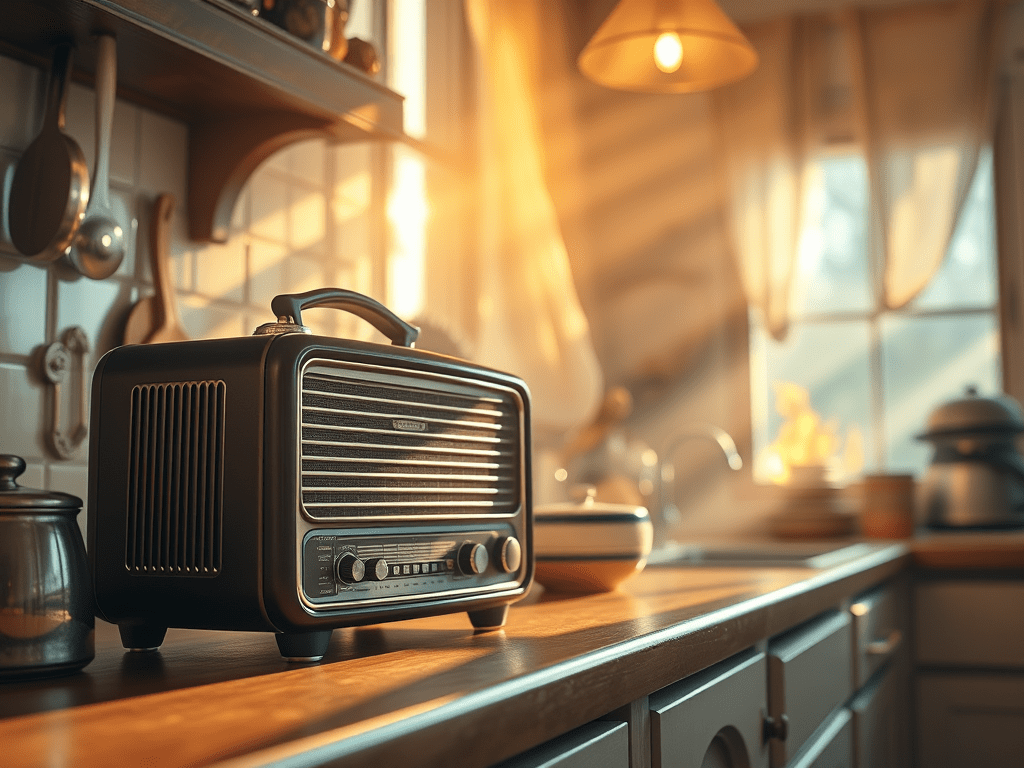
    When I flipped on the radio in my kitchen, the warmth of its live immediacy hit me like a long-lost friend. My heart ached as memories of radio’s golden touch from my youth came flooding back. As a nine-year-old, after watching Diahann Carroll in Julia and Sally Field in The Flying Nun, I’d crawl into bed, armed with my trusty transistor radio and earbuds, ready for the night to truly begin. Tuned to KFRC 610 AM, I’d be transported into the shimmering world of Sly and the Family Stone’s “Hot Fun in the Summertime,” Tommy James and the Shondells’ “Crystal Blue Persuasion,” and The Friends of Distinction’s “Grazing in the Grass.” The knowledge that thousands of others in my community were swaying to the same beats made the experience electric, communal, alive—so unlike the deadening isolation of my curated streaming playlists.

    And then there was talk radio. Live conversations on KGO 810 AM with Jim Eason and Ronn Owens held a spellbinding charm. In the 70s, my mother and I would sit in the kitchen, enraptured, as they dissected controversies and gossip with the vigor of philosophers at a cocktail party. It was conversation as an art form, communal and vital, like cavemen telling stories around the fire. Contrast that with my podcasts: cherry-picked for my biases, carefully calibrated to affirm my tastes, locking me in an echo chamber so snug it could double as a straightjacket.

    The fires aren’t just devastating to the city—they’ve exposed the cracks in my own longing for connection. The nostalgic ache sent me down a rabbit hole of online research, hunting for a high-performance radio, convinced that it might resurrect the magic of my youth. But even as I clicked through reviews of antennas and AM clarity, a voice nagged at me: was this really about finding a better radio, or was it just another futile errand from a man in his sixties trying to outrun time? Could a supercharged radio transport me back to those transistor nights and kitchen conversations, or was I just tuning into the static of my own melancholia?

  • The FOMO Frequency: How I Tried to Tune Back into Real Life

    The FOMO Frequency: How I Tried to Tune Back into Real Life

    As I clawed my way out of my addiction to writing doomed novels (which were really short stories in disguise), a strange thing happened: buried emotions clawed back. It wasn’t pleasant. It was like peeling off a bandage only to discover that underneath was raw, exposed nerve endings. Turns out, the grandiose fever dream of writing had insulated me from reality. Now, stripped of that delusion, I was left unprotected, vulnerable, and completely awake to the world.

    And the world, in 2025, was on fire.

    Literally. The Los Angeles wildfires turned the sky into an apocalyptic hellscape—a choking haze of smoke and fury. The inferno forced me into an act I hadn’t performed in years: I dusted off a radio and tuned into live news.

    That’s when I had two epiphanies.

    First, I realized I despise my streaming devices. Their algorithm-fed content is an endless conveyor belt of lukewarm leftovers, a numbing backdrop of curated noise that feels canned, impersonal, and utterly devoid of gezelligheid, a sense of shared enjoyment. Worst of all, streaming had turned me into a passive listener, a zombie locked inside a walled garden of predictability. I spent my days warning my college students about AI flattening human expression, yet here I was, letting an algorithm flatten my own relationship with music.

    But the moment I switched on the radio, its warmth hit me like an old friend I hadn’t seen in decades. A visceral ache spread through my chest as memories of radio’s golden spell came rushing back—memories of being nine years old, crawling into bed after watching Julia and The Flying Nun, slipping an earbud into my transistor radio, and being transported to another world.

    Tuned to KFRC 610 AM, I was no longer just a kid in the suburbs—I was part of something bigger. The shimmering sounds of Sly and the Family Stone’s “Hot Fun in the Summertime” or Tommy James and the Shondells’ “Crystal Blue Persuasion” weren’t just songs; they were shared experiences. Thousands of others were listening at that same moment, swaying to the same rhythms, caught in the same invisible current of sound.

    And then I realized—that connection was gone.

    The wildfires didn’t just incinerate acres of land; they exposed the gaping fault lines in my craving for something real. Nostalgia hit like a sucker punch, and before I knew it, I was tumbling down an online rabbit hole, obsessively researching high-performance radios, convinced that the right one could resurrect the magic of my youth.

    But was this really about better reception?

    Or was it just another pathetic attempt to outrun mortality?

    Streaming didn’t just change my relationship with music; it hollowed it out.

    I had been living in a frictionless digital utopia, where effort was obsolete and everything was available on demand—and I was miserable. Streaming devices optimized convenience at the cost of discovery, flattening music into algorithmic predictability, stripping it of its spontaneity, and reducing me to a passive consumer scrolling through pre-packaged soundscapes.

    It was ironic. I had let technology lull me into the very state of mediocrity I warned my students about.

    Kyle Chayka’s Flatworld spells out the horror in precise terms: when you optimize everything, you kill everything that makes life rich and rewarding. Just as Ozempic flattens hunger, technology flattens culture into a pre-digested slurry of lifeless efficiency.

    I didn’t need Flatworld to tell me this. I had lived it.

    The day I flipped on a real radio again, I didn’t just hear a broadcast—I heard my brain rebooting. The warmth, the spontaneity, the realness of people talking in real time—it was the sonic equivalent of quitting Soylent and biting into a perfectly seared ribeye.

    If Flatworld taught me anything, it’s that aliveness is exactly what convenience culture is designed to eradicate.

    Once I abandoned streaming, I filled every room in my house with a high-performance multiband radio. My love of music returned. A strange peace settled over me.

    The problem? My addictive personality latched onto radios with a zeal that bordered on the irrational.

    I began gazing at them with the kind of reverence normally reserved for religious icons. When I spotted a Tecsun PL-990, PL-880, PL-680, or PL-660, something in my brain short-circuited. I was instantly enchanted, as if I had just glimpsed an old friend across a crowded room. At the same time, I was comforted, as if that friend had handed me a warm cup of coffee and told me everything was going to be alright.

    But a radio isn’t just a device. It’s a symbol, though I’m still working out of what exactly.

    Maybe it represents the lost art of slowing down—of sitting in a quiet room, wrapped in a cocoon of music or familiar voices. Or maybe it’s something deeper, a sanctuary against the relentless noise of modern life, a frequency through which I can tune out the profane and tune into something sacred.

    The word that comes to mind when I hold a radio is cozy—but not in the scented-candle, novelty-mug kind of way. This is something deeper, something akin to the Dutch word gezelligheid—a feeling of warmth, belonging, and ineffable connection to the present moment.

    Radios don’t just play sound; they create atmosphere. They transport me back to Hollywood, Florida, sitting on the porch with my grandfather, the air thick with the scent of an impending tropical storm, the crackle of a ball game playing in the background like the heartbeat of another era.

    That’s the thing about gezelligheid—it isn’t something you can program into an algorithm. It isn’t something you can optimize. It’s a byproduct of presence, community, and shared experience—the very things convenience culture erodes.

    Many have abandoned radio for the cold efficiency of streaming and smartphones.

    I tried to do the same for over a decade.

    I failed.

    Because some things, no matter how old-fashioned, still hum with life.

    And maybe that’s what replacing streaming devices with radios is about—not just recovering from my addiction to writing abysmal novels, but recovering life itself from the grip of Flatworld.

  • Magical Thinking #4: The Power Play Illusion

    Magical Thinking #4: The Power Play Illusion

    (or, Why Rolex is Schmolex and Your Favorite Song is Dead to You)

    People like to believe that power equals happiness—that if they can flex on the world just right, contentment will follow. It won’t. But that doesn’t stop the endless parade of obnoxious power plays designed to manufacture status while delivering absolutely zero fulfillment.

    If you want an easy lesson in the folly of power, read a children’s book. Yertle the Turtle by Dr. Seuss perfectly illustrates the doomed nature of power-lust. Yertle stacks himself on the backs of his fellow turtles, ruling over them like a tyrant—until, inevitably, the whole thing collapses and he ends up in the mud, humiliated. A perfect metaphor for the desperate, self-defeating nature of most power grabs.

    Power Play #1: Making People Wait

    One of the most tired power moves in the corporate playbook is the boss who makes his subordinates stand around like idiots while he does something “important.” Maybe he’s chomping on a sandwich, lazily swinging a golf club in his office, or pretending to be locked in a deep, world-changing phone call. The message is clear: I am in control. You exist on my schedule.

    In reality, this is a power move straight from the middle manager’s guide to overcompensation—the business-world equivalent of a small dog barking furiously through a fence.

    Power Play #2: Restaurant Tyrants

    Some people have so little actual power in their lives that the only place they can lord over others is at a restaurant. Watch for the guy berating the waitstaff over a slightly overcooked steak or treating the hostess like she’s beneath him. This is not a powerful person—this is a loser grasping at the flimsiest form of authority available.

    Power Play #3: Dating as a Status Grab

    Some high school guys don’t date because they like a girl. They date because other guys like her, and taking her is a flex. She’s not a person to them—she’s a trophy, a territory to be claimed, a game to be won. This is not love, nor attraction—it’s status theater, and it’s as empty as it is pathetic.

    Power Play #4: Buying Rolex for the Wrong Reasons

    Which brings me to the ultimate power flex of consumer culture: Rolex.

    I love Rolex. The Explorer II is a masterpiece. But would I buy one? No. Not even if money were no object. Because Rolex is no longer Rolex—it’s Schmolex.

    The Transmutational Phenomenon: When Prestige Gets Laundered into Meaninglessness

    Rolex suffers from what I call The Transmutational Phenomenon—a process where something once beautiful and meaningful is absorbed into the commercial bloodstream and spit back out as a status symbol for the masses.

    Rolex, originally a marvel of craftsmanship, is now the go-to wrist flex for people who don’t actually care about watches. It has been worn by too many hedge-fund bros, crypto grifters, and status-hungry clout chasers who want the shiny aura of power but lack the appreciation for the artistry. After decades in the cosmic wash cycle of commercial culture, Rolex emerges from the machine unrecognizable to its former self. It’s no longer Rolex. It’s Schmolex.

    How Commercial Culture Murders Meaning

    This transmutational process happens all the time. Take music.

    I once loved Pink Floyd’s Dark Side of the Moon. Then, in my teenage years, Circuit City, a now-defunct stereo store chain in the Bay Area, blasted a snippet of it in every single radio and TV ad. Slowly, insidiously, the song transformed. It was no longer “Dark Side of the Moon.” It was “Flark Flide of the Gloom.” The song I once revered no longer existed.

    This is what happened to Rolex. Maybe it’s not the brand’s fault, but the fact remains: Rolex isn’t Rolex anymore. It’s Schmolex.

    The Lesson? Power is an Empty Currency

    Whether it’s making people wait, bossing around waiters, dating for status, or flexing a Rolex for the Instagram likes, none of it leads to actual happiness.

    Because power isn’t joy, and status isn’t meaning. If you need an overpriced watch, an expensive steak, or a fragile ego-boost to feel powerful, you’re not powerful at all.

  • The danger of misunderstanding Steely Dan’s “Deacon Blues”

    The danger of misunderstanding Steely Dan’s “Deacon Blues”

    Reading Why We Write and seeing the world’s elite authors dissect the process that made them flourish forced me to confront a brutal truth: I am not a real writer.

    All those decades of grinding out abysmal, unreadable novels weren’t acts of literary craftsmanship—they were performance art, a cosplay so convincing that even I fell for it. I played the role of “the unappreciated novelist” with such dazzling commitment that I actually believed it. And what was my proof of authenticity? Misery and failure.

    Surely, I thought, only a true genius could endure decades of rejection, obscurity, and artistic suffering. Surely, my inability to produce a good novel was simply a sign that I was ahead of my time, too profound for this crass and unworthy world.

    Turns out, I wasn’t an undiscovered genius—I was just really, really bad at writing novels.

    Misery is a tricky con artist. It convinces you that suffering is the price of authenticity, that the deeper your despair, the more profound your genius. This is especially true for the unpublished writer, that tragic figure who has transformed rejection into a sacred ritual. He doesn’t just endure misery—he cultivates it, polishes it, wears it like a bespoke suit of existential agony. In his mind, every unopened response from a literary agent is further proof of his artistic martyrdom. He mistakes his failure for proof that he is part of some elite, misunderstood brotherhood, the kind of tortured souls who scowl in coffee shops and rage against the mediocrity of the world.

    And therein lies the grand delusion: the belief that suffering is a substitute for talent, that rejection letters are secret messages from the universe confirming his genius. This is not art—it’s literary cosplay, complete with the requisite brooding and self-pity. The unpublished writer isn’t just chasing publication; he’s chasing the idea of being the tortured artist, as if melancholy alone could craft a masterpiece. 

    Which brings us to the next guiding principle for Manuscriptus Rex’s rehabilitation: 

    The belief that the more miserable you are, the more authentic you become. This dangerous belief has its origins in a popular song–none other than Steely Dan’s brooding anthem, “Deacon Blues.”

    Like any good disciple, I’ve worshiped at this altar without even realizing it. I, too, have believed I’m the “expanding man”—growing wiser, deeper, more profound—while simultaneously wallowing in self-pity as a misunderstood loser. It’s a special kind of delusion, the spiritual equivalent of polishing a rusty trophy.

    To fully grasp this faith, I point you to The Wall Street Journal article, “How Steely Dan Created ‘Deacon Blues’” by Marc Myers. There, Donald Fagen and Walter Becker peel back the curtain on the song’s narrator—a man who could’ve just as easily been named Sad Sack Jones. He’s a suburban daydreamer, stuck in a dull, mediocre life, fantasizing that he’s a hard-drinking, sax-blowing rebel with women at his feet.

    Fagen admits the character was designed as a counterpoint to the unstoppable juggernaut of college football’s Crimson Tide—a gleaming machine of winners. In contrast, Deacon Blues is the anthem of the losers, crafted from a Malibu piano room with a sliver of Pacific Ocean peeking through the houses. Becker summed it up best: “Crimson Tide” dripped with grandiosity, so they invented “Deacon Blues” to glorify failure.

    And did it work. “Deacon Blues” became the unofficial patron saint for every self-proclaimed misfit who saw their own authenticity in his despair. He was our tragic hero—uncompromising, self-actualized, and romantic in his suffering.

    But then I read the article, and the spell broke. We were all suckered by a myth. Like the song’s narrator, we swallowed the fantasy of the “expanding man,” not realizing he was a con artist in his own mind. This isn’t a noble figure battling the world’s indifference—it’s a man marinating in his own mediocrity, dressed up in fantasies of scotch, saxophones, and self-destructive glamour.

    Walter Becker wasn’t subtle: the protagonist in “Deacon Blues” is a triple-L loser—an L-L-L Loser. Not a man on the cusp of greatness, but a man clutching a broken dream, pacing through a broken life. Fagen sharpened the knife: this is the guy who wakes up at 31 in his parents’ house and decides he’s suddenly going to “strut his stuff.”

    That sad, self-deluded basement dweller? That was the false prophet I’d built my personal religion around. A faith propped up by fantasies and self-sabotage.

    The man who inspired me wasn’t a misunderstood genius. He was a cautionary tale. A false path paved with jazz, liquor, and the comforting hum of failure.

    The slacker man-child isn’t just a tragic figure crooning in Steely Dan’s “Deacon Blues.” No, he walks among us—lounges among us, really—and I knew one personally. His name was Michael Barley.

    We met in the late 1980s at my apartment swimming pool while I was teaching college writing in Bakersfield, a place that practically invents new ways to suffocate ambition. A failed musician who had dabbled in a couple of garage bands, Michael was in his early thirties and bore such a stunning resemblance to Paul McCartney that he could’ve landed a cushy gig as a Vegas impersonator if only ambition hadn’t been a foreign concept to him. He had it all: the same nose, the same mouth, the same melancholy eyes, even the same feathered, shoulder-grazing hair McCartney rocked in the ’70s and ’80s. Sure, he was shorter, stockier, and his cheeks were pockmarked with acne scars, but from a distance—and, really, only from a distance—he was Paul’s sad-sack doppelgänger.

    Michael leaned into this resemblance like a man squeezing the last drops from a dry sponge. At clubs, he’d loiter near the bar in a black blazer—his self-anointed “Beatles jacket”—wearing a slack-jawed half-smile, waiting for some starry-eyed woman to break the ice with, “Has anyone ever told you…?” His pickup strategy was less a plan and more a form of passive income. The women did all the work; he just had to stand there and exist. The hardest part of the night, I suspect, was pretending to be surprised when they made the McCartney connection for the hundredth time.

    And then he disappeared. For six months, nothing.

    When Michael resurfaced, he wasn’t Michael anymore. He was Julian French—an “English musician” with a secondhand accent and thirdhand dreams. He had fled to London, apparently thinking the UK was clamoring for chubby McCartney clones, and when that didn’t pan out (shocking, I know), he slunk back to Bakersfield to live in his parents’ trailer, which, in a tragicomic twist, was attached to an elementary school where his father worked as the janitor and moonlit as a locksmith.

    But Michael—excuse me, Julian—was undeterred. He insisted I call him by his new British name, swore up and down that his accent was authentic, and we returned to our old haunts. Now, at the gym and in nightclubs, I watched him work the crowd with his faux-charm and faux-accent, slinging cars and cell phones like a man with no Plan B. His Beatles face was his business card, his only sales pitch. He lived off the oxygen of strangers’ admiration, basking in the glow of almost being someone important.

    But here’s the truth: Michael—Julian—wasn’t hustling. He was coasting. His whole life was one long, lazy drift powered by the barest effort. He never married, never had a long-term relationship, never even pretended to have ambition. His greatest challenge was feigning humility when people gushed over his discount McCartney face.

    Time, of course, is undefeated. By middle age, Julian’s face began to betray him. His ears and nose ballooned, his jowls sagged, and the resemblance to Paul McCartney evaporated. Without his one-note gimmick, the magic died. The women, the friends, the sales—they all disappeared. So, back to the trailer he went, tail tucked, learning the locksmith trade from his father, as if turning keys could unlock the door to whatever life he’d wasted.

    And me? I didn’t judge him. I couldn’t.

    Because deep down, I knew I was just as susceptible to the same delusion—the myth of the “Expanding Man.” That romantic fantasy of being a misunderstood artist, swaddled in self-pity, wandering through life with the illusion of authenticity. Like the anti-hero in “Deacon Blues,” Julian wasn’t building a life; he was building a narrative to justify his stagnation.

    And wasn’t I doing the same? By the late ’90s, I was approaching 40, professionally afloat but personally shipwrecked—emotionally underdeveloped, the cracks in my personality widening into canyons. I, too, was toeing that fine line between winner and loser, haunted by the possibility that I’d wasted years buying into the same seductive lie that trapped Julian.

    That’s the genius of the “Deacon Blue’s” Doctrine—a religion as potent as opium. It sanctifies self-pity, addiction, and delusions of grandeur, repackaging them into a noble code of suffering. It convinces you that stewing in your own misery is a virtue, that being a failure makes you authentic, and that the world just isn’t sophisticated enough to appreciate your “depth.”

    But here’s the truth no one tells you: eventually, life hands you your ass on a stick. That’s when you find out which side of the line you’re really on.

  • Kenny G Is Not Jazz

    Kenny G Is Not Jazz

    I recently watched Listening to Kenny G, Penny Lane’s documentary on the world’s most famous saxophonist. It left me in a knot of conflicting emotions. Here’s a man, decent and diligent, who built a global empire of “smooth jazz”—a genre that, to my ears, is the musical equivalent of baby food: cloying, textureless, and aggressively inoffensive. And yet, millions worship him. The crowds at his concerts glow with unfiltered joy, their faces alight as if they’re receiving communion through the smooth, syrupy notes of his soprano sax.

    Who am I to sneer at them—or at him? I’m just a guy recovering from influenza, after all, with no musical empire to my name. But damn if I didn’t feel the urge to reach for some cultural antacid to settle my aesthetic nausea while judging him and his fans.

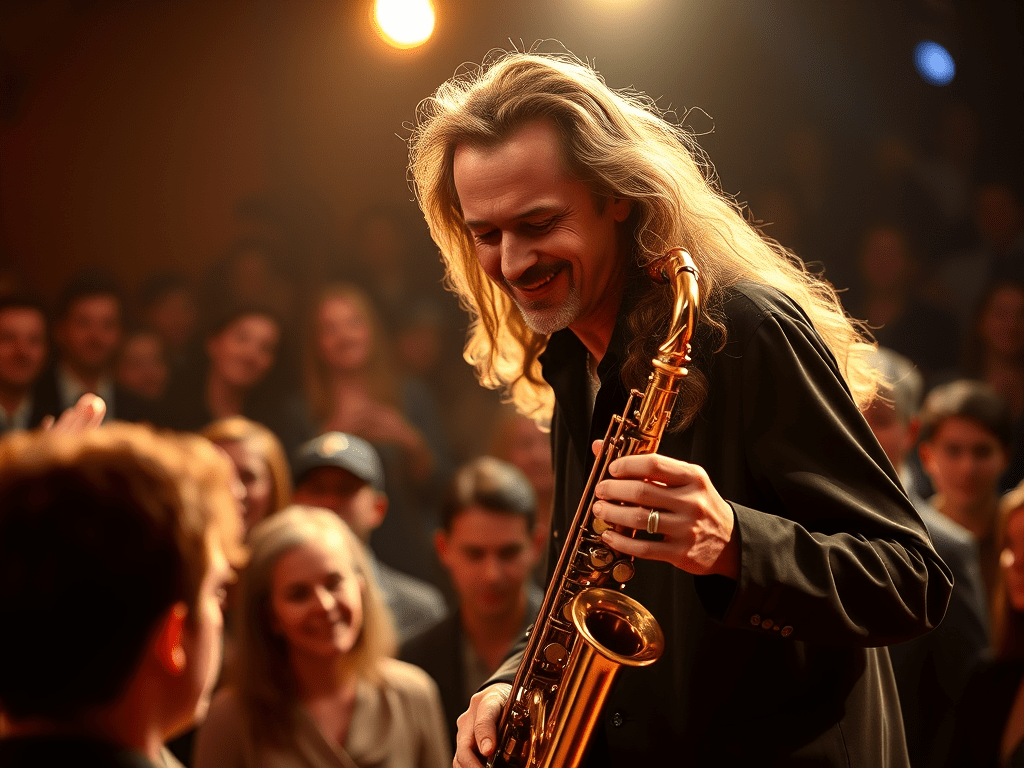
    And judge, I did. Kenny G, with his chirpy demeanor and ornithological cheer, seems blissfully detached from the rich, complex history of jazz that his music pretends to embody. He comes across as a musical solipsist, spinning out saccharine, Cliff Notes versions of jazz—an imitation so shallow it feels like he’s never ventured beyond the surface. His long, flowing hair and darting, eager eyes bring to mind a medieval court musician, strumming cloying pavane tunes to lull a bloated king into a post-feast stupor. Listening to Kenny G isn’t an artistic experience; it’s being spoon-fed emotional mush, a cheap confection disguised as depth. This is jazz devoid of soul, grit, or struggle—a hollow desecration of the genre’s essence, delivered with a smile so unrelenting it borders on the surreal.

    And yet, the guilt creeps in. Kenny G himself is disarmingly likable, a man seemingly immune to the venom of critics. He’s successful, and so are many of his fans, who are undoubtedly smart and decent people. Does that make their taste in music immune to critique? Hardly. Popularity is not an arbiter of artistic merit, and Kenny G’s music remains, to me, a vulgarity—saccharine and soulless, a betrayal of jazz’s improvisational brilliance. But the fact that his audience finds bliss in his syrupy melodies leaves me grappling with a larger question: Is artistic taste a bastion of universal truth, or just another playground for our pretensions?

    Am I so obsessed with Kenny G that I feel the need to join the ranks of his detractors, delivering a fiery diatribe like Pat Metheny’s infamous takedown? Not quite. But am I endlessly fascinated that something so blatantly saccharine, so clearly an abomination of music, can bring others to the brink of elation and transcendence? Absolutely. Kenny G’s music strikes me as the sonic equivalent of New Age spirituality: the kind where you pay for a weekend retreat only to be serenaded by a guru with Kenny G’s hair, who doles out self-help clichés like they’re sacred mantras. It’s the auditory version of being flattered into blissful mediocrity, a soothing appeal to one’s narcissism wrapped in smooth sax tones. And let’s face it: the appetite for such cloying bromides is insatiable—and always has been.

    I can’t help but feel a twinge of guilt for roasting Kenny G. I’m clearly afflicted with Sax Shamer’s Syndrome—the nagging unease of mocking a man whose soprano sax has brought legions of fans genuine joy, even if it makes me wince. I try to rationalize my disdain, reminding myself that I, too, have been guilty of infantile pleasures. As a child, I devoured Cap’n Crunch like it was manna from heaven, exalting its sugary crunch as the pinnacle of culinary achievement. The difference? I outgrew Cap’n Crunch. Meanwhile, Kenny G fans seem eternally devoted, treating his smooth jazz like the apotheosis of music. Does that make me a snob for pointing this out, or am I just calling it as I see it?

    The guilt gnaws at me. By deriding Kenny G, I’m effectively sneering at millions of perfectly decent, hard-working people who find solace in his musical equivalent of high-fructose corn syrup. But who am I to judge? I have my own guilty pleasures. I still scroll Instagram for black-and-white photos of 70s bodybuilders, sighing nostalgically for a golden age that was never mine. I still revel in childhood comfort foods—pigs-in-a-blanket dunked in mustard and barbecue sauce, as if I’m at a suburban soirée circa 1982.

    So really, what separates me from the Kenny G crowd? Not much. Scorning his fans isn’t a declaration of superior taste; it’s an act of hubris. We’re all creatures of indulgence, clinging to the things that soothe us. The real sin isn’t enjoying Kenny G or Cap’n Crunch—it’s forgetting that, at the end of the day, we’re all just looking for something to hum along to as we float through life.

  • TEACHING COLLEGE WRITING IN THE AGE OF OZEMPIFICATION

    TEACHING COLLEGE WRITING IN THE AGE OF OZEMPIFICATION

    The 2025 Los Angeles wildfires, blazing with apocalyptic fury, prompted me to do something I hadn’t done in years: dust off one of my radios and tune into live local news. The live broadcast brought with it not just updates but an epiphany. Two things, in fact. First, I realized that deep down, I despise my streaming devices—their algorithm-driven content is like an endless conveyor belt of lukewarm leftovers, a numbing backdrop of music and chatter that feels canned, impersonal, and incurably distant. Worst of all, these devices have pushed me into a solipsistic bubble, a navel-gazing universe where I am the sole inhabitant. Streaming has turned my listening into an isolating, insidious form of solitary confinement, and I haven’t even noticed.

    When I flipped on the radio in my kitchen, the warmth of its live immediacy hit me like a long-lost friend. My heart ached as memories of radio’s golden touch from my youth came flooding back. As a nine-year-old, after watching Diahann Carroll in Julia and Sally Field in The Flying Nun, I’d crawl into bed, armed with my trusty transistor radio and earbuds, ready for the night to truly begin. Tuned to KFRC 610 AM, I’d be transported into the shimmering world of Sly and the Family Stone’s “Hot Fun in the Summertime,” Tommy James and the Shondells’ “Crystal Blue Persuasion,” and The Friends of Distinction’s “Grazing in the Grass.” The knowledge that thousands of others in my community were swaying to the same beats made the experience electric, communal, alive—so unlike the deadening isolation of my curated streaming playlists.

    The fires didn’t just torch the city—they laid bare the fault lines in my craving for connection. Nostalgia hit like a sucker punch, sending me down an online rabbit hole in search of a high-performance radio, convinced it could resurrect the magic of my youth. Deep down, a sardonic voice heckled me: was this really about better reception, or just another pitiful attempt by a sixty-something man trying to outrun mortality? Did I honestly believe a turbo-charged radio could beam me back to those transistor nights and warm kitchen conversations, or was I just tuning into the static of my own existential despair?

    Streaming had wrecked my relationship with music, plain and simple. The irony wasn’t lost on me either. While I warned my college students not to let ChatGPT lull them into embracing mediocre writing, I had let technology seduce me into a lazy, soulless listening experience. Hypocrisy alert: I had become the very cautionary tale I preached against.

    Enter what I now call “Ozempification,” inspired by that magical little injection, Ozempic, which promises a sleek body with zero effort. It’s the tech-age fantasy in full force: the belief that convenience can deliver instant gratification without any downside. Spoiler alert—it doesn’t. The price of that fantasy is steep: convenience kills effort, and with it, the things that actually make life rich and rewarding. Bit by bit, it hollows you out like a bad remix, leaving you a hollow shell of passive consumption.

    Over time, you become an emotionally numb, passive tech junkie—a glorified NPC on autopilot, scrolling endlessly through algorithms that decide your taste for you. The worst part? You stop noticing. The soundtrack to your life is reduced to background noise, and you can’t even remember when you lost control of the plot.

    But not all Ozempification is a one-way ticket to spiritual bankruptcy. Sometimes, it’s a lifeline. GLP-1 drugs like Ozempic can literally save lives, keeping people with severe diabetes from joining the ranks of organ donors earlier than planned. Meanwhile, overworked doctors are using AI to diagnose patients with an accuracy that beats the pre-AI days of frantic guesswork and “Let’s Google that rash.” That’s Necessary Ozempification—the kind that keeps you alive or at least keeps your doctor from prescribing antidepressants instead of antibiotics.

    The true menace isn’t just technology—it’s Mindless Ozempification, where convenience turns into a full-blown addiction. Everything—your work, your relationships, even your emotional life—gets flattened into a cheap, prepackaged blur of instant gratification and hollow accomplishment. Suddenly, you’re just a background NPC in your own narrative, endlessly scrolling for a dopamine hit like a lab rat stuck in a particularly bleak Skinner box experiment.

    As the fires in L.A. fizzled out, I had a few weeks to prep my writing courses. While crafting my syllabus and essay prompts, Mindless Ozempification loomed large in my mind. Why? Because I was facing the greatest challenge of my teaching career: staying relevant when my students had a genie—otherwise known as ChatGPT—at their beck and call, ready to crank out essays faster than you can nuke a frozen burrito.

  • DON’T GET TRAPPED IN A FLINTSTONES BACKGROUND LOOP

    DON’T GET TRAPPED IN A FLINTSTONES BACKGROUND LOOP

    In Arnold: The Education of a Bodybuilder, Arnold Schwarzenegger observes that bodybuilding is not merely a means toward self-improvement of the body. It opens other doors as well in business and other enterprises. I found that Arnold was right: My teenage years of toiling in the gym and amassing muscles finally paid off in 1979 when, at the tender age of seventeen, I landed the coveted position of bouncer at Maverick’s Disco in San Ramon, California. I was rolling in dough, earning a whopping ten cents over the minimum wage at three dollars an hour, while enjoying the luxurious perks of free soft drinks and peanuts. My nights were spent amidst a sea of polyester pantsuits and hairdos so heavily sprayed they constituted a legitimate fire hazard. I thought I had hit the jackpot, killing two birds with one stone: raking in the cash while strolling around the teenage disco, flexing my lats, and mingling with an endless parade of beautiful women. However, my dreams of disco glory were dashed when I encountered a cruel concept I’d later learn about in my college Abnormal Psychology class: the anhedonic response. This phenomenon numbs the brain to repeated stimulation, leading to a state of anhedonia, where happiness and pleasure are but distant memories. Thinking about anhedonia took me back to the moment when I stopped enjoying my beloved cartoon, The Flintstones. One day, as Fred and Barney drove their caveman car down the highway, I noticed the background—a series of trees, boulders, and buildings—repeating over and over. This revelation shattered the show’s illusion of reality, much like seeing how the sausage is made. Watching The Flintstones was never the same again. Maverick’s Disco was my Flintstones moment. Night after night, I watched customers flood the club with faces lit up with high expectations of excitement, glamour, and romantic connections. By closing time, those same faces were glazed over, tired, and disappointed. Yet, like clockwork, they returned the next weekend, ready to repeat the cycle. My life at the disco had become the monotonous wraparound background of The Flintstones. It was a sign that I needed to quit. Like Arnold Schwarzenegger, I needed to break out of a limited situation, spread my wings, and fly. 

  • WALTER CRONKITE AND FRANK SINATRA WERE THE TRUSTED PROPHETS OF MY YOUTH

    WALTER CRONKITE AND FRANK SINATRA WERE THE TRUSTED PROPHETS OF MY YOUTH

    At four years old, a pocket-sized philosopher in footie pajamas, I’d often find myself stationed in the living room like a tiny sentinel, transfixed by the glow of our hulking television set. The air was thick with the comforting aroma of my mother’s lasagna or spaghetti, a scent that promised warmth and stability, while my father and I tuned in to the evening sermon of Walter Cronkite. Cronkite, that square-jawed oracle of truth, delivered the news with the gravitas of a benevolent yet exhausted deity. His voice—measured, slightly weary—wrapped around the day’s events like a woolen blanket, equal parts reassurance and obligation, as necessary as a nightly dose of cod liver oil or a reluctant gulp of Ovaltine.

    But Cronkite, for all his journalistic divinity, did not hold the title of Supreme Voice in our household. That honor belonged to Frank Sinatra, whose velvet baritone floated from our Fischer Hi-Fi console stereo with the omnipresence of a household deity. Sinatra wasn’t merely a singer—he was a prophet, a sage in a sharp suit, the Cronkite of melody, issuing dispatches on love, loss, and longing with a conviction that made it clear: this was the stuff of life. His voice had the eerie authority of a celestial news anchor, forewarning me of adulthood’s looming weather patterns—storms of responsibility, gales of regret, hurricanes of heartbreak.

    At an age when my greatest concern should have been whether I got the last Nilla Wafer, I found myself drowning in premature nostalgia, gripped by the weight of Sinatra’s melancholic musings. “It Was a Very Good Year” hit my preschool psyche like an existential anvil—suddenly, I was an ancient soul trapped in a toddler’s body, debating whether to pair my Triscuits with a port wine cheddar spread or just give in and sip on some prune juice like a man resigned to his fate. Sinatra had me feeling so prematurely adult, I half-expected a cigar to materialize in my hand or to receive a personal invitation to an exclusive stockholder’s meeting.

    I wasn’t just waiting for dinner. I was reckoning with life’s grand metaphysical dilemmas, wrestling with the realization that the world was vast, unknowable, and, worst of all, drenched in longing. And yet, as I sat there, absorbing the gospel of Ol’ Blue Eyes, I couldn’t help but suspect that Sinatra had the answers—the ones I wouldn’t fully understand until I was old enough to toast my regrets with a stiff drink and a knowing smirk.

  • NOT THE GREATEST AMERICAN HERO

    NOT THE GREATEST AMERICAN HERO

    When I was a nineteen-year-old bodybuilder in Northern California, I stumbled into a gig at UPS, where they transformed the likes of me into over-caffeinated parcel gladiators. Picture this: UPS, the coliseum of cardboard where bubble wrap is revered like a deity. My mission? To load 1,200 boxes an hour, stacking them into trailer walls so precise you’d think I was defending a Tetris championship title. Five nights a week, from eleven p.m. to three a.m., I morphed into a nocturnal legend of the loading dock. Unintentionally, I shed ten pounds and saw my muscles morph into something straight out of a comic book—like the ones where the hero’s biceps could bench-press a car.

    I had a chance to redeem myself from the embarrassment of two previous bodybuilding fiascos. At sixteen, I competed in the Mr. Teenage Golden State in Sacramento, appearing as smooth as a marble statue without the necessary cuts. I repeated the folly a year later at the Mr. Teenage California in San Jose. I refused to let my early bodybuilding career be tarnished by these debacles. With a major competition looming, I noticed my cuts sharpening from the relentless cardio at UPS. Redemption seemed not only possible but inevitable.

    Naturally, I did what any self-respecting bodybuilder would do: I slashed my carbs to near starvation levels and set my sights on the 1981 Mr. Teenage San Francisco contest at Mission High School. My physique transformed into a sculpted masterpiece—180 pounds of perfectly bronzed beefcake. The downside? My clothes draped off me like a sad, deflated costume. Cue an emergency shopping trip to a Pleasanton mall, where I found myself in a fitting room that felt like a shrine to Joey Scarbury’s “Theme from The Greatest American Hero,” the ultimate heroic anthem of 1981.

    As I tried on pants behind a curtain so flimsy it could’ve been mistaken for a fogged-up windshield, I overheard two young women employees outside arguing about which one should ask me out. Their voices escalated, each vying for the honor of basking in my bronzed splendor. As I slid a tanned, shaved calf through a pants leg, I pictured the cute young women outside my dressing room engaged in a WWE smackdown right there on the store floor, complete with body slams and flying elbows, all for a dinner date with me. This was it—the ultimate validation of my sweat-drenched hours in the gym. And what did I do? I froze like a deer in headlights, donning an aloof expression so potent it was like tossing a wet blanket on a fireworks show. They scattered, muttering about my stuck-up demeanor, while I stood there in my Calvin Kleins, paralyzed by the attention I had so craved.

    For a brief, shining moment—from my mid-teens to my early twenties—I possessed the kind of looks that could make a Cosmopolitan “Bachelor of the Month” seem like the “Before” picture in a self-help book. But my personality? Stuck in the same developmental phase as a slab of walking protein powder with the social finesse of a half-melted wax figure.

    I had sculpted the body of a Greek god but inhabited it with the poise of a toddler wearing his dad’s shoes. In this regrettable state, I found that dozens of attractive women threw themselves at me, and I responded with the enthusiasm of a tax auditor on Xanax. Look past the Herculean exterior, and you’d find a hollow shell—a construction site abandoned mid-project, complete with rusted scaffolding and a sign that said, “Sorry, we’re closed.”