Tag: relationships

  • Normal Until It Isn’t: The Slow Collapse of a Social Life

    Normal Until It Isn’t: The Slow Collapse of a Social Life

    We acclimate to our routines the way a room acclimates to its own stale air—gradually, without protest—until the familiar starts to smell like something we’d refuse if it were new. Habit acquires the authority of identity. It tells us, “This is who you are,” and we nod, relieved not to argue. Then, occasionally, a crack opens. Something in the routine reveals itself as not just unusual, but quietly unhealthy. Six months ago, I noticed the crack: I have no active friendships. I can inventory names—P and T nearby, four sightings a year if the calendar is feeling generous; A an hour away, a phone call that arrives annually like a polite comet—but these are museum pieces, not relationships you live inside. By the only definition that matters—people you see and speak with regularly—I am operating at zero. I’ve built a life that functions without friends and then congratulated myself for the efficiency.

    I can dress the solitude up as a lifestyle. I can cite Laurie Metcalf and her apparent ease living alone, as if borrowing her poise could underwrite my own. But the analogy collapses on contact. Solitude is not the same as isolation, and thriving alone doesn’t imply the absence of active ties. The rationalization is elegant; it’s also evasive.

    What unsettles me is not the label—“friendless” is a blunt instrument—but the salience of it, the way the fact refuses to stay abstract. It lands on my family. A husband and father who lives in the Friendless Zone quietly shifts the social burden onto his wife and children. Every conversation, every need for connection, every idle hour leans on them. That’s not intimacy; it’s overreliance dressed as closeness. No one signs up to be an entire ecosystem.

    This wasn’t always the rhythm. Before marriage, my life had edges and movement. Meals with colleagues that stretched into second coffees, movies that required coordination, parties that produced stories, landline conversations that ran until your ear ached and you didn’t notice. Then 2010 arrived with twins and a schedule that ate the clock. Bottles, dishes, carpools, appointments—the logistics of care are relentless and, to be clear, necessary. Friendship became the expendable line item. I trimmed it “for now,” and “for now” matured into a policy.

    I’m not assigning blame. If anything, the demands of family life offered my inner recluse a beautifully plausible alibi. He’d been waiting for a reason to stay home; parenthood handed him a portfolio of them. The cave felt efficient, even virtuous. And then it felt normal. Now it feels narrow. Part of me still enjoys the quiet—the control, the absence of social friction. Another part sees the cost: fewer perspectives, fewer checks on your own thinking, fewer chances to be surprised into being more than you currently are.

    If I map the trajectory, my life  breaks into three eras: having friends and taking them for granted; losing friends and not noticing the loss; being without friends and finally noticing. Awareness is not a solution. It’s a diagnosis that arrives without a prescription. There’s no switch I can flip to become the convivial man who collects invitations like business cards. There is only the discomfort of seeing clearly—and the obligation to decide whether clarity is something you act on or merely admire.

  • The Appetite Recursion Loop

    The Appetite Recursion Loop

    Looking back, I can trace a clean, ugly line connecting my love of watches and my love of food: appetite, indulgence, anger, shame. It’s not a lifestyle. It’s a loop. I want more than I should, I give in, I punish myself for giving in, and then I reset the machine and start again. Call it the Appetite Recursion Loop—a closed system where desire feeds indulgence, indulgence feeds shame, and shame reloads desire with fresh ammunition. It feels inevitable because, most days, it is.

    Appetite and chaos are my factory settings. In the early ’90s, when I lived in a bachelor pad that smelled like basil and ambition, my Navy SEAL friend Mike would call and say, “McMahon, I can hear you chewing through the phone. Every time I call, you’re eating. What is it now, Fat Face?”

    “Angel hair pasta with pesto.”

    “Sounds dangerous. I’m coming over.”

    And he would—arriving just in time to annihilate whatever I’d cooked. His metabolism ran on military drills and Pacific swells; mine ran on fantasy and carbohydrates. He burned calories like a wildfire. I cultivated them.

    He once called with an offer: Santa Barbara, surfing, and a setup with a friend of his girlfriend’s. “Now can you surf?” he asked.

    That’s how I found myself on excursions that had nothing to do with waves and everything to do with spectacle.

    Mike lived with his father, Bob—a former Marine with a foghorn voice and a temper that could peel paint. Their daily routine was a ritualized war: shouting about lawns, garages, groceries—two men chesting up like rival roosters while spit flew. Five minutes later, ceasefire. We’d pile into Mike’s Toyota for Mongolian beef with Social Distortion rattling the doors. Back home, John Wayne on the TV, Bob opening his gun safe “in case the Duke needs backup.” To me, this wasn’t dysfunction. It was familiar. It was home.

    I was raised in a house where anger was the native language. Fathers barked, belts translated. When rage is your baseline, it’s like living with your brain tuned permanently to a Death Metal station. Eventually, you stop hearing it. You call it normal. It isn’t.

    I know that now because I married a woman fourteen years younger than me, and we have twin teenage daughters who have no interest in Death Metal Dad. They want something closer to Smooth Jazz—Bach, Earth, Wind & Fire—anything that doesn’t rattle the drywall. They’re right. Rage isn’t masculinity. It’s intoxication. A sloppy, corrosive one.

    My version of sobriety isn’t about alcohol. It’s about anger. That means tracking triggers like a customs agent. One of the biggest? New watches. Shiny objects flip a switch. The Death Metal station hums back to life. Desire spikes, anxiety follows, and then comes the familiar hangover: self-reproach with a side of irritability. I become a joyless man—Grandma Sour Pants in sneakers. My family doesn’t want to be around me. Frankly, neither do I.

    Money isn’t the problem. I can afford the watches. What I can’t afford is the noise. I own eight pieces worth about fifteen grand, and even that feels like mental bookkeeping—rotations, rationalizations, inventory control for a hobby that was supposed to be fun. If I owned twelve, I’d need a project manager and a therapist. My watch friends say, “Life is short. Buy what you want.” That’s not wisdom. That’s indulgence wearing a tie. A man-child with a credit card is still a man-child—and no man-child is happy. He buys to outrun loneliness, and the purchases lose every race.

    Ninety-five percent of my buys were impulsive. Which means ninety-five percent were evidence—exhibits entered into the case against my maturity. I sold most of them at a loss, not because I needed the cash, but because I needed to feel like I wasn’t owned by my own impulses.

    I’m a product of the Me-Generation—California, ’70s, self as deity. Stories I Only Tell My Friends captures it perfectly: the Counterculture as the Worship of the Self—whatever the Self wants, the Self gets. No brakes, no compass. Malibu as a sunlit laboratory for beautiful people making terrible decisions. When desire becomes sacred, reality becomes optional—and the bill comes due.

    When I see a watch I love, my brain lights up like I’ve just taken a hit of something illegal. Desire surges. Then anger—because the loss of control is the real offense. I don’t want rehab for watches. I want a hobby that fits inside reality instead of dragging me out of it. Pleasure without compulsion. Enjoyment without obsession. A life without permanent FOMO.

    And here’s the final punchline: even writing this makes me nostalgic for being sixteen in Santa Monica and Malibu in 1976. I start looking backward like Lot’s wife, feel the salt forming, the Death Metal station warming up again. That’s my cue. Change the channel.

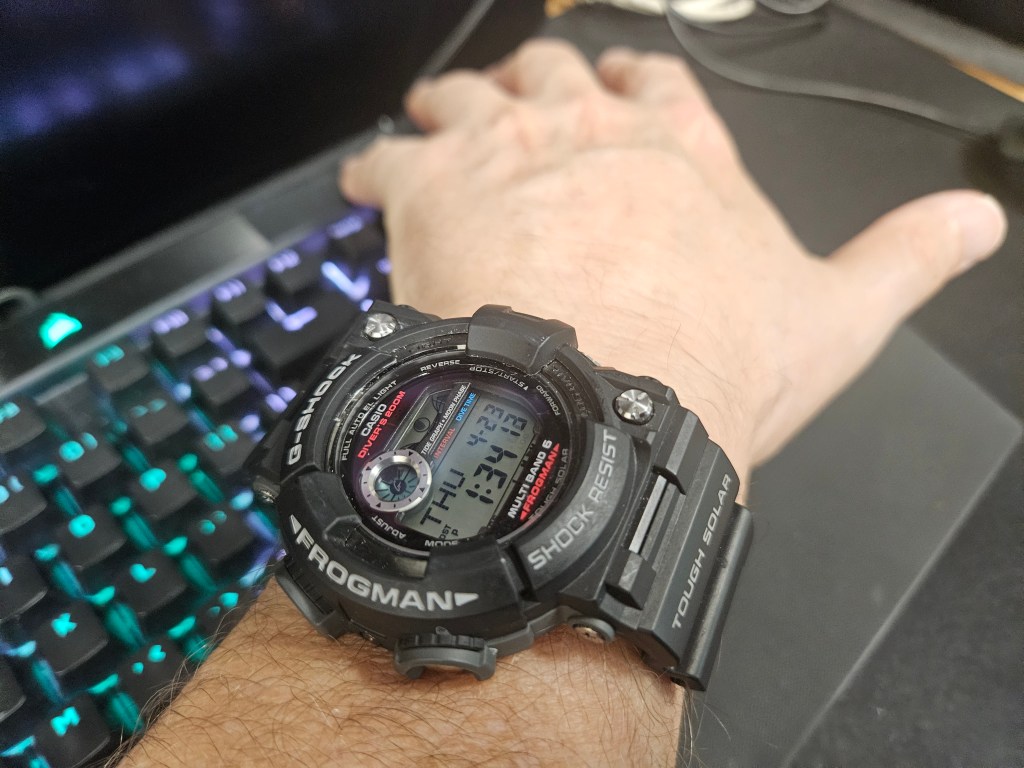
    Which is why I wonder if the shift to the G-Shock Frogman was an attempt at self-surgery—a clean cauterization of the need for more. A reset. My G-Shock friends laugh. The Frogman isn’t the cure, they say. It’s Act One of a new addiction.

    If they’re right, then “I Am the Frogman” isn’t transformation.

    It’s mythology.

    And I’m the one who wrote it.

  • The Horological Substitution Effect

    The Horological Substitution Effect

    I’ve long suspected that my late-night commiseration with other men about watches was not fellowship but camouflage. We called it passion—dial textures, lume performance, the moral superiority of mechanical over quartz—but beneath the jargon was something quieter and more embarrassing: loneliness.

    Lately, a more unsettling thought has taken hold. My transformation into the Frogman—the resin-clad apostle of atomic time—may not be about horology at all. It may be an attempt to imagine myself as a man who exudes the kind of charisma that draws an abundance of real friendships. Not forum acquaintances. Not usernames. Real people who might, inexplicably, choose to spend time with me.

    I have a name for this pathology: the Horological Substitution Effect. It’s the quiet exchange a man makes when real connection feels too risky—he trades the messy, unpredictable labor of friendship for the controlled ritual of online hobby talk. The watch becomes a proxy for intimacy. The forum becomes a stage where vulnerability is replaced with specifications. It looks like connection. It feels like connection. It isn’t.

    My suspicions hardened into something closer to fact when my wife began sending me short videos of comedy skits about a subject that has no business being funny: the epidemic of friendless adult men. The jokes land with the precision of an indictment. Get off your ass. Build a life that includes other human beings. Not for amusement. For survival. For the family.

    The problem is I don’t know how.

    My friendships didn’t end dramatically. They dissolved. Quietly. Gradually. Like hair circling a drain until there’s nothing left to catch. I haven’t met a friend for a movie and a meal in over a decade. Solitude didn’t arrive as a crisis; it moved in, rearranged the furniture, and declared itself permanent. Worse, it feels justified. I operate under a private assumption so efficient it barely needs words: no one would choose this. Why would they? Friendship is an investment, and I’ve already decided I’m a bad bet. Rejection is neatly avoided by never extending the invitation. It’s surrender, dressed up as self-respect.

    If I trace the origin, I land somewhere around 2005. Dinner with my cousin in downtown Los Angeles. Afterward, he wanted me to follow him to Silver Lake for coffee and more conversation. It wasn’t the original plan, just a spontaneous thought. I felt the anxiety spike, sharp and immediate. Dinner had been the contract; anything beyond it felt like a breach. I went along, but badly. He noticed. He never asked again. He went on to build a life dense with friendships, a calendar that requires pruning. I refined a different skill: leaving early. It’s part of my neurosis and a condition called Extension Anxiety Reflex: the immediate surge of discomfort triggered when a social encounter exceeds its original scope, prompting withdrawal, compliance-with-resistance, or emotional shutdown. The reflex prioritizes escape over connection, often at the exact moment intimacy might begin.

    I inherited the inclination to not maintain friendships. My parents spent the last decades of their lives without friends. My father outsourced social contact through his second wife but never rebuilt what he’d lost. My mother claimed acquaintances the way a diner claims rapport with a waiter—polite, transactional, ultimately imaginary. Loneliness wasn’t diagnosed in our house; it was modeled. It wore the mask of normalcy. I didn’t choose to avoid friendships so much as follow a script. 

    My parents weren’t bad people. They were self-involved, chemically dependent, emotionally unavailable. My father once told me, with the bluntness of a man who had stopped editing himself, that if he could do it over again, he wouldn’t have children. People recoil at that. I didn’t. It sounded like a sentence I’d already been living. My mother oscillated between warmth and collapse, her depressions so severe she vanished into hospitals while I vanished into my grandparents’ home. Childhood became less a place to grow than a place to endure.

    So I adapted. I became self-sufficient. I entertained myself. I removed the need for others before they could remove themselves from me. Isolation wasn’t a failure; it was a system—efficient, predictable, safe.

    In my twenties, desire disrupted the system. I wanted relationships, so I built a version of myself that could secure them. Talkative. Confident. Funny. A man with timing. It worked. Women believed in the performance. So did I. But the performance had no depth. It couldn’t support anything real. Relationships collapsed under the combined weight of my anxiety and self-absorption. I could attract; I could not attach. I had charisma without the anchor: the ability to generate attraction through confidence, humor, and social fluency while lacking the emotional grounding required to sustain a relationship. I could initiate connection but could not stabilize it, resulting in repeated relational collapse.

    That hasn’t entirely changed. I can still be charming in controlled doses. Colleagues enjoy me in passing. I generate conversation the way a barista generates foam—pleasant, temporary, decorative. But conversation is not friendship. Friendship requires escalation. Risk. The unthinkable act of asking someone to step outside the script and spend time with you. That’s where the system fails. I assume the answer will be no, so I never ask the question. It’s a perfect loop: I avoid rejection by guaranteeing isolation.

    This morning, sitting in my car waiting to take my daughters to school, I nearly performed another ritual. I reached for my watch, ready to photograph it for Instagram—a small sacrifice to the gods of trivial validation. For a moment, I considered it. Then the idea turned on me. The absurdity was too clean to ignore. As if a watch photo could compensate for a hollow social life. As if attention could masquerade as connection. It felt like eating sugar to cure hunger and calling the crash nourishment.

    So I sat there instead.

    I thought about those videos my wife keeps sending. They’re funny the way a diagnosis is funny—because it’s accurate. She’s worried. She should be.

    The truth is not complicated. It’s just unflattering. I have built a life optimized to avoid risk, and in doing so, I have optimized it to avoid connection. And here’s the irony that would be funny if it weren’t so exact: as the self-appointed Frogman—the man of action, the avatar of decisiveness—I am acutely aware of the contradiction. The Frogman is not a watch; it is an aspiration. Like Steely Dan’s suburbanite Deacon, dreaming of escape through saxophone and whiskey, I imagine a version of myself that moves, acts, engages—a man who shows up, who serves, who answers the call.

    A man who doesn’t leave early.

  • The Man Who Never Asked

    The Man Who Never Asked

    My wife has been sending me comedy skits about a subject that isn’t remotely funny: the epidemic of friendless adult men. The message arrives dressed as humor but lands as indictment—get off your ass and build a life that includes other human beings. Not for entertainment. For survival. For the family.

    The problem is I don’t know how.

    My friendships didn’t end with a bang; they evaporated. One by one, they thinned out, like hair in a drain, until nothing remained. I haven’t met a friend for a movie and a meal in nearly twenty-five years. Solitude didn’t ambush me; it settled in and redecorated. It became my default setting. Worse, it feels justified. I operate under a quiet but tyrannical assumption: no one would willingly spend that kind of time with me. Why would they? Friendship requires an investment, and I’ve already decided I’m not worth the return. Rejection is neatly avoided by never making the ask. A preemptive surrender disguised as dignity.

    When I think about how this calcified, I go back to 2005. My cousin and I met for dinner in downtown Los Angeles. Afterward, he wanted to extend the evening—drive twenty minutes to a coffee shop, linger, talk. I felt the anxiety rise like a fever. Dinner had been the contract; anything beyond it felt like trespass. I went along, reluctantly. He noticed. He never asked again. He moved on to a life crowded with friendships, a calendar he has to prune. I perfected the art of leaving early.

    I come by this honestly. My parents spent the last three decades of their lives without friends. My father borrowed social contact through his second wife but never rebuilt what he lost. My mother claimed friendships the way a customer claims familiarity with a waiter—pleasant, transactional, imaginary. Loneliness wasn’t diagnosed in our household; it was modeled. It looked normal. It felt inevitable.

    My parents weren’t bad people. They were self-involved, chemically compromised, and emotionally unavailable. My father once told me that if he could do it over again, he wouldn’t have children. People recoil when they hear that. I didn’t. It had the ring of truth I had already lived with. My mother, meanwhile, oscillated between warmth and collapse. Her depressions were so severe she disappeared into hospitals, and I disappeared into my grandparents’ house. Childhood became something to endure rather than inhabit.

    So I adapted. I became self-contained. I entertained myself. I eliminated the need for others before they could eliminate me. Being alone wasn’t a failure; it was a system.

    In my twenties, desire disrupted that system. I wanted relationships, so I built a version of myself that could get them. I became talkative, confident, funny—an actor with good timing and a decent script. It worked. Women believed in the character. So did I. But the performance had no depth. It couldn’t sustain love because it wasn’t built on vulnerability, only on impression. The relationships collapsed under the weight of my anxiety and selfishness. I could attract; I could not attach.

    That hasn’t entirely changed. I can still be charming in controlled environments. My colleagues enjoy me in passing. I can generate conversation the way a barista generates foam—pleasant, temporary, nonbinding. But conversation is not friendship. Friendship requires escalation, risk, the unthinkable act of asking someone to step outside the script and spend time with you. That’s where I freeze. I assume the answer will be no, and so I never pose the question. It’s a tidy system: I protect myself from rejection by guaranteeing isolation.

    This morning, sitting in my car waiting to take my daughters to school, I almost performed another ritual of avoidance. I reached for my watch, ready to photograph it for Instagram—a small offering to the gods of trivial validation. For a moment, I considered it. Then the idea repulsed me. The absurdity of it. As if a watch photo could compensate for a hollow social life. As if attention could substitute for connection. It felt like feeding a hunger with sugar and calling it nourishment.

    So I sat there instead, thinking about those videos my wife keeps sending me. They’re funny in the way a diagnosis can be funny—because it’s accurate. She’s worried. She should be.

    The truth is simple and unflattering: I’ve built a life that minimizes risk and, in doing so, minimizes connection. If I want to be less of a burden to my family, I have to become someone who can love beyond the walls of his own habits. That means doing the one thing I’ve spent decades avoiding.

    It means asking.

  • The Weight of a Ringing Phone During the Landline Era

    The Weight of a Ringing Phone During the Landline Era

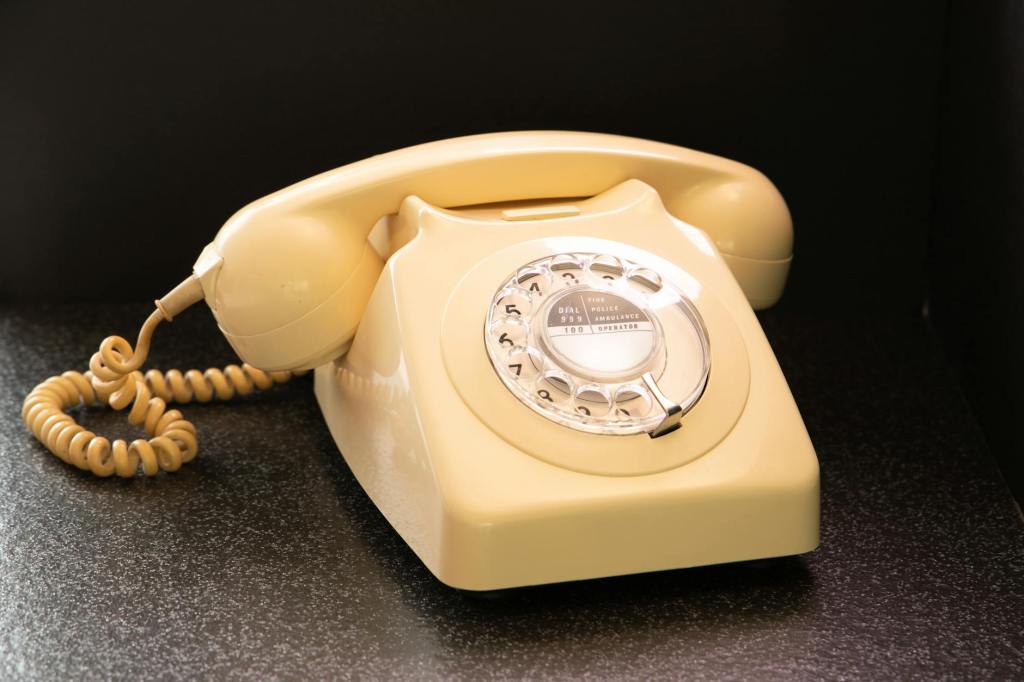
    I remember the Landline Era with a kind of reverence that borders on disbelief. Back then, I inhabited a different self. Those heavy rotary phones were not appliances; they were portals. You dialed into a world where connection had weight, where conversations stretched for hours until your ear burned raw against the receiver. When the phone rang, it didn’t interrupt life—it elevated it. The call carried you from ordinary time into something charged and consequential. Someone wanted you. Someone chose you. That alone conferred meaning.

    Even the timing of a call had its own grammar. A phone ringing before dawn meant dread. I was eleven on December 31, 1972, when my best friend Marc Warren called early to deliver news that felt too large for our age: Our beloved baseball hero Roberto Clemente had died in a plane crash while bringing aid to earthquake victims in Nicaragua. The call itself became part of the tragedy—a ritual of shared shock, proof that grief demanded a witness.

    In my late twenties, after I moved from the Bay Area to the California desert for my first full-time teaching job, the phone remained a lifeline. Friends scattered across Denver, Eureka, and back home would call, or I would call them, and we would talk—really talk—for two hours or more. We told stories not just to report events but to interpret them, to make sense of who we were becoming. The underlying message was never spoken, yet it saturated everything: you matter enough for this kind of time. Your life deserves this level of attention. I never questioned my worth because it was constantly affirmed in the currency of sustained conversation.

    By the early 2000s, the erosion had begun. Calls shrank to thirty minutes, sometimes less. You could feel the shift before you could name it. Texting arrived first, then the slow takeover of online life—relationships diluted into fragments, attention splintered across endless digital surfaces. The word “engagement” was repurposed into something thin and transactional. It came to mean clicks, likes, metrics—fleeting signals that mimicked connection without ever achieving it. No surge of digital attention could rival the steady gravity of a two-hour conversation in which your existence was never in doubt.

    In what I think of as the Parasocial Era, self-worth became unstable, tied to numbers that refreshed by the second. Real relationships receded as people adapted to simulations of connection. You watched others contort themselves to stay visible—posting constantly, performing outrage, dispensing optimism like a drug, chasing relevance as if it were oxygen. It was easy to recognize the pathology in others and harder to admit its presence in yourself. That recognition, uncomfortable as it was, pushed me to step back from social media, though not entirely free of its pull.

    Around 2006, I started a blog about my obsession with radios. It wasn’t really about radios. It was about reaching out, about recreating some version of the connection I had lost. When I joined social media a few years later, I found myself tracking engagement numbers with a vigilance that bordered on compulsion. Each fluctuation felt like a verdict. For the first time, I didn’t take my self-worth for granted; I monitored it, measured it, doubted it.

    Meanwhile, the practical demands of life closed in. Raising twin daughters, managing time, keeping everything afloat—these became the organizing principles of my days. Friendships didn’t end so much as they withered. Meeting someone in person required planning, travel, coordination—all the friction that digital life had taught me to avoid. Plans were made and then canceled. Illness intervened. Weeks turned into years. Absence became normal.

    I understand now that these simulated connections cannot supply what they promise. They offer stimulation, not sustenance. They mimic affirmation but cannot anchor it. I wish I had protected a handful of friendships with more stubbornness, more intention. Not out of nostalgia, but out of necessity—for myself, and for the people closest to me. A man with real friendships is a steadier presence at home. Deprive him of those, and something essential erodes.

    I don’t pretend there’s a way back to the Landline Era. I don’t see myself as a casualty either. I made choices. I accepted the bargain of convenience and efficiency, believing I could preserve deep connection while embracing frictionless substitutes. I believed I could have my cake and eat it too. That belief was naïve. The system was designed to flatter that illusion.

    Still, I return to that Sunday morning in 1972. A tragedy had occurred, and my friend needed to tell me—not broadcast it, not post it, not signal it to a crowd, but tell me. Because I mattered. The call was the message.

  • Social Capital and the Art of Not Being Chosen

    Social Capital and the Art of Not Being Chosen

    Not all rejection deserves to be filed under the same heading. Romantic rejection—the operatic kind—arrives with violins, moonlight, and a certain built-in alibi. You fall hard, you overestimate your odds, and when the other person declines to co-star in your fantasy, you can console yourself with the obvious: the whole thing was inflated from the start. You were auditioning for a role that rarely gets cast.

    But the quieter rejections—the ones that occur under fluorescent lighting and polite conversation—cut deeper. They lack drama but not consequence. In fact, they feel more diagnostic, as if they’ve been administered by a committee.

    Consider friendship rejection. You meet someone, exchange a few promising signals, and then—nothing. Or worse, a friendship that once had momentum slows, then stalls, then disappears entirely. This is not a stranger declining your advances; this is someone who had enough data to make a decision and chose, calmly, not to proceed. The verdict feels less like bad luck and more like a character assessment.

    Then there is colleague rejection, which operates with corporate efficiency. Alliances form. Cliques crystallize. You are not invited into the warm circle of inside jokes and informal influence. You do your work—flawlessly, even—but without the buoyancy that comes from being wanted. You become competent but peripheral, visible but not included. This is where you begin to suspect you suffer from what might be called Social Capital Deficit Syndrome: a condition marked by a shortage of the invisible currency that makes social and professional life glide instead of grind.

    And here is the uncomfortable truth: social capital is not a luxury; it is infrastructure. Without it, you are left to interpret every silence, every omission, every polite deflection. The temptation is to diagnose yourself—too blunt, too quiet, too something—and then to launch a campaign of correction. This is where things get worse. Self-blame mutates into paranoia. Self-improvement becomes performance. You start sanding down your edges in public, hoping to emerge as a more acceptable version of yourself, and end up as a less convincing one.

    At some point, a harsher but cleaner realization presents itself: your personality comes with a certain gravitational pull, and not everyone will orbit it. No amount of forcing will change that. Trying to wedge yourself into every available opening only advertises the mismatch.

    The more durable response is less theatrical and more disciplined. Accept that people respond rather than decide. They are not conducting formal evaluations of your worth; they are reacting to chemistry, timing, and preference—most of which lie outside your control. This does not excuse cruelty, but it does eliminate the fantasy that everyone owes you affinity.

    So you take the higher road—not as a moral performance, but as a practical strategy. You remain courteous when ignored, steady when excluded, and restrained when slighted. You refuse to become the bitter man who proves his critics right simply by reacting exactly as expected.

    This runs counter to a culture that treats every problem as fixable with the right toolkit. You can, of course, pursue therapy, charisma workshops, confidence training—the whole catalog of self-upgrades. Some of it may help. Some of it may turn you into a louder version of the same problem. There is a fine line between improvement and overcorrection, and many people sprint past it.

    What remains, then, is a quieter ambition: to live without rancor. To accept your limits without turning them into grievances. To maintain a sense of integrity that does not depend on applause. The chip on your shoulder may feel like armor, but it is really a signal—confirmation to others that their instincts about you were correct. Let it go.

    You may lose the small comforts of self-pity. In return, you gain something sturdier: a life not governed by who did or did not choose you.

  • You Can’t Hack Friendship

    You Can’t Hack Friendship

    A shortage of friendship seeps into everything. It distorts your thinking, magnifies your obsessions, and turns both your work and your home life into echo chambers. What begins as a quiet absence becomes a governing condition. The burden doesn’t stay neatly contained within you; it spills outward, pressing on your family, altering the atmosphere of every room you occupy.

    Active friendship is not a luxury. It is a nutrient. Deprive the soul of it and you don’t merely feel a little off—you begin to atrophy. The comparison is almost clinical: friendship is to the psyche what protein is to muscle. Neglect it long enough and weakness follows, then dysfunction, then a kind of emotional brittleness that snaps under ordinary strain.

    Your predicament has a familiar shape. You reach out. The response is lukewarm, delayed, or politely distant. You respect boundaries—yours and theirs—so you retreat. The retreats accumulate. What began as courtesy hardens into habit. Eventually, not seeing friends stops feeling like a temporary lull and starts to resemble a lifestyle. The absence becomes routine, then normal, then invisible.

    The culture is more than happy to bless this arrangement. Adults, we’re told, naturally drift into smaller circles. Life is busy. Everyone is tired. The internet offers a thin, flickering substitute for presence. Add in economic pressure—the side hustles, the quiet anxiety about money—and friendship begins to look like a discretionary expense. Time becomes a zero-sum game, and friendship is the line item that keeps getting cut.

    Age compounds the problem. The older you get, the more fixed your habits become. The friction of meeting new people increases. The old friendships fade—some through neglect, some through conscious uncoupling, most through the slow erosion of time. Replacements don’t arrive. They rarely do.

    Then there’s pride, that silent enforcer. You don’t talk about the absence. You don’t announce your loneliness. The first rule is to pretend there is no problem. You keep your complaints internal, your need concealed. You perform composure. You suffer privately, as if dignity requires it.

    You may even suspect this was always your trajectory. You look back at your parents and see hints of the same pattern—difficult temperaments, limited circles, a tendency toward inwardness. You begin to wonder if you’re not simply repeating a script written long before you understood it.

    Over time, solitude becomes architecture. You build a small, fortified life and call it independence. It starts to resemble something like C. S. Lewis’s description of hell: a self-constructed enclosure where nothing enters and nothing leaves. You seal the doors, throw the key beyond the walls, and then convince yourself this arrangement is freedom. It is, in fact, a perfectly engineered loneliness.

    Inside the fortress, you have time—too much of it. Memory begins to intrude. You recall childhood, when friendship required no strategy and no scheduling. It was as natural as breathing. You laughed without agenda. You learned who you were in the presence of others. Those early alliances—messy, loud, unfiltered—helped shape your sense of right and wrong, belonging and identity.

    Adulthood replaces that immediacy with calculation. Time fragments. Obligations multiply. Your circle shrinks. The hunger for connection doesn’t disappear; it mutates. You turn to social media, posting curated glimpses of a life that appears connected. The response—likes, comments, brief exchanges—offers a diluted version of what you’re actually missing. It looks like friendship at a distance, but it lacks weight. Eventually, even that thin substitute fails to satisfy, and you drift away from it too.

    You try another route: creation. You write. You play music. You hope that expression will generate connection. People may admire what you produce. They may even love it. But admiration is not friendship. Applause is not companionship. A well-received paragraph cannot sit across from you at a table.

    There is no workaround. No clever substitution. No technological proxy or “life hack” that fills the gap.

    At some point, you have to say it plainly: the absence of friendship is a problem.

    What follows that admission is uncertain. There is no neat solution waiting on the other side of the sentence. But there is at least this: you are no longer pretending. You are no longer calling deprivation a preference or isolation a virtue.

    You are, finally, telling the truth.

  • Reunion Loop Syndrome: The Watch You Can’t Quit

    Reunion Loop Syndrome: The Watch You Can’t Quit

    Seasoned watch collectors know a particular form of heartbreak: selling a watch they love—then hunting it down again like a lost soulmate. The cycle repeats. Buy. Sell. Regret. Rebuy. Promise never to let it go again. Then, a few months later, the relationship cools, restlessness sets in, and the breakup happens all over again.

    At some point it becomes clear: the fixation isn’t the watch.

    It’s the drama.

    This pattern has a name: Reunion Loop Syndrome—a behavioral cycle in which the collector repeatedly parts with and repurchases the same watch, not because their taste has changed, but because they crave the emotional arc. The pleasure isn’t ownership; it’s the story. Separation sharpens longing. Regret fuels the search. The chase restores meaning. And the reunion delivers a brief, intoxicating high.

    The watch becomes less an object than a romantic partner in a serialized relationship. Each transaction reenacts the emotional turbulence of a teenage breakup—except now the reconciliation includes PayPal fees, overnight shipping, and the quiet humiliation of buying back your own mistake.

    Eventually, some collectors recognize the madness and attempt an intervention.

    Instead of selling, they stage a controlled disappearance.

    The watch is locked in a safe. Or exiled to a friend’s house. Sometimes both. Access is restricted for months—three at a minimum, sometimes a full year. The strategy is simple: simulate loss without the financial damage. Absence rebuilds longing. Time restores novelty. When the watch finally returns to the wrist, the reunion feels earned rather than repurchased.

    It’s emotional theater without the market penalty.

    The good news is the method works. Thousands of dollars remain safely in the bank. The flipping stops. The collection stabilizes. Financial maturity has arrived.

    The bad news is harder to admit. Emotional security is still stuck in senior year.

  • When Watch Collecting Becomes Financial Infidelity

    When Watch Collecting Becomes Financial Infidelity

    Any honest account of watch addiction must confront its most uncomfortable chapter: financial infidelity.

    The watch obsessive does not merely inhabit a fever dream of dials and bezels. He is a consumer training his appetite the way a bodybuilder trains a muscle. Each purchase lowers resistance. Each box on the doorstep normalizes the next. What begins as an occasional indulgence becomes a rhythm, then a pattern, then a supply chain.

    At first, his wife is charmed. A parcel here and there. A harmless hobby. A grown man treating himself to a toy.

    But frequency is the tell.

    Soon the packages arrive too often, too predictably, like clockwork. The enthusiast recognizes the danger before anyone says a word. And so the hobby evolves. Deliveries rerouted to the office. A friend’s address. A rented mailbox. The collection expands. The domestic narrative is quietly edited.

    The line is crossed when the money changes categories.

    Vacation funds become “temporary reallocations.” Home projects become “later.” College savings become “untouched in principle.” And somewhere along the way, a Swiss luxury watch appears that cannot be explained without a level of honesty the buyer is no longer prepared to offer.

    Behavior adapts to the secrecy.

    Watches are swapped during the day so no single piece attracts attention. New arrivals are unboxed during strategic windows of solitude. Lume checks are performed under blankets like a teenager hiding a flashlight after lights-out. YouTube reviews are watched with the sound off.

    To the outside world, he is a responsible husband and father.

    Privately, he operates a parallel identity.

    This condition has a name: Domestic Double Life Disorder—the psychological split in which a man performs stability and restraint in public while privately sustaining a covert economy of acquisition, concealment, and rationalization.

    For some, the weight of the split becomes unbearable. Guilt accumulates. The numbers add up. The secrecy grows exhausting. And one day, the buying stops.

    The result is not relief.

    It is silence.

    No packages. No tracking numbers. No late-night research. No private surge of anticipation. Life becomes honest—and strangely flat. For a man accustomed to the adrenaline of concealment and the dopamine of arrival, integrity feels less like freedom and more like withdrawal.

    This is the danger point.

    Because if honesty feels empty and secrecy felt alive, the relapse writes itself.

    The addresses reappear. The justifications return. The private economy resumes. The double life feels, once again, familiar. Efficient. Even comforting.

    For some watch addicts, deceit is not the problem.

    It is the habitat.

  • The Hot Take Is the Chronic Cough of Something Gone Wrong

    The Hot Take Is the Chronic Cough of Something Gone Wrong

    We live in a Hot Take culture, and on balance, hot takes do more harm than good.

    For a decade, I feasted on them. Back when it was still called Twitter, my days were seasoned with sharp one-liners, instant judgments, and rhetorical mic drops. It felt bracing at first—intellectual espresso shots delivered in 280 characters. But over time, the feed stopped feeling like conversation and started feeling like a room full of people shouting clever insults at a fire.

    About a year ago, I deleted my account. By then, I barely recognized the people I once followed. Everything had gone shrill. Bombast replaced thought. Even the impressive hot takes—clever, ruthless, beautifully phrased—eventually blurred into something anesthetizing. A constant buzz that left me dull rather than informed.

    I didn’t quit social media entirely. What I actually want is boring, old-fashioned breaking news. Tell me what happened. Tell me where. Tell me when. I don’t need a verdict within thirty seconds. So now I drift through places like Threads, mostly lurking. Many of the smart people I used to follow migrated there. Some still do what they’ve always done: post headlines and context. Others can’t resist the gravitational pull of commentary. News first, hot take immediately after. Their allies cheer them on inside familiar silos, and the machine rewards escalation.

    To be fair, not everyone posting is chasing dopamine. Some journalists are doing real work. They have massive audiences and feel a genuine obligation to interpret chaos in real time. They live in a crucible of praise and abuse, applause and outrage. That kind of constant psychic weather can’t be healthy, but the motive is understandable—meaningful engagement. If this were a pre-digital era, they’d still be doing something similar, just with deadlines instead of feeds. Slower. Quieter. Possibly saner.

    But then there’s another species entirely: the professional Hot Taker.

    This person has mastered the form. Their posts are short, sharp, structurally elegant. A good hot take is witty, memorable, and instantly legible. It lands. It spreads. It racks up likes and reposts like a slot machine hitting cherries. Success is measurable, public, addictive.

    And that’s the trap.

    When identity and self-worth become tethered to engagement metrics, the self gets commodified. Everything becomes raw material for the next take. Nuance is a liability. Hesitation is death. The hot take demands boldness, outrage, and certainty—even when certainty is fraudulent.

    At that point, the Hot Taker is no longer responding to the world; they are farming it.

    I’ve watched thoughtful, decent people slide into this role. At first, their posts are useful. Then they overshare. Then they pick fights they don’t need to fight. Eventually, their online life becomes a series of skirmishes that feel exhausting even to sympathetic observers. They can’t stop—not because they’re evil, but because the machine has trained them well.

    So yes, we live in the Age of the Hot Take, where people measure their purpose by their ability to generate applause from the faithful. Hot takes don’t convert anyone. They delight the choir and enrage the opposition. Polarization intensifies. Nothing moves.

    Is it unfair to call this a disease? I don’t think so.

    First, there’s the hijack. The belief that constant expression equals relevance, that relevance equals worth. It’s a delusion reinforced by numbers. Likes don’t satisfy; they sharpen hunger.

    Then there are the consumers. By liking and reposting, they feel they’re participating in history, bending reality toward justice. In practice, they’re mostly helping tribes harden their borders. Everyone believes they’re weaponizing truth. No one notices the epistemic ground eroding beneath them.

    When COVID hit, I assumed the crisis would force clarity. Instead, it deepened the divide. Now measles—a disease we already solved—is making a comeback. Science, once the shared floor, has become another battlefield. If pandemics and preventable deaths can’t bring us together, hot takes certainly won’t.

    You can fire off the most righteous, viral condemnation imaginable. Measles will still spread.

    So what should we do instead?

    The answer isn’t attractive. Reality hasn’t hit hard enough yet. Historically, people abandon fantasy only when consequences become unavoidable. Until then, we chatter. We posture. We perform. Hot takes aren’t solutions. They’re symptoms—the chronic cough that tells you something deeper is wrong.