Tag: reviews

  • The Exit Watch That Blew the Exit

    The Exit Watch That Blew the Exit

    There comes a moment in every watch influencer’s career when he announces, with ceremonial gravity, that he has found his Exit Watch. This watch, he assures his audience, is different. It stands apart from the rest of the collection not merely in design, but in destiny. It promises completion. Closure. A sense that the long pilgrimage through steel and lume has reached its ordained end.

    The watch is so magnificent that it demands narrative consequences. The influencer hints at “big changes.” New content. A reimagined channel. Perhaps fewer uploads, perhaps deeper reflections. The implication is clear: the Exit Watch has not merely ended a collecting phase—it has matured the man.

    Then the watch arrives.

    It is flawless. Better than expected. The case sings. The dial radiates authority. The bracelet feels engineered by monks. The unboxing video trembles with reverence. For approximately forty-eight hours, the influencer experiences peace.

    Then something goes wrong.

    The watch does not quiet desire. It amplifies it. Instead of satiation, there is hunger—acute, feral, unprecedented. The Exit Watch behaves less like a sedative and more like a stimulant. New watches begin to haunt his thoughts. He starts browsing late at night. He rationalizes. He reopens tabs he swore were closed forever. The collection multiplies wildly, untethered from logic or restraint.

    Within months, the spiral is complete. The influencer is on the brink of losing his sanity, his marriage, and his house—saved only by a merciful uncle who wires sixty thousand dollars to send him to a rehab facility in the Utah desert. There, stripped of his collection, he learns to play the flute, hunt his own food, and live without Wi-Fi. He emerges thinner, quieter, and reconciled to a solitary G-Shock Frogman, worn not for pleasure but for survival.

    This is Exit Watch Reversal: the affliction in which a watch intended to conclude a collecting arc instead detonates it. The subject does not experience closure, but acceleration—as though the watch has unlocked a previously dormant appetite and handed it the keys.

  • Applause Collapse and the Perils of a “New Direction”

    Applause Collapse and the Perils of a “New Direction”

    There comes a moment in every watch influencer’s career when he believes—sincerely, even nobly—that his audience is ready to applaud his growth. He has done the hard work. He has pared down. He has purified. Five watches remain, all on straps, each presented as evidence of restraint and moral clarity. The comments are approving. The tone is reverent. He is, at last, becoming free.

    Naturally, this serenity bores him.

    So he shakes things up. Three new watches enter the fold. The collection now stands at eight—four on straps, four on bracelets—symmetry restored, balance achieved. He announces a “new direction.” He films a YouTube video about his “evolving philosophy.” He speaks earnestly of equilibrium, versatility, and personal growth. The framing is careful. The lighting is soft. The music is tasteful. He waits for the applause.

    It does not come.

    Instead, the comment section turns cold. The audience, once indulgent, becomes prosecutorial. I thought you were healing. This feels like relapse. You were doing so well at five. The verdict is unanimous and devastating: the addiction has returned. What’s worse is not the criticism itself, but its accuracy. The influencer feels it immediately, like a clean punch to the ribs. The comments articulate the doubt he was trying not to hear.

    Shame sets in. He replays the video and cringes at his own rhetoric. “Quest for balance” now sounds like a euphemism. The watches feel heavier on the wrist. Within weeks, he detonates the entire enterprise. Seven watches are given away. One remains, kept on a strap, stripped of pleasure and worn more as a reminder than an object of joy. He deletes his YouTube channel. He nukes Instagram. He earns a kettlebell certification. He eats clean. He helps clients. He speaks of social media with quiet contempt, like someone describing a former addiction he has sworn never to touch again.

    This is Applause Collapse: the moment an influencer unveils a carefully staged transformation, expecting affirmation, only to encounter moral disappointment so severe that disappearance feels like the only honest response. It is not the loss of praise that breaks him. It is the realization that the crowd was not watching his journey—they were auditing his compliance.

  • How 2025 Made Me Believe in Movies Again

    How 2025 Made Me Believe in Movies Again

    I lost my love for movies sometime in the last decade, when Hollywood began to feel less like a dream factory and more like an actuarial office with better lighting. Everything started to look like a boardroom decision in costume. I can count on one hand the films I bothered to see in theaters over fifteen years: Avatar, World War Z, Black Panther, Get Out. A few streamed titles shook me awake—Uncut Gems and Good Time from the Safdies, Paul Giamatti’s bruised soul in Private Life and The Holdovers, Paul Thomas Anderson’s sunburned nostalgia in Licorice Pizza, Ryan Coogler’s Sinners. But 2025 hit differently. Four films—Eddington, One Battle After Another, Bugonia, and Weapons—did something rare: they stared directly into the national nervous breakdown. These weren’t escapist fantasies. They were dispatches from a culture unraveling—where institutions inspire no faith, conspiracies feel more plausible than facts, politics has become cosplay, and we live in sealed-off realities that collide without ever conversing.

    Eddington blindsided me. Joaquin Phoenix plays a bitter, alienated, anti-mask sheriff in a New Mexico town during the pandemic, and he’s so fully possessed by the role that I didn’t recognize him for several minutes. I went in braced to hate the film—expecting a grim slog through our worst collective memories. Instead, I got something braver: a devastating portrait of a society that has slipped its moorings and drifted into a lonely fever swamp. The film doesn’t mug for satire or cheap laughs. It trusts the material. Every scene tightens the vise on your attention. It’s the kind of movie nine hundred ninety-nine directors would have drowned in. Ari Aster somehow swims.

    One Battle After Another turns political polarization into tragic pageantry. Sean Penn’s Colonel Lockjaw—a grotesque ICE-agent archetype—faces off against Leonardo DiCaprio’s Rocket Man, who might as well be an Antifa folk demon. But the movie’s real target isn’t left or right; it’s the theater of identity itself. We’ve become a nation of people in costumes, fighting playground wars with adult consequences. Once your political tribe becomes your personality, nuance feels like betrayal. The film suggests a hard truth: a country run by permanent adolescents doesn’t collapse in flames—it collapses in tantrums. Penn has built a career on operatic excess, but Lockjaw may be his most disturbingly perfect creation yet.

    Bugonia is stranger still. Jesse Plemons—leaner, sharper, and channeling a high-IQ Dale Gribble—plays Teddy, a man-child whose conspiracy obsessions keep him tuned to late-night AM radio and convinced that a tech CEO, played by Emma Stone, is an alien in need of kidnapping and repatriation. Once tied up in his house, she attempts to weaponize corporate confidence as an escape strategy, and her faith in managerial language becomes its own punchline. Plemons is reliably excellent, but Emma Stone has crossed into something rarer: the kind of presence Daniel Day-Lewis had in the nineties, where the screen bends around her. The film’s bizarre logic and eerie beauty sent me straight into the arms of Yorgos Lanthimos’ odd, seductive universe.

    Weapons brings the nightmare home—literally. Set in the suburbs, it tells the story of a witch who makes a classroom of children vanish. The teacher is blamed. The principal responds with bureaucratic platitudes. The town spirals. Beneath the horror scaffolding is a sharp allegory about addiction and institutional cowardice: when a society loses its ability to think clearly, every crisis metastasizes. The adults talk in slogans. The children disappear.

    Taken together, these films diagnose the same disease. Chaos becomes pandemonium when a culture retreats into fantasy and calls it identity. We dress up our impulses as ideologies. We curate personas instead of building character. The center doesn’t hold—not because of some invading barbarian, but because we’ve all invited the barbarian inside and handed him the keys. The good news, if there is any, is that there are still filmmakers brave enough to tell the truth about the mess we’re in. In 2025, cinema finally stopped trying to soothe me—and started telling me what I already knew but didn’t want to admit.

  • The Gospel According to Fran Lebowitz

    The Gospel According to Fran Lebowitz

    To stay young, I don’t just need a healthy body—I need a mind that isn’t turning into attic storage. My role model in this department is Fran Lebowitz, the humorist who travels the world armed with nothing but her brutally honest intelligence. Her worldview is diamond-cut: she adores New York and despises technology. She refuses to drive a car, touch a smartphone, or even acknowledge a laptop’s existence. Writer’s block? She treats it like a houseguest who overstays for a few decades. Talking is her chosen weapon, so potent that publishing books has become optional.

    Fran is an atheist—not the timid, hedging kind, but a certifiably confident one. She has no worries about the soul, no anxieties about the afterlife, no guilt about her misanthropy. Her biggest spiritual concern is locating a decent bagel.

    Her lack of religiosity hasn’t hindered her friendship with Martin Scorsese, the Catholic titan of cinema. They linger in New York together, trading stories about the old city and reveling in their shared devotion to art—and to complaining eloquently about everything else.

    My mind would be far less cluttered if I possessed Fran’s secular serenity, but I’m built more like Scorsese. I’m a tormented soul, forever plunging into questions about sacrifice, guilt, depravity, and redemption. I couldn’t live like Fran even with a decade of training. I’m hopelessly Marty. But at least I can imagine that if I ever met Fran, she wouldn’t dismiss me for my melancholic leanings. She might dismiss me for my mediocrity or any bland remark that escaped my mouth, but at least her reasons would be earthly.

    To spend an hour at dinner listening to Fran Lebowitz would be a balm—more philosophically satisfying than any bestselling thinker’s 700-page tome. It will never happen, of course. But fortunately, I can find Fran Lebowitz on YouTube. 

  • In Defense of Watching True Crime

    In Defense of Watching True Crime

     A couple of weeks ago my wife DMed me an Instagram reel: one reviewer, dozens of true-crime docuseries. I pressed play and fell down the shaft. I binged everything—some episodes like gravel in the throat, others slick as a thriller—and realized I was hooked the way novels used to hook me: late nights, one more chapter, living on cliffhangers and bad coffee.

    A year ago I would’ve dismissed the whole genre as tabloid embalming fluid: pain turned into programming. That was the lazy take, the one you reach for when you haven’t looked long enough. The better work in this space isn’t cheap; it’s meticulous. At its best, it has social value.

    Watch the detectives. The strong series showcase minds like scalpels—profilers knitting together motive and method, investigators reconstructing a life from fibers and timestamps. The good ones don’t myth-make; they interrogate reality. Their craft can outstrip a screenwriter because the stakes aren’t applause—they’re truth and, sometimes, prison.

    Credit the pursuit, too. The suspect is slippery, the evidence thin, and still the chase continues—phone records, shoe tread, the geography of a lie. You can see how the work rewires them. They read a face like a ledger. They separate panic from performance. They carry that calibration into ordinary life, for better and worse.

    But the badge isn’t a halo. Some episodes show coercive interrogations, tunnel vision, a theory clung to past its sell-by date while exculpatory facts stack up in the corner. Those missteps belong in the record. A genre that can praise tenacity should also indict certainty when it curdles.

    What keeps me watching, beyond craft and cautionary tales, is the way communities assemble under pressure—search parties in neon vests, casseroles and candles, volunteers mapping creek beds while the cameras spin. These stories remind you how much ordinary goodness survives the worst day a town can have.

    Then there are the perpetrators, often undone by their own theater. The vanity is operatic: cryptic boasts, trophies kept, shoplifting while on the run because entitlement feels bulletproof. Not all are violent; some are artists of fraud whose lies cascade through bank accounts, marriages, and nervous systems. The harm is quieter, not smaller.

    The hardest stretch is the parents—the permanent gray in the eyes, the architecture of a life collapsed on one missing pillar. They stay decent, they organize scholarships and vigils, they become advocates—but you can see the subtraction. A part of them is gone, and the camera can’t restore it.

    I do feel the moral splinter: I’m consuming narratives built from someone else’s worst night. There’s a voice that hisses, How dare you. And a voice that answers: Then look harder. Don’t watch for spectacle; watch to learn—about procedure, about predation, about how to be a better neighbor and a sharper juror. The difference between voyeur and witness is attention and intent.

    So here I am, converted, with reservations. The good series map the borderlands between justice and error, courage and vanity, community and collapse. They don’t restore innocence; they invoice it. If I keep watching, it’s because the genre—at its best—insists on seeing clearly, and because clarity, though it stings, is a civic skill worth practicing.

  • The Shock Jock Who Forgot to Pivot

    The Shock Jock Who Forgot to Pivot

    I still tune in to Howard Stern now and then, but most of what I hear these days sounds like a half-hearted reprise of his old shtick—sophomoric gags, body-function chatter, and adolescent innuendo that once jolted the airwaves but now just sag. In his prime, Stern was combustible: he blended pranks, irreverence, and enough genuine insight to keep his circus from collapsing. He earned his Radio Hall of Fame status by kicking down doors no one else dared touch.

    Now, as rumors of his retirement bubble and I endure his weary, autopilot banter with Robin, three thoughts claw at me. First: they don’t sound like they’re having fun anymore. This is a zombie act, plodding through the motions. Second: filling three hours of airtime every single day is a Sisyphean curse—nobody has that much worth saying without stuffing the sausage with sawdust. Third: we all have a shelf life. Relevance expires, and dignity demands a graceful exit.

    Stern’s curse is worse than most. His career persona—edgy, raunchy, forever pandering to prurience—has gone stale, but he’s trapped in it. The irony is brutal: a man smart enough to evolve chose to calcify. A decade ago, he could have pivoted, shed the shock-jock skin, and re-emerged as the wise veteran with conversations that mattered. Instead, while podcasts multiplied like caffeinated rabbits, he let himself be left behind.

    But maybe it isn’t too late. Imagine Howard 2.0: no longer the carnival barker of Sirius, but the philosopher-in-residence of his own café, sipping coffee and musing about culture, mortality, and meaning. Not fifteen hours of filler a week, but four hours of distilled insight—an hour twice a week, sharp and substantive. Podcasting is radio’s heir, and radio is in his DNA. Reinvention is the only antidote to irrelevance, and if he can summon the nerve, Stern could still surprise us.

  • C.Crane Solar Radio: Attention to Details Makes It a Winner

    C.Crane Solar Radio: Attention to Details Makes It a Winner

    20250115_153540

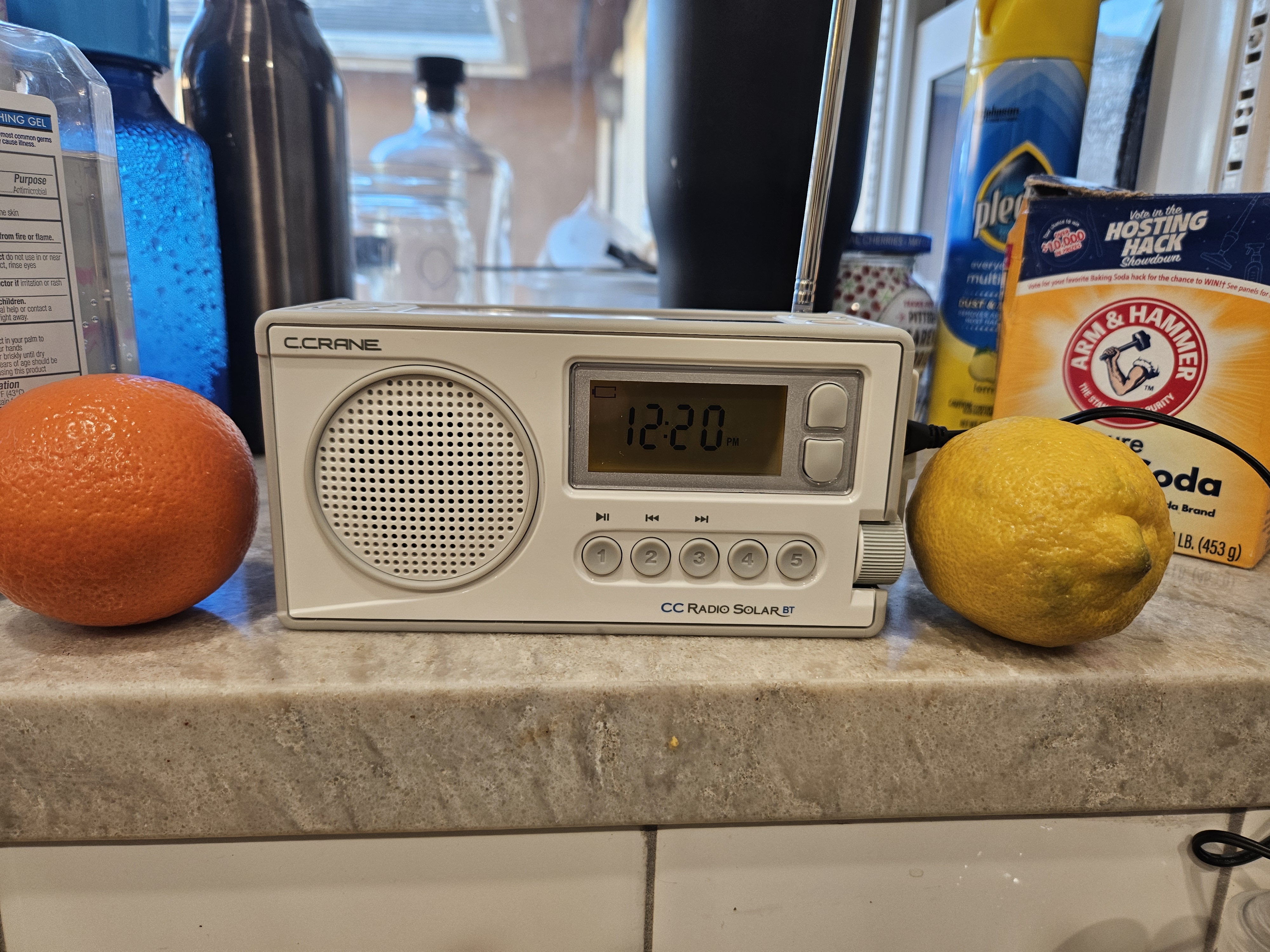
    The C. Crane Solar Radio, paired with the optional AC adapter, arrived on Day 9 of the Los Angeles fires—perfect timing for some disaster preparedness. My first impression? Surprisingly compact and, dare I say, stylish. Its buttons and controls are refreshingly intuitive, a rare quality in emergency gadgets that usually look like they were cobbled together by paranoid survivalists.

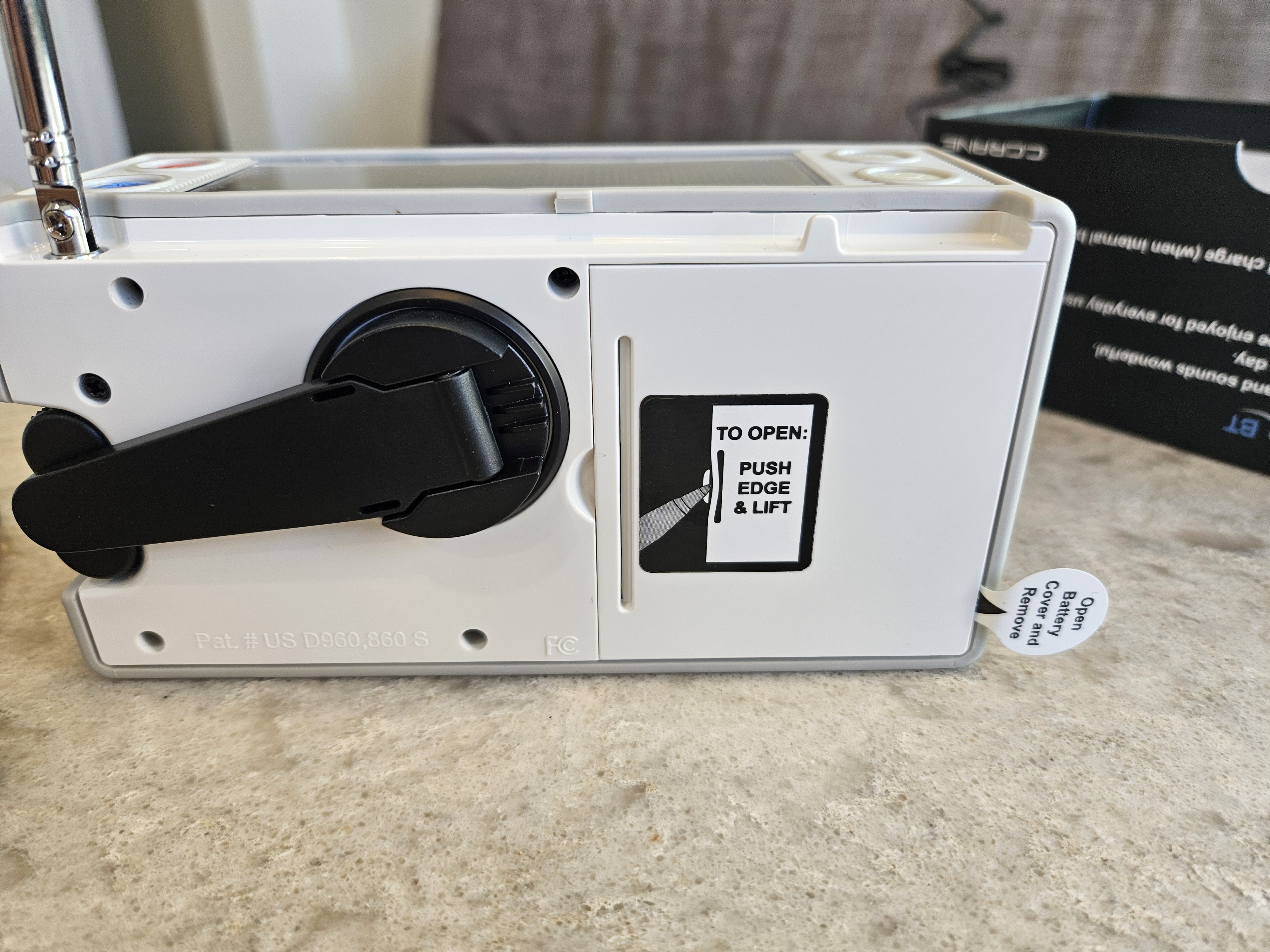
    Then I met the battery door—a stubborn slab of plastic that wouldn’t budge. My fingers failed, so out came the Swiss Army knife, turning what should’ve been a simple battery swap into minor surgery.

    20250115_150949

    Once powered up (on batteries, to avoid interference), I tested FM reception. Not bad. It’s sensitive, though slightly weaker than my Sangean PR-D12 when pulling in 89.3, a notoriously tricky station here in Torrance. Still, it handled it well. KUSC 91.5, though, was a lost cause—same as the PR-D12. Odd, since during my obsessive radio blogging days in the mid-2000s, 91.5 was crystal clear. Maybe it’s not the radios. Maybe it’s today’s electromagnetic smog choking the airwaves.

    Later that evening, as I tackled the dishes, the FM sound impressed me. 89.3 came through loud and clear, delivering crisp voices on the news.

    AM performance? Initially disappointing—distant, hollow, like voices echoing from a well. My friend Mark reminded me that modern homes are electronic war zones. Between Wi-Fi routers, smart devices, and God knows what else, AM hardly stands a chance.

    But then I tweaked the settings. Switching the bandwidth filter from 2.5kHz to 4kHz transformed the AM performance. Suddenly, it shined.

    The speaker is pleasant but modest. This is a small radio, after all. Luckily, the hidden High Power Audio Mode (press buttons 1 and 5) gives it a subtle boost—not exactly concert hall quality, but enough to rise above kitchen noise.

    Where the C. Crane Solar Radio really excels is in its power versatility—two battery types, a solar panel, and a hand crank. Practical, yet it doesn’t scream apocalypse gear.

    So, where does it fit in my collection? The PR-D12 stays in the garage for kettlebell workouts. The Solar Radio earns a spot over the kitchen sink, likely becoming my wife’s go-to. With solid FM performance, customizable AM tuning, and thoughtful design, the C. Crane Solar Radio gets the details right—and comes out a winner.

    20250115_150937
  • Watch What Implodes: Andy Cohen’s Domestic Cinematic Universe

    Watch What Implodes: Andy Cohen’s Domestic Cinematic Universe

    As Stephen Colbert’s tenure winds down on CBS—another headstone in the graveyard of “Late Night”—one might conclude that the talk show format, with its recycled monologues and tepid celebrity banter, is quietly expiring in a corner somewhere, clutching its blue cards and mug. But while traditional television gasps for relevance, the Andy Cohen Empire on Bravo is not merely surviving—it’s reproducing. Rapidly. Like reality TV kudzu.

    Welcome to the Bravo Matrix, where the camera never blinks and no martini goes unslurped. This isn’t scripted television, not officially. But let’s not be naïve—these shows are engineered with the precision of a Swiss watch, albeit one dipped in rosé and glitter. The “reality” may be cooked, but it’s a soufflé audiences devour by the season.

    Each cast member, whether they’re a Botoxed real estate maven, a Charleston trust-fund Casanova, or a spiritual advisor with a skincare line, is cast not for depth but for maximum combustion. These people may or may not be exceptional, but they do one thing very well: live out their personal chaos on camera while clawing for love, status, clarity, and closet space. We watch, transfixed, as they spiral, rebound, or occasionally evolve—all in HD.

    And let’s not forget the ambiance. These shows are drenched in lifestyle pornography: rooftop bars, poolside lounges, candlelit dinners served with sizzling gossip and artisanal side-eye. If television is the new hearth, Bravo is the scented candle flickering at its center—equal parts relaxing and mildly toxic.

    The producers, ever mindful of narrative drag, inject chaos agents—new cast members with just enough lip filler and latent sociopathy to blow up the group chat. This keeps the plot moving and the blood-pressure elevated. If a character becomes too boring or too stable, they’re exiled with the same indifference one might apply to expired yogurt.

    But for the chosen few—those rare personalities who deliver madness with consistency—tenure is real. A Bravo veteran can live a decade on screen, morphing from wide-eyed ingenue to meme-fodder matriarch, all while cultivating their social media following like a side hustle with God-complex benefits. We watch them grow, or don’t. We root for them, or we don’t. Either way, we’re still watching.

    And then there’s Watch What Happens Live, where Cohen himself presides like a smirking Zeus on a pleather throne, guiding reunion specials, feuds, and audience thirst with a cocktail in hand. What started with The Real Housewives of Orange County in 2006 has mushroomed into 75 interwoven shows, with spin-offs, reunion shows, and cameos that make the Marvel Universe look like a provincial theater company.

    In the end, what Vince McMahon did for wrestling—turning it into a steroidal psychodrama of spectacle and tribal allegiance—Andy Cohen has done for domestic warfare. And if the ratings are any clue, Cohen’s steel-clad battalion of brunch brawlers and dinner-party divas is winning.

  • Gene Wilder’s Prelude to Mischief and Mayhem

    Gene Wilder’s Prelude to Mischief and Mayhem

    In fourth grade at Anderson Elementary in San Jose, our teacher cracked open Charlie and the Chocolate Factory and unleashed a literary sugar bomb on the classroom. The characters didn’t just leap off the page—they kicked down the door of our imaginations and set up shop. The book hijacked our brains. Good luck checking it out from the library—there was a waiting list that stretched into eternity.

    A year later, the film Willy Wonka and the Chocolate Factory hit theaters, but my parents, apparently operating under some moral suspicion of Hollywood whimsy, refused to take me. I wouldn’t see it until the VHS era, when cultural consensus finally upgraded it to “beloved classic” status. That’s when I met Gene Wilder’s Wonka—equal parts sorcerer, satirist, and deranged uncle.

    The best moment? Easy. He hobbles out, leaning on a cane like a relic of Victorian fragility—then suddenly drops the act, executes a flawless somersault, and stands up with a gleam that says, I know exactly what game I’m playing, and so should you. That glint in his eye, equal parts wonder and judgment, has haunted me for decades. His entire persona is a velvet-gloved slap to the smug, the spoiled, and the blissfully ignorant. He isn’t just testing children—he’s taking society’s moral pulse and finding a weak, sugary beat.

    That gleam stayed with me. So much so that I wrote a piano piece inspired by Wilder’s performance. I called it Gene Wilder’s Prelude to Mischief and Mayhem. The first movement was a nightmare—rewritten more times than I care to admit. Oddly, the second and third movements came first, composed together in the aftermath of my mother’s passing on October 1, 2020. Nearly five years later, I finally completed the first movement, like some strange reverse birth.

    The result? A tribute in three acts to the sly grin, the righteous mischief, and the bittersweet brilliance of Gene Wilder—a man who, like the best artists, never let kindness become cowardice or magic become a mask for mediocrity.

  • My Midyear Top 5 Music Obsessions of 2025 (So Far)

    My Midyear Top 5 Music Obsessions of 2025 (So Far)

    Let’s call this what it is: a midyear soundtrack to my emotional needs, taste refinement, and irrational belief that a great song can still restore one’s faith in the universe. Below are five songs from 2025 that didn’t just catch my ear—they staged a full occupation of my psyche.

    1. Billie Eilish – “Wildflower”

    Boomers love to chant, “They don’t make music like this anymore,” usually while polishing their vinyl copies of Rumours and sipping overpriced Malbec. To which I say: Have you heard “Wildflower”? Billie Eilish wrote a melody so hauntingly beautiful and emotionally precise it might just slap Stevie Nicks across the astral plane. “Wildflower” isn’t nostalgic—it’s timeless, and it makes the whole “they don’t make ‘em like they used to” argument sound like a radio station that’s lost its signal.

    2. Miley Cyrus – “Flowers” (Demo Version)

    Forget the radio-polished, empowerment-anthem version designed for spin class playlists and morning talk shows. The demo is the real deal. Stripped down and raw, it sounds like Miley walked into the studio, ripped her ribcage open, and hit record. It’s not just about self-love—it’s a reckoning. A breakup song without the mascara, just bone-deep clarity and vocal grit. If the original was a brand campaign, the demo is the heartbreak behind it.

    3. Lana Del Rey & Father John Misty – “Let the Light In”

    This track is so beautiful it feels like eavesdropping on two fallen angels trying to talk each other back into heaven. I’m humbled, elated, and borderline offended by how good it is. If I’d played this song for Anthony Bourdain who once told KCRW’s Evan Kleinman that during his Applebee’s-induced existential spiral he lost faith in the human soul. I wish I could have played him “Let the Light In.” Perhaps he would have reconsidered the cosmic bleakness of mediocre mozzarella sticks. Lana and Misty have composed a shimmering argument for the existence of the human soul. It should be piped into the waiting room between this world and the next.

    4. Strawberry Guy – “As We Bloom”

    Strawberry Guy continues his gentle tyranny over my playlists. “As We Bloom” is another heart-melting, dew-soaked track that could have been transmitted from the dream-state of a lonely Victorian poet. He has the rare talent of making everything feel sacred and a little tragic, like a faded birthday card found in a drawer during a move. In vibe and texture, he’s a spiritual cousin to The Innocence Mission, and I say that with reverence.

    5. Olivia Dean – “Touching Toes”

    This song made me forget my age, my responsibilities, and that I’m not, in fact, swaying in slow motion through a desert cantina in the 1970s. “Touching Toes” is sultry, jazzy, and unselfconsciously whimsical—pure auditory flirtation. It gives me the same odd, disorienting confidence that Maria Muldaur’s “Midnight at the Oasis” once offered: a delusion of magnetism and a sudden desire to wear silk and speak in metaphors. Olivia Dean makes me feel like maybe I am the moment.