Tag: travel

  • I Need to Talk to You About Neighborplexity

    I Need to Talk to You About Neighborplexity

    Sumatra coffee is my bad boy of the coffee world—dark, mysterious, and utterly unapologetic. It doesn’t just wake me up; it smacks me across the face, throws me out of bed, and chases me down the street while I’m still in my pajamas. Imagine if a tropical thunderstorm decided to moonlight as a barista, bottling up its fury in a cup. That’s Sumatra—every sip as intense as being caught in a downpour while you’re half-asleep and regretting every life choice that led you to this point.

    Sure, I’m probably guzzling more Sumatra dark roast than is recommended by anyone with a functioning heart, but let’s be real: I’m an overworked college writing professor, buried under an Everest of student assignments that multiply like rabbits on caffeine. Add to that the never-ending demands of being an author of coffee table humor books—books that, according to my editors, need constant revision and expansion to “stay relevant” and “generate a healthy revenue stream.” Translation: “Jeff, we need you to keep churning out content until your fingers bleed and your soul shrivels up like a raisin.”

    But let’s not get ahead of ourselves with the self-pity party. I could give you a long-winded lecture about how the digital age was supposed to bring us more convenience and free time, only to morph into a merciless sociopath that steals our time faster than you can say “work-life balance.” But instead, let me start my story before the Sumatra kicks in too hard, and I start ranting like a madman on a caffeine bender. Buckle up, because this ride is about to get bumpy.

    My tale begins with the Pattersons, my dear, respectable neighbors. For years, I lived in blissful harmony with these upstanding citizens—the kind of people who proudly displayed their New Yorker subscriptions and NPR tote bags like badges of intellectual honor. We had an unspoken pact, a mutual understanding that we were members of the Smart People’s Society, where the TV was reserved for documentaries, award-winning dramas, and the occasional indie film that required subtitles and a dictionary to understand.

    But then, one evening, as I casually glanced out my window—just a harmless peek, really—I saw something so grotesque, so utterly incomprehensible, that it shook me to my core. There, through the open window of my once-revered neighbors, I saw them glued to the screen—not just any screen, but one streaming a TV show so mind-numbingly lowbrow it made reality itself seem like a parody. My brain went into full-blown meltdown. Could it be? Were they actually watching Love Island?

    I blinked, hoping I’d misinterpreted the scene, but no—the horror was all too real. My neighbors, those paragons of taste and intellect, were indulging in what could only be described as televised garbage. I was struck down by a case of Neighborplexity: that gut-wrenching, mind-twisting moment when you realize you might not know the people next door at all. Suddenly, my world was flipped upside down. Had they always been this way? Were those book club meetings just a ruse, a clever cover-up for their secret love affair with trash TV? I felt like I’d just discovered that the Michelin-starred chef who lived down the block actually preferred dining on Spam straight out of the can.

    I thought we were united in our disdain for anything that wasn’t at least 95% fresh on Rotten Tomatoes. But now? Now, I wasn’t so sure. How could they betray me like this? Was every dinner party, every casual chat about the latest literary masterpiece, just a well-orchestrated charade? My mind spun as I tried to reconcile the image of these seemingly cultured, well-spoken people with the reality of them willingly watching—gasp—that show.

    What do I do now? How do I move forward? Can I ever look them in the eye again, or will I be forever haunted by this dark revelation, this unraveling of the fabric of my once-idyllic neighborhood? All because of one dreadful, unforgivable act of poor taste on TV. Love Island, of all things. The horror! The betrayal! The absolute audacity! I might need more Sumatra just to get through this.

  • Return to Purgatory: A Packing Dream from Hell

    Return to Purgatory: A Packing Dream from Hell

    Last night, I found myself trapped in a sprawling compound of crumbling houses that looked like they were built during the Carter administration and never cleaned since. A communal frenzy was underway: the packing of thousands—yes, thousands—of food items and random clothing for a temporary exodus. Why the mass exodus? Unclear. Fumigation? Apocalypse? A reboot of The Grapes of Wrath? Whatever the reason, it was purgatorial.

    The mood? Moronic cheer. My fellow inmates—let’s not flatter them by calling them neighbors—were sipping drinks, cackling, and treating this Herculean labor like a godforsaken block party. Meanwhile, I hovered at the edge of the scene, paralyzed by the Sisyphean logistics of it all. Every cabinet I opened unleashed another avalanche of expired beans and mismatched Tupperware lids. The collective merriment felt obscene, as if they were toasting the Titanic’s elegant descent into the sea.

    And just when I thought salvation had arrived—in the form of a 2 a.m. bathroom break—I awoke, staggered to the toilet, and stumbled back to bed hoping to reset my brain. No such luck. The dream resumed exactly where I left off, like I’d hit pause on Netflix and walked back into my own streaming nightmare. There I was again, back in the compound, surrounded by half-drunk revelers blissfully ignoring the sheer futility of their packing, while I stood, a one-man FEMA unit, dreading every box and can like they were symbols of existential despair.

    I suppose, in some Jungian corner of my subconscious, this was meant to be cathartic. Maybe a soul purge. Maybe a late-night psychological CrossFit session designed to wring out my nervous system like a filthy sponge. All I know is, I woke up feeling like I’d done emotional burpees for eight hours straight—but to my surprise, I was eager to get out of bed, made a pot of coffee like it was a holy sacrament, and gleefully planned a one-hour kettlebell workout. 

  • How Fake Food Mirrors AI Writing

    How Fake Food Mirrors AI Writing

    Like most people, I have an unbreakable bond with food—a bond so primal that when the food industry dares to present me with a counterfeit, I might taste it out of politeness or morbid curiosity, but love it? Never. Inferior substitutes, especially those concoctions posing as “creative alternatives,” are my culinary kryptonite. My first encounter with such deceit came in 1970, courtesy of my stint in the YMCA’s Indian Guides (now rebranded as Adventure Guides). We were part of “tribes,” each made up of eight father-son pairs, with one dad dubbed “Chief” and the rest relegated to “Assistant Chiefs.” The real highlight, of course, was the weekly rotation to a different family’s home, where the moms—our unsung heroes—served dessert.

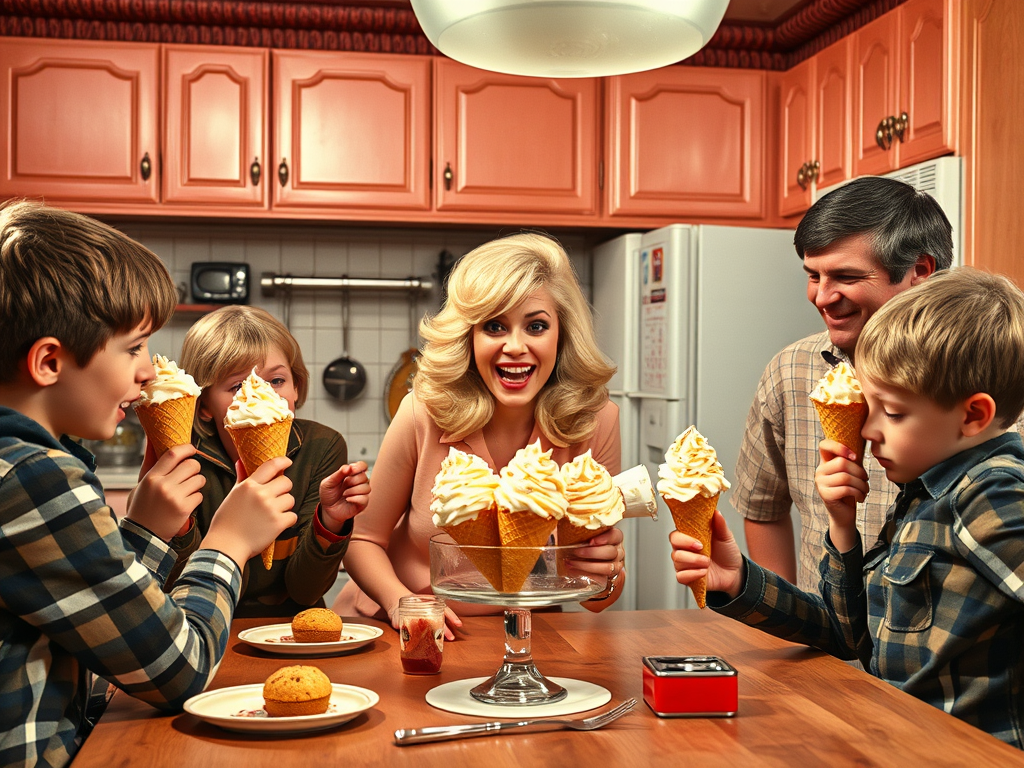
    But one evening, dessert took a turn for the worst. Our host mother, a vision of 70s flair with her blonde spun-sugar hair and white go-go boots, had stumbled upon what she must have thought was the recipe of the century. There it was, in plain sight on her kitchen counter: an open Ladies’ Home Journal or some equally menacing tome of domestic innovation. She cheerfully announced her culinary coup—a dessert she was calling “ice cream” but with no actual ice cream in it. Instead, the concoction was an unholy alliance of canned frosting and Cool Whip.

    She served it in cones with an enthusiasm that could have powered the disco lights at Studio 54. But when I took a bite, the illusion shattered. It wasn’t ice cream; it was a crime scene. The texture was gritty, like someone had blended sand with modeling clay. It was lukewarm—room temperature, for God’s sake—and tasted like the sugary sludge dentists use to polish your teeth before hitting you with the guilt trip about flossing. I glanced around and saw my fellow boys and their dads wearing identical expressions of barely-contained horror—the same grimace detectives on TV crime procedurals make when they have to pull out a hanky to block the stench of a decomposing corpse. One by one, we all quietly set our cones down as though handling evidence at a murder trial.

    The poor woman, sensing the full weight of her failure, blushed beet-red and stammered out a series of apologies, swearing on everything holy that she would never again darken a dessert table with this abomination. We forgave her, of course—some crimes are too absurd to punish. But to this day, whenever I see Cool Whip, I feel a pang of existential dread and hear the faint echo of tribal laughter masked by suppressed gagging.

    My second traumatic encounter with fake food came years later, sometime in the early 90s. I was living alone in the barren expanse of the California desert, surrounded by nothing but dust, lizards, and my questionable life choices. Thanksgiving rolled around, and rather than go full Norman Rockwell with a solo turkey feast, I decided to spare myself the hassle and opted for something “easy.” Enter the boxed abomination known as tofurkey—a vegetarian horror show complete with a pouch of dubious “gravy.”

    The first bite was a betrayal of taste and texture. My jaw slowed in protest, grinding against the dense, rubbery mass like I was chewing on a tire patch. The spongy gluten monstrosity refused to yield, as if daring my teeth to break first. The flavor? Imagine licking a salted yoga mat that’s been marinated in vague artificial regret. I eyed another slice, its pallid, lifeless complexion daring me to continue. With the enthusiasm of a condemned man, I stabbed the fork into it, hoping for some hidden culinary salvation. Nope. The taste was as bland and soul-crushing as the first bite—less “holiday cheer,” more “processed despair.”

    Finally, I’d had enough. With a sigh that could’ve put out a candle, I carried my plate to the trash and scraped the entire crime scene into the garbage, where it belonged. Dignity had to be reclaimed. I poured myself a bowl of Cheerios, sliced a banana over the top, and drizzled on some honey. As I savored each crunchy, sweet spoonful, I felt a small but vital spark of culinary joy return. It wasn’t just a meal—it was a rescue mission for my self-respect. And let me tell you, a bowl of cereal has never tasted so victorious.

    The self-abasement and insult to others from eating and serving fake food was captured brilliantly in the early 1980s when comedian Bob Sarlatte took aim at the pièce de résistance of culinary chicanery: the Ritz Crackers recipe for Mock Apple Pie. Sarlatte was on a mission to uncover the absurdity behind Ritz’s audacious claim of making apple pie with, wait for it, crackers instead of apples. He was incredulous, practically frothing at the mouth as he dissected this travesty. “Why on earth,” he demanded, “would Ritz, in all their cracker-clad glory, boast about a recipe that doesn’t even remotely involve apples?” According to Sarlatte, this so-called “apple pie” was like calling a desert a beach because it had sand—except the sand was made of crushed Ritz crackers, and the beach was a figment of your imagination. The comedian was in no mood for Ritz’s grandstanding. To him, this wasn’t a culinary innovation; it was a culinary catastrophe. He took Ritz to task for attempting to pass off a cracker conglomeration as apple pie, as if the lack of fruit was a feature, not a flaw. “Who,” Sarlatte railed, “are you going to serve this Mock Apple Pie to? Your mock friends? People who enjoy mockery served with a side of disappointment?” Sarlatte’s razor-sharp wit wasn’t just about lampooning a recipe—it was about exposing a greater travesty: the shameless elevation of a subpar substitute as a triumph of creativity. This wasn’t a clever culinary trick; it was an insult wrapped in a cracker crust. Bob Sarlatte laid bare the staggering lack of self-awareness and the brazen audacity required to serve such an ersatz “apple” pie with a smug smile. It was a masterclass in how to serve up an insult with a cherry on top, minus the apple, of course.

    Sarlatte’s takedown resonates because food is sacred territory. Our connection to it is primal. Unlike AI-generated text, fake food assaults the senses in ways you can’t ignore. And while AI hasn’t (yet) encroached on the culinary world with soulless meal simulations, the market’s rejection of fake meat shows just how little tolerance we have for edible counterfeits. Sales of plant-based protein substitutes have tanked, a clear signal that consumers aren’t ready to trade their ribeye for a rubbery simulacrum. Simply put, there’s only so much culinary mockery we’re willing to stomach—literally.

    Fake foods fail 90% of the time with 90% of the people, but in the realm of writing, AI-generated prose seems to enjoy the opposite fate: it’s “good enough” 90% of the time for 90% of situations. So perhaps fake food isn’t the right comparison. When it comes to our slow surrender to mediocrity in writing, convenience food may be a more apt metaphor. Sure, a Hot Pocket isn’t a Russian piroshki, but its ham and cheese filling is technically real. The danger isn’t the outright fakery of fake food—it’s the insidious appeal of convenience that gradually numbs our taste for anything better. The same flattening effect occurs in writing, where AI churns out serviceable but soulless content, lowering our appetite for higher-level craftsmanship.

    Let’s be real: when you bite into a Big Mac, you’re not searching for the subtle interplay of flavors or the delicate dance of textures. You’re there for the holy trinity of fat, protein, and salt—instant gratification, hold the sophistication. Likewise, when you fire up ChatGPT, you’re not chasing literary immortality. You’re after a fast, serviceable product so you can free up time to hit the drive-thru. Convenience becomes king, and both your palate and prose pay the price. Before you know it, you’ve traded filet mignon for fast food and Shakespeare for shallow clickbait. Standards? Those eroded long ago, somewhere between the special sauce and the soulless syntax.

    We’ve already seen this erosion over the last fifteen years. Smartphones have replaced thoughtful correspondence with texts full of abbreviations and emojis. My students now submit essays littered with “LOL” and lowercase “i” like punctuation’s gone on permanent strike. But maybe it doesn’t matter. Maybe this linguistic infantilization is the new standard, and business communication will one day be indistinguishable from TikTok captions. Still, I don’t entirely despair. Higher-level writing—like Joan Didion’s piercing cultural reportage—exists in a category of its own and doesn’t compete with the memos and press releases AI is destined to take over.

    What worries me more is that fewer people will seek out writers like Didion, Zadie Smith, or Hunter S. Thompson. Without readers, the appetite for great writing—and with it, deep thinking—shrinks. The flattening of taste becomes a flattening of consciousness, a slow bleed of our shared humanity. Look at our growing dependence on technology: GLP-1 drugs manage our weight, AI shapes our communication, streaming algorithms filter our music, and nutrition powders substitute for food. The result is a bland middle ground, a life devoid of both high peaks and deep valleys. We stop noticing the dehumanization because we’ve acclimated to it.

    But not all hope is lost. I remember hearing an interview on Fresh Air with Tiffany Haddish. Early in her career, Haddish struggled to find her comedic voice—until Eddie Murphy gave her a piece of advice that changed everything. He told her to have fun on stage, to genuinely enjoy herself. If she was having fun, the audience would feel it and respond. That human moment of mentorship transformed her career.

    This story reassured me for two reasons. First, Tiffany Haddish wasn’t mentored by ChatGPT—she was guided by Eddie Murphy, a living legend. Second, comedy itself is proof that people will always crave voices that cut through the emotional numbness of modern life. Great comedians, like great writers, are the axes that Kafka said could break the frozen sea within us. They shatter our tech-induced monotony and return us to the raw, messy experience of being human. As long as there are voices like Haddish and Murphy to remind us of that, there’s still hope that humanity won’t flatline into a dull, digital abyss.

    We may live in a world where powdered meal replacements pose as dinner and AI-generated text poses as thought, but the human appetite—whether for flavor or for meaning—can’t be faked for long. Just as we spit out Cool Whip cones and tofurkey slabs with a shudder, our souls eventually revolt against the flattening effects of machine-made language. We remember what real texture feels like, in food and in prose. We remember what it means to laugh at a story that stings because it’s true. And even if convenience wins most days, there will always be those who crave the messy, glorious excess of a banana split or the searing honesty of a well-told tale. As long as people continue to gag on mediocrity—be it edible or literary—there’s hope that the hunger for something real, soulful, and defiantly human will keep coming back.

  • Headphone Mode: How We Rewired Ourselves to Escape Reality

    Headphone Mode: How We Rewired Ourselves to Escape Reality

    In the summer of 2023, during a family odyssey through Las Vegas and the Grand Canyon — a trip defined by heat, dehydration, and regrettable buffet choices — I noticed my then-13-year-old daughter entering what I can only describe as her Headphone Phase.
    Once she slipped on her wireless headphones, she ceased to be a participant in family life and transformed into a sealed capsule of teenage autonomy.

    The headphones weren’t just streaming music — they were constructing a perimeter, a force field against the chaos of the outside world and the more treacherous chaos within.
    Wearing them allowed her to filter reality through a private soundtrack, to shrink the overwhelming noise of adolescence into something manageable and rhythmic.
    For those six months, she was rarely spotted without them, a small island of basslines and daydreams moving among us.

    By fifteen, she abandoned the habit. Now the headphones make rare appearances, the way childhood toys do after the magic has leaked out of them.
    But that long season of constant headphone use stuck with me — especially yesterday, when I slipped on my own new pair of Sony noise-canceling headphones for a nap.
    The experience was ridiculous: pure luxury, pure oblivion. I was catapulted into a faraway world of softness and distance, so relaxed I half-expected to wake up with a boarding pass to another galaxy.
    I understood at last how Headphone Mode could become addictive — not just helpful, but a crutch, or worse, a replacement for unmediated existence.

    This thought kept circling as I recently lost hours reading headphone reviews online.
    At first, I encountered the usual suspects — audiophiles earnestly parsing treble decay, bass extension, and soundstage geometry.
    But then I fell into a stranger subculture: headphone reviews written not as technical evaluations, but as love letters to support animals.
    Some reviewers described wearing their headphones all day, every day, as if they had permanently grafted the devices to their skulls, forming a new biological organ.
    These weren’t mere tech accessories anymore — they were portable cocoons.

    The reviews lavished obsessive praise on tactile details: the pillowy yield of the earcups, the tension of the headband, the specific heat footprint generated after six hours of wear.
    Weight, texture, elasticity — it read less like consumer advice and more like audition notes for adopting a service animal that hums quietly in your ear while you disappear from the world.

    It made me think of my old satin blanket from toddlerhood, a filthy, beloved scrap of fabric I once clung to so fiercely my father eventually hurled it out the car window during a drive past the Florida swamps.
    He didn’t consult me. He simply decided: enough.
    I wonder if some of these headphone obsessives are at the same crossroads — but with no father figure brave enough to wrest their adult security blanket away.
    They may have crossed a threshold where life without permanent auditory sedation has become not merely unpleasant, but unthinkable.

  • Luxury Is Relative: Tales from the Desert of Almost

    Luxury Is Relative: Tales from the Desert of Almost

    Fresh off the bus from the bustling Bay Area, I found myself marooned in Bakersfield, a sun-bleached corner of California that could only generously be described as a town. With zero friends and even fewer social obligations, I embraced my solitude like a monk embracing a vow of silence. My one-bedroom apartment became my sanctuary—no roommates, no forced small talk, just me and the sweet luxury of never having to negotiate over chores or TV channels.

    My companions? A stack of CDs featuring Morrissey, The Smiths, and other bands that sounded like a group therapy session set to a minor key. I was working on a novel Herculodge, my dystopian magnum opus in which society punishes the overweight with Orwellian fervor for failing to meet state-mandated body standards.

    When I wasn’t writing, I’d plink away on my Yamaha ebony upright, conjuring up self-indulgent sonatas that only the most pretentious of muses could appreciate. I didn’t read music so much as let it ooze out of me—luscious chords here, shameless glissandos there—while imagining some ethereal goddess materializing in my living room to stroke my ego as I struck a soulful pose.

    Compared to the misery of my college days in the Bay Area, my Bakersfield digs were practically a five-star resort. Back then, I wasn’t so much living as squatting in a hovel that had the audacity to pretend it was a room. The place featured a gaping hole in the wall strategically located at bed level, inviting in gusts of cold air so fierce they felt like the Bay’s fog had developed a personal vendetta against me. Sleeping wasn’t just uncomfortable; it was a survival sport. I’d huddle under layers like I was gearing up for an Everest expedition—jacket, hat, and sometimes gloves if the wind got particularly sassy.

    My diet was a tragicomedy in three acts: breakfast, lunch, and dinner. Cheerios were the headliner, while bean-and-cheese burritos played the understudy whenever I was feeling particularly adventurous. These “burritos” were nothing more than refried sludge wrapped in a tortilla that had all the elasticity of cardboard. The cheese? It was the kind that refused to melt out of sheer spite, clinging to the tortilla like it was serving a life sentence. Each bite was a bleak reminder that I wasn’t starving, but I wasn’t thriving either.

    Transportation was another chapter in my tale of woe. My chariot was a ten-year-old Toyota Tercel that was less a car and more a mobile disaster waiting to happen. It rattled like a haunted maraca, and driving it felt like piloting a coffin with wheels. The brakes let out a tortured groan every time I approached a stop sign, as if they were begging me to put the poor thing out of its misery. On the infamous Bay Area hills, I clung to the steering wheel with a white-knuckled grip, praying the Tercel wouldn’t decide to pack it in and roll backward into oblivion, taking out a few unsuspecting cyclists along the way. Fixing it was a twisted game of financial Russian roulette: repair the brakes or eat for a week—one of us had to suffer.

    Money was as scarce as warmth in that drafty hole I called a room. Every broken item (and there were many) required a DIY fix involving duct tape, a prayer, and whatever scraps I could scavenge. Even gathering enough change for a trip to the laundromat felt like winning the lottery. “Luxury” back then meant adding an extra spoonful of salsa to my sad burritos—living on the edge by upping the spice in a meal that was otherwise flavorless and depressing.

    Looking back, it’s a miracle I escaped that purgatory with my sanity—or whatever passed for sanity. That cold, drafty hole taught me resilience, but more than anything, it taught me how to laugh at the sheer absurdity of trying to survive in a city that demands gold while you’re barely scraping together tin.

    So here I was, newly settled in this desert hideaway, craving a hint of the luxury I’d been denied. On weekends, I tanned my lean, 195-pound frame by The Springs’ apartment pool—a so-called “luxury” pool that only deserved the title because the sign said so. No real friendships blossomed at that pool—friendships are messy and overrated—but I did collect some “acquaintances,” a bizarre cast of characters who could only exist in this sun-scorched limbo.

    I wasn’t thriving, but at least I wasn’t freezing or eating cardboard masquerading as food. And in a place like Bakersfield, that was about as close to paradise as you could hope for.

  • Cork Dorks and the Road to Nowhere

    Cork Dorks and the Road to Nowhere

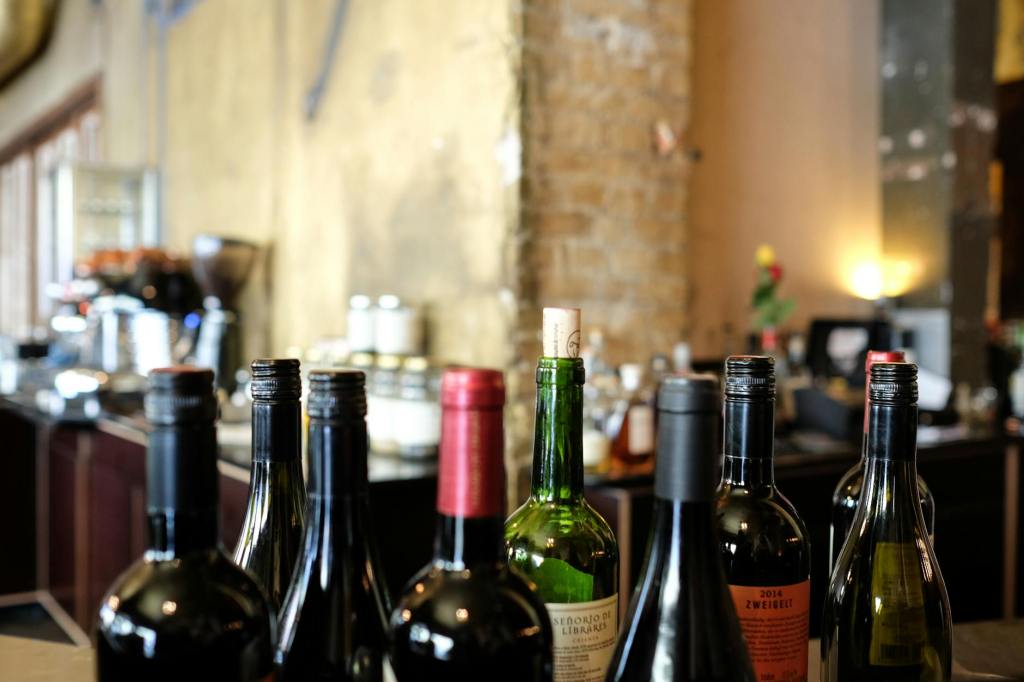
    In the mid-1980s, I funded my so-called college education as an English major by slinging bottles at Jackson’s Wine & Spirits in Berkeley, strategically nestled near the ritzy Claremont Hotel on Ashby Avenue. The job itself was an exercise in absurdity, not because of the work, but because of my coworkers—an ensemble of walking encyclopedias who were grossly overqualified to stock shelves and ring up Chardonnay. We’re talking PhDs in linguistics, anthropology, chemistry, physics, philosophy, and musicology—each degree worth less than a tenured spot in a clown college, yet brandished like medals in an intellectual arms race. These were people who read Flaubert in the original French and practically spat on anyone who dared pick up an English translation. The mere thought of working for a corporation or any institution that might impose a dress code or, heaven forbid, expect them to “synergize” was beneath their dignity. Selling fine wines and imported beers became their ironic playground, a place where they could cultivate a sense of elitism thicker than the crust on a neglected wheel of Brie. Their unofficial motto? “Service with a smirk.”

    These intellectual peacocks, not particularly rich or buff, took immense pride in flexing the one muscle they deemed worthy: the brain. Their idea of a power pose wasn’t a bulging bicep but a razor-sharp quip delivered with surgical precision. For them, intellectual one-upmanship was the true path, with the mind as the muscle to be sculpted. Their version of bodybuilding legend Sergio Oliva’s “Myth Pose” was a finely tuned discussion about Adorno’s critique of culture or a multi-hour debate comparing two French Beaujolais, all sprinkled with quotes from Camus. They taught me that flexing didn’t require dumbbells; it just needed the right amount of pretension and a willingness to alienate everyone around you.

    During slow hours, we gathered near the cash registers like a cabal of cynical sages, dissecting the philosophical curiosities of Nietzsche, the overwrought bombast of Wagner, and the labyrinthine despair of Kafka. The job became less of an occupation and more of a sanctuary for delusional self-importance. I found myself believing that I was somehow smarter than most, despite the glaring fact that I was working in a retail wine store with zero career prospects. But who needed money when you could live on the heady fumes of intellectual superiority? The longer I marinated in that environment, the more I realized I was becoming gloriously, irreparably unemployable.

    While shuffling between dead-end teaching gigs at various colleges—where my enthusiasm quickly flatlined—I always found solace in returning to my wine snob cocoon. There, surrounded by these proud misfits who’d traded ambition for esoteric chatter, I could pretend that debating the nuances of Hegel was more fulfilling than climbing any traditional career ladder. Truth be told, I might’ve happily stagnated in that dead-end job forever if fate hadn’t intervened in the form of an administrator at Merritt College who inexplicably liked my teaching style. He pulled me aside one day and whispered that there was a full-time gig open at some desert outpost called Bakersfield. He and his colleagues were prepared to write me “sterling letters of recommendation” to ensure I got the job.

    “What’s Bakersfield like?” I asked, a vague unease bubbling up as memories of my family stopping there to gas up our station wagon drifted into my mind like a bad smell.

    “Don’t worry about that,” he replied, his tone thick with the kind of unearned confidence that only comes from never having to live in a place like Bakersfield. “Just move your butt down there and take things as they come.”

    And so, in the span of a few short months, I traded intellectual elitism for a one-way ticket to the middle of nowhere, chasing a full-time paycheck while my wine store days—and the delusions that came with them—slowly receded into the rearview mirror.

  • My Early Days as a Peacock

    My Early Days as a Peacock

    I had no clue back then, but my tragic fashion choices as a young professor in the desert in the early ‘90s were the desperate impulses of a kid who’d missed his shot at feeling special and was clawing to reclaim a glory he’d fumbled away when he was a teenage bodybuilder. Flashback eight years: I was working a job loading parcels at UPS in Oakland, on a low-carb diet that shredded me down to the bone. I was this close to contending for the Mr. Teenage San Francisco title. With a perfectly bronzed 180-pound frame, my clothes started hanging off me like a bad costume. That meant one thing: new wardrobe. Enter a fitting room at a Pleasanton mall, where I was trying on pants behind gauzy curtains when I overheard two attractive young women debating who should ask me out. Their voices escalated, full of hunger and competition, as if I was the last slice of pizza at a frat party. I pictured them throwing down on the store carpet, pulling hair and clawing at each other’s throats, all for the privilege of walking out with the human trophy that was me.

    It was the golden moment I’d always dreamed of, my chance to bask in the attention and seize my shot at feeling like a demigod. So, what did I do? I froze like a deer in headlights, slapping on a look of such exaggerated indifference it was like laying out a welcome mat that said “Stay Away.” They took one look at my aloof facade and staggered off, probably mumbling about how stuck-up I seemed. But here’s the truth: I wasn’t a man full of myself—I was a coward hiding behind muscle armor.

    For a short, fleeting period—from my mid-teens to early twenties—I was the kind of guy who could’ve sent Cosmopolitan’s “Bachelor of the Month” candidates sobbing into their pillows. But my personality was still crawling in the shallow end of the pool while my body was busy competing for gold medals. I had sculpted a physique that would make Greek gods nod in approval, but socially? I was like a houseplant that wilts if you talk too loudly. Gorgeous women practically threw themselves at me, and I responded with the warmth and enthusiasm of a mannequin. Behind all that bronzed, chiseled muscle was a scared little boy trapped in a fortress of self-doubt.

    The frustration that consumed me as I stood there, watching those two retail employees squabble over me, was the same frustration that hit me like a truck a week later at the contest. I entered Mr. Teenage San Francisco as a “natural”—which is just a polite way of saying I didn’t juice and therefore shrank down to a point where I looked more like a wiry special-ops recruit than a bodybuilder. At six feet and 180 pounds, I had the lean, aesthetic “Frank Zane Look” just well enough to snag runner-up. But the guy who beat me was a golden-haired meathead pumped full of steroids and Medjool dates, which gave him muscles that looked inflated by a bike pump and a gut that seemed ready to explode from cramping. 

    The day after the contest, I was laid out at home, basking in the almost-victory and recovering from the Herculean effort of flexing through a nightmare lineup. Then the calls started pouring in. Strangers who’d gotten my number from the contest registry wanted me to model for their sketchy fitness magazines. Some sounded more like basement-dwelling creeps than actual photographers. I turned them down with all the enthusiasm of a nightclub bouncer dealing with fake IDs. But then one call stood out—a woman claiming to be an art student from UCSF, asking me to pose for her portfolio. Tempting, sure, but I politely declined. 

    Why? The reasons were as predictable as they were pathetic. First, I was drained from cutting down to 180 pounds and just wanted to curl up in a hole. Second, I was lazy. The thought of expending energy to meet a stranger sounded about as fun as a root canal. But the main reason? I was a professional neurotic, a certified worrywart who avoided human interaction like it was an airborne disease. The idea of meeting this mysterious woman in a San Francisco coffee shop filled me with a dread so profound that I felt like a cat eyeing a room full of rocking chairs.

    By turning down those offers, I was throwing away the golden advice handed down in the Bodybuilder’s Bible, Arnold Schwarzenegger’s Arnold: The Education of a Bodybuilder. According to the Gospel of Arnold, I should’ve been leveraging my physique into acting gigs, business ventures, and political fame. But here’s the thing—I didn’t have Arnold’s larger-than-life charisma, his zest for adventure, or his shameless drive to turn everything into a money-making opportunity. While Arnold was out charming Hollywood and turning flexing into fortune, I was content to crawl under a rock and avoid all forms of adventure and new connections. If there had been a way to market my body without ever leaving my room, I would’ve been the undisputed king of the fitness world.

    Instead, I took a different path—one paved with introversion and leading straight to a career as a college writing instructor in the California desert. By the time I hit twenty-seven, I was finally catching up socially—just in time to fantasize about all the chances I’d blown. Strutting around the desert in flamboyant outfits like a peacock trying to reclaim lost glory, I was determined to make up for all the opportunities I’d wasted, finally embracing the ridiculousness of who I’d become.

  • How I Outsmarted the Algorithm and Found a Human Being at Lowe’s

    How I Outsmarted the Algorithm and Found a Human Being at Lowe’s

    Today, I embarked on a noble and deeply aggravating quest: buying a refrigerator.
    I knew exactly which model I wanted — the research was done, the decision made — and I almost bought it online. But Lowe’s website, in its infinite wisdom, offered no civilized scheduling options. Buy today, and you’re rewarded with delivery tomorrow, whether you like it or not. I needed four more days — a minor concession to the gods of logistics, apparently beyond the website’s feeble imagination.

    So I drove to the Lowe’s on Skypark in Torrance, muttering curses at the indignities of modern retail. I marched straight to the Refunds desk, where two clerks stood idle, marooned in a sea of boredom. I said, with the slight guilt of a man about to break protocol, “I know I’m supposed to go to Appliances and hunt down a salesperson, but can you help me?”

    And then — like a choir of angels tuning up in aisle five — one of them smiled and said, “Well, since Appliances is busy, I’ll help you.”
    Her words were a warm poultice slapped onto my stress-riddled soul, the perfect antidote to the week’s ordeal: a refrigerator emergency caused by my seven-year-old Kenmore, which froze over, sneered at my hair dryer attack on its blocked freezer drain, and essentially told me to go pound sand.

    Within ten minutes, the deal was done. I floated out of Lowe’s light as a helium balloon, buoyed by the rarest of modern mercies: competent, unsolicited human kindness.
    Yes, by the time my contractor widens the kitchen doorway to accommodate this new metallic beast, and I pay for the fridge, warranty, and the luxury of hauling my dead Kenmore to appliance hell, I’ll be out two thousand dollars.
    But for a fleeting, golden moment, I remembered that the world, battered as it is, can still be shockingly decent.


  • The Postcard Life: Why Perfection Always Rings Hollow

    The Postcard Life: Why Perfection Always Rings Hollow

    I can’t shake an interview I heard thirty years ago—an offhand confession that stuck to me like burrs on a wool coat.
    Terry Gilliam, the Monty Python animator turned fever-dream film director, was talking with Charlie Rose. Gilliam described a moment straight from a high school dream: he was walking the Santa Monica Pier on a twilight evening, a beautiful woman on his arm, the beach shimmering under a dying sun. It was the kind of moment that screams You’ve Made It! if you’ve ever been a teenage boy with a tragic imagination.

    And yet, Gilliam said, he felt nothing. Not euphoria. Not awe. Just… flatness. Like he wasn’t even in his own life but rather trapped inside one of his own cartoons—a two-dimensional fantasy drawn by someone who had seen too many movies and lived too little.
    That was his grim epiphany: we don’t chase life—we chase the idea of it.

    Gilliam’s teenage dream had come true, but it rang hollow because it wasn’t connection he had caught. It was a postcard of connection, a lifeless image polished smooth by years of expectation.

    I’ve thought about that moment a lot, especially in the slow burns of my own life, in all the arenas where the blueprint of perfection crashed hard against the walls of reality.
    Take teaching: I’ve taught college writing for forty years. More times than I care to admit, I walked into class with what I believed was a masterstroke of a lesson plan—polished, structured, airtight. And then I delivered it like a robot with tenure. The students, bless them, tried not to visibly expire.
    Only when I threw away the script and talked to them like a breathing, flawed human being did I finally see heads lift and eyes focus.

    It’s the same poison at work: that blueprint, that false idol of how it’s supposed to be.
    Therapist Phil Stutz calls it the Magical Moment Frozen in Time—a mental snapshot of ideal beauty, love, success, whatever, that we spend our lives trying to recreate. And like the cruelest mirage, it recedes the closer we get.
    Because it’s not life.
    It’s a knockoff. A counterfeit so slick, it fools even the person living it.

    It’s sobering, humiliating even, to realize how often my life has been a performance for an audience that doesn’t exist—measuring real experiences against some fantasy standard cooked up in the caves of my mind.
    Maybe Plato had it right all along: we’re prisoners staring at shadows, mistaking flickers on the wall for the blazing, complicated, imperfect mess that is actual life.
    And every time we chase the shadow instead of the fire, we walk the Santa Monica Pier at sunset, hand in hand with a beautiful illusion, and feel… nothing.

  • The PreSnackalithic Era

    The PreSnackalithic Era

    In the Before Snack Times of the early 70s, we didn’t have helicopter parents hovering over us, micromanaging our every move with a suffocating schedule of dance classes, gymnastics, karate, swim lessons, math tutors, writing coaches, soccer practices, chess clubs, computer coding, mindfulness meditation, and Ashtanga Yoga. We didn’t have smartphones tracking us like we were secret agents with microchips implanted in our necks. For the entire day, our parents had absolutely no clue where we were or what we were up to. We’d saunter off after breakfast, either on foot or aboard our trusty bicycles, and were expected to return only by dinner. During that endless stretch of freedom, we’d navigate through construction sites strewn with lumber, nails, electrical wires, and bottomless ditches, all of which screamed, “Adventure awaits!” We gravitated toward mud, streams, and rivers like moths to a flame, setting up wooden ramps to perform Evel Knievel-level stunts over bodies of water. The messier and more perilous the terrain, the more irresistible it became. These hazardous playgrounds were usually bordered by rusty barbed-wire fences and “Do Not Enter” signs, which not only failed to deter us but ignited our rebellious spirits to trespass with even more gusto. Inside these danger zones, we’d be chased by furious steers, territorial cows, and muscle-bound guard dogs. Occasionally, a disgruntled landowner would fire warning shots at us with a pellet gun, a token gesture that barely fazed us. In the ravines behind our homes, we crafted forts, swung from vines, ignited firecrackers, and leaped into piles of poison oak. We encountered black widows, rattlesnakes, bobcats, coyotes, and even the occasional mountain lion. After a day of flouting every conceivable health and safety code, we’d trudge home at night, our bodies caked in filth, bruises, and scratches. But our parents, bless their oblivious hearts, never inquired about our whereabouts or escapades. As long as we took a bath and cleaned up, they were content to feed us hearty helpings of turkey pot pies, meatloaf, chili, and tacos. They knew we needed the energy to wake up the next morning and dive headfirst into another day of mayhem. Back then, we had little time for snacking. Our days were filled with wilderness adventures, where our imaginations ran wild. This level of playfulness, chaos, and enchantment is as extinct as the dinosaurs in today’s Snack Age, where parents meticulously micromanage their children’s activities and pacify their appetites with chips, juice boxes, chocolate chip granola bars, fruit rolls, and Happy Meals.

    Before Snack Times is sometimes referred to as the PreSnackalithic Era–the rough-and-tumble epoch of the early 1970s when childhood ran on chaos, sunburns, and a single daily meal of meatloaf or tacos—long before the rise of the Snack Age. In the PreSnackalithic Era, children roamed unsupervised like feral philosophers, fueled not by organic apple slices or protein-packed squeeze pouches, but by sheer mischief and an occasional stolen sip from a warm garden hose. Helmets were for astronauts, schedules were a myth, and sustenance came only when the streetlights flickered on and the meatloaf hit the table. Snack culture had not yet risen from the primordial ooze, and the only “mindfulness” was making sure you didn’t get bitten by a rattlesnake while building a fort in a construction site. Parents parented with the laissez-faire wisdom of, “If he’s not home by dinner, we’ll worry.” And worry they rarely did.