Tag: travel

  • College Essay Prompt: “Authenticity on the Menu: Rethinking Cultural Purity in Mexican and Chinese American Cuisine”

    College Essay Prompt: “Authenticity on the Menu: Rethinking Cultural Purity in Mexican and Chinese American Cuisine”


    Essay Prompt:

    In contemporary food discourse, cries of “inauthentic” are often used to police the boundaries of cultural identity. American Chinese food and modern Mexican cuisine are frequently accused of deviating from their traditional roots—dishes like General Tso’s chicken or Korean taco fusion provoke both celebration and scorn. But what does authenticity really mean in a country built on cultural convergence and adaptation?

    This essay invites you to explore the tensions between authenticity and adaptation in the evolution of Mexican and Chinese food in the United States. Rather than framing culinary transformation as a betrayal, consider how these cuisines have served as vehicles for survival, cultural expression, and even quiet resistance against exclusion and erasure.

    Drawing from:

    • Gustavo Arellano’s essay “Let White People Appropriate Mexican Food”
    • Ian Cheney’s documentary The Search for General Tso
    • Charles W. Hayford’s “Who’s Afraid of Chop Suey”
    • Cathy Erway’s “More Than ‘Just Takeout’”
    • Kelley Kwok’s “‘Not Real Chinese’: Why American Chinese Food Deserves Our Respect”
    • Jiayang Fan’s “Searching for America with General Tso”

    Your task is to defend, refute, or complicate the claim that criticizing Mexican and Chinese food for being “inauthentic” oversimplifies the realities of cultural exchange, economic survival, and creative resilience. Analyze how these foods reflect the lived experiences of immigrant communities negotiating belonging in a country often hostile to their presence.

    In your essay, define authenticity and explain how food operates as both cultural symbol and commodity. Should evolving cuisines be celebrated as testaments to resilience and ingenuity, or are there valid reasons to lament the loss of traditional culinary practices?

    You are encouraged to include personal anecdotes, cultural observations, or family histories if relevant—but maintain an argumentative, evidence-based tone throughout.


    Sample Thesis Statements


    Thesis 1:
    Labeling American Chinese and modern Mexican food as “inauthentic” not only ignores the histories of exclusion and survival that shaped these cuisines, but also reinforces a rigid, essentialist view of culture that fails to recognize adaptation as a legitimate—and necessary—form of expression.


    Thesis 2:
    While culinary purists may mourn the loss of tradition, dishes like orange chicken and carne asada fries should be understood not as betrayals of culture, but as inventive responses to racism, capitalism, and assimilation—proof that food evolves to meet the needs of those who cook it.


    Thesis 3:
    Though some modern interpretations of Mexican and Chinese cuisine risk diluting cultural meaning, dismissing them as inauthentic erases the labor, compromise, and strategy behind immigrant adaptation. These “inauthentic” dishes are often the only tools marginalized communities have to assert presence in the mainstream.


    10-Paragraph Essay Outline


    Paragraph 1 – Introduction

    • Open with a vivid description of a “fusion” dish—e.g., General Tso’s chicken or a bulgogi taco.
    • Introduce the cultural tension: critics call it inauthentic, but fans see it as innovative.
    • Define authenticity as it relates to food—linked to heritage, but often idealized or frozen in time.
    • Introduce thesis: Adapted Mexican and Chinese dishes are more than just Americanized versions—they are creative, resilient responses to exclusion, shaped by economic and social realities.

    Paragraph 2 – The Myth of Culinary Purity

    • Discuss how cultures, including their cuisines, are never static—food evolves across borders, time, and necessity.
    • Reference Hayford’s essay: Chop Suey was mocked but also became a symbol of cultural hybridity.
    • Suggest that authenticity is a moving target, not a fixed standard.

    Paragraph 3 – Food as Survival Strategy

    • Show how immigrant communities adapted recipes to fit American ingredients, tastes, and economic constraints.
    • Use The Search for General Tso to illustrate how Chinese restaurant owners tailored menus to avoid discrimination while making a living.
    • Frame these adaptations as strategic—not sellouts, but survival tools.

    Paragraph 4 – Mexican Cuisine and Cultural Flexibility

    • Draw from Arellano’s argument: Mexican food has always been flexible and regionally diverse.
    • Discuss the rise of dishes like breakfast burritos or California burritos—not Mexican per se, but still rooted in Mexican technique and sensibility.
    • Argue that innovation doesn’t erase identity—it expands it.

    Paragraph 5 – Appropriation vs. Adaptation

    • Make distinctions between cultural appropriation (extraction without respect) and cultural adaptation (evolution from within).
    • Arellano’s essay defends white chefs cooking Mexican food, but notes the double standard when immigrants are excluded from credit or capital.
    • Emphasize the importance of who benefits from culinary success.

    Paragraph 6 – The Emotional Stakes of Authenticity

    • Explore why food carries such emotional weight—it connects to home, family, memory.
    • Reference Kelley Kwok’s essay on shame and pride in eating American Chinese food.
    • Acknowledge that critiques of authenticity often come from a place of longing, but may oversimplify how identity is preserved.

    Paragraph 7 – The Mainstreaming of “Ethnic” Food

    • Discuss how dishes once dismissed as “ethnic junk” have become trendy and profitable.
    • Use Jiayang Fan’s reflections to show how General Tso became a cultural ambassador—flawed, yes, but powerful.
    • Ask: Is mainstream acceptance a win for cultural visibility, or does it flatten the story?

    Paragraph 8 – Counterargument: The Loss of Tradition

    • Consider critics who argue that modern adaptations erase important culinary history.
    • Acknowledge the danger of cultural dilution—e.g., chain restaurants replacing traditional kitchens.
    • But rebut by arguing that tradition and innovation are not mutually exclusive; both can coexist.

    Paragraph 9 – Synthesis: Food as a Living Archive

    • Reassert that Mexican and Chinese American dishes are not lesser—they are living archives of migration, struggle, and creativity.
    • Argue that we should assess cuisine not just by fidelity to a past, but by how it reflects the realities of the present.
    • Draw from Erway’s piece on how takeout often contains rich, hidden histories of resilience.

    Paragraph 10 – Conclusion

    • Return to your opening image: that “inauthentic” fusion dish is a cultural text worth reading.
    • Reaffirm your thesis: to dismiss adapted food as inauthentic is to miss its ingenuity and the hard histories behind it.
    • End with a call to rethink what authenticity means—not as static preservation, but as cultural endurance through change.
  • CAR T-Cell Therapy Helped My Brother Beat a Rare Cancer

    CAR T-Cell Therapy Helped My Brother Beat a Rare Cancer

    In 2021, my younger brother faced a grim diagnosis: Burkitt lymphoma, a rare and aggressive cancer that left him with a mere three months to live. As if that wasn’t enough, he was recently divorced, his finances were in tatters following the collapse of his tech start-up, and the weight of stage-4 cancer was crushing him. The doctor, in a rare moment of compassion, suggested he create a bucket list. But fate had one last twist in store: my brother was accepted as the final participant in a groundbreaking UCSF experimental treatment known as CAR T-cell therapy.

    For three weeks, he underwent this miracle treatment, and as his recovery began, he was supposed to stay at the nearby Koz Hospitality House, a sanctuary for cancer patients. But he needed more than just a place to stay—he needed someone to help him navigate this harrowing chapter. Enter me. My college courses had all shifted online due to the pandemic, so I was able to handle my remote office hours from the Koz House. I moved in with my brother for two weeks, and though it was a challenge, it felt like a moral imperative to be by his side.

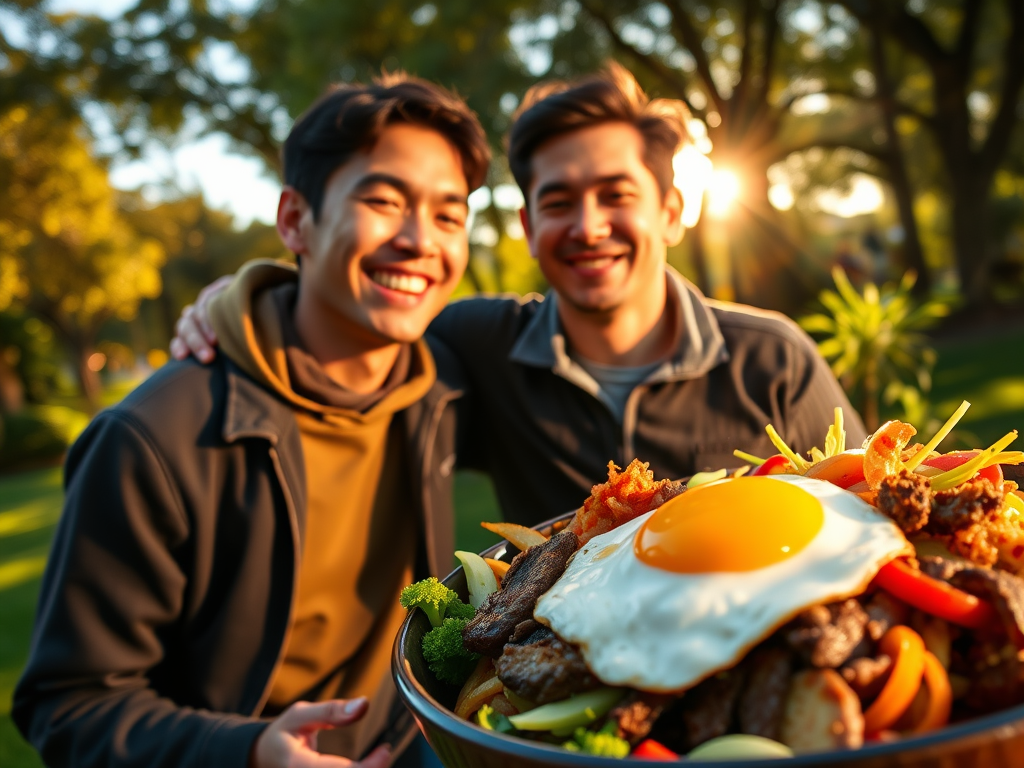
    What followed was nothing short of miraculous. Not only did my brother defy the odds and beat the cancer—the enormous tumor in his chest vanished—but the absence of chemotherapy meant he was full of energy. We walked several miles a day in the warm embrace of the Golden Gate Park sunshine, and dined out at local restaurants, with our absolute favorite being the Bibimbap from a charming Korean café within walking distance of the Koz House.

    Imagine, if you will, a plate that could make the gods weep with joy: the luxurious Bibimbap. At its core is a steaming mound of jasmine rice, each grain perfectly cooked and slightly caramelized around the edges, promising a delightful crunch. This foundation is adorned with a vibrant array of vegetables that seem to dance in a riot of color. There are tenderly crisp shredded carrots, their bright orange sweetness a contrast to the emerald-green spinach, delicately sautéed to perfection. Thin strips of julienned shiitake mushrooms lend an earthy umami, while sautéed zucchini adds a touch of sweetness, and crunchy bean sprouts offer a refreshing snap.

    Amid this colorful tableau, slices of seasoned beef—tender and juicy, marinated in a rich blend of soy sauce, garlic, and sesame oil—rest in harmonious balance with the vegetables. Atop this culinary masterpiece is a perfectly fried egg, its golden yolk a glossy orb of creamy richness, its edges crisply caramelized for a delightful textural contrast. A bold dollop of gochujang, a spicy-sweet fermented chili paste, sits at the center, its fiery kick slicing through the richness with vibrant heat.

    A sprinkling of sesame seeds, their nutty aroma mingling with the dish’s complex flavors, completes the ensemble. Thinly sliced scallions add a touch of freshness, and a drizzle of toasted sesame oil imparts a deep, nutty undertone. Every bite of this artful creation is a testament to the balance of textures and flavors—a celebration of umami, sweetness, and spice that transforms each meal into a joyous feast.

    Watching my brother relish every bite of this extraordinary Bibimbap was more than just a culinary delight—it felt like witnessing a healing miracle. It was as though this renowned Korean dish held within it a secret power, a savory balm that not only nourished his body but also rejuvenated his spirit, making him heal before my very eyes.

  • The Reuben Sandwich Standoff

    The Reuben Sandwich Standoff

    In 1983, I was a humble college student working at Jackson’s Wine & Spirits, conveniently located next to the illustrious Claremont Hotel in Berkeley. This wasn’t just any wine store—it had a deli too, where the drama unfolded like a soap opera on rye bread. 

    One fateful afternoon, a man in his fifties, who had the unmistakable air of a New Yorker transplanted to the west coast, waltzed in and ordered a Reuben sandwich.

    Enter George, our deli manager and fellow New Yorker, who was a 300-pound titan with a penchant for thick black-framed glasses and a cigar stub that seemed permanently fused to his lips. George was the kind of guy who could turn ordering a sandwich into a WWE smackdown. George, in his infinite deli wisdom, asked the customer what kind of cheese he wanted on his Reuben.

    This question, apparently, was a direct assault on the customer’s very essence. With all the drama of a Shakespearean tragedy, the customer launched into an impassioned monologue. “A Reuben sandwich is rye bread, corned beef, Swiss cheese, sauerkraut, and Russian dressing!” he proclaimed, as if he were revealing the secret formula to eternal life.

    George, unimpressed by this unsolicited lecture and clearly unamused by the customer’s attempt to rewrite Reuben history, repeated his question: “What kind of cheese do you want?”

    The customer’s face turned the color of a cherry tomato as he launched into his tirade once more, listing the sacred ingredients with the fervor of a man defending his homeland. The two New Yorkers engaged in an epic standoff, a duel of stubbornness, each more entrenched in their own version of Reuben orthodoxy.

    The debate reached such a fever pitch that the customer exploded in a flurry of expletives that could have given a sailor pause and stormed out, declaring he would never do business with a deli that dared question his Reuben expertise.

    To this day, I marvel at the sheer audacity of these two colossal egos. One was denied his lunch, and the other was deprived of a sale, all because neither would concede an inch. It was a lesson in culinary pride and stubbornness—a Reuben sandwich standoff for the ages.

  • My Disenchantment with the Hyped “Bed-in-a-Box”

    My Disenchantment with the Hyped “Bed-in-a-Box”

    Recently, my wife and I embarked on a perilous expedition to the mall, determined to sample the mystical, much-hyped “bed in a box” phenomenon. These mattresses, made of memory foam and gel, promise to unfurl from their vacuum-sealed cocoons like majestic, overpriced butterflies, transforming into full-sized California Kings. All you need is a steady hand with a box cutter and the courage to avoid slicing into your thousand-dollar slumber investment.

    We lounged on mattresses priced between three and nine thousand dollars, letting the sales pitch wash over us like warm chamomile tea. They were fine. Soft, supportive—sure. But the experience was more “meh” than mind-blowing transcendence. As I lay there, staring at the ceiling, I couldn’t shake the feeling that someone, somewhere, was having a good laugh. Thousands of dollars for glorified memory foam? I half expected Ashton Kutcher to jump out and yell, “You’ve been Punk’d.”

    Once home, I consulted the digital oracles—various AI platforms—to confirm what I already suspected. Their verdict was swift and merciless: “Bed in a box? Cute. Overpriced. Flimsy.” The collective AI wisdom aligned—luxury does not arrive folded like a quesadilla. I was told that traditional mattresses—those stalwart hybrids and innerspring titans—deliver the same materials, often at half the price, and outlive their boxed-up counterparts by years.

    The harshest critique? Longevity. You can fork over four grand for a slab of compressed foam, and in five years, that bed will be about as supportive as a wet sponge. Meanwhile, a conventional mattress, purchased for the same price, will still be cradling you like the loyal workhorse it was born to be.

    Armed with this knowledge, I basked in smug, streetwise satisfaction. I had danced through the minefield of marketing spin and emerged unscathed, my wallet intact. To celebrate, I collapsed onto my overpriced sectional and binge-watched a Netflix comedy special—content, victorious, and perched atop a couch that cost far too much but, at least, wasn’t pretending to be something it wasn’t.

  • The gastronomic equivalent of putting a monocle on a raccoon

    The gastronomic equivalent of putting a monocle on a raccoon

    As a kid, my taste buds were on a non-stop joyride with Pigs In a Blanket—those glorious cocktail sausages swaddled in Pillsbury Crescent Rolls, dunked with the carefree abandon of a sugar-high toddler in cheddar cheese, spicy mustard, and barbecue sauce. They were the epitome of childhood bliss.

    Fast forward to adulthood, and we must now suffer Luxury Reinterpretation. This is the gastronomic equivalent of putting a monocle on a raccoon. The process involves taking our beloved comfort foods like Pigs in a Blanket, grilled-cheese sandwiches, and Sloppy Joes, and draping them in so much opulence that you’d think they were being prepared for a royal banquet. We’re talking artisan breads that cost more than a week’s groceries, freshly baked brioche buns, and French cheeses so refined they practically come with a family crest.

    In this upscale twist, culinary wizards employ techniques that sound like they belong in a sci-fi film—slow cooking, smoking, and sous-vide. Flavors are layered with truffle oil, caramelized onions, and sautéed mushrooms, all artfully plated with microgreens, edible flowers, and a drizzle of balsamic reduction that could double as abstract art. There’s even a heart-wrenching narrative woven into the dish, involving deep-rooted culinary traditions or some distant great-grandmother who once served peas on an antique platter.

    The lengths to which we’ll go to gild the lily of our childhood comfort foods is a testament to our fear of being judged for enjoying simple pleasures. Sometimes, all I want is to revel in the uncomplicated joy of Pigs in a Blanket without all the pomp and circumstance. But no, in the world of haute cuisine, even the humble piggy-in-a-blanket must be paraded around in a tuxedo and given a backstory worthy of Shakespearean drama. And so, we drape our comfort foods in an extravagant cloak of sophistication, proving once and for all that our insecurities are as elaborate as the dishes we create.

    This scenario exposes the fact that the move to “Luxury Reinterpretation” isn’t just a culinary choice—it’s a full-blown identity crisis, a performance art piece meant to scream, Look how refined I’ve become! Remember: No matter how much balsamic reduction you drizzle, a piggy-in-a-blanket in a tuxedo is still just a piggy in a blanket—albeit one sweating under the weight of insecurity and overpriced truffle oil.

  • The Slurpee, the Sirens, and the Rabbit That Never Was

    The Slurpee, the Sirens, and the Rabbit That Never Was

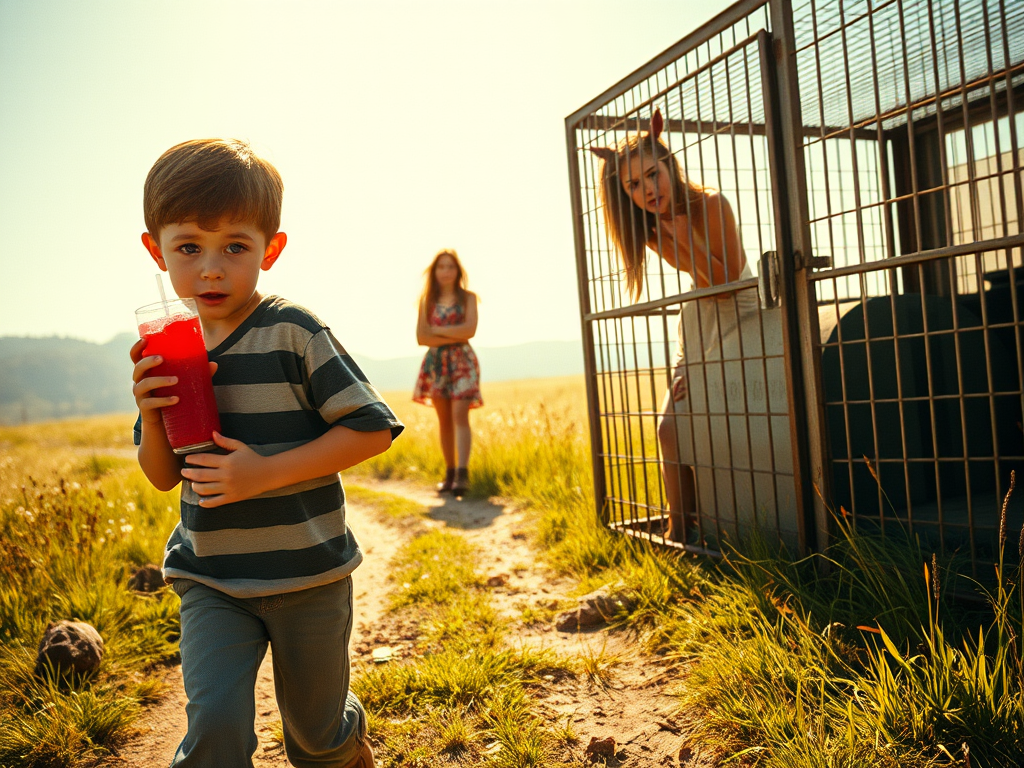
    It was a warm California afternoon in 1973, the kind where time stretched lazily and everything smelled like fresh-cut grass, asphalt, and melted sugar. After sixth-grade let out, we piled off the school bus at Crow Canyon Road and made the mandatory pilgrimage to 7-Eleven, where a cherry Slurpee was both a status symbol and a life force.

    Inside, I was mid-slurp, soaking in the neon buzz of the store, when “Brandy, You’re a Fine Girl” crooned from the radio—a song about a sailor who refuses love for the sea, a detail I should have paid more attention to. Because, right then, the Horsefault sisters walked in.

    They were freckled, long-legged, and dangerously charismatic, their mischievous blue eyes glinting with some hidden scheme. One was in eighth grade, the other a high school sophomore, but their combined power far exceeded their individual ages. They lived in a farmhouse behind the 7-Eleven and approached me with an offer that, in retrospect, should have triggered immediate alarm:

    “Do you wanna see a rabbit in a cage?”

    I did not want to see a rabbit in a cage. But they had high cheekbones and figures that activated my deeply ingrained Barbara Eden fixation, so naturally, I announced that I was deeply invested in seeing this rabbit.

    I followed them out of the store, Slurpee in hand, as we walked about a hundred yards down a trail littered with dry horse dung, the sun casting long shadows over the tall grass. This was, in hindsight, my first mistake.

    At the end of the trail stood a large, ominous cage. The door hung slightly ajar, a thick chain lock dangling menacingly from the latch. I peered inside, expecting my promised rabbit. Instead, I saw nothing but the dark void of impending doom.

    Before I could process the cold realization that no rabbit existed, the sisters cackled like witches, grabbed me, and began dragging me toward the cage. The plan was clear: shove me in, slam the door, lock me up, and leave me to contemplate my poor life choices.

    But I was too strong, too desperate, too unwilling to be some kind of farm-boy prisoner. I fought back, and in the ensuing struggle, we tumbled into the dirt, rolling in a cloud of dust and hay, limbs flailing like a low-budget Western bar fight. Nearby, chickens screeched and flapped in terror, as if foreseeing my imminent imprisonment.

    Sweaty and defeated, the sisters finally let go. I scrambled to my feet and bolted, leaving behind my half-finished Slurpee—a tragic casualty of war.

    The Horsefault sisters had nearly claimed me as their caged trophy, but I had escaped. Barely. I never saw the rabbit. I doubt it ever existed. But I did learn an important lesson that day: if two gorgeous, devious girls invite you to see something in a cage, you are probably the attraction.

  • The Great 70s Oyster Feasts at Pt. Reyes

    The Great 70s Oyster Feasts at Pt. Reyes

    Every summer from 1975 to 1979, my family and a small oyster-guzzling army—ten other families and a battalion of friends—made the pilgrimage to Pt. Reyes Beach. Our sacred mission? To consume shellfish on a biblical scale.

    Johnson’s Oyster Farm supplied us with what felt like truckloads of oysters—so many that if the ocean had suddenly run dry, we wouldn’t have batted an eye. From noon to sunset, we devoured an obscene amount of barbecued oysters, each one bathed in garlic butter and an irresponsible amount of Tabasco. Thousands of loaves of garlic bread disappeared as though vaporized by our gluttony. The meal concluded with slices of chocolate cake so enormous they could have doubled as structural support beams.

    We punctuated this orgy of excess with reckless ocean dives, dismissing dire warnings of great white shark sightings because, in our teenage arrogance, we assumed the sharks would respect our dominance. Emerging from the waves, our pecs glistening with rivulets of saltwater like bronzed demigods, we returned to the picnic tables to resume our assault on the oyster supply.

    By the summer of ‘78, I had evolved into full teenage hedonist mode. That year, rather than going home with my parents, I hitchhiked in the back of a truck with a bunch of people I’d just met—because, clearly, nothing bad ever happened to sweaty, sunburned teenagers full of shellfish riding in the open bed of a moving vehicle. We were feral, fearless, and slightly delirious from a day of unchecked indulgence.

    Stuffed to the gills and feeling like King Neptune in a food coma, we stared at the stars with the vacant, glazed expressions of reptiles digesting a large meal. We swapped wild stories, unconcerned with documenting a single moment. No selfies. No calorie counting. No checking the time. Just a glorious, unrecorded blur of feasting, friendship, and youthful delusion.

    Those were happy days indeed—a time before food guilt, before social media, before adulthood ruined everything. And like all golden eras, it is gone forever.

  • Something Strange Happened to Me When I Saw My Childhood Home on Zillow

    Something Strange Happened to Me When I Saw My Childhood Home on Zillow

    When I was a kid, my dad worked at IBM in San Jose, and we lived at the very end of Venado Court—a cul-de-sac so serene it felt like a cosmic loophole in suburban chaos. I loved everything about it, especially the absence of cross-traffic.

    Cross-traffic was anarchy—it was second base in Little League, where the game unraveled into sheer bedlam: runners stealing, coaches screaming, fielders panicking. But Venado Court? It was home plate. Safe. Untouchable. The kind of place where nothing bad could happen—unless you count the existential horror of eventually having to leave it.

    The analogy reminds me of George Carlin’s classic bit contrasting baseball and football: Baseball is a pastoral dream, all about going home. Football is military conquest, where you march into enemy territory and get your spine realigned by a 300-pound lineman. Venado Court was baseball. It was safety. It was home.

    Recently, I stumbled onto a real estate site featuring my childhood house—5700 Venado Court, San Jose, California, where I lived from 1968 to 1971. The photos were unsettlingly familiar. My old bedroom. The bathroom where Mr. Bubble and Avon’s Sesame Street shampoo bottles once stood like sentinels of childhood innocence. The backyard, still lush with fruit trees—apricot, peach, plum, and walnut—a miniature Garden of Eden where my mother and the neighbor ladies, in some kind of euphoric domestic alchemy, canned preserves like their lives depended on it.

    The kicker? That house, my sacred childhood sanctuary, is now worth $1.3 million—the same price as my current home in Southern California. A deranged part of me toyed with the idea: sell my house, buy my childhood back, step through the front door like some time-traveling prodigal son.

    But then sanity prevailed.

    I know exactly how that story would end. Not in horror, but in ennui. I’d be trapped in a slow-moving nightmare of banality, watching my enchanted memories dissolve under the fluorescent hum of reality. The house wouldn’t feel like home. It would feel like a set piece in a dismantled dream.

    Thomas Wolfe was right—you can’t go home again. Not because it’s scary. But because it’s boring.

  • The First Cut is the Deepest: A Childhood Steeped in FOMO

    The First Cut is the Deepest: A Childhood Steeped in FOMO

    FOMO is never stronger than in childhood, when imagination stretches farther than reality can reach and the world feels just beyond our grasp. To a child, magic is real, enchantment is tangible, and some hidden paradise always seems just out of reach—close enough to see, impossible to touch. And nothing stings quite like realizing that somewhere, right now, a better world exists, and you are not in it.

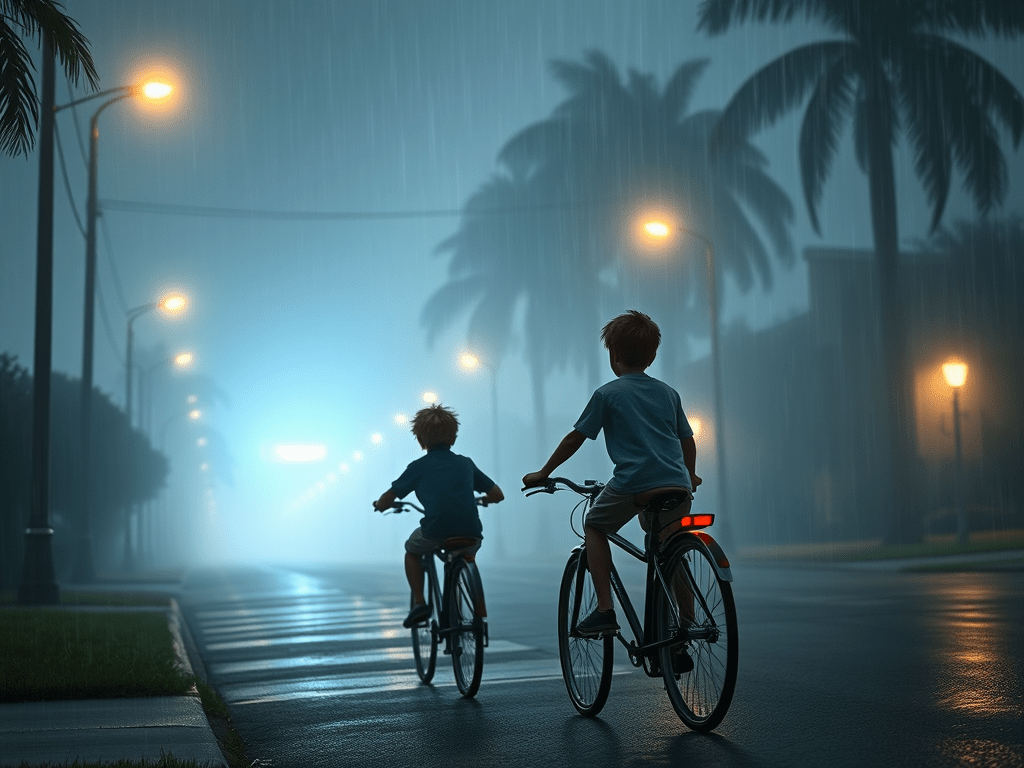
    I learned this lesson in the summer of 1968 in San Jose, California, while riding bikes with my neighbor, Billy Cantambay. We were two six-year-olds, circling Venado Court as a fine mist of summer rain fell around us, making the streetlights glow and the air smell like wet pavement and possibility.

    Then we saw it:

    A single blue light flickering in the distance, hovering above the unfinished housing developments at the edge of the neighborhood. It twinkled through the fog like a Christmas bulb detached from time, a spectral glow that neither of us could explain.

    “Christmas lights!” one of us shouted.

    “Christmas lights!” the other echoed.

    But why was Christmas happening over there and not here? Whose house was that? What kind of people lived beneath that glow? In my mind, I pictured a lone man inside—not lonely, just content—waking up to Christmas every day.

    For a week, Billy and I worshipped the light, riding our bikes in endless circles, pointing, speculating, longing. Then one evening, it was gone. No explanation. No goodbye. Just a vanishing act, leaving behind nothing but an ache—an inexplicable sadness, as if we had been denied entry into something greater than ourselves.

    Four years later, another dream slipped through my fingers, and this time, I cried about it.

    My fifth-grade friend Marc Warren had invited me to Piper’s Smorgasbord in San Leandro, California—a kingdom of pizza, fried chicken, and blueberry pie, where gluttony was not just encouraged but a sacred ritual. By the time we left, we were bloated with triumph.

    Driving home, still drunk on sugar and grease, we talked about our flying dreams.

    Not figurative flying—not ambition, not success—actual flying. The kind where you jump off a cliff and just go, gliding over the ocean, effortless, weightless, free.

    The dreams were so vivid—we could remember the wind in our faces, the rush of air under our arms, the certainty that we would never fall.

    And then, reality crashed down.

    We weren’t flying. We would never fly.

    The grief was immediate, existential, crushing.

    Two fifth-graders, staring out the car window, weeping over the cosmic injustice of gravity.

    That’s the cruelty of FOMO—it isn’t just about missing an event. It’s about missing a world, a place so real inside your imagination that its absence hurts like a phantom limb.

    Every culture has its own version of this unreachable paradise—a place forever close but forever out of reach.

    For me, it was Bali Ha’i.

    The song, sung so hauntingly by Juanita Hall in South Pacific, tells of an island just across the water—visible, tantalizing, but never quite attainable.

    I first heard it as a toddler in the Flavet Villages—a cluster of old military barracks repurposed as student housing in Gainesville, Florida, where my family lived near an alligator swamp and a stretch of forest.

    Most people would have found the place bleak. I found it enchanted.

    At dusk, my father and I would walk to the edge of the forest to visit a Mynah bird, which perched on the same branch every evening, watching us with an intelligence I couldn’t explain.

    The swamp smelled of alligator dung, a rank, pungent stench that somehow filled me with a sense of cosmic belonging.

    One night, as we stood beneath the Mynah bird, a distant radio played “Bali Ha’i.”

    The melody wove itself into the moment, perfectly harmonizing with the humid night air, the bird’s quiet watchfulness, and the unseen creatures shifting in the darkness.

    For the first time, I understood the ache of paradise lost.

    In 1965, another world out of reach found me.

    Her name was Barbara Eden.

    She lived inside a genie bottle—a glowing jewel of a home, lined with pink and purple satin, circular sofas, and mother-of-pearl inlays.

    To five-year-old me, this was the peak of human civilization.

    I didn’t just want to watch I Dream of Jeannie. I wanted to live inside that bottle.

    I imagined myself curled up on the velvet cushions, bathed in the warm glow of genie magic, whispering secrets with Jeannie as the outside world became irrelevant.

    When it hit me—really hit me—that I would never live in that bottle, that the closest I’d ever get was a TV screen and my own relentless imagination, I felt crushed in a way I had no words for.

    Even crueler?

    That gorgeous genie home was just a painted Jim Beam whiskey decanter.

    That’s what FOMO really is: intoxication by illusion.

    And long before Instagram, long before airbrushed vacations and curated feeds, I was already intimately familiar with its sting.

  • Wrestling with an especially virulent case of “Influenza A”

    Wrestling with an especially virulent case of “Influenza A”

    In I’m Dysfunctional, You’re Dysfunctional: The Recovery Movement and Other Self-Help Fashions, Wendy Kaminer lays waste to the therapeutic fads of the 1990s, particularly the trend of “reclaiming the inner child”—a ritual that took infantilization to near-religious extremes.

    She describes John Bradshaw’s workshops, where grown adults with respectable careers arrived clutching teddy bears like traumatized toddlers, preparing to embark on a guided journey into the mansion of their past. There, as Bradshaw whispered encouragements, lower lips trembled, tears streamed, and a congregation of emotionally overqualified professionals sobbed into the polyester fur of their stuffed animals.

    What floored Kaminer wasn’t the unhinged emotionalism—it was the sheer, shameless conviction. These people weren’t just indulging in a saccharine, self-indulgent spectacle—they were true believers, convinced that squeezing a doll and reliving some long-buried playground trauma was nothing short of a spiritual awakening.

    Kaminer was not impressed. What others saw as self-reflection and healing, she saw as an infantilizing orgy of narcissism, a self-help séance in which grown-ups tried to resurrect their inner kindergartener, only to be possessed by a ghost that refused to leave.

    Now, I’d like to say that my bullshit detector is too finely tuned for me to cradle a stuffed animal and regress into baby talk. But the bitter irony is that writing this memoir has forced me into my own brand of infantilization—just without the teddy bear and group cry session.

    Nothing made this clearer than the pathetic spectacle of my post-Thanksgiving downfall, which started with a game of Russian roulette—except instead of a revolver, I played with rotting cabbage.

    It all began when I decided to make chicken tacos—a wholesome, adult dinner choice. Unfortunately, the bag of shredded cabbage I retrieved from the fridge had been marinating in its own decay for two weeks, slowly transforming into hell’s compost pile.

    The moment I tore open the bag, my wife recoiled with the dramatic flair of a crime scene detective stumbling upon a long-decomposed body. She clutched her nose, waved her hands like an exorcist warding off a demon, and issued a forensic report:

    “That smells like a mix of a latrine and a horse’s taint.”

    A normal person would have taken this as a warning. But, fueled by misplaced confidence and the hubris of someone who had survived worse, I dumped the cabbage on my tacos and dug in.

    Hours later, my immune system, weakened by the Thanksgiving marathon of forced hospitality, collapsed like a debt-ridden empire. The virus that had been lurking in the shadows seized its moment, and by the next morning, I was a feverish, shivering wreck, contemplating my life choices between bouts of violent gastrointestinal reckoning.

    It seems that you don’t need a stuffed animal and a therapy circle to regress into infancy. Sometimes, all it takes is spoiled cabbage and a ruinous lack of self-preservation.

    Naturally, instead of exercising common sense, I channeled my inner cheapskate prophet. “Cabbage by its very nature has a funky scent,” I proclaimed with the confidence of a man who regularly courts disaster. “A little fermentation won’t hurt anyone.” My wife frowned and said, “It’s smelling up the entire kitchen.”
    “We’ll be fine,” I insisted, scooping copious amounts of fetid-smelling cabbage onto my tacos like I was auditioning for a daredevil cooking show.

    At dinner, I was the only one brave—or foolish—enough to eat it. Within an hour, my body issued a resounding, “You absolute moron.” No GI issues, but I felt like I’d been hit by a truck, reversed over, and then hit again. My head throbbed, my eyes were so sensitive to light I had to drape a T-shirt over my face just to listen to a Netflix show, and my energy flatlined by eight p.m. I crawled into bed, feeling like a half-baked zombie.

    The next morning was worse. Still no GI problems, but the 101 fever and crushing fatigue made me question my will to live. I tried to eat some oatmeal and grapefruit, the culinary equivalent of punishment food, but even that felt like too much effort. 

    By day three, no improvement. I’d become a cautionary tale, researching induced vomiting and discovering it was far too late. Apparently, if you don’t purge immediately, the toxins settle in like an unwanted houseguest who insists on staying for five to seven days.

    Being sick in my family makes everyone else suffer. Our teenage twins require constant care, frequent snacks that generate endless dirty dishes, and someone breathing down their necks to ensure homework gets done. My wife had to shoulder it all while I languished in my misery. I apologized profusely for my reckless hubris and promised, at the age of sixty-three, to turn over a new leaf—or at least stop eating ones that reek like death.

    For decades, I’d treated eating old, moldy food like a badge of honor, quoting my dad’s immortal wisdom: “Pilgrims who ate blue cheese on the Mayflower survived disease while the mold-avoiders died.” It was as if I’d been brainwashed into believing spoiled food was a superfood. But this cabbage debacle—this hellish, cabbage-induced reckoning—put the fear of God in me. Never again would I be the fool who eats something that smells like a medieval torture chamber. This time, I mean it. The next funky bag of cabbage? Straight to the trash. May it ferment in peace.

    As the alleged food-borne illness dragged on and my fever turned my brain into a swamp, I found myself pondering a morbid yet painfully stupid thought: What if I died because I was too cheap to toss a two-dollar bag of cabbage? Imagine the headline: “Man Perishes Over Discount Vegetables.” How could I ever forgive myself for such world-class idiocy? Worse, how could my wife ever forget that I lectured her with the smug confidence of a food-safety guru right before scarfing down a fatal dose of rotting produce? I’d be immortalized as the kind of hapless buffoon who wouldn’t even get a name in a Chekhov short story—just “The Idiot Who Ate the Cabbage.”

    Then, because fever dreams and existential crises go hand in hand, another absurd thought hit me: How would my YouTube subscribers and Instagram followers know what happened to me? I’d be gone, but my accounts would still sit there, ghostlike, leaving them to wonder why the witty guy with the diver watches and snack obsession suddenly went dark. What a tragedy—I wouldn’t even get the chance to create a final piece of content documenting my own demise in comedic glory. A video titled, “How Cabbage Killed Me (And Why You Should Toss Yours)” would surely have gone viral.

    This realization struck me as profoundly twisted: content creators care more about producing “engaging material” than their own mortality. Forget self-preservation—I was more upset that my audience might miss out on the hilarity of my self-inflicted cabbage-related downfall. The pathology runs deep: we’re so hooked on being performative, we’d probably narrate our own deaths if we could. Imagine me, breathless and feverish, croaking out, “Don’t forget to like, comment, and subscribe—assuming I make it to tomorrow.” The absurdity of it all made me laugh, which hurt, because even my ribs were exhausted from this cabbage-induced purgatory.

    It was apparent I was so desperate to be relevant on social media that I had become a Gravefluencer–an influencer who extends his reach six feet under, ensuring even death is on-brand.

    After five days of relentless illness, I had a phone consultation with my doctor about what I was sure was self-inflicted food poisoning. I laid out the symptoms with the kind of detail you’d expect from someone auditioning for a medical drama. My doctor listened patiently, then unceremoniously popped my bubble of absurdity. “This isn’t food poisoning,” she said. “You’ve got the flu. It’s going around.”

    Just like that, my grand narrative of culinary hubris—the man who dared to defy rancid cabbage and paid the ultimate price—was dead. Instead, I was left with something far less glamorous: virulent flu. Part of me was relieved that I wasn’t poisoning myself with poisoned produce, but another part of me felt cheated. I’d lost the absurd, darkly comedic morality tale about a man so cheap he nearly killed himself over a two-dollar bag of cabbage. What a waste.

    The doctor wasn’t exactly brimming with solutions, either. “Rest and stay hydrated,” she advised, the way you might tell a child to eat their vegetables. That night, my fever spiked close to 104, launching me into a kaleidoscope of fever dreams where my brain decided to give me the full surrealist experience. Words from my podcasts took on physical forms—spiky, sticky, grotesque shapes—and suddenly, I was inside them. I wandered through caves of conversation, waded through cocoons of dialogue, and got tangled in thick spider webs spun from language. Each sentence wrapped around me, trapping me in its endless loops of nonsense.

    When I woke up, drenched in sweat and feeling like I’d wrestled a linguistically gifted tarantula, I realized the flu wasn’t just an illness—it was a full-blown avant-garde art installation happening in my own head. So no, I didn’t have food poisoning. I had performance art fever. And while it wasn’t the cabbage apocalypse I’d hoped for, it was plenty weird in its own way.

    For six days, I had been wrestling with the so-called “Thanksgiving Flu,” a charming little virus that kept my fever bouncing between 101 and 104, as if my body were auditioning for a medical melodrama. Being that sick wasn’t just about physical misery—it was a battering ram smashing through the cozy little mental structures I had built around my life. Aspirations? Pointless. Health goals? A cruel joke. My reading list? Forget it. Even my hunger for social belonging and validation had been knocked flat. What remained was a stripped-down nihilism so bleak it made Nietzsche look like an optimist.

    Sickness dragged me to a dark place where life felt like a cosmic prank. I could almost hear my 14-year-old self rolling his eyes as I remembered my Grandma Mildred’s wise words from one of her letters: “Illnesses bring out the doldrums.” No kidding, Grandma. That particular flu had brought out more than the doldrums—it had conjured a maudlin cocktail of despair and self-pity.

    In that state, I found myself spiraling into melodrama, muttering things like, “What’s the point? Just end the torment and let me meet my Maker already!” It was ridiculous, of course, but I couldn’t help but notice how flu-induced misery fed into a distinctly male flavor of narcissism. Egotism, after all, was a hallmark of the man-child: the guy who thought the universe should pause when he didn’t get his way.

    Men, it seemed, were uniquely gifted at turning minor discomforts into existential crises. While women powered through illness with a mix of stoicism and practicality, men turned their sickbeds into thrones of self-pity, proclaiming their impending doom to anyone who would listen. And me? I was no exception. With every feverish shiver, I became the star of my own overwrought drama, raging against the cruelty of a world that dared to continue spinning while I wallowed in flu-induced existential despair.

    Sure, Grandma Mildred, the doldrums were part of the package—but why did it feel like men turned those doldrums into an art form? Perhaps the real flu virus wasn’t in my body; it was in my ego, throwing a tantrum because life wasn’t bending to my fevered will.

    I appeared to be languishing in the Flu-tile State—a fever-fueled realization that all human endeavor was futile.

    On day 8 of this flu from hell, my doctor emailed me a cheerful little grenade: “Your symptoms are concerning. I need to see you today.” Fabulous. At 11 a.m., feverish, grouchy, and radiating the energy of a half-cooked zombie, I dragged myself to her office for the usual poking and prodding. COVID? Negative. Influenza? Oh yes, Influenza A—the viral overachiever of the season. My nurse, who’d had it two weeks earlier, gave me the kind of pep talk you’d expect from someone who survived a minor apocalypse. “Seven days of fever,” she chirped, “so you’ve probably got two more to go!” Like I’d won a spa weekend in purgatory.

    But the flu wasn’t the real sucker punch. No, that came when I stepped on the scale. At a soul-crushing 252 pounds, with blood pressure at 166 over 92, Dr. Okada laid it out with the dispassion of someone reading a menu: “You’re at high risk for a massive stroke or heart attack.” She might as well have handed me a shovel and a map to my future grave. Then, just to twist the knife, she added, “You need to lose fifty pounds in six months. Otherwise…” She trailed off, but I got the point: dead man waddling.

    Her final blow came with a steely gaze and a guilt grenade: “If not for yourself, lose weight for your wife and daughters.” Translation: stop being selfish and get your act together before they have to plan your funeral.

    Desperate for a cheat code, I asked about Mounjaro or Ozempic, those miracle weight-loss injectables I’d read about. She barely stifled a laugh. “We prescribe those for people with exclusive employer benefits.” I muttered something about how my college likely doesn’t cover luxury drugs, and her thin smile confirmed it. I’d be fighting this battle the old-fashioned way: with the DASH diet and restricted calories, not cutting-edge pharmaceuticals.

    And then there was the Motrin ban. Apparently, my go-to painkiller was a blood-pressure ticking time bomb. “No more Motrin. Tylenol only,” she said, with all the enthusiasm of a waiter recommending the tofu option. So now, my fevers would be accompanied by a dull, Tylenol-soaked march toward mortality. Fantastic.

    I thanked her—sincerely, I swear—because she wasn’t wrong. But the whole thing felt like I’d been blindsided by a particularly grim episode of The Biggest Loser: Medical Edition. On the drive home, Miley Cyrus’s “Flowers (Demo)” came on, and I—feverish, bloated, and thoroughly defeated—actually cried. Miley crooned about resilience and self-love, and all I could think about was how laxity, that slow, sneaky killer, had been working me over for years. Skipped workouts, mindless snacks, every excuse—it had all led to this: a middle-aged man sobbing in his car, mourning his dignity while stuck in traffic.

    Dr. Okada’s tough love landed like a wrecking ball. This was my moment—the kind where you either turn your life around or start drafting your obituary. Time to put down the Motrin, pick up some discipline, and drag myself back from the brink before I became the subject of one of those tragic lessons everyone ignores until it’s too late cautionary tales.

    I had entered the clinic expecting to get a quick flu diagnosis and maybe a lecture about rest and fluids. Instead, I walked out with the realization that my life wasn’t just off-track; it was an unmitigated dumpster fire rolling downhill. How had I missed it? The creeping wreckage of my existence had been unfolding right under my nose, like a slow-motion train derailment I refused to acknowledge. Denial, thy name is me.

    Dr. Okada, bless her clinical professionalism, had held up a mirror and forced me to see what I’d been expertly avoiding for years: that my life, much like my blood pressure, was a ticking time bomb. I’d been blind to my own unraveling, and now the blinders were off. The view wasn’t pretty, but at least now I knew what I was working with—a fixer-upper existence in desperate need of a renovation.

    My visit to the doctor turned into an unplanned catalyst for a long-overdue moral metamorphosis. I left not just diagnosed, but afflicted by a new condition I can only call the Scales of Justice (and Shame)—that peculiar state where the doctor’s scale transforms into the ultimate moral arbiter. Each number glaring back at me didn’t just measure pounds; it weighed my life choices, my discipline, my worthiness as a functioning adult. It was less a medical device and more a courtroom, and let’s just say I was found guilty on all counts.

    I was convinced that had I been ten years older, this bout of influenza would have finished me off. The first week felt less like an illness and more like the aftermath of a roadside bombing, with me as the unfortunate bystander left mangled in a ditch. My body was a buffet for phantom wolves and mosquitoes—every nerve ending seemed to host its own ravenous pest. Mentally, I spiraled into fever-induced madness, complete with hallucinatory jungle scenes: Gumby-esque AI bodybuilders, sculpted and sinewy yet gelatinous, painted the revolting hue of yellow sea slugs, slithered around me in an Amazonian hellscape.

    By Week Three, the influenza had mercifully downgraded its malevolence, though “mild” feels like an insult to language. I still shivered like a Victorian orphan in a snowstorm, my body temperature yoyoing between inferno and tundra. Aches gnawed at me persistently, like bad houseguests who don’t get the hint. And mentally? I was underwater—grasping at reality as it floats just out of reach. My brain felt stripped of a few critical screws, rattling around and threatening to unscrew the rest.

    At some point, I recalled, in the hazy, fevered way of someone stranded in a desert, that my daughter had lozenges in her room. Fueled by desperation, I shuffled to her door, knocked weakly, and thrust my trembling hands forward as if auditioning for a Dickens adaptation. “Please,” I croaked, my voice barely above a whisper, “fill my hands with lozenges for your poor ailing father.”

    The response? Hysterical laughter. Both of my daughters, cozied up watching TV, howled with the kind of delight usually reserved for viral cat videos. I caught a glimpse of myself in the hallway mirror: pajamas wrinkled like a bad alibi, beanie perched jauntily askew, my face the pallor of a sickly sailor. I was every bit the tragicomic figure they saw—a fevered street urchin begging for cough drops.

    My wife, ever the realist, stormed in to restore order. “We have plenty of lozenges in the kitchen,” she barked, clearly unimpressed by my Oscar-worthy theatrics. She led me, limping and pathetic, to the cupboard, where she proceeded to dump several bags of lozenges onto the table with all the ceremony of Santa Claus unloading his sleigh. My daughters, tears of laughter streaming down their faces, declared me Oliver Twist reincarnated.

    I retreated to bed clutching a handful of lozenges, humiliated but momentarily soothed, only to lie awake wondering when this fever would break—or if the AI bodybuilders would show up again to finish the job.

    Four weeks into my bout with influenza, I emerged bleary-eyed, fever-wrecked, and staring down my old nemesis: addiction. Not the sexy kind you’d brag about in a memoir—just the creeping, mundane kind that comes with a tendency to overindulge in things like self-pity, compulsive behaviors, and yes, an irrational attachment to writing books.

    And so, I emerged from this fever-ridden odyssey not as a transformed man, but as someone who had simply suffered enough to pause and reflect—until the next catastrophe beckoned. If John Bradshaw were leading my recovery workshop, he’d likely hand me a stuffed animal and instruct me to embrace my inner child, soothing my cabbage-traumatized soul with affirmations of self-love. But after weeks of sweating, hallucinating, and contemplating my own obituary over a bag of rotting vegetables, I didn’t need a teddy bear. I needed a referee, a financial adviser, and possibly an exorcist.

    The true lesson here? My inner child doesn’t need rescuing. He needs a restraining order. Because left to his own devices, he’ll continue to eat spoiled food out of spite, spiral into existential despair at the first sign of adversity, and demand that every brush with mortality be converted into premium content. So if I’m to move forward as a recovering writing addict, I have to acknowledge this truth: The inner child is not a sage. He’s a lunatic. And I should probably stop taking his advice.

    CHAPTER FORTY-SIX

    As part of my rehabilitation from writing novels I have no business writing, I remind myself of an uncomfortable truth: 95% of books—both fiction and nonfiction—are just bloated short stories and essays with unnecessary padding. How many times have I read a novel and thought, This would have been a killer short story, but as a novel, it’s a slog? How often have I powered through a nonfiction screed only to realize that everything I needed was in the first chapter, and the rest was just an echo chamber of diminishing returns?

    Perhaps someday, I’ll learn to write an exceptional short story—the kind that punches above its weight, the kind that leaves you feeling like you’ve just read a 400-page novel even though it barely clears 30. It takes a rare kind of genius to pull off this magic trick. I think of Alice Munro’s layered portraits of regret, Lorrie Moore’s razor-sharp wit, and John Cheever’s meticulous dissections of suburban despair. I flip through my extra-large edition of The Stories of John Cheever, and three stand out like glittering relics: “The Swimmer,” “The Country Husband,” and “The Jewels of the Cabots.” Each is a self-contained universe, a potent literary multivitamin that somehow delivers all the nourishment of a novel in a single, concentrated dose. Let’s call these rare works Stories That Ate a Novel—compact, ferocious, and packed with enough emotional and intellectual weight to render lesser novels redundant.

    As part of my rehabilitation, I must seek out such stories, study them, and attempt to write them. Not just as an artistic exercise, but as a safeguard against relapse—the last thing I need is another 300-page corpse of a novel stinking up my hard drive.

    But maybe this is more than just a recovery plan. Maybe this is a new mission—championing Stories That Eat Novels. The cultural winds are shifting in my favor. Attention spans, gnawed to the bone by social media, no longer tolerate literary excess. Even the New York Times has noted the rise of the short novel, reporting in “To the Point: Short Novels Dominate International Booker Prize Nominees” that books under 200 pages are taking center stage. We may be witnessing a tectonic shift, an age where brevity is not just a virtue but a necessity.

    For a failed novelist and an unapologetic literary wind-sprinter, this could be my moment. I can already see it—my sleek, ruthless 160-page collection, Stories That Eat Novels, four lapidary masterpieces gleaming like finely cut diamonds. Rehabilitation has never felt so good. Who says a man in his sixties can’t find his literary niche and stage an artistic rebirth? Maybe I wasn’t a failed novelist after all—maybe I was just a short-form assassin waiting for the right age to arrive.