Tag: travel

  • The One-Watch Monk Is Not Immune to a Relapse

    The One-Watch Monk Is Not Immune to a Relapse

    I know a few brave souls who have done the unthinkable. They’ve faced down the snarling beast of the Timekeeper’s Cavebrain—the primordial voice that whispers, “One more won’t hurt”—and emerged with nothing but a $79 G-Shock strapped to their wrist like a talisman of survival. These men are not collectors. They are survivors. Ex-chronoholics who now wear a single resin slab like a badge of sanity in a world overdosing on lume and limited editions.

    And yet—here’s the twist—they still linger in the digital temples of temptation. They haunt the forums, stalk the subreddit threads, and scroll the Instagram wrist shots like monks in a wine bar. They do not comment. They do not buy. They simply observe, living vicariously through the endless dopamine-chasing of others. Their presence is ghostly, detached, almost ethereal.

    These men have all, at some point, knelt before Father Time-Out, a shadowy ascetic who preaches from behind a cracked Casio:

    “You were once a sinner in the temple of timepieces. You must now enter permanent exile. Perhaps, in time, you may guide others out of their chrono-hell. Become a lighthouse of restraint. Point them toward the True Path.”

    And some do. These One-Watch Monks become minor saints of the community—offering cryptic encouragement, spartan wisdom, and the occasional photo of their battered DW-5600 glowing like a sacrament. They are revered not for what they wear, but for what they don’t. They symbolize what every timepiece addict secretly craves: freedom.

    But not all monks stay in the monastery.

    Sometimes, the Cavebrain resurfaces, soft-spoken but persuasive:
    “You’ve earned a second watch. Something modest. Something Swiss.”

    And just like that, a relapse: the purchase of an Omega Seamaster “as a test,” a way to prove their control. They become Two-Watch Semi-Monks—respected, yes, but no longer holy. The mystique is gone. Their resin-born purity has been tarnished by a splash of steel and hubris.

    They will say, “It’s just two watches.”
    But the Timekeeping Community knows better. It always starts with one exception.

    Still, we do not mock the fallen. We nod, we sigh, and we tighten our NATO straps. We know how easy it is to go from sage to sucker, from minimalist to maximalist, from monk to maniac—in just one click.


  • Desert Paradise for the Chronically Disenchanted

    Desert Paradise for the Chronically Disenchanted

    Fresh off the bus from the bustling Bay Area, you found yourself marooned in Hobcallow—a sun-bleached corner of California that could only be generously described as a town. With zero friends and even fewer social obligations, you embraced your solitude like a monk taking a vow of silence. Your one-bedroom apartment became your sanctuary—no roommates, no forced small talk, just you and the sweet luxury of never having to negotiate chores or TV channels.

    Your companions? A stack of CDs featuring Morrissey, The Smiths, and other bands that sounded like group therapy sessions set to a minor key. The soundtrack was perfect as you labored over your novel Hercu-Dome, your dystopian magnum opus in which society punished the overweight with Orwellian fervor for failing to meet state-mandated body standards.

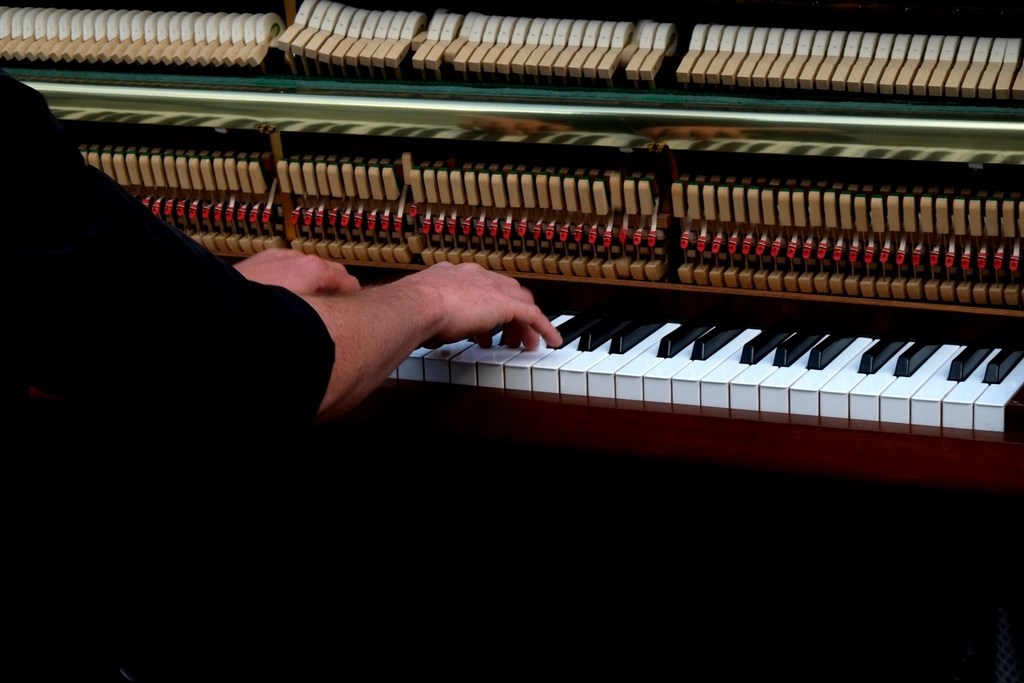
    When you weren’t writing, you plinked away on your Yamaha ebony upright, conjuring self-indulgent sonatas that only the most pretentious muses could appreciate. You didn’t read music so much as let it ooze out of you—luscious chords here, shameless glissandos there—while imagining some ethereal goddess materializing in your living room to stroke your ego as you struck a soulful pose.

    Compared to the misery of your college days in the Bay Area, your Hobcallow digs felt like a five-star resort. Back then, you hadn’t been living so much as squatting in a glorified crawlspace. That room had a gaping hole in the wall, perfectly positioned at bed level, letting in gusts of cold air so vengeful it felt like the Bay’s fog had developed a personal vendetta against you. Sleeping wasn’t rest—it was combat. You huddled under layers like you were gearing up for an Everest summit—jacket, hat, and gloves included, if the wind got particularly sassy.

    Your diet back then was a tragicomedy in three acts: breakfast, lunch, and dinner. Cheerios were the lead performer, while bean-and-cheese burritos played the understudy when you felt adventurous. These “burritos” were little more than refried sludge folded into tortillas with all the flexibility of a sheet of drywall. The cheese? The kind that refused to melt out of pure spite, clinging to the tortilla like it was serving a life sentence. Each bite reminded you that you weren’t starving—but you were nowhere near thriving either.

    Your transportation situation was another chapter in your tale of woe. You drove a ten-year-old Toyota Tercel that was less car and more haunted maraca. Every time you touched the brakes, the thing let out a tortured groan, like it wanted to die with dignity. Navigating the Bay Area hills required a white-knuckled grip and a whispered prayer that the Tercel wouldn’t roll backward into a bus full of nuns and cyclists. Fixing it became a twisted game of financial Russian roulette: either repair the brakes or buy groceries. One of you had to suffer.

    Money? Scarcer than warmth in that arctic excuse for a room. Every broken item—of which there were many—demanded a patch job involving duct tape, superstition, and whatever scraps you could scavenge. Gathering enough quarters for the laundromat felt like winning a regional lottery. “Luxury” meant adding an extra spoonful of salsa to your burrito—living on the edge by upgrading the spice level in a meal otherwise soaked in depression.

    Looking back, it was a miracle you escaped that purgatory with your sanity—or whatever passed for it. That drafty hellhole taught you resilience, sure, but more than anything, it taught you to laugh at the sheer absurdity of trying to survive in a city that demanded gold while you were scraping together lint and hope.

    So there you were, newly settled in this desert hideaway, craving a hint of the luxury you’d never known. On weekends, you tanned your lean, 195-pound frame beside The Springs’ apartment pool—a so-called “luxury” pool that only deserved the title because the sign said so. Real friendships didn’t blossom there—friendships were messy and overrated—but you collected a small cluster of “acquaintances,” a bizarre cast of characters who could only exist in this sun-scorched limbo.

    You weren’t thriving, but at least you weren’t freezing or chewing on cardboard disguised as food. And in a place like Hobcallow, that was as close to paradise as you were ever going to get.

  • Too Good to Sip: My Toxic Romance with Coffee

    Too Good to Sip: My Toxic Romance with Coffee

    I should probably quit drinking coffee—not because it’s bad for me, but because it’s too good, like a lover who ruins you for everyone else.

    This revelation smacked me in the face after a visit to my in-laws in Prescott Valley. There, in the quiet altitude of Arizona suburbia, I encountered coffee nirvana via a Ninja coffee maker—a machine that makes my Keurig taste like it was brewed through a gym sock. The Ninja’s brew was hotter, stronger, bolder. It had the depth of a Russian novel and the intensity of a Quentin Tarantino monologue. I immediately bought one for myself, eager to elevate my mornings into spiritual events. And elevate them I did—too far.

    Now my life has become tragically front-loaded. The coffee is too exquisite. It’s an overachiever. Nothing that follows—emails, errands, workouts, social obligations—can match its rich, scalding glory. My day peaks at 7:12 a.m., and everything after is a slow descent into lukewarm mediocrity. My existence has become a parade of yawns between two cups of perfection.

    This isn’t living. It’s a caffeine cult. And I’m the high priest.

    So what am I to do? Only one solution remains: renounce coffee. Banish the beans. Crawl out of this roasted rut and reinvent myself as a man unshackled from the tyranny of joy. I will become someone who experiences life itself—not just life plus Arabica.

    Or so I’d like to believe. Because deep down, I know I’ll just replace one ritual with another. Like that British expat novelist who lives in Tunisia, the one with the butler who brings him tea and a giant slab of cake every afternoon. That’ll be me. Earl Grey at four, carrot cake on Monday, German chocolate on Tuesday, and so on. I’ll swap a vice, rename it “ritual,” and carry on.

    Coffee may be gone, but the cravings will simply find new costumes.

  • If Cormac McCarthy Wrote a Movie Treatment for Maria Muldaur’s “Midnight at the Oasis”

    If Cormac McCarthy Wrote a Movie Treatment for Maria Muldaur’s “Midnight at the Oasis”

    FADE IN:

    A bone-white desert stretches out beneath a black vault of stars. The dunes are still as sacrificial altars. Somewhere out there, beneath the coyote moon and the ruined tower of Orion, rides a woman of indeterminate age and infinite mischief. She wears a sun hat like a halo. Her sandals leave no prints.

    The camel she rides is named Jeremiah. He does not speak but regards the world with the mournful gaze of a beast who has seen empires fall and lovers lie. His saddle is adorned with silver conches, turquoise fringe, and a little brass bell that tolls only for the damned.

    She comes upon a man.

    He is shirtless, jawline like a blade. Smokes roll-your-owns and speaks in aphorisms. Former bluesman turned snake-oil preacher turned fugitive for a crime he may or may not have committed in Santa Fe, where the sheriff’s daughter still dreams of him and leaves milk out for the scorpions.

    She says

    Midnight at the oasis

    He says

    There’s no such thing as time in this country. Only heat and forgetting.

    They drink wine from a dented canteen and roast cactus blossoms on a fire made of mesquite and ancient regret. The camel chews cud. The stars wheel. A frog laughs somewhere.

    The woman suggests they slip off to a sand dune real soon. Her voice, soft as velvet, carries across the salt-swept wind like prophecy or seduction or both. The man, being a fool or a poet (but never both at once), accepts.

    The desert is watching. It has watched worse.

    They make love like two fugitives hiding from God, beneath constellations older than grammar. Their bodies steam in the moonlight. A lizard judges them and scuttles away.

    At dawn, they are pursued. By whom? Perhaps the woman’s husband. Perhaps bounty hunters. Perhaps just Time, wearing spurs and humming a Carter Family tune. The chase is unspoken but certain.

    The camel refuses to run.

    The woman kisses the man once more and vanishes into a dust devil. Gone. Or maybe never there to begin with.

    The man will ride Jeremiah to the nearest roadhouse and order three fingers of mezcal. He will never again look at the moon without suspicion.

    FADE TO BLACK.

  • When It comes to Swim Briefs the Size of a Hotel Mint, Maybe Opt Out

    When It comes to Swim Briefs the Size of a Hotel Mint, Maybe Opt Out

    Today’s New York Times article, titled “Skimpy Men’s Swimming Briefs Are Making a Splash,” offers a solemn dispatch from the front lines of GLP-1 drugs, but I would guess that men—having exhausted every form of visible self-optimization—are now expressing their Ozempic-enabled slenderness via tiny, Lycra-clad declarations of status. We’re talking male bikinis, or what I like to call the ego sling.

    Apparently, if you’re dropping $18,000 a year to chemically suppress your appetite and shed your humanity one subcutaneous injection at a time, you deserve the privilege of looking like a Bond villain’s pool boy. I suppose this is the endgame: pay to waste away, then wrap what’s left in a luxury logoed banana peel.

    Luxury houses, never ones to miss a chance to monetize body dysmorphia, are now marketing these second-skin briefs not as mere swimwear, but as power statements. To wear them is to say: “I’ve defeated fat, joy, modesty, and comfort in one fell swoop.”

    I’m almost 64. My aspirations remain high—ideally, I’d like to look like a special-ops operator on vacation in Sardinia. But I know my place. I wear boxer-style swim trunks, the cloth of the pragmatic and the semi-dignified. They’re not exciting, but neither is seeing a sun-leathered septuagenarian adjust a spandex slingshot over a suspicious tan line.

    There’s a difference between being aspirational and being delusional. The former means striving for vitality, strength, and energy. The latter means stuffing yourself into a satirical undergarment and pretending you’re 28 with a sponsorship deal.

    To my fellow older men: sculpt your body like it’s your spiritual obligation—but when it comes to swim briefs the size of a hotel mint, maybe opt out. Not every part of youth is worth reliving. Some of it deserves to be left in the chlorine-stained past, right next to Axe body spray and Ed Hardy tank tops.

  • Safe at Home with Tofu: We Need George Carlin Now More Than Ever

    Safe at Home with Tofu: We Need George Carlin Now More Than Ever

    George Carlin once built a whole comedy bit around the contrast between football and baseball. Football, he said, is war—full of blitzes, bombs, and sudden death. Baseball, by contrast, is a pastoral game, a gentle journey home. Safe at home. He could’ve done an equally scathing bit on carnivores versus vegans.

    A carnivore is a Viking. He doesn’t eat dinner; he conquers it. He roasts slabs of meat over open flame, wears elk pelts in July, and believes the phrase “nose to tail” is less a philosophy than a moral imperative. He eats liver because it’s what his ancestors did, despite the fact that his ancestors also died at 38 from dysentery and wolf bites.

    The vegan? A minimalist monk who speaks in the tone one reserves for therapy dogs and endangered turtles. His kitchen smells like soaked lentils and moral superiority. He eats “greens,” plural, as though a vague handful of chlorophyll could power a biped. His hero is the neighborhood spider, which he refuses to squash. Instead, he names it Rumi, places it gently on a compostable bamboo plate, and ushers it into the wild with a whispered prayer and a single tear.

    The carnivore doesn’t own plates. He eats standing up. The vegan has three sets of reusable dishware, made from renewable bamboo and guilt. The carnivore fills his “power bowl” with yolks, red meat, and testosterone. The vegan fills his with quinoa, miso, and the sense that one day we’ll all live on floating gardens of kale, fueled by gratitude and biotin.

    The carnivore laughs when lightning strikes. The vegan winces when the microwave beeps.

    And yet—here’s the kicker—both think they’re saving the world. One by returning to primal wisdom, the other by transcending it. One believes in survival of the fittest; the other believes in surviving without harming a single sentient thing. They are, in essence, two sides of the same self-mythologizing coin: the ancient warrior and the futuristic monk, each clinging to their menu like it’s a worldview. And perhaps that’s what diet is now—a belief system, a theology served with a side of macro tracking. Eat, pray, posture.

  • Recycling in the Shadow of the End Times

    Recycling in the Shadow of the End Times

    Last night, my wife asked me to handle a sacred domestic rite of passage: haul a trunk-load of obsolete electronics to the Gaffey S.A.F.E. Recycle Collection Center in San Pedro. “They open at 9 a.m.,” she said, which is code for: Don’t sleep in.

    So I dutifully loaded my Honda Accord with a hall of shame—old radios, half-dead fans, ghosted iPads, prehistoric laptops, orphaned computer speakers, a humidifier that wheezed its last breath in 2018, and enough acid-leaking batteries to qualify as a small environmental disaster.

    By morning, I punched the address into my phone, merged onto the 110 South, and exited Pacific Avenue, driving through an industrial no-man’s-land of rusting warehouses, improvised shelters, and overgrown brush—a Stephen King set piece waiting to happen. After bouncing over railroad tracks and veering onto a gravel path flanked by nothing but dirt and faint regret, I arrived at 8:50.

    The “facility” was a glorified tarp tent squatting in front of a cinder-block warehouse. A small line of cars idled ahead of me like penitents outside a confessional. Signs warned against dumping poisons, spoiled crops, medical waste, firearms, and, refreshingly, detonation materials of any kind. A second sign warned against exiting your vehicle, eating, or drinking—because apparently the mere whiff of your lukewarm coffee might trigger a chemical reaction that could incinerate the South Bay.

    At one point, a confused driver from Washington state cut in front, realized he was in the wrong dystopian checkpoint, U-turned, and peeled off down the gravel road, leaving a dust plume that coated our windshields like nuclear ash.

    By nine o’clock, two dozen cars were idling behind me in what now resembled the opening act of an eco-thriller. A cheerful woman in an orange vest began making her rounds, clipboard in hand. She asked what I was dropping off, and I gave her the rundown—my sad parade of malfunctioning tech. I suspect her job was twofold: confirm I wasn’t smuggling Chernobyl-grade waste, and quietly profile whether I looked like the kind of guy who dumps bodies with his broken humidifiers. Somewhere nearby, I imagined, there was a man with a headset and a sidearm watching from a repurposed FEMA trailer.

    Finally, I popped the trunk. Uniformed workers retrieved my gadgets with grim efficiency. I thanked them. They returned my gratitude like seasoned pallbearers—calm, practiced, unfazed.

    Unburdened, I pulled away from the hazmat drive-thru, feeling 50 pounds lighter and slightly radioactive. I had fulfilled my civic duty to both my marriage and the planet.

  • One Day, One House, No Excuses

    One Day, One House, No Excuses

    This morning, I brewed a pot of delicious Stumptown French roast—molten, bitter, potent—and padded over to my computer feeling dangerously wholesome. A good man with good intentions. Which, of course, is always the start of a problem. I was toying with the idea of living more virtuously: dialing back the animal fat, leaning into tempeh and nutritional yeast, pretending a plant-based diet isn’t just a long goodbye to flavor. You know, the usual summer resolutions—less cheese, more clarity.

    Somewhere between the aroma of roasted beans and my first click of the mouse, I felt something resembling courage. Not the real, bare-knuckled kind, but the kind that sneaks in when the house is quiet and you haven’t yet sabotaged yourself with toast. I thought: Gird up thy loins like a man. (Who says that anymore? Besides prophets and people named Chet.) But still, the idea stuck. Maybe I was finally ready to stop flinching and start living with actual conviction—about food, fitness, morality, and cholesterol.

    And yet I know myself. Talk is cheap. I have spent years writing grocery lists for lives I never lived. What matters is performance.

    Which brings us to today. My summer has officially begun. My wife and teenage daughters are off to Disneyland—a place I regard with the same warmth I reserve for colonoscopies and TikTok. They know this, and mercifully leave me out of the Mouseketeer pilgrimage. Which means: the house is mine.

    I have made a pact with myself. Today, I will submit my final grades, mount the Schwinn Airdyne for a 60-minute sufferfest (estimated burn: 650-750 calories, depending on whether I channel Rocky Balboa or Mister Rogers), and I will rehearse my piano composition—tentatively titled Gene Wilder’s Prelude to Mischief and Madness. If all goes well, I’ll record it and upload it to my YouTube channel, where it will be watched by six people and a bot from Belarus.

    Alone time is rare in a house shared with twin teenage girls, a wife, and the occasional haunting presence of someone asking what’s for dinner. I daydream of a private studio—soundproofed, monk-like, adorned with a grand ebony Yamaha piano and maybe a faint aura of genius. Instead, I have today: a suburban cosplay fantasy in which I pretend to be a cloistered artist, instead of a middle-aged man in gym shorts wondering if tempeh is as bioavailable as the vegan influencers claim it is.

    And yet… it’s enough. Let the performance begin.

  • The Pilgrim, the Mansion, and the Flying Death Rig

    The Pilgrim, the Mansion, and the Flying Death Rig

    Last night, I dreamed I worked at a surreal hybrid of a college campus and an amusement park—the kind of place where tenured professors could file paperwork in one building and ride a log flume in another. Picture syllabus deadlines and cotton candy coexisting. Naturally, I was late for both.

    Meanwhile, several miles away in my old neighborhood, Marcus, a childhood friend, decided he’d had enough of modern civilization. His exit wasn’t dramatic—no manifesto, no angry blog post—just a quiet pilgrimage beginning in front of my house. The weather was unreasonably perfect. Sunlight filtered through air that smelled like rose petals and eternal spring. Think Garden of Eden meets Orange County real estate brochure.

    So why would Marcus leave paradise? We didn’t know. But my neighbors and I were offended by the sheer moral audacity of it. His journey felt like a judgment—like he’d stared into the hollow eyes of our HOA and whispered, “You people are dead inside.” Naturally, we chased him. Not to stop him, but to prove we were decent people too. We jogged after him, waving metaphysical CVs and shouting, “We recycle! We make our own salad dressing!”

    But Marcus was too far ahead. By the time I arrived at the college-amusement park, he was gone. I retreated to my professor’s office to catch up on what dreams insist professors do: paperwork. That’s when Mike arrived—a former student, Navy SEAL, and time-traveling spirit guide from the 1990s. He led me to a house in Buena Park, once his father’s, now transfigured by dream logic into a mansion of staggering beauty, where I apparently lived a life of joy and ease in another dimension. It was, quite simply, the life I never knew I had but now mourned like a phantom limb. I was flooded with regret. Why did I leave that parallel mansion where I was whole, radiant, and probably never had to grade a single freshman essay?

    Then the sun set, and—as dreams do—I stopped being a professor and morphed into some kind of blue-collar rig worker, one of four men hauling cargo across the freeways of this theme park universe. At breakneck speed, we clung to the roof of a truck, flying over the 5 freeway like a band of deluded daredevils. I alone had the courage (or sanity) to question this arrangement. “You know,” I said, wind slapping my face, “we don’t have to die tonight. There’s an interior cabin. With seats.”

    At first, they mocked me—because apparently, dreamland logic still includes workplace hazing—but eventually, they gave in. We climbed down into the safety of the rig, like cowards, or people who enjoy not being flung across asphalt.

    As I relaxed, I thought once more about that mansion in Buena Park, that shadow life where I wasn’t trying to prove my worth or cling to cargo. A life of belonging, not striving. Then I woke up, ate a bowl of buckwheat groats, drank my Sumatra coffee, and wondered what it all meant.

  • The Forgotten Fleet: Memoirs of a Honda Hoarder

    The Forgotten Fleet: Memoirs of a Honda Hoarder

    Last night, my subconscious staged an intervention.

    In the dream, my family and I had relocated to a sprawling house perched at the edge of a forest—idyllic at first glance, but the driveway told another story. It had become a graveyard of Honda Accords. Not just one or two, but an entire archaeological dig of them: gleaming new models barely broken in, others half-eaten by moss and mulch, some peeking out from decaying leaf piles like forgotten Easter eggs, and one—yes, really—buried in the earth like a pharaoh’s chariot. Another Accord had somehow washed up near the beach, sun-faded and abandoned like a bloated sea lion.

    A kindly messenger—part real estate agent, part archangel—told my daughter and me about the beach-stranded Accord. So we climbed into an older model, the color of a liver spot, and headed to the coast. Upon arrival, we ditched that old heap to rescue another Accord of the exact same jaundiced hue. Predictably, the beach Accord was dead on arrival. My daughter and I, summoning the brute strength of Greek demigods, pushed it across the sand, up a mountain, and across California at warp speed—from Orange County to Simi Valley—as if towing the sins of my consumer past behind us.

    We paused at a cousin’s house, where iced tea and human needs awaited. My cousin, ever the concerned parent, confided that his son was wilting from loneliness. Without missing a beat, my daughter rang up a stunning actress—someone so luminous she made Instagram filters seem redundant. She showed up. So did half the neighborhood, offering baked goods in exchange for a glimpse at the sun goddess. One woman brought a cherry pie, trembling with reverence.

    As we continued northward, my joy curdled into anxiety. How many Accords had I bought over the years? Were there more hidden somewhere—collector’s editions with leather interiors and forgotten potential—lost to my Swiss cheese memory? Had I turned into the automotive equivalent of a hoarder monk, stacking sacred relics of midlife crises in the forest of my own forgetfulness? I awoke not with peace, but with regret, soothed only slightly by a tall, steaming mug of Sumatra roast, which I drank like a sacrament to sanity.