Tag: watches

  • Confessions of a Reluctant G-Shock Convert

    Confessions of a Reluctant G-Shock Convert

    Yesterday I put bracelets back on four of my Seiko divers, restoring them to their native steel—links clicking into place with the confidence of expensive machinery. They looked the part. Between one and three thousand dollars’ worth of brushed surfaces and tight tolerances, the watches radiated competence. On the wrist, though, the spell broke. The weight announced itself immediately, a small, insistent gravity that felt less like substance and more like obligation. I admired them the way you admire a well-made chair in someone else’s house: respect without attachment.

    I had hoped the bracelets would add some pizzazz—some latent charisma waiting to be unlocked by the right configuration. Instead, they exposed a mismatch. The watches belonged to a former version of me, a man who equated heft with meaning and steel with seriousness, a man I barely recognize. That man, it turns out, has been quietly replaced.

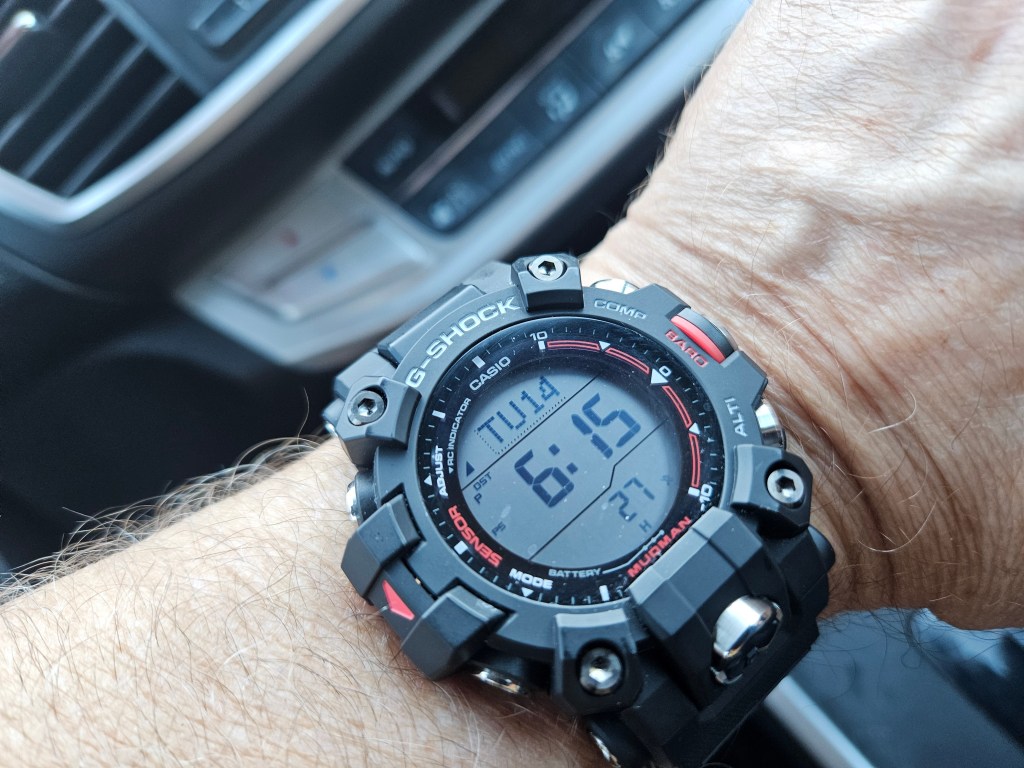
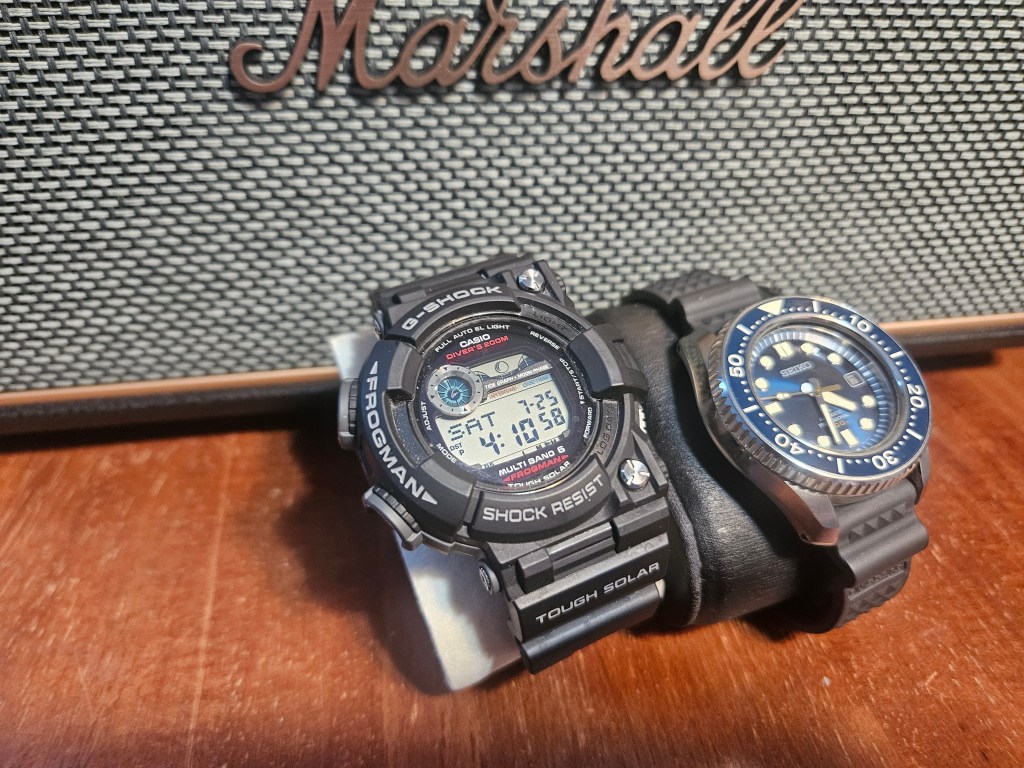
    In his place stands a convert to G-Shock—not the entire circus, but a very specific order of monks: the Frogman, the Mudman, the Rescue. Resin instead of steel. Solar instead of ritual. Atomic time instead of romance. These watches don’t ask for admiration; they deliver accuracy and get out of the way. After them, the Seikos feel like cufflinks with pretentiousness.

    I’m aware this confession offends the faithful. Mechanical devotion runs deep, and there’s a certain etiquette to pretending you still feel it. I don’t. The G-Shocks have recalibrated my wrist. They’ve made lightness feel honest and precision feel sufficient. The Seikos now read as formalwear—appropriate, occasionally necessary, but fundamentally performative. I’ll wear them when a formal event demands it, the way one wears a jacket in an expensive restaurant to satisfy a dress code no one quite believes in anymore.

    Call it heresy if you like. I call it clarity. In my head I’m a collector; on my wrist, I’m a G-Shock guy.

  • The Clean Split: Seiko Romance vs. G-Shock Precision

    The Clean Split: Seiko Romance vs. G-Shock Precision

    For more than two decades, I lived inside the cathedral of Seiko divers—mechanical, muscular, faintly mythic. Then, without warning, I developed a taste for G-Shock. Not the entire sprawling catalog—just a narrow, almost doctrinal subset: Tough Solar, Multiband-6, digital display. Precision without ceremony. Time as a solved problem.

    Strangely, this new fixation didn’t dethrone the old one. If anything, it refused to engage it. My Seikos–SLA051, SLA023, SLA055, SBDC203, the Tuna SBBN049–continue their analog romance, ticking away with artisanal stubbornness. The G-Shocks, by contrast, operate with cold, atomic certainty. They don’t drift; they don’t charm; they don’t ask for admiration. They simply tell the truth. I find myself wearing them more often, yet the two categories never compete. They inhabit parallel realities, each complete unto itself.

    What used to be a single, coherent hobby has split into two clean domains. Not a conflict–more like a continental drift. The G-Shocks don’t diminish the Seikos, and the Seikos don’t dignify the G-Shocks. They coexist without conversation. The complication, if it can be called that, has the feel of an upgrade: a second language acquired late in life, one that doesn’t replace the first but sharpens your sense of what each can do.

    And once you see the line, you want to ink it in.

    I’ve started returning my Seikos to their bracelets, restoring them to their native uniform—steel on steel, no ambiguity. Only the Seiko SLA051 gets a pass; it belongs on a waffle strap the way certain truths belong in plain speech. The rest will click back into their bracelets like soldiers resuming formation. The goal isn’t function; it’s taxonomy. I want the collection to declare itself in two voices, not one muddled chorus.

    This is the quiet compulsion at work: the need to clarify, to separate, to keep categories from bleeding into one another. Call it Horological Bifurcation Syndrome–the clean split of a once-unified obsession into two ecosystems with incompatible logics and equal appeal. On one side, mechanical romance: weight, history, the seduction of imperfection. On the other, digital precision: light-powered, atom-synced, immune to drift. They don’t compete. They refuse to integrate. And the more I indulge them, the more I prefer it that way.

  • Unless You’re Certain Your G-Shockification Is Permanent, Keep Your Mechanical Divers

    Unless You’re Certain Your G-Shockification Is Permanent, Keep Your Mechanical Divers

    My mechanical watches sit in their box like retired athletes—well-kept, occasionally exercised, no longer in the game. Every so often I take one out, give it a few dutiful shakes, wind it like a ritual I don’t quite believe in, and return it to its padded cell. The magic has evaporated. In its place: the afterimage of a fever swamp—a mind that mistook obsession for discernment, a man who let proportion slip while calling it passion.

    Did I quit watches? No. I still strap one on every day. I rotate between two Tough Solar, Multiband-6 G-Shocks—the Frogman and the Rescue—and they do the one thing I apparently wanted all along: tell the correct time without drama. Precision, delivered nightly from a radio tower, not coaxed from springs and sentiment.

    The question nags: are these G-Shocks the nicotine patch—same habit, fewer toxins? A maintenance dose that keeps the shakes at bay while I detox from romance? Or have I simply traded one dependency for another, swapping lacquered nostalgia for resin certainty? I can imagine a small, sane G-Shock lineup—four, maybe five—but I recoil at the thought of a sprawling collection that demands wardrobe changes, spreadsheets, and a personality built around rotation schedules.

    I’m not selling the mechanicals. Not yet. A month is not a verdict; it’s a mood with good PR. I’ve undergone what I’m tempted to call a conversion—G-Shockification—but I don’t trust conversions. They arrive like thunder and leave like weather. If this holds, time will tell me so—accurately, for once.

    There’s also the quieter force at work: the sunk-cost instinct dressed up as dignity. When you’ve poured money, hours, and a piece of your identity into something, you don’t walk away—you renegotiate with yourself. You call it loyalty. You call it patience. You call it anything but regret.

    Let’s keep perspective. I own four mechanical divers and one quartz. This isn’t a warehouse liquidation. I’m not torching a museum. I’m a man with a small box and a slightly embarrassed past.

    So the divers stay—for now—on the shelf to my upper left as I type. They used to summon me: strap changes, wrist rotations, the ceremonial wipe-down. Now they sit in a quiet that feels less like neglect and more like clarity. The box hasn’t moved. I have.

  • Why I’m Not Fully G-Shockified (Yet)

    Why I’m Not Fully G-Shockified (Yet)

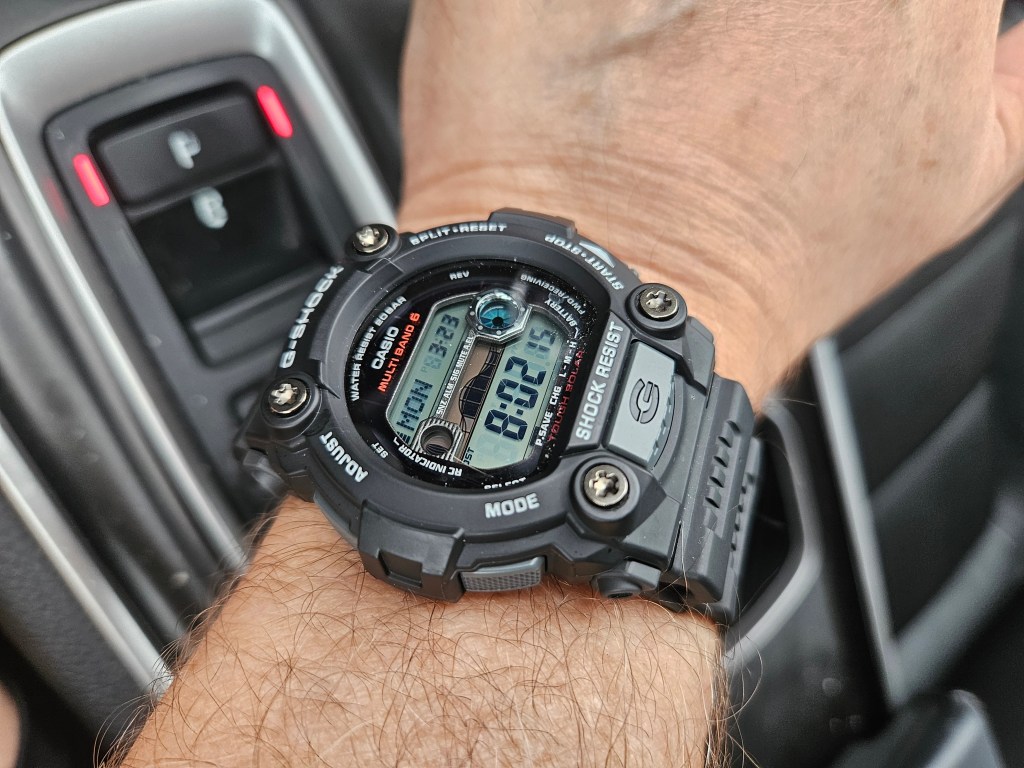
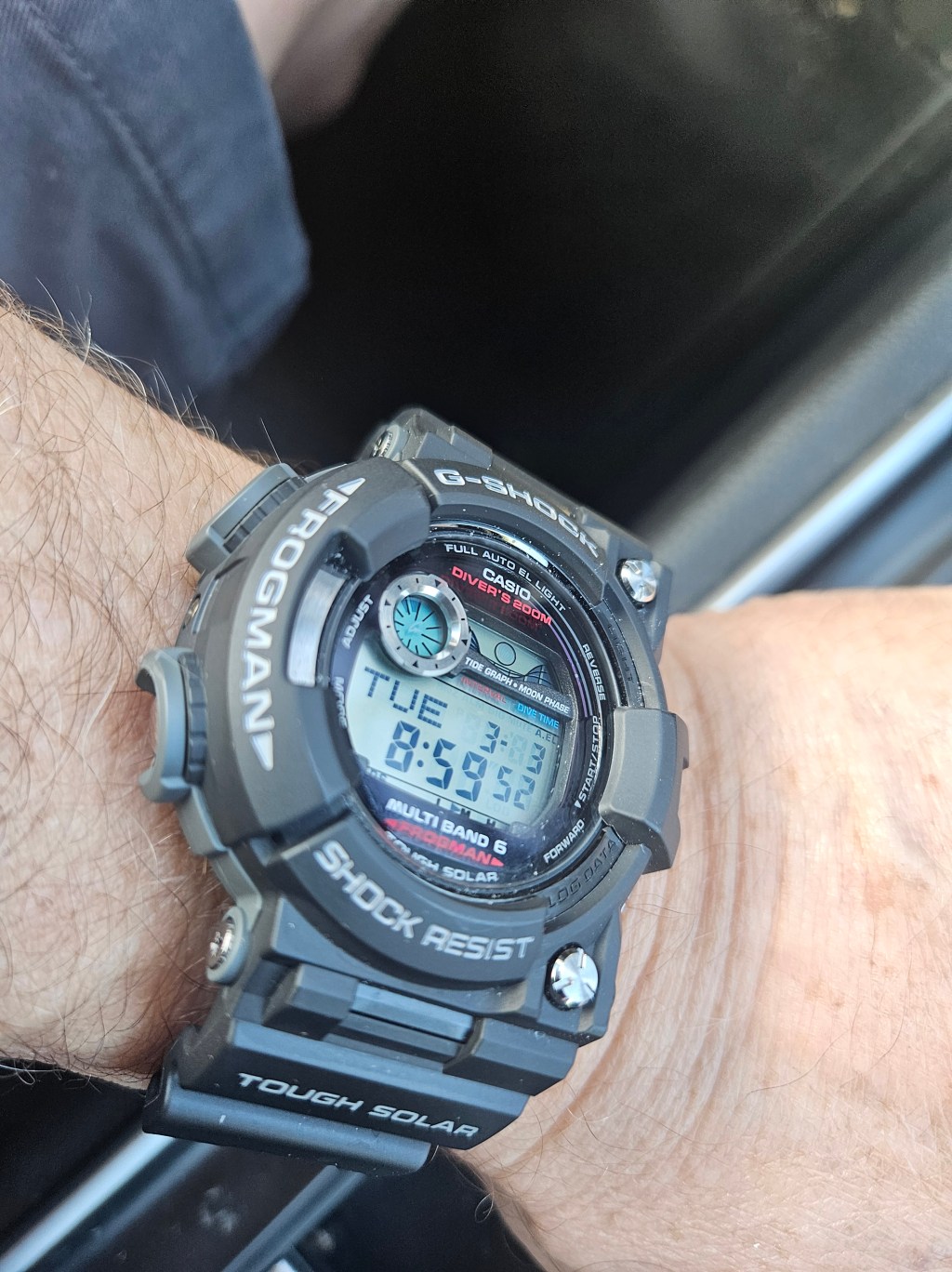
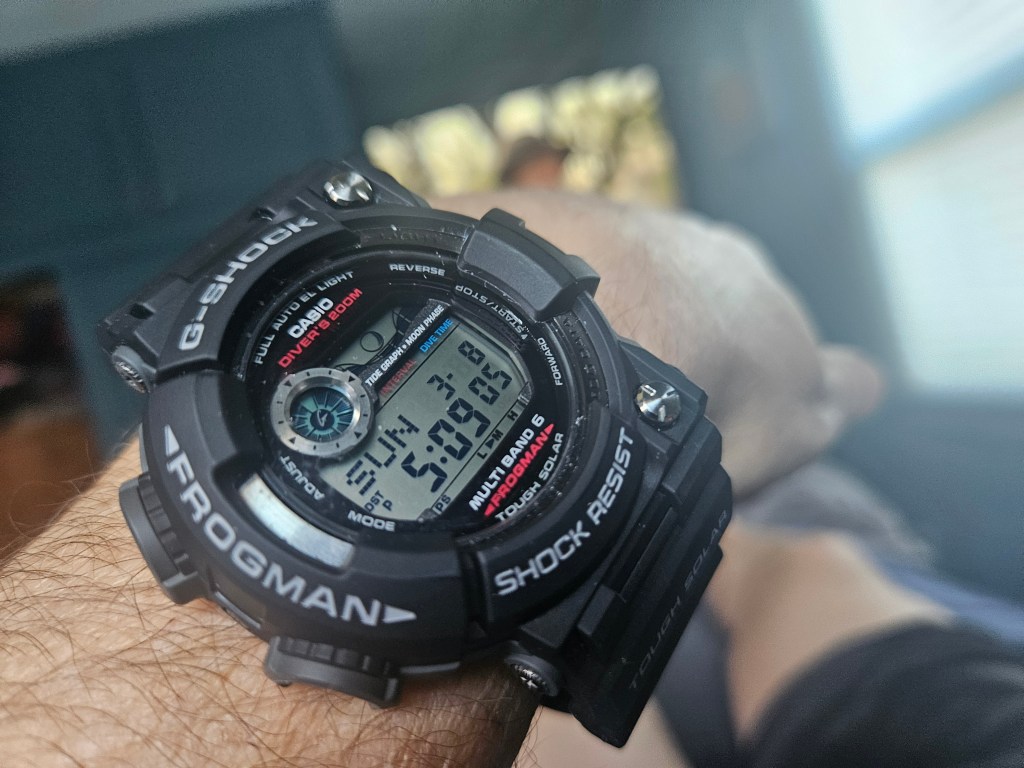
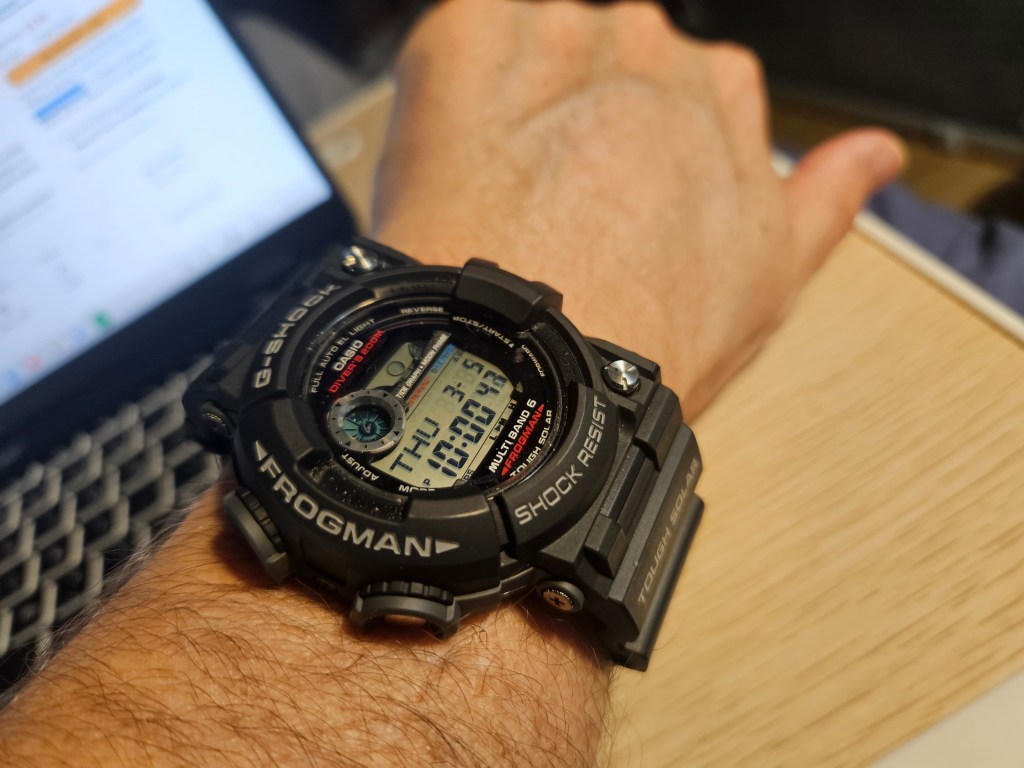
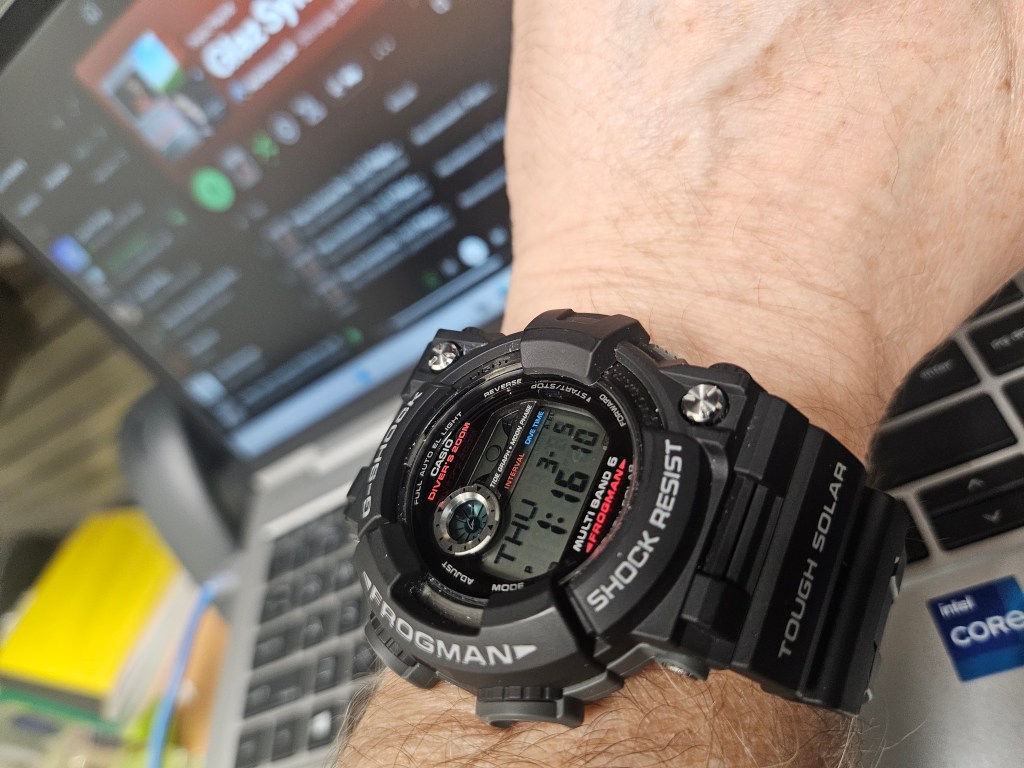
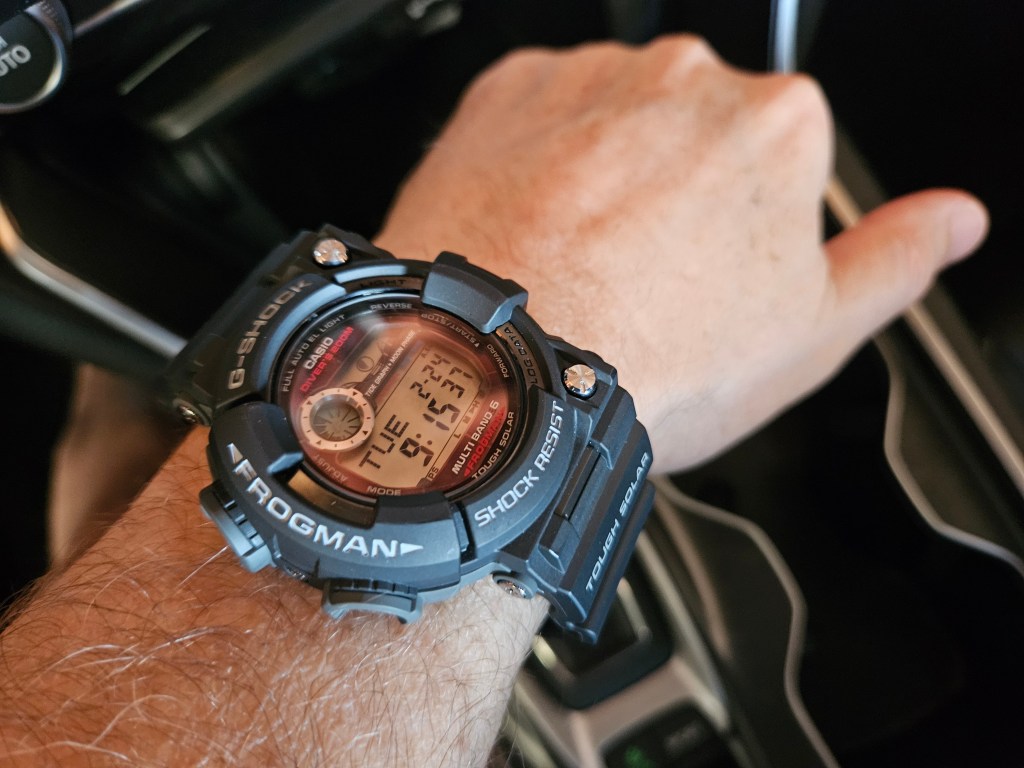
    A month ago, I fell—hard—for the G-Shock Frogman GWF-1000. Not a mild infatuation. Not a passing curiosity. A full conversion experience. Within days, I recruited two accomplices—the GW-7900 Rescue and the GW-6900 Three-Eyed Monster—and suddenly my mechanical divers, once the crown jewels of my collection, were sitting in the watch box like retired prizefighters telling stories no one asked to hear.

    Let me be clear: I have not renounced them. I still admire the Seiko SLA055. I still regard the quartz Tuna SBBN049 with something close to reverence. But admiration is not the same as use. Once you’ve tasted atomic time—precise, indifferent, quietly superior—it’s difficult to return to the charming imprecision of mechanical watches. You don’t switch back from filtered water to a garden hose unless nostalgia is doing the driving.

    And I’m not alone. Since confessing my condition, I’ve received a steady stream of testimonials. Men who bought a GW-M5610 or a GW-5000U and quietly stopped wearing everything else. Not because they planned to. Not because they declared war on their collections. But because the G-Shock—comfortable, accurate, frictionless—refused to leave their wrist. Their curiosity still wandered, their addiction still whispered, but the watch stayed put. Anchored. Unmoved.

    This phenomenon deserves a name: G-Shockification.

    It is the moment when a watch enthusiast, steeped in the romance of mechanical horology, is overtaken by the brute efficiency of atomic precision. At first, there is resistance. Then rationalization. Finally, surrender. Variety collapses. The rotation dies. The watch box becomes a museum, and the G-Shock becomes the only living artifact. What began as a hobby turns into a single, dominant habit—quiet, practical, and oddly liberating.

    Some resist the change. Some embrace it. Some preach it like a new religion. But they all share one outcome: the mechanical watch, once a daily companion, becomes an occasional guest.

    Which brings me to the uncomfortable question: Have I been G-Shockified?

    The honest answer is: not quite.

    I have my objections. With a G-Shock, I cannot simply glance at the time. I must present the watch to my face like an offering, or press a button and summon light—an act that triggers a faint but persistent anxiety about draining the solar charge. In a dark movie theater, the problem becomes almost philosophical. Do I illuminate my wrist and disrupt the room? Or do I behave like a civilized adult and wear something else?

    This is where the quartz Tuna reenters the story.

    Since my G-Shock conversion began, the Tuna has enjoyed a quiet renaissance. It is as if atomic time granted me permission to appreciate quartz accuracy without guilt. At night, it is flawless—constant lume, instant readability, no negotiation required. It does not ask for a button press. It does not demand a ritual. It simply tells the time, like a professional.

    And so I arrive at a compromise.

    I am not fully G-Shockified because I am not willing to tolerate certain frictions: the angle-sensitive readability, the dependence on backlight, the small social calculations about when it is appropriate to illuminate my wrist. These are minor issues, but they are enough to prevent total surrender.

    What I have instead is something more complicated: Hybridification.

    My collection is now split down the middle—four analog watches, four G-Shocks. This is not harmony. It is a negotiated settlement. The G-Shocks govern precision, durability, and daily utility. The analog watches—especially the Tuna—reclaim territory where immediate readability and luminous clarity matter.

    The result is a managed tension between two philosophies:

    • the digital world of accuracy, convenience, and indifference
    • the analog world of presence, legibility, and quiet satisfaction

    It is not a perfect system. But it is stable.

    For now.

  • The Signal Hunter: From Vintage Radios to Atomic G-Shocks

    The Signal Hunter: From Vintage Radios to Atomic G-Shocks

    For a long time before I became a watch obsessive, I was a radio obsessive. This was the early 2000s, when my idea of a thrilling evening involved testing AM sensitivity and comparing FM clarity the way sommeliers compare Burgundy. I developed an unhealthy admiration for 1960s and 70s Sony and Panasonic radios—machines that looked as if NASA engineers had been given permission to design living-room furniture.

    That obsession never really left. I still keep half a dozen high-end Tecsun radios scattered around the house like electronic houseplants. One in the kitchen. One in the bedroom. One in the garage. Each quietly sipping signals from the air.

    Over the next two decades my attention drifted from radios to watches, and not modest watches either. I assembled a small stable of Seiko mechanical divers, some pushing well north of three thousand dollars. They were beautiful machines—tiny brass orchestras ticking away beneath sapphire glass.

    Then, about a month ago, something strange happened. I unplugged emotionally from the mechanicals and wandered into the strange, glowing world of G-Shock Multiband-6 atomic watches.

    And to my surprise, I’m having more fun with this hobby than I ever did before.

    These watches cost a fraction of my mechanical divers. Yet I’m connecting with them more deeply. That should bother me. It doesn’t.

    But let’s not dramatize this as some kind of betrayal of my mechanical diver heritage. This is not treason. It’s zoning.

    Think of it like Jay Leno’s Big Dog Garage near the Burbank airport. Leno divides his collection between vintage machines and modern ones. Two different eras. Two different moods.

    My watch world now works the same way.

    On one side of the garage sit my mechanical divers. They’re the horological equivalent of a 1959 BMW 507 convertible with a four-speed manual. When I strap one on, it’s like taking a country drive through nostalgia. The wind is loud. The ride is bumpy. The engine chatters like a coffee grinder full of marbles.

    And occasionally, that experience is glorious.

    But as the years pile up, those drives become less frequent. The wind noise, the rattling, the mechanical fussiness—eventually the romance demands a bit more patience than my bones want to give.

    Now walk across the garage.

    Here you’ll find the modern fleet: my Multiband-6 G-Shocks.

    These are the Honda, Lexus, and BMW sedans of the watch world. Smooth handling. Effortless precision. A cabin so insulated from chaos that time itself arrives wirelessly in the middle of the night.

    Moving between a G-Shock and a mechanical diver is like stepping from a luxury sedan into a vintage convertible. Two different universes. Neither one replaces the other. You simply choose which universe you feel like visiting.

    And as my eyes grow older and slightly crankier, I can already see where I may end up parking more often: something like the G-Shock Mudman GW-9500 with a big positive display.

    Positive display only, mind you. Negative displays are pure muscle-flex cosplay. I already get plenty of testosterone from the armored tank aesthetic of G-Shock design. I don’t need the digits hiding in a cave as well.

    But here’s the deeper truth.

    My attraction to Multiband-6 watches has quietly returned me to my radio roots.

    The vintage radio hobby and the atomic watch hobby attract the same personality type. They scratch the same itch.

    Both revolve around the quiet thrill of pulling invisible signals out of the air.

    In that sense, I am what I like to call a Signal Hunter.

    A signal hunter doesn’t simply collect equipment. He collects moments of reception. The tiny surge of satisfaction when a device—a Sony shortwave radio or a G-Shock atomic watch—locks onto something traveling through the ether.

    The world is whispering signals constantly. Most people never notice.

    But if you have the right instrument, the air suddenly comes alive.

    To improve my odds of catching those signals, I recently ordered an industrial pipe jewelry and headphone stand. Apparently many G-Shock owners swear that letting the watch rest overnight on a piece of metal—like a pipe or curtain rod—helps the antenna catch the atomic time signal more reliably.

    The moment I read this, resistance was futile. I ordered the stand immediately.

    Because suddenly I was six years old again.

    I had my Batman Bat-Signal flashlight. I had my decoder ring. And the universe was sending secret messages again.

    Syncing my G-Shocks has become a nightly ritual.

    And rituals are my natural habitat.

    Coffee. Oatmeal. Protein powder. Kettlebells. Mechanical watch winding. Atomic watch syncing.

    Different objects.

    Same impulse.

    Order the world. Listen closely. Catch the signal.

  • The Digital Purist’s G-Shock Manifesto

    The Digital Purist’s G-Shock Manifesto

    When I bought my G-Shock Frogman and experienced the peculiar bond that many G-Shock owners describe, I began hearing from other enthusiasts who spoke about their watches with the same kind of fervor usually reserved for religion, motorcycles, or properly cooked brisket. Curious, I started watching G-Shock videos online. What struck me was not the technical analysis—though there was plenty of that—but the sheer affection people felt for these watches. It was humbling to see someone speak with genuine reverence about a $100 resin timepiece with the same poetic intensity that others reserve for ten-thousand-dollar Swiss luxury watches. Apparently joy does not scale with price tags.

    After enough of these videos, I discovered something about myself: my lane in the G-Shock universe is extremely narrow. My watches must be digital. They must be Tough Solar. They must be Multiband 6. And they must come on straps. The moment a watch wanders outside those borders—analog hands, shiny bracelets, smartwatch features that make it look like a Garmin auditioning for a triathlon—it falls off my radar. Limited editions that feel like marketing departments squeezing collectors for lunch money also fail to stir my soul. My tastes are simple: give me the rugged, atomic-synchronized machinery of the late-20th-century Casio imagination.

    And that is where the magic happens. Casio is the undisputed curator of the 1980s and 1990s technological mood: efficient, unapologetically digital, and blissfully free from the surveillance culture of modern smart devices. A Tough Solar Multiband 6 G-Shock does everything you ask of it without demanding attention in return. It is competent, quiet, and oddly comforting. Once you step into that retro-technical atmosphere, you discover the purest G-Shock vibe: a blend of practicality, nostalgia, and cool restraint.

    Based on this revelation, I created what I now consider my essential G-Shock quartet:

    G-Shock Frogman GWF-1000
    G-Shock Rangeman GW-9400
    G-Shock Rescue GW-7900
    G-Shock GW-5000U

    I already own the first one. The other three remain safely outside my possession—at least for the moment. My strategy for maintaining discipline is simple: I try to read books and articles like a normal person. Unfortunately, every fifteen minutes my browser opens a new tab where I begin “researching” the Rangeman, the 7900, or the GW-5000U with the dedication of a graduate student preparing a thesis on atomic timekeeping. So far the watches remain unpurchased.

    But I would not advise betting against them.

    The Man Who Lost His Mind to Watches is my book about the watch madness that many of us share. It is now on Amazon Kindle:

  • Mechanical Atrophy Prevention

    Mechanical Atrophy Prevention

    I wear my G-Shock Frogman GWF-1000 almost every day. It has become the default setting of my wrist, the horological equivalent of gravity. Twice a week, however, I stage a small act of resistance. I slip on one of my Seiko divers. If I don’t, the Frogman will quietly suffocate the rest of the collection. It already has, to a degree. The moment I first strapped that Frogman on, it felt less like a purchase and more like a declaration: this watch had my name written across it in thick permanent ink. It fit my life with such ruthless competence that every other watch in the box began to look like an understudy waiting for a call that will never come.

    So twice a week I impose discipline. The Seikos get their turn. Think of it as horological cross-training. Most days I’m on the exercise bike or doing yoga, but I still force myself to swing the kettlebells twice a week so my muscles don’t dissolve into decorative noodles. The Seikos perform the same function. They are my defense against mechanical watch atrophy.

    This ritual belongs to what I call my Mechanical Atrophy Prevention program: the deliberate act of wearing a mechanical watch just often enough to preserve one’s emotional bond with gears, springs, and that hypnotic sweeping second hand. Without this intervention, the human brain quickly adapts to the ruthless efficiency of digital timekeeping. Soon you’re living in a world of solar charging, atomic synchronization, and clinical precision, and the charming little clockwork creatures in your watch box begin to feel quaint—like writing letters with a quill.

    Wearing the Seikos twice a week is my version of lifting weights so my body doesn’t evolve into an ergonomic office chair with legs. The practice keeps alive the fragile illusion that I am still a “mechanical watch person,” not a man who has quietly surrendered to the cold efficiency of quartz.

    Does this sound crazy to you?

    Welcome to my world.

  • From Luxury Dreams to G-Shock Atomic Reality

    From Luxury Dreams to G-Shock Atomic Reality

    I made a YouTube video about my G-Shock Frogman and my growing inability to take it off my wrist. The response was immediate and disproportionate. The video drew ten times the comments I typically get when I talk about mechanical watches.

    That told me something important.

    The passion inside the G-Shock world isn’t just strong. It’s combustible.

    What surprised me even more was the pattern many viewers described. It ran directly against the standard collector narrative—the familiar climb from inexpensive watches up the luxury ladder, the gradual refinement that ends with an Omega, a Tudor, and the quiet satisfaction of having “arrived.”

    Many G-Shock owners reported the opposite trajectory.

    They did climb the ladder. They bought the Swiss pieces. They tasted the luxury world. And then something happened.

    They discovered atomic time.

    One comment captured the shift perfectly: the plan had been to move from entry-level divers into Tudor. But after experiencing the precision of a radio-controlled G-Shock, mechanical watches stopped making sense. The Tudors remained—for weddings, formal events, the occasional appearance—but daily life belonged to the digital watch.

    The romance didn’t fade gradually.

    It collapsed.

    What replaced it wasn’t thrift or minimalism. It was something colder and far more powerful: precision, efficiency, optimization. The watch was no longer a story. It was a system.

    This transformation deserves a name: Precision Conversion.

    Precision Conversion is the moment a collector crosses an invisible line. He stops wearing watches for heritage, craftsmanship, or the poetry of miniature machinery and starts wearing them for one unforgiving reason: they are correct.

    It often begins quietly. One morning, the atomic watch has synchronized overnight. No drift. No adjustment. No uncertainty. The time is simply right—down to the second, without effort, without supervision.

    After that, the mechanical watch changes character.

    What once felt soulful now feels approximate. What once felt charming now feels like a pleasant but unreliable narrator. The convert doesn’t lose respect for craftsmanship. He loses tolerance for romance that runs five seconds fast.

    Accuracy begins to feel like moral clarity. Self-correction feels like intelligence. A watch that needs adjusting starts to look less like a companion and more like a hobby that forgot its primary responsibility.

    And here’s the important part.

    Money never came up.

    Not once.

    These comments weren’t about saving cash or avoiding luxury. For true G-Shock converts, the affordability is incidental—almost accidental. The lower price isn’t the motivation. It’s simply a pleasant side effect.

    In this world, G-Shock isn’t the budget choice.

    It’s the rational one.

    The price, as the believers would say, is just icing on the cake.

  • The Watch Ninja and The Great Deepening

    The Watch Ninja and The Great Deepening

    If you stay in the watch hobby long enough, you must accept a hard truth: your identity will betray you.

    One morning you wake up and the mechanical divers—the watches that once defined your taste, your discipline, your personality—feel distant. Cold. Decorative. In their place sits a small, efficient triumvirate of atomic, solar G-Shocks that refuse to leave your wrist.

    You feel guilty. Disloyal. Untethered. Who are you if the romance of gears and springs no longer moves you? What kind of man replaces craftsmanship with digital certainty?

    This is not a question for forums.

    This requires the Watch Ninja.

    The fee is $1,000. Nonrefundable. Trusted members of the community blindfold you and load you into an unmarked van, because enlightenment, like limited editions, requires exclusivity.

    When the blindfold comes off, you find yourself in the stone-walled basement of a respectable hotel. Above you, restaurant workers clatter through the dinner rush. Below, time slows.

    The Watch Ninja sits on a high stool.

    He wears a white chef’s jacket, a wide-brimmed cavalry Stetson pulled low, dark aviators, and a G-Shock Frogman. The hat’s high crown gives him the posture of authority; the brim throws his eyes into shadow. He does not occupy the room. He commands it.

    Then the realization lands.

    He looks exactly like Robert Duvall as Lt. Col. Kilgore in Apocalypse Now—a man who would order helicopters for the sound alone.

    You confess your crisis. The abandonment of mechanical divers. The seduction of atomic precision. The creeping sense that you have betrayed your former self.

    He listens, stroking his chin like a man evaluating air support.

    Then he speaks.

    “There is no such thing as a single conversion,” he says. “There are only conversions within conversions. Your life as a watch obsessive is not defined by loving watches. It is defined by the subconversions that follow.”

    He leans forward.

    “A man builds a collection of mechanical divers. He exhausts their enchantment. Then he pivots—to G-Shocks, to atomic time, to solar autonomy. This is not betrayal. This is the Great Deepening.”

    He lets the words settle.

    “You did not lose your passion. You accelerated it. When one category is worn out, the serious enthusiast expands. You are not unstable. You are evolving.”

    He pauses.

    “Do not mourn the divers. Become the Expanding Man.”

    You leave the basement changed. Lighter. Forgiven. Your G-Shocks no longer feel like a betrayal. They feel like destiny.

    The Watch Ninja has taught you the central doctrine of serious collecting: The Great Deepening.

    This is the phase when the easy pleasure of broad collecting gives way to excavation. “I like dive watches” becomes metallurgy analysis, bezel resistance debates, production-year archaeology, and solemn arguments about whether the 2018 lume possessed greater emotional warmth than the 2020 revision.

    And somewhere in that tunnel, many collectors encounter an unexpected chamber: G-Shocks.

    What once looked crude now reveals its own austere beauty—atomic accuracy, solar independence, tool-first design, the moral clarity of a watch that does its job without pretending to be art.

    To outsiders, the Great Deepening looks like fixation.

    To the enthusiast, it feels like refinement.

    In truth, it is the hobby’s survival instinct.

    When breadth stops thrilling, depth takes over. When one identity fades, another emerges. And if the process works as intended, there is always one more layer to study, one more doctrine to adopt, and one more watch that finally—this time—feels exactly right.

  • From Wrist to World: The Long Climb Out of Gollumification

    From Wrist to World: The Long Climb Out of Gollumification

    At a certain depth, the watch obsessive stops merely owning watches and begins inhabiting them. He lives in beat rates and power reserves, dreams in lume, and speaks a dialect composed entirely of tolerances, metallurgy, and micro-adjustments. This language becomes his native tongue—and everyone else’s becomes a foreign one. Instead of translating himself back into ordinary conversation, he doubles down. Why speak about people, work, or weather when there are case coatings, anti-magnetism ratings, and the eternal question of 20mm versus 22mm?

    This is Gollumification: the slow psychological narrowing that occurs when a hobby expands to occupy the territory once reserved for identity, emotion, and social life. The enthusiast begins to interpret the world through horological logic. Reliability matters more than warmth. Precision outranks connection. Conversations become monologues disguised as education. Over time, the technical vocabulary hardens into a private dialect that excludes anyone not fluent in the faith.

    The social consequences arrive quietly. Friends feel the intensity and step back. Family members nod politely, then change the subject, then eventually stop asking. Their distance confirms the collector’s growing suspicion that the outside world lacks depth or appreciation. The loop closes: fewer people, more watches; more expertise, less range as a human being.

    Advanced Gollumification produces a curious asymmetry. The collection becomes refined, curated, museum-worthy. The collector becomes narrower, guarded, and faintly brittle—capable of explaining torque tolerances at length but uncomfortable with ordinary emotional exchange. He manages mechanisms with surgical care while neglecting the untidy maintenance of relationships.

    Some drift into this state gradually, the behavioral accretion so slow they don’t notice the cave forming around them. Others embrace it knowingly, wearing their social withdrawal like a badge of purity. If the world doesn’t understand watches, the problem must be the world.

    Rarely, something interrupts the descent. A spouse’s fatigue. A child’s indifference. The uneasy realization that the collection is thriving while the rest of life is running on reserve. This is the beginning of De-Gollumification.

    De-Gollumification is the difficult return from horological exile—the moment the collector recognizes that memorizing every movement specification is not the same as being present in his own life. The shift begins with a painful inventory: relationships neglected, conversations hijacked, attention diverted into stainless steel and sapphire. The enthusiast steps back from the private dialect of lume performance and lug geometry and relearns the language of ordinary human exchange.

    The watches remain, but their jurisdiction shrinks. Identity migrates back to where it belongs. The collector stops leading with the wrist and starts leading with attention. The transition is humbling and occasionally disorienting, like emerging from a quiet bunker into daylight.

    Successful De-Gollumification does not require selling the collection. It requires abandoning the bunker. The pieces stay. The spell breaks. There are fewer lectures and more listening, fewer unboxings and more presence. The whisper of my precious gives way to something healthier and far more difficult: our life.