Yesterday I put bracelets back on four of my Seiko divers, restoring them to their native steel—links clicking into place with the confidence of expensive machinery. They looked the part. Between one and three thousand dollars’ worth of brushed surfaces and tight tolerances, the watches radiated competence. On the wrist, though, the spell broke. The weight announced itself immediately, a small, insistent gravity that felt less like substance and more like obligation. I admired them the way you admire a well-made chair in someone else’s house: respect without attachment.
I had hoped the bracelets would add some pizzazz—some latent charisma waiting to be unlocked by the right configuration. Instead, they exposed a mismatch. The watches belonged to a former version of me, a man who equated heft with meaning and steel with seriousness, a man I barely recognize. That man, it turns out, has been quietly replaced.
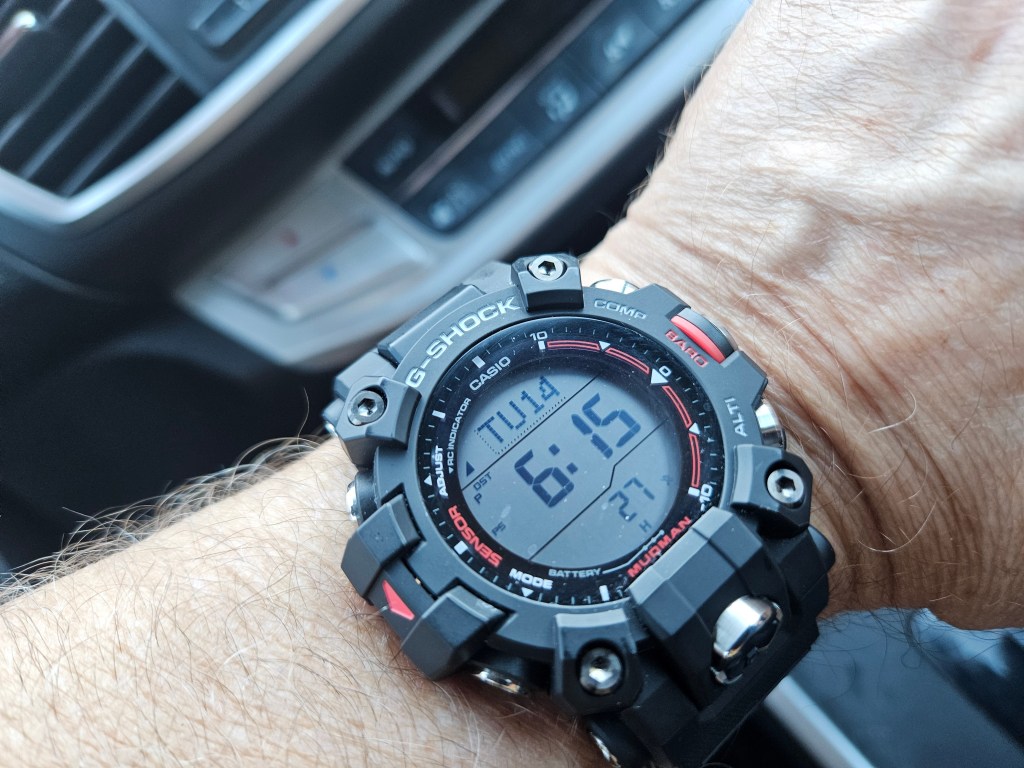
In his place stands a convert to G-Shock—not the entire circus, but a very specific order of monks: the Frogman, the Mudman, the Rescue. Resin instead of steel. Solar instead of ritual. Atomic time instead of romance. These watches don’t ask for admiration; they deliver accuracy and get out of the way. After them, the Seikos feel like cufflinks with pretentiousness.
I’m aware this confession offends the faithful. Mechanical devotion runs deep, and there’s a certain etiquette to pretending you still feel it. I don’t. The G-Shocks have recalibrated my wrist. They’ve made lightness feel honest and precision feel sufficient. The Seikos now read as formalwear—appropriate, occasionally necessary, but fundamentally performative. I’ll wear them when a formal event demands it, the way one wears a jacket in an expensive restaurant to satisfy a dress code no one quite believes in anymore.
Call it heresy if you like. I call it clarity. In my head I’m a collector; on my wrist, I’m a G-Shock guy.


Leave a Reply