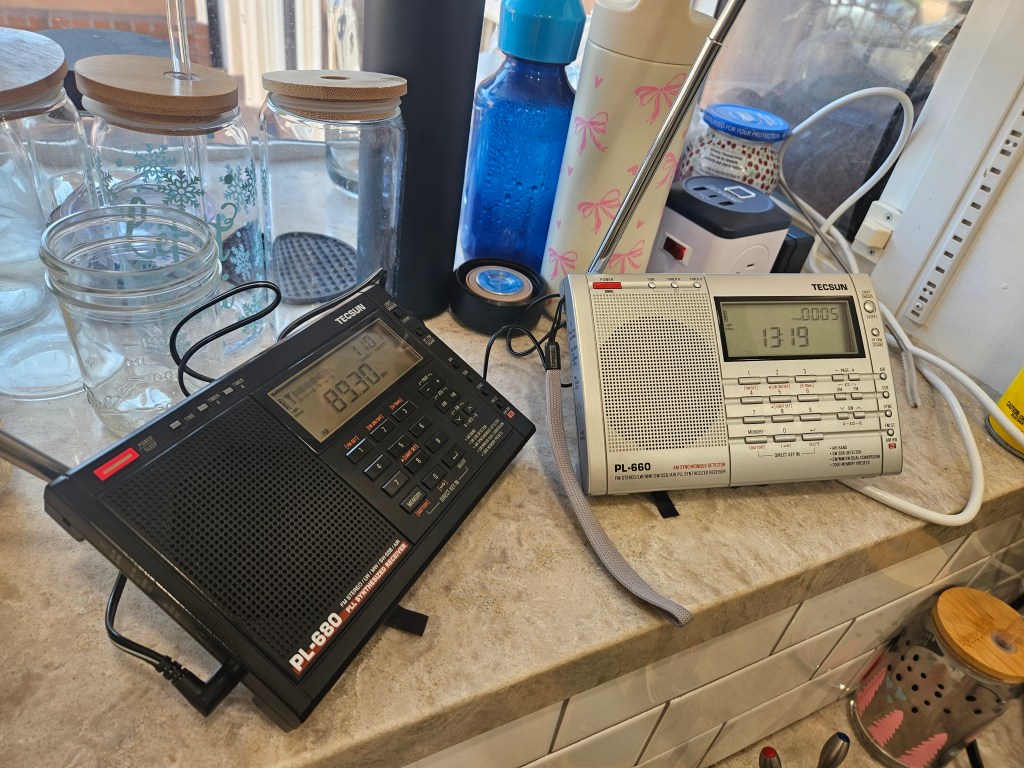
A couple of months ago, as the Los Angeles wildfires raged, I found myself glued to a radio for live reports. A thought struck me like a lightning bolt: I had missed the radio. This ancient relic had been eclipsed by streaming devices, which, over the past decade, had somehow become my personal cocoon—a space where I meticulously curated my music and podcasts like a hyper-intelligent hermit with a PhD in self-isolation. I was alone, yes, but at least I had the comforting hum of algorithmically chosen tunes to keep me company. Then I realized: this wasn’t comfort. This was madness in a cocoon. My little silo, built to keep out the noise of the world, was also keeping out everything else that made me feel connected. I was losing my grip on reality, like the woman in “The Yellow Wallpaper” who could only see the world through the eyes of her claustrophobic madness.
So, I did what any self-respecting, slightly paranoid adult would do: I bought a batch of high-performance radios, like the Tecsun PL-990, and I tuned back into the real world. I started listening to Larry Mantle’s voice again on LAist, to KJAZZ and KUSC—the classical music station that claims to be the most popular in the country. And after a few months of basking in their sonic embrace, I understood why KUSC is so beloved. It’s not just music; it’s a friend. The DJs don’t just announce the next piece; they drop in casual nuggets of composer trivia like old pals who just happen to know a lot about Bach’s temper. They are personal, conversational, and soothing, like a club of soundwave whisperers gently easing you into a state of calm with “your nightly lullaby” or music to “start your day.”
KUSC doesn’t just play classical music. It plays the role of a companion—your anti-anxiety, anti-depression, virtual hug in the form of a radio signal. These aren’t just voices on the air; they’re voices that make you feel like you’re not alone, that someone is there to guide you through the chaos of your day. It’s the kind of subtle emotional manipulation you don’t mind because it’s just so comforting. If radio is going to survive the onslaught of streaming, it could do worse than to study KUSC’s Proxy Friendship model. There’s a lesson in that calm, gentle routine that could help even the most chaotic station become a lifeline in a world that feels like it’s constantly spinning off its axis.
 Cinemorphosis
Leave a comment