At 63, I now divide my life into chapters—not by achievements or milestones, but by bone density, hormone decay, and the gradual hardening of the frontal cortex. Think of it as an anatomical calendar, where each page curls with protein shakes, pretension, and the occasional existential crisis.
Chapter One: The Barbara Eden Years.
Childhood wasn’t about innocence—it was about Cap’n Crunch. Bowls of it. Oceans of sweetened corn rubble. I dreamed not of firetrucks or baseball cards but of living inside Barbara Eden’s genie bottle—a plush, velvet-lined fever dream of satin pillows and cleavage. If Barbara Eden wasn’t beaming into my imagination, there was always Raquel Welch in fur bikinis or Barbara Hershey smoldering her way across a screen. This was hormonal awakening served with a side of sugar coma.
Chapter Two: The Strength Delusion.
By twelve, I was slamming Bob Hoffman’s bulk-up protein like it was communion wine. At Earl Warren Junior High, I became a Junior Olympic Weightlifter—a gladiator-in-training who wanted pecs like dinner plates and the gravitas of a Marvel origin story. This was the age of iron worship and adolescent mythology: I wasn’t building muscle—I was forging armor.
Chapter Three: The Intellectual Flex.
In my late teens, I realized I had all the social charm of a wet gym sock. So I went cerebral. I buried myself in Kafka, Nabokov, and classical piano, amassing a CD library of Beethoven and Chopin that could rival the Library of Congress. I worked in a wine shop where I learned to pronounce “Bordeaux” with a nasal twang and described Chablis as “crisp with notes of existential regret.” I didn’t just want to be smart—I wanted to be the human embodiment of a New Yorker cartoon.
Chapter Four: The Shop Foreman of My Own Dysfunction.
Marriage and employment hit like a cold bucket of reality. Suddenly, I had to function around other human beings. My inner demons—once delightfully antisocial—were now liabilities. I had to manage them like a foreman supervising a warehouse of unruly toddlers armed with crowbars. Turns out, no one wants to be married to a psychological landfill. I had to self-regulate. I had to evolve. This wasn’t personal growth; it was preventative maintenance, or what other people simply call adulthood.
Chapter Five: Diver Cosplay.
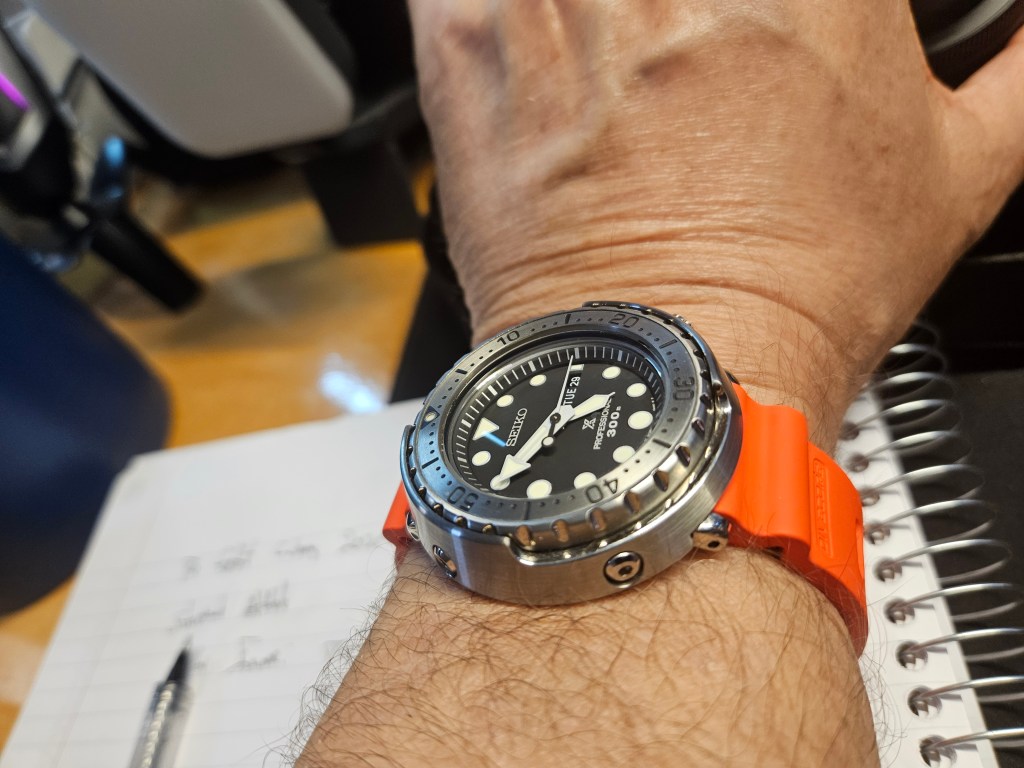
In my forties, I had just enough disposable income and suburban ennui to start collecting dive watches. Not just one or two. A flotilla. I wanted to be the hero of my own fantasy—a rugged diver-explorer-adventurer who braved Costco parking lots with a Seiko strapped to his wrist. This was less about telling time and more about clinging to the idea that I was still dangerous, or at least interesting. Spoiler: I was neither.
Chapter Six: The Age of Denial and Delusion.
These days, the watches still gleam, but now I’m staring down the barrel of cholesterol, visceral fat, and the slow betrayal of my joints. I swing kettlebells five days a week like a garage-dwelling warlock trying to ward off decay. I track my protein like a Wall Street analyst and greet each new biomarker like a hostile corporate audit. Am I aging gracefully? Hardly. I’m white-knuckling my way through geriatric resistance and calling it “wellness.” If I’m Adonis, then somewhere in the attic there’s a Dorian Gray portrait of my pancreas in open revolt.
I know what’s coming: Chapter Seven. The reckoning. The spiritual compost heap where I either make peace with my body’s betrayal or turn into a bitter relic that grunts through foam-rolling sessions like it’s trench warfare. It’ll be the chapter where I either ascend or unravel—or both.
And while our chapters differ in flavor, I suspect we’re all reading from the same book. Different fonts, same plot twist: we start with fantasies, build identities, fight the entropy, and eventually, we all kneel before the mirror and ask, “Was that it?”
 Cinemorphosis
Leave a comment