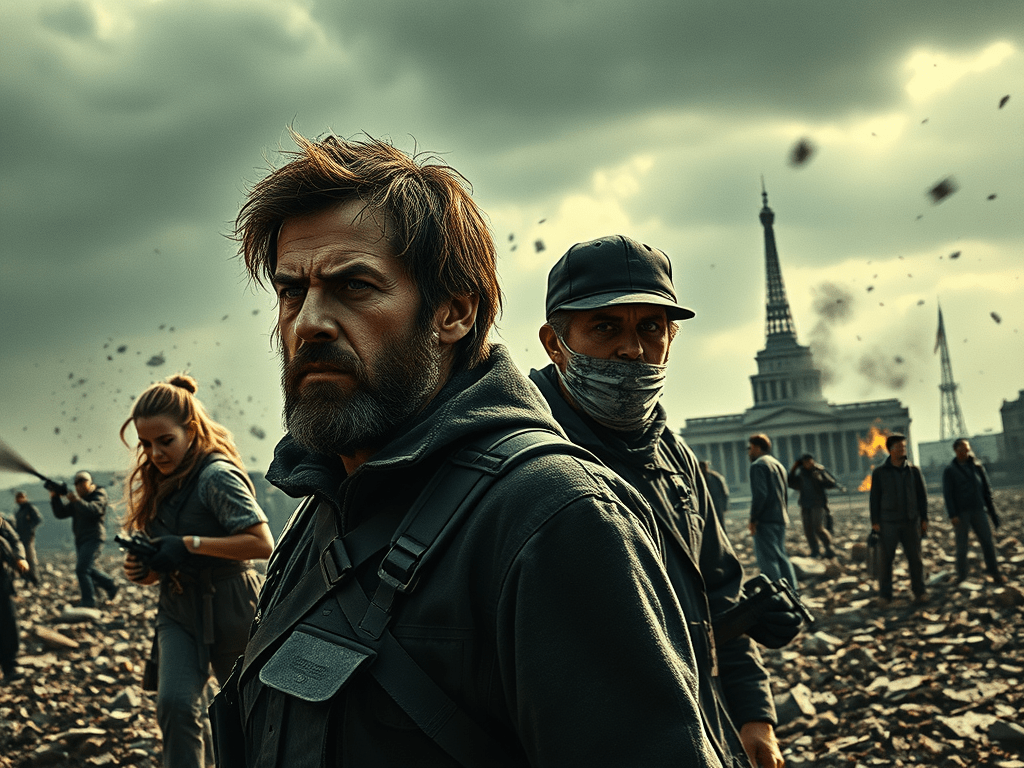
Both 28 Years Later and World War Z depict the spread of a deadly virus that triggers the collapse of global order. Yet beyond the zombies and infected hordes, these films offer striking metaphors for the chaos, distrust, and political polarization amplified by the COVID-19 pandemic.
In a well-structured, thesis-driven essay of 1,700 words, compare how each film explores the fragility of major institutions (governments, media, military, science), the spread of misinformation, and the psychological aftermath of global catastrophe. Your analysis should consider how each film allegorizes different aspects of pandemic culture: emotional volatility in 28 Years Later vs. bureaucratic inertia in World War Z.
You must address the following questions:
- How do these films portray public institutions’ response to crisis? What critiques are embedded in those portrayals?
- In what ways do these narratives reflect or exaggerate the real-world cultural and political divisions that were intensified by COVID-19?
- Do these films offer any hope or solutions, or are they fundamentally cynical about humanity’s ability to cooperate?
Use specific scenes, dialogue, and cinematic techniques from both films to support your claims. Outside sources are encouraged but not required.
Here are five sample thesis statements for the prompt comparing 28 Years Later and World War Z as post-COVID allegories, each with clear mapping components:
1. The Bureaucratic Collapse vs. Emotional Fallout Thesis
While World War Z depicts a slow-motion collapse of global institutions in the face of a virus that outpaces diplomacy and reason, 28 Years Later focuses on the emotional and ethical wreckage left behind, showing that the true horror of a pandemic lies not in the infection itself but in the unraveling of trust, memory, and social cohesion.
2. The Misinformation and Fear Contagion Thesis
Both 28 Years Later and World War Z serve as cultural autopsies of the COVID era, portraying not only viral outbreaks but the parallel contagion of misinformation, fear, and ideological extremism, revealing how modern pandemics are fought as much in echo chambers and comment threads as in laboratories.
3. The Institutional Failure and Survivalist Morality Thesis
In their depiction of pandemic response, World War Z shows the impotence of top-down globalism, while 28 Years Later offers a bottom-up view of localized anarchy and survivalist ethics, together illustrating a post-COVID cinematic shift from faith in institutions to tribal resilience and moral ambiguity.
4. The Pandemic as Psychological Reckoning Thesis
More than disaster films, 28 Years Later and World War Z use the aesthetics of horror and action to stage a psychological reckoning with the trauma of COVID—28 Years Later captures the rage and exhaustion of a public pushed to its emotional brink, while World War Z visualizes the logistical panic and fractured chain of authority that left millions globally disoriented and unmoored.
5. The Allegory of Polarization Thesis
28 Years Later and World War Z reflect the political polarization accelerated by COVID by framing survival as dependent not on unity but on division—on isolation, suspicion, and competing narratives of truth—suggesting that in a fractured society, pandemics don’t create monsters so much as they expose them.
 Cinemorphosis
Leave a comment