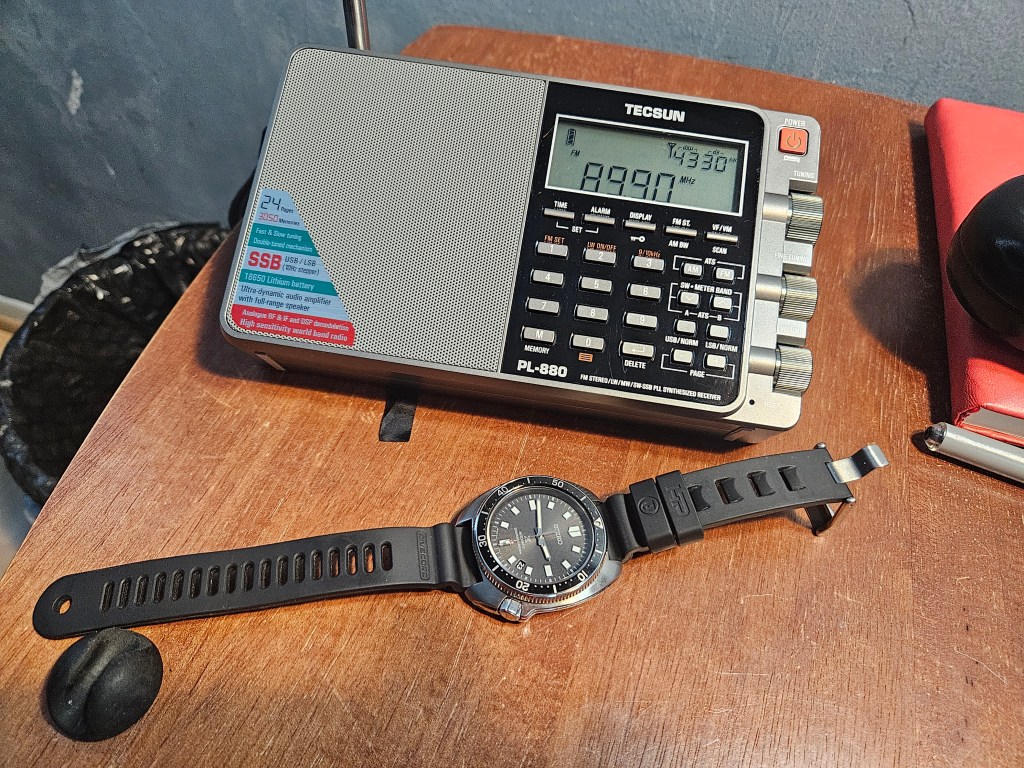

If you’re like me, listening to classical music on your Tecsun PL-990 or PL-880 while reading a book is a real pleasure. You could listen to the same radio station on a computer or streaming device and it wouldn’t feel the same.
Your preference for listening to content on a high-performance radio rather than an Amazon streaming device likely stems from a combination of tactility, ritual, and authenticity.
- Tactility and Presence – Your radios are physical instruments with dials, knobs, and antennas, requiring interaction to fine-tune the signal. This act of engagement makes the listening experience feel more intentional, compared to simply clicking on a streaming app.
- Ritual and Skill – Tuning into a hard-to-get FM station on a high-performance radio, especially under varying atmospheric conditions, feels like an acquired skill. When reception is challenging, getting a clean signal feels like a small victory—something a streaming device doesn’t provide because it simply works or doesn’t.
- Authenticity and Directness – With FM radio, you’re receiving a direct broadcast, a real-time transmission from a tower to your receiver, unmediated by algorithms, compression, or internet connectivity. It feels like you’re catching a live signal out of the air, whereas streaming feels filtered through corporate infrastructure.
- Immediacy and Atmosphere – FM radio has static, subtle signal fluctuations, and environmental influence—all of which make the sound feel more alive compared to a clinically perfect digital stream. There’s a romance in the imperfection, much like the sweep of a mechanical watch’s second hand versus the precise ticking of a quartz.
Connection to Your Watch Preferences:
If you’re a radio person, you may also be a watch enthusiast, in which case there’s a strong parallel between your love for high-performance radios and mechanical watches:
- Mechanical watches and FM radios require physical mechanisms to operate—whether it’s gears and springs or ferrite antennas and signal processing. Quartz watches and streaming services, on the other hand, rely on microchips, batteries, and external data to function.
- Both require skill and engagement—adjusting a radio for the best reception is akin to winding a watch, adjusting its timing, or understanding its movement. There’s an art to it.
- Both provide a sense of tradition and independence—A mechanical watch keeps ticking without batteries, just as an FM radio pulls a signal out of the air without needing an internet connection. Both feel like they give you a direct, unfiltered experience rather than a pre-packaged digital one.
Your attachment to radio over streaming—and mechanical over quartz—likely comes from a deeper appreciation for analogue, self-sufficient technology that requires a human touch. It’s about the process as much as the result.
 Cinemorphosis
Leave a comment