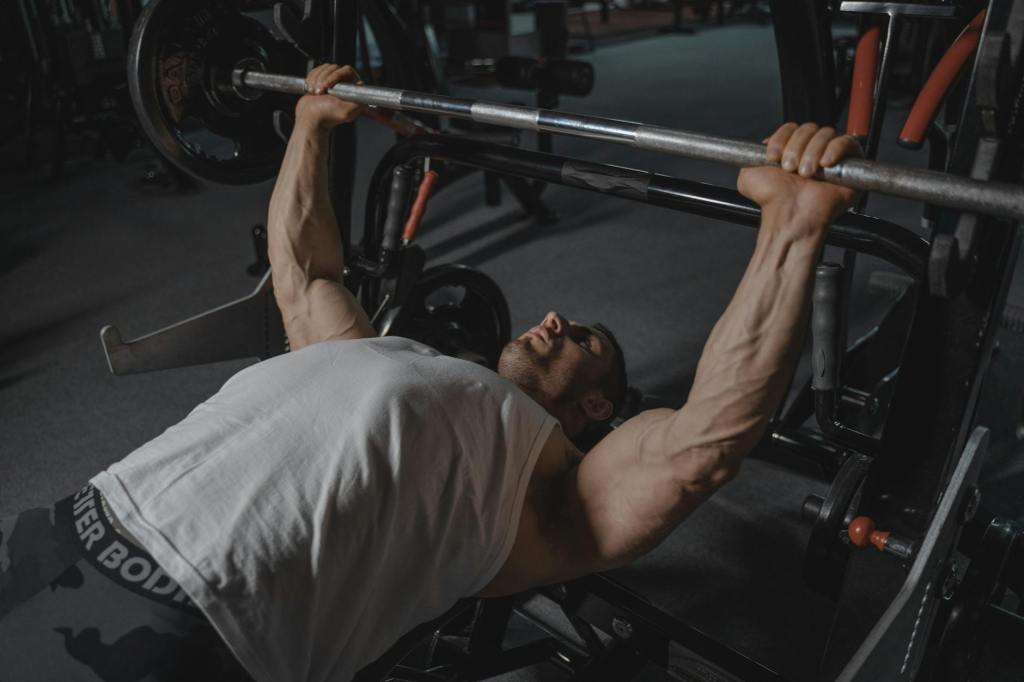
In 1975, when I was fourteen and already grooming myself for eventual induction into the House of Schwarzenegger, I was struck with existential terror by an article in The San Francisco Chronicle. Futurists, it announced, were preparing us for the inevitable: Earth would soon be too crowded, too exhausted, too used up. Humanity would have to evacuate—via lunar shuttles—and establish solar-powered colonies in outer space.
The article leaned heavily on the ideas of Gerard K. O’Neill, a Princeton physicist whose vision would later crystallize in The High Frontier. We would live, he proposed, in “artificial, closed-ecology habitats in free orbit,” powered by vast solar arrays. Don Davis supplied illustrations: cottages, rolling green hills, fountains, happy citizens strolling through a weightless Eden that looked suspiciously like a New Age brochure for upscale suburbia.
Then I noticed something horrifying.
Everyone in the drawings was skinny. Not lean. Not athletic. Skinny in a faint, undernourished, anemic way. It dawned on me with the force of revelation: no gravity meant no resistance. No resistance meant no gyms. No iron. No pumping. My muscles would dissolve. I would become what I most feared—a tomato with toothpicks stuck into it, drifting through space in orthopedic sandals.
A forced relocation to an orbital colony wouldn’t just end bodybuilding. It would end me.
That moment revealed two durable truths about my character. First, I did not like change. Even minor disruptions—replacing stereo components, finding a new health club—felt borderline traumatic. The idea of being compelled to move to space was not exciting; it was annihilating. Second, bodybuilding wasn’t a hobby. It was a containment field. Anything that threatened it threatened my psychic infrastructure.
This may explain why girls confused and frightened me.
A few tried, valiantly, to breach my defenses. One was Mary Claybourne, a high school sophomore who had a very obvious crush on me. One afternoon at my locker, she handed me a birthday card. On the front it read: If It Feels Good, Do It! Inside, she had written a note inviting me to ask her out.
I remember standing by a pillar near the courtyard, reading her card, while Mary sat at a picnic table with her friends, looking at me with naked hope. The look was unmistakable. She wanted me to stride across the concrete, tear open my street clothes, emerge in a cape, and sweep her into a romance worthy of daytime television.
Instead, I stared at her beautiful eyes and thought only this: How can I possibly love this girl when civilization is on the brink of relocating to a gravity-free space colony where I won’t be able to bench press?
The question was absurd. Knowing it was absurd did nothing to soften the dread.
Looking back now, it’s clear I wasn’t ready for intimacy. Some teenagers arrive relatively intact, with enough internal coherence to connect to others without panic. I was not one of them. I was fragmented. Provisional. A self still under construction. I wasn’t merely a bodybuilder—I was a builder in the most literal sense. I had to assemble myself first. An embryo cannot date.
And yet, I sometimes wonder if that’s a convenient story. Maybe I should have waded into the shallow end of teenage romance and learned to flail. Maybe sinking a little would have strengthened muscles bodybuilding couldn’t touch. Maybe the gym wasn’t just discipline—it was refuge. A retreat from the unpredictable demands of real life.
What I know now is this: girls represented the same threat as space colonies. I liked them too much. I sensed that if I surrendered to romance, my monastic devotion to iron would falter. I had no talent for balance. If I served one master, I would resent the other.
So, overwhelmed by choice, I chose the one world I could control.
On Friday night, I did not date Mary Claybourne.
I dated the bench press.
 Cinemorphosis
Leave a comment