Every watch obsessive has a Watch Origin Story. It doesn’t matter whether the story is accurate, exaggerated, or stitched together from selective memory. What matters is that it explains everything. It gives the madness a beginning, a cause, a moment when fate tapped you on the shoulder and said, This is who you are now.
The story functions as psychological ballast. Instead of admitting that the obsession grew slowly—from curiosity to habit to compulsion—the collector points to a single event: a grandfather’s heirloom, a childhood Casio, a promotion gift. A messy accumulation of impulses becomes a clean narrative arc. The hobby feels chosen, even destined, rather than accidental. That is the power of the Watch Origin Story: not historical accuracy, but emotional stability. It anchors the collector to a version of reality that makes the obsession feel meaningful instead of absurd.
My own origin story began not with romance, but with humiliation.
Years ago, I lost my classroom key at a university. This was not treated as a minor inconvenience. It was treated as a character defect.
I was summoned before an administrator whose expression suggested I had been caught plagiarizing Aristotle. She informed me—slowly, ceremonially—that the one thing a college instructor does not do is lose his key. Her eyes moved over me the way airport security studies a suitcase that hums. My carelessness, she implied, had finally exposed my true nature: a professional lightweight, a man one misplaced stapler away from total institutional collapse.
When the character autopsy concluded, I asked how one replaces a lost key.
“You don’t just get a replacement,” she said. “It’s a process.”
The word process fell like a prison door.
I was instructed to drive to a remote facility on the outer rim of campus known only as Plant-Ops. There I would locate a locksmith. I would give him my personal information and twenty dollars in cash. No check. No receipt. The arrangement sounded less like facilities management and more like a controlled exchange of classified documents.
“How will I know who he is?” I asked.
“You’ll know him,” she said. “He’s the only person there.”
Dismissed and morally diminished, I began the journey.
The pavement gave way to dirt, then rubble, then a surface best described as geological suggestion. My car rattled through a landscape of sun-bleached debris and slow-moving tumbleweeds. Buzzards circled with professional interest. Without a watch, I had no sense of time, direction, or civilization. I was no longer in Southern California. I had entered a pocket dimension where entropy was the dominant administrative philosophy.
At last, I reached Plant-Ops: a collapsing metal hangar that appeared to be losing its structural will to live.
Inside stood the locksmith.
He was small, skeletal, and deeply offended by my existence. Grease-stained apron. Glasses. A mustache clinging to his face like a final act of resistance. He glared at me while eating cold SpaghettiOs straight from the can, as if my arrival had interrupted a carefully scheduled moment of despair.
I apologized for losing the key. I apologized for arriving. I apologized, indirectly, for modern society.
He demanded twenty dollars in cash—up front—cut the key, and then leaned close to deliver a warning: he was retiring soon. His replacement, he said, was an idiot who could not make a proper key.
I believed him.
I fled.
And on the drive back, a realization settled over me: life is unpredictable, systems fail, competence is fragile, and the world contains entire zones where time, direction, and institutional mercy disappear.
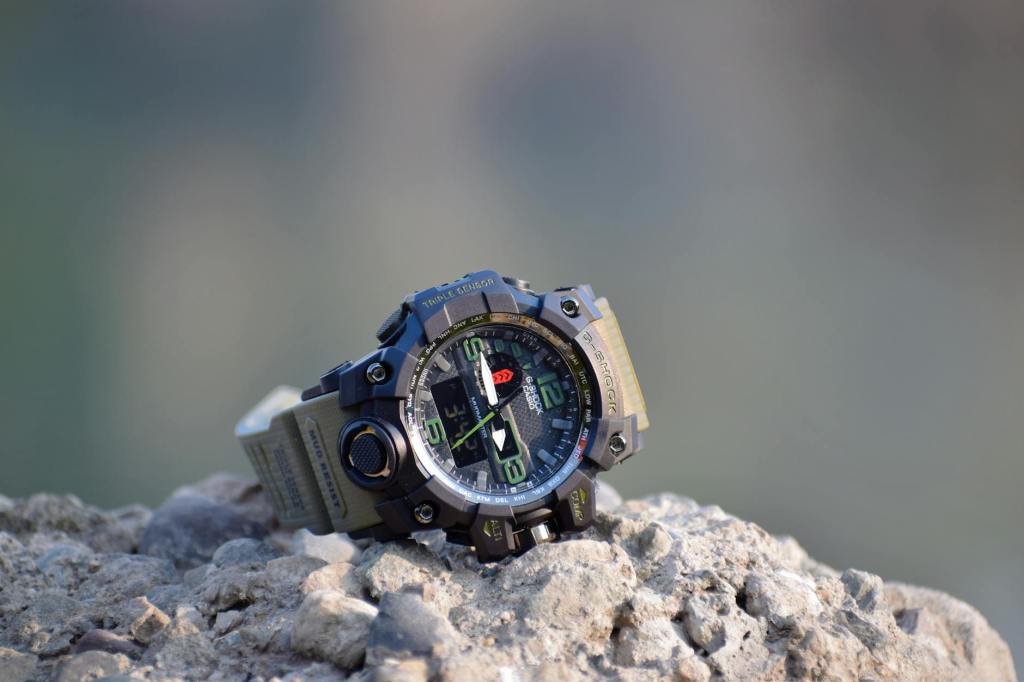
I drove straight to a watch store and bought a G-Shock Rangeman.
Compass. Altimeter. Barometer. Thermometer. Solar power. Tactical readiness.
Because the next time I entered the Plant-Ops Zone, I intended to know exactly where I was—and how long I had left.
That was the day I stopped wearing a watch.
And started wearing equipment.
 Cinemorphosis
Leave a comment