Working from home is supposed to be a privilege. Deliver the numbers, meet the deadlines, and you’re spared the slow death of freeway traffic and fluorescent lighting. Your company trusts you. Your productivity is tracked by a sleek little monitoring app that converts your workday into a tidy efficiency score.
Unfortunately, your desk shares airspace with the enemy.
The lacquered watch box sits there like a silent casino. You glance at the watch on your wrist. Nice. Solid choice. But what about the others? You lift the lid. A row of polished faces looks back at you—steel, lume, sapphire, promise. You’re supposed to be refining actuarial tables, tightening the language in your report, making sure the graphs don’t embarrass you in front of management.
Instead, you swap.
The new watch feels right. For three minutes.
Then doubt creeps in. Maybe the diver was too heavy. Maybe the field watch better matches your “work-from-home professional” persona. Swap again. Back to the box. Another selection. Another micro-adjustment to your identity. Meanwhile, the cursor blinks on an unfinished paragraph, and your productivity score quietly bleeds out.
You know the behavior is neurotic. You also know you’re waiting for a moment of revelation—for one watch to settle onto your wrist and announce, in a calm and authoritative voice, This is the one. The watches remain silent. So you keep rotating, chasing a verdict that never comes.
What you have is Chrono-Proximity Compulsion.
The disorder is simple: when your collection lives within eyesight, your brain enters a loop—check, compare, swap, repeat. Each decision feels minor, harmless, even rational. In aggregate, they shred your attention into chrome-plated confetti. The watches stop telling time and start interrupting it. Work hours dissolve into wrist experiments, each swap chasing a mythical state of alignment between object, mood, and self.
The cure is drastic but effective.
You remove the collection from the battlefield. Down to the basement it goes—sealed in a treasure trunk, out of sight, out of negotiation. No lineup. No options. No silent chorus asking to be chosen.
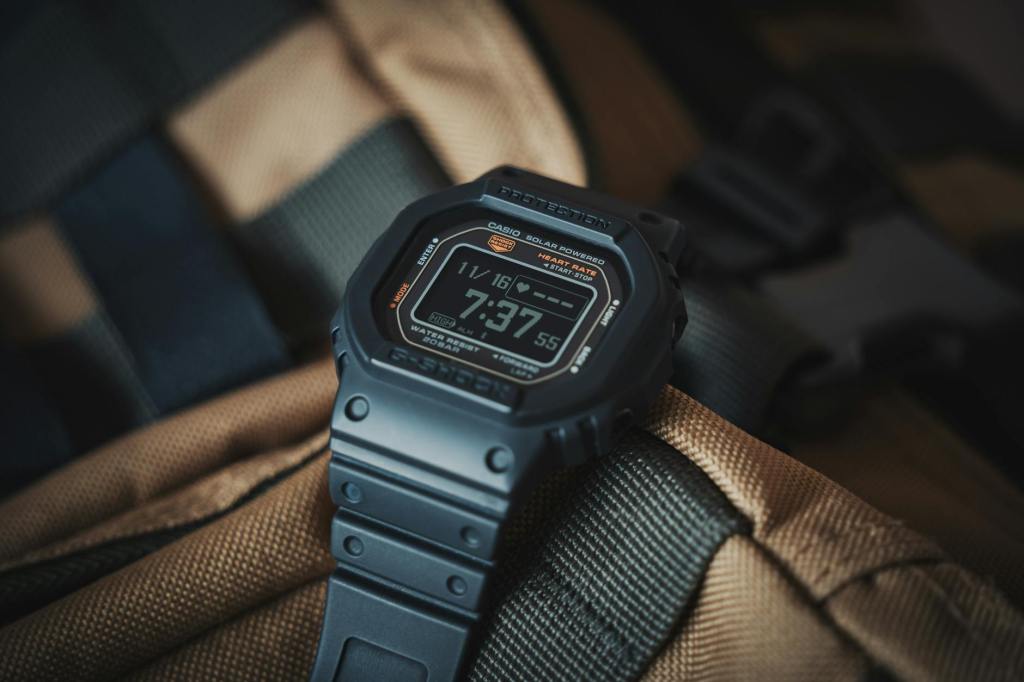
On your wrist remains the G-Shock GW5000.
It does not flatter you. It does not whisper about heritage, craftsmanship, or lifestyle. It does not ask to be admired or reconsidered. It delivers one message, blunt and unromantic: Get back to work.
For the first time all day, the cursor moves.
And the efficiency app finally has something to measure.
 Cinemorphosis
Leave a comment