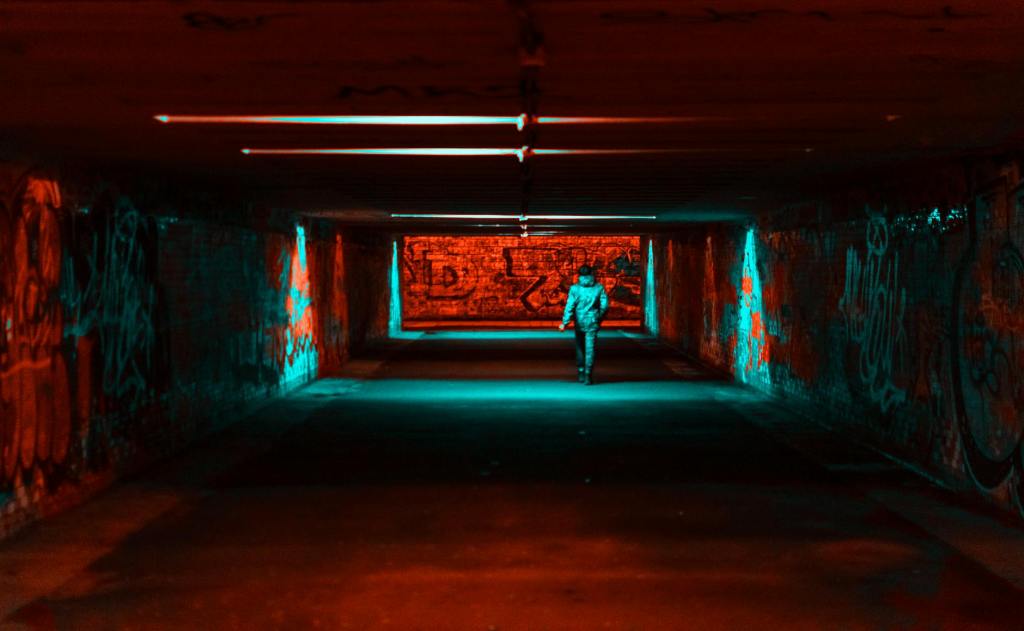
Has it occurred to you that you’re spending too much time alone—and that the solitude isn’t helping your watch hobby but slowly poisoning it? That the long, quiet hours with your collection have pushed you past enjoyment and into analysis, past appreciation and into fixation, until proportion itself has quietly slipped out the back door?
And has it occurred to you that the mental energy you pour into dial variations, strap pairings, and hypothetical upgrades might be better spent building something harder and far more valuable—an honest relationship with yourself, and real connection with the people who actually know your name?
These questions force a difficult reexamination of the word hobby.
A hobby is supposed to restore you. It should lower your blood pressure, widen your perspective, give you a small place in life where curiosity and pleasure coexist. But if you find yourself anxious, restless, endlessly tweaking, forever chasing a version of perfection that retreats the moment you approach it, then something has inverted.
You don’t have a hobby.
You have a dungeon.
And the uncomfortable truth is this: no one locked you inside. You walked in voluntarily because the dungeon offers something seductive—control, predictability, measurable outcomes. Relationships are messy. Self-knowledge is uncomfortable. Family and friendship require vulnerability. Watches, by contrast, sit quietly while you measure them.
So you remain underground, starving yourself of companionship and growth while laboring over configurations, rotating straps like a medieval scribe illuminating manuscripts no one will ever read. Your social life migrates to forums and comment sections, where you form parasocial alliances with other inmates who speak your language and share your captivity.
What you’re experiencing has a name: the Horological Isolation Loop.
It’s a self-reinforcing cycle. Too much solitude intensifies watch preoccupation. Increased preoccupation reduces engagement with real life. What begins as peaceful hobby time hardens into solitary rumination—comparison charts, resale calculations, endless scrolling, the low-grade anxiety of optimization. Gradually, the watch world doesn’t supplement your life.
It replaces it.
And here’s the quiet danger: you’re no longer choosing solitude for reflection. Solitude is choosing you.
At that point, the path forward divides.
You can maintain the status quo—another unboxing, another strap experiment, another night spent refining a system that never quite feels finished.
Or you can design an exit strategy: fewer hours with the watches, more hours with people; less optimization, more living; less wrist analysis, more life experience.
The watches will survive either way.
The question is whether you will.
 Cinemorphosis
Leave a comment