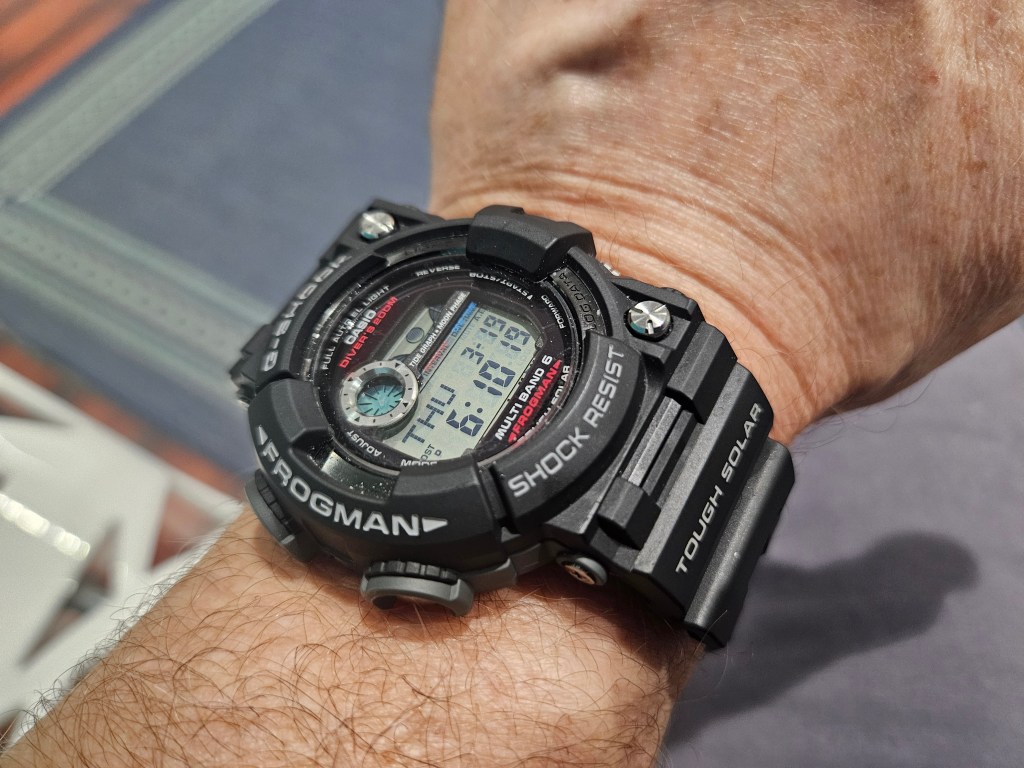
More than a decade ago, a seasoned watch obsessive told me something I dismissed at the time: you don’t hunt a Holy Grail—you stumble into it. It doesn’t arrive with fireworks or a four-figure invoice. It slips onto your wrist quietly, and then, without asking permission, it takes over. Everything else starts to feel like a costume. You try to rotate, you try to be fair, you give the others their appointed wrist time—but you feel a faint resentment, like you’re cheating on something that actually fits. Eventually the charade collapses. You stop negotiating. You wear the same watch because it works, and because you no longer have the patience for anything that doesn’t.
When that happens, the chronophage loses its grip. The endless scroll of “must-haves,” the dopamine carnival of releases and reviews, the debates over marginal gains—all of it begins to look like noise generated by people who haven’t found their watch yet. You close the tabs. You ignore the hype. You retire from the rotation economy. Let the others keep spinning the wheel. You’re done. You’ve chosen, or more accurately, you’ve been chosen.
If you had told me a year ago that a black resin digital watch would be the one to do this, I would have laughed you out of the room. My tastes, I thought, were too refined, too anchored in steel and mechanical romance to be hijacked by a plastic instrument. And yet, a month ago, the G-Shock Frogman GWF-1000 landed on my wrist and quietly began rewriting my habits. It doesn’t leave. The only thing that occasionally displaces it is another G-Shock—the GW-7900—which, if I didn’t have the Frogman, would be my undisputed daily driver.
Of course, I know the trap. The honeymoon phase has seduced better men than me. Give it six months, I tell myself. Let time do its work. If the Frogman is still there—if the others still feel like substitutes—then this isn’t infatuation. It’s alignment.
The grail, it turns out, is not the watch you chase. It’s the one that makes you stop.
 Cinemorphosis
Leave a comment