When I was five years old and living at the Royal Lanai apartments in San Jose, one of my favorite television shows was Daniel Boone. I was fascinated by Boone’s coonskin cap, especially the raccoon tail dangling from the back. To my young mind, it was the height of frontier elegance. Any man bold enough to wear a dead raccoon as a fashion accessory had to possess uncommon wisdom and imagination. Surely such a man knew secrets unavailable to ordinary people.
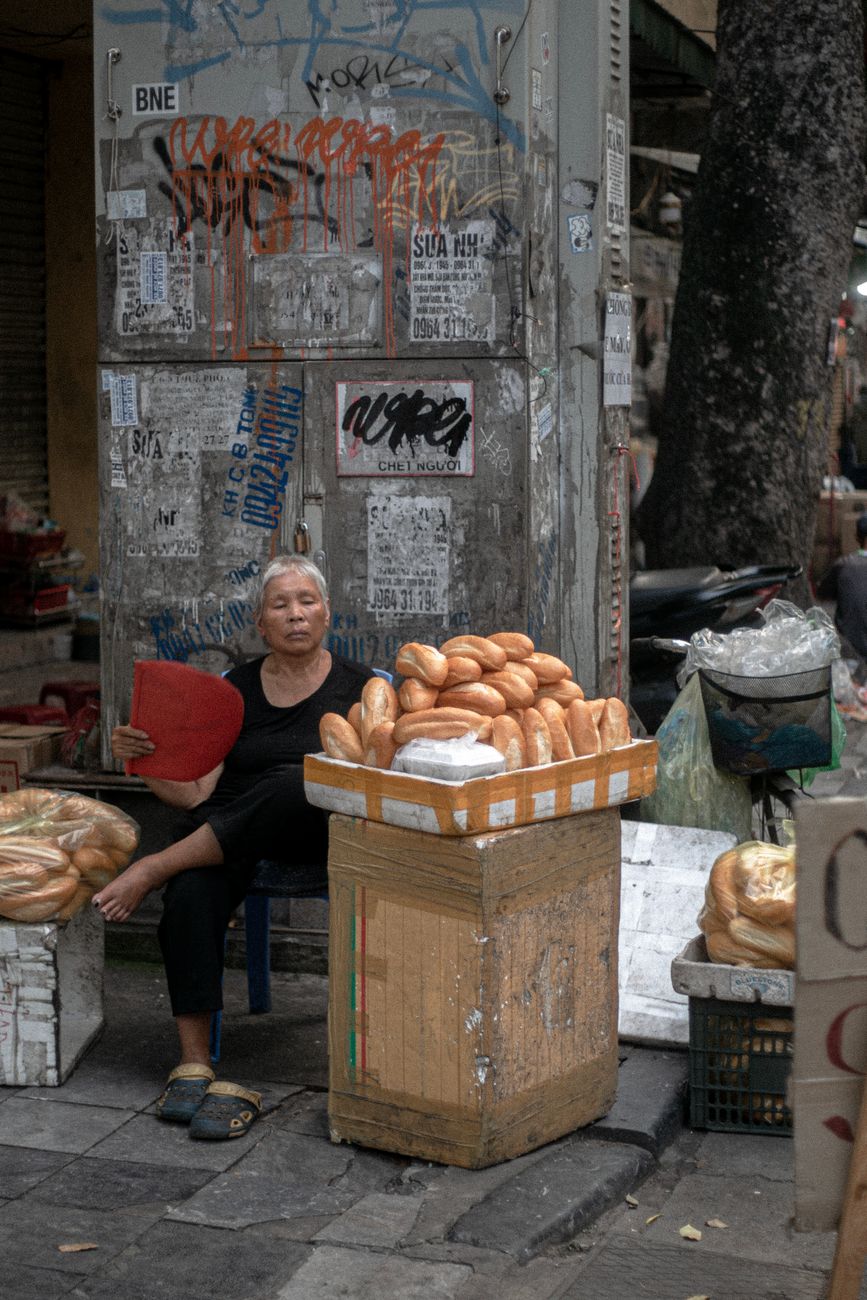
One episode lodged itself permanently in my memory. In it, a destitute man lived alone in the wilderness, gaunt with hunger and desperation. A passerby took pity on him and handed him a loaf of bread. The starving man stood beneath a tree and immediately tore into it. He chewed with the ferocity of a man rescued from the edge of extinction. As he ate, he repeated a single word over and over:
“Bread.”
“Bread.”
“Bread.”
The word became a prayer, a hymn, a declaration of gratitude. Watching him, I was struck by a revelation that only a child could find astonishing: this man’s happiness came from something as simple as a loaf of bread.
The next day, life provided me with an opportunity for field research.
My mother and I had gone shopping at a local plaza. Returning to the car, we loaded our groceries into the back seat, including a fresh loaf of sourdough bread. Before we left, my mother remembered seeing some white divinity and black licorice in a candy store and decided to run back inside.
“I’ll wait in the car,” I said.
The moment she disappeared, I launched my experiment.
I reached into the grocery bag, tore off a chunk of sourdough, and stuffed it into my mouth. Then I began repeating the sacred word from Daniel Boone.
“Bread.”
Another bite.
“Bread.”
Another bite.
“Bread.”
I was trying to recreate the miracle I had witnessed on television. I wanted to understand what it felt like to be so hungry that a loaf of bread seemed like heaven itself. I wanted to know what true satisfaction felt like.
Nearly sixty years later, I still remember that moment.
Something about the image continues to haunt me: the idea of profound hunger meeting simple nourishment. No luxury. No extravagance. No abundance. Just an honest need met by an honest gift.
The proposition remains irresistible.
The older I get, the more I understand that the episode was never really about bread.
It was about hunger.
The famous biblical phrase tells us that “man does not live by bread alone.” Physical hunger is only one of our appetites. Even when our stomachs are full, our mortgages paid, our homes comfortable, and our refrigerators stocked, we remain restless creatures. We hunger for purpose. We hunger for belonging. We hunger for love, friendship, meaning, beauty, and transcendence.
We hunger for forms of bread that cannot be purchased at a bakery.
Music is one of those forms.
I think of “There Is a Light That Never Goes Out,“ one of The Smiths’ most beautiful songs. The narrator is starving for connection. Home does not feel like home. It feels confining, lonely, and emotionally barren. He longs to escape into the world and find kindred souls who possess the warmth and vitality missing from his life. He dreams of a surrogate family, a tribe of fellow travelers who might finally make him feel understood.
He does not know where such people are.
He only knows he needs them.
His longing saturates every line of the song. Beneath the wit and melancholy is a desperate appetite for belonging. He is emotionally famished.
In that sense, he is not so different from the starving man beneath the tree in Daniel Boone.
Both are hungry.
Both are waiting.
Both are searching for the thing that will finally satisfy them.
The difference is that one seeks a loaf of bread while the other seeks companionship, love, and meaning.
Yet the emotional experience is remarkably similar.
A starving man dreams of bread.
A lonely man dreams of friendship.
And when either finally receives what he has been seeking, the response is the same. Gratitude. Relief. Fullness.
For a brief and precious moment, the hunger stops.
Solitude is another form of hunger.
My mother, who struggled with clinical depression throughout her life, would sometimes disappear from the world for days at a time. She would retreat to her bedroom, pull the covers around herself, and consume novels with the same urgency that the starving man in Daniel Boone consumed his loaf of bread. Page after page disappeared into her imagination. The stories fed something that ordinary life could not. Friends would call. Invitations would come and go. My mother often chose the company of books instead. She possessed a strong reclusive streak.
I inherited some of it.
At times, I feel the same longing for friendship and belonging that animates “There Is a Light That Never Goes Out.” I understand the desire to find kindred spirits and become part of something larger than oneself. Yet I also understand the opposite impulse. Like my mother, there are days when I want nothing more than to be left alone with my podcasts, my kettlebell workouts, and my piano compositions. A quiet room can feel as nourishing as a crowded gathering. Solitude, when freely chosen, can be its own loaf of bread.
Hunger takes many forms. Some people ache for companionship. Others ache for silence. Most of us spend our lives moving back and forth between the two, never fully satisfied by either and always searching for the proper measure of both.
Perhaps religious hunger is the greatest hunger of all.
I experienced it while watching the 1978 Superman movie. I was a teenage bodybuilder then, full of grandiose dreams and the conviction that I was destined for some undefined greatness. Sitting alone in a dark theater, I watched Superman’s father prepare his son for his mission on Earth. He explained that humanity was a lost and fallen people, wandering in confusion and ignorance. Then came the line that pierced me:
“They only lack the light to show the way.”
As those words echoed through the theater, something happened to me. A wave of emotion surged through my body. It felt as if a bright light had been switched on somewhere deep inside me. I began to shake. Tears streamed down my face. I was overwhelmed by a feeling I could neither explain nor resist.
What moved me was not Superman’s strength. It was his purpose.
For the first time, I recognized a hunger that had been living inside me all along. I wanted to be a light in the world. I wanted my life to matter. I wanted to help people find their way through confusion, loneliness, and despair. I had no idea how such a calling could be fulfilled. I only knew that the desire burned within me with an intensity I had never experienced before.
Looking back, I think I was discovering another form of bread.
Not the bread that fills the stomach, but the bread that nourishes the soul.
Perhaps this is what people mean by the bread of life: the longing to serve something greater than oneself, to become useful to others, and in that act of service to discover who one truly is. The deepest hunger is not merely to consume. It is to contribute. It is to find a purpose worthy of devotion and, in pursuing it, become fully alive.

 Cinemorphosis
Leave a comment