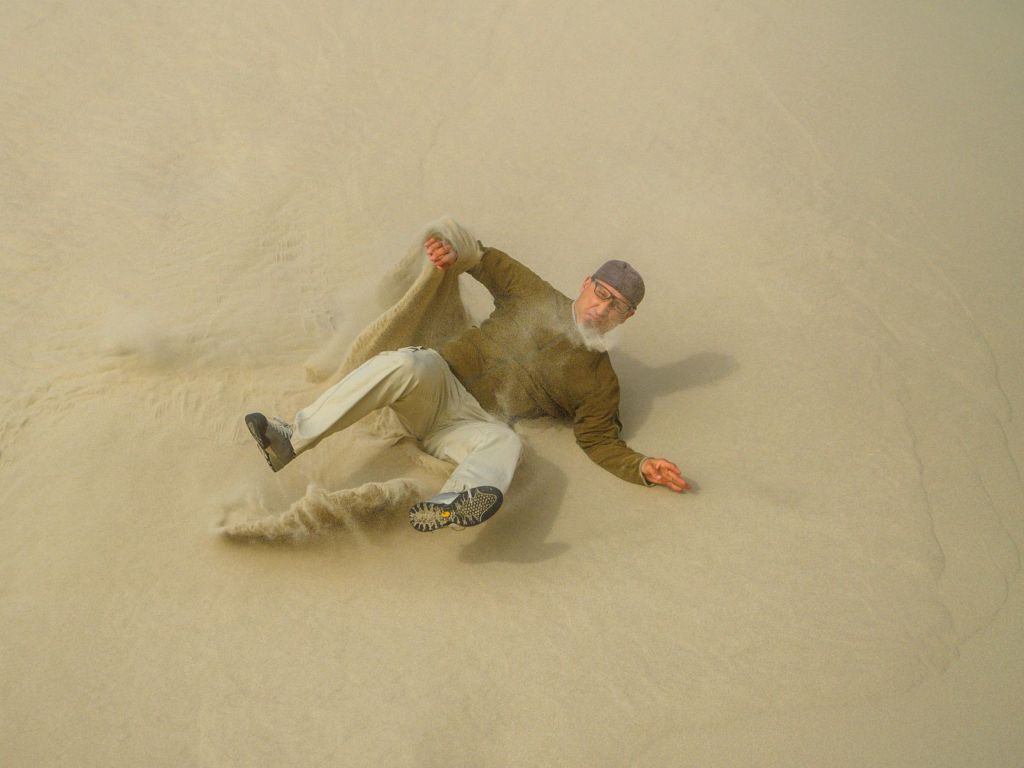
Many years ago, my wife explained something about men that has stayed with me: we are suckers for violent conversions.
She grew up in a church where people regularly stood before the congregation and delivered their testimonies. These were rarely modest affairs. Nobody announced that over several years he had gradually become less selfish and slightly easier to live with. That would hardly justify taking the microphone.
No, there had to be an abyss.
The man had been drinking, drugging, fighting, fornicating, worshipping money, driving ninety miles an hour toward eternal damnation—and then, at 3:17 one Tuesday morning, Jesus grabbed the steering wheel.
My wife would roll her eyes.
She suspected that some of these testimonies contained less piety than theater. Ostensibly, the man was glorifying God. Curiously, however, God had given him forty-five minutes of stage time to explain what an exceptionally fascinating sinner he had been.
Call it Damascus Syndrome: the male longing for a catastrophic encounter that divides life into a disgraced Before and a redeemed After.
Men seem particularly susceptible to it. We don’t want gradual improvement. We don’t want to become five percent more patient every year. We want an earthquake. We want the old self dragged from the wreckage and a new self emerging through the smoke.
In other words, we want an origin story.
Before Peter Parker gets bitten by the spider and Bruce Wayne enters the Batcave, Saul of Tarsus is riding toward Damascus with murder in his heart.
Saul isn’t searching for truth. He believes he already owns it. He has his convictions, his mission, his enemies. Then comes the light.
A vision. A voice.
Suddenly the man who knows exactly where he is going cannot see the road.
Saul is left blind, helpless, and disoriented. For three days he sits in darkness while a greater darkness collapses inside him. His old identity has suffered an internal earthquake. The load-bearing walls have cracked. The building has been condemned.
Then a stranger arrives claiming to have been sent by the Lord.
More unsettling still, Saul will become Paul.
This new identity feels less like self-actualization than an eviction notice. Saul wants his old certainties back. His old mission. His old enemies. He doesn’t want transformation. He wants things returned to factory settings.
But Damascus doesn’t negotiate.
The light has hijacked his life.
This is the part of the story that fascinates me and makes my wife suspicious. Men love the idea that somewhere out there awaits an event sufficiently violent to blast through the accumulated concrete of the false self. We don’t merely want to change. We want to be struck down, preferably with witnesses.
A quiet epiphany while loading the dishwasher lacks production value.
Damascus Syndrome demands thunder.
Emmanuel Carrère captures the deeper paradox of Paul’s conversion in The Kingdom: “Paul was no longer himself; he was finally himself.”
That sentence overturns our comforting modern idea of authenticity. We usually imagine the authentic self as something we express: Follow your instincts. Find your voice. Be true to yourself. Peel away society’s expectations until the magnificent original You finally appears.
Damascus proposes something considerably more terrifying.
What if the self you are determined to express is precisely the self that has to go?
What if your deepest identity lies underneath the personality, convictions, ambitions, resentments, appetites, and certainties you have spent decades defending?
Then becoming yourself requires losing yourself.
This possibility gives Damascus Syndrome its genuine spiritual power. It also gives men an irresistible opportunity for grandiosity. After all, once you’ve been annihilated and reborn, somebody needs to hear about it.
Preferably everybody.
Preferably in hardcover.
My wife remains skeptical. She has heard too many testimonies, watched too many men turn repentance into performance art, seen too many ordinary psychological crises inflated into The Dark Night of the Soul: My Journey from Darkness into Light.
Perhaps she has a point.
Maybe men can’t tolerate the thought that maturity might happen quietly—that becoming a better person could involve thousands of small corrections made without applause, lightning bolts, blindness, voices from heaven, or a publishing contract.
We want Damascus.
We want the spider bite.
We want the Batcave.
We want our old identity blown to pieces so that we can stagger from the crater transformed, finally ourselves, with one additional blessing from God:
a hell of a story.
 Cinemorphosis
Leave a comment