Once I had done my due diligence and concluded that I was emotionally and financially ready to retire, I began telling people: my wife, my children, friends, family, colleagues. This seemed like a straightforward administrative matter. I had made a decision. Now I was informing the relevant parties.
I was wrong.
I had stumbled upon what I call the Performative Retirement Principle: announcing your retirement does not merely describe a future event. It begins the event. The word itself changes your status. Before you say it, you are a person thinking about retirement. You can entertain the idea, examine pension statements, run calculations, meet with financial advisers, and imagine leisurely Tuesday mornings without fundamentally altering your identity. Retirement remains hypothetical, one possibility among many.
Then you say it.
Retirement.
The effect is surprisingly close to Billy Batson screaming “SHAZAM!” One moment he is an ordinary boy; the next, lightning strikes and he occupies a different body. Retirement lacks the cape and thunderbolt, unfortunately, but the metaphysical principle is much the same. You utter the word and undergo a transformation.
You are no longer merely a professor. You are a professor who is retiring.
This distinction sounds trivial until you experience it. Once the announcement has been made, retirement begins colonizing your consciousness. Meetings acquire a strange archaeological quality. You sit through discussions of assessment procedures and curriculum revisions with the detached fascination of someone touring the ruins of Pompeii. Colleagues complain about problems that once irritated you, and you realize with a small electrical thrill that many of these problems will soon belong entirely to them.
Someone starts explaining a new administrative initiative scheduled to roll out three years from now, and you experience the exquisite pleasure of realizing that this particular catastrophe will occur without you.
The Performative Retirement Principle changes your relationship not only to work but to time. The future, once an enormous warehouse into which you casually tossed plans, begins to acquire walls. You have entered the strange territory of countdowns: last fall semester, last spring semester, last opening-day meeting, last committee assignment, last student who submits a 1,700-word essay consisting largely of AI-generated fog and then looks wounded when you suggest that perhaps he should participate in the writing of it.
But the transformation is not entirely pleasurable.
I first uttered the word retirement on August 26, 2026, and almost immediately felt older.
Nothing had physically changed. My cells had not received an email from Human Resources. My knees did not buckle. My hair did not turn white during lunch. Yet something had shifted. By announcing retirement, I had publicly acknowledged a fact that had previously remained pleasantly abstract: my career had an ending.
More disturbing, so did everything else.
That is the hidden power of the word. Retirement appears to be about employment, but underneath it lurks mortality. When you are thirty-five, changing jobs suggests expansion. When you are sixty-five, leaving your career carries a different resonance. Nobody has to say anything. The arithmetic is sitting quietly in the room.
My world suddenly felt smaller.
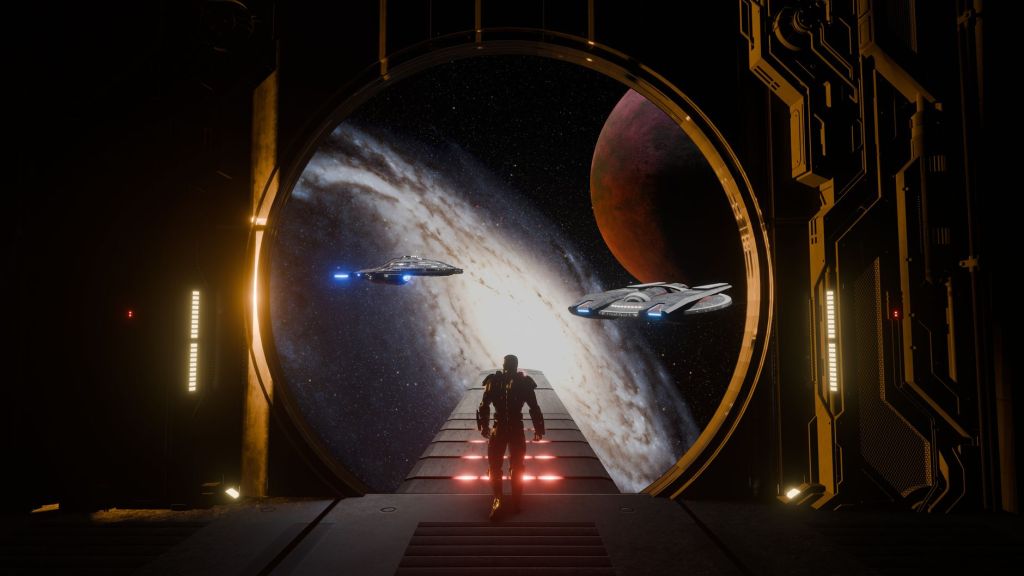
The sensation reminded me of a scene from Battlestar Galactica in which a traitor is sealed behind glass before being expelled through an airlock. She pleads. The others watch. The machinery proceeds with terrible calm. Nobody is screaming. Nobody needs to. The transparent barrier has already divided the universe into two populations: those remaining aboard the ship and the person who is leaving it.
A ritual exile.
Aging can feel like that.
The younger people remain inside the warm spacecraft of seemingly endless tomorrows. They discuss five-year plans, career pivots, promotions, new houses, new babies, new projects. Their futures stretch before them like an interstate disappearing into desert sunlight. You remember inhabiting that world. Indeed, some stubborn portion of your consciousness still believes you belong there.
Then the glass descends.
Not because anyone dislikes you. Not because society has declared you useless. The barrier is more unsettling precisely because nobody installed it. Time did.
You tap the glass.
Hello? I’m still here.
And you are. You may be healthy, energetic, curious, productive, perhaps more intellectually alive than you were twenty years earlier. Yet you have glimpsed something the younger travelers cannot fully see because youth requires a certain optical illusion. They know intellectually that life is finite, just as they know Saturn has rings. The information is accurate but emotionally remote.
Retirement brings the horizon closer.
For a moment, you may want to take the word back. Perhaps you announced it too soon. Perhaps you should have kept retirement locked inside your head for another six months, privately admiring it like contraband. You might imagine stuffing the genie back into the bottle.
Too late, my friend.
You said it.
The word has entered circulation. Your wife knows. Your children know. Your colleagues know. Your friends know. Somewhere, forms are being completed. Social Security has your name, telephone number, address, and enough numerical information to reconstruct you after a plane crash. The bureaucratic machinery has begun to turn.
More important, you know.
That is the irreversible part.
The Performative Retirement Principle therefore contains both liberation and terror. Saying the word frees you from the illusion that your career must continue indefinitely, but it also strips away another illusion: that time itself is indefinitely renewable.
You have crossed the Retirement Rubicon.
There is dignity, however, in refusing to spend the rest of the journey clawing at the glass. The shrinking horizon can clarify as much as it frightens. When time appears limitless, it is easy to squander enormous quantities of it accumulating objects, nursing grievances, winning arguments nobody remembers, and worrying about matters that will eventually seem as consequential as the seating arrangement at a faculty meeting in 1997.
A finite horizon imposes editorial discipline.
What stays?
Family. Friendship. Reading. Writing. Teaching what remains worth teaching. Making things. Helping younger people without pretending they particularly want your wisdom. Paying attention. Remaining curious. Being useful.
Perhaps that is the final stage of the Performative Retirement Principle. At first, saying “I am retiring” feels like announcing your departure from the world. Gradually, however, you realize that you are departing only from one arrangement of the world.
The cockpit of youth is sealed. No reentry.
Fine.
There are other rooms on the ship.


Leave a Reply