Category: Confessions

  • The Next One Is Always the One

    The Next One Is Always the One

    About eight years ago, I experienced the horological equivalent of speed dating. Two watches arrived on the same afternoon: a Seiko Sumo SBDC001 with a black dial and sapphire, and the sleeker SBDC051—a reissue of the classic 62MAS. I placed them side by side like two contestants in a Darwinian experiment, then strapped each one on as if I were auditioning them for the role of “forever watch.”

    It wasn’t even close.

    The 051 had the refinement and wrist presence of a watch that knew it belonged. Crisp finishing. Perfect proportions. Lume that could guide ships through fog. The Sumo? It felt cheap. It wasn’t worth half of the 051. I sold it before dinner. Brutal, but deserved.

    Fast-forward eight years. I’m hunting again—not for a grail, but for something that will sing when paired with my beloved orange Divecore strap, the one accessory that unlocks my inner Watch Beast. Naturally, I thought about giving the Sumo a redemption arc—maybe the gray-wave dial SBDC177? But my instincts flared. Once a dud, always a dud?

    Then I spotted the polygonal Seiko SBDC203 (SPB483), aka the “Coastline,” and something clicked. This one looks like it could go toe-to-toe with the 051. Sharp lines, killer specs, and the kind of tactile satisfaction you only get when Seiko decides to actually try.

    Two closing thoughts:

    First, nothing has made me feel more bonded to my watch obsession than the orange Divecore strap. It’s not just a strap—it’s a mood, an identity, a wrist-based mission statement.

    Second, I’ve come to believe the real addiction isn’t the watches. It’s the brain hijack you constantly crave. The way your brain lights up when The Next Thing to Get starts coming into focus. That little thrill of clarity when you think, Yes, this is the one. It’s the same buzz I get from customizing a Camry XSE in Heavy Metal Gray on Fletcher Toyota’s website and seeing it listed for “only” $38K—a car I may or may not buy but already love as if it’s parked in my soul’s garage.

    Humans are a deranged species. We crave imaginary ownership like it’s the secret to inner peace.

  • The Wind Stole My Midterm

    The Wind Stole My Midterm

    Last night I dreamed I was co-teaching a college course on health and mixed martial arts with Eliot—the bearded jazz musician who moonlights as a Trader Joe’s clerk. He was fired up like a preacher at a tent revival. I, on the other hand, had the enthusiasm of a dogwalker who’s just spotted a fresh pile and no bag.

    Eliot, bless his plaid soul, had prepped a morning exam for his students—neatly typed, stapled, and probably color-coded. Meanwhile, I forgot I was even supposed to give a test. My lectures were improvised jazz solos, long on flair and short on structure. I’d wander into class and riff about cholesterol, Muay Thai, or the history of granola, depending on my mood or what I’d eaten for breakfast.

    But here’s the kicker—I had better material. Buried under the kitchen of my imaginary mansion was a secret archive: white binders filled with decades of syllabi, obscure readings, quizzes, interviews, and errant genius. I never used them. Too lazy. Too proud. Too me.

    Eliot, the eager grasshopper, somehow discovered the hidden staircase that led to the front porch—don’t ask how dream architecture works—and climbed it with evangelical zeal. I watched from my perch in a bathrobe, coffee in hand, while he scaled those steps like a man training for the Tour de France. When he reached the door, breathless and bright-eyed, he begged for the archive.

    So I gave it to him—several white binders, edges fraying like the conscience of a plagiarist. He held them like sacred scrolls, eyes gleaming with the same reverence I once had before tenure made me soft and cynical. I felt a flicker of gratitude. At least someone would use them. At least the work would live on.

    Then came the twist.

    He informed me, with the officious glee of a parking enforcer, that according to some obscure clause in the college handbook, I’d have to sit for his early-morning exam to renew my credential. Me—the man who had literally written the test’s DNA. I considered studying, briefly. Then I took a nap instead.

    The exam was held in the middle of a chaotic street fair, somewhere between a kettle corn booth and a band playing off-key Fleetwood Mac covers. Wind tore through the papers like it was auditioning for a disaster movie. Test pages flew like startled pigeons, and students chased them in panic. It was academic absurdism, pure and uncut.

    And me? I was at peace. I knew—somehow, with prophetic clarity—that there would be no consequences. That the wind, the noise, the anarchy, would camouflage my ignorance. Eliot’s students would struggle. I’d bluff. The test would become performance art, and no one would remember the score.

    What separated me from Eliot wasn’t intelligence or experience. It was weariness. He was still playing to win. I was waiting for the buzzer. He taught with the fire of the newly converted. I taught like a man allergic to rubrics and enthusiasm. He saw a future. I saw a pension.

    And maybe, in that dream, I realized I had already started to retire—from effort, from purpose, from caring about the difference between good teaching and showing up with anecdotes and gumption. Eliot wanted to be me. I wanted to be gone.

  • Everyone Has an Origin Story. Here Is Mine

    Everyone Has an Origin Story. Here Is Mine

    The Road Trip That Made You Possible

    Everyone has an origin story. You are no exception. Yours begins with your father. Without your father’s sheer audacity and competitive determination, you wouldn’t even be here today. Long before you were a glint in his eye, your father was locked in a battle of epic proportions—an all-out, no-holds-barred contest for the affections of your eighteen-year-old mother. And this wasn’t just any competition. His rival? None other than John Shalikashvili, future United States General and Chairman of the Joint Chiefs of Staff. Their battlefield? The smoky, beer-soaked bar scene of Anchorage, where the stakes were higher than a highball glass during happy hour.

    Their duel for your future mother’s heart took a brief Christmas ceasefire when Shalikashvili retreated to his tactical command center in Peoria, Illinois, while your father returned to Hollywood, Florida, to soak up some sunshine and plot his next move. But as he lounged by the pool, your father realized that victory in this romantic Cold War required swift and decisive action. So he cut his vacation short, crammed himself into a cream-colored 1959 Morris Minor—a vehicle that looked like it had been assembled from the Island of Misfit Toys, complete with a coat hanger for an antenna and door handles barely clinging on by the grace of duct tape—and embarked on the most high-stakes road trip of the 20th century.

    Halfway through this odyssey, the car’s fuel filter decided to go on strike, leaving your father stranded in the middle of nowhere. When the local auto parts store couldn’t supply a replacement, your father—who would later perform engineering miracles at IBM—pulled off a MacGyver-level feat of mechanical wizardry. Armed with nothing but a prophylactic and a paperclip, he fashioned a makeshift fuel filter that was equal parts creative desperation and mechanical blasphemy. This duct-taped miracle kept the fuel pump from either flooding the engine or abandoning ship entirely, depending on its mood.

    Driven by the urgency of love and the fear of losing ground to Shalikashvili’s brass-polished charm, your father powered through the journey, ignoring his growling stomach like a man possessed. Subsisting on loaves of bread devoured like a feral squirrel, he soldiered on, skipping meals because, who needs food when you’re racing against the clock to prevent a military coup over your future wife?

    After a ferry ride that probably felt like crossing the River Styx, your father finally arrived in Anchorage, a full forty-eight hours before Shalikashvili could swoop in with his military swagger and irresistible authority. Nine months later, you were born, the ultimate trophy in this love-struck arms race.

    Even before you took your first breath, your father’s victory over Shalikashvili imparted some crucial life lessons: The competition is fierce, and life is a zero-sum game where you’re either a winner or a nobody. To survive, you must find a competitive edge, and if you ever get complacent, rest assured, someone will move in on your turf faster than you can say “ranked second.”

    As a teenage bodybuilder obsessed with becoming Mr. Universe, opening a gym in the Bahamas, and silencing your critics, you often thought about bodybuilding great Ken Waller stealing Mike Katz’s shirt before a competition in the movie Pumping Iron. Something as trivial as a missing shirt could send your opponent into a tailspin, disrupt his focus, and rattle his confidence like a cheap shaker bottle. Like Mr. Universe Ken Waller, your father taught you that power is a road paved with relentless cunning, ruthless strategy, and a healthy dose of underhanded shenanigans. 

    But underneath the shenanigans and Machiavellian flair, your father taught you one core truth: sweat more than everyone else. Out-hustle, out-grind, outlast. In his gospel, sweat wasn’t just effort—it was currency. The person who left the biggest puddle won. 

  • Flex Day: A Tragedy in Tube Socks

    Flex Day: A Tragedy in Tube Socks

    Another Flex Day had dawned—yet again a gaudy parade of icebreaker drivel, PowerPoint piety, and educational workshops led by people who looked like they’d been conjured by a bureaucratic séance. Against my better instincts—and with a flicker of masochistic hope I should’ve interrogated—I signed up for a session titled Exercise and Mental Wellness. It was being held in the Hobcallow campus gym, a crumbling monument to deferred maintenance and broken promises. If buildings could sigh, this one would’ve let out a long, exhausted groan. Everything about it screamed “run,” but I ignored the sirens blaring in my skull and walked straight in, armed with denial and a water bottle.

    The gym was a fluorescent-lit dungeon, the kind of place where even the light seemed desperate to escape. The air reeked of mildew, ancient sweat, and the crushed dreams of generations who’d suffered through dodgeball and underfunding. I could practically hear the scent—a low moan of institutional despair.

    Then the “fitness expert” took the stage. He looked like he subsisted on steamed kale and unprocessed anxiety. His limbs were pipe cleaners, and his tube socks rode high up his shins like he was waving tiny surrender flags. A whistle hung from his neck, though it clearly served more as costume than command. The guy had the aura of a substitute gym teacher in a 1979 after-school special—minus the charm. With the fervor of a man unveiling the cure for cancer, he launched into a sermon on the redemptive power of push-ups. According to him, daily push-ups could defeat depression, boost classroom charisma, and chisel us into statues Michelangelo would envy.

    I sat among fifty or so other professors, all of us bearing the glazed, shell-shocked expressions of people who’d just survived a bureaucratic earthquake. When the whistle-wielder asked for a volunteer to demonstrate the proper push-up, silence fell across the gym like a dropped curtain. Heavy. Suffocating. It was the sound of collective academic burnout, of souls ground into dust by budget cuts and endless committee meetings.

    Eventually, someone was nudged forward. “Volunteer” was a generous word. The man was more of a human offering. He shuffled onto the stage in a suit that draped off him like wet laundry. His glasses clung to his face like they were afraid to be part of what came next. He moved like a man who had made a series of increasingly regrettable choices that had all led here.

    Then he went down for the push-up—and the moment collapsed into slapstick tragedy. His arms gave out instantly, like a folding chair kicked from behind. His glasses launched from his face and slid across the gym floor, desperate for escape. He lay there wheezing like a deflating accordion, the very embodiment of what happens when the intellect thrives and the body is left for dead.

    You’d think someone might offer sympathy. A supportive chuckle. Maybe a smattering of ironic applause. Nope. The room was pure stone—emotionally fossilized. A few professors exchanged murmured postmortems. Most stared ahead with the blank-eyed stillness of DMV patrons or people deep into a hostage negotiation.

    And when it finally ended, I fled. I bolted, heart pounding, mind racing, lungs grateful just to be outside again. It wasn’t enlightenment I’d found that day. Just confirmation: some kinds of despair really do come with a whistle.

    After surviving thirty Flex Days—each one more spiritually numbing than the last—I’ve come to a grim conclusion: these spectacles aren’t designed to make us better instructors. No, they’re the bureaucratic equivalent of waterboarding. Their true purpose is to remind us, in the most humiliating way possible, that we are not free agents but indentured servants to a cabal of institutional overlords who wouldn’t recognize actual education if it bit them on their lanyards. The activities they concoct—team-building scavenger hunts, trust falls, and workshops on how to smile while grading—aren’t just irrelevant to higher learning. They are a brazen insult to critical thinking itself, proof that the people orchestrating these charades are not only disconnected from the classroom, but from basic cognitive function. Flex Days are not professional development; they’re intellectual purgatory dressed up in business casual.

  • How Your Flintstones Moment Made You Pursue Higher Education

    How Your Flintstones Moment Made You Pursue Higher Education

    Charlene’s office had been a shrine to immaculate control—gleaming surfaces, aligned papers that looked like they’d been measured with a laser level, and an air of clinical precision that could make a Swiss watchmaker weep tears of admiration. But that day, the outside world was doing its damnedest to breach her fortress. A dust storm had rolled into Hobcallow with all the subtlety of a biblical plague. It was mid-afternoon, but you wouldn’t have guessed it. The sky was choked in an apocalyptic shade of brown, casting the office in a bruised sepia tone. The overhead lights flickered like they’d given up hope. Dust smeared the windows like greasy fingerprints on a crime scene, and Charlene—who waged holy war against dirt—cringed at every grain that dared defile her glass.

    If anyone could stare down Mother Nature and win on points, it was Charlene. You’d have bet your last protein shake on it.

    She tried to tune it all out and focus on her latest mission: turning you into some kind of intellectual demigod for her next newspaper feature. She tapped her pen on her notepad with the kind of sharp, deliberate rhythm that could cut glass. Then she leaned in, smiling like a predator who’d just cornered a wounded animal. “Tell me,” she said, “what were the defining moments that led you to pursue higher education?”

    The wind screamed outside like a banshee in heat, but you leaned back and let yourself drift. “There was this bouncer gig I had at seventeen,” you began. “Maverick’s Disco in San Ramon. Three bucks an hour—ten cents above minimum wage. Free soda, free peanuts. I thought I was rich.”

    You could still picture it: a swirling disco inferno of polyester pantsuits, platform shoes, and hair sculpted into helmet-grade updos. The Bee Gees were on loop, the dry ice fog never cleared, and the lights pulsed like a migraine. It was paradise—until it wasn’t.

    “At first,” you said, “I thought I’d struck gold. I got to flex my lats and mingle. But after a while, it all started blending together. The same couples, the same fights, the same sweaty desperation. One night, mid-shift, I had this epiphany—Fred and Barney cruising in their Flintstone-mobile, but the background just repeated: tree, rock, house, tree, rock, house. That loop ruined the cartoon for me. And suddenly, it was ruining my life, too.”

    Charlene’s pen was flying. You could tell she was high on narrative gold.

    “Maverick’s became my Flintstones moment,” you said. “Week after week, the same loop: wide-eyed people chasing magic and leaving with hangovers and broken heels. And I realized I was part of it—punching the clock, buying into the monotony. I needed something more unpredictable. So I chose college. I needed to break the loop.”

    Charlene looked like she was about to levitate from her chair. The dust storm outside didn’t matter—she was in a state of pure journalistic ecstasy.

    And then you got honest.

    “But look at me now,” you said, and your voice had that creeping bitterness you couldn’t quite stifle. “Degrees? Check. Stable career in higher ed? Check. And what have I built? A life of structure and repetition. Same workouts, same egg whites, same damn protein shakes, same naps, same Angels game every night. I wrapped myself in the very loop I thought I’d escaped. The Flintstones background just changed colors.”

    Charlene’s pen froze mid-air. Her gaze snapped to you with a gleam of ice behind it. That calculating smile returned—sleek, practiced, a smile that had shut down board meetings and ended more than one marriage. “We won’t tell them that part,” she said sweetly. “That’s just between us.”

    You felt the temperature drop, despite the swirling storm outside. It was the smile of someone who took pleasure in control—over narrative, over outcomes, over people.

    You glanced toward the window. The storm was still there, clawing at the glass like a desperate thing. But Charlene’s smile? That was the real weather system in the room.

  • Finding Loopholes in Caloric Responsibility

    Finding Loopholes in Caloric Responsibility

    You remembered how Julian French and Charlene Janson were practically fused at the hip, two early-90s lovebirds marinating in chlorinated water and dietary delusion. They spent more time poolside than anywhere else, suckling from the sacred teat of the nonfat craze like it was divine revelation. If it had “nonfat” stamped on the box, it became part of their holy sacrament. SnackWell’s Chocolate Crème Sandwich Cookies, Devil’s Food Cakes, Entenmann’s nonfat fudge—every bite a loophole in caloric responsibility. And when they weren’t sprawled in the jacuzzi, they were waddling over to Penguin’s Frozen Yogurt, their temple of guilt-free indulgence.

    Julian, bless his misguided heart, believed himself a hero. You watched him parade across the pool deck in elastic-waisted shorts, clutching two towers of frozen yogurt like he’d just retrieved them from Mount Olympus. The froyo swirled skyward in absurd spirals of nonfat vanilla, trembling with anticipation. Then came the toppings—an avalanche of crushed Oreos, cookie dough boulders, syrupy strawberries, and sauces that flowed like molten sin. Fudge dripped in dark rivulets, caramel oozed like golden tar, and whipped cream sat proudly on top, crowned with rainbow sprinkles, the garnish of the damned.

    They cackled with every bite, believing they’d hacked the matrix—dessert without consequence, joy without cost. But consequences don’t wear warning labels. You watched the pounds creep up like a slow betrayal. One day, Julian hauled himself out of the hot tub, his belly sloshing like an overfilled water balloon, and just as he reached for his towel, he clutched his chest and folded like a cheap lawn chair.

    The doctor’s message was blunt: drop fifty pounds or drop dead.

    Charlene took the news as a divine calling. She transformed overnight into a wellness dictator, dragging Julian from snack god to penitential health monk. Veganism became the law of the land. Dinners were now grim platefuls of raw broccoli, quinoa, and tofu cubes that looked—and tasted—like packing foam. Julian, a former king of indulgence, was reduced to sneaking cheeseburgers in gas station parking lots. But Charlene could smell deception like a narcotics dog. The scent of trans fat sweat gave him away.

    Her response? More treadmill. More SlimFast. Less mercy.

    Their days of poolside romance were replaced by hikes, boot camps, and overpriced health retreats where fun went to die. Charlene found her calling in this tyranny of self-improvement. When you spotted them months later at Woody’s, the transformation was stunning. Charlene glowed like a fitness influencer on a juice cleanse, sipping Perrier with the smug serenity of a cult leader. Julian looked like a prisoner of war in gym clothes—gaunt, glassy-eyed, and blinking out Morse code from behind his herbal tea.

    His lips said, “I’m fine,” but his eyes whispered, “Save me.”

  • Arm-Wrestling My Way into Belonging

    Arm-Wrestling My Way into Belonging

    Last night, I had a dream so vivid it might as well have come with a recruitment brochure. Word had spread—apparently my reputation as the guy who could teach college football players to write sentences that didn’t cause nosebleeds had reached mythical status. Somewhere in South Carolina, perched on a beach with the casual arrogance of a luxury condo, a university decided they needed me. Urgently.

    Some guy—I don’t remember his name, only that he had the calm urgency of a cult recruiter—convinced me to hop on a bus. The ride took five seconds. Not metaphorically. Five actual seconds. Blink and boom: there I was, standing on a beach so perfect it made the California coast look like an overhyped sandbox.

    The air was humid but in a sensual, Southern Gothic sort of way. The kind of air that makes you forgive mosquitoes and contemplate linen pants. The sun was melting into the Atlantic like it had nowhere better to be. I was home, or something like it.

    Coaches greeted me like I’d just been drafted into sainthood. Players clapped me on the back and called me “Coach,” which I didn’t correct because, frankly, it felt good. Then came the arm wrestling. One by one, I took them down like some middle-aged Hercules hopped up on tenure and protein powder. Elbow to the table, bicep to the heavens. I wasn’t just respected—I was essential.

    It wasn’t about strength. It was about belonging. Every laugh, every handshake, every ridiculous display of masculine absurdity made me feel needed in a way that was almost embarrassing. I wasn’t just part of the team. I was the team.

    I wanted to call my wife back in California, to tell her we were moving. I had found the Promised Land, and it came with free gym access and a faculty parking permit. But the joyous noise around me was too loud. The players were hooting, the coaches were laughing, and the ocean kept slapping the shore like it had something to prove. I’d call her later, I told myself.

    Then I woke up.

    The ceiling fan was rattling. My desire for dark roast coffee was pressing. And I was back in the real world, where my inbox was probably filled with late assignments and vague threats from the IT department.

    Still, the dream stuck with me. Not because of the location, or the humidity, or the freakish arm strength—but because of the feeling. That feeling of being wanted. Of being part of something. Of mattering.

    There is no substitute for that. None.

  • The Beatle Who Wasn’t

    The Beatle Who Wasn’t

    You once had an apartment poolside acquaintance named Julian French. He was a man whose entire existence felt like a tribute act to Paul McCartney. He wasn’t the kind of character you could invent—he was too perfectly strange. In his late thirties, Julian looked so uncannily like the legendary Beatle that you would’ve sworn he moonlighted as a McCartney impersonator in some dingy Las Vegas lounge, crooning “Hey Jude” to an audience of comatose tourists. He had the nose, the mouth, the chin, and those same droopy, heartbreak-hardened eyes that suggested he’d been personally betrayed by Yoko Ono.

    And of course, he rocked the signature McCartney hair: a feathered mullet straight out of 1978, perfectly sculpted despite the furnace-blast of the desert heat.

    But let’s be honest—Julian was no rock god. He was a bit shorter, a bit pudgier, and his face bore the battle scars of a thousand acne skirmishes. Still, he clung to his resemblance with the desperation of a man dangling from a cliff, convinced that if he just held on long enough, someone might mistake him for greatness.

    You watched his act unfold with tragic precision. He’d slip into a club in his shiny black “Beatles jacket,” lean on the bar with a half-cocked grin that shouted, Yes, I know I look like Paul McCartney—let’s get this over with. And right on cue, some buzzed woman would meander over, eyes twinkling, and say, “Has anyone ever told you…?”

    Julian pretended to be flattered. He feigned surprise. He summoned just enough fake humility to get her number, or at least a kiss. But you could see it in his eyes: his soul had left the building long ago. The routine bored him senseless, but it was all he had. The face did the lifting. The brand did the talking. The man behind it all? Checked out.

    Eventually, Julian let you in on a secret that was more absurd than scandalous: his real name was Michael Barley. That’s right. The name “Julian French” was a purchase—a paid rebranding, like he was a knockoff cologne trying to pass for Chanel. And he wasn’t done. Armed with his new persona and a fake British accent he’d been workshopping in the mirror, he flew off to London, convinced the UK would welcome their long-lost Beatle doppelgänger with open arms.

    It did not.

    London was unmoved. Employers declined. Clubs ignored him. Reality bit hard, and Julian—or rather, Michael—slunk back to Bakersfield with a bruised ego and zero prospects.

    But it got worse. He didn’t just return to a humdrum apartment—he returned to a trailer home attached to an elementary school, where his dad worked as the janitor by day and a locksmith by night. Julian was mortified. The trailer wasn’t the problem, not really. The terror was deeper: time had begun to wear down his greatest asset. The puffiness in his face, the softening jawline, the slow betrayal of age—each was a crack in the illusion. His McCartney mystique was melting under the desert sun.

    So he moved out. Got a job at a local car dealership. Tried to hang on to the myth a little longer.

    By the time you met him, “Julian French” was a weathered parody of himself, still speaking in that phony accent, still scanning faces for a flicker of recognition. You could see him straining to believe it might all work again—that the right woman, the right lighting, the right moment would resurrect the Beatle magic. But he knew. You both knew. He was becoming the man who used to look like someone famous.

    Time, like a harsh stage light, didn’t just expose the lie. It mocked it.

  • The News Anchor of the Shallow End

    The News Anchor of the Shallow End

    A poolside pestilence—you knew him as Roland Beavers. He was the kind of poolside companion nightmares were made of. Picture it: a pudgy man in his early thirties with dishwasher-blond hair clinging lifelessly to a scalp that looked perpetually annoyed at its assignment. His physique was more Pillsbury than gladiator, his chin having taken early retirement sometime around 1996. And yet, this proud specimen insisted on strutting around the pool in lava-red terry cloth trunks so tragically undersized they clung to his hips like terrified hikers on a cliffside. The stretch marks? They splayed across his skin like graffiti sprayed by a disgruntled street artist.

    Naturally, Roland had an explanation at the ready for anyone who dared lock eyes with him long enough to hear it. Those stretch marks? Not from powdered donuts, perish the thought. No, they were the battle scars of a world-class daredevil—his words—earned from leaping off the cliffs of Acapulco. You could practically hear the collective eye-roll from the pool regulars every time he launched into one of his airbrushed tales of aerial glory.

    But Roland’s true calling wasn’t daredevilry—it was unsolicited poolside broadcasting. Armed with a crumpled newspaper, he’d take up his post like an aging news anchor, providing loud, unfiltered commentary on every blurb and headline, under the delusion that everyone within earshot was waiting with bated breath for his take on gas prices and tabloid divorces. His “audience,” meanwhile, muttered oaths under their breath, praying he’d take up knitting—somewhere indoors, ideally underground.

    You watched his social cluelessness peak during innocent pool games—playful couples tossing a football or frisbee back and forth. For Roland, this wasn’t just casual recreation to be observed; it was a direct invitation. He’d launch himself into the water with the grace of a bowling ball dropped from a rooftop, crashing into their game like a forgotten uncle showing up drunk at a family reunion. The couples would pause, stunned, then shuffle off with expressions reserved for people who talk during movies.

    And heaven help the women just trying to sunbathe in peace. Roland, ever the gallant poolside creep, took it upon himself to offer his “services” to any woman within spraying distance. Whether it was spritzing their backs with water or offering to rub in sunscreen, Roland never missed an opportunity to “help”—oblivious to the fact that his mere presence was enough to derail an entire afternoon of tanning and tranquility.

    These long, unwanted days at the pool weren’t just for his entertainment—they were an extension of the strange domestic theatre unfolding upstairs. His mother, Nadine, loomed over the scene from their apartment balcony, a woman built like she could bench-press a Buick, her muu-muu rippling in the desert breeze like a circus tent threatening lift-off. With her hair wound into curls so tight they looked ready to spring off and attack, she’d bark orders with the authority of a drill sergeant with a megaphone.

    “Slather on more sunscreen, Roland!” she’d bellow, veins throbbing in her neck like they were sending an SOS in Morse code. “Get inside and eat something! You’re wasting away!” This, despite the fact that Roland had a good 40 pounds he could have “wasted away” without anyone shedding a tear.

    You’d think all this doting and nagging might eventually motivate Roland to get a job—maybe contribute something to society, or at the very least give the rest of you a break. But no. Roland and Nadine were comfortably buffered by the settlement from a lawsuit tied to Roland’s brief, disastrous stint at flight school in San Diego. Apparently, his dorm mates decided his face needed some rearranging, and after a skull fracture and several court dates, Roland walked away with a broken head and a windfall large enough to fund his permanent poolside residency.

    So there he was—your unwanted mascot in red trunks—coasting through life on lawsuit money and his mother’s militant affections, interrupting your peaceful afternoons with unsolicited news updates and delusions of former glory. Thanks to the faded glory of his imaginary daredevil days and a bottomless box of Chardonnay, Roland Beavers remained the persistent echo of everything you were trying to escape.

  • The Man Who Refused to Unpack

    The Man Who Refused to Unpack

    Chief among your apartment acquaintances in the godforsaken desert was Leonard Skeazy, an attorney from Santa Monica who had been lured out to this sun-scorched outpost by a fat signing bonus and a monogrammed office chair, yet couldn’t shake the gnawing resentment of having been exiled to what he considered a cultural wasteland. Leonard treated “style” not as a preference but as a full-blown religion. He wore custom-made Speedos purchased at a boutique in Santa Monica—yes, he actually made return trips to the city just to replace them when the pool’s chlorine dulled the jewel tones of his sacred spandex.

    With his long, curly hair and eerie, borderline-glasslike blue eyes, Leonard looked like a lounge singer who never graduated from the Holiday Inn circuit. He was a man of eccentric habits and hygiene choices that defied both logic and cologne. Despite being well into his thirties, he clung to the bachelor fantasy of meeting “the right girl,” though his criteria seemed more fitting for a dating pool in Cannes than in a desert town where a GED qualified you as a local intellectual.

    Leonard could be found most afternoons sprawled poolside, his skin glistening like a buttered croissant under the sun, blasting Kenny G from his battered boombox as if smooth jazz were some pheromonal weapon. His breath often carried the unmistakable bouquet of last night’s Chardonnay, perfectly matched by his habit of sneaking sips from boxes of white wine stashed like contraband in the fridge.

    Curiosity—and let’s be honest, a lack of better options—led you to visit Leonard’s apartment one day. It was a bachelor pad in the bleakest sense. Despite his high income, his apartment felt like a holding cell with Wi-Fi. The living room featured a single couch, a TV perched on cinder blocks, and—because tragedy loves detail—an ironing board, which he used religiously to press his endless collection of gaudy silk ties. The walls were as blank as his emotional availability, barren beige expanses that caught the flicker of the TV and projected ghostly shadows over the serpentine lines of his slithering tie rack.

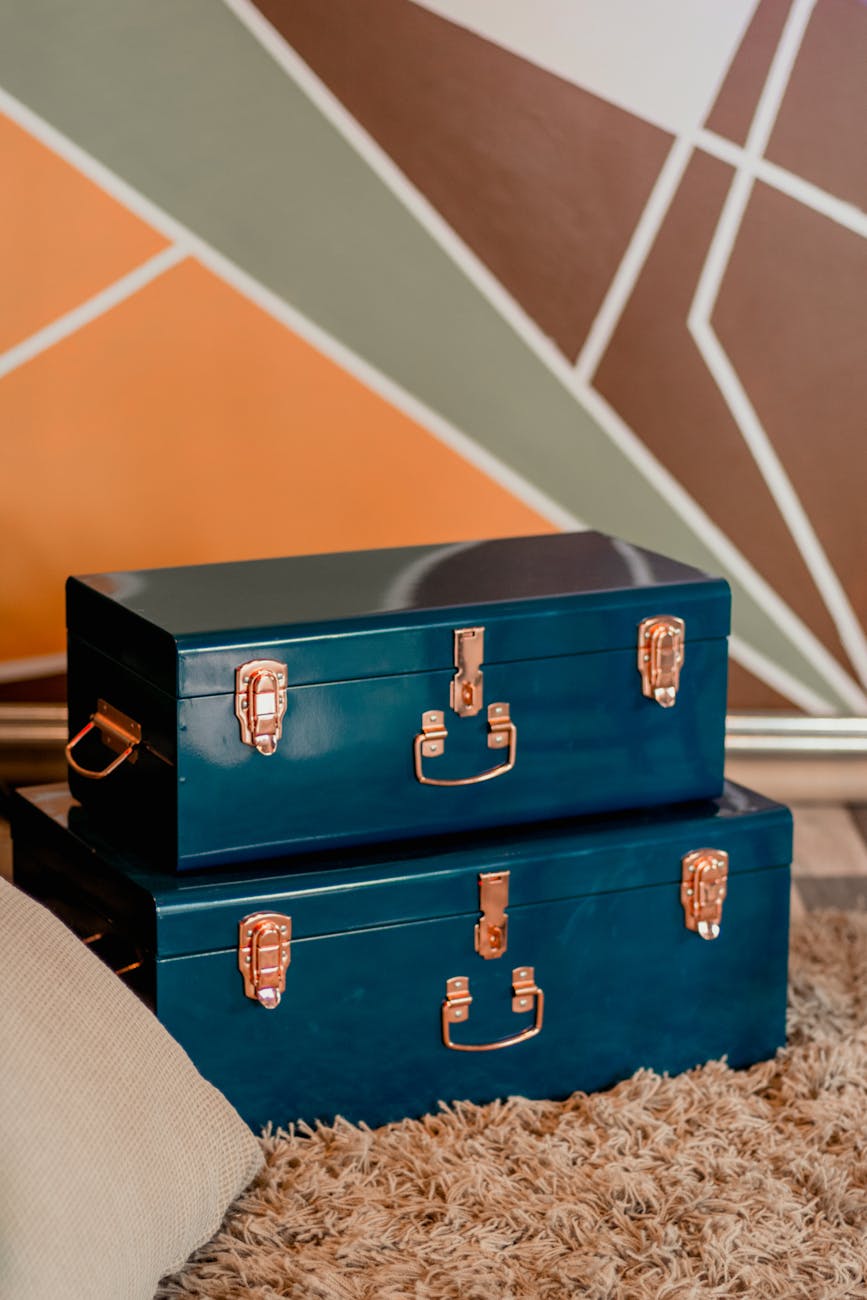
    Then there was the bedroom. No dresser. No closet system. Just three open suitcases that served as a rotating archive of silk shirts, vintage cologne, and desperation. It was as if he’d never truly unpacked—a subconscious protest against the idea that he’d actually settled in this armpit of a town. The fridge, naturally, was a tundra of emptiness save for—you guessed it—more boxes of white wine. This was a man who had chased the scent of money straight into the middle of nowhere, only to insist he hadn’t actually arrived.

    Leonard was a ghost haunting his own life. A man who treated his presence in this town like an extended layover, still clinging to the fantasy that he’d be boarding a first-class escape back to the coastal glamour of a life he probably never really had. You couldn’t help but wonder: what kind of man gets seduced by a fat paycheck only to spend his days in self-imposed purgatory, where the only things thriving are his excuses and his growing graveyard of faded Speedos?

    You supposed it was easier for Leonard to pretend he was just “passing through” than to admit that he was, in fact, a permanent exhibit in this forgotten museum of stalled ambition—a relic draped in silk and denial, clinging to the illusion of a life that had long since evaporated.