Category: Education in the AI Age

  • Essay Prompt: The Performance Trap: Online Identity, Narcissism, and the Collapse of the Real Self

    Essay Prompt: The Performance Trap: Online Identity, Narcissism, and the Collapse of the Real Self

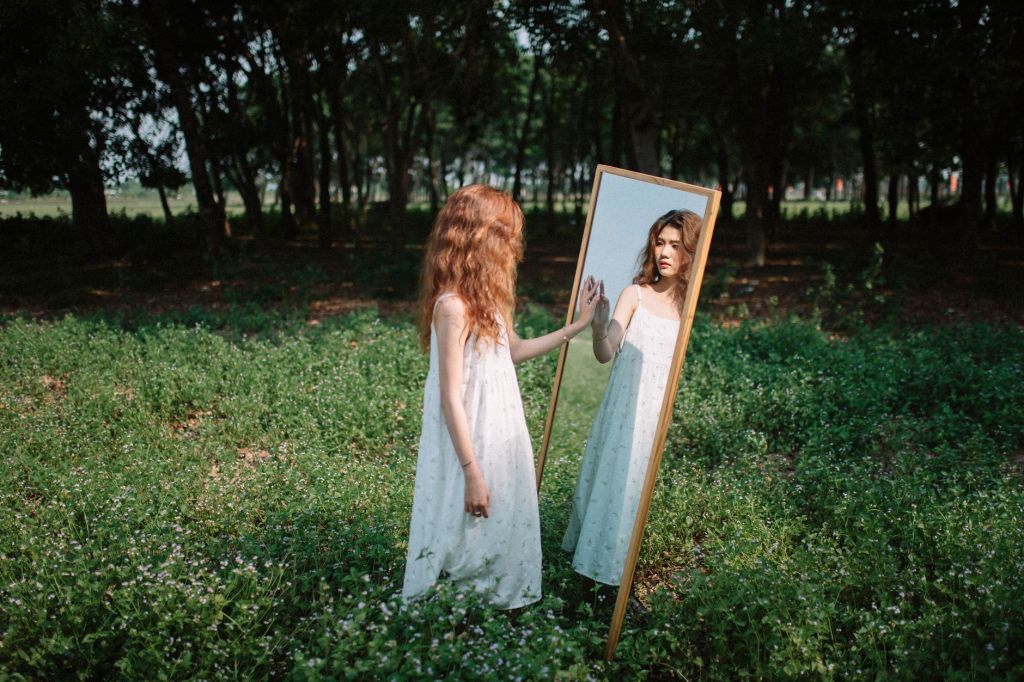
    In the Netflix documentary The Crash and the Black Mirror episode “Joan Is Awful,” audiences witness characters whose lives become consumed by spectacle, performance, surveillance, and the relentless pressure of online visibility. While the two works differ in genre—one a real-life tragedy and the other a satirical dystopian drama—both raise disturbing questions about how modern digital culture reshapes identity, distorts reality, and erodes the boundary between authentic selfhood and online performance.

    In The Crash, the documentary suggests that Mackenzie Shirilla’s compulsive online self-curation reflected a deeper psychological unraveling in which image management, attention-seeking, and social media validation became inseparable from her sense of identity. Meanwhile, in “Joan Is Awful,” Joan discovers that her life has been transformed into a grotesque entertainment product streamed to millions of viewers, forcing her to confront the horrifying possibility that her real self has become secondary to a digitally manufactured persona designed for mass consumption. In both works, online visibility functions less as a tool for communication and more as a vortex that pulls individuals toward narcissism, performative behavior, emotional instability, and estrangement from reality itself.

    Write a 1,000-word argumentative essay in which you compare The Crash and “Joan Is Awful” to examine the claim that maintaining a constant online presence can suck people into a vortex of unhinged narcissism and madness that makes them unrecognizable from their authentic selves.

    Your essay should analyze how both works depict:

    • the transformation of identity into performance;
    • the addictive pursuit of attention, relevance, and validation;
    • the psychological consequences of constant self-curation and surveillance;
    • the collapse of the boundary between private life and public spectacle;
    • and the dangers of confusing online visibility with genuine human worth.

    You should also address the broader cultural implications of these works. What do these texts suggest about the modern relationship between technology and identity? Do social media platforms merely reveal narcissism already present in human nature, or do they actively manufacture and intensify it? At what point does self-expression become self-erasure?

    A strong essay will move beyond summary and develop a clear argumentative thesis that makes an original claim about the psychological and cultural dangers presented in both works. Your thesis should be supported by detailed analysis of scenes, dialogue, imagery, characterization, and thematic parallels between the documentary and the episode.

    You must include:

    • a clear and debatable thesis;
    • detailed comparison of both works;
    • at least one counterargument and rebuttal;
    • analysis of specific scenes and examples;
    • and thoughtful commentary about the relationship between technology, identity, and modern culture.

    Possible directions for argument include:

    • Social media transforms ordinary narcissism into pathological self-obsession.
    • Constant online performance erodes authentic identity and emotional stability.
    • Digital culture rewards outrage, exhibitionism, and emotional extremity.
    • Online validation creates a dopamine-driven cycle that destabilizes mental health.
    • Surveillance culture turns human beings into entertainment products.
    • The internet encourages people to construct marketable personas rather than genuine selves.

    You may agree, disagree, or complicate the prompt’s central argument, but your essay must directly engage the idea that online self-curation can psychologically deform individuals and distance them from reality.

    Requirements:

    • Approximately 1,000 words
    • MLA format
    • Clear introduction, body paragraphs, counterargument-rebuttal section, and conclusion
    • Use evidence from both The Crash and “Joan Is Awful”
    • Include a Works Cited page

    The strongest essays will avoid simplistic “technology bad” arguments and instead explore the more unsettling possibility that modern digital culture rewards the most performative, narcissistic, and emotionally unstable versions of ourselves until the performance eventually consumes the person behind it.

  • A Society That Has Sacrificed Interiority for the Next Dopamine Hit

    A Society That Has Sacrificed Interiority for the Next Dopamine Hit

    In “Has College Gotten Too Easy?”, Joe Pinsker notes a curious inversion: grades rise as the quality of student work declines. He borrows a distinction from a Harvard sociologist—“easy” can mean lighter material or looser grading—and suggests the latter is doing most of the work. From where I sit, it’s both. Around 2010, as reading skills began to erode, writing instructors quietly trimmed the syllabus. Fewer essays, fewer books, and almost nothing long. The last time I assigned The Autobiography of Malcolm X, a 500-page climb, the backlash was volcanic. Students weren’t being asked to read; they were being asked to endure. It felt less like instruction and more like pitting a white belt against a black belt and calling it pedagogy.

    Something fundamental shifted at the same moment. The smartphone didn’t just arrive; it reprogrammed. We moved from readers to watchers. As readers, we practiced interiority—the habit of turning language inward until it took root. Sentences weren’t skimmed; they were inhabited. Ideas weren’t collected; they were argued with, revised, made to answer to memory and conscience. Interiority is not mere comprehension; it is a private workshop where meaning is built, not downloaded.

    Around 2010, that workshop closed early. In its place came what I’ll call dopaminergic exteriority: attention pulled outward by a conveyor belt of novelty—short videos, endless scroll, perpetual interruption—until thought has no time to cohere. The mind becomes a relay station for images, optimized for reaction rather than reflection. The inner dialogue thins to a whisper; the feed does the talking.

    The consequences show up in the classroom. Interiority tends to produce patience, skepticism, and a tolerance for difficulty—the raw materials of maturity. Exteriority produces the opposite: impatience, certainty without evidence, and a preference for the quick hit. Ask for Moby-Dick and you’ll get a highlight reel about “the great whale” in thirty seconds. The novel becomes a rumor; the rumor earns the grade.

    Institutions adapt. They always do. Assignments shrink. Expectations soften. Grades inflate to meet the new baseline of attention. Students, understandably, demand high marks for low friction; colleges, increasingly, oblige. The result is not a conspiracy but a convergence: a curriculum calibrated to the scroll.

    We tell ourselves this is access, flexibility, modernization. There’s some truth in that. But there’s also evasion. A watered-down education is what you get when a culture trades interiority for the next stimulus. We begin to prefer performance to thinking, identity to argument, and ease to effort. We stop reading the world and start skimming it.

    None of this is irreversible, but it is cumulative. Interiority is a practice; it returns when practiced. Assign the long book again. Require the sustained argument. Give students something that resists them. Not because difficulty is virtuous, but because without it, the mind never learns to stay.

  • Don’t Hang On to Your Job as a Social Life Raft

    Don’t Hang On to Your Job as a Social Life Raft

    Yesterday I stepped into a small knot of colleagues in the corridor, that narrow strip of campus where ideas briefly outrun the clock. We traded jokes about the recent Canvas collapse, congratulated ourselves for having our lectures safely parked on Google Slides, and circled the usual anxiety about AI—this new auditor that has wandered into the classroom and begun asking uncomfortable questions about our usefulness. The conversation had the easy rhythm of habit. No one spoke as if I were leaving.

    So I reminded them: one year to go.

    S shook her head as if I had announced a mild illness. I shouldn’t retire, she said. I thrive on the friction of the place—the chatter, the debate, the daily collision with students. Besides, she added, men don’t retire well. Men don’t cultivate friendships the way women do; they don’t maintain the networks that keep the emotional weather from turning bleak. 

    I admitted what I already know. I have two friends. I see them rarely enough to qualify as seasonal.

    “I’m an appetizer,” I said. “People enjoy me in small doses.”

    S dismissed that with a wave. “No. You’re a sprawling Las Vegas buffet.”

    The hallway erupted with laughter. It was a generous line and a dangerous one. Flattering, because it confirmed what I trade on: conversation, wit, the ability to animate a room. Terrifying, because buffets are not known for cultivating long-term friendships, and I have no second act of friendships waiting in the wings.

    Oddly, the exchange reinforced my decision to leave at sixty-five, after four decades of teaching. Staying on the job to stave off loneliness is a poor reason to keep a desk. It erodes dignity and, eventually, the quality of the work itself. A classroom deserves more than a man using it as a social life raft.

    The conversation ended the way these corridor encounters always do—with a sudden glance at the time and a polite tearing-away, each of us sprinting back to our assigned rooms before we become late versions of ourselves. Those moments are rare and bright—half a dozen a year, if that—and they carry a dangerous illusion: that their warmth can be stretched across an entire calendar.

    They can’t.

    I will miss them. I will miss the quick intelligence, the laughter, the feeling that something alive is happening just outside the classroom door. But a handful of good conversations a half dozen times a year does not justify postponing an ending that has already announced itself.

    I could stay three more years. I would be sixty-eight, still having the same conversation in a slightly older voice. My challenges would not change; only the date would. Delaying the inevitable is not a strategy. It’s a habit.

    So I’ll leave while the hallway still feels like a gift—and before it becomes an excuse.

  • Prove You Offer Something AI Cannot, or Become Obsolete 

    Prove You Offer Something AI Cannot, or Become Obsolete 

    After nearly forty years teaching college writing, I can say this without ceremony: AI didn’t knock—it walked in and rearranged the furniture. We weren’t ready. Now we’re scrambling to answer basic questions we once took for granted: What is our role? What, exactly, is our job? How do we evaluate a student’s work when the student can outsource the thinking? And how do we defend the value of higher education—especially the Humanities—to a public that is already drifting away?

    The backdrop isn’t kind. We face a culture that reads less and skims more, chasing quick hits of stimulation instead of sustained thought. The cost of college keeps rising while the promise of stable, predictable employment grows less certain. In that context, debates about AI feel less like speculation and more like triage. The question isn’t whether AI will reshape higher education; it’s how deeply and how quickly.

    In that vein, I read Jay Caspian Kang’s essay “Why the Future of College Could Look Like OnlyFans” with particular interest. Kang highlights the argument of Hollis Robbins, who offers a blunt standard for survival: universities justify their existence only if they provide access to faculty whose expertise exceeds what AI can deliver. Strip away the academic language, and the message is stark: prove you offer something AI cannot, or become obsolete.

    Robbins pushes the point further. In a classroom saturated with generative AI, she predicts a severe contraction—potentially eliminating a large share of faculty positions. Courses built around foundational, repeatable skills—the kind often taught in the first two years—are the most vulnerable. Specialized fields, particularly those grounded in rare knowledge or deep cultural expertise, are far less exposed. The more interchangeable the instruction, the easier it is to replace.

    That leaves instructors like me in an uneasy position. I’ve spent decades teaching literacy and critical thinking—the very skills that AI now performs with unnerving competence. If Robbins is right, those of us in broad, introductory disciplines face the sharpest edge of change. The specialists may endure. The rest of us may be folded into what she envisions as a rapid and unforgiving contraction.

    This isn’t a distant possibility. It’s a present demand. Adapt—or be edited out.

  • Three Protein Wafers and a Funeral for Joy

    Three Protein Wafers and a Funeral for Joy

    I drank my first protein shake in 1975, at thirteen—an age when you’ll ingest anything if it promises muscle. It was milk and two heroic scoops of Bob Hoffman’s “Super Hi-Proteen,” a granular blend of soy, brown sugar, and the kind of mystery ingredients that seemed to come with a warning label in spirit if not in ink. I swallowed it like a pledge of allegiance. Years later, I realized I’d been spooning down hog slop with a marketing budget.

    Protein powders, of course, grew up. Whey replaced soy, monk fruit and stevia replaced sugar, and the flavor profile advanced from “punishment” to “tolerable.” I returned, cautiously, folding a scoop into my oatmeal or stirring it into yogurt. A lifetime lifter develops a habit I’ll call protein insurance—the quiet reassurance that your muscles won’t starve because you forgot to eat like a grown man.

    And so the shake became a fixture—less a meal than a policy.

    Bodybuilders and civilians alike now drink these things by the gallon, not just for insurance but for convenience. Which raises a question that refuses to stay polite: assuming we’re not slowly marinating ourselves in trace metals such as lead and cadmium, are we doing something more subtle—something that damages the soul? Rachel Sugar poses a version of this in her Atlantic essay “Admit It, That Protein Shake Is Basically Soylent,” where the modern ideal appears in a hoodie: a tech bro so devoted to efficiency that he outsources eating to a beige slurry. Why cook, why chew, why pause, when a bottle can reduce nourishment to a task you can complete between emails?

    Enter Soylent, the Willy Wonka chewing gum of Silicon Valley—a full meal compressed into a swallow, a dinner table dissolved into a transaction. At best, it tastes like competent baby food. At worst, it tastes like ambition without appetite.

    Soylent had its moment and then receded, but the protein shake did not. It adapted, multiplied, rebranded. Giants like The Coca-Cola Company now print money selling pre-made bottles fortified with protein, “adaptogens,” and antioxidant halos. The label reads like a résumé; the experience reads like chalk. A nation too busy to cook, trained to snack, and newly anxious about muscle retention—thanks to the rise of GLP-1 receptor agonists—is primed to accept frictionless nutrition. Open. Sip. Be optimized.

    None of this is accidental. The arithmetic of food is unforgiving: real food spoils and yields modest margins; ultra-processed food endures and pays dividends. The industry didn’t just produce these powders—it educated us to desire them, dressed them in the language of health, beauty, and time savings, and invited us to trade ritual for efficiency.

    Last week, I tried a thought experiment on my writing students. They’re working on an argument about whether ultra-processed foods are villains to both body and soul.

    “Imagine,” I said, “three protein wafers a day. They regulate appetite, deliver perfect nutrition, sculpt you into an Instagram after photo, and carry you past a hundred. No cooking. No dishes. No decisions.”

    I let that sit for a moment.

    “Now imagine what disappears. The dinners that run long. The laughter that spills over the table. The argument that turns into a story. The quiet, ordinary pleasure of chewing.”

    In this optimized life, your insurer applauds and your followers multiply. But you become something flatter—efficient, photogenic, and faintly ghostlike. Not dead, exactly. Just thinned out where life used to be.

    I asked for a show of hands. Who would choose the wafers?

    Not one hand rose.

    For all our flirtation with powders and promises, the verdict was clear: they want to be healthy, yes—but not at the cost of becoming efficient shadows of themselves. Real food, with all its inconvenience and noise, remains the center. The shake can stay as insurance. It just can’t be the policy that replaces the warmth of home.

  • Canvas Crashes and a Protein Bar Declares War on My Molar

    Canvas Crashes and a Protein Bar Declares War on My Molar

    Five days ago, an hour before my afternoon class, I performed my sacred office ritual: a Barbell’s Salty Peanut protein bar followed by a red apple. The pairing is non-negotiable. The bar coats my teeth in a fudge-like film; the apple arrives like a janitor, scrubbing the residue with righteous crunch. It’s dental choreography. It works—until it doesn’t.

    Mid-bar, I bit down and hit something that did not belong in the human diet. A crack, a jolt, a flash of pain in my upper left molar that suggested litigation. I spit out the offending bite and there it was: a small, defiant piece of gravel. Not metaphorical gravel. Geological. I briefly entertained the idea of a calcified peanut shell, but no—this was the kind of object that builds driveways, not snacks.

    I discarded the rock, finished the bar like a man negotiating with fate, and approached the apple with the caution of a bomb technician, chewing exclusively on my right side. The tooth protested—sharp when I bit down, sensitive when I dared sip cold sparkling water. I called my dentist. He agreed to see me Monday while my daughters are in for their cleaning, a kind of dental drive-by.

    I told him, only half joking, that if this turns into a root canal, I’ll be leaving the country under an assumed name. My claustrophobia is not a charming quirk; it’s a governing principle. The rubber wedge they use to keep your mouth open transforms my throat into a closed border. When I can’t swallow on command, panic doesn’t knock—it kicks the door in. I am praying for a humble composite fix, something modest and merciful. A root canal would turn me into a beachside exile, scanning the horizon for dental extradition.

    As if one anxiety weren’t enough, two days later my college’s learning system—Canvas—collapsed under a ransomware attack that apparently took down thousands of schools. An hour before class, I discovered my lecture had vanished into the digital abyss. I called my engineering friend Pedro to deliver a live report of my unraveling. I told him I’d have to improvise, which in teaching is another word for “pray for coherence.”

    Then a thought arrived like a small miracle: my lectures are linked to Google Slides. If I could log into my Google account, I could resurrect the class. I told Pedro I’d head to the room early and test the login before the students arrived. I looked down at my desk—keys, empty protein bar wrapper, the usual debris of academic life—but no phone.

    “Where the hell is my phone?” I said.

    “You’re talking to me on it,” Pedro replied.

    We laughed the way men laugh when reality briefly exposes its wiring. For twelve years, Pedro has been my unofficial tech support, but informing me that the phone I was using was in my hand may be his finest work.

    Between the compromised tooth and the compromised Canvas infrastructure, I felt like a man auditioning for a nervous breakdown. Instead, I walked into class and, perversely, had one of the best sessions of the semester. We discussed ultra-processed foods—their design, their addictiveness, the way they quietly rig the game of weight management. Then I offered a heretical counterargument: homemade food can be just as seductive, just as dangerous to restraint.

    To prove the point, I pulled up a photograph from the Los Angeles Times: a $38 basturma brisket sandwich from Yerord Mas, built from Australian wagyu and dusted with cumin, garlic, and chiles. The image did not educate so much as seduce. Within seconds, my students had located the menu and confirmed the price with the forensic zeal of the hungry.

    “We should Uber to Glendale,” I said, “and call it field research.”

    At that point I added, “Some of you are going to complain to the Dean that you enrolled in a critical thinking class and all I do is talk about food.”

    They laughed—real laughter, not the polite classroom version. The room had a charged, fizzy quality, as if the collapse of Canvas had granted us permission to loosen the tie a notch. Chaos had stripped the day down to its essentials: conversation, curiosity, a shared joke.

    I needed that laugh more than I care to admit.

    Now I’m waiting. Will the dentist deliver a quick, civilized repair, or will I be pricing one-way tickets and practicing aliases on a beach somewhere in Mexico, scanning the horizon for a man carrying a drill?

    In the meantime, I chew carefully, avoid gravel, and consider the possibility that the most dangerous part of my day is not the curriculum, but the snack.

  • The Day I Logged Off the AI Panic Machine and Walked at the Beach

    The Day I Logged Off the AI Panic Machine and Walked at the Beach

    I teach college writing, which means I’ve spent the last four years staring at the AI question the way a man stares at a fire he suspects might jump the fence. When ChatGPT arrived, it didn’t knock politely. It crashed into the room like a UFO and rearranged the furniture. Since then, I’ve read what feels like a small library’s worth of essays—predictions, warnings, elegies for the essay itself—and contributed a few of my own, because that’s what we do: we metabolize disruption by writing about it.

    But there comes a point when the analysis stops clarifying and starts echoing.

    I’ve reached that point. My brain has filed a quiet injunction: no more. Not just a break from AI, but a break from reading about how exhausted everyone else is by AI. The discourse has become a hall of mirrors—each reflection slightly more fatigued than the last.

    I’ve been here before. In 2010, I had newborn twins, which is another way of saying I was living inside a low-grade emergency. The market offered guidance—books, podcasts, earnest experts—but I wanted none of it. I was already doing the job. Additional commentary felt like a second shift. Experience was loud enough; analysis was just noise layered on top.

    Both episodes point to the same condition: Applied Reality Rejection—the refusal to consume secondary discourse when you’re already neck-deep in the primary experience. When you’re in it, more talk about it doesn’t help. It dilutes.

    And here’s the part the essays rarely admit: reading about AI doesn’t soothe AI anxiety. It compounds it. Each think piece arrives like a fresh weather report announcing the same storm in slightly different prose.

    So I’m choosing friction of a better kind. I play the piano until my attention steadies. I pick up kettlebells and let gravity argue with me for a while. I walk the beach and let the horizon do what no article can—put scale back into the day. The analog world doesn’t theorize; it recalibrates.

    That was the remedy with the twins, too. Not another podcast on sleep training, but a walk, a dumb TV binge, a sweaty hour in the garage. Relief came from stepping out of the commentary loop, not diving deeper into it.

    Which is why, when I see another AI essay queued up from The Atlantic or The New Yorker, I feel a familiar tightening—and then I close the tab. Not out of contempt, but out of preservation.

    I’ve heard enough echoes. It’s time to drive two miles to Catalina Avenue and take a walk at the beach.

  • A College Degree in Applause

    A College Degree in Applause

    When Oprah Winfrey signed off for the last time, she offered a distilled insight after decades of televised confessionals and couch-bound catharsis: beneath our surface differences, we all want the same thing—to be heard and, more importantly, to be affirmed. Not merely listened to, but validated, as if our words must pass through some invisible tribunal and emerge stamped: This life matters. This mind is not wasted inventory.

    She was right, though even that admission feels like an understatement. The appetite for validation is not a polite preference; it’s a metabolic demand. We don’t just want to speak—we want to land. We want our sentences to strike the listener with enough force that they nod, recalibrate, maybe even quote us later as if we were a minor authority in the ongoing project of making sense. We want to believe that our thoughts improve the room, that our presence upgrades the conversation from background noise to something resembling signal.

    Of course, the engine driving this hunger isn’t entirely noble. Scratch the surface and you’ll find insecurity jittering beneath the skin, narcissism preening in the mirror, tribal instincts scanning for applause from the right audience. We want to be right, but more than that, we want to be seen being right. Yet it would be too easy—and too smug—to reduce this to vanity alone. There’s another current running underneath. Human beings, for all their posturing, are wired for cooperation. We build moral systems, knowledge systems, entire civilizations on the premise that sharing ideas might actually improve the collective condition. So the same impulse that craves applause also aspires—sometimes sincerely—to contribute something of value. We may be peddling clichés, hallucinations, or the occasional insight, but the urge to be heard persists like a drumbeat.

    After nearly forty years of teaching writing, I’ve had a front-row seat to this performance. I’ve enjoyed the privilege—let’s call it what it is—of having a voice that people were required to listen to. Now, as that authority begins to fade at the edges, I’m left examining the machinery that made it feel necessary in the first place. My students will tell you they’re here for practical reasons: a degree, a job, a paycheck that doesn’t insult them. Fair enough. But beneath that utilitarian script, I suspect another motive is quietly at work. They want to matter intellectually. They want their ideas to carry weight, to be received not as filler but as substance.

    I can see it because I can reverse-engineer myself at eighteen. Put me back in that position—blank slate, open catalog—and I’d choose political science without hesitation. Not because it guarantees employment—it doesn’t—but because it offers a stage. A chance to sound sharp, to read densely, to write with the kind of authority that might make a professor pause and think, there’s something here. The fantasy isn’t wealth; it’s recognition. Money pays the bills, but it doesn’t applaud. It doesn’t lean forward when you speak.

    And without that recognition—without the sense that your mind registers on someone else’s radar—life begins to feel like static. Content generated, scattered, and forgotten. A digital smear. Noise mistaken for presence.

    Which is why so many of us operate under a quiet affliction I’d call Intellectual Visibility Panic: the nagging fear that no matter how carefully we assemble our thoughts, they will evaporate on contact—unheard, unvalued, and unremembered. It’s not dramatic enough to ruin your day, but it’s persistent enough to shape your choices. It nudges you toward certain majors, certain careers, certain performances of self. It whispers that time is running out, that if you don’t establish your voice soon, it will dissolve into the background hum.

    And so we speak. We write. We posture. We refine. Not just to communicate—but to leave a trace strong enough that someone, somewhere, might stop and say: that was worth hearing.

  • Energy Vampires and the Cost of Desire (college essay prompt)

    Energy Vampires and the Cost of Desire (college essay prompt)

    Write a 1,200-word essay that advances a clear, arguable thesis about time—how it is lost, misused, and quietly drained—by analyzing Winter Dreams and Torch Song. Focus on relationships that operate like “energy vampires”: people who absorb attention, distort priorities, and leave the other person with less time, less clarity, and less life than before.

    In your introductory paragraph, define “energy vampire”–a person who consumes another’s attention, time, and emotional resources while giving little in return. Then illustrate your definition with a paragraph-long personal experience in which you encountered someone who drained your time or energy. 

    The present your thesis that examines the dynamics between Dexter Green and Judy Jones, and between Jack Lorey and Joan Harris. Where do these pairings overlap, and where do they diverge? In what ways do these relationships function as “time vampires,” diverting the protagonists from lives they might otherwise have lived?

    Finally, take a position on responsibility. To what extent are Dexter and Jack victims of these draining relationships, and to what extent do they participate in their own depletion? Support your claims with close textual analysis and specific evidence.

  • How It Feels to Grade 60 Original Essays Edited by AI

    How It Feels to Grade 60 Original Essays Edited by AI

    I assigned my students an essay that asked them to describe a place both ugly and formative—a crucible that hurt them and, in the same breath, made them. The submissions came back like a map of pressure points: a high school classroom that felt like a courtroom, a gym that smelled of rubber and dread, a mental health ward lit like an aquarium, a pre-op room where the clock ticked louder than courage, a soccer field that taught hierarchy and grace, a family home in El Salvador, a Korean farm where labor spoke in blisters. The content was theirs—specific, unborrowed, alive. But the sentences often arrived wearing a suspicious polish, the prose lacquered to a showroom shine. You could feel the editor in the room, invisible and tireless.

    I keep returning to a metaphor I can’t shake: AI is like a bodybuilder taking steroids for writing. Go in “natty,” and you present a muscular physique that is honest–well defined, maybe even impressive. Add the chemical assist and you step onstage thirty percent larger, veins penciled in, every line exaggerated into spectacle. 

    After sixty of these eye-popping essays, I felt the same deadening I get at a bodybuilding show. At first you admire the craft; then the sameness creeps in. The poses change; the effect doesn’t. Everything looks like everything else.

    This is my ambivalence, and it refuses to resolve. On one hand, AI hands students a language upgrade that would make a New York editor nod—clarity, rhythm, a vocabulary that lands. It’s as if they’ve been fast-tracked to a professional register. On the other hand, that very upgrade dilutes the experience. When strong language grows out of a human mind, it carries the friction of effort—the faint grit that makes it feel earned, inhabited. When it arrives laundered through a machine—the “stochastic parrot” Emily M. Bender warned us about—it can be dazzling and hollow at once, a chandelier with no wiring. The sentences glitter; the room stays dark.

    I’ve graded hundreds of essays for years and thought I knew the terrain—the tells of struggle, the leap from draft to draft, the moment a voice becomes unmistakably its own. Now I’m reading in a new jurisdiction with no settled law. I’m less a judge than a border agent, inspecting passports that all look freshly printed. Welcome to the literary Wild West: the gold is real, the essays are suspect, and every nugget asks the same question—where did you get this?