Category: FOMO and Its Discontents

  • Neddy Merrill Disease: Lifting Weights to Outrun the Abyss

    Neddy Merrill Disease: Lifting Weights to Outrun the Abyss

    I take no glory in training through my 60s. At nearly 64, with a lifting life that began in 1974 amid the clang of Olympic barbells and testosterone-choked gyms, I no longer chase records or applause. These days, I chase mobility. I chase not falling apart. A nagging flare of golfer’s elbow—inner right, thank you very much—has made its uninvited return, forcing me to swap kettlebell rows for gentler “lawnmower” pulls and abandon my beloved open-palm curls in favor of reverse curls, the orthopedic equivalent of safe sex.

    There was a time, of course, when I confused self-worth with showing off. I strutted under heavy weights in the ‘70s through the ‘90s like a tragic extra from Pumping Iron, nursing shredded rotator cuffs and wrecked lumbar discs in my quest to impress… well, no one, really. The mirror? My dad? Arnold? These days I tiptoe a tightrope between intensity and injury, trying to silence the reckless ghost of my twenty-year-old self who still believes he’s indestructible.

    This tug-of-war with time reminds me of Neddy Merrill, the doomed protagonist in John Cheever’s “The Swimmer,” who tries to recapture youth by swimming across his neighbors’ pools like a suburban Odysseus, only to arrive at his own foreclosed house—empty, echoing, and final. I see flashes of my own Neddy Merrill alter ego every time I glimpse my neighbor, a sturdy cop in his early 40s, shepherding his twin teenage sons off to jiu-jitsu. I envy them—their youth, their purpose, their untouched joints. But I remind myself that comparison is the mother of misery. I don’t train for glory anymore. I train because the alternative is to surrender to frailty, to collapse into a slow-motion horror film of decay. I train because being strong is still cheaper than therapy, and it’s the only middle finger I can raise at time’s relentless advance.

  • Blubberation: The Scourge of Humankind

    Blubberation: The Scourge of Humankind

    Few words in the English language wear such a deceptive mask as maudlin. To the untrained ear, it sounds quaint—maybe even charming—like something involving an embroidered hanky and a soft violin cue. Most people, if they’ve heard it at all, treat maudlin like a minor indulgence in sentiment. But this tepid reaction completely misses the word’s fangs. In truth, maudlin is not merely saccharine—it’s a spiritual sickness. It is the emotional equivalent of soggy pie crust: overbaked, overhandled, and incapable of supporting the weight of anything real.

    Jeffrey Rosen, in The Pursuit of Happiness, opens with a quote from Paracelsus that nails the metaphysical rot at the core of maudlin: “Even as man imagines himself to be, such he is, and he is also that which he imagines.” Most of us don’t realize we’ve built our entire personalities around a grandiose hallucination—an operatic self-image drenched in tragic overtones, straining for gravitas. This isn’t just self-delusion. It’s Blubberation—a term I propose as an upgrade to the soft-focus failure of maudlin. Blubberation is not some quaint emotional hiccup. It’s our default operating system. We cling to our sad little myths and bathe in our own narrative syrup, while Rosen, echoing the Stoics, begs us to snap out of it. Real freedom, the kind Cicero and Jefferson admired, comes not from indulging the lower self with its gaudy tantrums, but from mastering our inner world—our thoughts, emotions, actions, and absurd yearnings for applause.

    Consider Cicero’s ideal: the man who is not tormented by longing, not broken by fear, not drunk on ambition or self-congratulating euphoria. This man, Cicero says, is the happy man. And here’s the kicker: this man is the sworn enemy of Blubberation. The Stoic’s strength lies in composure; Blubberation recoils from it like a vampire from sunlight. Rosen knows this. His book is a case against the lachrymose self—the one addicted to its own melodrama, whose emotional overreach demands constant rewards: a cookie, a compliment, a new Omega Speedmaster.

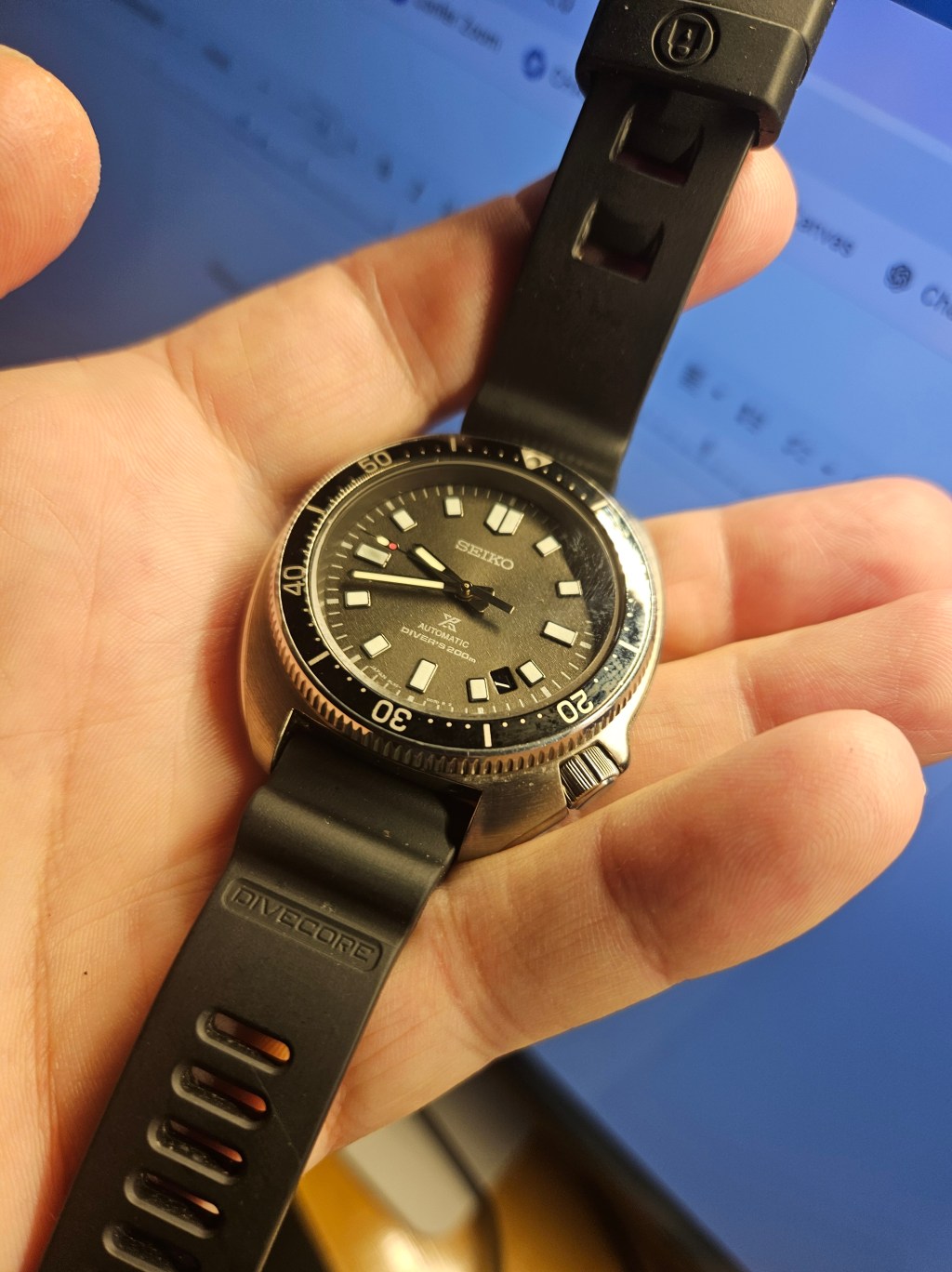
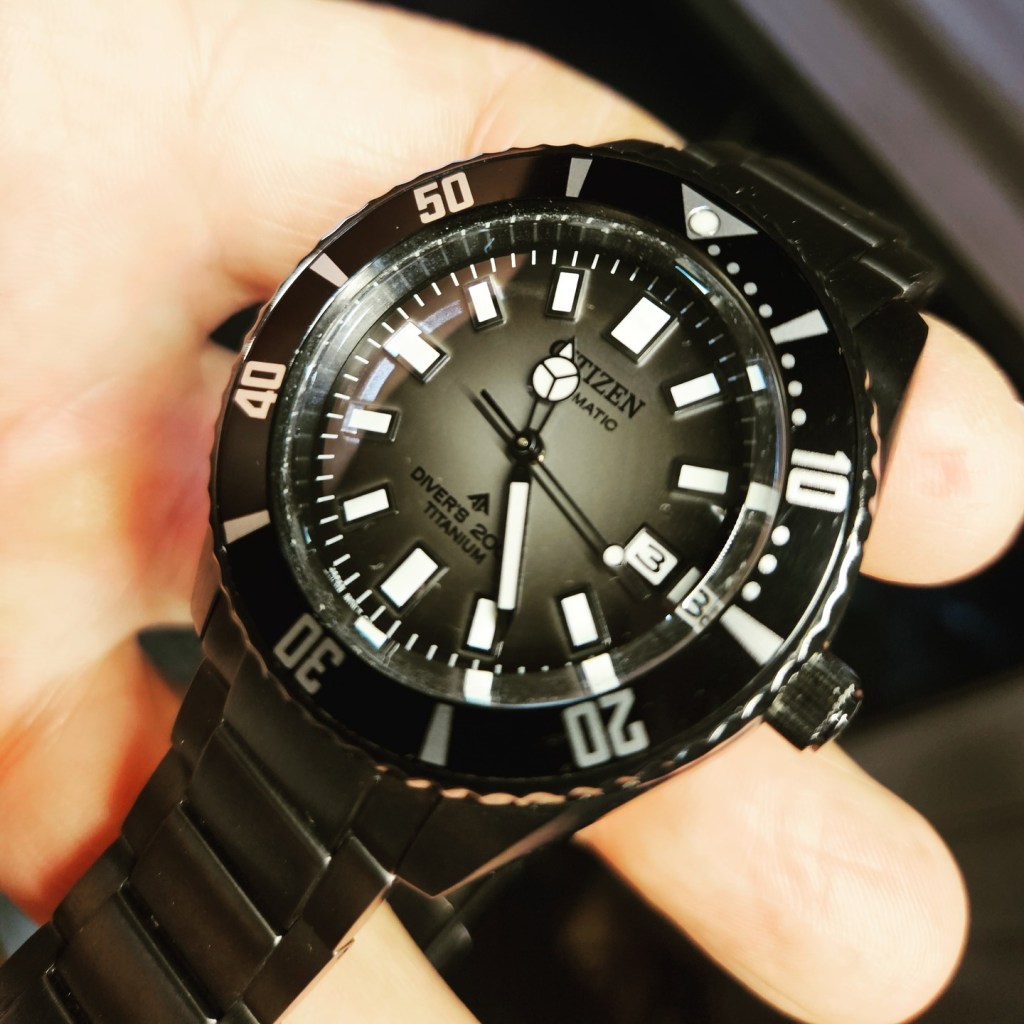
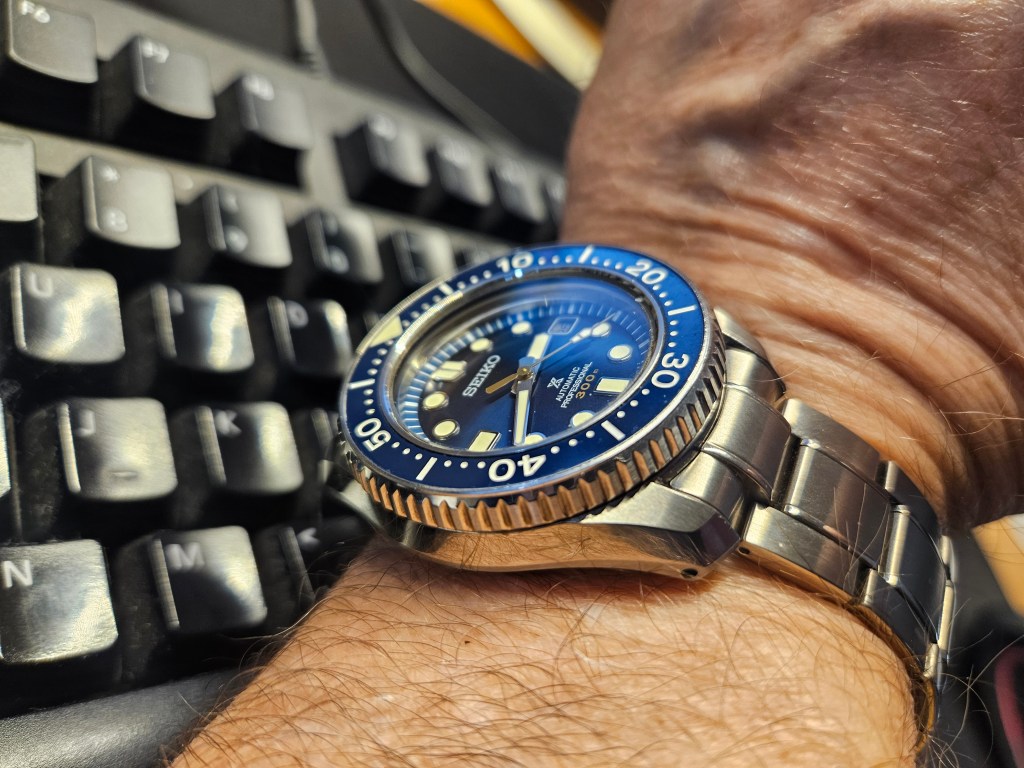
    Let me be clear. I am not above this. I am its most devout practitioner. In fact, my watch addiction is Blubberation in horological form. I’ve shed actual tears during a wrist rotation cull. I have felt the full agony of “falling out of love” with a diver watch I once swore was “The One.” I’ve experienced the euphoric lift of trimming my collection, only to relapse a week later with trembling hands at a DHL box. We call this collecting. We dress it up as passion. But let’s be honest: it’s the theater of the self. It’s manufactured meaning in a velvet-lined case.

    Maudlin doesn’t cut it anymore. It’s too polite, too antique-shop sad. Blubberation, on the other hand, is a full-body emotional spill. It’s sadness with jazz hands. It’s weeping into your soy latte because someone forgot to like your Reels. It’s mistaking catharsis for wisdom. It’s trying to turn your trauma into TikTok content with the right music filter. And it’s not limited to watches. It infects how we narrate our lives, our diets, our so-called “journeys.” It’s the self crying out, not for help—but for attention.

    Blubberation, in the end, is a trap. It offers the illusion of depth but delivers only the shallows. It promises identity but trades in caricature. The Stoics warned us: without restraint and clarity, we become slaves to our worst performances. We become sentimental hustlers, selling tragedy like perfume. And as long as we keep mistaking our emotional indulgence for authenticity, we’ll never touch happiness—only sniff it through the fog of our own overwrought monologues.

  • FOMO, Fantasy, and the Machinery of Manipulation: A College Essay Prompt

    FOMO, Fantasy, and the Machinery of Manipulation: A College Essay Prompt

    Analyzing FYRE and The Game Changers

    At first glance, FYRE: The Greatest Party That Never Happened and The Game Changers occupy two very different cultural arenas: one sells a fantasy of celebrity-soaked luxury on a tropical island; the other sells a utopia of plant-based athletic dominance. But both rely on the same invisible force: FOMO—Fear of Missing Out—to bypass skepticism, override critical thinking, and sell a seductive vision of who you could be.

    Whether it’s an exclusive influencer party or a miracle diet that promises power and peak performance, both documentaries expose how modern branding doesn’t just target wallets—it targets identity. These films demonstrate that FOMO isn’t a glitch in the persuasion system—it is the system.

    In a 1,700-word argumentative essay, respond to the following claim:

    FYRE and The Game Changers reveal that FOMO is a deliberate tool of manipulation, used to sell not just products or experiences, but entire identities. Through cinematic spectacle, influencer mythology, selective omission of facts, and emotional manipulation, both documentaries demonstrate how fear of being left out or left behind can be used to suppress critical thinking and turn aspiration into submission.

    Your task is to analyze how FOMO functions rhetorically in both films. You are not just describing the messages—they’re clear enough. You are interrogating how those messages are constructed, packaged, and delivered in ways that exploit emotional, cultural, and cognitive vulnerabilities.

    Themes to Consider:

    • FOMO as Psychological Pressure: How do these films manufacture urgency, envy, or insecurity to drive belief and behavior?
    • Influencer Culture and Manufactured Authority: How do the films use celebrities, athletes, and social media figures to create a sense of unassailable credibility?
    • Cinematic Manipulation: How do editing, music, lighting, testimonials, and pacing intensify the emotional appeal?
    • The Cult of Betterment: How is personal transformation framed not just as an option but a moral or social imperative?
    • Fantasy vs. Reality: What illusions are sold, and how are inconvenient truths hidden or glossed over?
    • Logical Fallacies and Propaganda Techniques:
      • Appeals to authority: Who is speaking, and why should we trust them?
      • Omission of facts: What’s conveniently left out to preserve the fantasy?
      • False cause, hasty generalization, slippery slope: Where does the argument jump logical tracks to maintain the illusion?

    Final Advice:

    This is not an essay about whether veganism works or whether luxury festivals are cool. It’s about how media uses FOMO and rhetorical sleight-of-hand to construct identities and sell illusions. Your job is to unpack the tactics, reveal the architecture of persuasion, and ask: what are we really buying when we buy into a dream?

    Here are three sample thesis statements and a detailed essay outline to accompany the revised prompt on FOMO, Fantasy, and the Machinery of Manipulation using FYRE and The Game Changers.


    Sample Thesis Statements:

    1. Thesis 1 – The Emotional Leverage Angle:
      FYRE and The Game Changers both manipulate audiences by leveraging FOMO to sell idealized versions of success and identity, using cinematic spectacle, authority bias, and selective omission to create illusions that prioritize emotional persuasion over logical coherence.
    2. Thesis 2 – The Propaganda Blueprint:
      Though vastly different in subject matter, FYRE and The Game Changers rely on the same propaganda playbook—omitting contradictory evidence, appealing to authority, and exploiting FOMO to craft fantasies of relevance, exclusivity, and self-optimization that suppress critical thinking.
    3. Thesis 3 – The False Promise of Transformation:
      By turning personal transformation into a cultural imperative, FYRE and The Game Changers reveal how modern media weaponizes FOMO and logical fallacies to promote the Cult of Betterment, ultimately offering not empowerment, but illusion.

    Sample Essay Outline:

    I. Introduction (200–250 words)

    • Hook: Describe a moment of FOMO-driven behavior (e.g., skipping sleep to buy into a trend, diet, or experience).
    • Introduce FYRE and The Game Changers as case studies in persuasive media.
    • Define FOMO as a manipulative tool—more than a side effect, it’s the delivery system.
    • Thesis statement: Choose one of the above or customize your own.

    II. FOMO as the Central Persuasive Strategy (300–350 words)

    • Define how FOMO functions in each film.
    • In FYRE: scarcity, exclusivity, influencer endorsements (you’re either in or invisible).
    • In The Game Changers: elite performance, longevity, masculinity, health—eat this way or fall behind.
    • Link back to emotional hijacking—how fear of inadequacy, irrelevance, or missing the next wave becomes the bait.

    III. Cinematic Manipulation and Visual Seduction (300–350 words)

    • Analyze how both films use editing, sound design, and selective storytelling to create atmosphere and urgency.
    • In FYRE: hyper-slick promo materials, tropical aesthetics, seductive influencer videos.
    • In Game Changers: slow-motion workouts, dramatic before/after testimonials, science-y graphics.
    • Emphasize how form serves fantasy—cinema is the sugar coating that makes the manipulation go down smooth.

    IV. Logical Fallacies and Omissions (350–400 words)

    • FYRE: Total omission of logistical and financial chaos from the promo content; “appeal to popularity” and “false cause” (this many influencers can’t be wrong!).
    • Game Changers: Hasty generalizations, cherry-picked science, appeal to authority via athletes and doctors with selective data.
    • Discuss what’s not shown: counter-evidence, contradictory studies, cost-benefit analysis, or nuance.
    • Show how omitting complexity creates the illusion of certainty and inevitability.

    V. The Cult of Betterment and Identity Construction (300–350 words)

    • Discuss how both films promote self-transformation not as a personal choice, but a necessity.
    • FYRE: Be the person who gets invited, who belongs.
    • Game Changers: Be the man who eats plants and squats 400 lbs—or you’re a relic.
    • Connect to broader cultural anxieties about relevance, masculinity, health, and success.
    • Highlight how FOMO becomes not just a fear of missing out, but a fear of not becoming.

    VI. Conclusion (200–250 words)

    • Reiterate the thesis in light of the analysis: persuasion is often disguised as empowerment.
    • Briefly reflect on what it means to consume media critically in a FOMO-driven culture.
    • Final insight: When identity is the product and attention is the currency, the most dangerous illusions are the ones we pay for willingly.
  • Psychedelic Mushrooms and the Art of Saying “Meh”

    Psychedelic Mushrooms and the Art of Saying “Meh”

    People I admire—deep thinkers, seekers, trauma survivors, even that old roommate who once confused a lava lamp for God—swear by magic mushrooms. They describe transcendence, tearful reunions with their inner child, and conversations with the universe where the universe speaks perfect Jungian. Apparently, psilocybin is the shortcut to enlightenment, the divine inbox where angels drop PDFs of your truest self.

    And yet, I remain a bastion of Mushroom Apathy Syndrome (MAS)—a spiritual condition marked by an impenetrable indifference to the fungal fanfare. While others are melting into cosmic unity on some mossy hillside, I’m thinking about whether it’s time to reorganize my spice rack. I don’t want to chew sacred mold to glimpse the divine. If I need an ego death, I’ll just read my old poetry.

    Sure, I’d love to encounter the Divine—maybe Spinoza’s glowing web of pantheistic awe, maybe a seraph with decent taste in jazz. But I just can’t take mystical advice from a guy in a woven beanie yelling about chakras while wearing Crocs. If I want a head trip, I’ll queue up Yes, The Strawbs, or Crosby, Stills & Nash and lie on the floor until my chakras align from sheer harmonic exhaustion. Or better yet, I’ll abstain from sugar for ten months and then unleash nirvana with a single bite of decadent, spice-laced carrot cake.

    My condition is also rooted in a kind of Fungal Nihilism—the belief that no mushroom, no matter how ancient, artisanal, or Amazonian, can fix the howling absurdity of existence. You can’t outrun entropy with a spore. If I want to stare into the abyss and laugh, I’ll binge-watch George Carlin eviscerate modern life with nothing more than a mic, a ponytail, and a pair of skeptical eyebrows.

    Ultimately, I practice Spore Snobbery—a reflexive contempt for the breathless mythologizing of psychedelic fungus. These aren’t sacred portals. They’re glorified mushrooms with a publicist. For some, they offer spiritual clarity. For me, they sound like a gastrointestinal trust fall with no one there to catch you but an ayahuasca-shaman-turned-life-coach named Brad.

  • The Protein Bar Delusion: My Love Affair with Lies and Graham Crackers

    The Protein Bar Delusion: My Love Affair with Lies and Graham Crackers

    I don’t eat protein bars anymore. Not because I’m virtuous—far from it—but because I finally admitted the obvious: they’re not meal replacements. They’re meal add-ons, sneaky little calorie grenades dressed up in the halo of anabolic health, whispering sweet promises of lean muscle and zero guilt.

    I’ve been chasing that lie since the 1970s.
    Back then, the gold standard of protein bars was the Bob Hoffman Club Sandwich—a peanut butter and graham cracker Frankenstein’s monster that must have clocked in at 500 calories, easy. It wasn’t a snack. It wasn’t a supplement. It was a religious experience.
    If I wanted to recreate it today, I’d just mash a couple of Reese’s between two graham crackers and pray for forgiveness.

    Over the decades, I kept eating protein bars—dense peanut butter bricks, chewy “engineered food” monstrosities—but never to any good effect. These bars didn’t sculpt my physique. They bulked me up like a slow, steady inflation of regret. Eventually, I abandoned them, like a gambler walking away from the slot machine after realizing the house always wins.

    Still, they haunt me.
    Protein bars remind me of Willy Wonka’s cursed 7-course meal gum that turned Violet Beauregarde into a giant blueberry: a miracle product promising the world but delivering only bloat and existential crisis.

    To be fair, the bars have gotten better over the years. There’s even one called David (because apparently even protein bars have minimalist branding now) made with real food, boasting 28 grams of protein at a miraculous 150 calories. It tempts me.
    Wouldn’t it be smarter, simpler, even a bit sexier to chomp down a David bar at breakfast instead of mixing up my daily slurry of yogurt, protein powder, soy milk, and berries? (A concoction that hits 500 calories with depressing reliability.)

    Maybe. But I know myself: I’d be starving by 9:30 a.m., staring into the abyss of a second breakfast. Protein bars have never given me satiety. They’re a snack in drag—a dessert cosplaying as health food.

    And yet… with all the shredded influencers on YouTube slicing open protein bars like they’re sommelier-testing vintage wine, I feel the pull. A little FOMO. A little “Maybe this time it’ll be different.”

    I have to remind myself, again and again:
    I’m not in love with the protein bar.
    I’m in love with the idea of the protein bar—the fantasy that some sweet, tidy, macro-balanced rectangle will solve my problems, sculpt my body, and carry me into some higher, cleaner version of myself.

    Reality tastes different.
    It tastes like mealy, sweet resignation. It tastes like being duped—with a thin layer of whey isolate on top.

  • Against the Grain: My College Students’ Quiet Rebellion Against the Cult of the Self

    Against the Grain: My College Students’ Quiet Rebellion Against the Cult of the Self

    My college students, nineteen on average, stand on the jagged edge of adulthood, peering into a world that looks less like a roadmap and more like a shattered windshield. Right now, we’re writing essays about the way social media—and the exhausting performance of self-curation—has sabotaged authenticity and hijacked the very idea of a real, breathing identity.

    Here’s the surprising part: they already know it.

    Unlike the last crop of dopamine junkies willing to sell their souls for a handful of TikTok likes, these students have developed a healthy, almost contemptuous disdain for “influencers”—those human billboards who spend their days manicuring their online selves like desperate bonsai trees, hoping to monetize the illusion of a perfect lifestyle. My students don’t want to be “brands.” They don’t want to hawk collagen supplements to strangers or play the carnival game of parasocial friendships with people they’ll never meet.

    No, they’re too busy wrestling with reality.

    They’re trying to adapt to a fast-changing, frequently chaotic world where entire industries collapse overnight and finding a career feels like rummaging through a haystack with oven mitts on. They are focused—ruthlessly so—on their careers, their families, and the relationships that breathe life into their days. There’s no time for performative outrage on Twitter. There’s no energy left for airbrushed TikTok dances in rented Airbnbs masquerading as real homes.

    What’s even more heartening?
    They are learning. They’re not Luddites fleeing technology; they’re studying how to use it. They’re exploring tools like ChatGPT without fear or delusion. They’re discussing things like Ozempic, not as magic bullets, but as case studies in how rapidly tech and biotech can transform human lives—for better or for worse.

    Underneath all this practicality hums a deeper current: a hunger for something more than survival. They know life isn’t just paying the bills and uploading sanitized highlight reels. It’s also about spiritual nourishment—found in beauty, art, connection, and the sacred rituals that make the unbearable parts of existence worth slogging through.

    They understand, in a way that seems almost instinctual, that social media platforms—those carnival mirrors of human desire—don’t offer that kind of connection. They see the platforms for what they are: hellscapes of manufactured anxiety, chronic FOMO, and curated loneliness, where everyone smiles and no one feels seen.

    In their quiet rejection of all this, my students aren’t just adapting.
    They’re rebelling—wisely, stubbornly, and maybe, just maybe, showing the rest of us the way back to something real.

  • Snackjection

    Snackjection

    When I was five, my father constructed a treehouse that stood like a beacon of childhood ambition in the Flavet Villages Apartments in Gainesville, Florida. It was a fortress, a palace, a skyscraper reaching for the heavens—at least in my young mind. In this realm of wood and nails, I sought to assert my dominion, and what better way than with the power of Sun-Maid raisins? One fateful day, I lured Tammy Whitmire to ascend the tree’s wooden slats by brandishing the ultimate weapon: a box of Sun-Maid raisins. This wasn’t just any box; it featured the Sun-Maiden herself, a radiant figure holding a colossal tray of grapes. Her red bonnet and the halo of yellow light marked with white triangles around her head made her look like the Great Raisin Angel, a deity of dried fruit. Tammy, captivated by the angelic glow of the Sun-Maiden, climbed up to join me. Victory seemed imminent until Zane Johnson, lurking in a nearby tree, emerged from a leafy cluster and shattered my triumph. With a smug grin, he declared he had something far superior to my measly raisins: Captain Kangaroo Cookies. These weren’t just cookies; they were double-fudge, cream-centered cookie sandwiches, the culinary equivalent of Excalibur. In the brutal marketplace of childhood affections, my raisins didn’t stand a chance. Tammy, seduced by the allure of Zane’s superior snacks, descended my tree faster than a squirrel on espresso and sprinted to Zane’s treehouse. There, they feasted on the decadent cookies, leaving me alone with my pitiful box of raisins. My reign had ended before it began. Crushed by the betrayal, I reclined in my treehouse and sobbed myself to sleep. But the universe wasn’t done with me yet. I awoke hours later to a stinging horror: my body was swarmed by red fire ants, drawn to the sweet raisins. My skin felt like it had been lashed by a thousand stinging nettles. In agony, I bolted to my apartment where my mother, horrified, gave me a scalding bath to rid me of the ants. In the battle between Sun-Maid Raisins and Captain Kangaroo Cookies, the cookies had won, and I had learned a painful, itchy lesson about the power of snacks and the fickleness of friends.

    This traumatic memory was my introduction to Snackjection–the  soul-bruising humiliation that occurs when your lovingly curated snack—especially one featuring wholesome packaging like a bonneted raisin maiden—is publicly rejected in favor of a rival’s more brand-name, sugar-slicked treat. Often inflicted during the high-stakes snack diplomacy of childhood, Snackjection delivers a one-two punch: the collapse of your social standing and the realization that Captain Kangaroo cookies wield more romantic sway than your dried fruit ever will.

    Symptoms may include:

    • Sudden loss of confidence in your snack brand identity
    • Emotional exile to a solo treehouse
    • Uncontrollable sobbing followed by an insect siege
    • Existential questioning of why the Sun-Maid looks holy but delivers only heartbreak

    Snackjection is the snacktime equivalent of being left at the altar for someone with a lunchbox full of TV tie-in sugar bombs.

  • DeDopaminification: Breaking Up with the Machine That Loves You Too Much

    DeDopaminification: Breaking Up with the Machine That Loves You Too Much

    DeDopaminification is the deliberate and uncomfortable process of recalibrating the brain’s reward circuitry after years—sometimes decades—of synthetic overstimulation. It’s what happens when you look your phone in the face and whisper, “It’s not me, it’s you.” In a culture addicted to frictionless pleasure and frictionless communication, DeDopaminification means reintroducing friction on purpose. It’s the detox of the soul, not with celery juice, but with withdrawal from digital dopamine driplines—apps, feeds, alerts, porn, outrage, and validation loops disguised as “engagement.”

    In Alone Together, Sherry Turkle diagnosed the psychic fragmentation wrought by constant digital interaction: we’ve become people who talk less but text more, who perform connection while starving for authenticity. In one of her most haunting observations, she notes how teens feel panicked without their phones—not because they’re afraid of missing messages, but because they fear missing themselves in the mirror of others’ attention. Turkle’s world is one where dopamine dependency isn’t just neurological—it’s existential. We’ve been trained to outsource our worth to the algorithmic gaze.

    Anne Lembke’s Dopamine Nation picks up this thread like a clinical slap to the face. Lembke, a Stanford psychiatrist, makes it plain: the modern world is engineered to overstimulate us into oblivion. Pleasure is no longer earned—it’s swipeable. Whether it’s TikTok, sugar, or digital outrage, our brains are being rewired to expect fireworks where there used to be a slow-burning candle. Lembke writes that to reset our internal reward systems, we must embrace discomfort—yes, want less, enjoy silence, and learn how to sit with boredom like it’s a spiritual practice.

    DeDopaminification is not some puritanical rejection of pleasure. It’s the fight to reclaim pleasure that isn’t bankrupting us. It’s deleting TikTok not because you’re better than it, but because it’s better than you—so good it’s lethal. It’s deciding that your attention span deserves a tombstone with dignity, not a death-by-scroll. It’s not heroic or Instagrammable. In fact, it’s boring, slow, sometimes lonely—but it’s also real. And that’s what makes it revolutionary.

  • Reclaiming Your Sanity May Depend on DeBrandification

    Reclaiming Your Sanity May Depend on DeBrandification

    DeBrandification is the conscious, defiant act of peeling away the curated layers of your public persona like old vinyl siding from a house that never needed a makeover in the first place. It’s the moment you look at your bio—“educator, content strategist, latte enthusiast, recovering perfectionist”—and think, Who the hell is this algorithm-optimized mannequin and what has she done with my soul? DeBrandification is not rebranding; it is anti-branding. It’s the willful act of becoming unmarketable, unpredictable, and gloriously unverified. You stop asking, Will this post get engagement? and start wondering, What would I write if no one were watching and no sponsors were lurking?

    It begins subtly: you delete a profile picture, unpublish a blog, or (gasp) let your TikTok account die peacefully of neglect. Soon, you’re off the grid like a suburban Thoreau with Wi-Fi guilt, refusing to hashtag your lunch or quote-tag your trauma. You don’t disappear—you just stop performing. The metrics vanish, and in their place, something odd happens: your thoughts get weirder, your sentences wobblier, your voice less pleasing but more alive. DeBrandification is not career suicide. It’s self-resurrection. And if you do it right, you won’t just lose followers—you’ll lose the craving for them.

    The final scene of Black Mirror’s “Nosedive” is a textbook act of DeBrandification—messy, raw, and utterly liberating. After spending the entire episode contorting herself into a chirpy, pastel-colored caricature to boost her social rating, Lacie finally bottoms out—literally and metaphorically—in a jail cell. Stripped of her devices, her followers, and the suffocating need to be likable, she engages in a gloriously profane scream-fest with her fellow inmate, both of them hurling insults with reckless joy. It’s the first time we see her alive—flushed, furious, and unfiltered. In that moment, Lacie isn’t falling apart; she’s shedding the synthetic skin of her brand. No more forced smiles, no more filtered breakfasts, no more networking by emotional hostage. What remains is a person—not an avatar, not a score—a human being who, for the first time, doesn’t give a five-star damn.

  • Cartoon Eve and the Algorithmic Hangover

    Cartoon Eve and the Algorithmic Hangover

    In the early ’70s, the network execs at ABC, CBS, and NBC pulled a marketing move so manipulative it should’ve been illegal under the Geneva Conventions. On a hallowed Friday night in the month of September, they handed kids a psychic dog biscuit: a glittering preview of Saturday morning’s new cartoon lineup. As a nine-year-old, I’d sit cross-legged in front of the TV, slack-jawed and vibrating, watching grainy flashes of The Bugaloos and H.R. Pufnstuf like I was being shown a trailer for heaven. It was less of a preview and more of a grilled Ribeye waved under my nose by a smiling sadist who tells me breakfast is in 12 hours.

    Sleep was not an option on Cartoon Eve, a night more sacred than Christmas, Easter, and your grandma’s funeral combined. I’d lie in bed thinking, What if I sleep in? What if I miss the premiere of Lidsville? What if, in a moment of tragic miscalculation, I eat my Cap’n Crunch in the kitchen instead of the TV room and lose valuable viewing seconds? These were the pre-digital days—no DVR, no YouTube, no forgiveness. If you missed it, you missed it. You could cry, but the cathode ray tube did not care.

    The masterminds behind these shows weren’t just marketers—they were psychological arsonists, setting fire to our dopamine circuits before we were old enough to spell serotonin. They didn’t just sell cartoons. They sold Tang, Danish Go-Rounds, and Pillsbury Space Sticks with the breathless urgency of black-market opioids. The shows started at 7 a.m. and ran till 11, but by 10 I’d start to feel queasy. I’d hear the crack of a baseball bat outside and realize I was sitting in a dim living room while my real childhood was playing third base across the street. That’s when the guilt set in—the primal, shame-soaked knowledge that I was trading sunshine and scraped knees for anthropomorphic cereal mascots and animated product placement.

    Eventually I’d fling off my pajamas like a molting larva, throw on jeans, and bolt out the door, desperate to reclaim the morning before it calcified into regret. Childhood, I realized, was a loop of anticipation, overstimulation, and the fear of having made the wrong choice.

    But compared to today’s chaos, that quaint Saturday-morning psychodrama feels like a gentle massage from Mr. Rogers. Social media is Cartoon Eve with weapons-grade dopamine—a psychic arms race where even adults devolve into sweaty, wide-eyed nine-year-olds, tapping their screens like they’re trying to summon a cartoon genie.

    After a decade of scrolling, I’ve pulled the plug. I’ve cut back my digital exposure by 97%, and what’s left is like being a shell-shocked tourist floating down the Amazon on a deflating raft, watching piranhas in mid-frenzy shred a water buffalo. It’s gruesomely riveting, but it fries your soul and robs you of original thought. Now, like millions of others, I am in post-social media convalescence—pale, twitchy, and unsure if I’ll ever feel real sunlight again.

    But one thing’s for certain: I don’t miss the Space Sticks.