Blog

  • The Day I Logged Off the AI Panic Machine and Walked at the Beach

    The Day I Logged Off the AI Panic Machine and Walked at the Beach

    I teach college writing, which means I’ve spent the last four years staring at the AI question the way a man stares at a fire he suspects might jump the fence. When ChatGPT arrived, it didn’t knock politely. It crashed into the room like a UFO and rearranged the furniture. Since then, I’ve read what feels like a small library’s worth of essays—predictions, warnings, elegies for the essay itself—and contributed a few of my own, because that’s what we do: we metabolize disruption by writing about it.

    But there comes a point when the analysis stops clarifying and starts echoing.

    I’ve reached that point. My brain has filed a quiet injunction: no more. Not just a break from AI, but a break from reading about how exhausted everyone else is by AI. The discourse has become a hall of mirrors—each reflection slightly more fatigued than the last.

    I’ve been here before. In 2010, I had newborn twins, which is another way of saying I was living inside a low-grade emergency. The market offered guidance—books, podcasts, earnest experts—but I wanted none of it. I was already doing the job. Additional commentary felt like a second shift. Experience was loud enough; analysis was just noise layered on top.

    Both episodes point to the same condition: Applied Reality Rejection—the refusal to consume secondary discourse when you’re already neck-deep in the primary experience. When you’re in it, more talk about it doesn’t help. It dilutes.

    And here’s the part the essays rarely admit: reading about AI doesn’t soothe AI anxiety. It compounds it. Each think piece arrives like a fresh weather report announcing the same storm in slightly different prose.

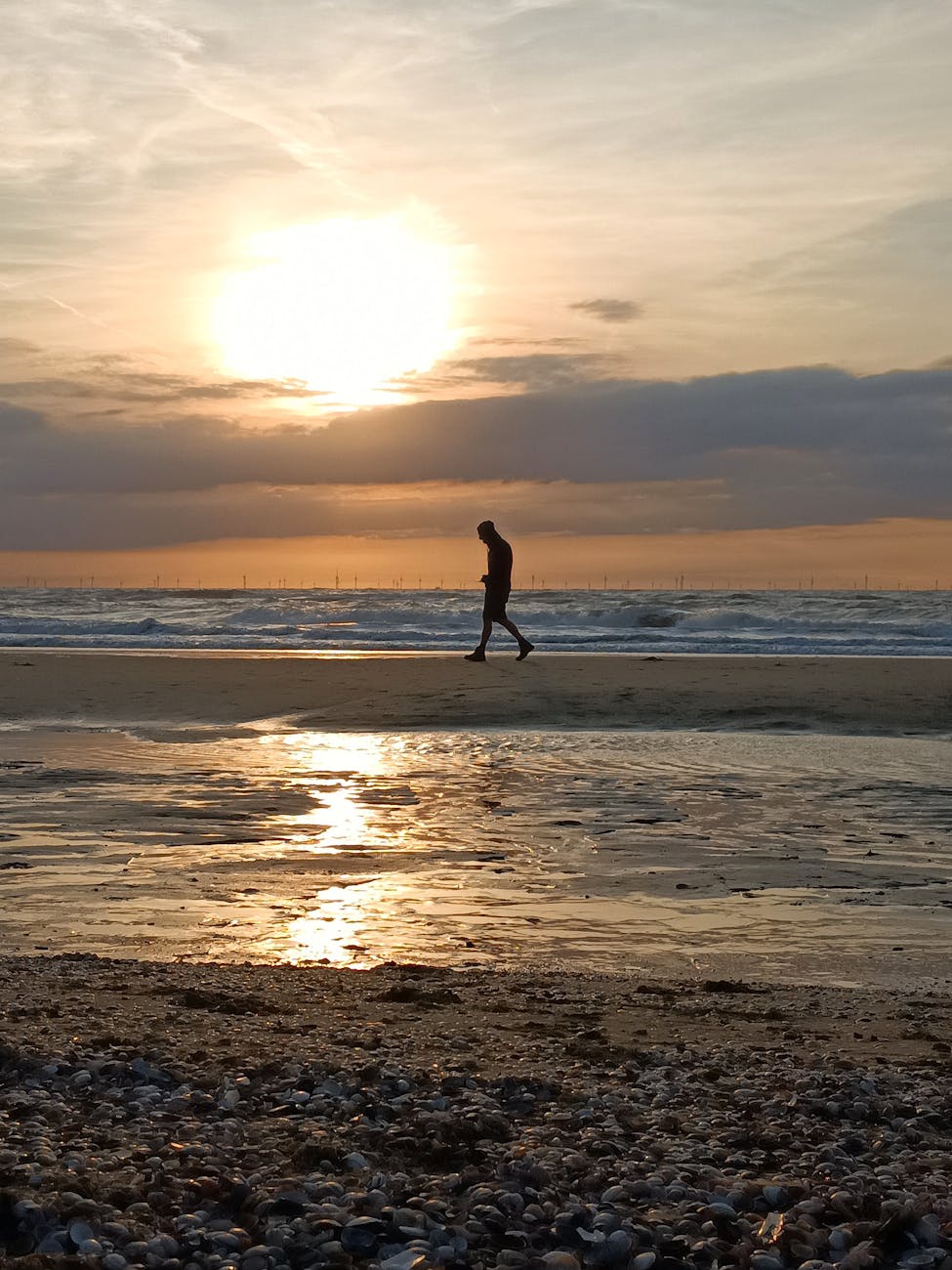
    So I’m choosing friction of a better kind. I play the piano until my attention steadies. I pick up kettlebells and let gravity argue with me for a while. I walk the beach and let the horizon do what no article can—put scale back into the day. The analog world doesn’t theorize; it recalibrates.

    That was the remedy with the twins, too. Not another podcast on sleep training, but a walk, a dumb TV binge, a sweaty hour in the garage. Relief came from stepping out of the commentary loop, not diving deeper into it.

    Which is why, when I see another AI essay queued up from The Atlantic or The New Yorker, I feel a familiar tightening—and then I close the tab. Not out of contempt, but out of preservation.

    I’ve heard enough echoes. It’s time to drive two miles to Catalina Avenue and take a walk at the beach.

  • The Tradwife, Tooter Turtle, and the Collapse of Reality

    The Tradwife, Tooter Turtle, and the Collapse of Reality

    When I was a teenager in the 1970s, I fell under the spell of Arnold Schwarzenegger, as did millions of young men who believed that iron could redeem them. Arnold didn’t just build muscle; he built permission. You didn’t have to slink into the gym like a social outcast. You could walk in like a man with a project—your body—and treat the work as something worthy, even noble.

    But here’s the part we forget when we romanticize that era: the fantasy always had a counterweight. You could admire the glossy magazine spreads, sure, but the minute you stepped into the gym, reality took over. The barbell didn’t care about your aspirations. It demanded blood, sweat, repetition, and a tolerance for humiliation. The dream had friction. It had consequences. It had gravity.

    Today, the dream has been fitted with wheels.

    We spend hours online absorbing lifestyles that arrive pre-edited, pre-filtered, and pre-approved by algorithms that understand our weaknesses better than we do. The counterweight—reality—hasn’t disappeared, but it’s been shoved to the margins, like an inconvenient footnote to a seductive headline. What replaces it is a fever dream: a curated existence that feels authoritative simply because it’s repeated often enough.

    Call this Frictionless Fantasy Drift—the condition in which ambition detaches from effort and begins to float, unmoored, in a frictionless digital sky. The struggle is edited out. The consequences are invisible. What remains is a mirage that invites you to step in and live there.

    I was reminded of this while reading Hanna Rosin’s essay “The Tragedy of the Tradwife.” Rosin contrasts the influencers of today with her own pre-internet lodestar, Martha Stewart—a figure she aptly describes as “a tycoon masquerading as a domestic goddess.” Stewart was many things—ruthless, exacting, extraordinarily competent—but she was real. Her brand, however polished, was anchored in actual skill and labor.

    Today, that grounded figure has been replaced by something far more synthetic: the algorithmic mountebank, the tradwife influencer who sells a pastoral fantasy with the confidence of a late-night infomercial host. She bakes bread from scratch, produces hearty meals with theatrical serenity, and presides over a small army of children as if domestic chaos were a lifestyle accessory. Her kitchen gleams. Her apron is spotless. Her smile suggests a fulfillment so complete it borders on evangelism.

    And then there’s the final flourish: submission. She assures her audience that handing over the steering wheel to her husband has unlocked a level of contentment previously unknown to modern women. Obedience, rebranded as liberation.

    In an era defined by Frictionless Fantasy Drift—where loneliness and dislocation leave people hungry for meaning—this performance finds an audience. Millions of them. The algorithm delivers it, refines it, amplifies it, until it begins to feel less like content and more like truth.

    Enter Caro Claire Burke, who looked at this spectacle and did what any rational observer might do: she pushed back. First on TikTok, then in her novel Yesteryear, which imagines a tradwife influencer waking up in 1855. The premise is simple. The result is devastating.

    Because when the fantasy is forced to pay rent—when it has to operate under the conditions it claims to celebrate—it collapses. The cozy illusion of domestic bliss is replaced by a brutal, unforgiving reality. Labor is constant. Comfort is scarce. And the husband, far from being a benevolent co-pilot, often resembles something closer to an owner. The cosplay dissolves, and what remains is history—raw, unvarnished, and deeply unpleasant.

    Reading about Burke’s setup, I couldn’t help but think of an old cartoon from my childhood: Tooter Turtle. Tooter is a lonely, perpetually dissatisfied turtle who dreams of becoming anything but himself—lumberjack, astronaut, baseball star, you name it. His friend, Mr. Wizard the Lizard, obliges by transporting him into these fantasies.

    And every time, without fail, the dream turns on him.

    The lumberjack nearly gets crushed. The astronaut faces disaster. The hero becomes the victim. Tooter, overwhelmed and panicked, begs to be rescued and returned to his ordinary life. The moral lands with blunt clarity: the fantasy is seductive, but it is also ignorant. It doesn’t account for reality because it doesn’t know it.

    Tooter is a child—permanently so—because he confuses the image of a life with the experience of living it.

    That’s the unsettling part. The gap between Tooter and a large segment of today’s online population is not as wide as we’d like to believe. We sit in front of our screens, absorbing curated lives, and imagine ourselves stepping into them as if they were costumes waiting to be worn. With enough imitation, enough belief, we assume the transformation will stick.

    It won’t.

    That’s why Burke’s novel has struck a nerve. It doesn’t just critique the fantasy; it subjects it to reality. It forces the dream to answer for itself. And when it does, the result is not liberation, but a sharp, corrective blow—a reminder that a life without friction may be easy to admire, but it is impossible to live.

    As for me, I’m looking forward to reading it.

  • The Visitor from the Abyss

    The Visitor from the Abyss

    On a bright spring afternoon in Southern California in 1998, my writing class was dissecting evil with the clinical confidence of people who believed it could be contained in literature. We were discussing The Painted Bird, a novel so saturated with human cruelty that it feels less like fiction and more like a dare. The room hummed with theories—evil as social construct, evil as pathology—until my students quietly dismantled the abstraction. They believed in evil not as metaphor, but as presence. Ghosts. Demons. Things seen and not forgotten.

    One single mother spoke of something that crawled beneath her bed at night. She said it plainly, without theatrics, which made it worse. Another student, a nurse in her forties who worked long shifts at UCLA, waited until after class. “I have a story,” she said, as if announcing a diagnosis that required privacy.

    She didn’t look like someone given to fantasy. She was compact, practical, her thick glasses enlarging eyes worn down by long hours and human frailty. Her stories usually involved difficult patients or her childhood in rural Louisiana—earthbound things. But as she began, her voice shifted, acquiring a distant cadence, as if she were tuning into a frequency not meant for daylight.

    She was six or seven at the time, roaming the backwoods with her cousin Carmen. No supervision, no schedule, no adult intervention. Their days were filled with the idle cruelty of children left alone too long—tormenting small animals, inventing games that escalated from mischief into something darker. There were no witnesses, no consequences, and so no brakes.

    Until one afternoon.

    They were inside the farmhouse, a sagging structure with a porch that complained with every step. The screen door creaked open. A man walked in and sat down in the living room as if he owned the place.

    But he wasn’t a man.

    She struggled to describe him without sounding ridiculous. He wasn’t clothed, but that detail felt irrelevant. His body was covered in coarse, matted fur. His skin—if it could be called that—had the pallor and texture of a rodent. Behind him trailed a long, muscular tail that slid along the floor and flicked against the doorframe like a living whip. He looked like something assembled from nightmare logic: a giant rat that had decided to stand upright and enter a house.

    The girls didn’t run. They couldn’t. Fear locked them in place, as if the room itself had thickened.

    He began to speak.

    For hours—she was certain it lasted hours—he sat in that chair and talked. His voice was low and abrasive, as if it scraped its way into the room. He told stories about the things he had done, the damage he had caused, the harm he had perfected. Time lost its structure. The afternoon stretched into something shapeless and suffocating.

    Then he turned his attention to them.

    “I’ve seen how bad you girls are,” he said. “I’ve seen what you’ve been doing.”

    And then he began to list their offenses. Not generalities—details. Every small cruelty, every secret act they had committed when no one was around. Things no adult had witnessed. Things no one could have reported.

    “I’m going to recruit you,” he said. “I’m going to make you mine.”

    The threat didn’t rise in volume. It settled into the room, thick and toxic, like something you could breathe in and never fully expel. His eyes stayed on them the entire time, unblinking, patient, certain. He described what would happen if they continued, not in vague moral warnings, but in precise, almost administrative terms—consequences rendered as inevitabilities.

    The girls sat frozen, their bodies no longer their own.

    And then, as casually as he had entered, he stood up and left. The tail followed him out like an afterthought, sliding across the threshold and disappearing into the heat.

    Silence rushed back into the house.

    Carmen finally whispered, “Did you see that?”

    My student nodded. Speech had abandoned her.

    From that day forward, their lives snapped into alignment. No more cruelty. No more experimentation with harm. They went to church. They prayed. They obeyed. Not out of virtue, but out of fear sharpened into obedience. Whatever had visited them had not suggested a path—it had enforced one.

    I would have preferred to dismiss the story as delusion, but that option didn’t fit the teller. This was a woman trained to assess reality, to separate symptom from fabrication. She spoke without embellishment, without the slightest interest in persuading me. She wasn’t selling a story; she was reporting an event that had rearranged her life.

    It unsettled me more than I expected.

    At the time, I was living alone in a condo in Redondo Beach, the kind of place that feels harmless until night gives it edges. One evening, I had a dream about the Cowardly Lion from The Wizard of Oz. Only this version had shed all pretense of cowardice. He chased me, snarling, his face twisted into something feral and wrong.

    I woke up, but the dream didn’t fully release me.

    At the foot of my bed, I felt it—presence. Not a thought, not a leftover image, but something that occupied space. The lion-man sat there, immense, silent, undeniable. Fear pinned me in place. Breathing became an effort, as if the air itself had thickened in protest.

    After several long seconds, I forced movement into my body. I stood, walked up the stairs on unsteady legs, poured a glass of water like someone performing a ritual they barely believed in. When I returned, I flooded the room with light, turned on the television, filled the silence with noise until the presence thinned and finally dissolved.

    Like pain receding from a crushed hand—slow, stubborn, but eventually gone.

    What stayed was the recognition.

    Evil is not just an idea we debate in classrooms or confine to novels. It has a way of presenting itself—not always dramatically, not always visibly, but with enough force to alter how you move through the world. Once you’ve felt it, even briefly, it leaves a residue. A knowledge that doesn’t argue its case. It simply waits, somewhere just beyond the edge of explanation.

  • The Man Who Refunded His Generosity

    The Man Who Refunded His Generosity

    There is a certain type of man who treats generosity like a minor injury—something to be iced, medicated, and quickly undone. When social protocol forces him to buy a gift for someone else, he doesn’t experience the faint glow of goodwill. He winces. The purchase lands like a deduction from a sacred account, and the only way to steady himself is to restore the balance immediately—by buying something for himself.

    This is not coincidence. It’s policy.

    He operates under a private accounting system I’d call Gift Offset Compulsion: every act of giving must be counterweighted by an equal or greater act of self-reward. The outward gesture is merely the opening move; the real transaction is internal. He hands over a wrapped token with one hand while quietly preparing a compensatory indulgence with the other.

    In his mind, this isn’t selfishness—it’s equilibrium. A world in which he gives without reclaiming would feel distorted, even unjust. So he corrects it. Every birthday present, every holiday obligation, every ceremonial nod to generosity is followed by a personal rebate. He doesn’t give; he circulates assets. He doesn’t sacrifice; he settles accounts.

    And once the books are balanced, he feels whole again—restored, reimbursed, and ready, if necessary, to give once more… provided he can be paid back promptly.

    So my challenge to all my watch-obsessive friends is this: Look deep inside and ask yourself if you’ve ever purchased a watch under this type of psychological distress. 

  • A College Degree in Applause

    A College Degree in Applause

    When Oprah Winfrey signed off for the last time, she offered a distilled insight after decades of televised confessionals and couch-bound catharsis: beneath our surface differences, we all want the same thing—to be heard and, more importantly, to be affirmed. Not merely listened to, but validated, as if our words must pass through some invisible tribunal and emerge stamped: This life matters. This mind is not wasted inventory.

    She was right, though even that admission feels like an understatement. The appetite for validation is not a polite preference; it’s a metabolic demand. We don’t just want to speak—we want to land. We want our sentences to strike the listener with enough force that they nod, recalibrate, maybe even quote us later as if we were a minor authority in the ongoing project of making sense. We want to believe that our thoughts improve the room, that our presence upgrades the conversation from background noise to something resembling signal.

    Of course, the engine driving this hunger isn’t entirely noble. Scratch the surface and you’ll find insecurity jittering beneath the skin, narcissism preening in the mirror, tribal instincts scanning for applause from the right audience. We want to be right, but more than that, we want to be seen being right. Yet it would be too easy—and too smug—to reduce this to vanity alone. There’s another current running underneath. Human beings, for all their posturing, are wired for cooperation. We build moral systems, knowledge systems, entire civilizations on the premise that sharing ideas might actually improve the collective condition. So the same impulse that craves applause also aspires—sometimes sincerely—to contribute something of value. We may be peddling clichés, hallucinations, or the occasional insight, but the urge to be heard persists like a drumbeat.

    After nearly forty years of teaching writing, I’ve had a front-row seat to this performance. I’ve enjoyed the privilege—let’s call it what it is—of having a voice that people were required to listen to. Now, as that authority begins to fade at the edges, I’m left examining the machinery that made it feel necessary in the first place. My students will tell you they’re here for practical reasons: a degree, a job, a paycheck that doesn’t insult them. Fair enough. But beneath that utilitarian script, I suspect another motive is quietly at work. They want to matter intellectually. They want their ideas to carry weight, to be received not as filler but as substance.

    I can see it because I can reverse-engineer myself at eighteen. Put me back in that position—blank slate, open catalog—and I’d choose political science without hesitation. Not because it guarantees employment—it doesn’t—but because it offers a stage. A chance to sound sharp, to read densely, to write with the kind of authority that might make a professor pause and think, there’s something here. The fantasy isn’t wealth; it’s recognition. Money pays the bills, but it doesn’t applaud. It doesn’t lean forward when you speak.

    And without that recognition—without the sense that your mind registers on someone else’s radar—life begins to feel like static. Content generated, scattered, and forgotten. A digital smear. Noise mistaken for presence.

    Which is why so many of us operate under a quiet affliction I’d call Intellectual Visibility Panic: the nagging fear that no matter how carefully we assemble our thoughts, they will evaporate on contact—unheard, unvalued, and unremembered. It’s not dramatic enough to ruin your day, but it’s persistent enough to shape your choices. It nudges you toward certain majors, certain careers, certain performances of self. It whispers that time is running out, that if you don’t establish your voice soon, it will dissolve into the background hum.

    And so we speak. We write. We posture. We refine. Not just to communicate—but to leave a trace strong enough that someone, somewhere, might stop and say: that was worth hearing.

  • Normal Until It Isn’t: The Slow Collapse of a Social Life

    Normal Until It Isn’t: The Slow Collapse of a Social Life

    We acclimate to our routines the way a room acclimates to its own stale air—gradually, without protest—until the familiar starts to smell like something we’d refuse if it were new. Habit acquires the authority of identity. It tells us, “This is who you are,” and we nod, relieved not to argue. Then, occasionally, a crack opens. Something in the routine reveals itself as not just unusual, but quietly unhealthy. Six months ago, I noticed the crack: I have no active friendships. I can inventory names—P and T nearby, four sightings a year if the calendar is feeling generous; A an hour away, a phone call that arrives annually like a polite comet—but these are museum pieces, not relationships you live inside. By the only definition that matters—people you see and speak with regularly—I am operating at zero. I’ve built a life that functions without friends and then congratulated myself for the efficiency.

    I can dress the solitude up as a lifestyle. I can cite Laurie Metcalf and her apparent ease living alone, as if borrowing her poise could underwrite my own. But the analogy collapses on contact. Solitude is not the same as isolation, and thriving alone doesn’t imply the absence of active ties. The rationalization is elegant; it’s also evasive.

    What unsettles me is not the label—“friendless” is a blunt instrument—but the salience of it, the way the fact refuses to stay abstract. It lands on my family. A husband and father who lives in the Friendless Zone quietly shifts the social burden onto his wife and children. Every conversation, every need for connection, every idle hour leans on them. That’s not intimacy; it’s overreliance dressed as closeness. No one signs up to be an entire ecosystem.

    This wasn’t always the rhythm. Before marriage, my life had edges and movement. Meals with colleagues that stretched into second coffees, movies that required coordination, parties that produced stories, landline conversations that ran until your ear ached and you didn’t notice. Then 2010 arrived with twins and a schedule that ate the clock. Bottles, dishes, carpools, appointments—the logistics of care are relentless and, to be clear, necessary. Friendship became the expendable line item. I trimmed it “for now,” and “for now” matured into a policy.

    I’m not assigning blame. If anything, the demands of family life offered my inner recluse a beautifully plausible alibi. He’d been waiting for a reason to stay home; parenthood handed him a portfolio of them. The cave felt efficient, even virtuous. And then it felt normal. Now it feels narrow. Part of me still enjoys the quiet—the control, the absence of social friction. Another part sees the cost: fewer perspectives, fewer checks on your own thinking, fewer chances to be surprised into being more than you currently are.

    If I map the trajectory, my life  breaks into three eras: having friends and taking them for granted; losing friends and not noticing the loss; being without friends and finally noticing. Awareness is not a solution. It’s a diagnosis that arrives without a prescription. There’s no switch I can flip to become the convivial man who collects invitations like business cards. There is only the discomfort of seeing clearly—and the obligation to decide whether clarity is something you act on or merely admire.

  • From Coffeehouse to Clickbait

    From Coffeehouse to Clickbait

    Invoking the word democracy in an essay feels like trying to sell a ghost–intangible, shapeless, and increasingly irrelevant to an audience fixated on the price of eggs and the cost of gasoline. We live in a state of Democratic Abstraction Fatigue, where civic ideals have been repeated so often and defined so poorly that they’ve lost all emotional voltage. Democracy has become a word people nod at politely while checking their grocery receipts.

    Salience is the problem. Democracy competes poorly in a culture that values immediacy over abstraction, sensation over structure. A fluctuating gas price commands attention because it hurts now. Democracy, by contrast, whispers about norms, institutions, and procedures–important, yes, but bloodless in the moment. When everything urgent is concrete and everything essential is abstract, the essential loses.

    We can attempt a definition to anchor the word: a democracy is a system of fair elections, peaceful transfers of power, and a citizenry capable of resisting manipulation by charlatans, influencers, and political opportunists whose incompetence would, in a sane society, disqualify them on sight. But even this definition now feels aspirational, almost quaint.

    Because the truth is harder: those guardrails are eroding. Adam Kirsch, in “The Era of Rational Discourse Is Over,” reminds us that American wars have often been sold under false pretenses–the Spaniards sank the USS Maine, Iraq hoarded weapons of mass destruction. But what distinguishes the present is not deception; it is indifference. The machinery no longer bothers to persuade. There is no narrative to construct, no public to convince, no Congress to consult. The decision is the justification. We have entered a phase of Executive Drift, where power operates with minimal friction and even less explanation.

    How did we arrive here? Kirsch turns to Jürgen Habermas, who witnessed the collapse of Nazism and the fragile rebirth of democratic life in Germany. For Habermas, democracy depended on what he called “communicative action”–a culture of dialogue where ideas are tested, challenged, refined, and, occasionally, improved. Democracy was not just a system of voting; it was a system of thinking.

    That system now shows signs of collapse. We inhabit an era of Communicative Decay, where discourse has splintered into tribal fragments, each sealed off from contradiction, each sustained by outrage. Argument has been replaced by performance. Listening has been replaced by waiting for your turn to strike.

    In The Structural Transformation of the Public Sphere, Habermas imagined democracy as an expanded coffeehouse—a literate, engaged public exchanging ideas with rigor and civility. It was a world in which communication flowed in two directions: we spoke, and we listened. Today, we scroll. We absorb. We react. But we do not engage.

    The modern condition might be better described as a dopamine democracy, where public opinion is shaped not by deliberation but by stimulation. Algorithms reward the loudest, the angriest, the most unhinged voices. Complexity is punished. Nuance is buried. What rises instead is spectacle–content engineered to trigger, not to inform.

    The consequences are predictable. Citizens become passive, then inert. Critical thinking atrophies. Conspiracy theories flourish in the vacuum. Truth becomes negotiable, then irrelevant. We do not fall from democracy in a single dramatic collapse; we degrade into a version of ourselves that no longer demands it.

    Mass media and weaponized misinformation accelerate the decline. Lies are no longer liabilities; they are tools. Identity replaces evidence. Tribe replaces truth. You are not expected to think–you are expected to align.

    And so we arrive at the most unsettling feature of our moment: the people who ascend in this environment are not the most disciplined, the most thoughtful, or the most competent, but the most performative, the most shameless, the most willing to exploit the system’s weaknesses. Infantilism becomes a strategy. Narcissism becomes an asset.

    A culture that rewards such traits should provoke alarm. It should trigger a course correction. But instead, we drift–distracted, entertained, anesthetized.

    Democracy has not been overthrown.

    It has been neglected.

    And like anything neglected long enough, it begins to disappear–quietly, gradually, while most of us are still asleep.

  • Weaklings Anonymous and the Gospel of Disappointment

    Weaklings Anonymous and the Gospel of Disappointment

    Like millions of Americans, I was taught that The Brady Bunch wasn’t just a sugary sitcom fantasy—it was a blueprint for how families should work. Polyester-clad harmony, avocado-colored kitchens, and life lessons that landed with the gentle thud of a sitcom laugh track. But why, decades later, does the Brady house at 11222 Dilling Street remain one of the most photographed homes in America? Why has the show’s popularity only exploded since its 1974 cancellation? And most baffling of all—why do people still worship at the altar of Sherwood Schwartz’s pastel-hued utopia?

    In The Way We All Became the Brady Bunch, Kimberly Potts excavates this cultural phenomenon, tracing its roots to Schwartz’s other fantasy fiefdom—Gilligan’s Island. Both shows peddled the same delusion: you could toss together any group of mismatched personalities, and through teamwork, pluck, and a catchy theme song, everything would turn out just fine. In reality, unresolved resentment doesn’t dissolve neatly before a commercial break, and a shared kitchen doesn’t magically make step-siblings love each other. But Schwartz wasn’t interested in reality—he was selling optimism in Technicolor.

    Sherwood Schwartz was America’s high priest of idealism, a man who saw divorce rates skyrocketing and decided to counterprogram with an unshakably cheerful alternative. His blended family would work, dammit, and they would thrive in a sun-drenched suburban utopia filled with pep talks and hugs. 

    I was raised on a steady diet of optimism—the kind ladled out with a smile and a moral. Captain Kangaroo read The Little Engine That Could as if perseverance were a law of physics. Comic books ran Charles Atlas ads promising that a few earnest reps with a dining chair would convert me from sand-kicked weakling into a suburban Hercules. The message was simple and intoxicating: try hard, get strong, win life.

    Even then, a small, skeptical voice whispered from the back row. I owe that voice to The Monkees.

    October 16, 1967—the day irony introduced itself with a slapstick flourish. I was five, planted in front of a Zenith, watching “I Was a 99-lb. Weakling,” blissfully certain the universe kept its promises. Then Micky Dolenz—my favorite Monkee—was humiliated on the beach by Bulk, a Speedo-wrapped monument played by Dave Draper. Bulk didn’t just flex; he annexed. He took Brenda—the beach goddess—as if she were part of the trophy case.

    Micky’s response was textbook American faith in self-improvement: join Weaklings Anonymous, submit to punishing workouts, and chug something resembling fermented goat sorrow. He sells his drum set to finance the transformation. The montage promises redemption; the protein slurry promises absolution. The contract seems clear: suffer now, triumph later.

    And then the script commits treason. On the eve of Micky’s muscular revenge, Brenda has a revelation—muscles are passé. She abandons Bulk for a bespectacled reader of Remembrance of Things Past. Apparently, Proust outcompetes pecs. The beach crowns a new champion: not the strong, not the striving, but the well-read.

    I remember the exact sensation—like a floor giving way under a small, unsuspecting life. The lesson landed with the grace of a dropped anvil: effort does not guarantee outcome. You can sweat, sacrifice, and swallow liquefied goat tragedy, and still lose the girl to a man who wins by turning pages. I didn’t have the vocabulary for irony, but I felt it enter my system—cool, patient, and permanent.

    Yet the story planted a second, more stubborn truth: the heart does not consult the intellect. Intellectually, I absorbed the lesson—life is not a ledger; virtue doesn’t always pay. Emotionally, I defected. I still wanted to look like Dave Draper. In the mind of a five-year-old, the world offered a clean binary: become Draper or remain a tomato skewered by four toothpicks. The moral could lecture all it wanted. The body had already cast its vote.

  • The Night My Biceps Filed for Divorce

    The Night My Biceps Filed for Divorce

    My pride as a lifelong bodybuilder—still clinging to relevance in my sixties—met its demise one evening on the couch, where I lay in a slovenly posture and glazed-over eyes while watching the movie Road House. Calling it a film feels charitable. It’s more like a glossy shrine to the male physique, starring a Jake Gyllenhaal so surgically chiseled he looks as if Michelangelo started carving David, lost patience, and decided to make him punch strangers for a living.

    Gyllenhaal plays a brooding bouncer in Key West, a man whose job description consists of protecting a bar and its luminous owner, played by Jessica Williams, from the usual parade of cinematic degenerates. This inevitably summons the film’s apex predator: Conor McGregor, who appears less like a human being and more like a shaved grizzly bear that discovered performance enhancers and never looked back. Veins bulge with the enthusiasm of overinflated garden hoses. His performance oscillates between feral animal and man who hasn’t blinked since the Obama administration, and it’s oddly mesmerizing.

    The plot is a rumor—thin, fleeting, and functionally irrelevant. A stranger rides into town, restores order with his fists, and exits in a cloud of testosterone and broken cartilage. But let’s not pretend narrative is the point. The camera worships muscle with the reverence of a Renaissance chapel. Biceps gleam. Lats ripple. Every slow-motion shot feels like a commercial for pre-workout powder and substances that come in unmarked vials. This isn’t storytelling; it’s a two-hour flex.

    Somewhere between Gyllenhaal’s forty-seventh shirtless entrance and McGregor’s latest snarl—delivered like a man hydrated exclusively by rage—I reached for my phone. Not to check the time. To search McGregor’s diet. Because this spectacle doesn’t entertain; it indicts. It shines a harsh fluorescent light on your own soft edges and whispers, You, sir, are a sentient pudding cup.

    At sixty-two, I knew I wasn’t about to carve myself into Gyllenhaal’s likeness. But I was still in the fight—kettlebells in the garage four days a week, the exercise bike on the others. My diet remained high-protein, though compromised by opportunistic snacking. The result: less Greek statue, more a compact, perspiring version of Larry Csonka in a Hawaiian shirt, lingering too long at the Grand Wailea buffet.

    I entertained fantasies of becoming a skinny version of myself. Replace kettlebells with yoga. Trade meat-heavy sandwiches for two plant-based meals a day of steel-cut oats, bell peppers, and tofu. But a chorus of old convictions intervened: maintain the protein intake, preserve the muscle, defend the territory. Five servings of “bioavailable protein” a day. No surrender. Somewhere along the way, fitness had ceased being about health and hardened into doctrine.

    I hadn’t competed since finishing runner-up in the 1981 Mr. Teenage San Francisco, but the mindset endured: life as contest, existence as proving ground. That belief wasn’t accidental. It was inherited. My father—infantryman turned engineer—treated life like a problem to be solved and a battle to be won.

    In the early 1960s, stationed in Anchorage, he found himself competing with another suitor—John Shalikashvili—for my mother’s affection. When Christmas interrupted the contest, my father refused the ceasefire. He cut his holiday short, intent on beating his rival back to Alaska. His vehicle—a pale 1959 Morris Minor—chose that moment to revolt, its fuel system failing with impeccable timing.

    Lesser men would have conceded. My father reached for ingenuity. Lacking a proper part, he improvised with a prophylactic and a paperclip, fashioning a grotesque but functional fix. It was absurd. It was desperate. It worked. He made it to Seattle, boarded the ferry, and arrived in Alaska forty-eight hours ahead of his rival.

    Nine months later, I entered the world—the byproduct of competitive instinct, mechanical improvisation, and what must surely be the most unorthodox application of latex in automotive history. In that moment, my father didn’t just win a race. He set a standard: adapt, outmaneuver, prevail. And decades later, as I sat watching sculpted demigods on screen, I realized that standard was still quietly running my life.

  • Costco and Sam’s Club Create More Problems Than They Solve

    Costco and Sam’s Club Create More Problems Than They Solve

    My wife and I conducted a field experiment at Sam’s Club—a trial run made possible by a discount membership from her workplace. The verdict arrived quickly. The food looked competent but uninspired, as if freshness had been negotiated down to a bulk rate. Organic options were sparse. Soy milk—my quiet staple—was nowhere to be found, as though exiled for insufficient enthusiasm. Everything came in portions calibrated for a family preparing for a siege, not a weeknight dinner.

    The outing consumed more than groceries; it swallowed time. Two hours vanished into the ritual: drive, navigate, queue, load, unload, shelve. By the end, the errand had metastasized into labor. I found myself thinking of Costco Wholesale—its better curation, its higher ceiling for quality—but then remembered the crowds, the parking gauntlet, the cart traffic that turns shopping into contact sport. Better food, perhaps; worse experience, certainly.

    Back home, I told my wife I’d return to Trader Joe’s for the core of our shopping and use Target to fill the gaps. The relief was immediate and physical. I don’t need a warehouse to validate my discipline or a pallet to prove my foresight. I need food that fits my life, not a lifestyle that accommodates a pallet. Shopping for the apocalypse creates more problems than it solves.