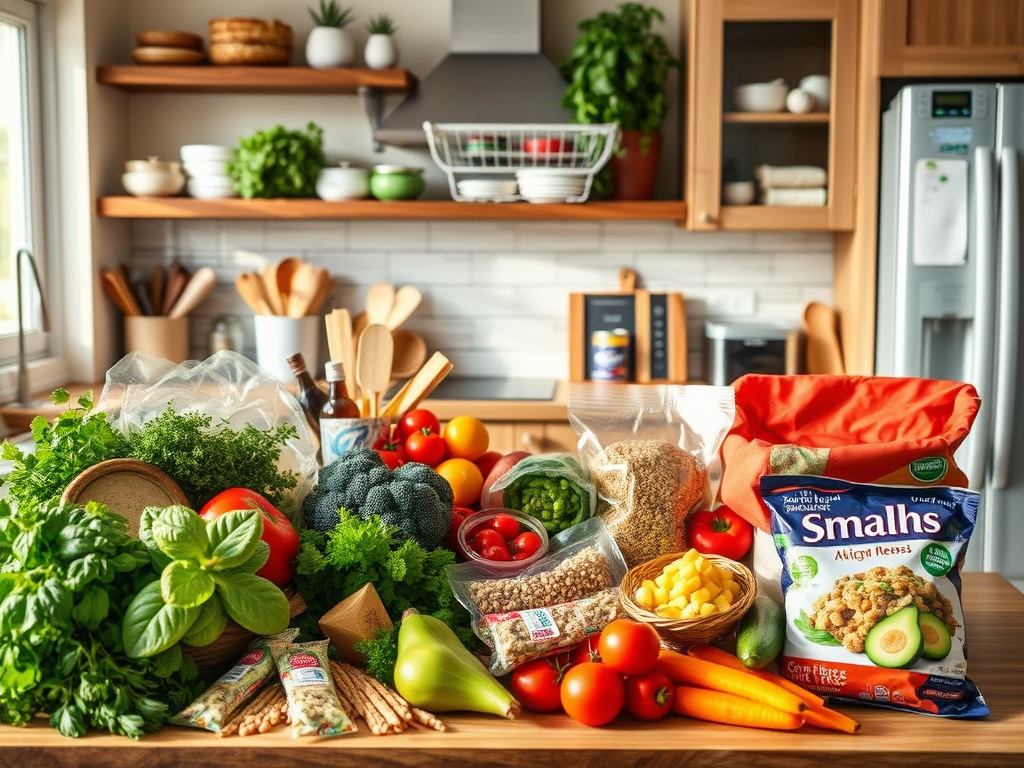
I admonish my teen daughters for their “high school” diet–80% of which is ultra-processed. I tell them to learn to prepare and enjoy whole foods, and as I speak these words, I can feel a self-righteous halo glowing over my head. My rectitude is rooted in my knowledge that whole foods are more dense, nutritious and fibrous than processed foods, and as a result whole foods help us achieve satiety–the word for feeling full, an important condition to help us avoid overeating.
The problem, however, with self-recitude, is that it can encourage us to become absolutists, zealous, and true believers who drink our own Kool-Aid with such relish that we fail to see how blind and rigid we have become. As whole food absolutists, we may find that our worldview and lifestyle doesn’t align with reality.
This misalignment is discussed in Olga Khazan’s essay “Avoiding Ultra-Processed Foods Is Completely Unrealistic.” The title is followed by the parenthetical “Especially if you have kids.”
As a health reporter, Khazan interrogates her own food choices for her son, some of which she understands will be questionable: peanut-butter puffs, grape-jelly Uncrustables sandwich, mixed-berry oat bites–all ultra-processed.
She understands that “hyperpalatable” Ultra-Processed Foods (UPFs) are linked to obesity, glucose spikes, insulin resistance, type 2 diabetes, and other afflictions so serious that UPFs should be treated like cigarettes and labeled with surgeon general warnings.
In light of UPF’s dangers, Khazan observes there is a myriad of health mommy influencers making videos on how to make your own healthy versions of goldfish crackers and chicken nuggets and how to prepare toothsome steamed cauliflower and carrot salad for your toddlers.
In this aspirational world, preparing whole foods may give us bragging rights, but it doesn’t align with the real world: Getting stuff done. When you consider how busy a working parent is in our ultra-competitive Hunger Games society, you realize that taking the time to prepare whole foods is an opportunity cost: Yes, you made homemade goldfish crackers, but you didn’t have time to go to the dry cleaners, drop off a return package of undersized garments to Temu, and stand in line at the pharmacy to pick up your medications. In other words, when you’re living in the real world, you have to capitulate to some UPFs regardless of the fitness mommies wagging their scolding fingers at you.
But Khazan points out that all this food shaming is making us fail to see the complexity of the ultra-processed food category, which is “too broad and difficult” for us to understand. Bran flakes and candy bars are both considered UPFs, but are they equal? Tofu is often categorized as a UPF, but is it really? Is soy milk bad for you in the same way sugary soda is? In other words, can we put all UPFs in the same category?
To complicate UPFs further, some are even good for you, including some yogurts, breads, and breakfast cereals. Additionally, some people have food restrictions, because of special dietary needs and food allergies, and their health benefits from some UPFs in their diet. For example, I use Splenda and liquid stevia for my coffee and tea, and my insulin thanks me for it.
The Shaming Whole Food Mommies should stop wagging their fingers for another reason: Being a parent entails unexpected crises that create time-management problems, which can only be solved with a quick meal, such as putting chicken nuggets in the toaster-oven. To make whole foods palatable can take several hours of preparation. Unless you’re rich and home all day, the time required for this type of preparation may elude you.
We’re not just talking about the time to prepare whole foods. We’re talking about cognitive drain. The amount of mental energy to bake chicken nuggets and a plate of celery stalks smeared with peanut butter is infinitesimal compared to prepping for chicken Tikka masala over basmati rice followed by cleaning ten times more dishes than microwaving a quick meal.
If you’re rich and you can spend time shopping in the morning and the rest of the day in the luxury of your spacious, state-of-the art home, you have the money, time, and cognitive energy to make tasty whole food dishes. Congratulations, you’re a member of the one percent. The rest of us have to work for a living. Unlike you, we’ve got chicken nuggets in the freezer for emergencies.
Have we even talked about the cost of whole foods vs. UPFs? A jar of organic pasta sauce cost more than double the one larded with high-fructose corn syrup. The same goes for salsa, nut butters, tomato sauce, pesto, bone broth, and the list goes on.
The Whole Foods Mommy Influencers shamelessly lard us with toxic positivity to “educate” us on healthy eating, but what they’re really doing is a muscle flex–showing us how great their lives are and wanting us to suffer FOMO because we don’t have their time and resources. They’re rubbing our noses in their glorious lifestyle knowing deep down that we don’t have the time and resources to join their rarified tribe. They’re more toxic than a case of UPFs.
A saner approach is simple: choose your battles. Cook whole meals when you can. Use common sense. Avoid the truly catastrophic diet—the frappuccino-and-bear-claw lifestyle that leads straight to endocrinological ruin. And when you inevitably reach for a UPF shortcut, don’t flagellate yourself or watch a Mommy Influencer video for penance. Just eat, breathe, and move on. The real world is hard enough without adding shame to the grocery bill.

 Cinemorphosis
Leave a comment