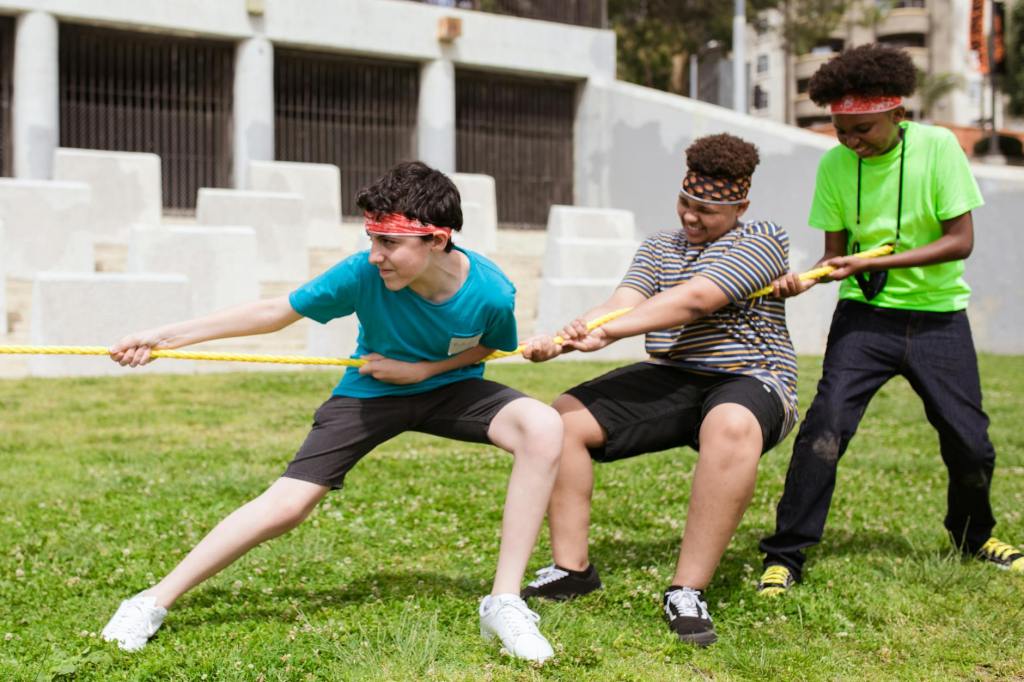
Reciprocal Authenticity Deadlock names the breakdown of trust that occurs when students and instructors simultaneously demand human originality, effort, and intellectual presence from one another while privately relying on AI to perform that very labor for themselves. In this condition, authenticity becomes a weapon rather than a value: students resent instructors whose materials feel AI-polished and hollow, while instructors distrust students whose work appears frictionless and synthetic. Each side believes the other is cheating the educational contract, even as both quietly violate it. The result is not merely hypocrisy but a structural impasse in which sincerity is expected but not modeled, and education collapses into mutual surveillance—less a shared pursuit of understanding than a standoff over who is still doing the “real work.”
***
If you are a college student today, you are standing in the middle of an undeclared war over AI, with no neutral ground and no clean rules of engagement. Your classmates are using AI in wildly different ways: some are gaming the system with surgical efficiency, some are quietly hollowing out their own education, and others are treating it like a boot camp for future CEOhood. From your desk, you can see every outcome at once. And then there’s the other surprise—your instructors. A growing number of them are now producing course materials that carry the unmistakable scent of machine polish: prose that is smooth but bloodless, competent but lifeless, stuffed with clichés and drained of voice. Students are taking to Rate My Professors to lodge the very same complaints teachers have hurled at student essays for years. The irony is exquisite. The tables haven’t just turned; they’ve flipped.
What emerges is a slow-motion authenticity crisis. Teachers worry that AI will dilute student learning into something pre-chewed and nutrient-poor, while students worry that their education is being outsourced to the same machines. In the worst version of this standoff, each side wants authenticity only from the other. Students demand human presence, originality, and intellectual risk from their professors—while reserving the right to use AI for speed and convenience. Professors, meanwhile, embrace AI as a labor-saving miracle for themselves while insisting that students do the “real work” the hard way. Both camps believe they are acting reasonably. Both are convinced the other is cutting corners. The result is not collaboration but a deadlock: a classroom defined less by learning than by a mutual suspicion over who is still doing the work that education is supposed to require.
 Cinemorphosis
Leave a comment